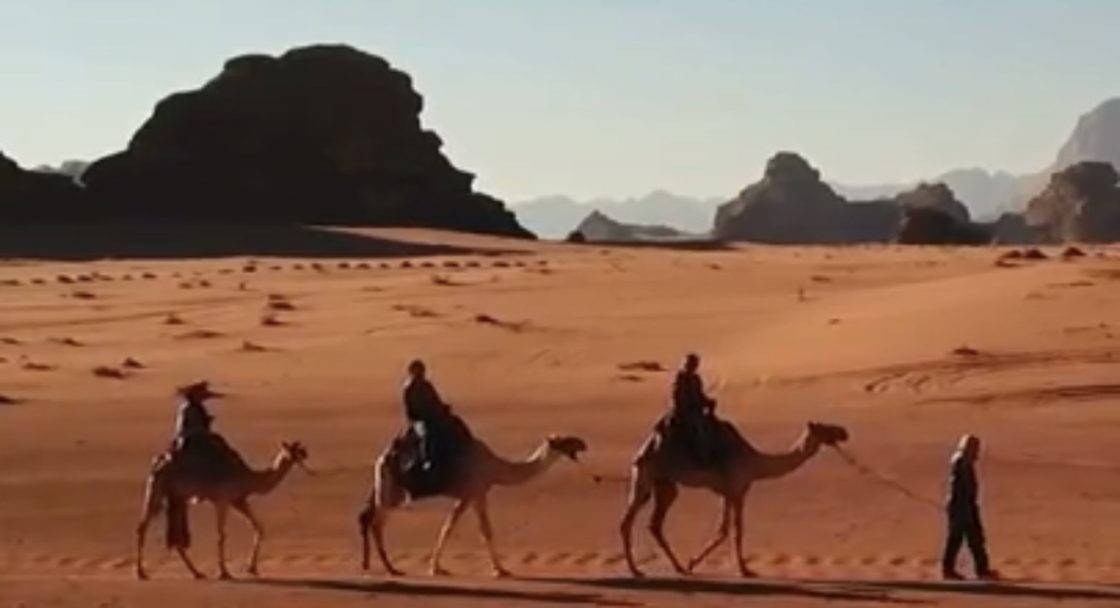
Petra, Jordan
By Paul Bryers
This morning was exceptional.
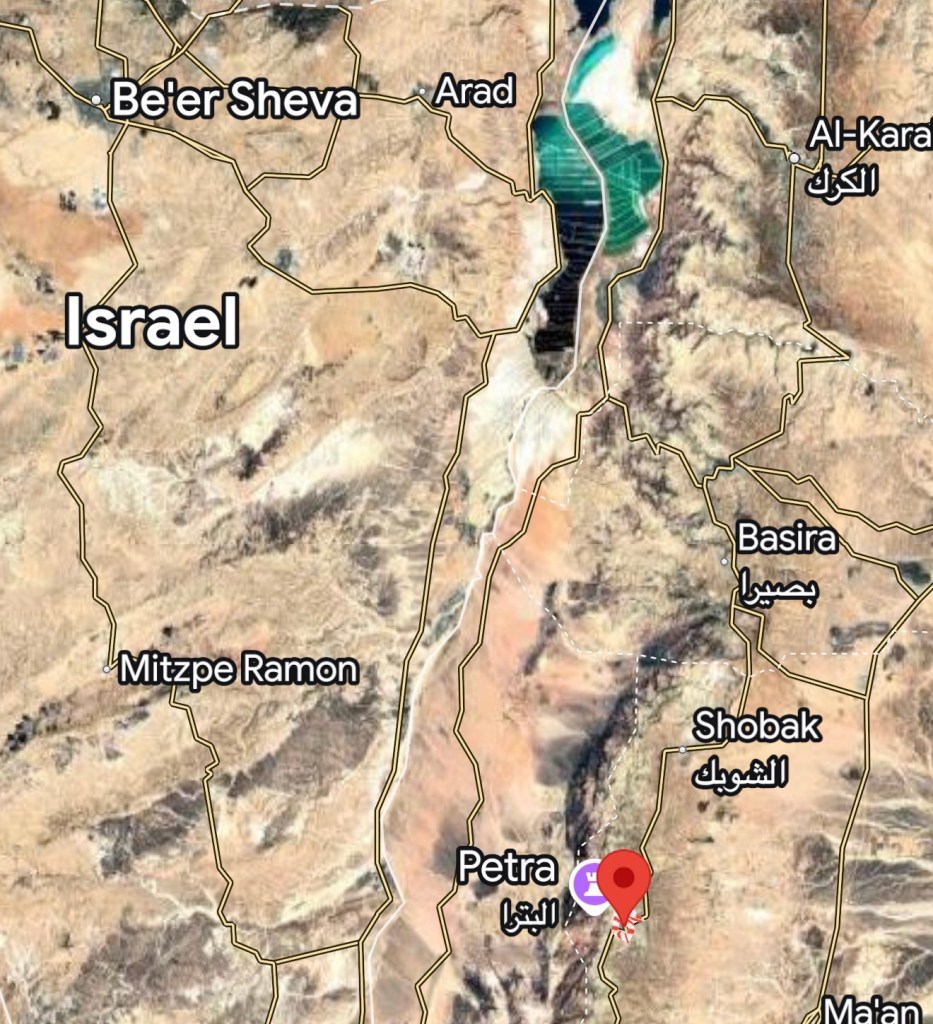
We departed early from our hotel, the Petra Moon, and walked approximately 2 miles to the ancient Arabic city of Petra.
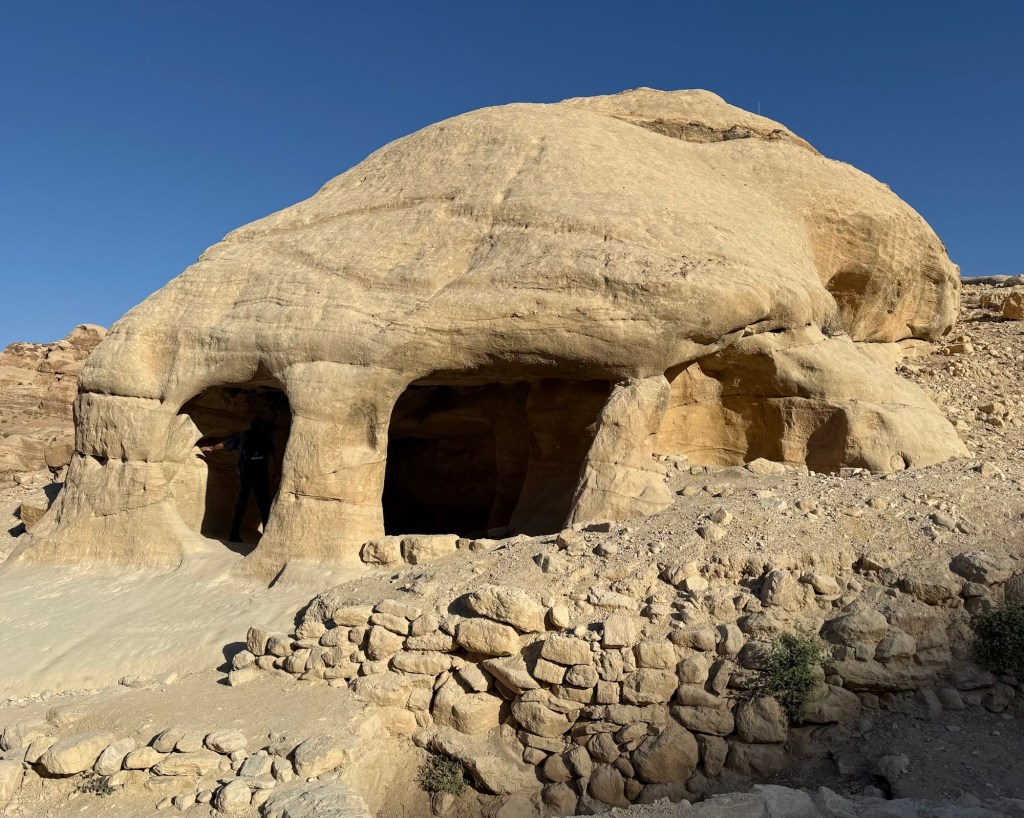
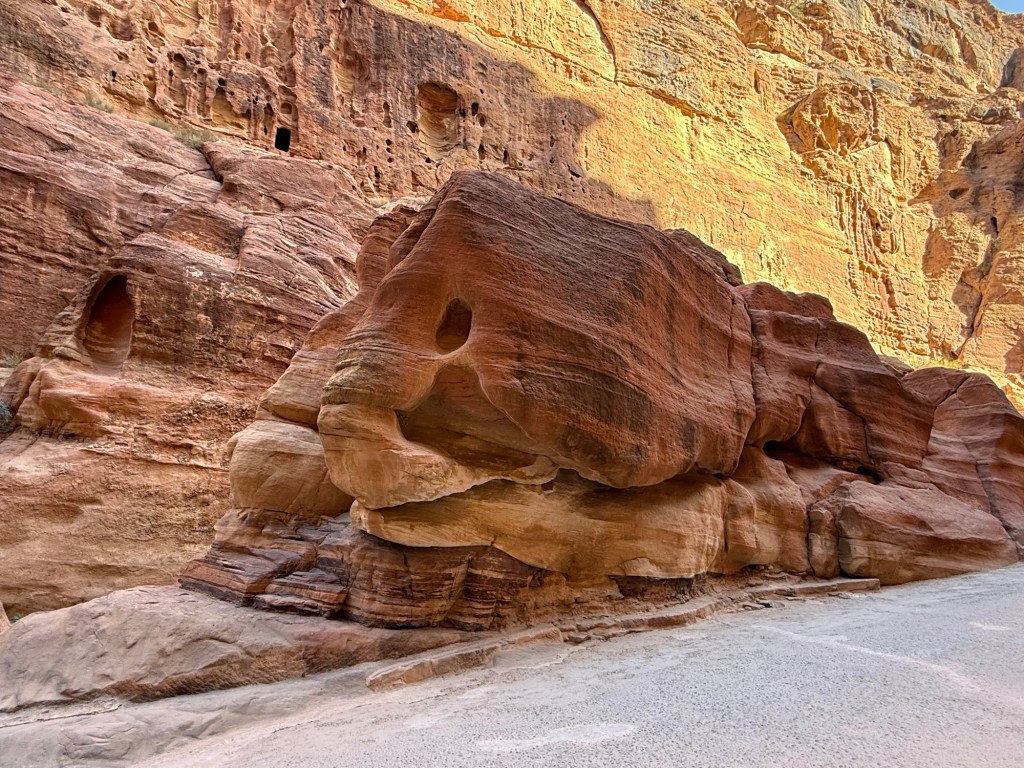
We initially passed through an area where people lived in caves until the middle of the 20th century and then through winding, narrow gorges.
The caves were utilized by Bedouins and other Arabic tribes until the Jordanian Government relocated them to nearby towns.
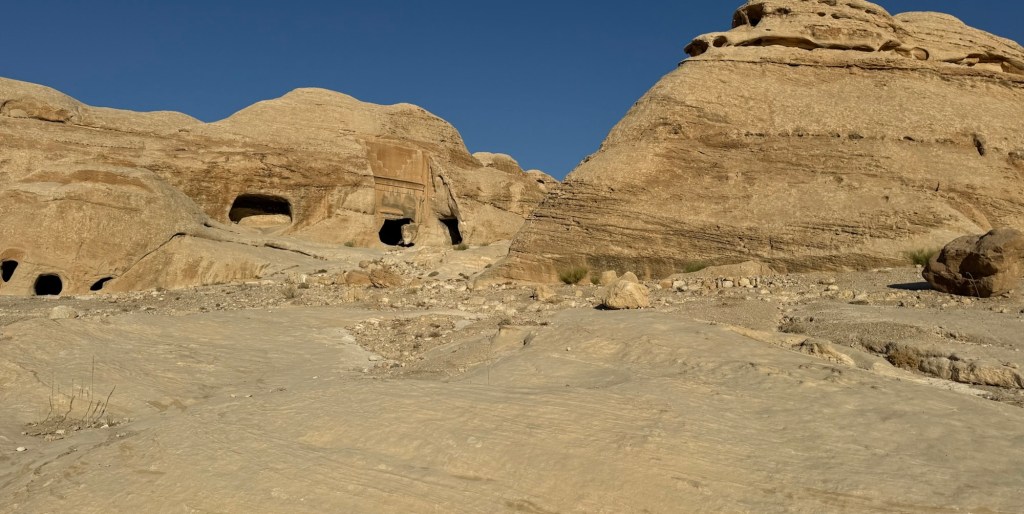
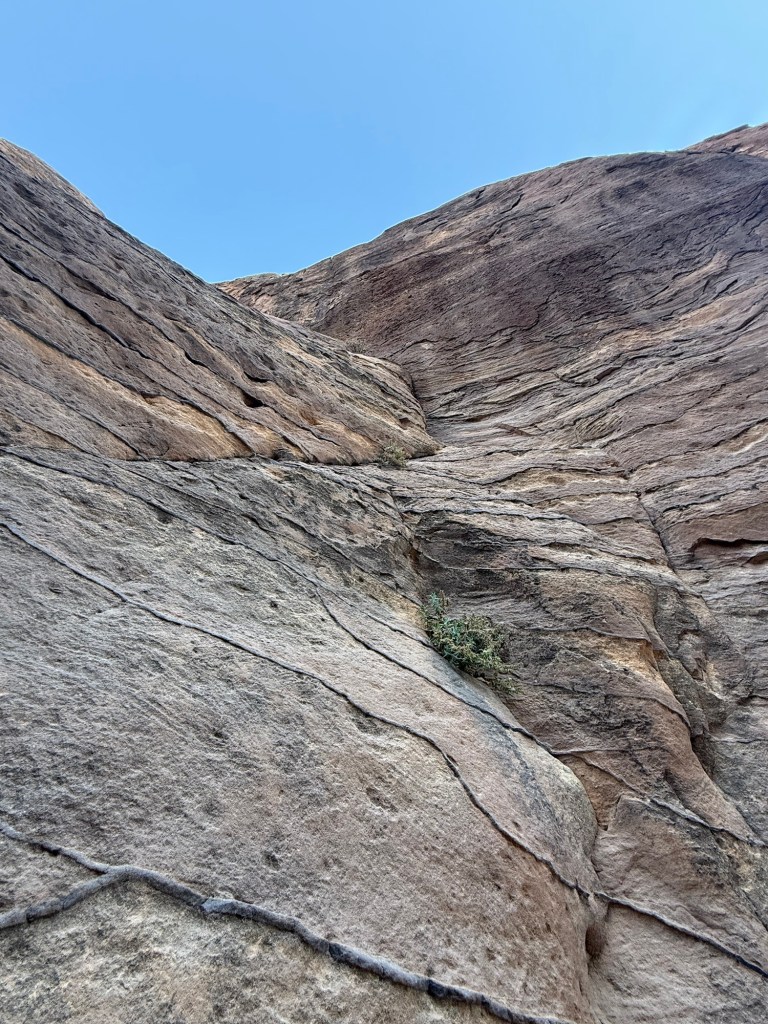
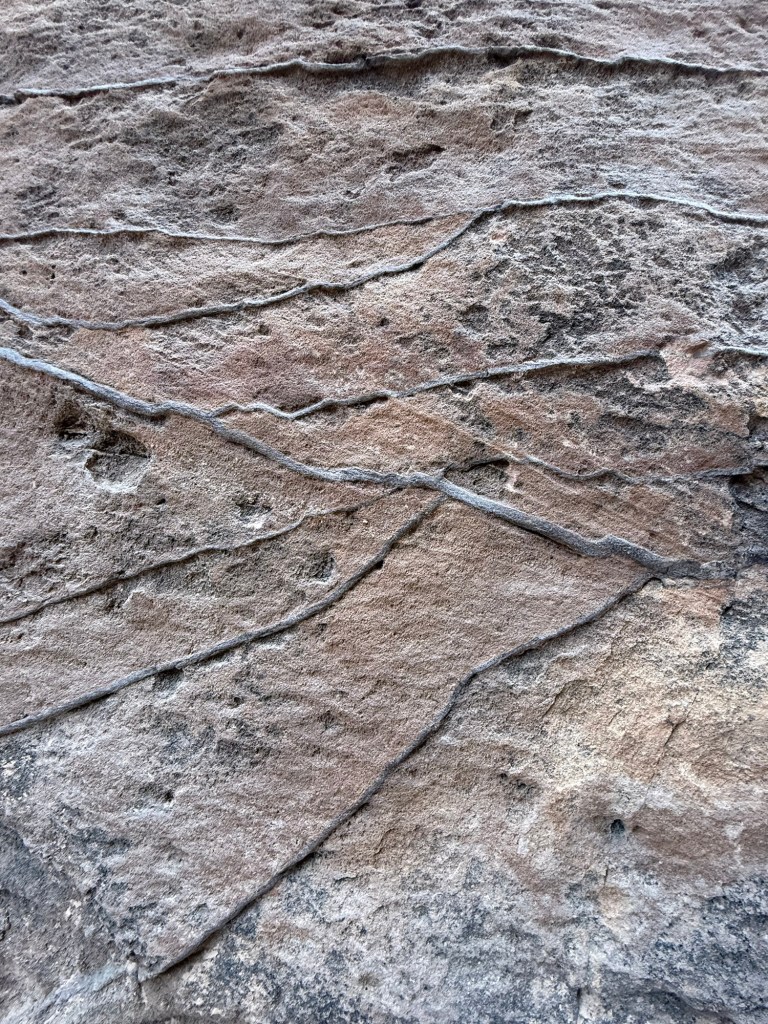
The gorges were formed by water eroding layers of sediment that had been deposited millennia prior when the area was below sea level.
The resulting gorge walls are multi-hued and tower hundreds of feet above the path to the city.
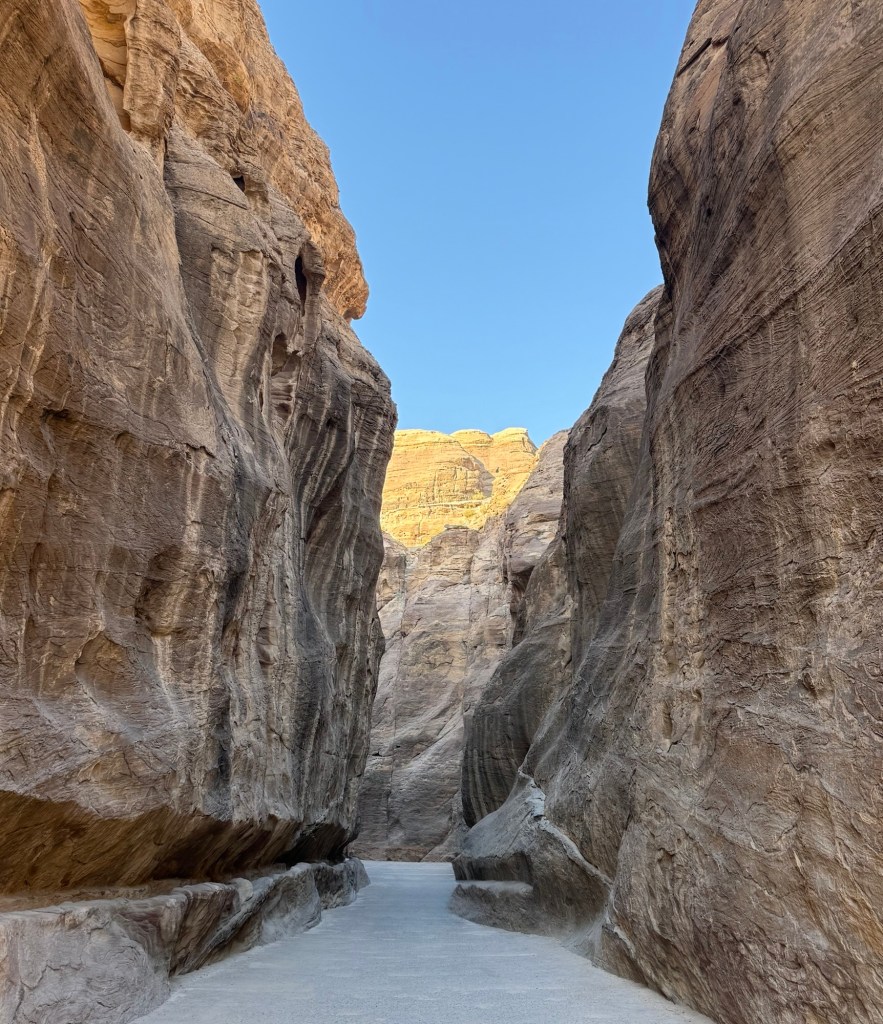
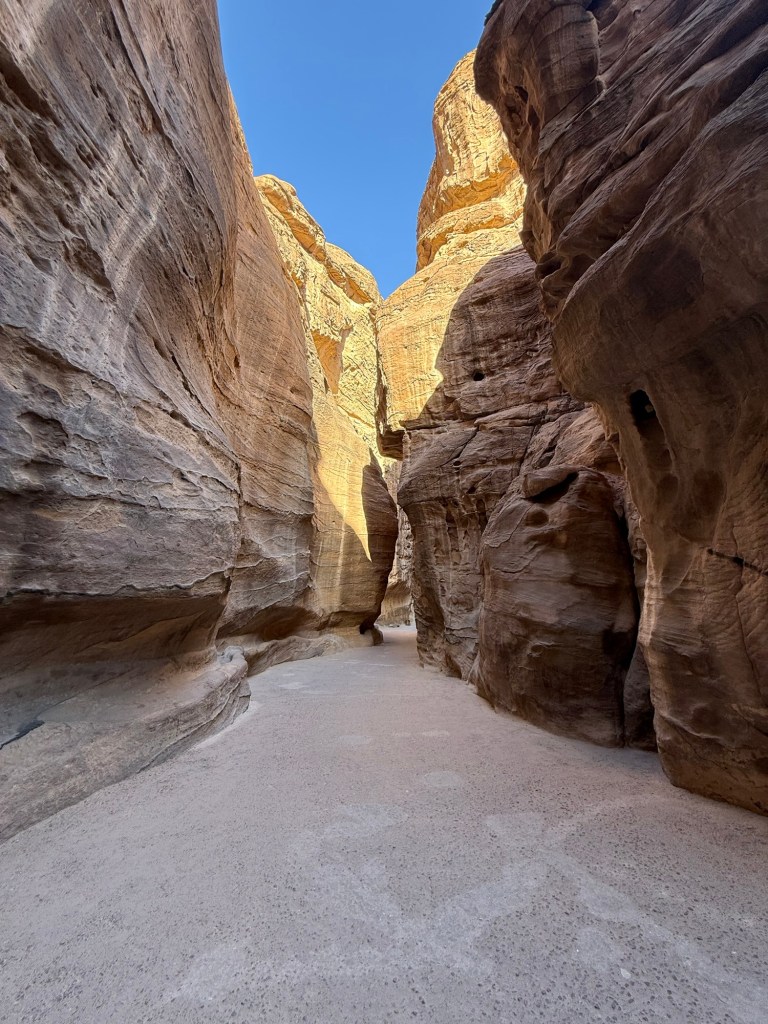
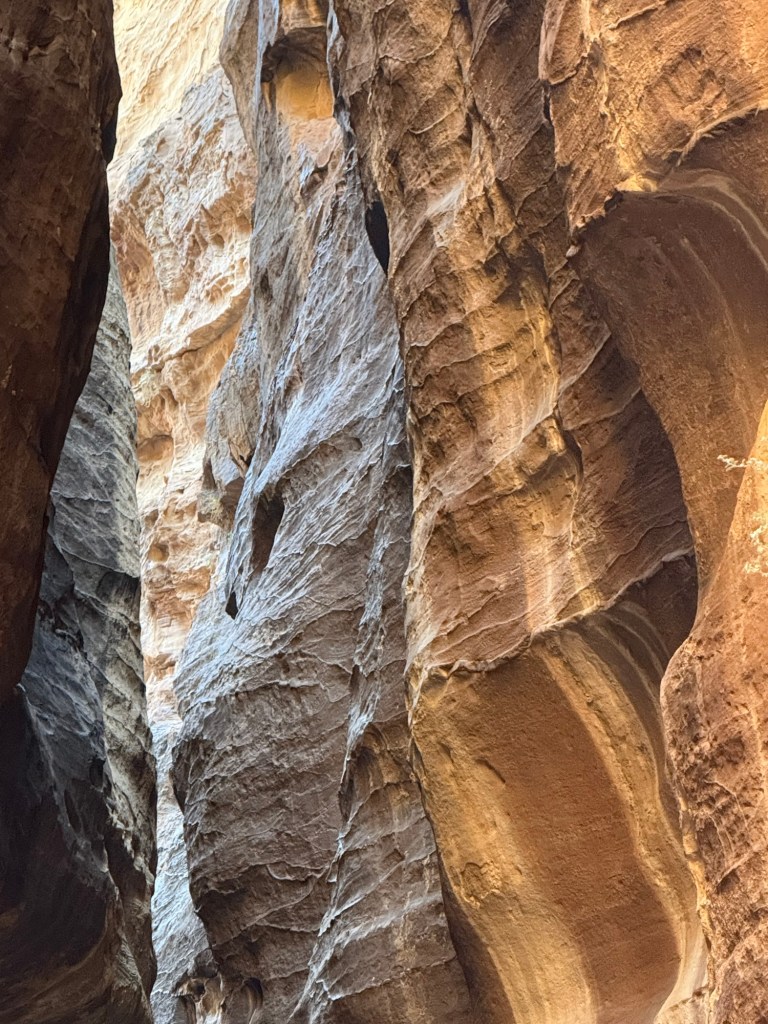

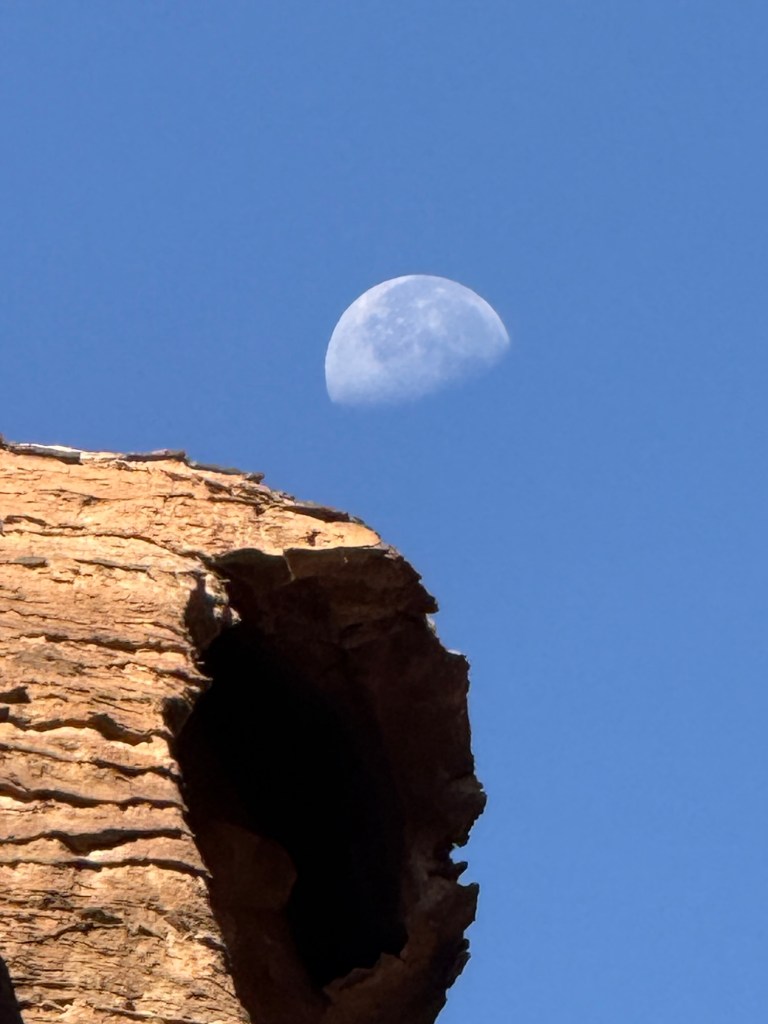
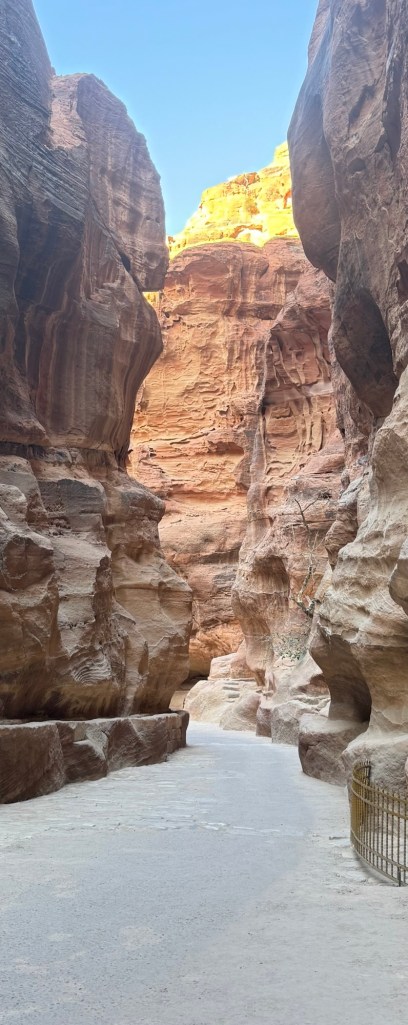
Along each wall, there are small, elevated half-pipes that channeled water down into the city, providing a better quality and more plentiful supply of water than is available to most Jordanians today.

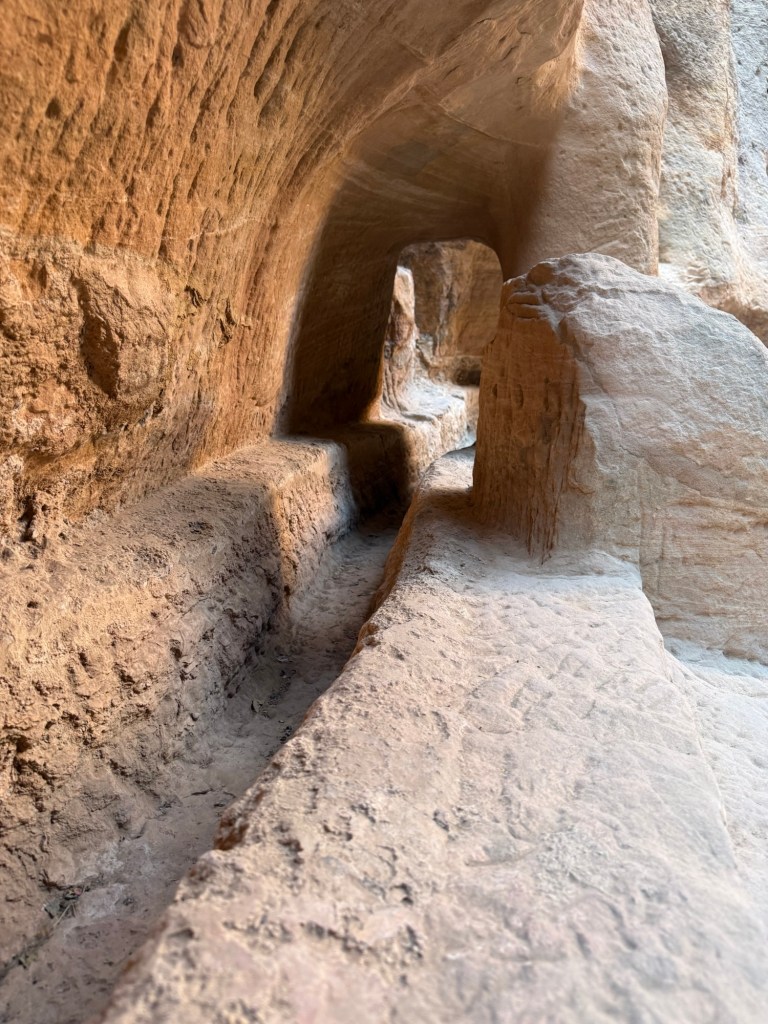
The lines of sediment are very noticeable, and thin black lines depict the result of sedimentation from local volcanic activity.
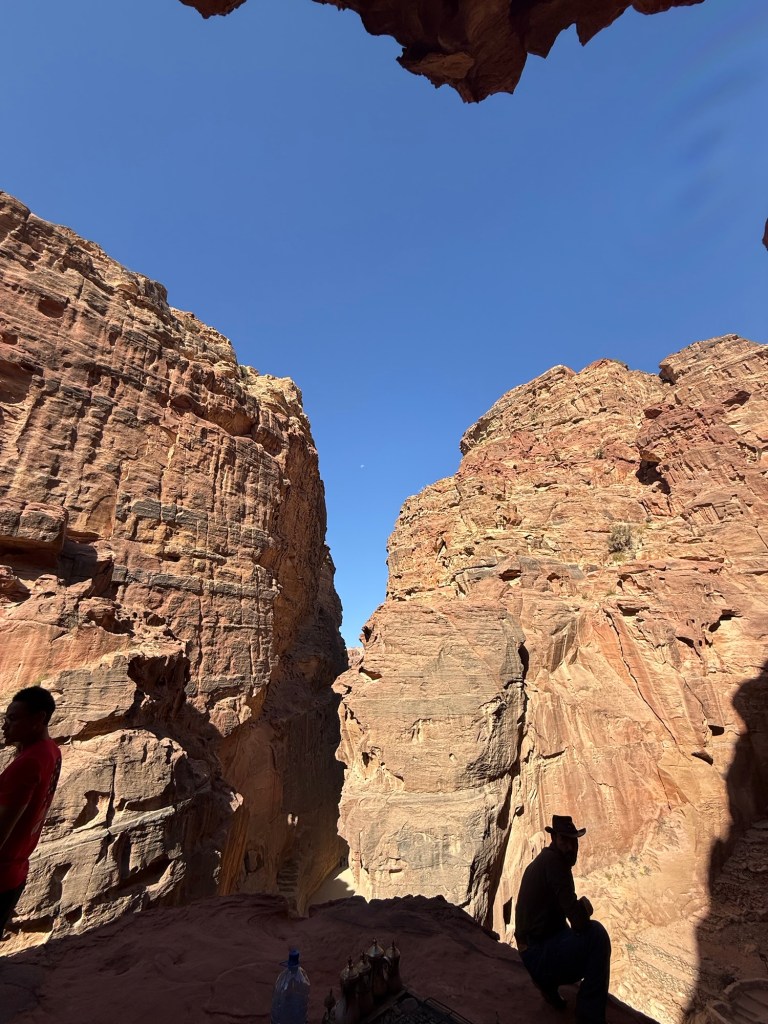
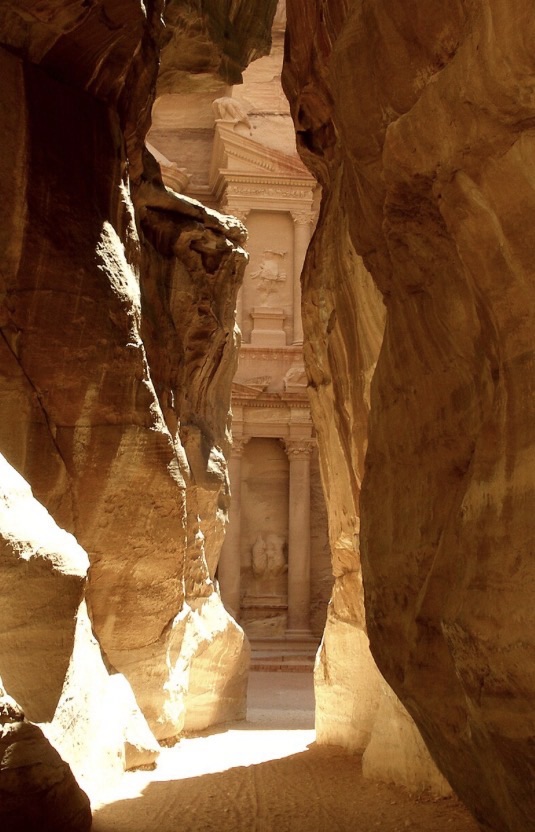
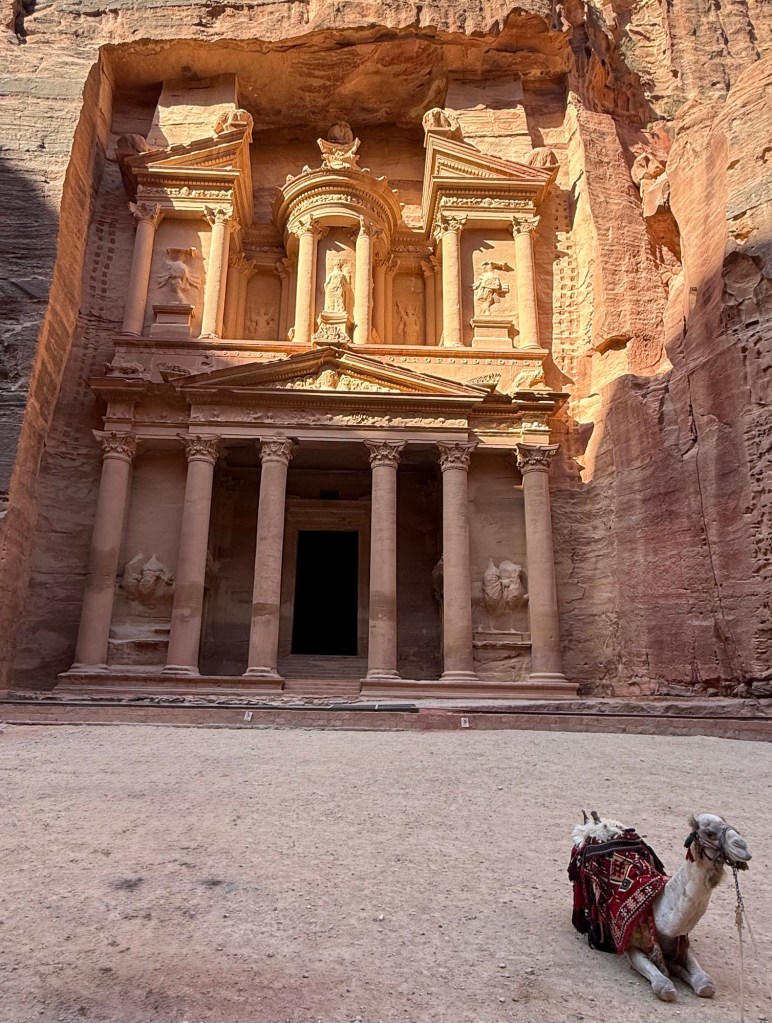
As you reach the end of the gorge, you get a tantalizing glimpse of the Treasury, the most renowned ruin in the city. And then, suddenly, it’s there, rising majestically before you!
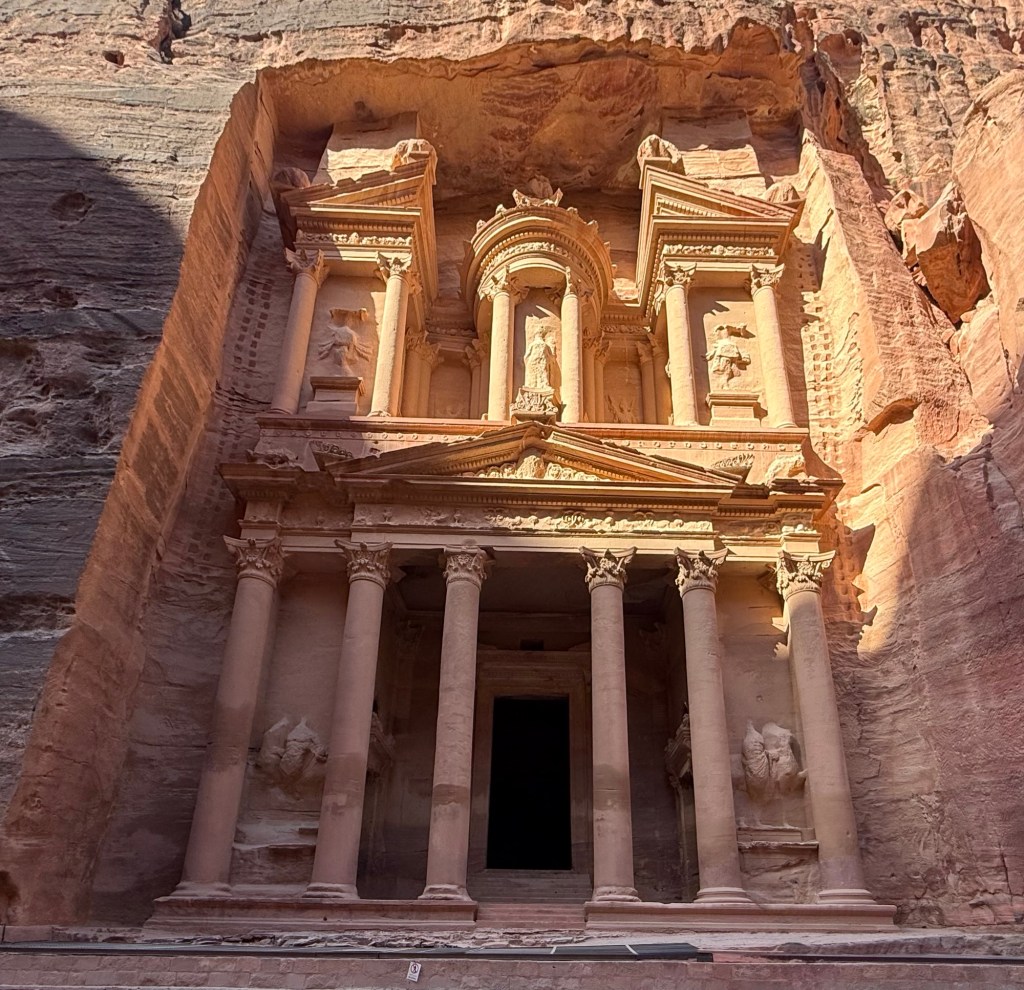
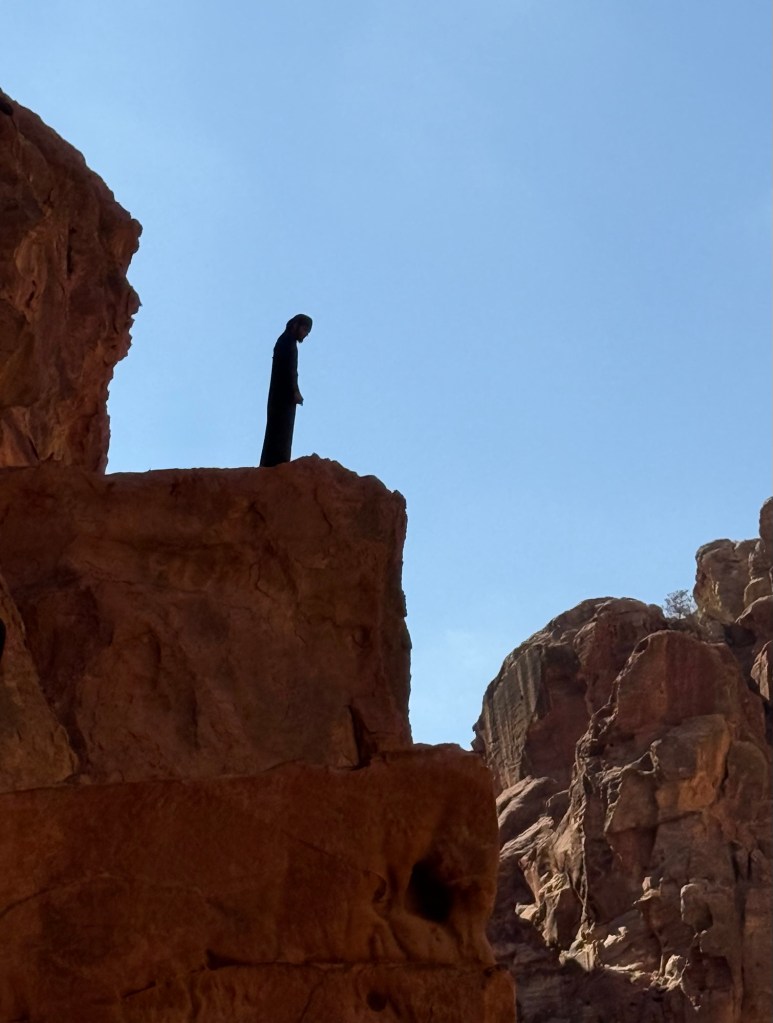
Looking up, I saw a silhouette of a man in Arabic attire. I climb up some rock steps to see what he was about, and gained a different perspective on the Treasury.
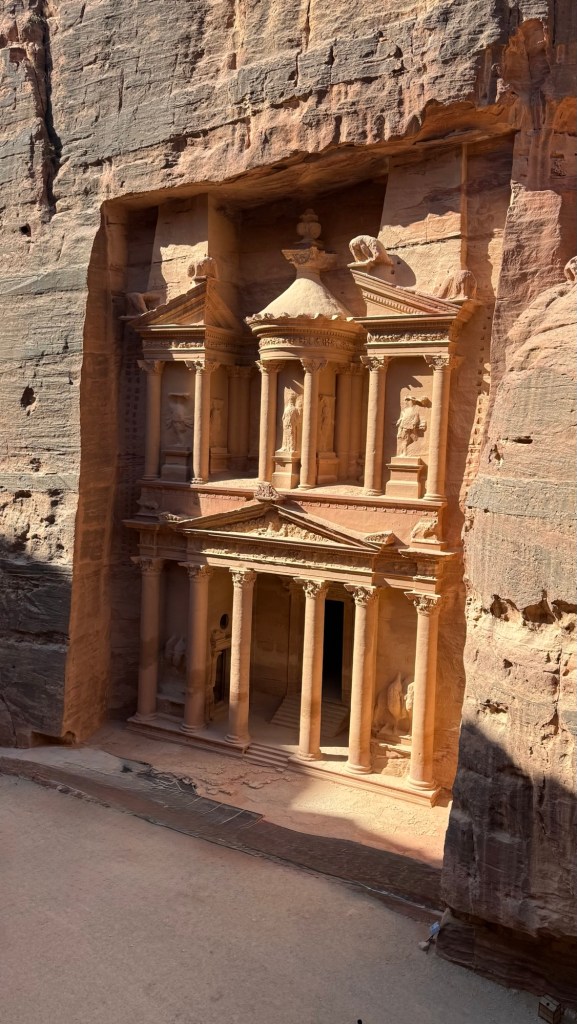
Notably, the Treasury was not actually a treasury – there are only a few small caves behind the impressive facade. It was more likely the tomb of some important Arab.
Continuing inward from the Treasury, you encounter other large facades …


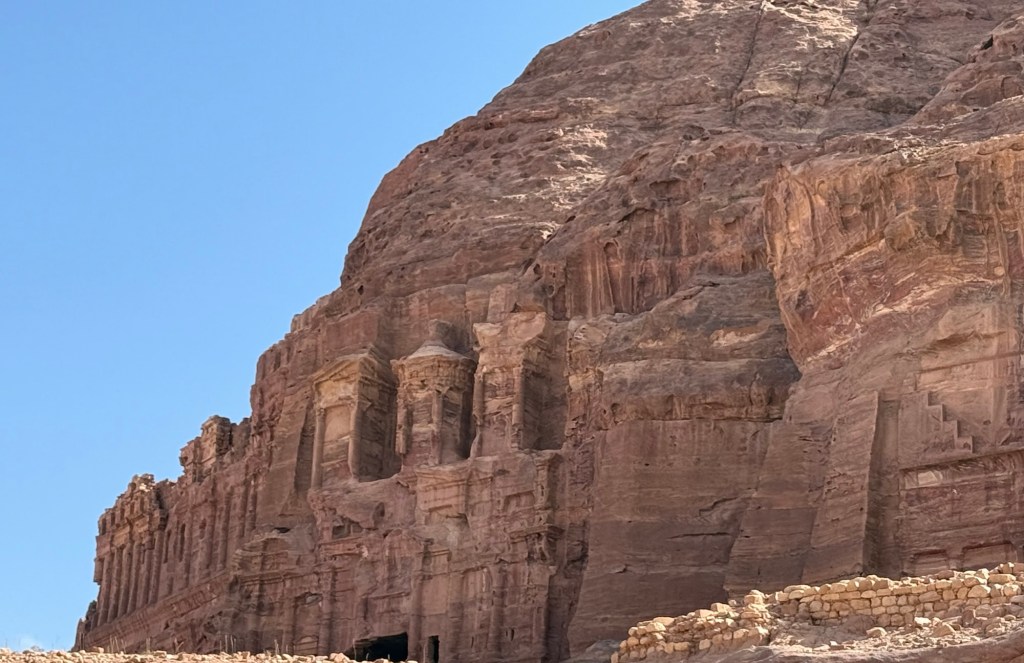
…the Kings Tombs…
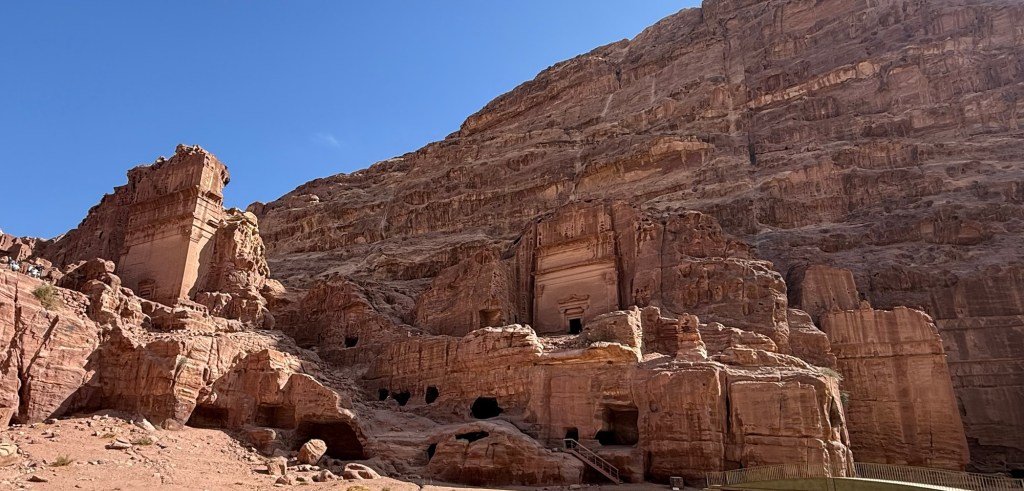
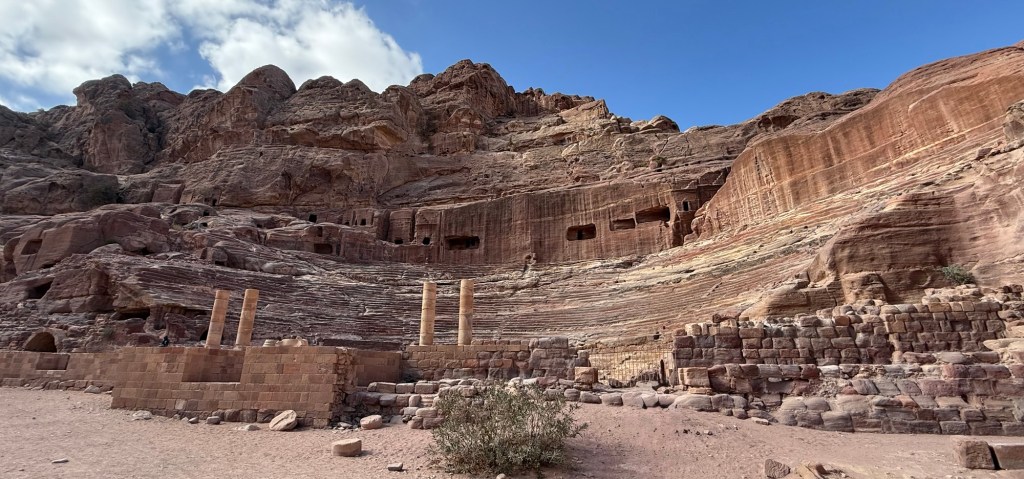
….the Theater…..

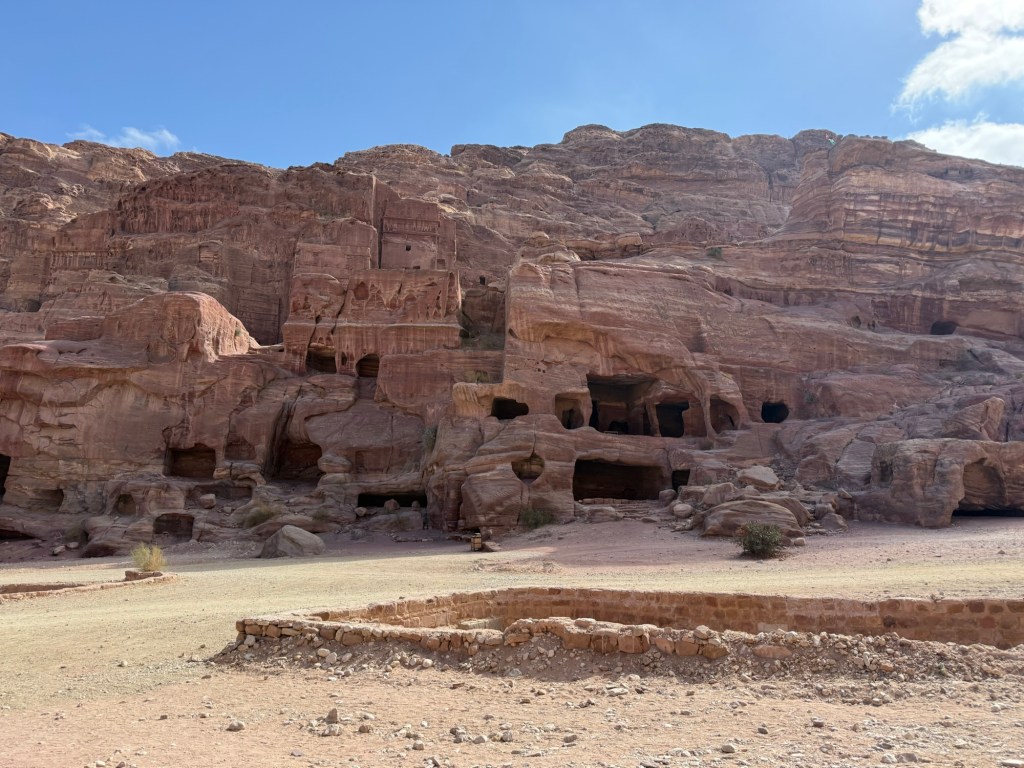
…..and more cave dwellings.
 seetheworldtravelblog