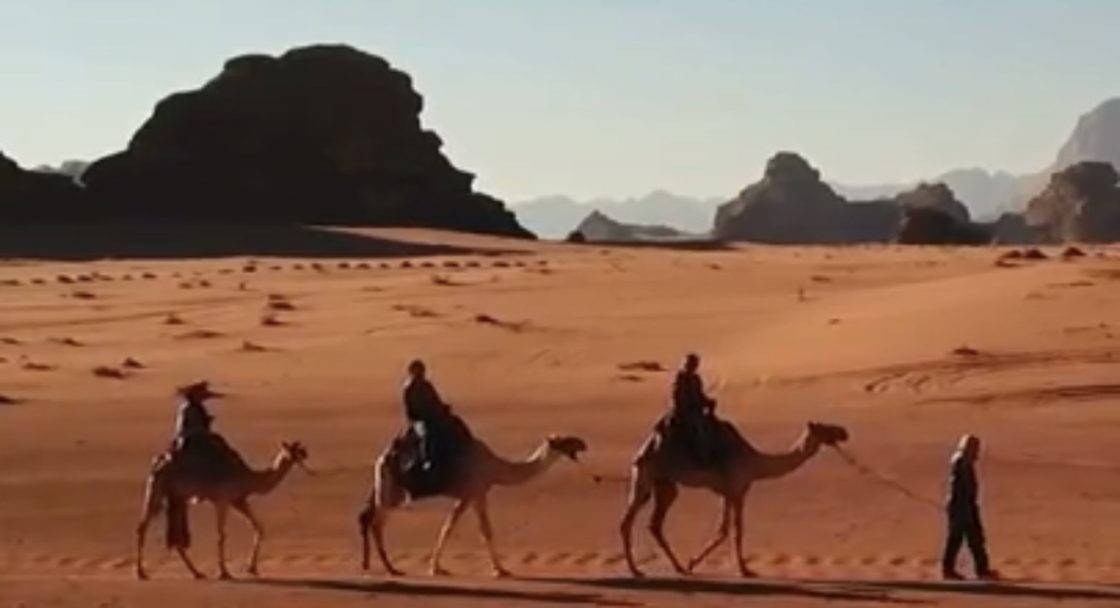
Citadel of Saladin and the Egyptian Museum including King Tut, Cairo
By Paul Bryers
This morning, we convened with our AMA Guide, Mohammed, at 10:30 am, a respectable hour, and promptly headed for the hills, literally.
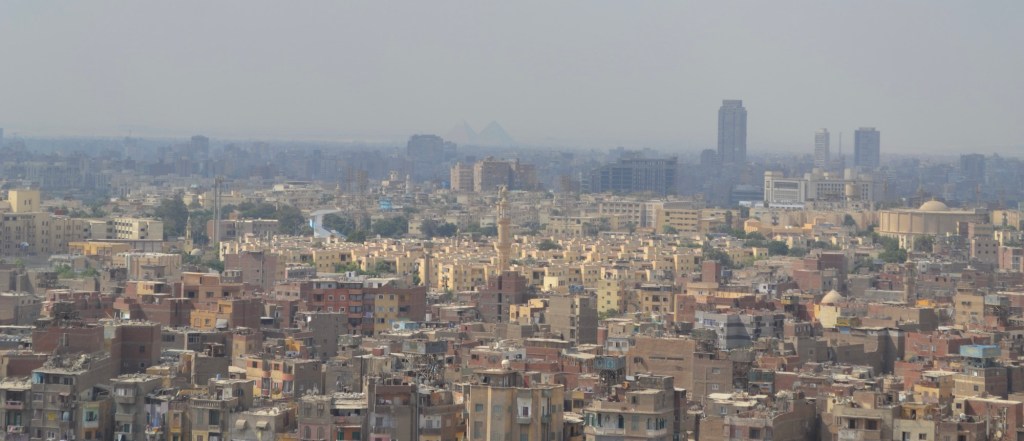
The Citadel of Saladin is one of the most iconic monuments in Islamic Cairo and among the most impressive defensive fortresses dating to the Middle Ages. Strategically situated on the Muqattam Hills, it afforded a formidable defensive position and offered, as it still does today, an unrestricted panoramic view of Cairo all the way to Giza. We could just make out the Great Pyramid.
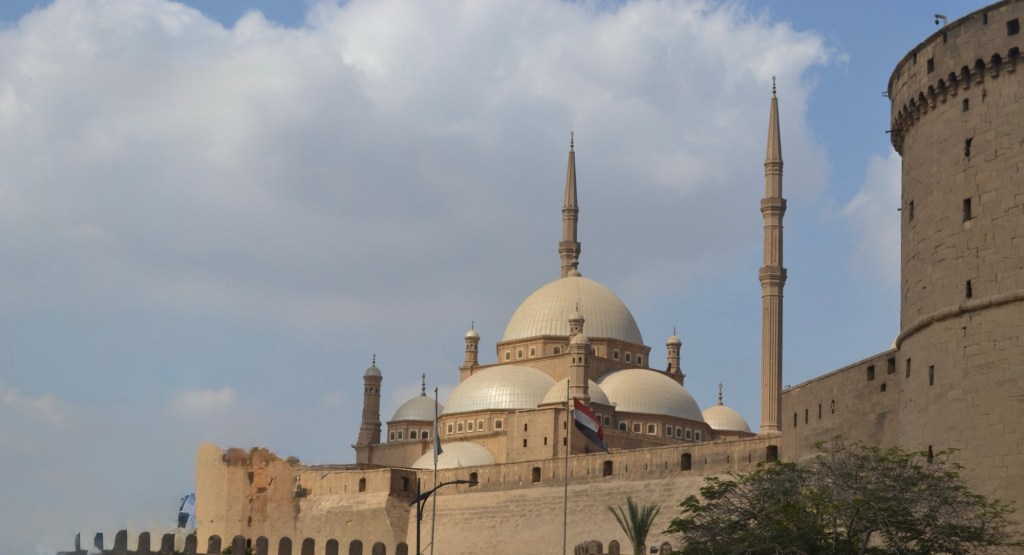
The Mosque of Muhammad Ali is located inside the Citadel. It was built by Muhammad Ali Pasha in 1848 AD on the site of Mamluk palaces. This mosque is known as the “Alabaster Mosque”, in reference to its marble paneling on its interior and exterior walls. The mosque’s twin minarets are the highest in all of Egypt, each reaching a height of 84 meters.
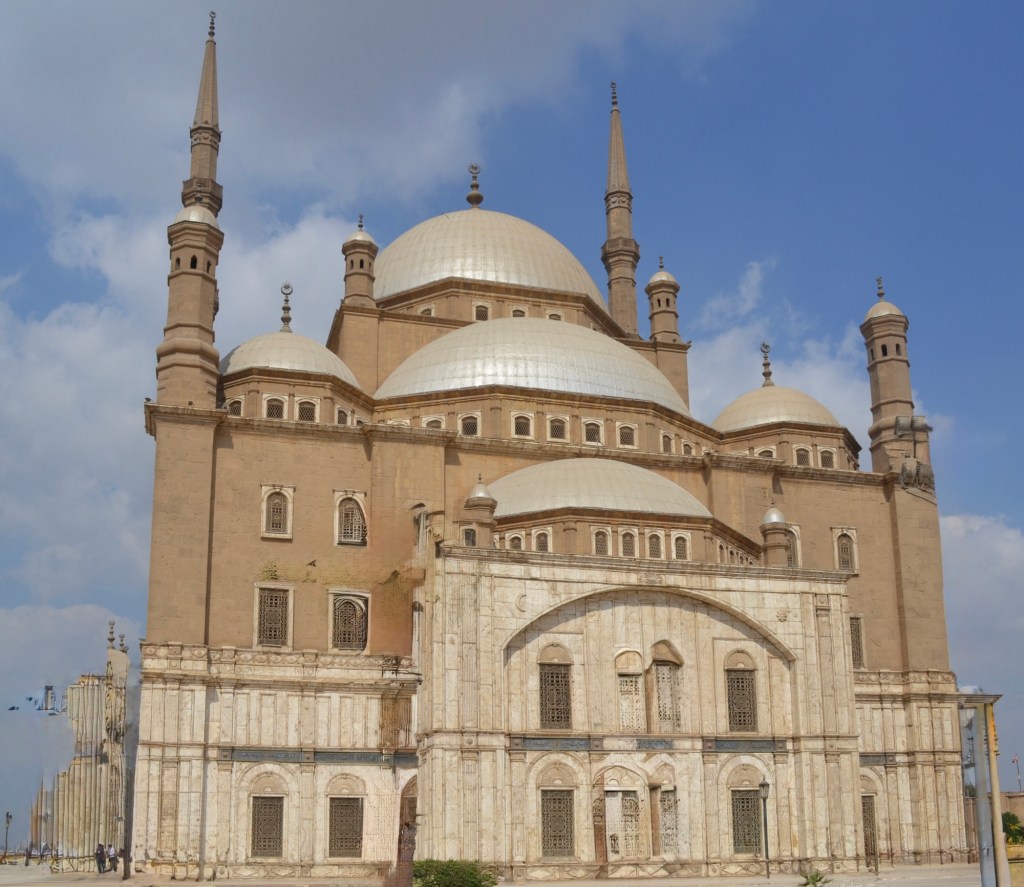
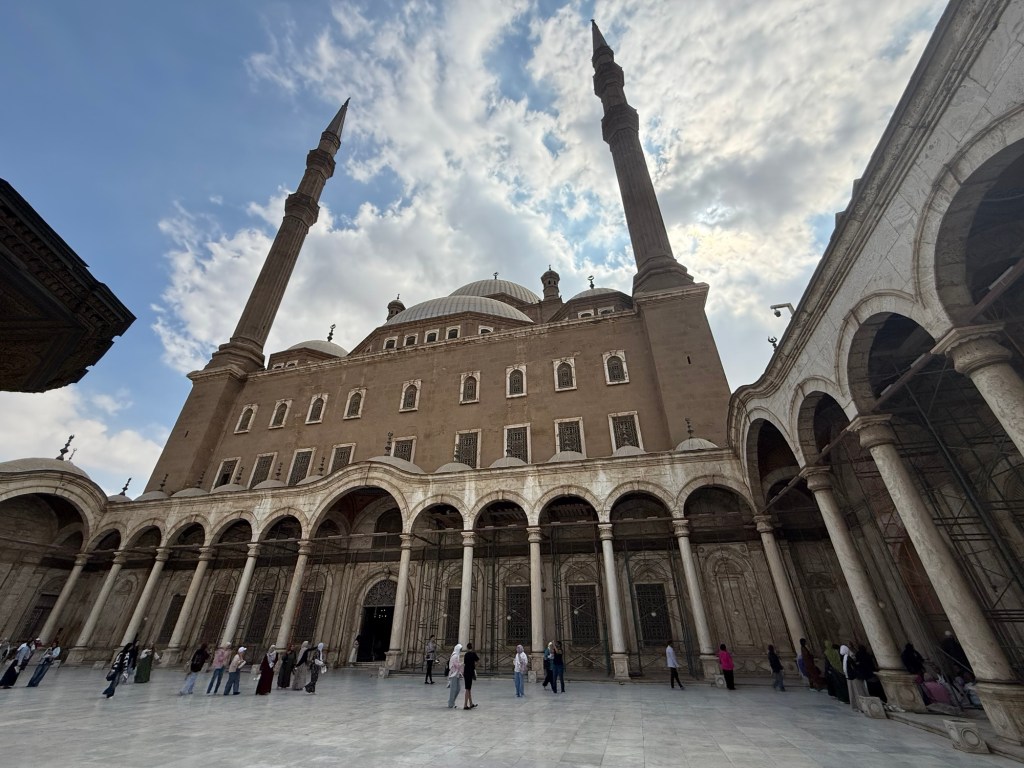
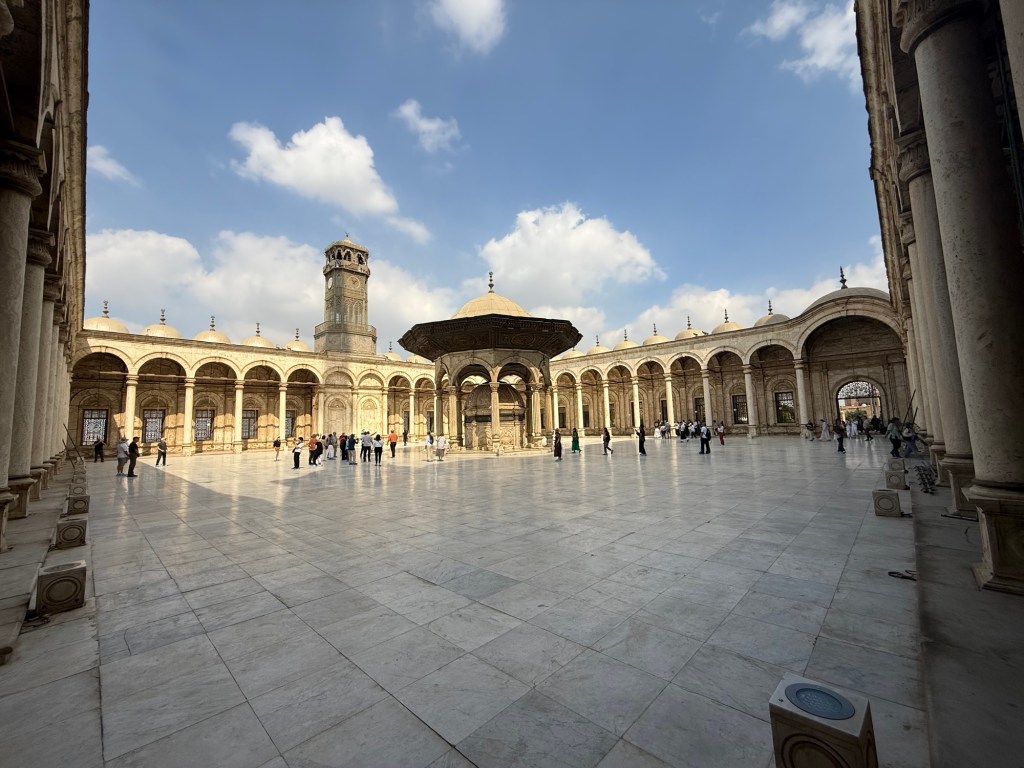
The limestone mosque was built in the Turkish style that consists of an open court and prayer hall.
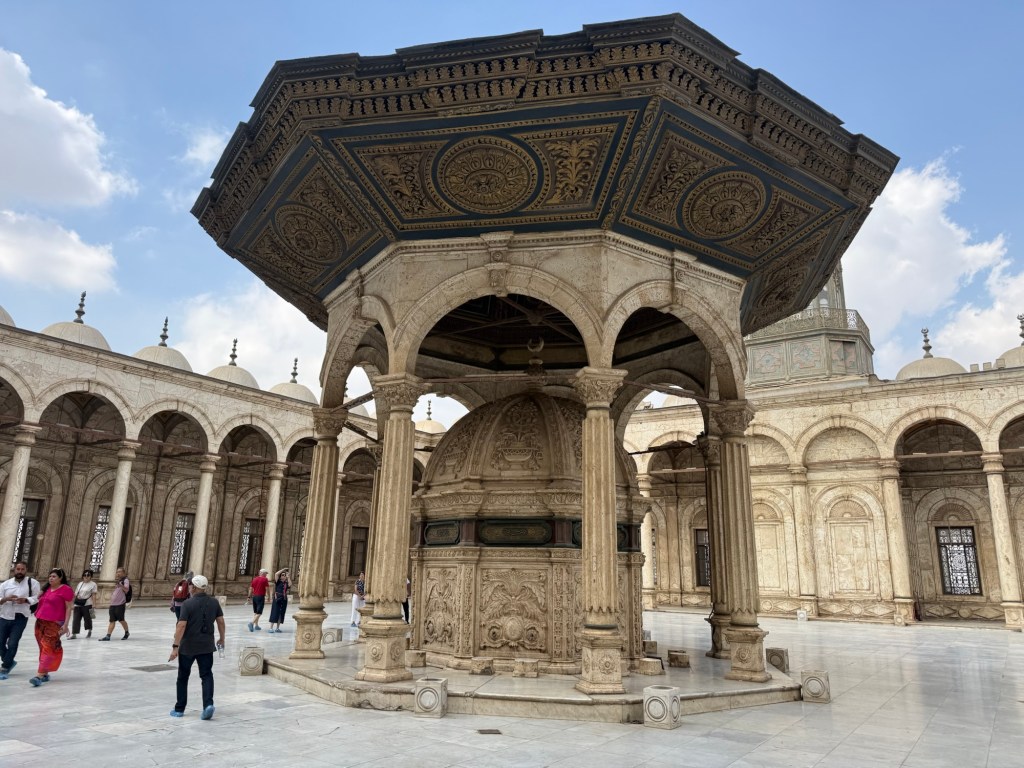
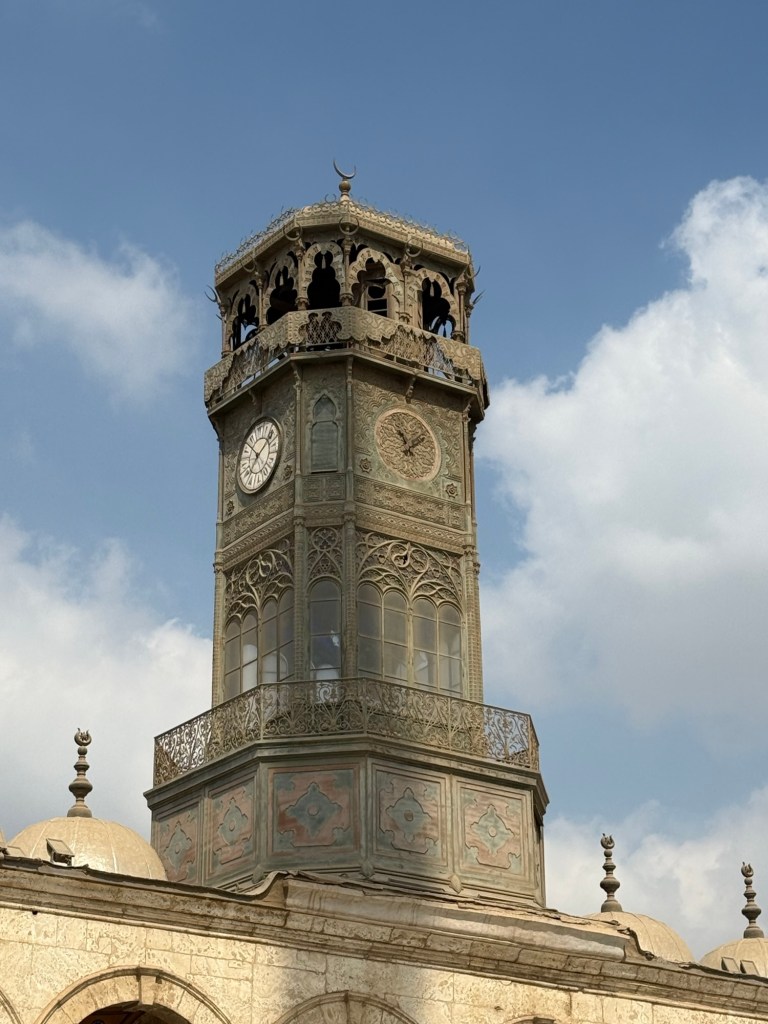
The outer open court contains a fountain with a gloriously decorated vase and a copper clock tower, which was gifted to Muhammad Ali Pasha by Louis Philippe of France.

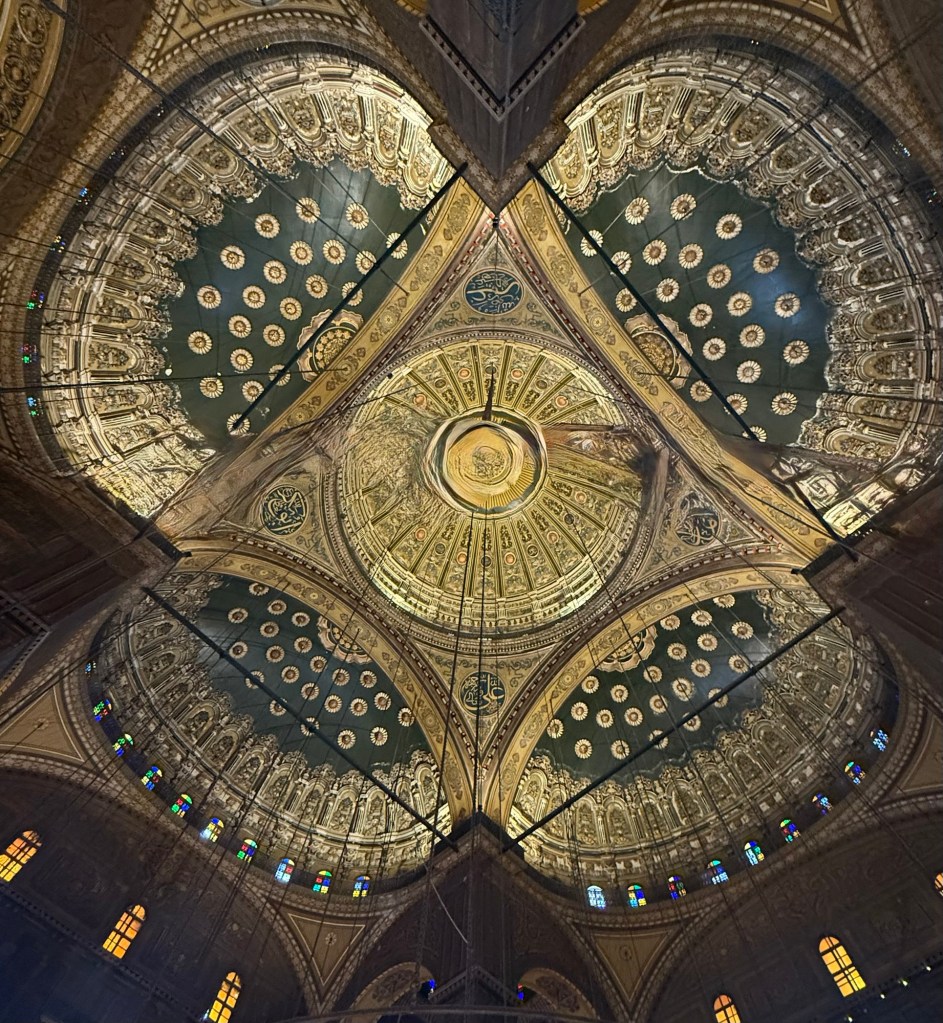
The prayer hall is a square space that is surmounted with a large central dome which is surrounded by four semi-domes and four shallow domes in the corners. There are two minbars (pulpits) inside the mosque. The original of the two is made of wood decorated in green. The other was a later addition made of marble.
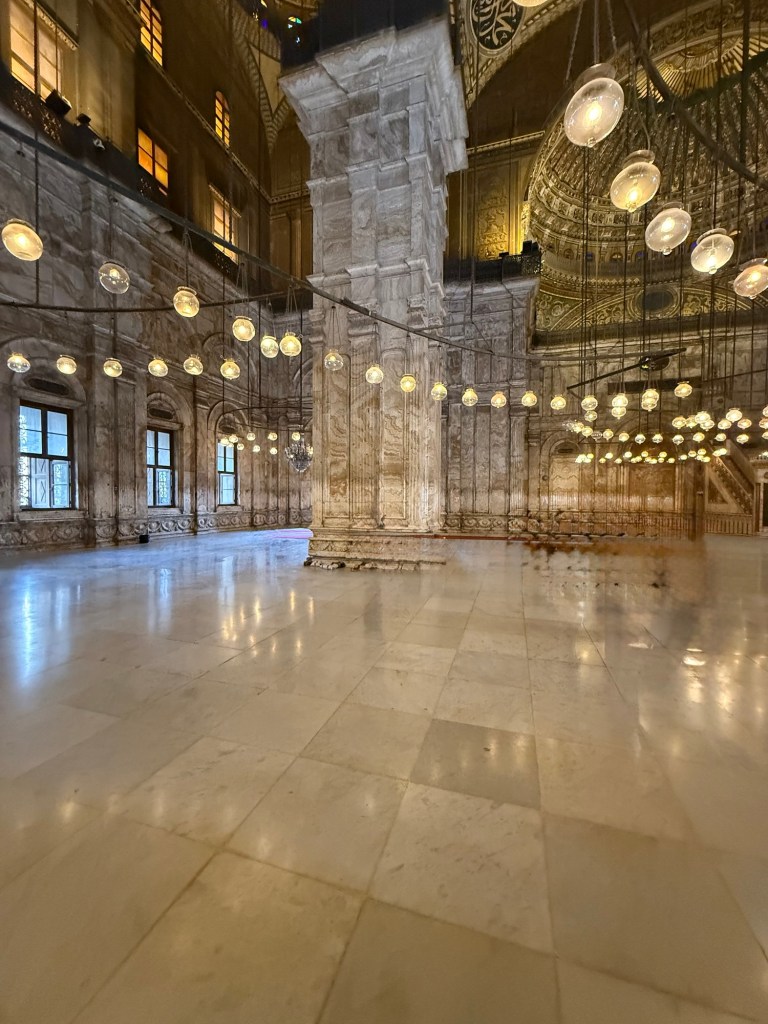
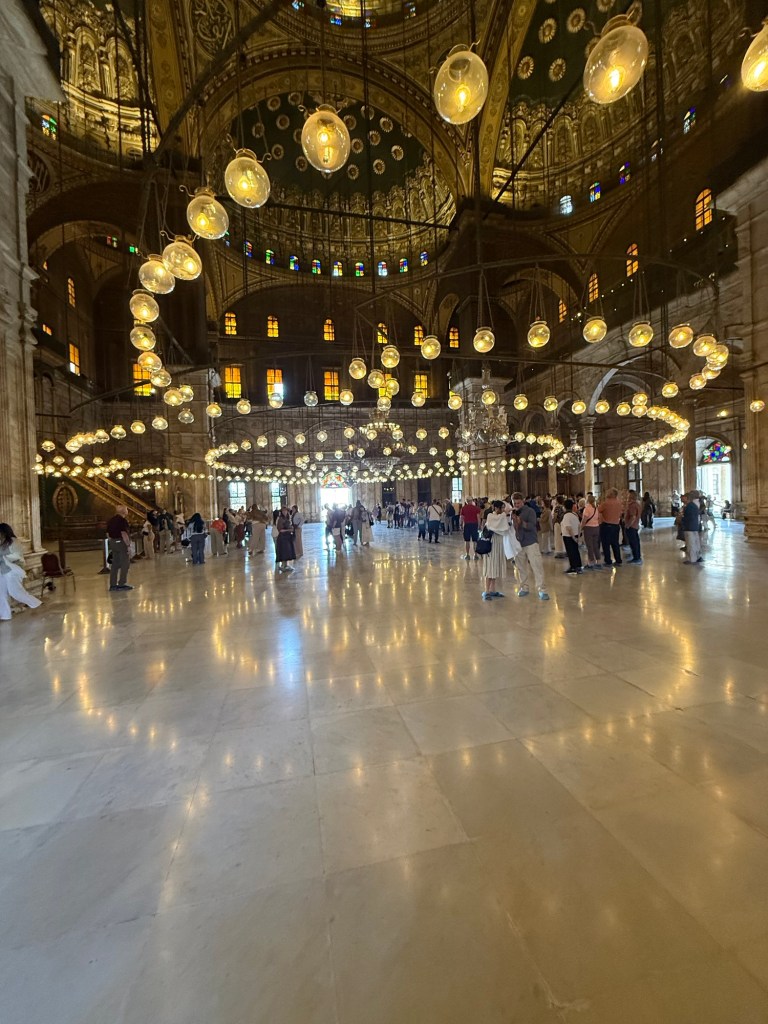
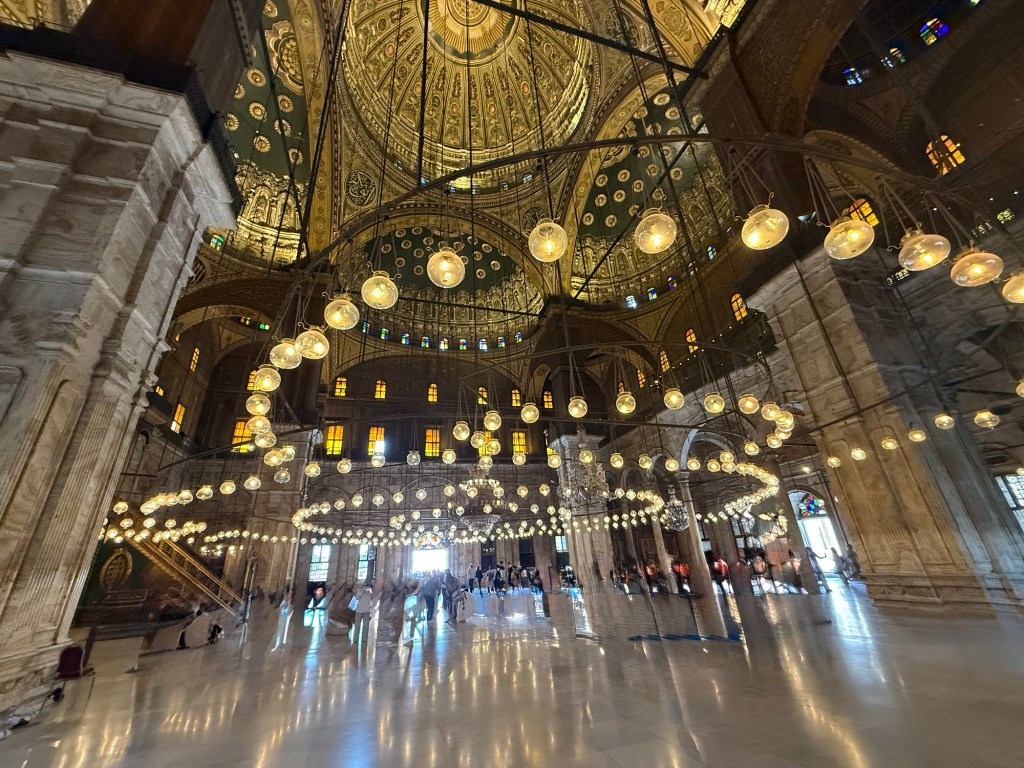
The ceilings are a dazzle of blues and golds, leading to a severe case of photographic neck pain!

After a lavish Egyptian lunch at the Nile Ritz, we walked to the Egyptian Museum (EM).

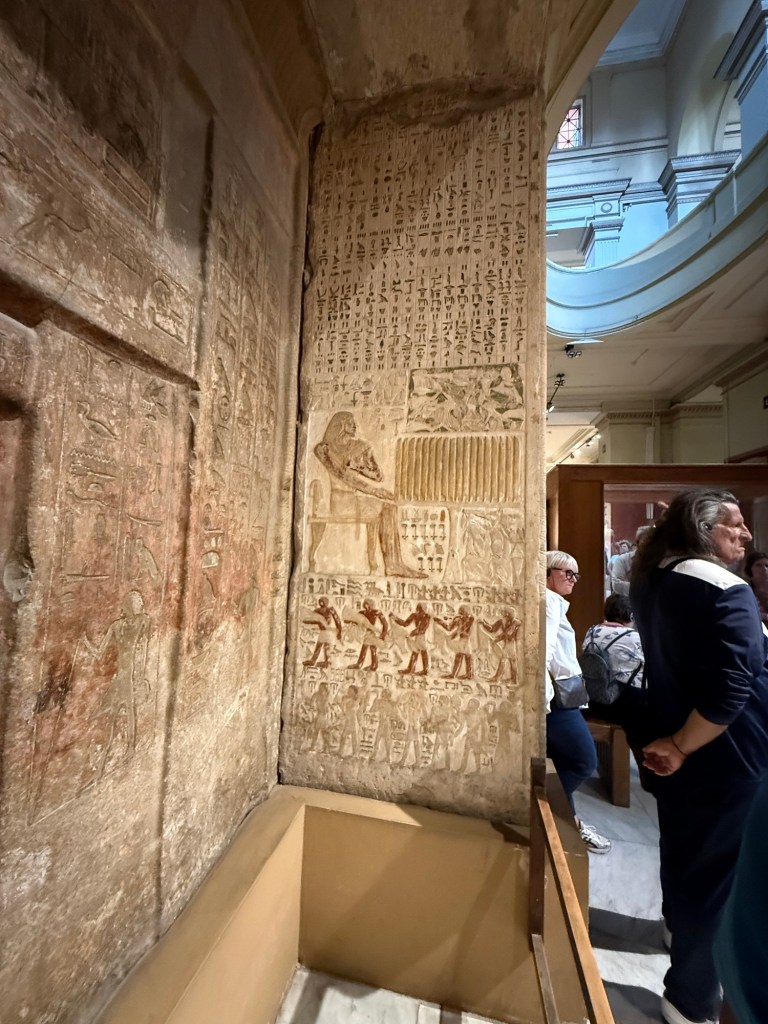
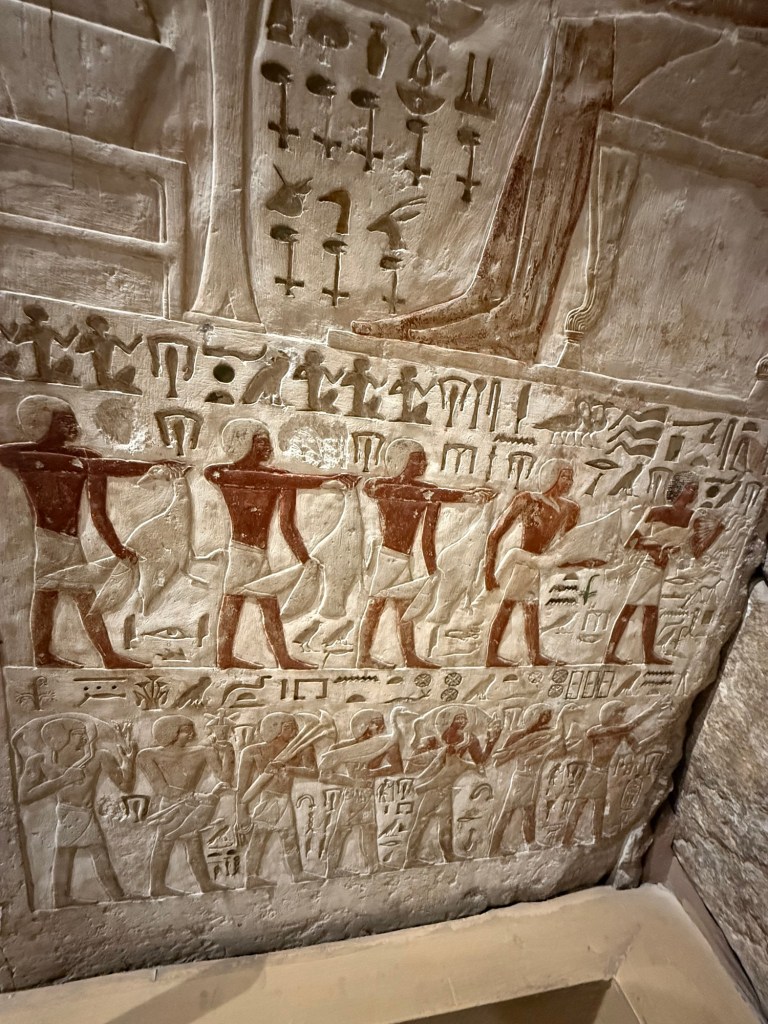
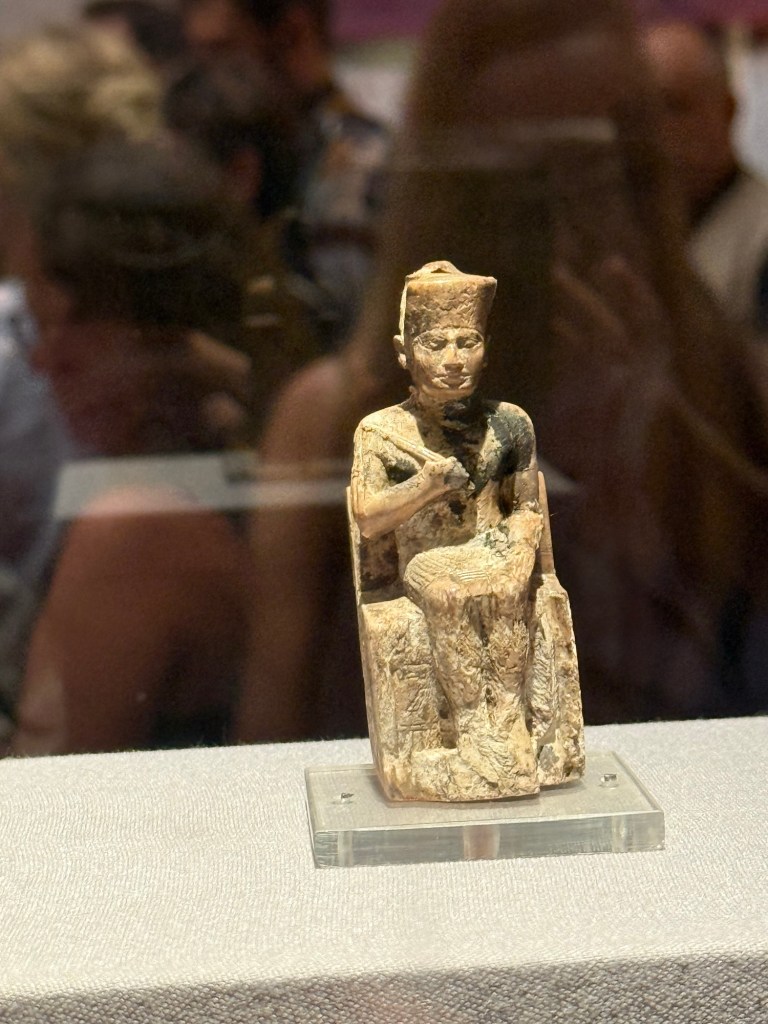
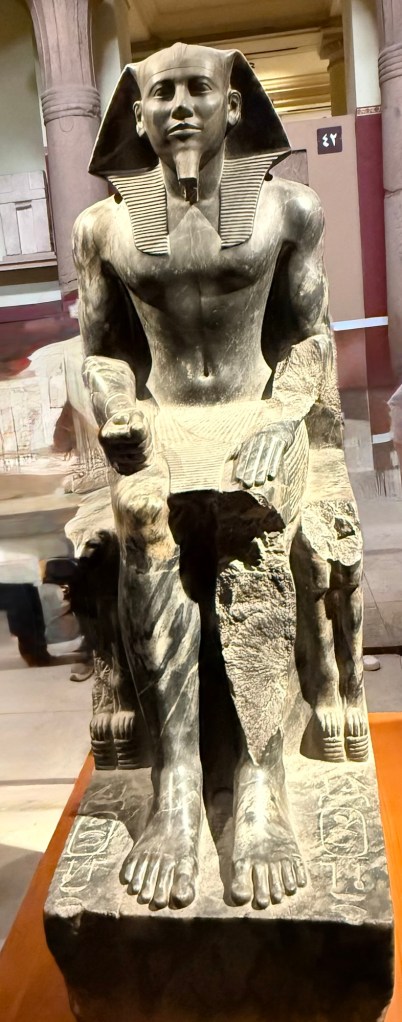
This museum has a plethora of statues and artifacts and is much more manageable than the Grand EM we visited yesterday.

Notably, this is the home of the Tutankhamun exhibition. In a few days it will move to the GEM.
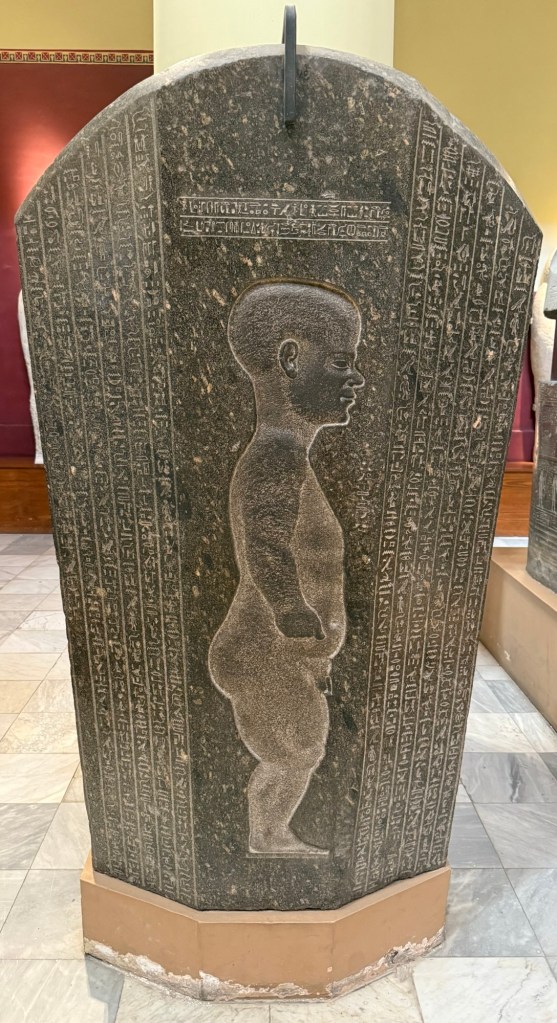
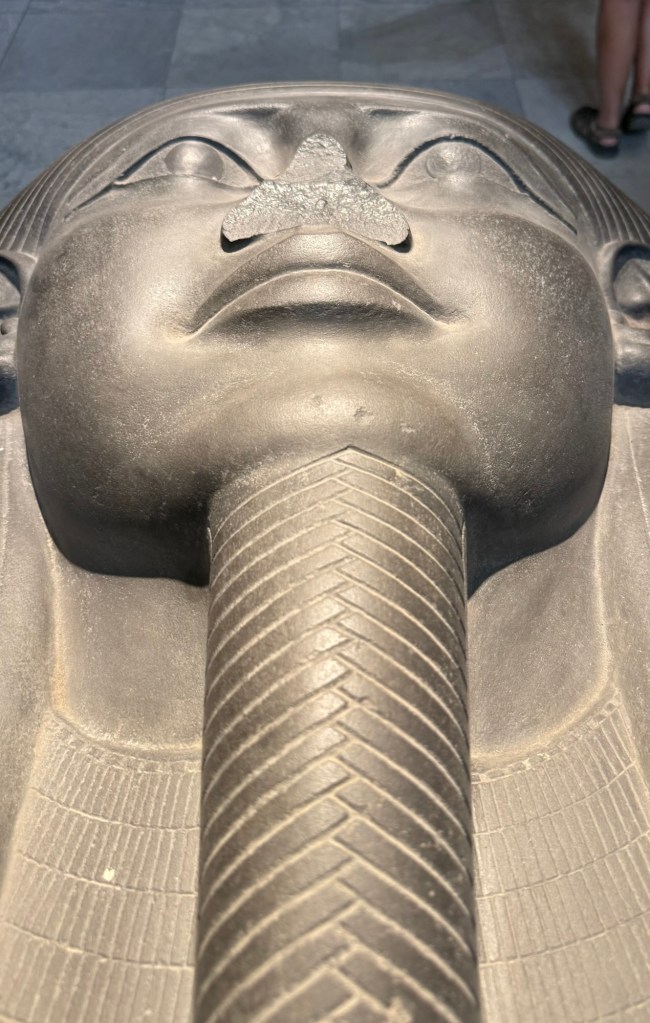
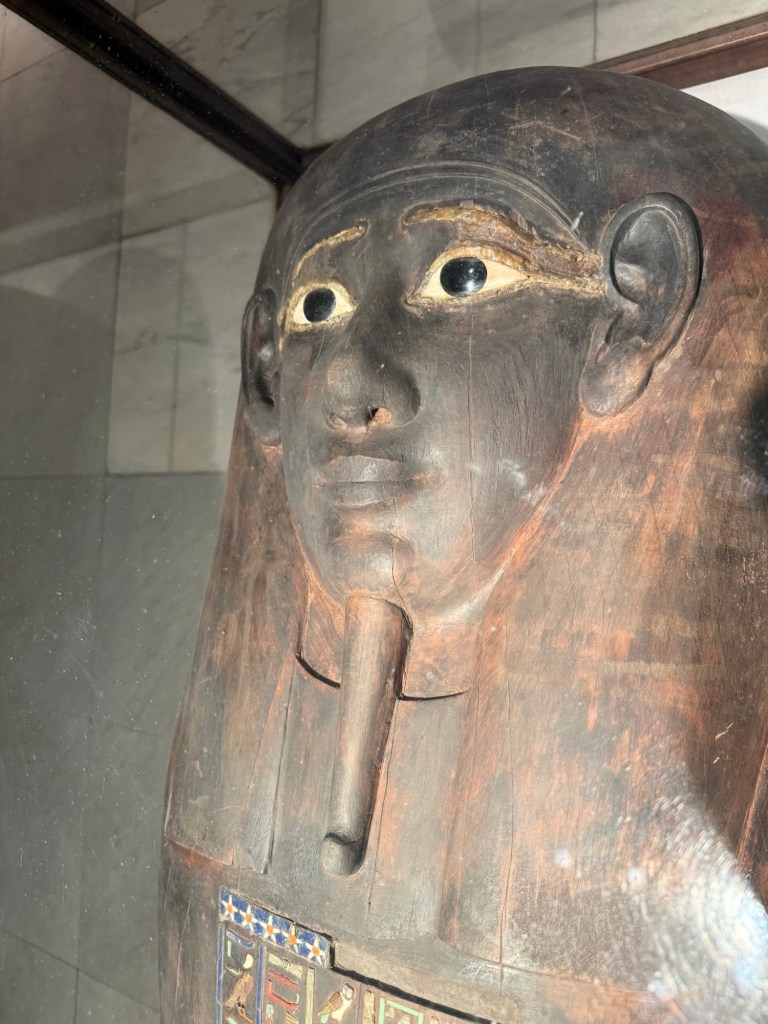
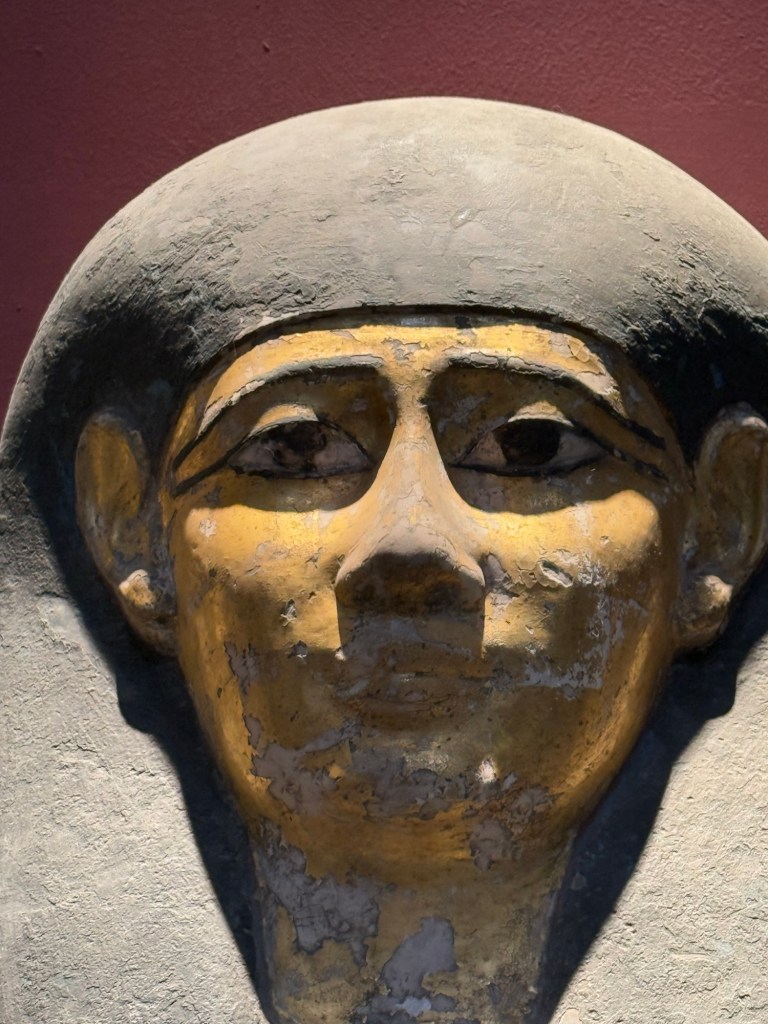
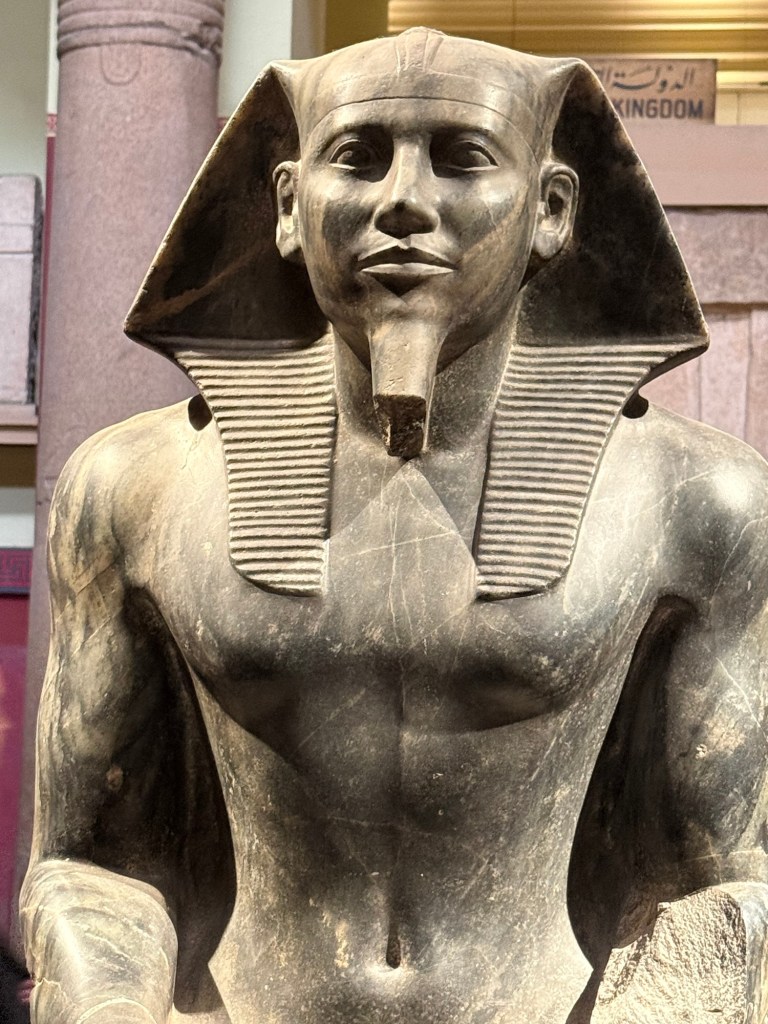
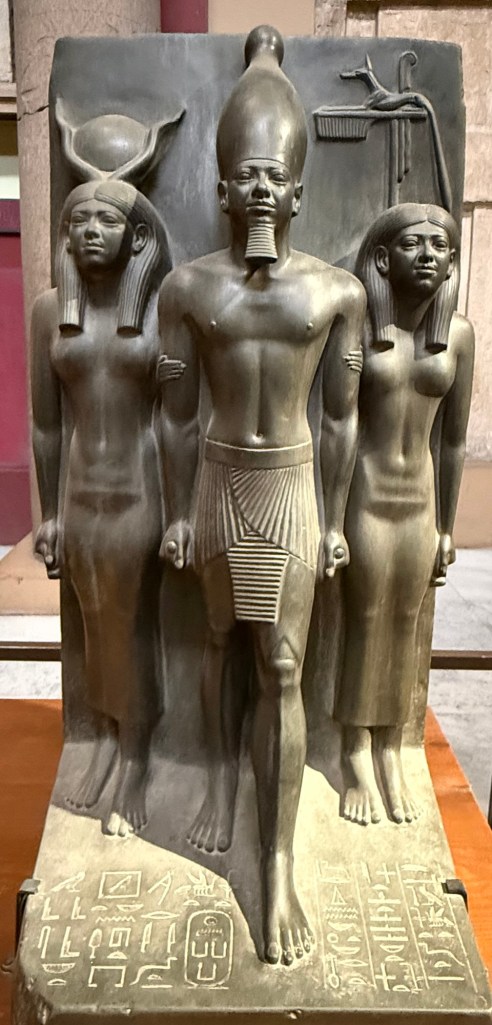
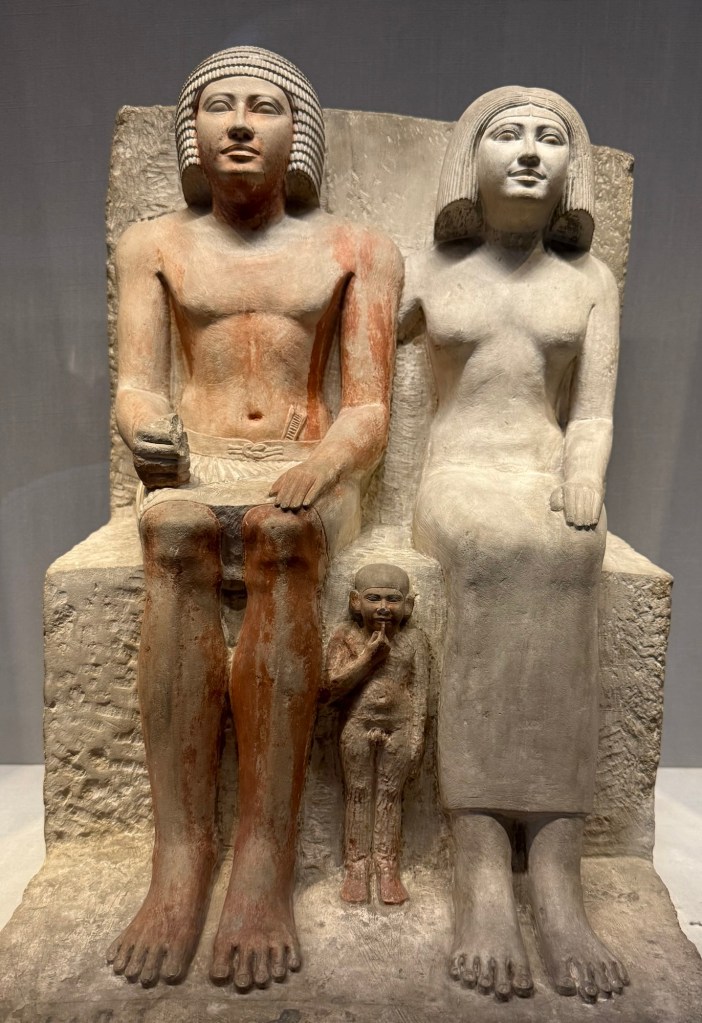
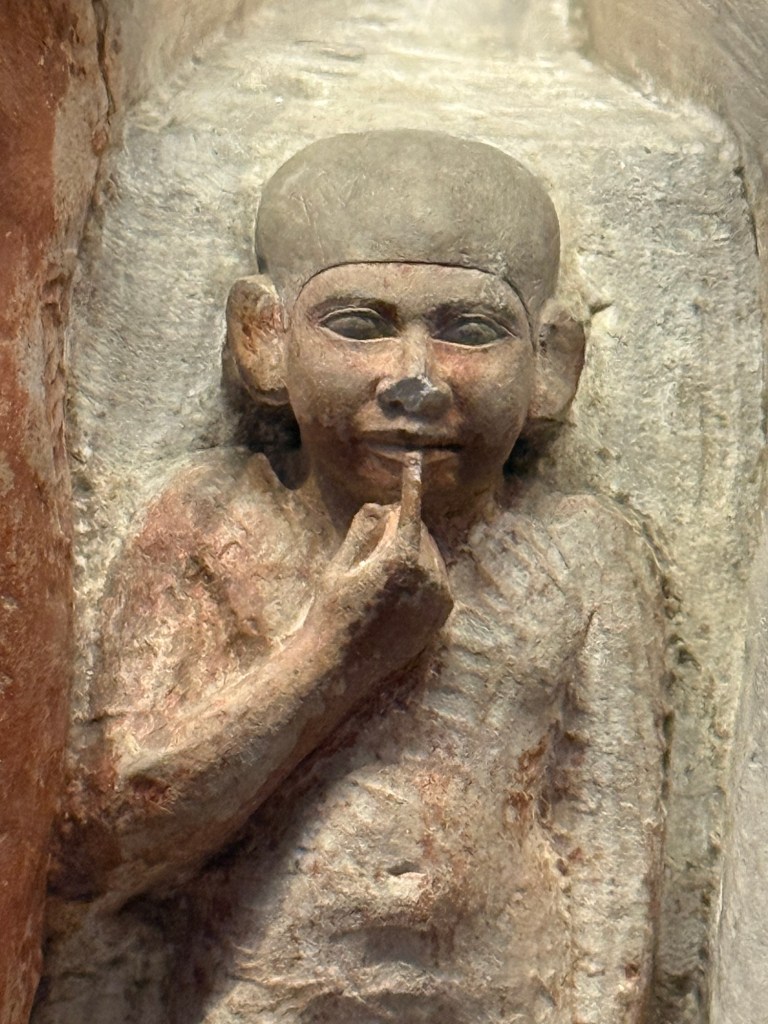
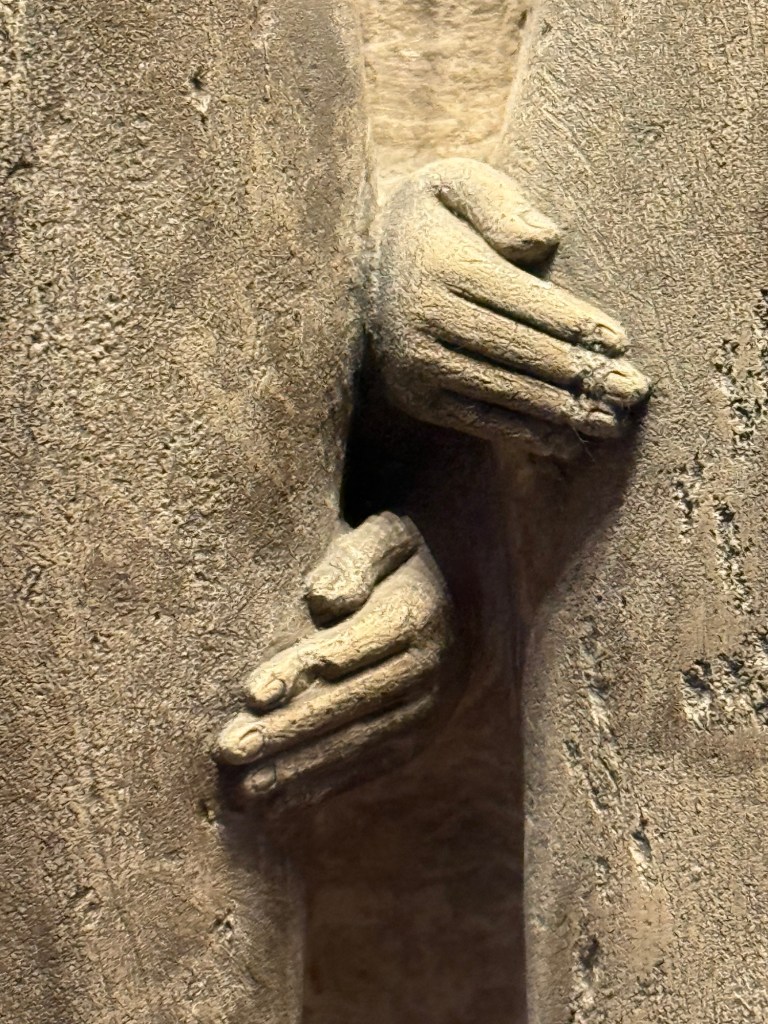
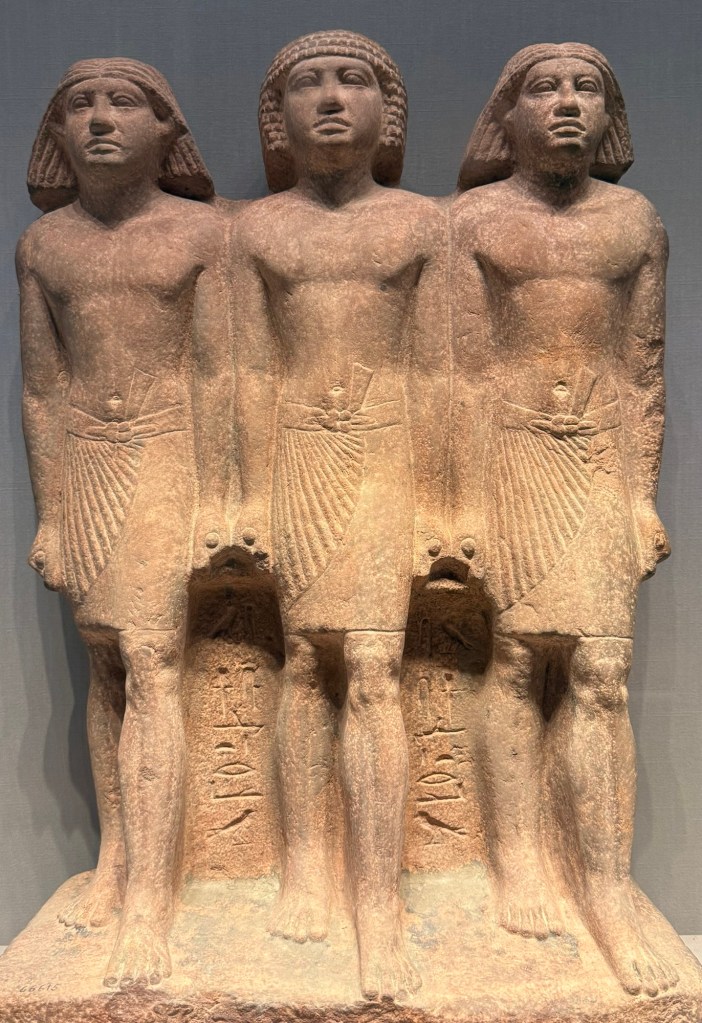
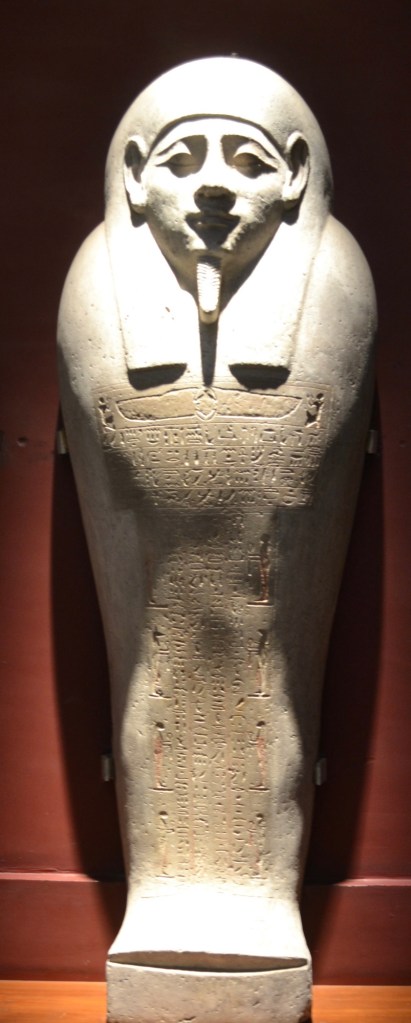
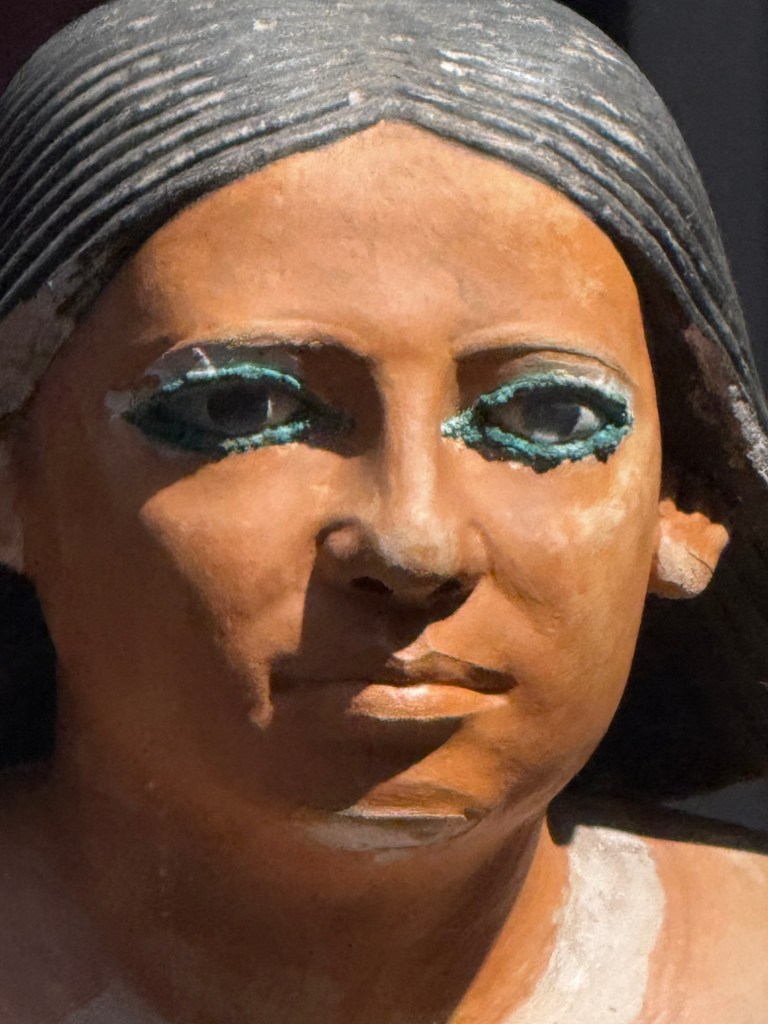
Again, I have not attempted to name each artifact – just enjoy them for their appearance.






At last we reached King Tut! Note that as photography is not allowed these photos are courtesy of the EM.
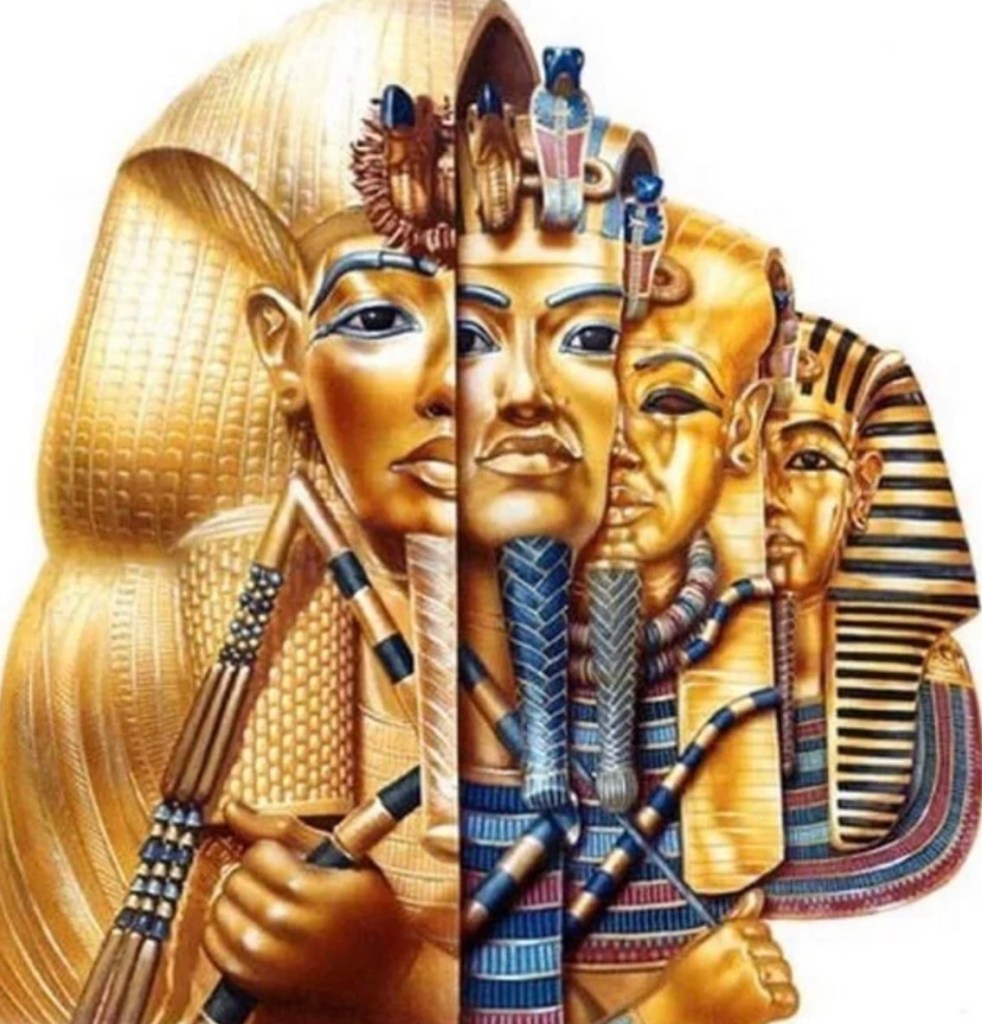
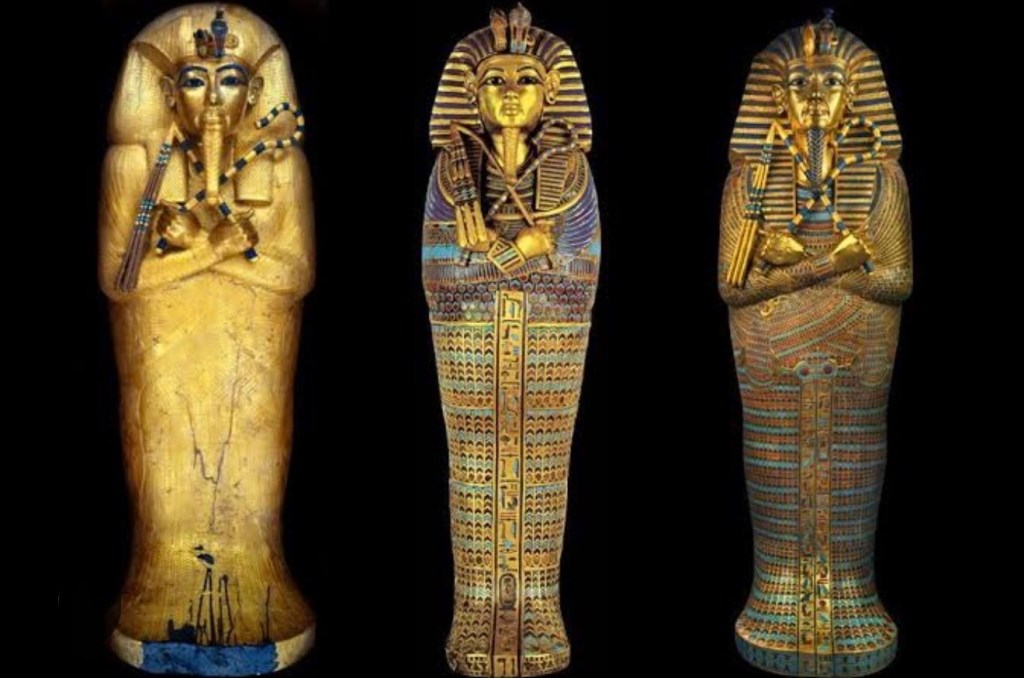
The fantastic exhibition consists of the funerary mask and the coffins.
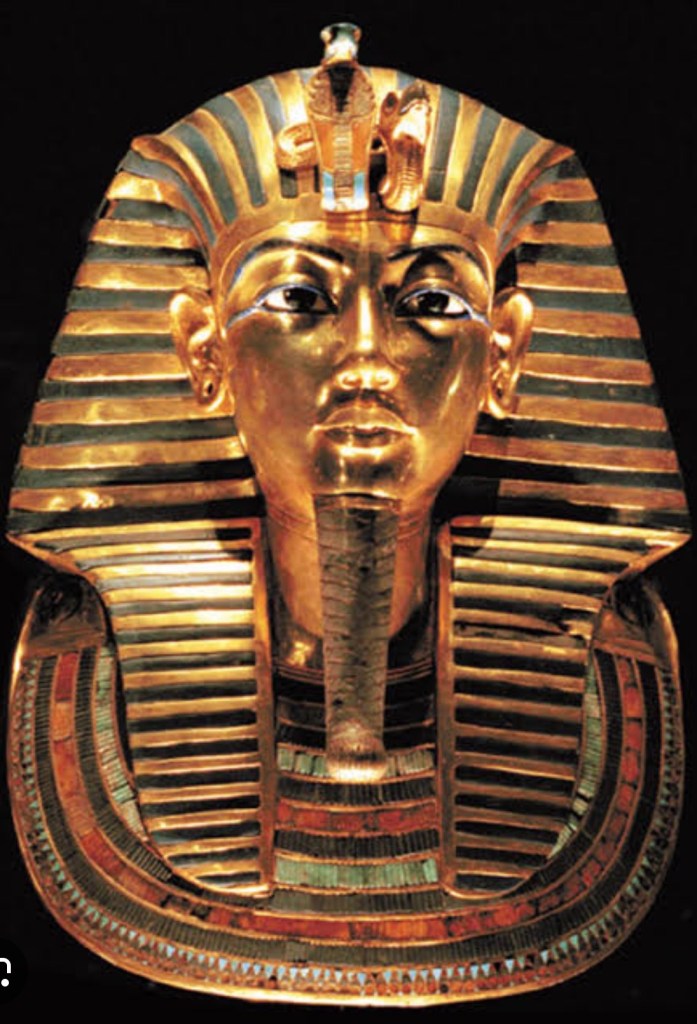
Solid Gold Funerary Mask
The mummy’s face was covered by the iconic solid gold mask, inlaid with semiprecious stones and glass.
Outer quartzite sarcophagus
A large stone container that housed the three coffins. It is decorated with figures of protective deities at its corners.
Outer gilded wooden coffin
This is the largest of the three coffins and is made of gilded wood with inlays of semiprecious stones and glass. It is shaped like a human, portraying the king in his divine form.
Middle gilded wooden coffin
Nestled inside the outer one, this coffin is also made of gilded wood and is decorated with multicolored glass and semiprecious stones.
Innermost solid gold coffin
The most spectacular coffin, made entirely of 110.4 kg (243 lb) of solid gold. It was found inside the middle coffin, with the mummy wrapped in linen and placed within it.
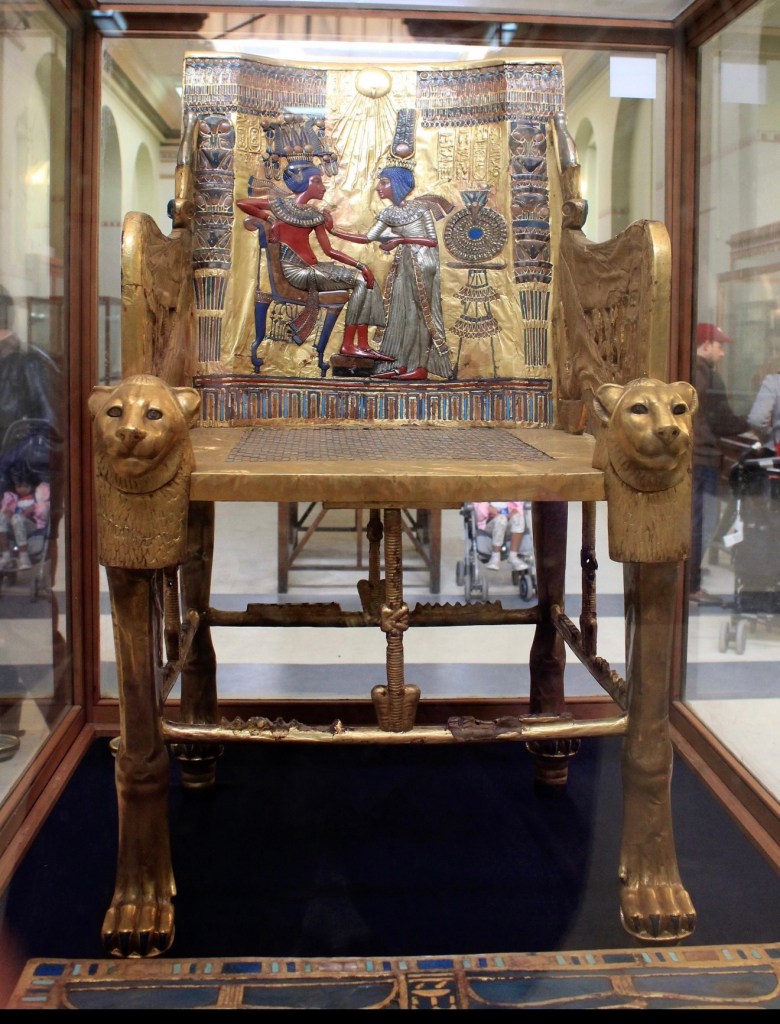
Gilded Throne
Another brilliant day courtesy of AMA Waterways!
 seetheworldtravelblog