Morning Itinerary: Abu Simbel, Egypt
~ 40°C/104°F
By Paul Bryers
It’s was a 5 am start this morning but we were as excited as kids at Christmas about our Abu Simbel visit.
It was a 35 min flight from Aswan to Abu Simbel.

As alluded to yesterday, the building of the Aswan High Dam in the 60’s and the resultant formation of Lake Nasser precipitated an international effort from 1964 – 8 to move the magnificent carvings of Abu Simbel to a new location 65 meters higher and 200 meters back from the Lake.
I managed to get a photo of the Temples from the aircraft.

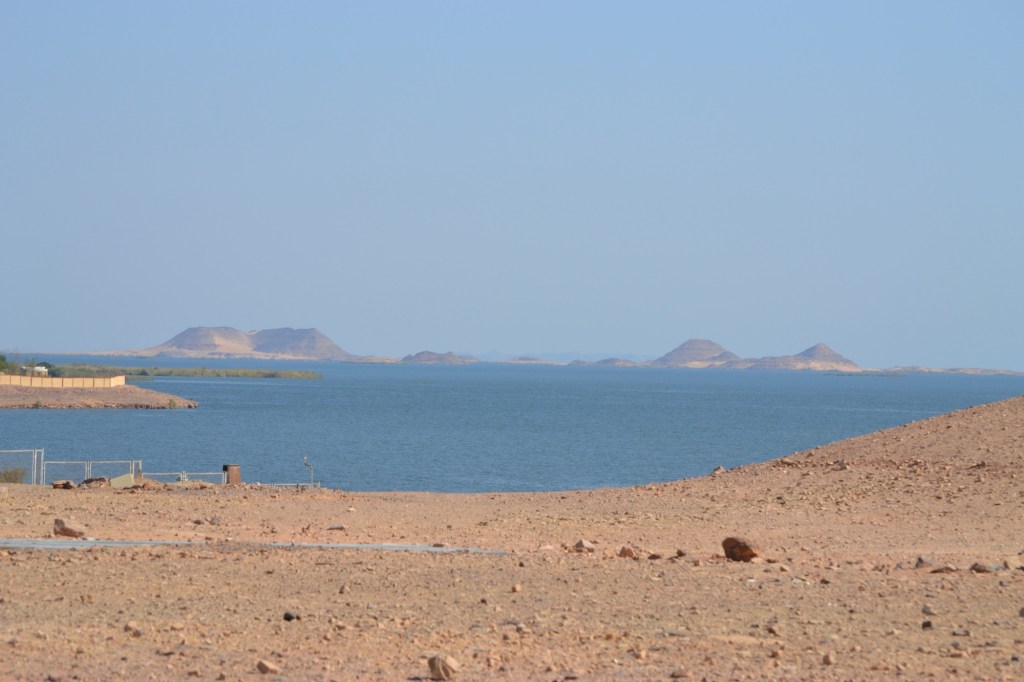
The Lake is very beautiful from ground level…
Abu Simbel is a historic site comprising two massive rock-cut temples (Great and Small Temples) in the village of Abu Simbel near the border with Sudan.
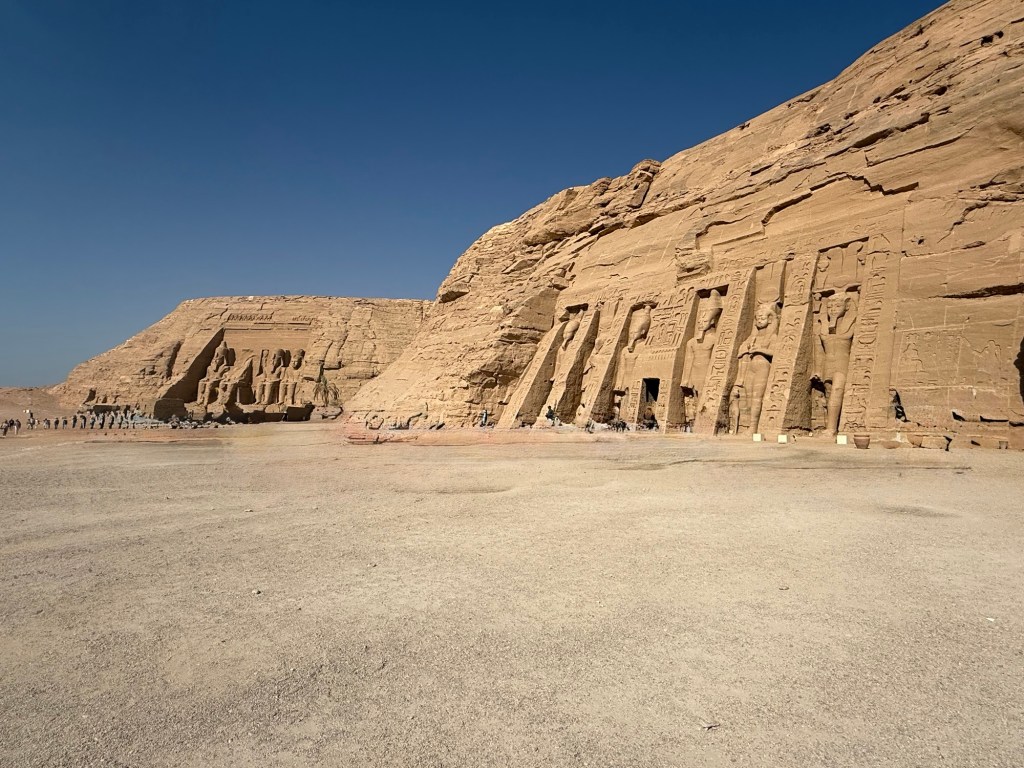
These temples were commissioned by Ramses II in the 13th century BC.
Grand Temple:
The Great Temple, which took about twenty years to build, was completed around year 24 of the reign of Ramesses the Great (which corresponds to 1265 BC).
The Great Temple is famous for the four colossal statues of Ramses II and its unique solar alignment, which illuminates the sanctuary twice a year during the Sun Festival on February 21 and October 22. Just two days too early!!
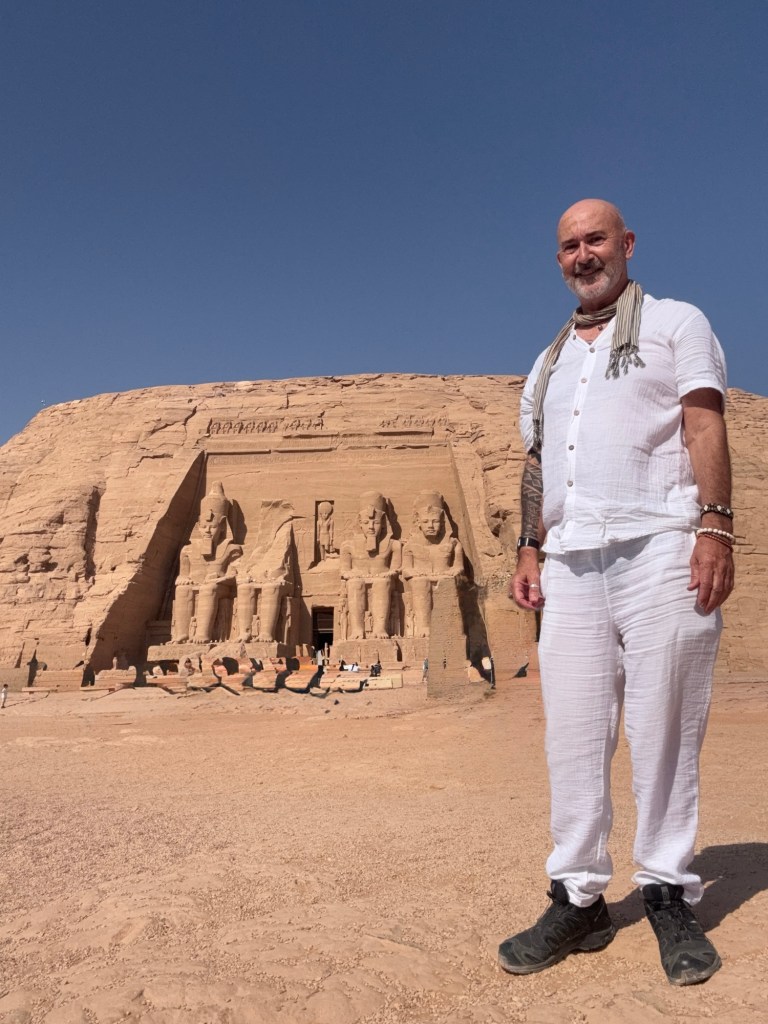

The statue to the immediate left of the entrance was damaged in an earthquake, causing the head and torso to fall away; these fallen pieces were not restored to the statue during the relocation but placed at the statue’s feet in the positions originally found.
The façade behind the colossi is 33 m (108 ft) high and 38 m (125 ft) wide. It carries a frieze depicting twenty-two baboons worshipping the rising sun with upraised arms and a stele recording the marriage of Ramesses to a daughter of king Ḫattušili III, which sealed the peace between Egypt and the Hittites.
His wife, Nefertari, and children can be seen in smaller figures by his feet.
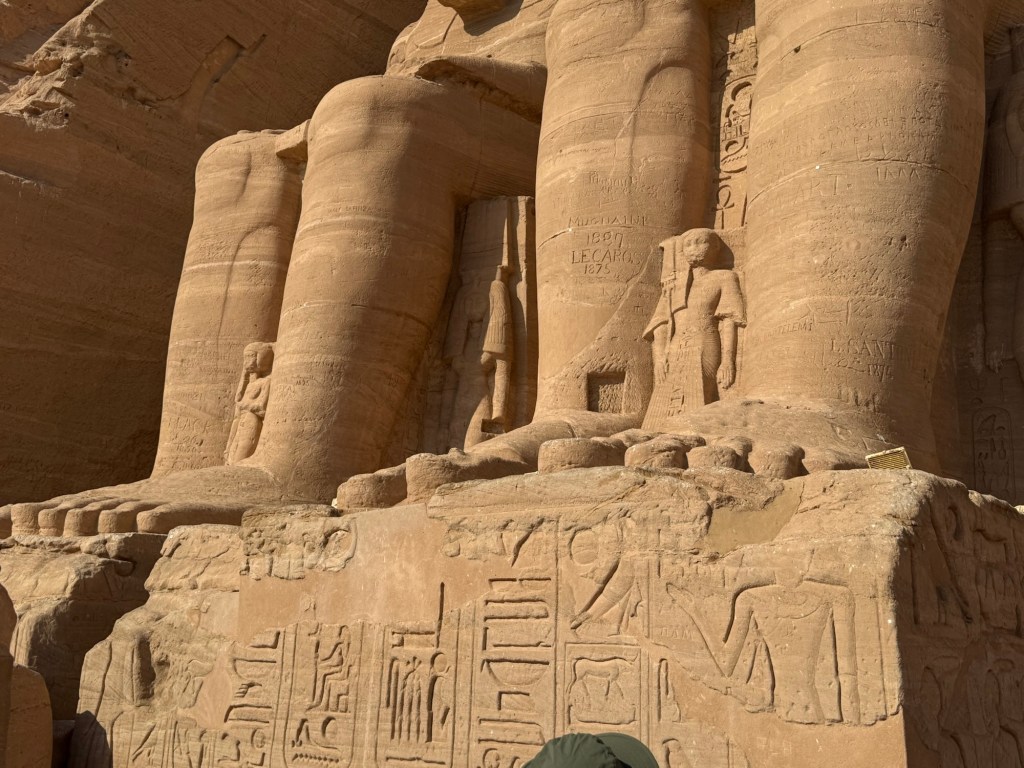
The entrance doorway itself is surmounted by bas-relief images of the king worshipping the falcon-headed Ra Horakhty, whose statue stands in a large niche.

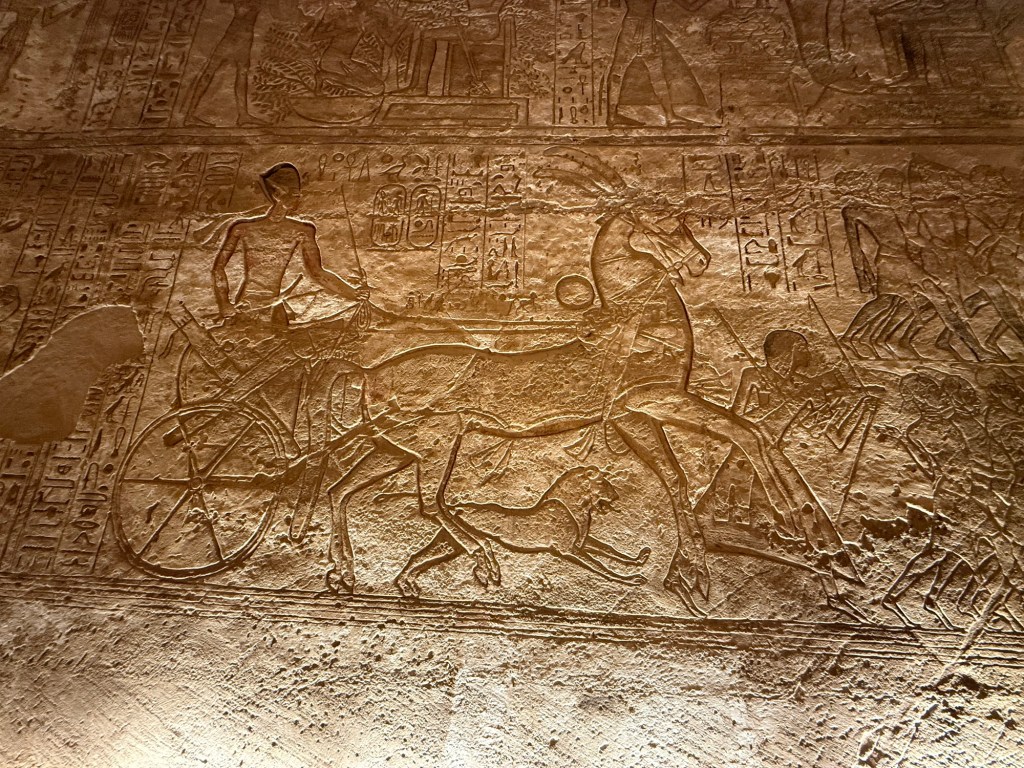
Sculptures inside the Great Temple hall commemorate Rameses II’s heroic leadership at the Battle of Kadesh.
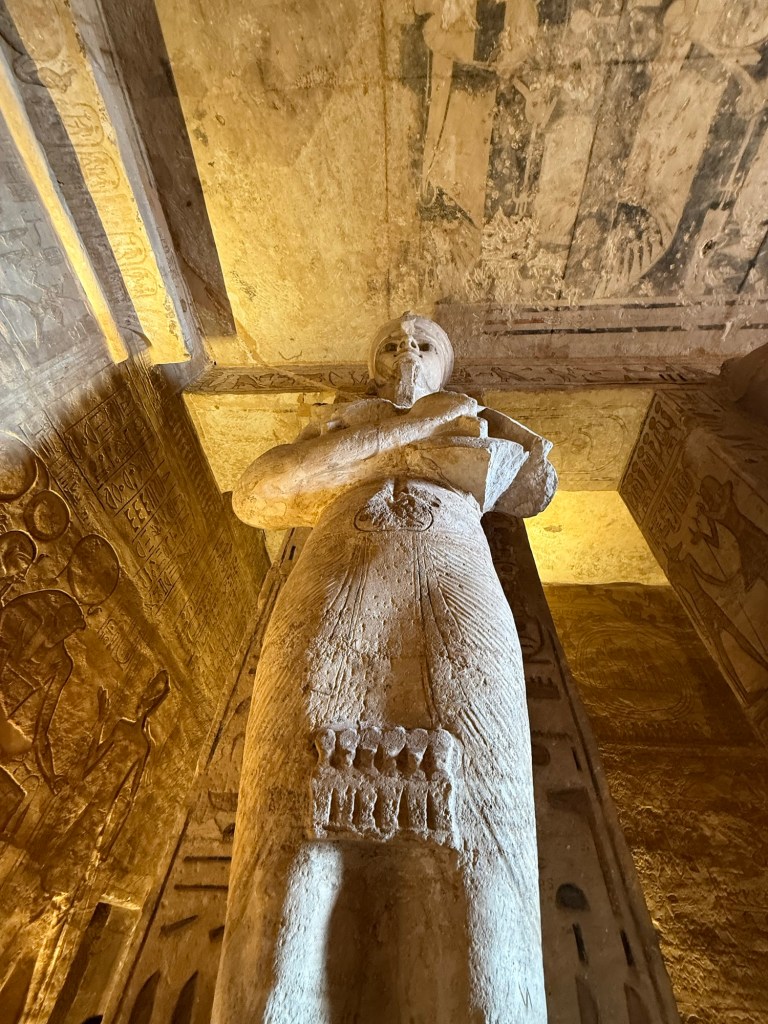
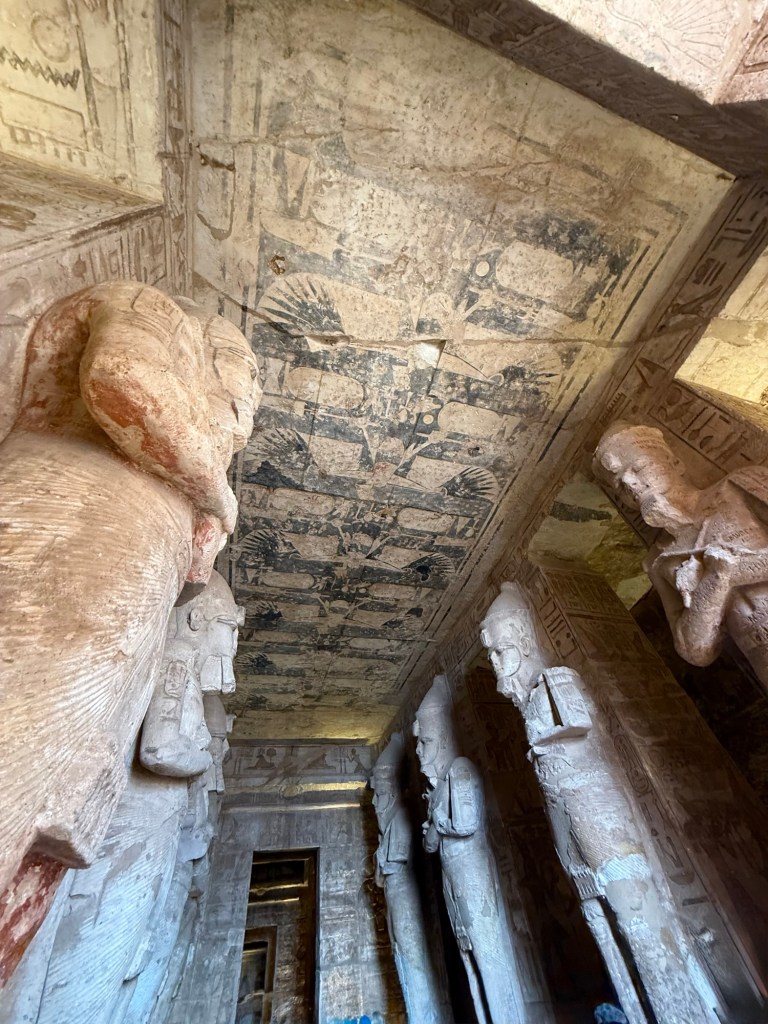
The hypostyle hall is supported by eight huge pillars depicting the deified Rameses linked to the god Osiris, the god of fertility, agriculture, the afterlife, the dead, resurrection, life and vegetation, to indicate the everlasting nature of the pharaoh.
The colossal statues along the left-hand wall bear the white crown of Upper Egypt, while those on the opposite side are wearing the double crown of Upper and Lower Egypt.
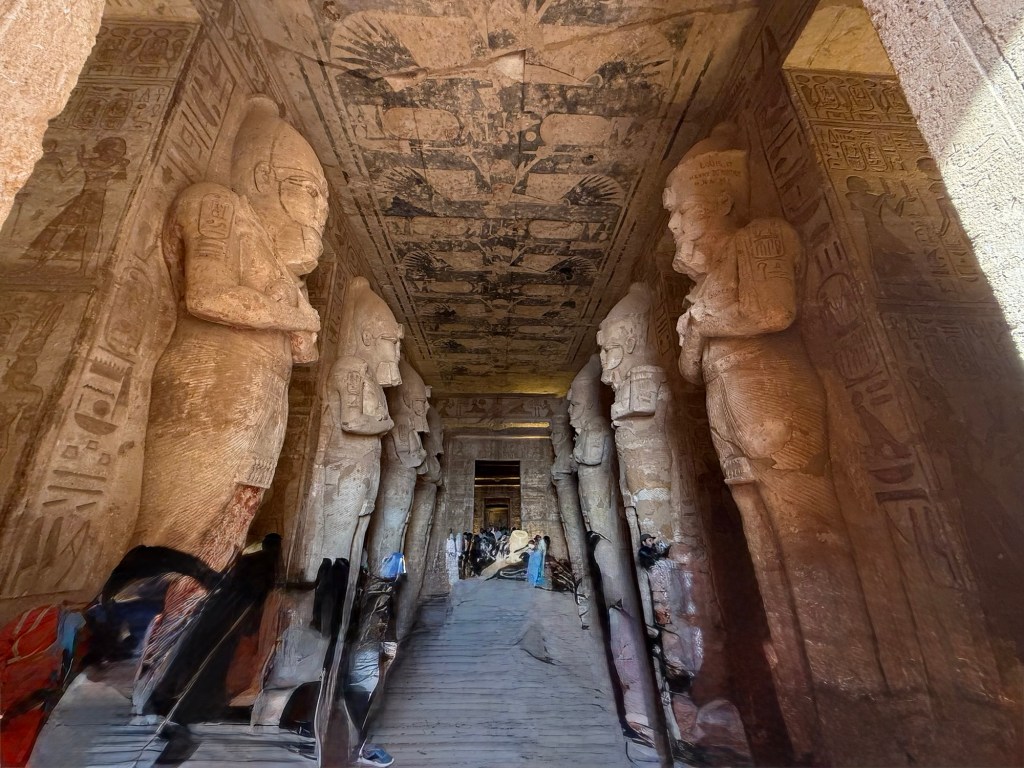
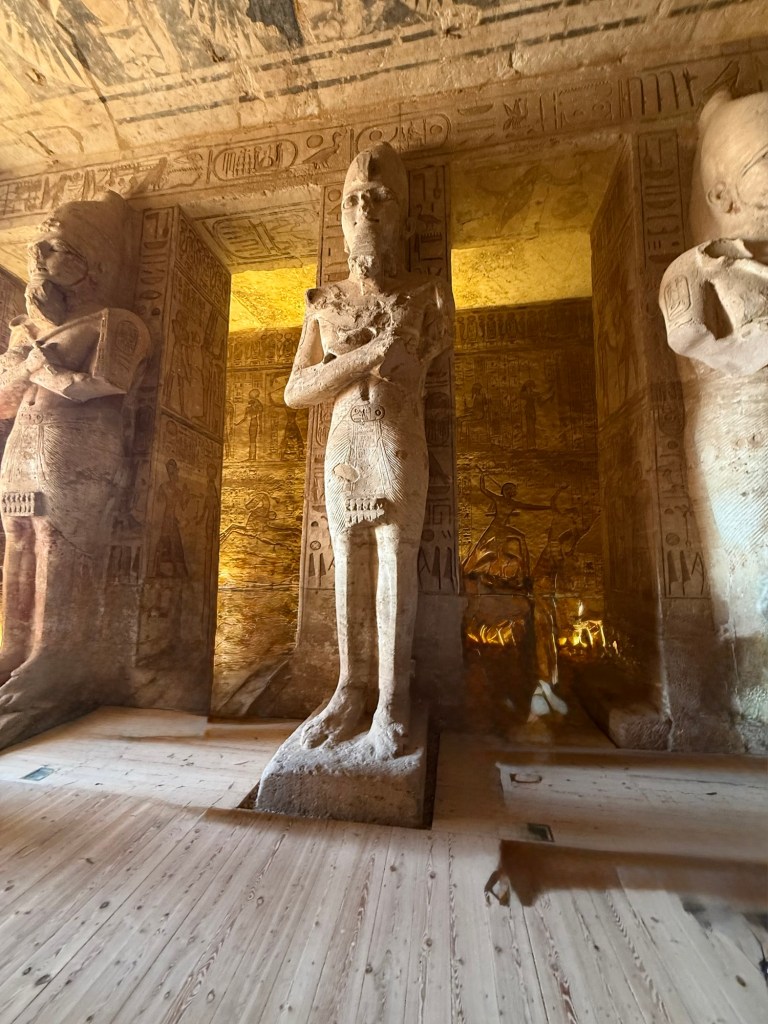
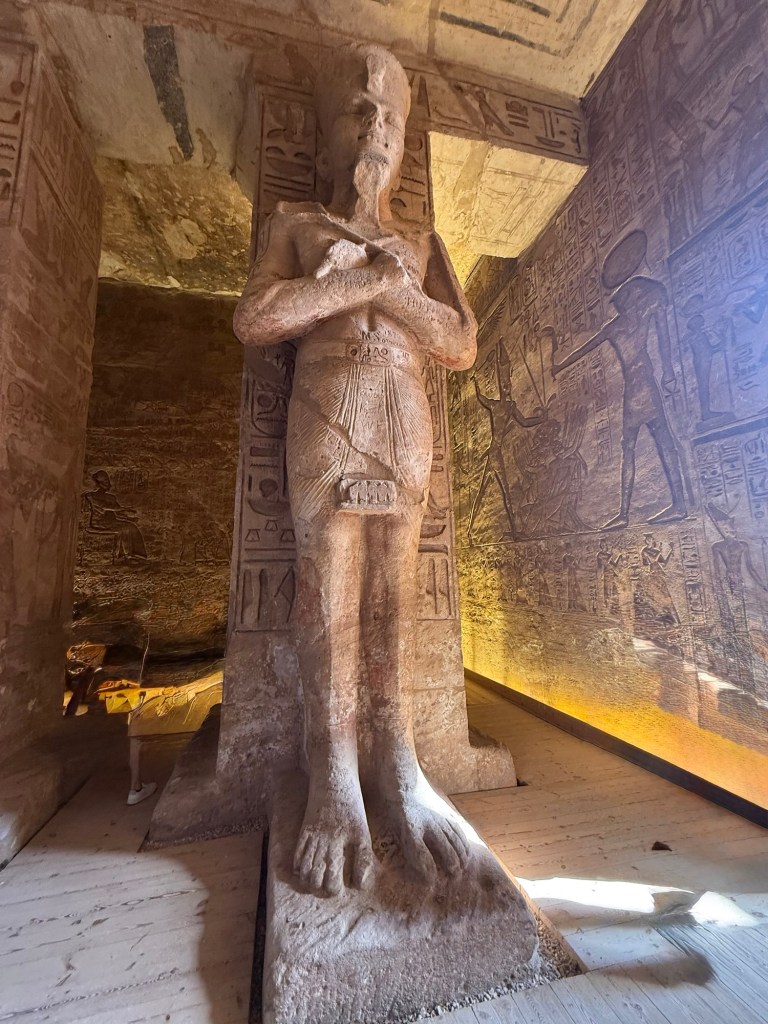
It was dedicated to the gods Amun, Ra-Horakhty, and Ptah, as well as to the deified Ramesses himself.
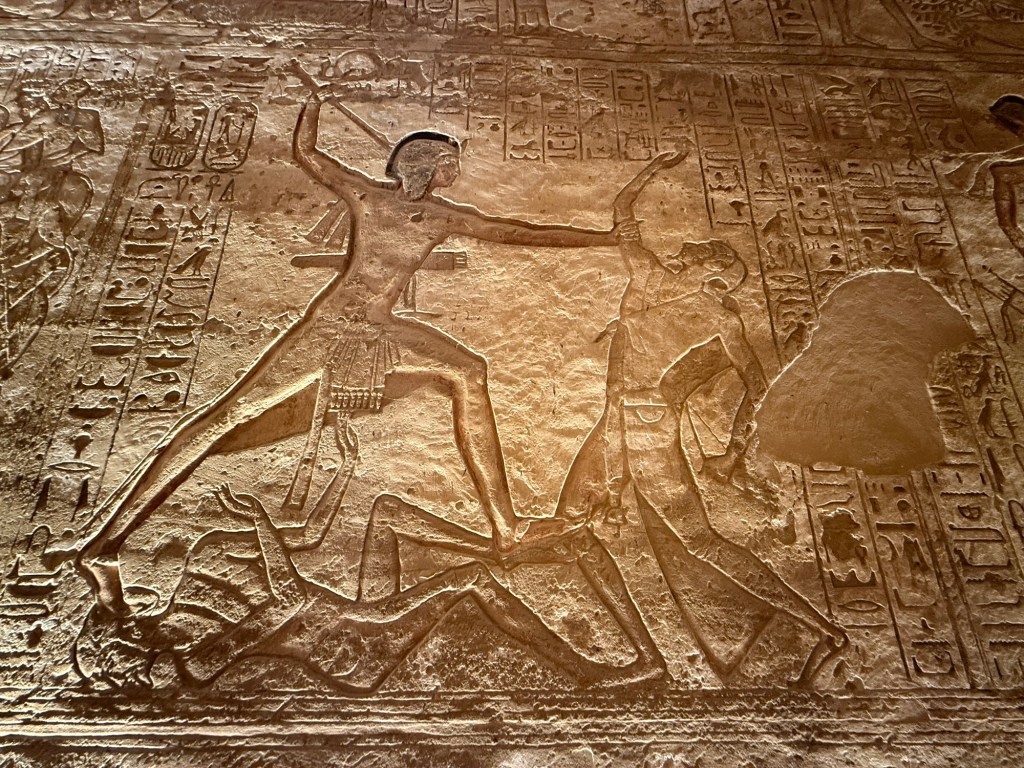
The bas-reliefs on the walls of the pronaos depict battle scenes in the military campaigns that Ramesses waged.
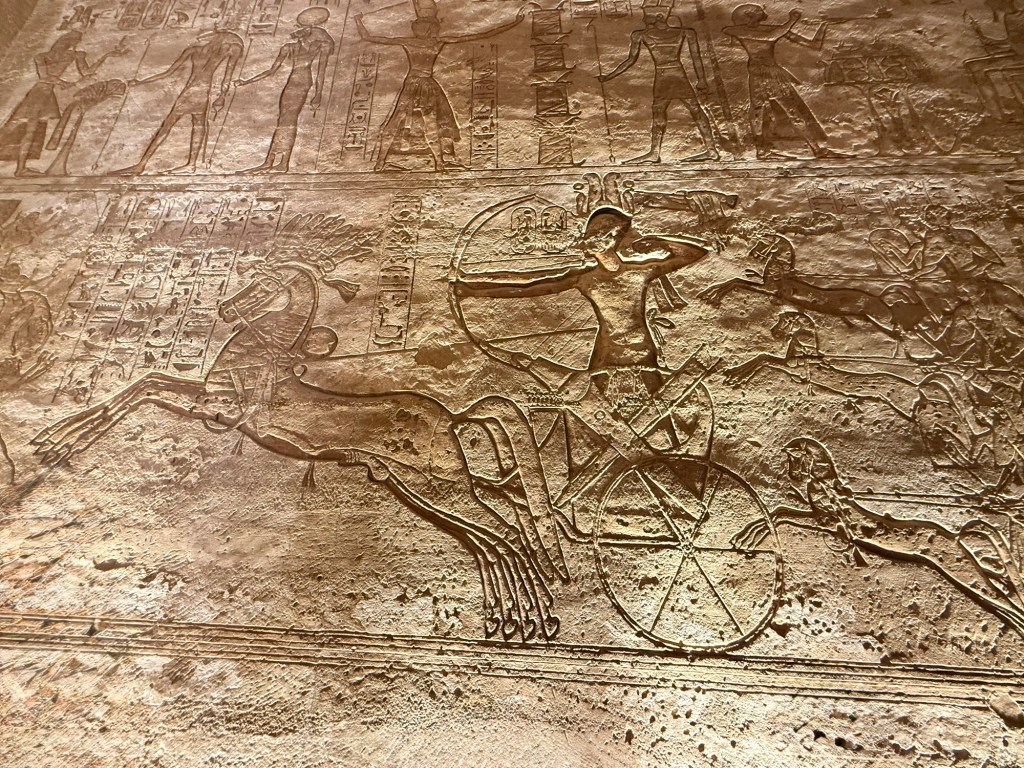
Much of the sculpture is given to the Battle of Kadesh, on the Orontes river in present-day Syria, in which the Egyptian king fought against the Hittites.
The most famous relief shows the king on his chariot shooting arrows against his fleeing enemies, who are being taken prisoner.
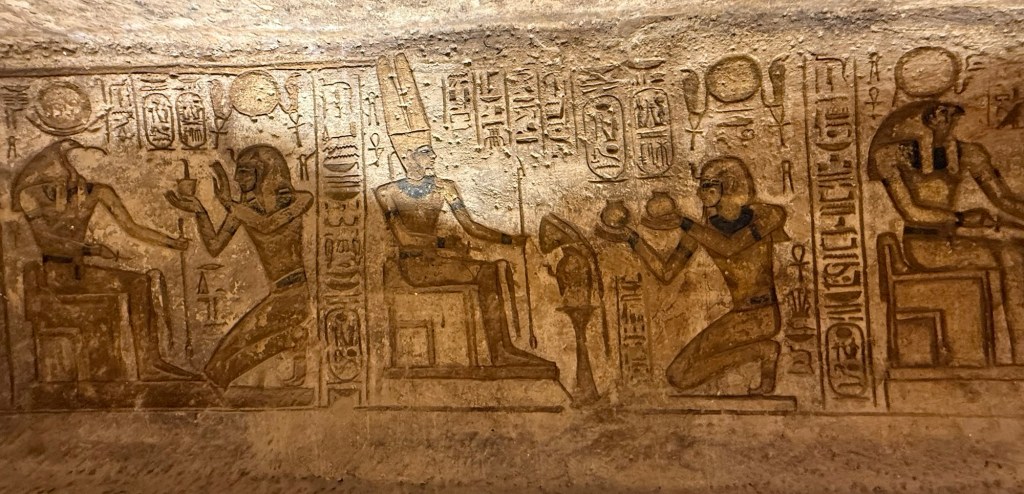
From the hypostyle hall, one enters the second pillared hall, which has four pillars decorated with beautiful scenes of offerings to the gods.
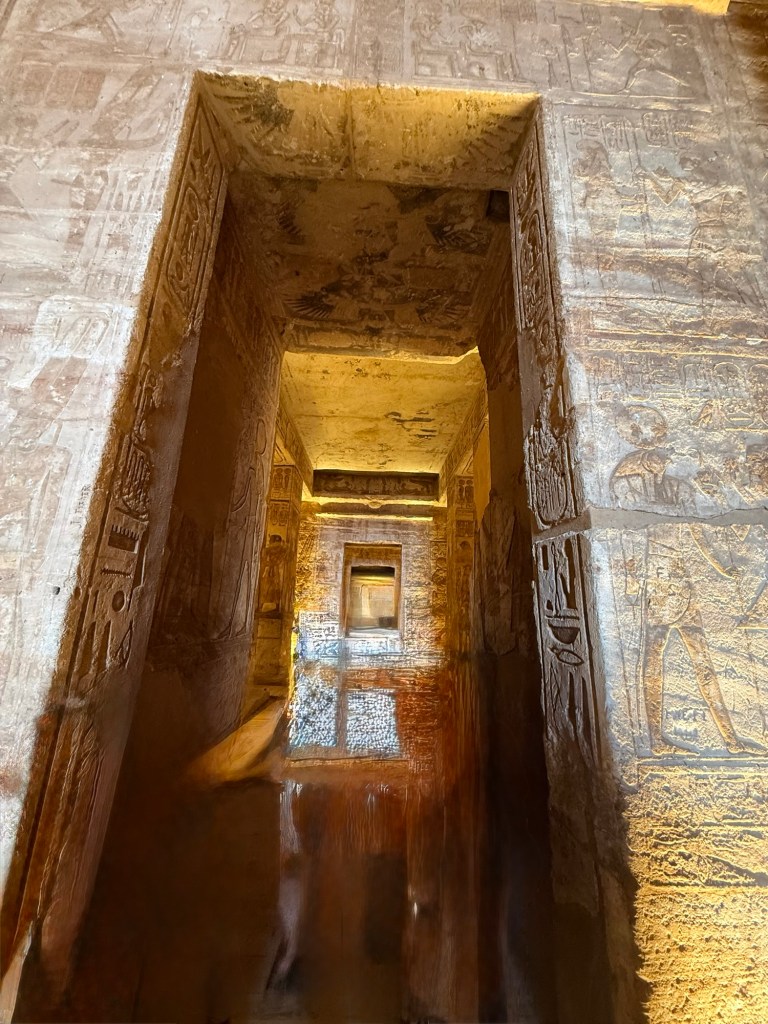
Many doorways lead further the inner sanctuary..
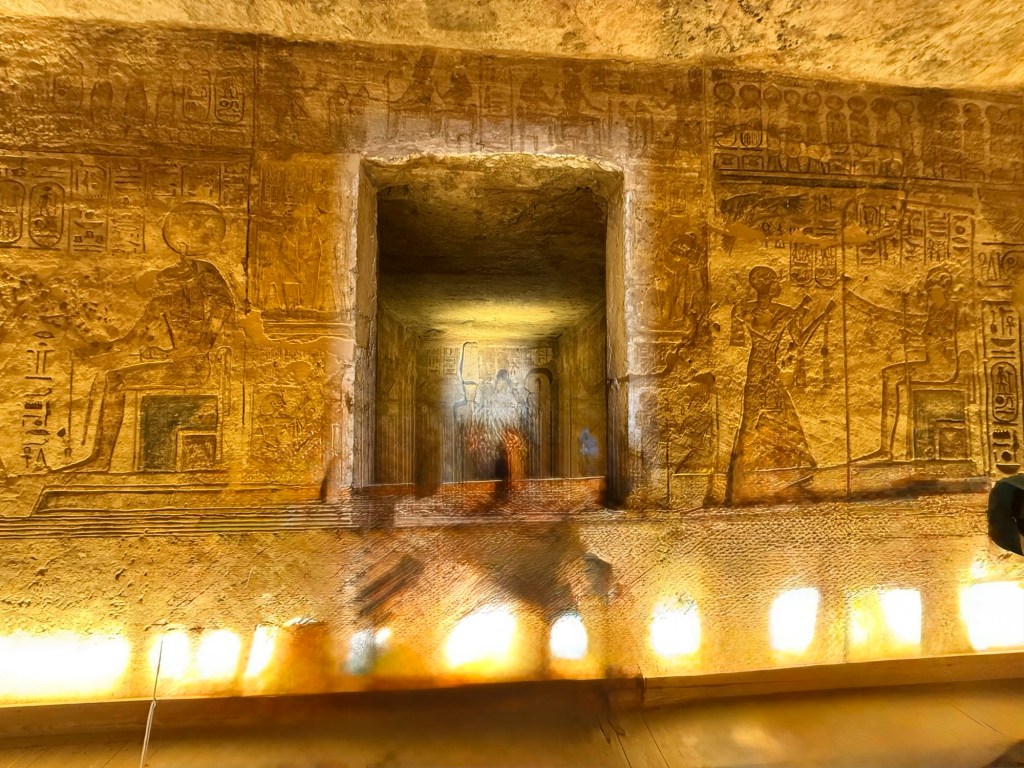
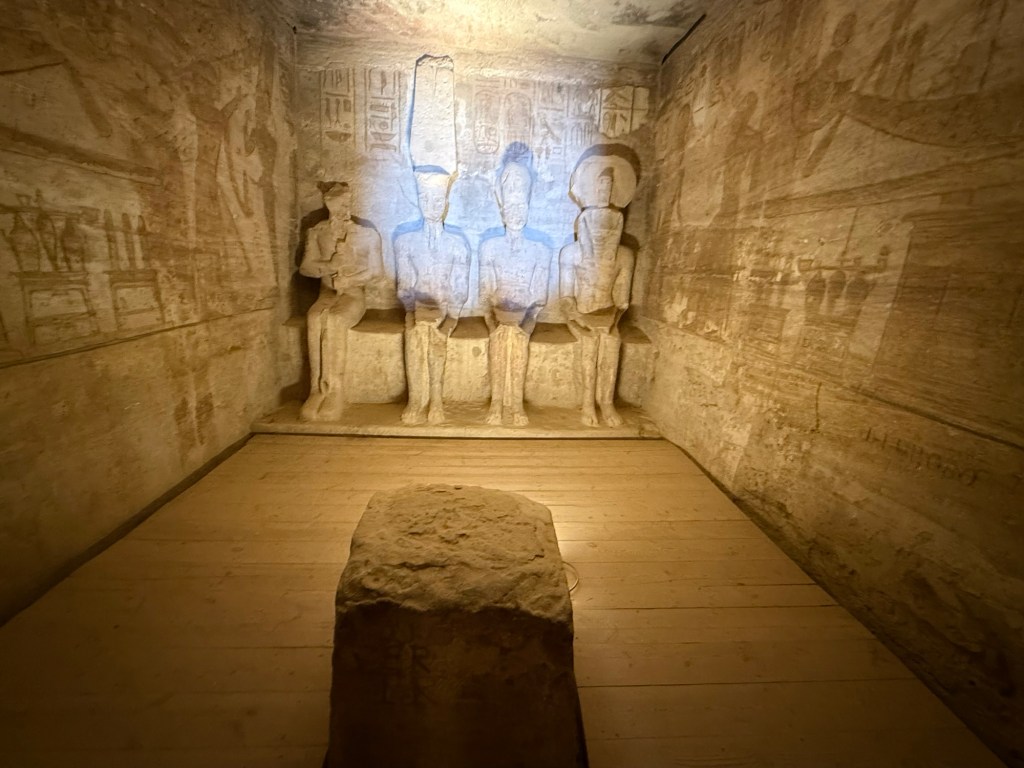
There are depictions of Ramesses and Nefertari with the sacred boats of Amun and Ra-Horakhty. This hall gives access to a transverse vestibule, in the middle of which is the entrance to the sanctuary. Here, on a black wall, are rock cut sculptures of four seated figures: Ra-Horakhty, the deified king Ramesses, and the gods Amun Ra and Ptah. Ra-Horakhty, Amun Ra and Ptah were the main divinities in that period and their cult centers were at Heliopolis, Thebes and Memphis respectively.
The Small Temple:
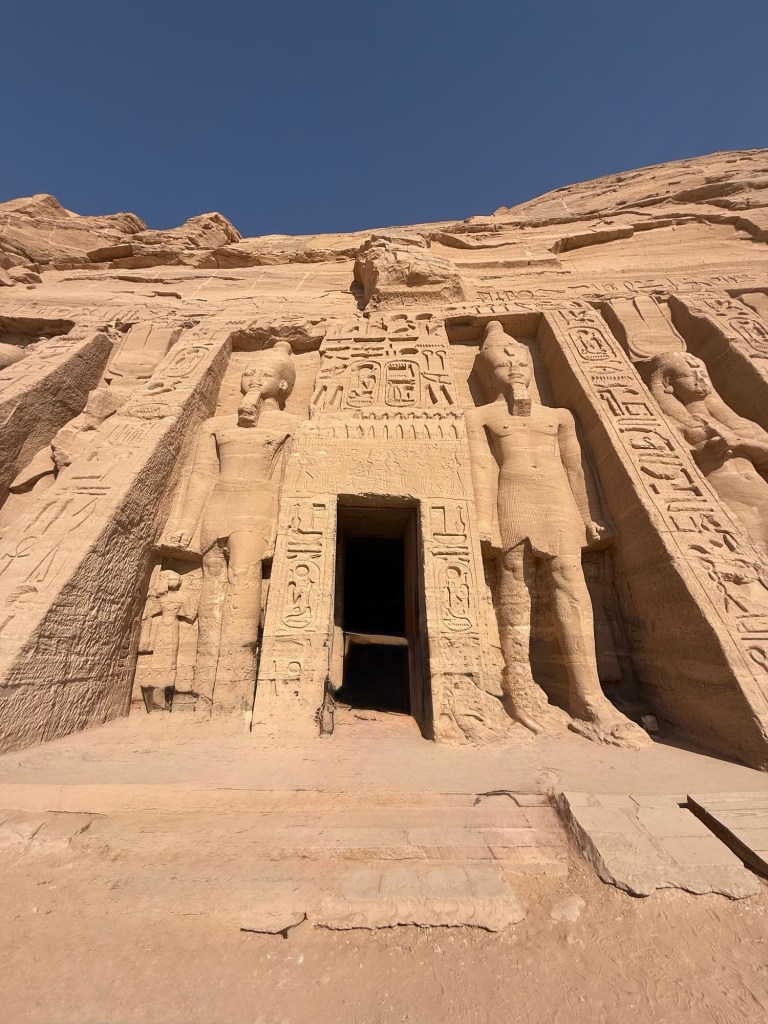
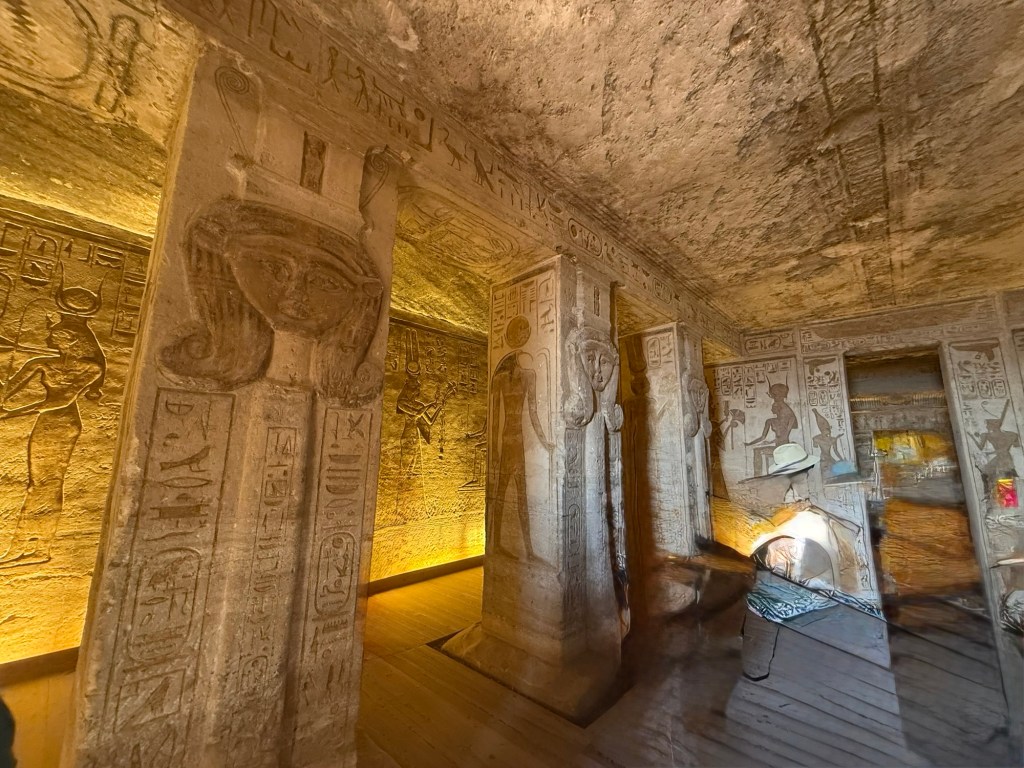
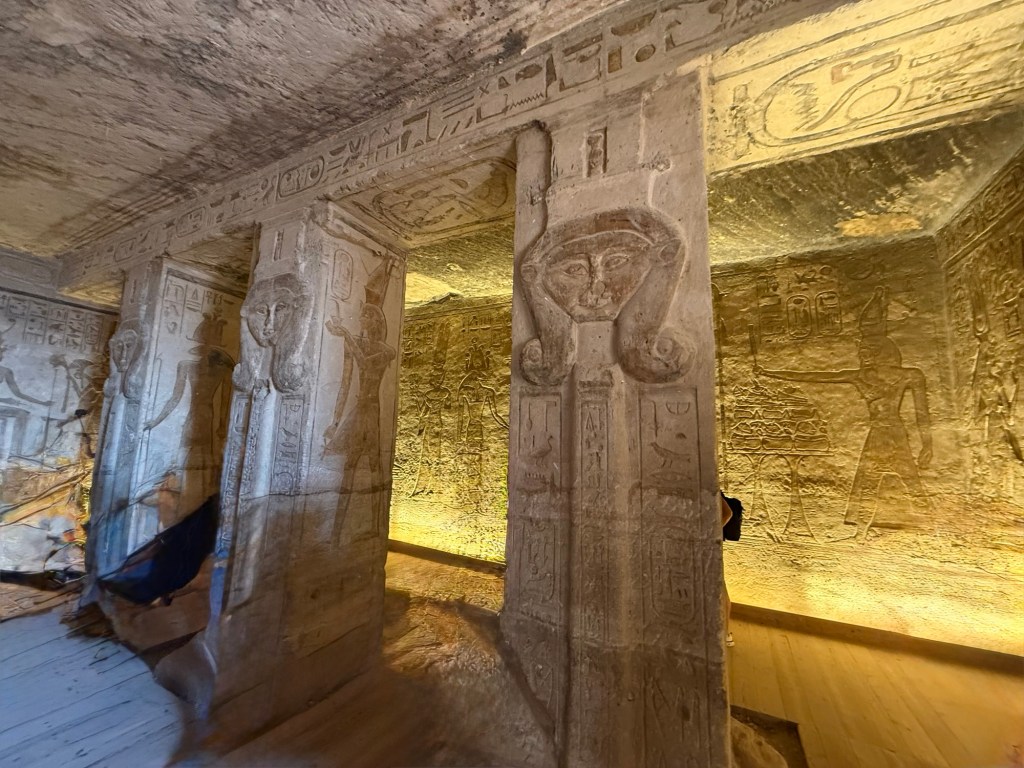
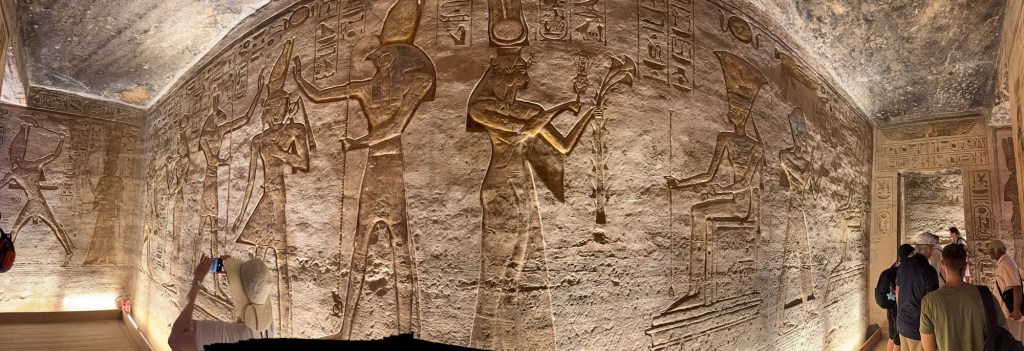
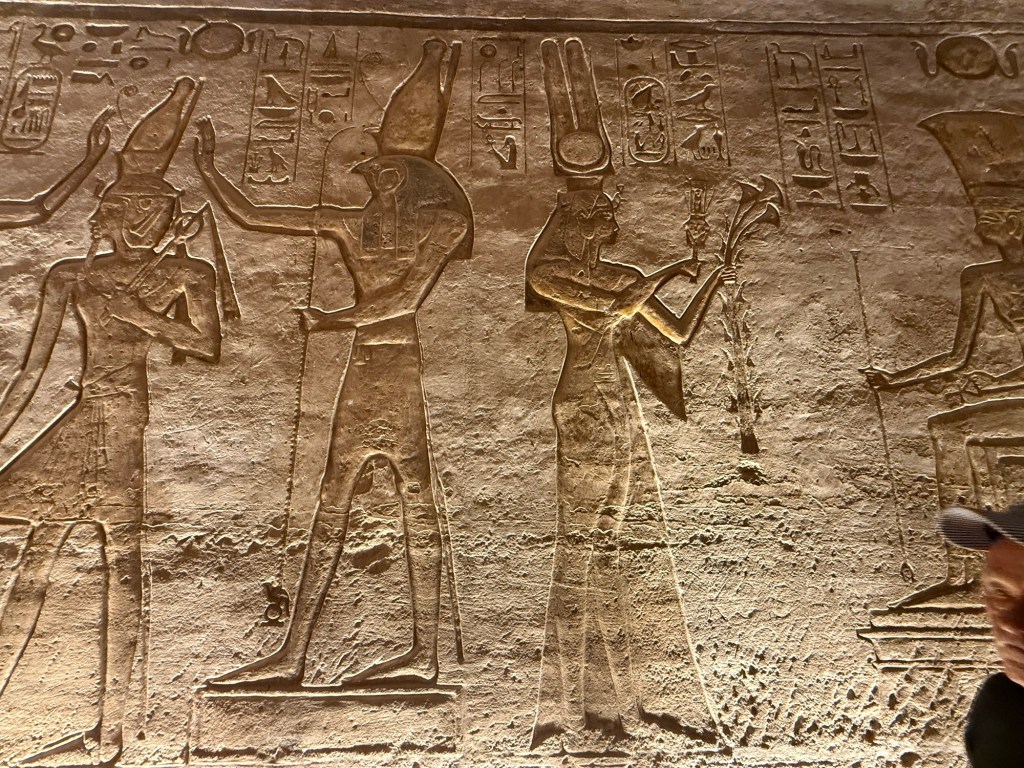
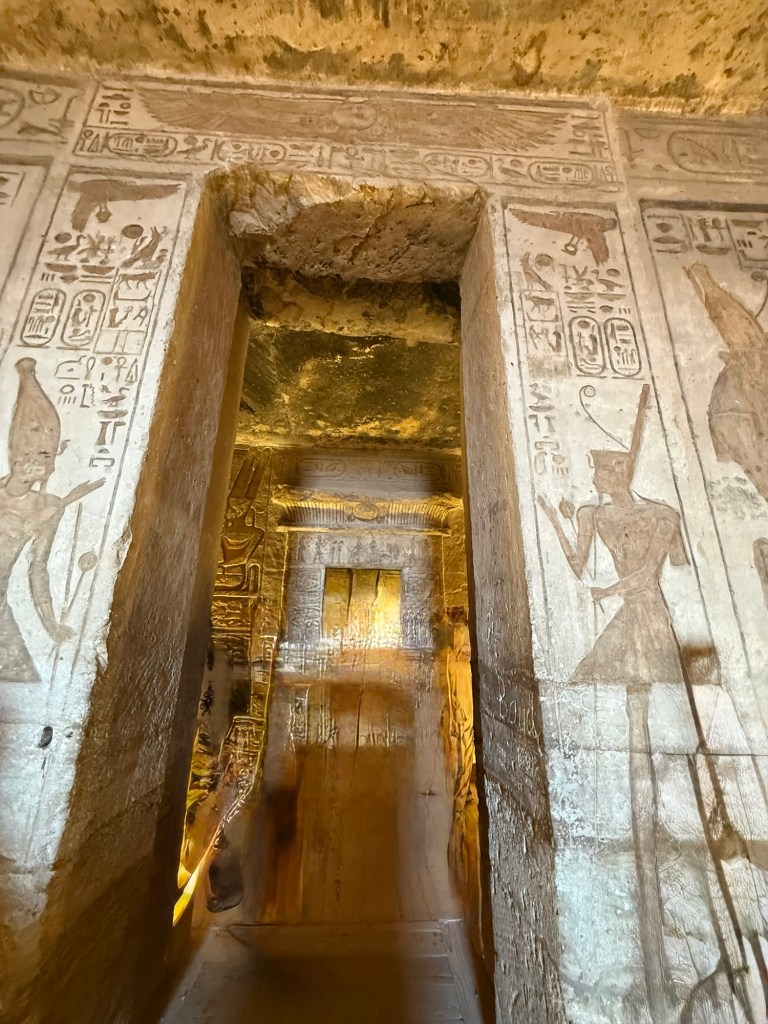
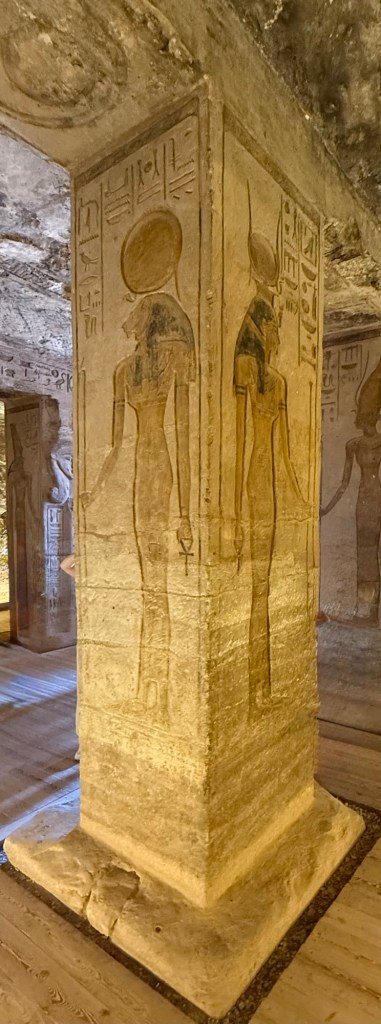
The smaller temple of Hathor and Nefertari was built about 100 m (330 ft) northeast of the temple of Ramesses II and was dedicated to the goddess Hathor and Ramesses II’s chief consort, Nefertari.




 seetheworldtravelblog