Morning Itinerary: Dendra Temple Complex, Dendra, Egypt
~ 35°C/97°F (at 12 pm)
By Paul Bryers
There was an Anglo-Saxon tourist close by me today who was a real laurel spaffer…bless….
Anyway….
The Dendera Temple complex, situated approximately 2.5 kilometres southeast of Dendera, is one of the best-preserved temple complexes in ancient Egypt.
The entire complex is surrounded by a substantial mudbrick wall, which is best viewed from the roof, accessible via a hot and humid climb within the walls.
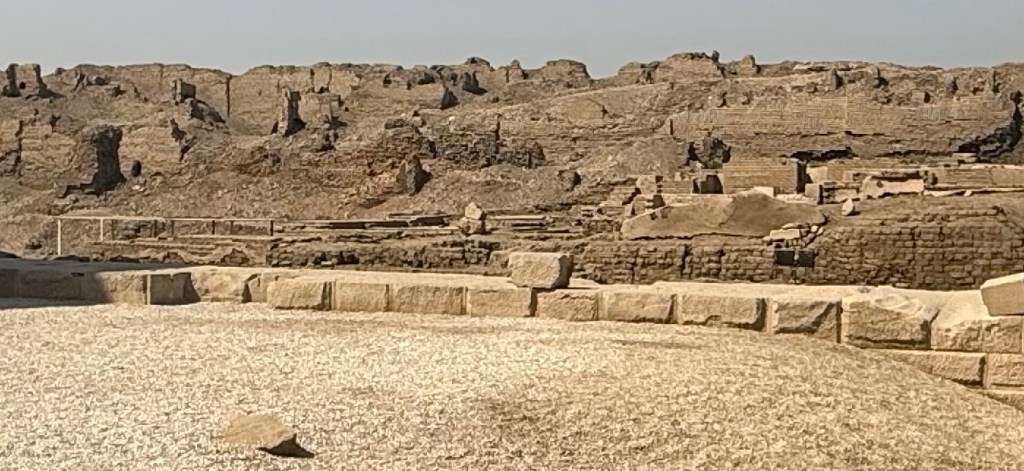
The structures throughout the complex were constructed over multiple eras, including the Middle Kingdom, the Ptolemaic Era, and the Roman provincial rule period.
Key features of the complex include:
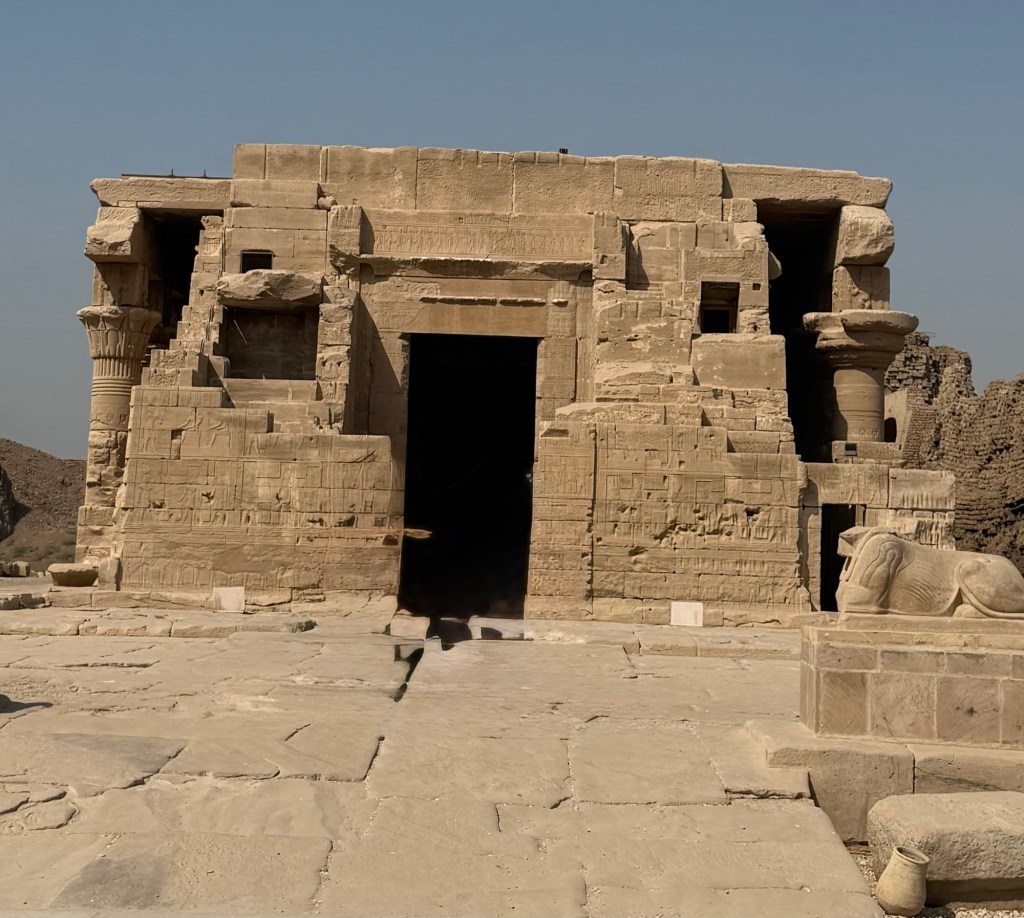
Roman Mammisi:
The Roman mammisi, a subsidiary building located before the Temple of Hathor, dates back to the reigns of Trajan and Marcus Aurelius. Numerous reliefs depicting Trajan making offerings to Egyptian deities are visible.
Hathor Temple:
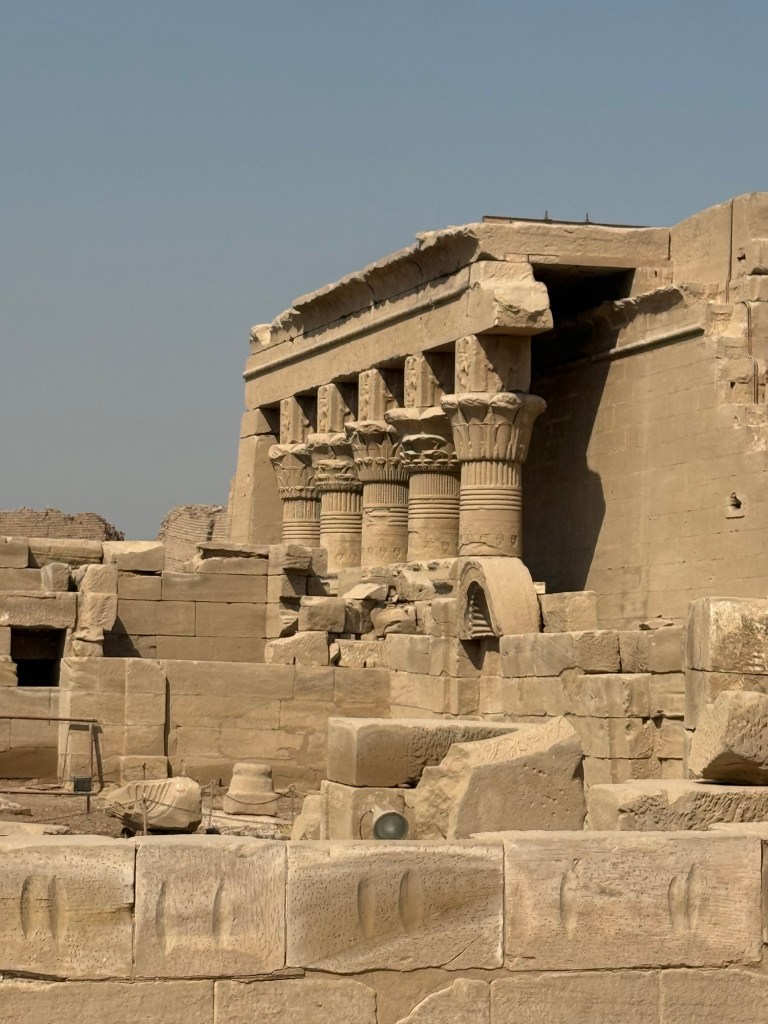
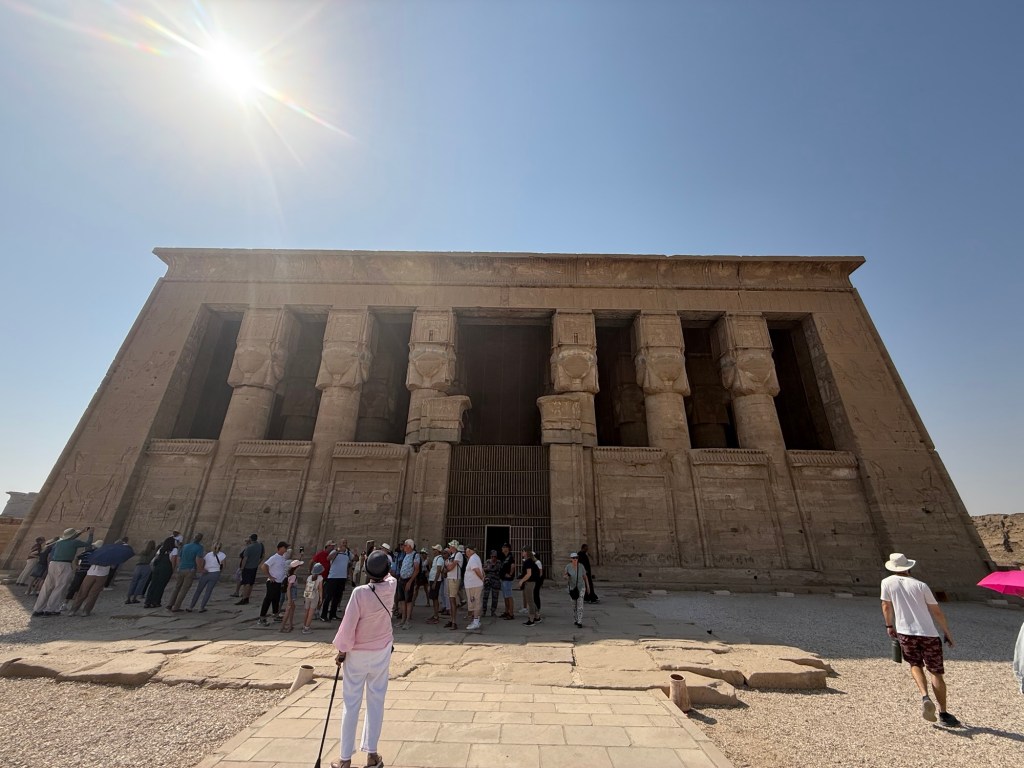
The Temple of Hathor dominates the complex, with its structure commanding attention. The original temple underwent continuous modifications throughout the Middle Kingdom and up until the beginning of Trajan’s reign.
The existing temple’s structure began construction in 54 B.C.E, during the late Ptolemaic period under Ptolemy Auletes.
- Great Vestibule of Pronaos:
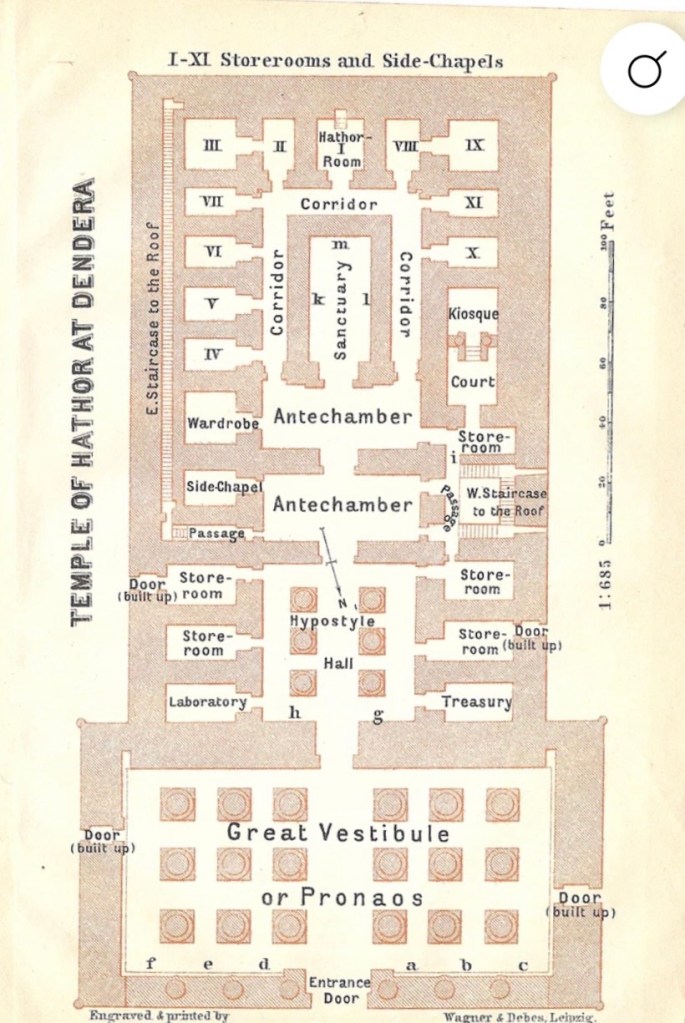
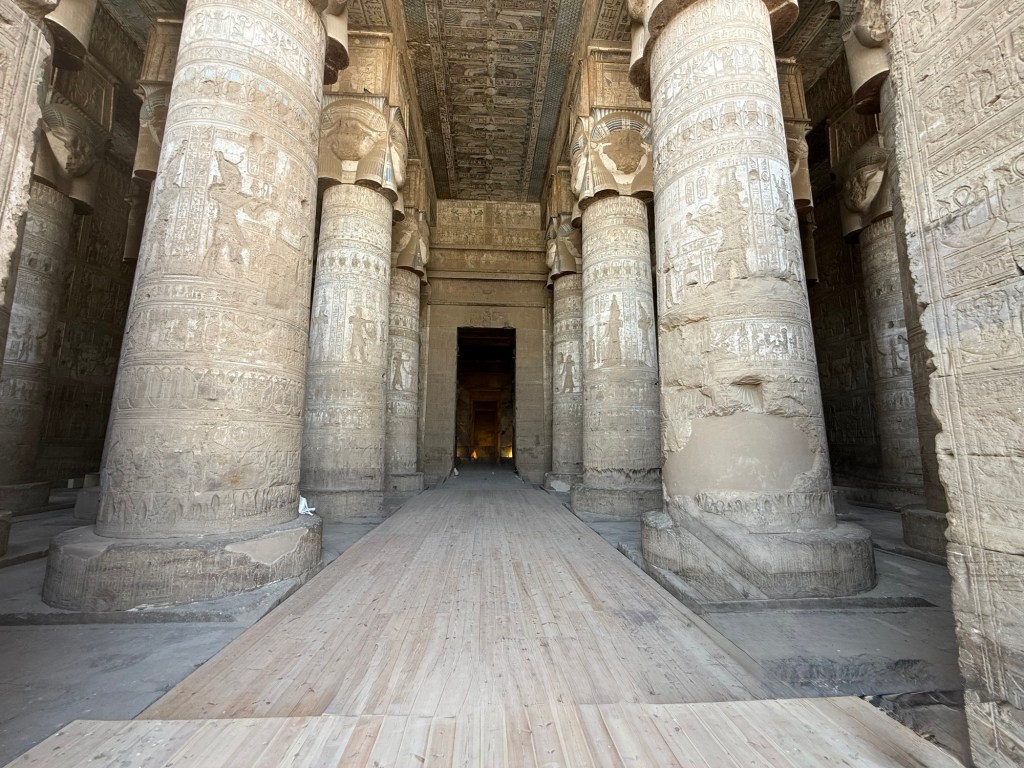
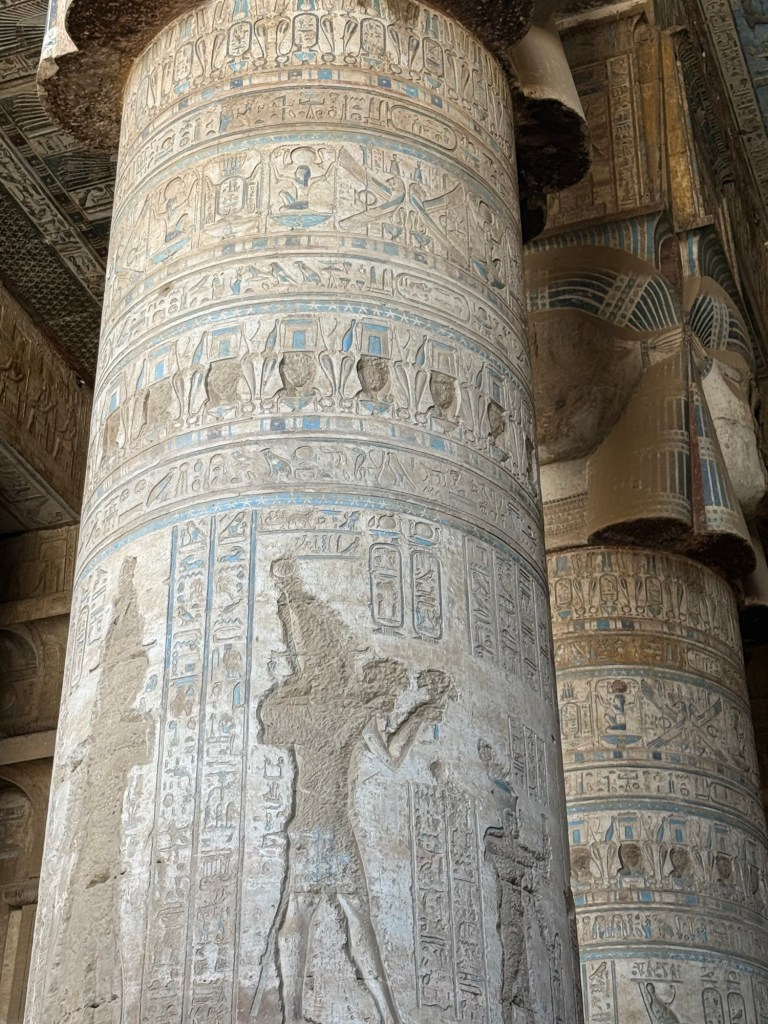
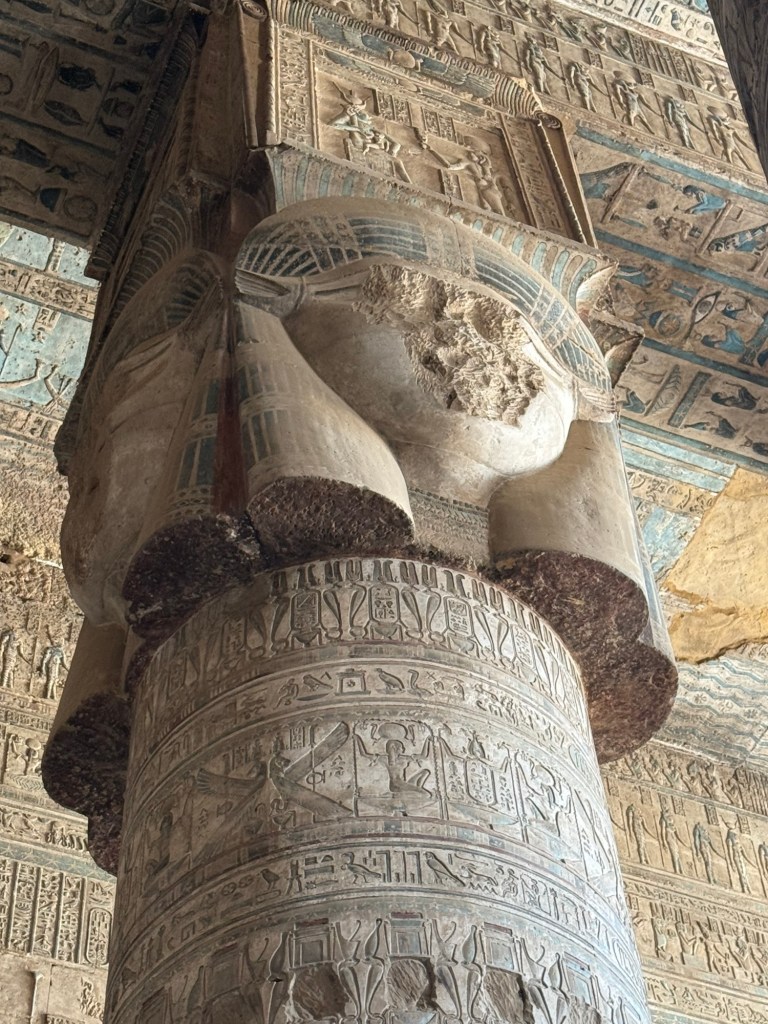
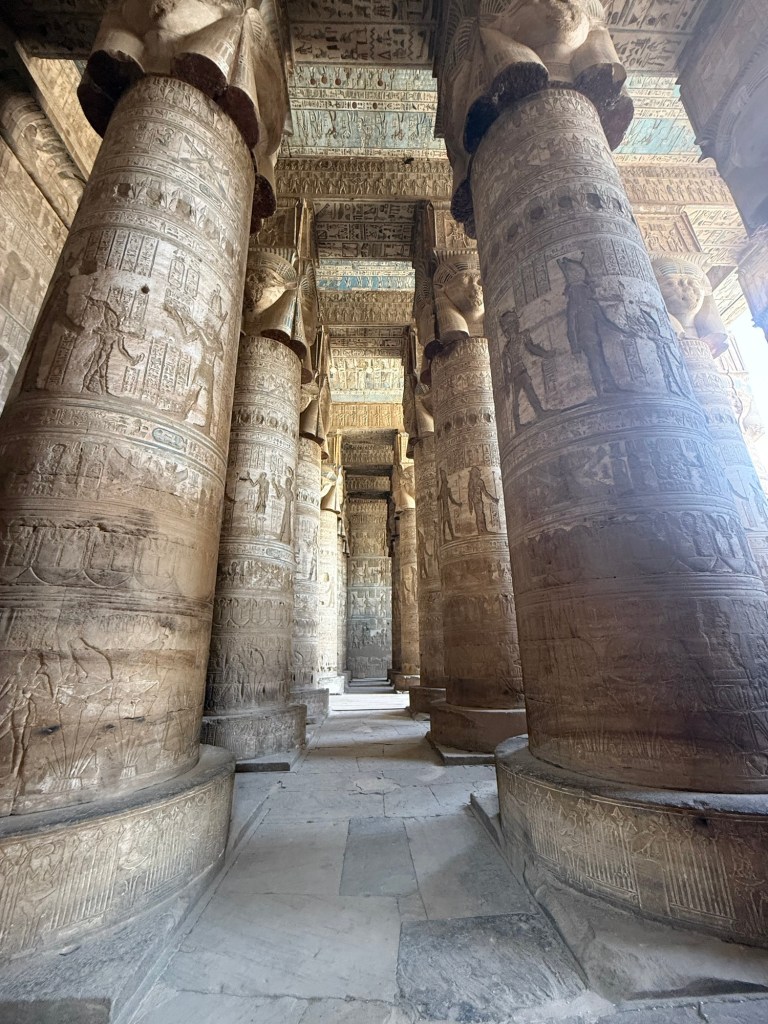
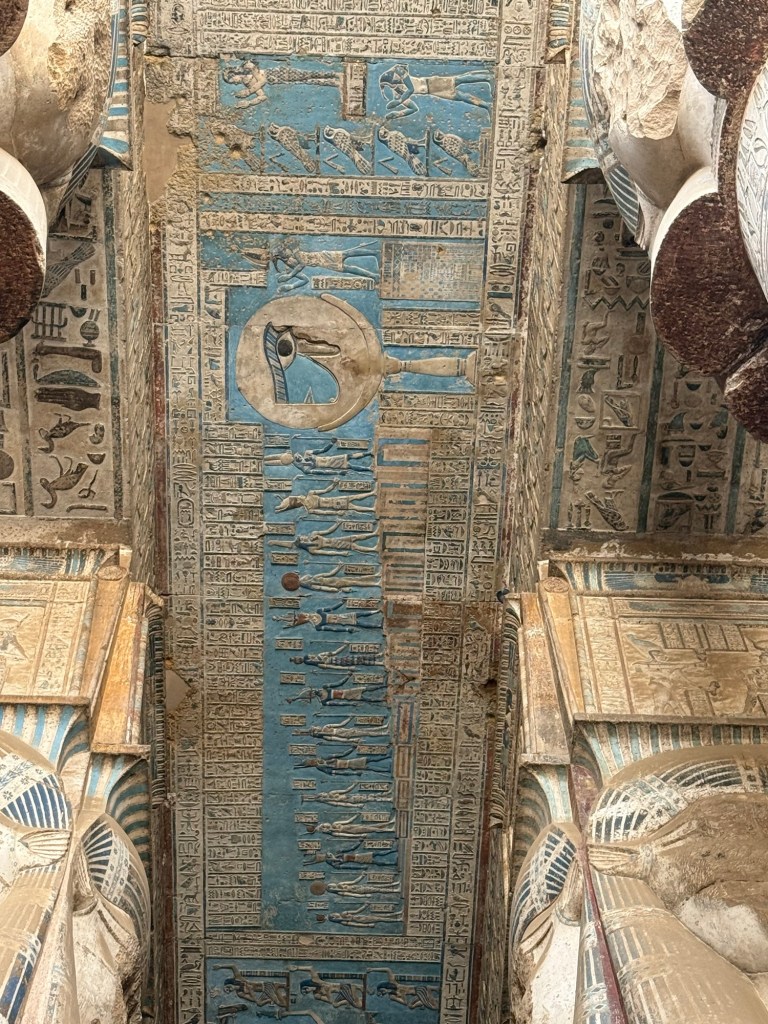
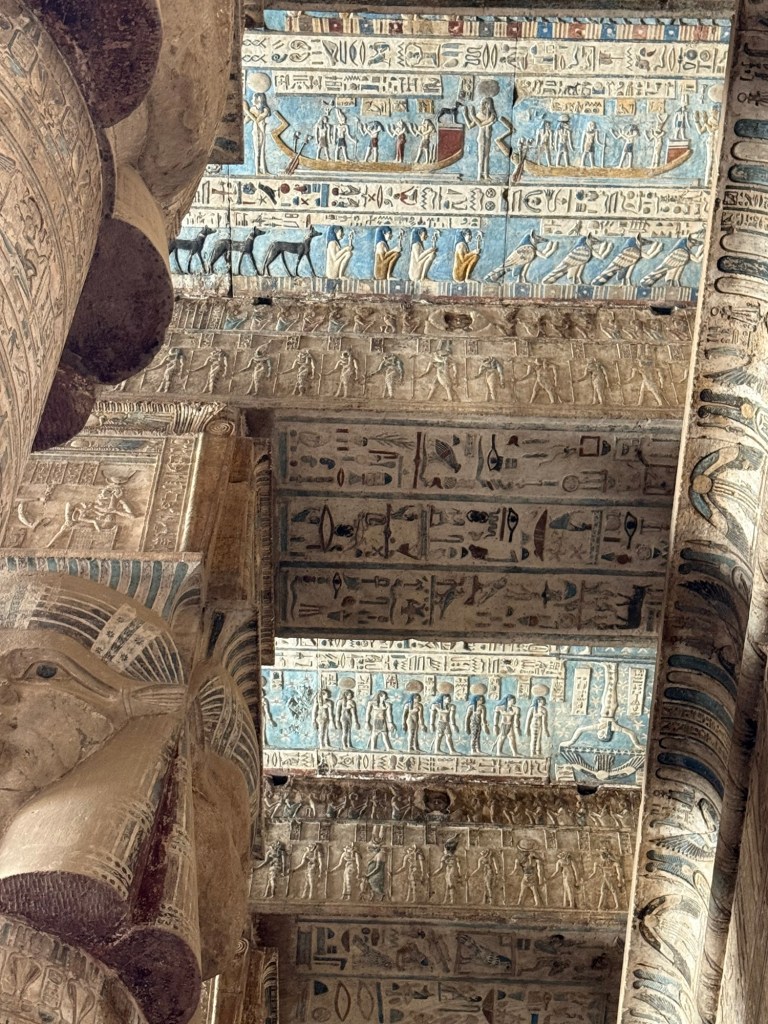
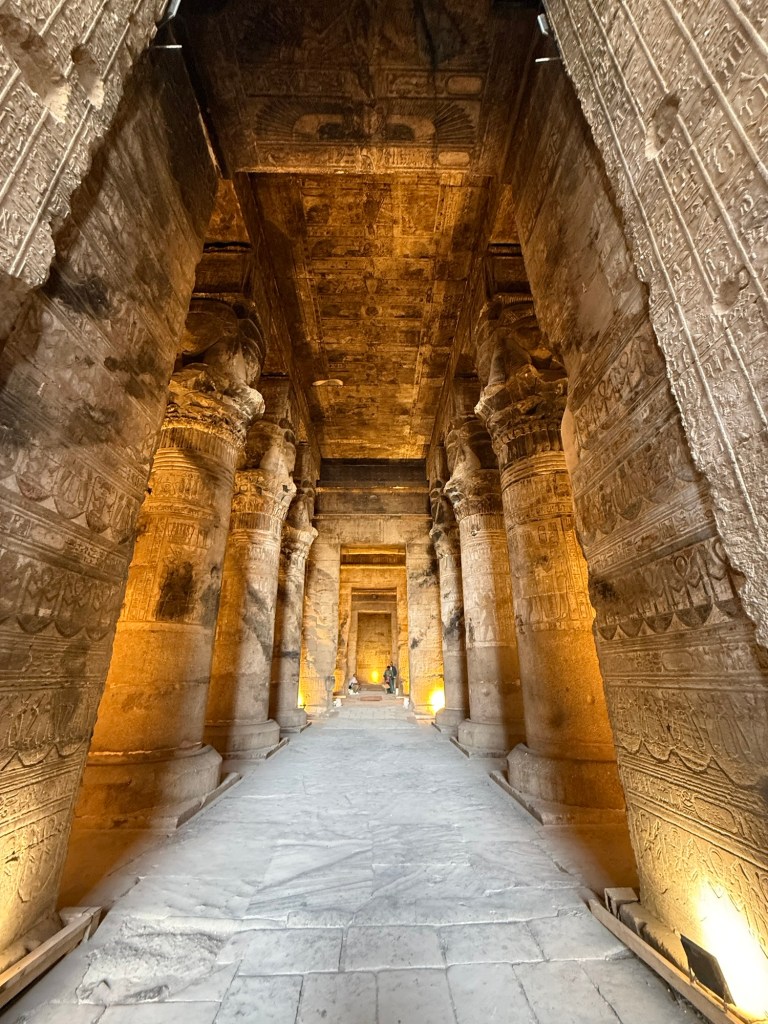
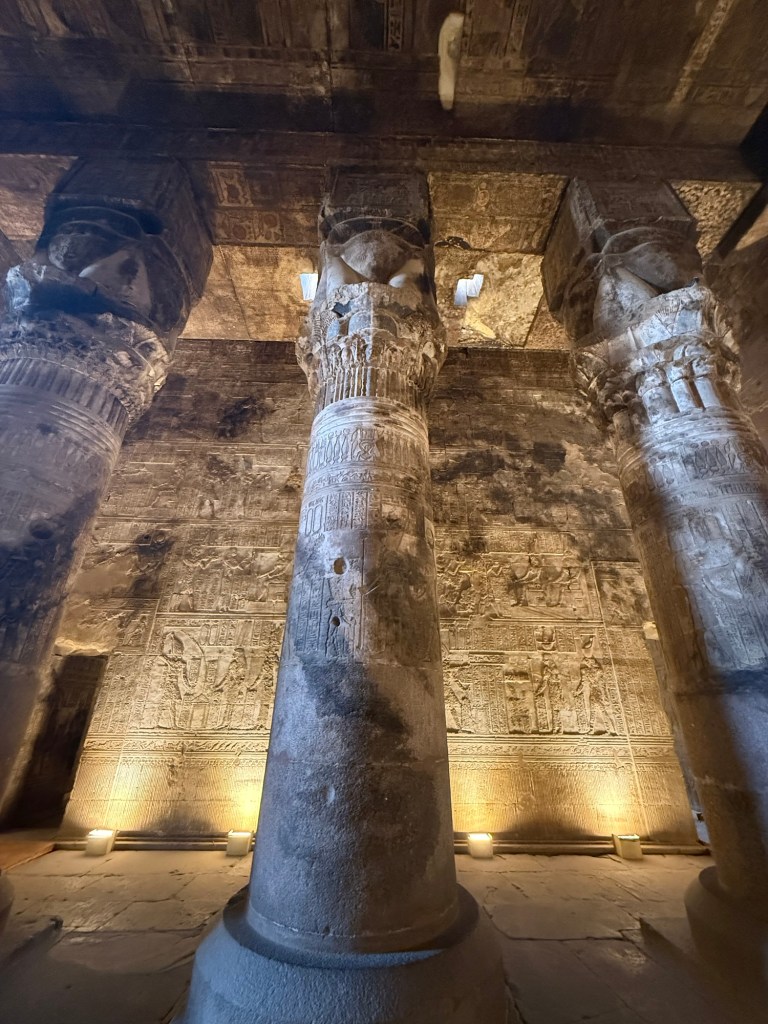
Upon entering the temple, one is immediately confronted with enormous rows of columns and a roof above, covered in carvings/paintings with some still bearing vibrant colors – this is in the Great Vestibule of Pronaos.

- Hypostyle Hall:
Following this is the Hypostyle Hall with its many columns. The hypostyle hall was built during the Roman period under Tiberius.
– Antichambers
Then, there are two antechambers before reaching the sanctuary.
- Subrooms, including Roman Kiosk
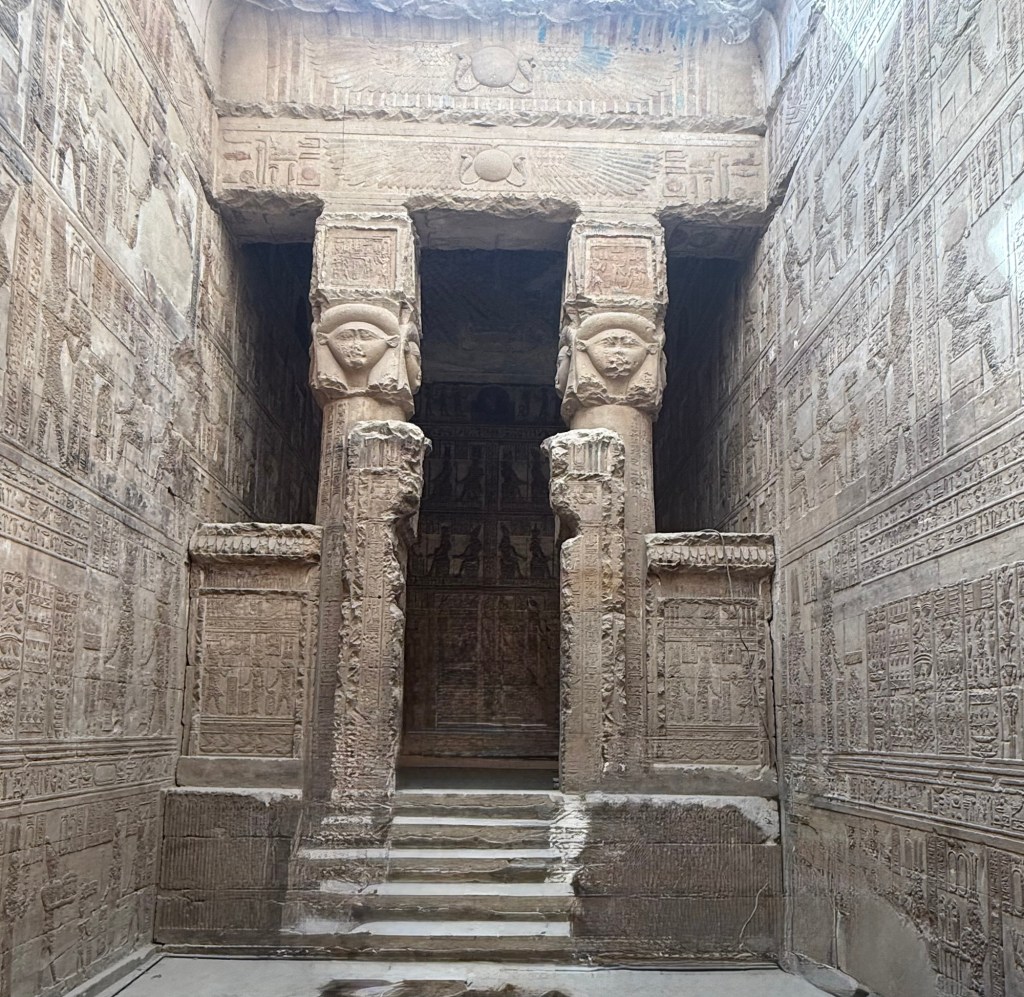
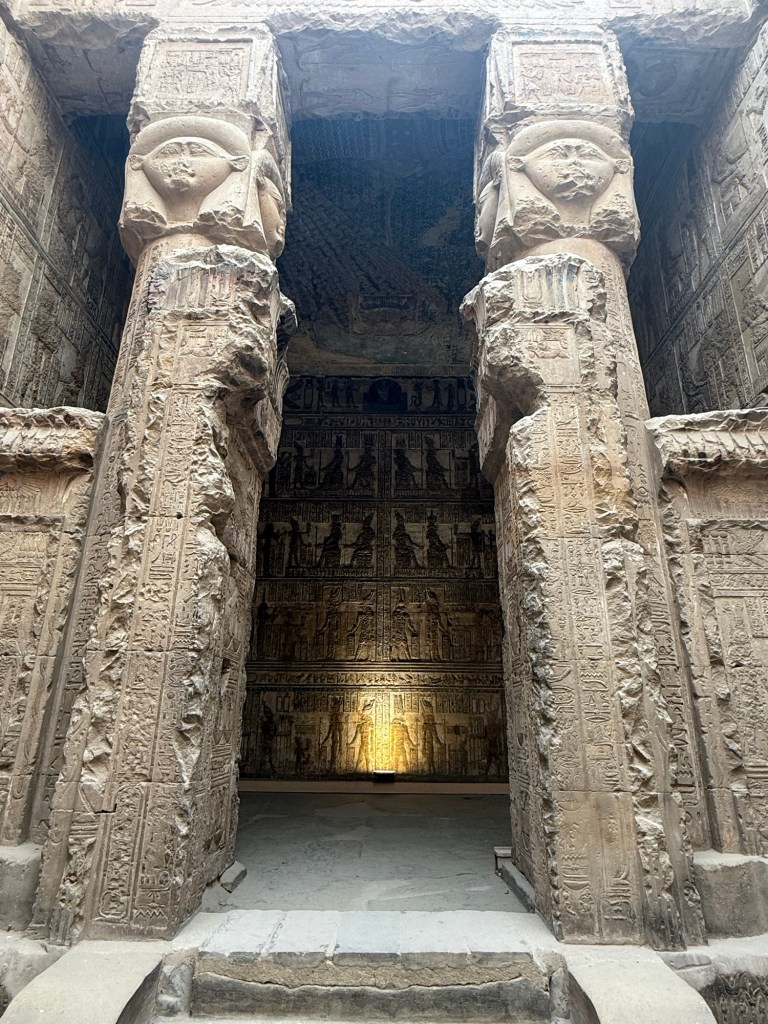
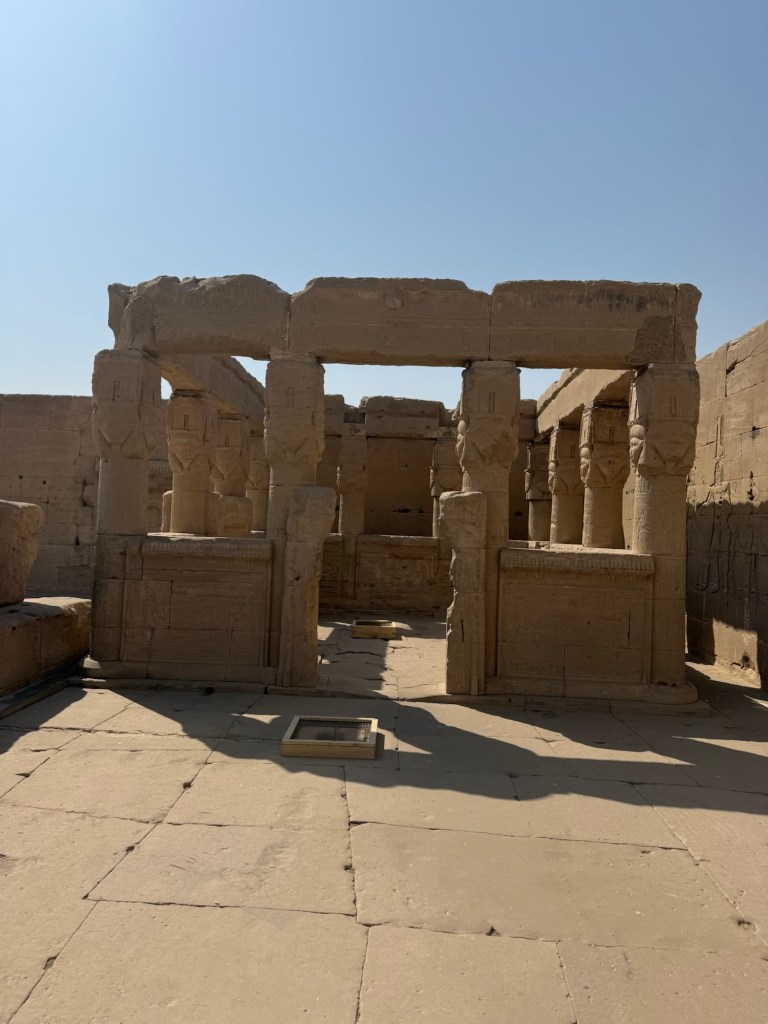
There are numerous storerooms, labs, and wardrobes adjacent to these main rooms, including a lovely Roman Kiosk.
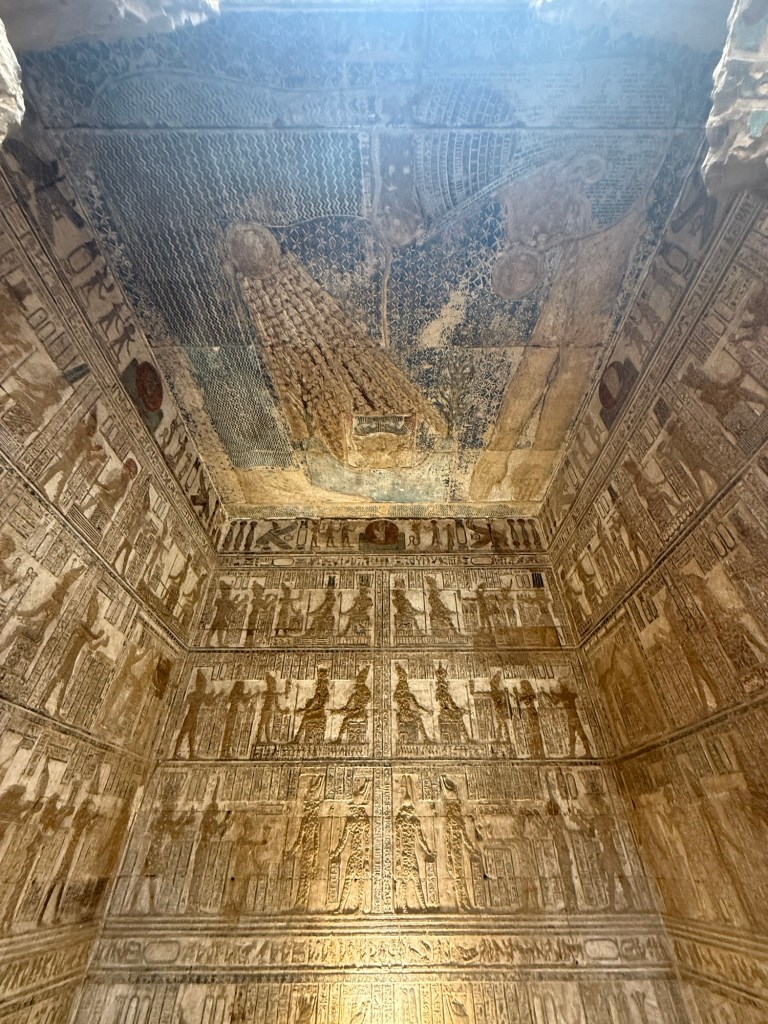
- Roof
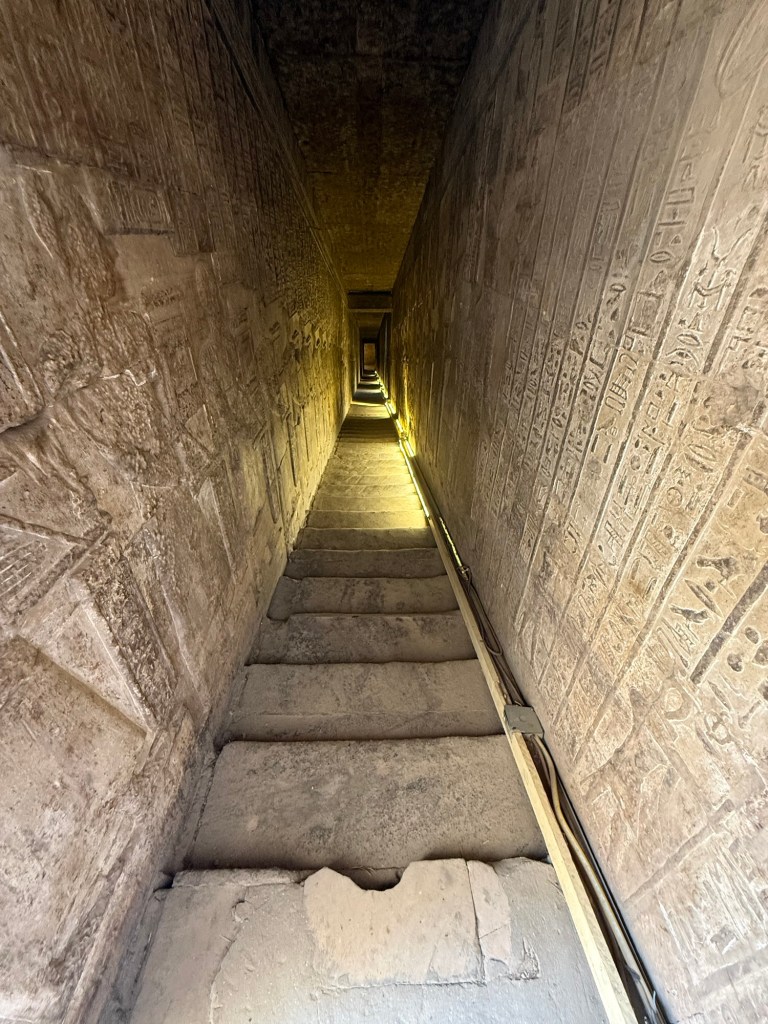
A processional stairway leads to the roof of the temple, where reliefs on the walls depict scenes from rituals performed at the temple. The staircase shows wear from millennia of use and an apparent accretion of material, earning it the informal name of “the melted stairs.”
The roof offers great views as to the size of the complex and to the surrounding mud brick walls and entry gates.
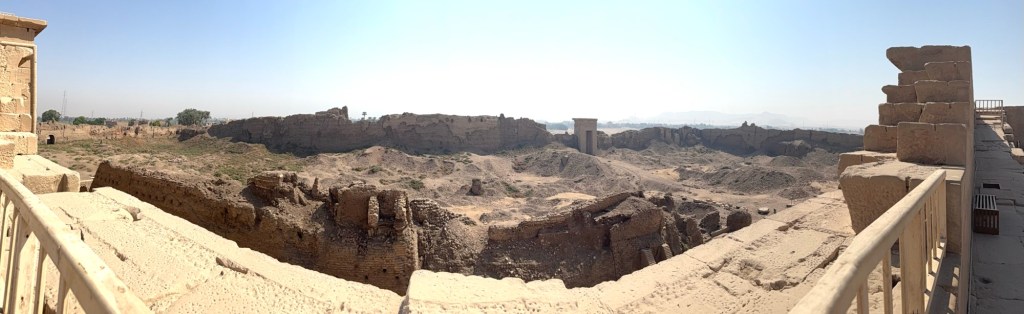

You can also see the Kiosk of Hathor.
The stairwell down is a straight shot.
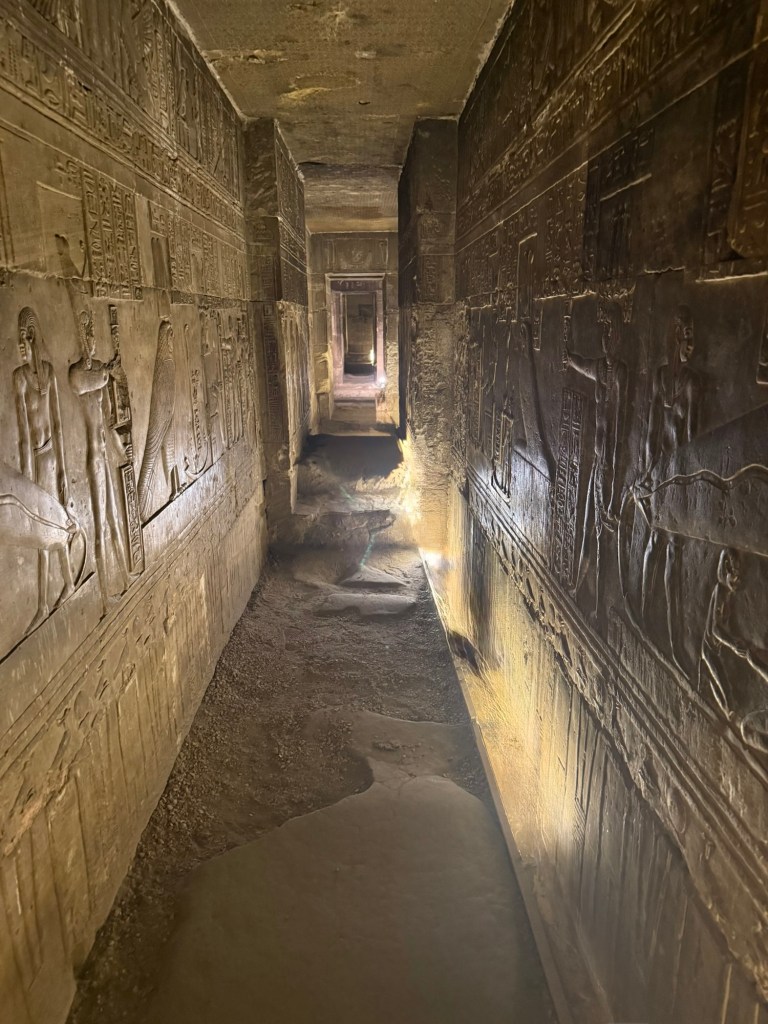
- Catacombs/Crypts
You have to be pretty bendy to get down here and it’s very claustrophobic. An opening in the Flame Room floor leads to a very narrow chamber with representations on the walls of the objects which were kept in them. In the second chamber, a relief depicts Pepi I offering a statuette of the God Ihy to four images of Hathor.
Sacred Lake and Sanatorium:
This would have functioned similarly to a Roman bathhouse, but strictly for bathing and an overnight stay to manifest healing dreams. The waters at Dendera were sacred and were often used to bless the inscriptions on statues so that they could cure diseases.
 seetheworldtravelblog