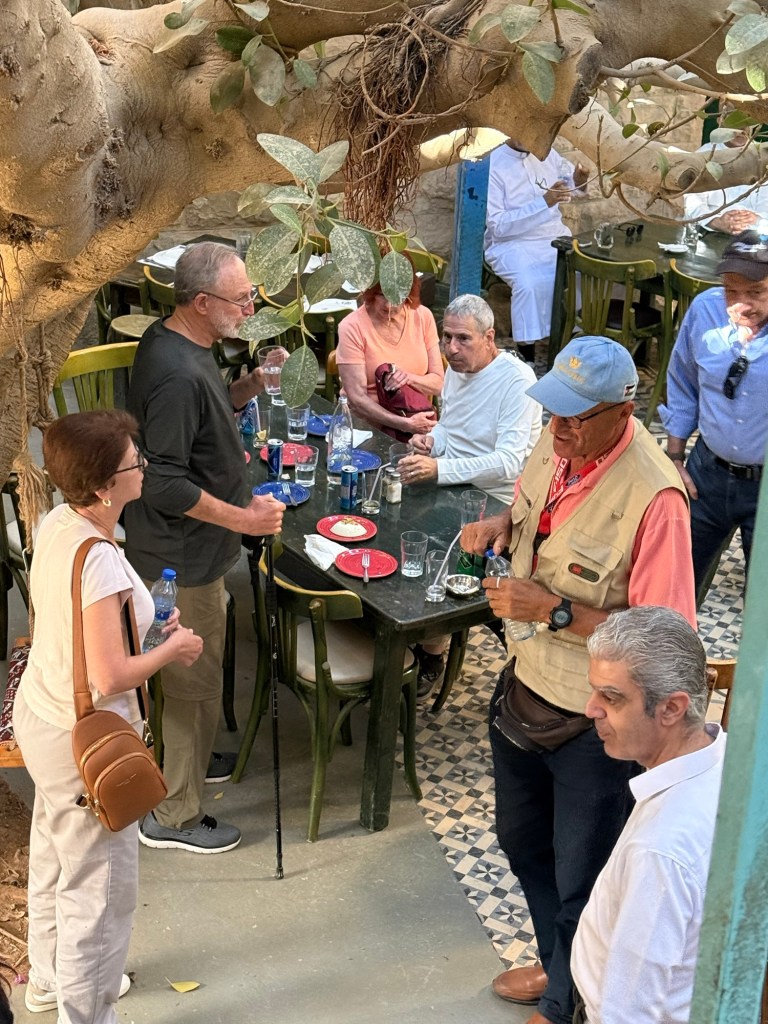
Day 9 (#1): AMA Waterways’ Jordan Land Trip, Cairo and Nile Cruise on AMALilia

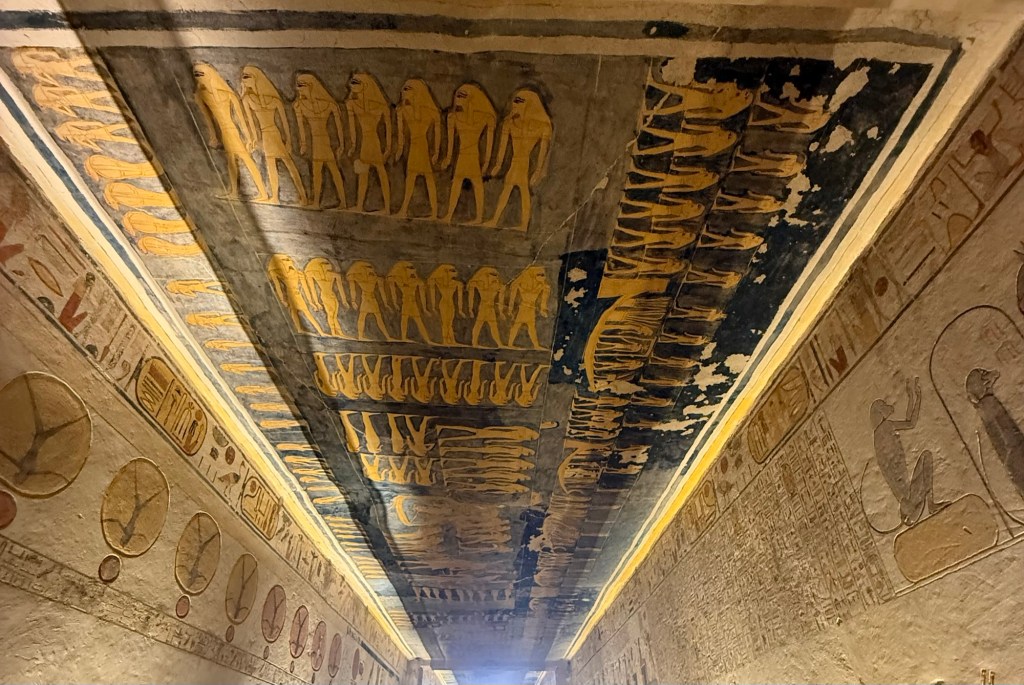
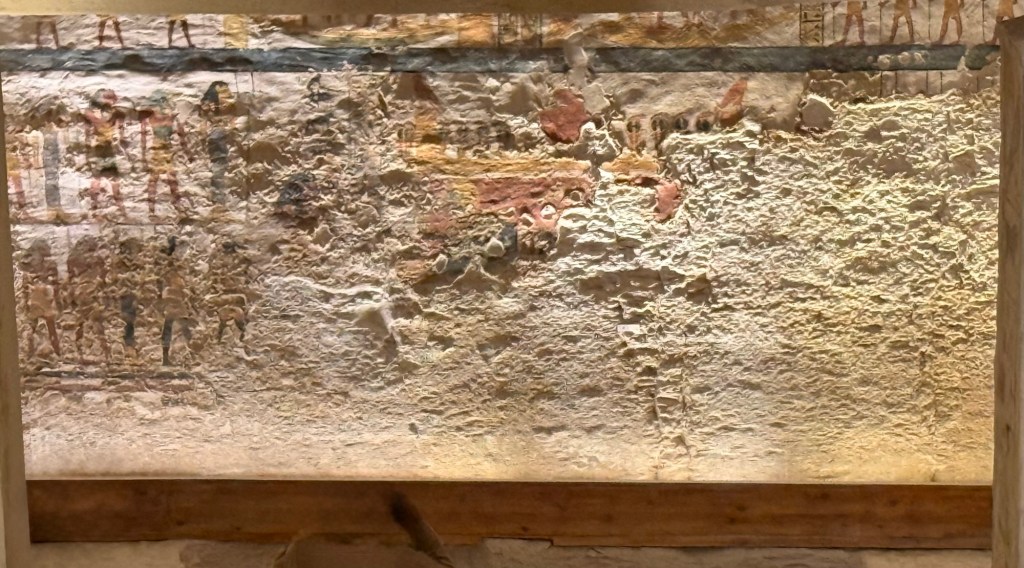
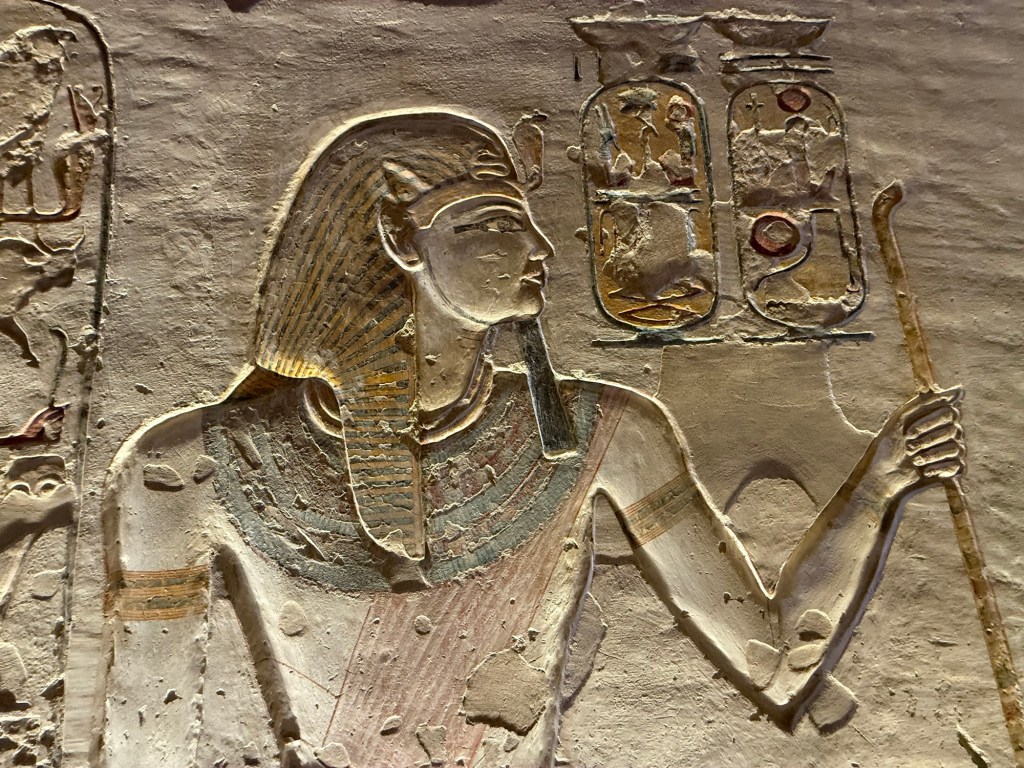
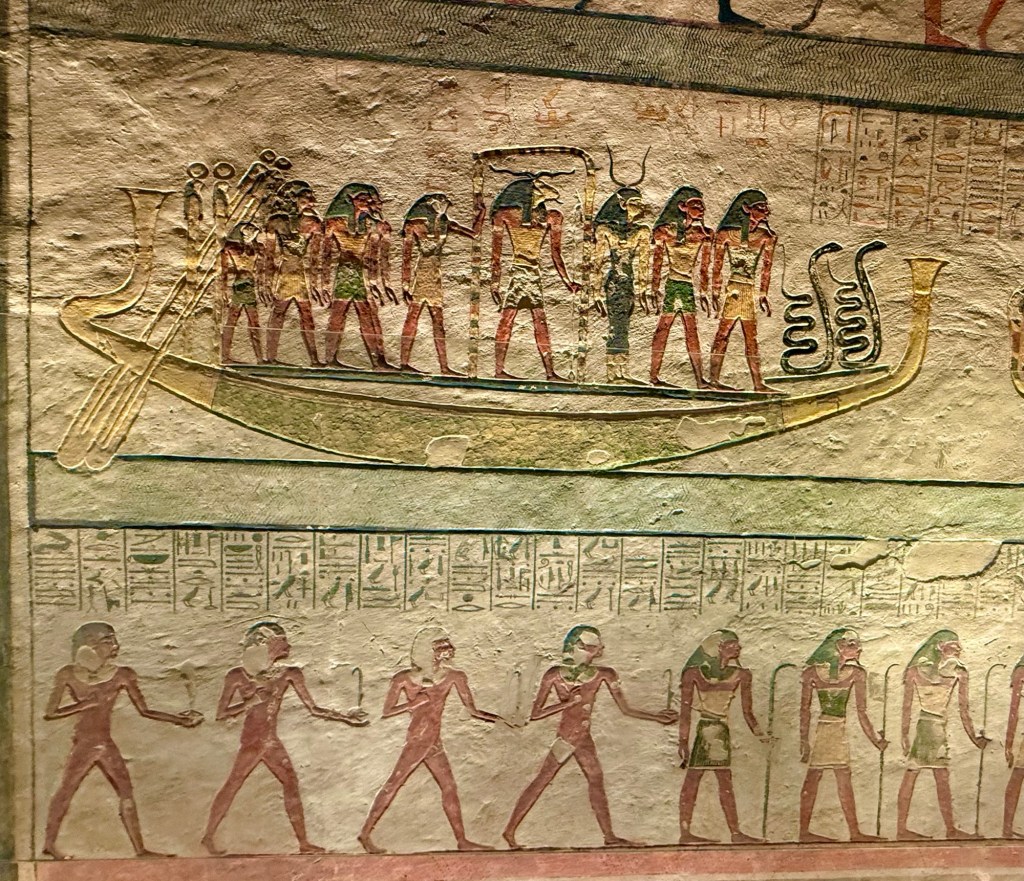
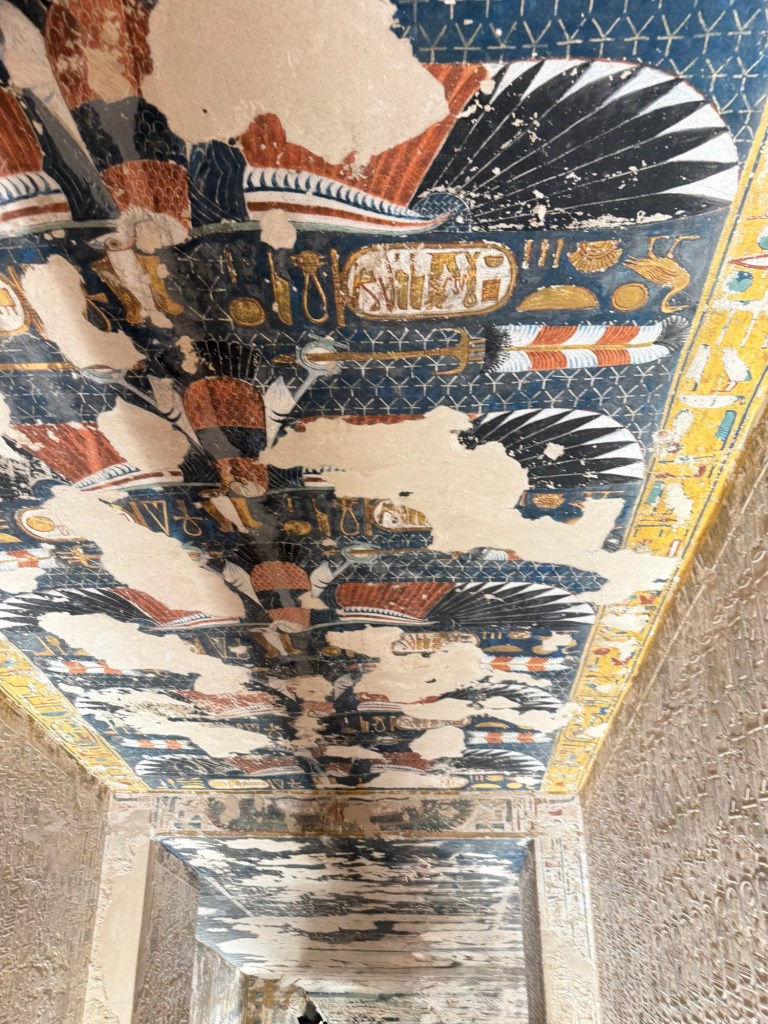
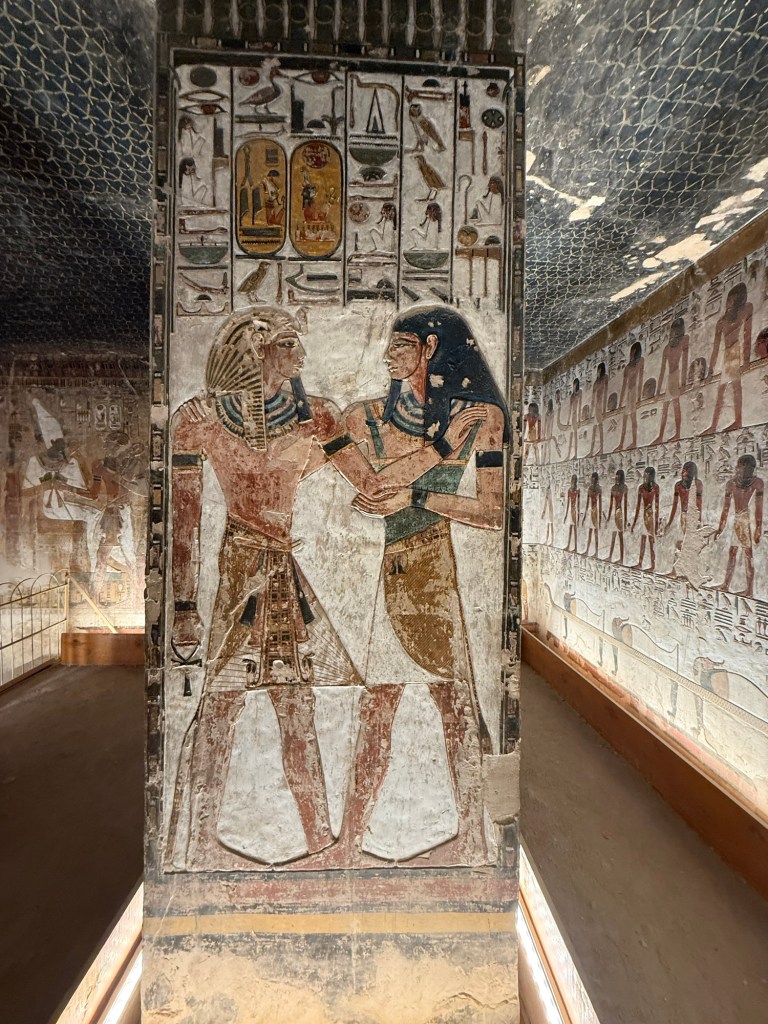
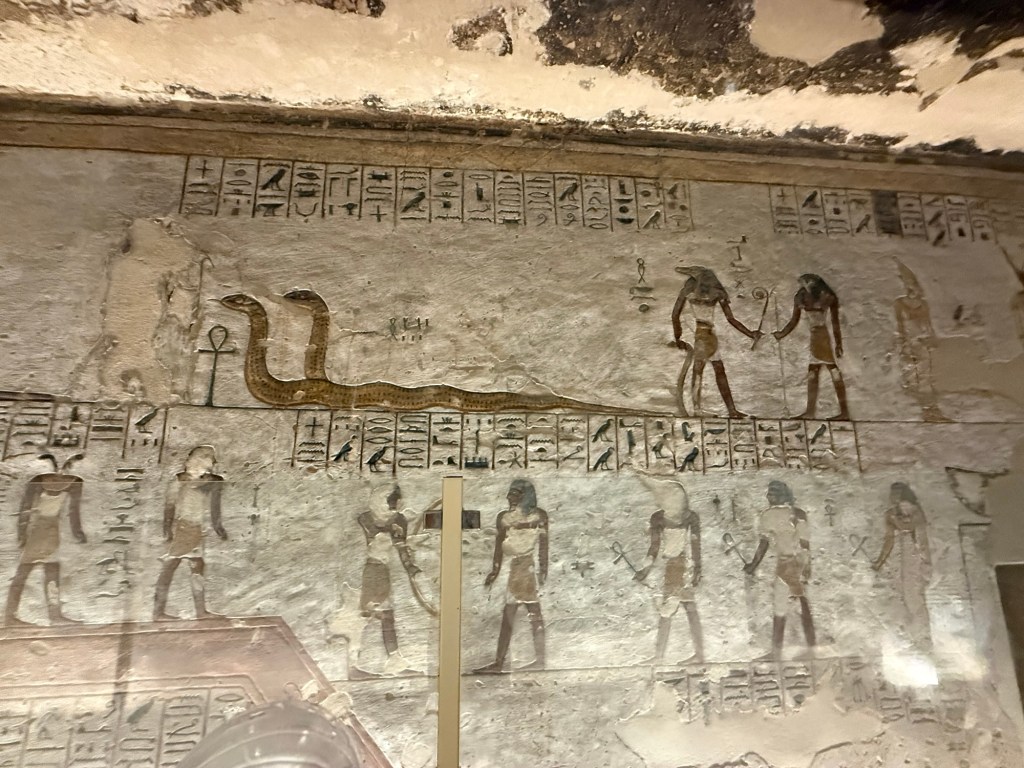
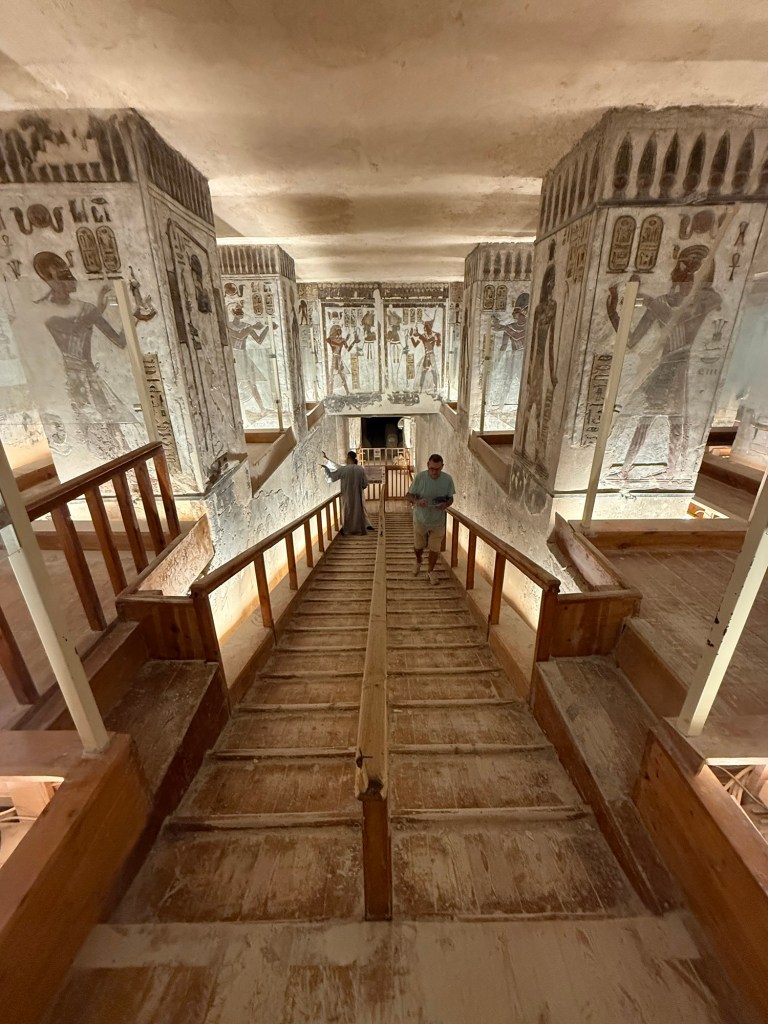
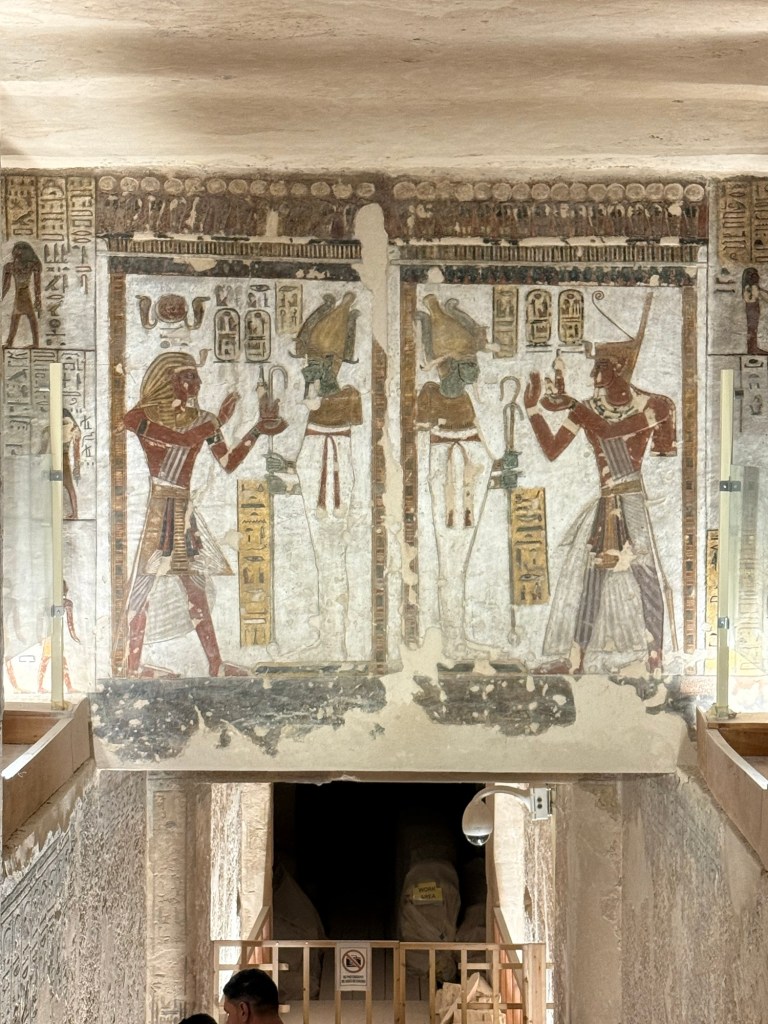
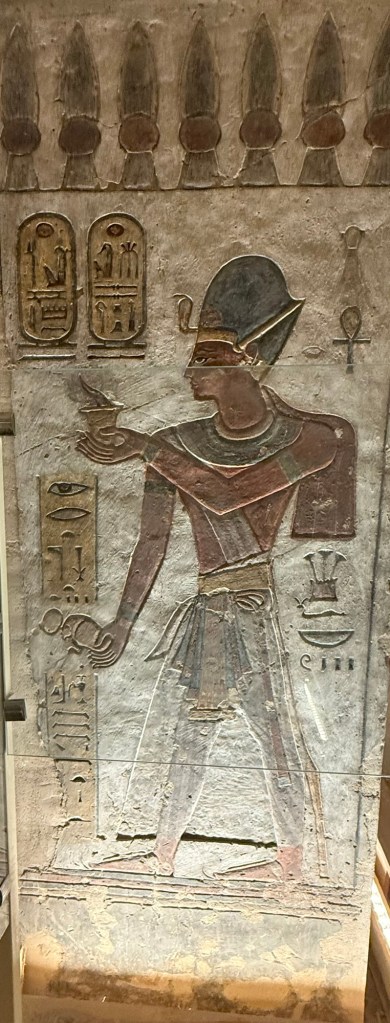
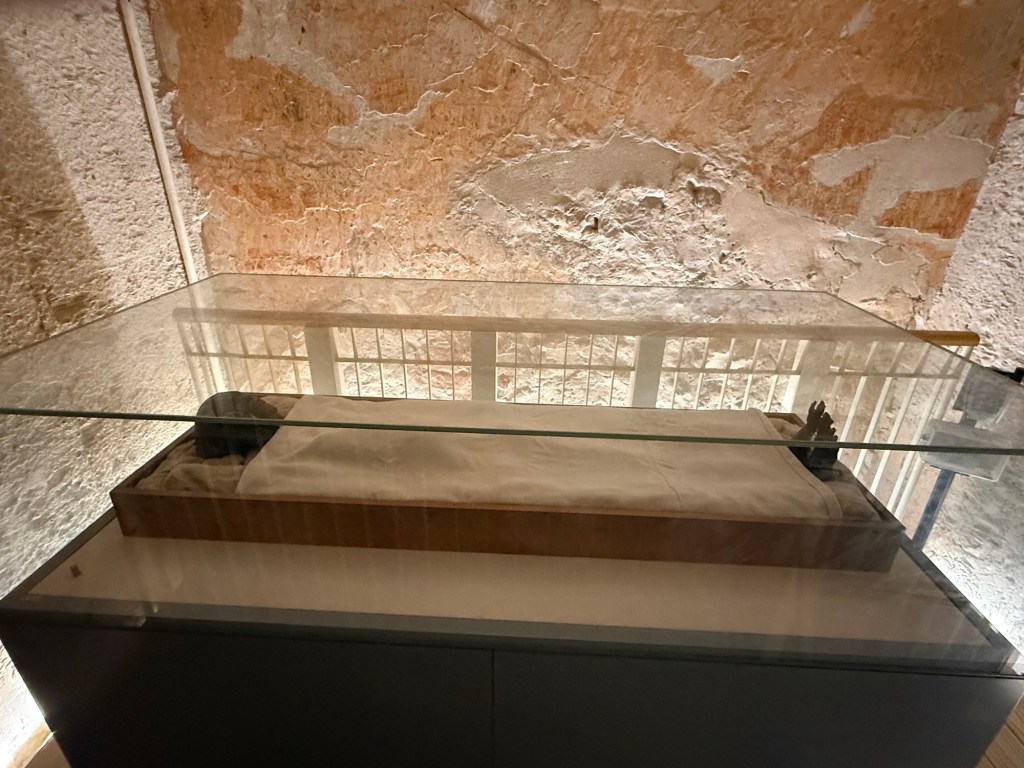
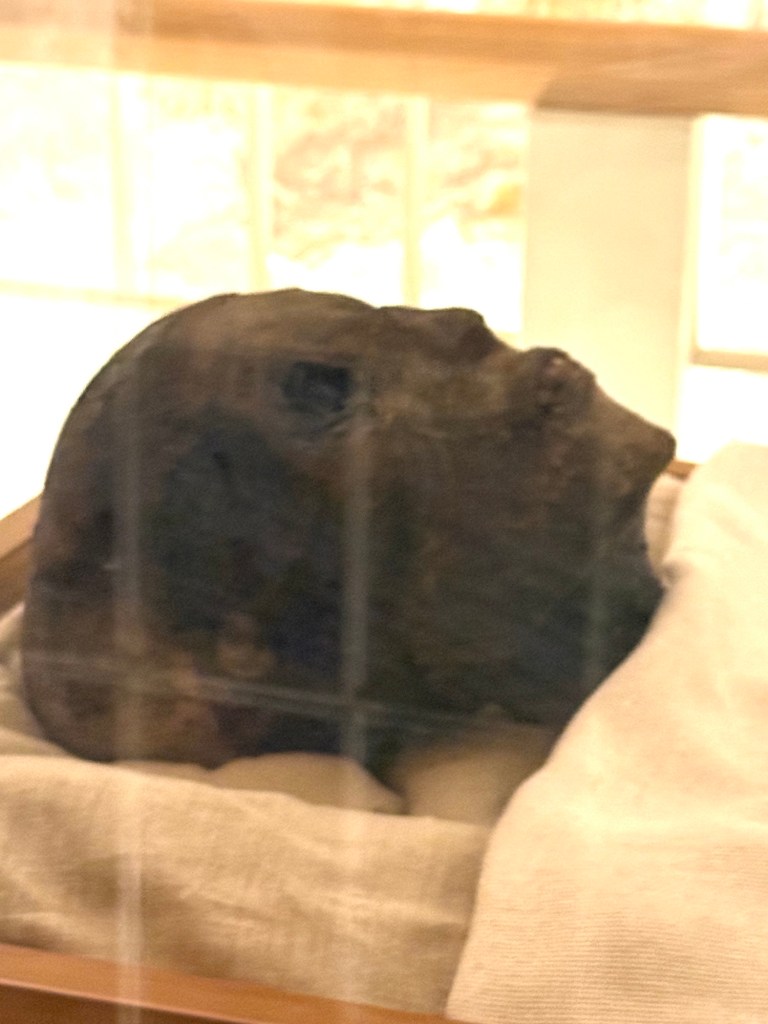
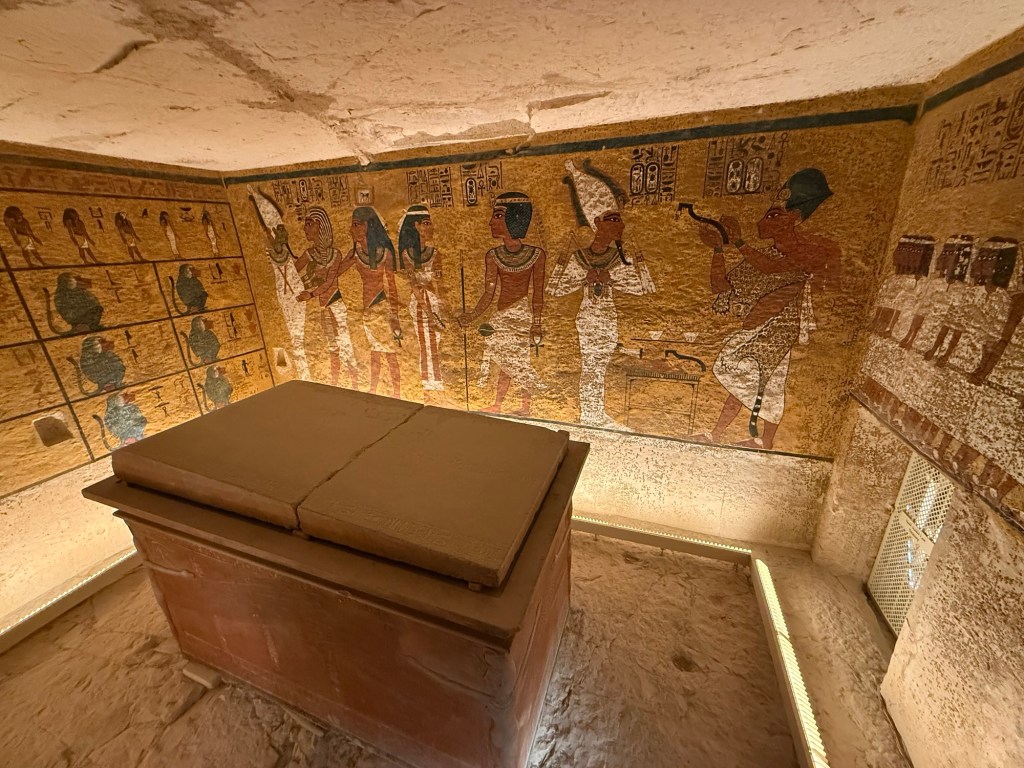
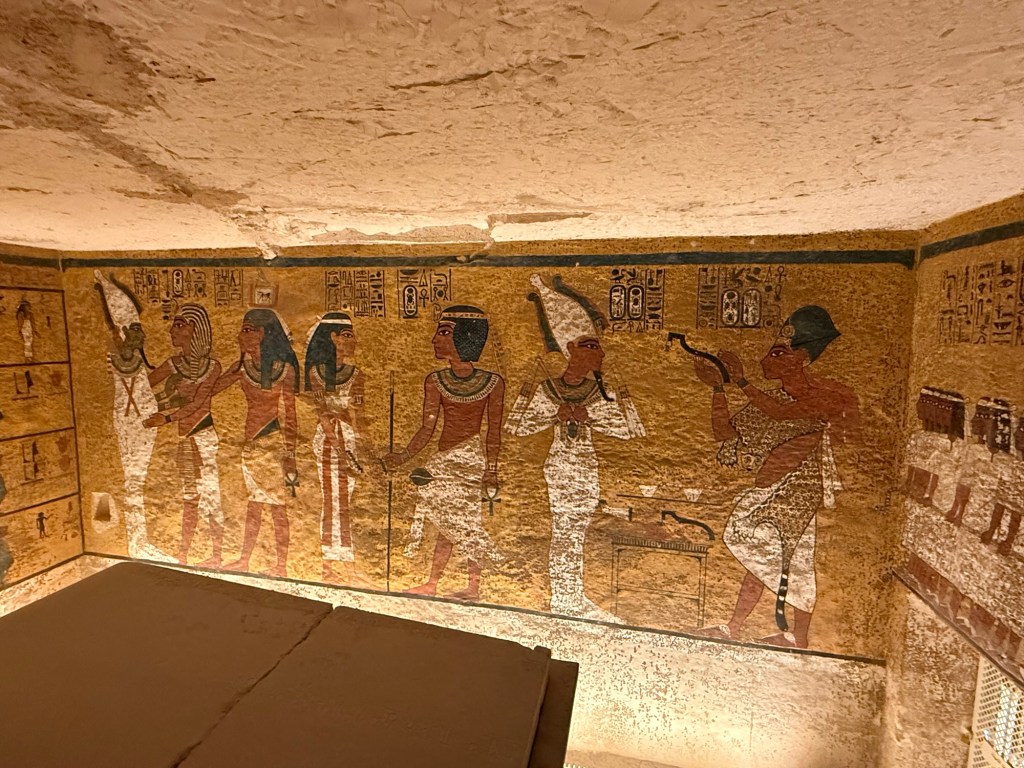
Day’s Itinerary: The Valley of the Kings, including special access to the tombs of Seti l and King Tutankhamun, Luxor
~ 37°C/100°F

By Paul Bryers

Lovely start to the day with hot air balloons rising over the mighty Nile and the early morning fishermen.

At 8 am we headed off to find drama and love in the Valley of the Kings with Robert Taylor and Eleanor Parker….

The Valley of the Kings is a royal burial ground on the West Bank of the Nile River famous for the rock-cut tombs of pharaohs and powerful nobles from the New Kingdom (c. 1550–1070 BC).
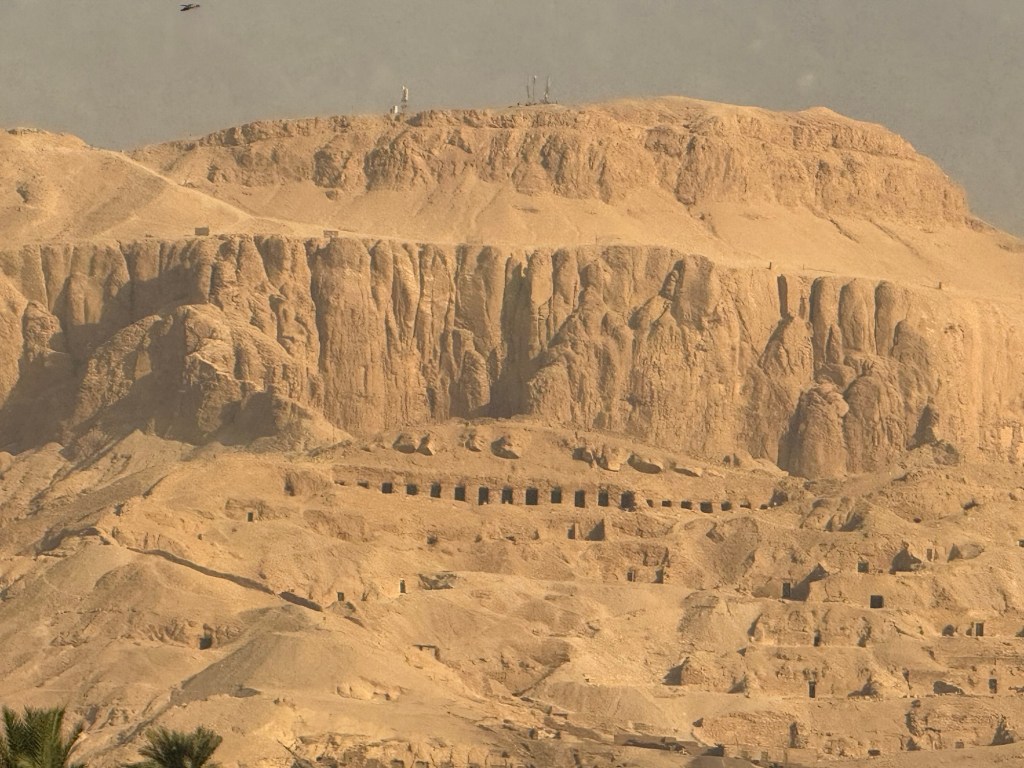
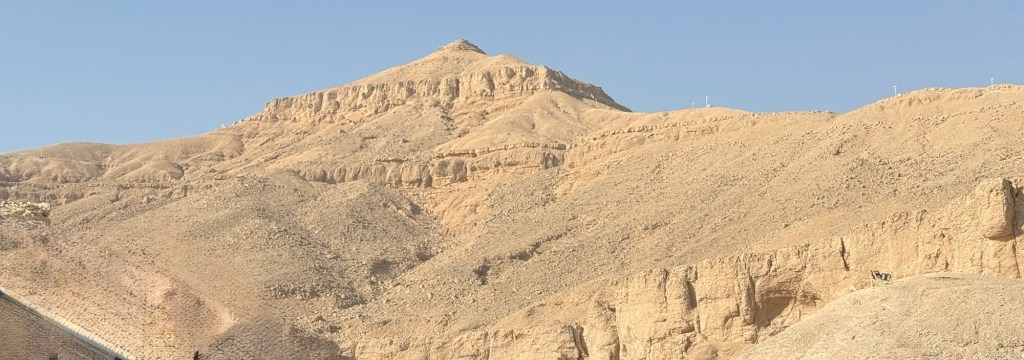
The necropolis’s location was chosen because of its association with the setting sun and the concept of rebirth in the afterlife.
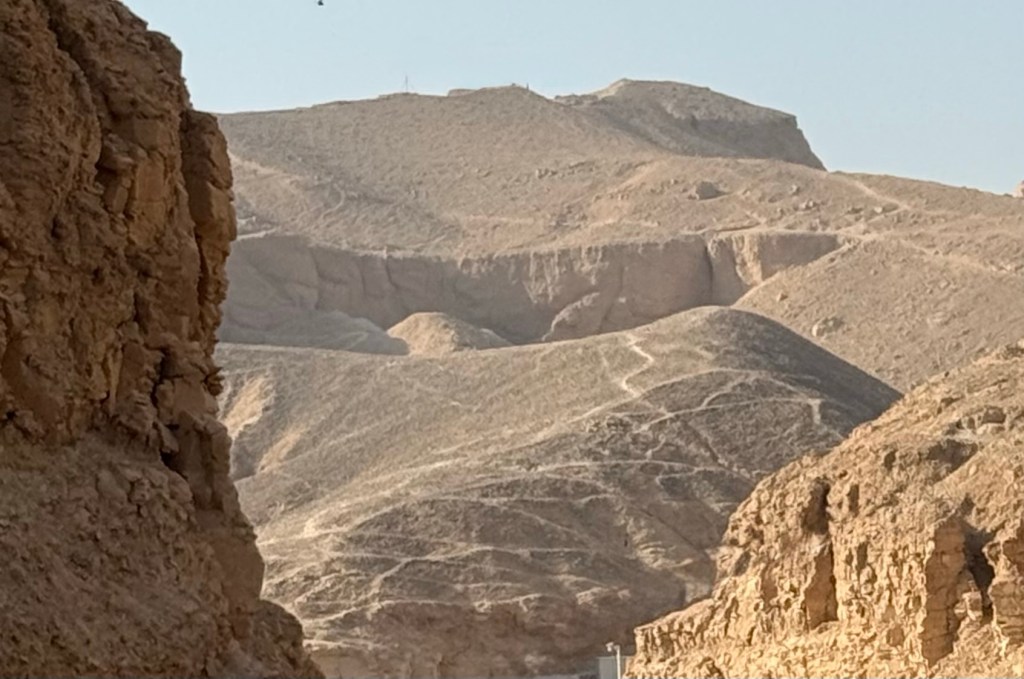
We visited the tombs of:

Rameses IX:

This seemed to be a small tomb as we quickly came to burial chamber which was inconveniently closed.
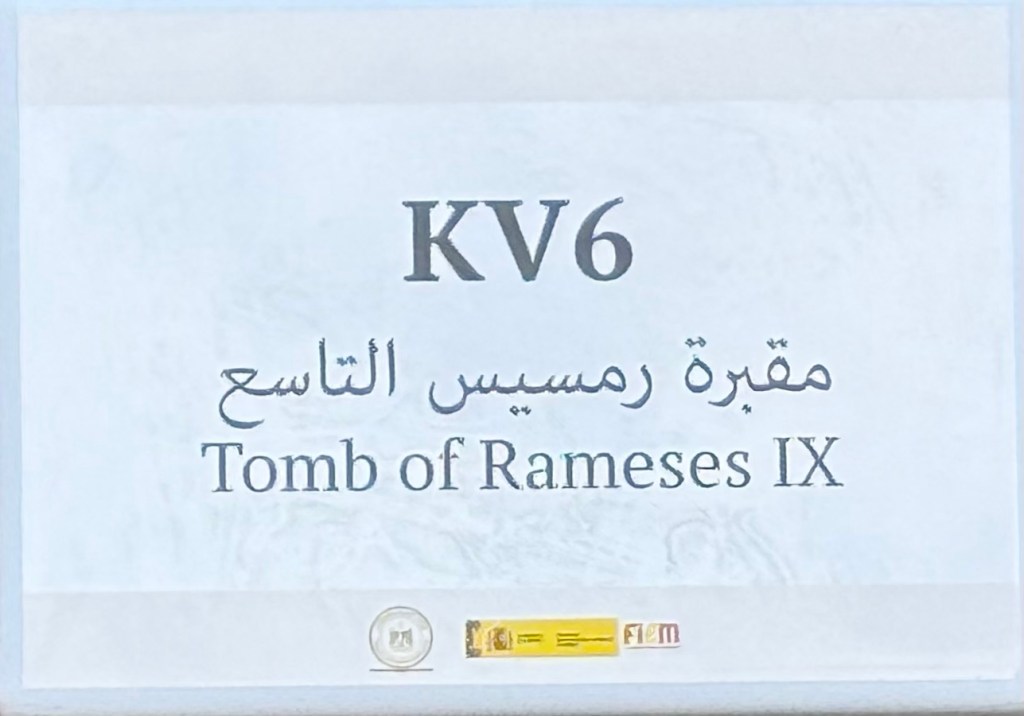
Nothing more to add
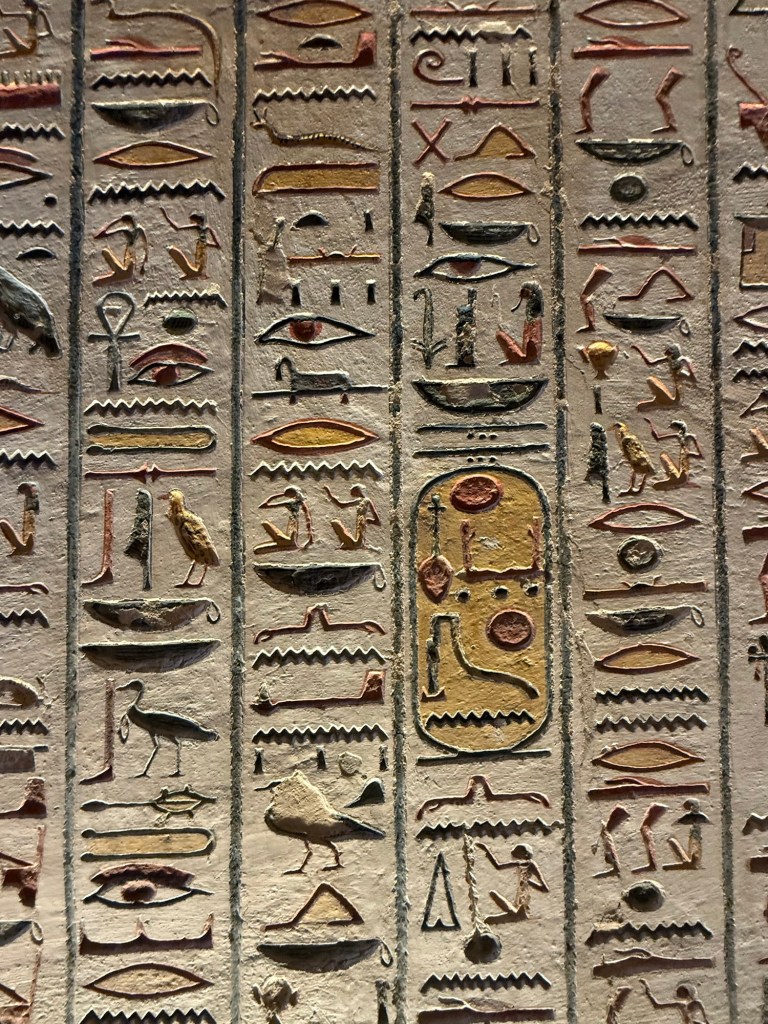
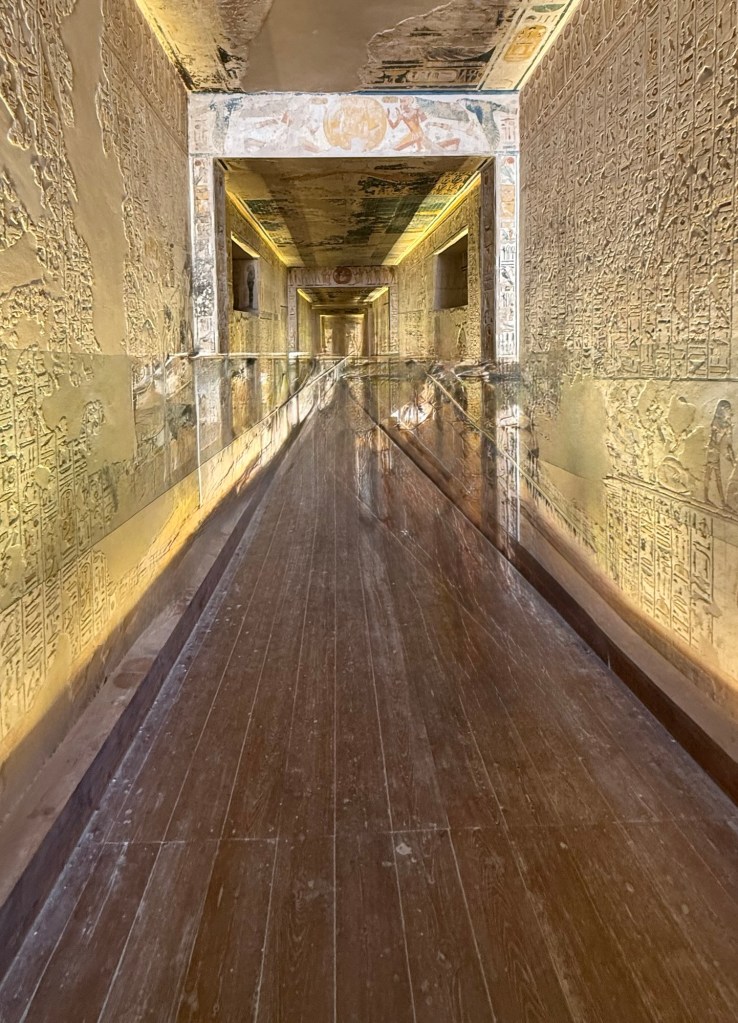
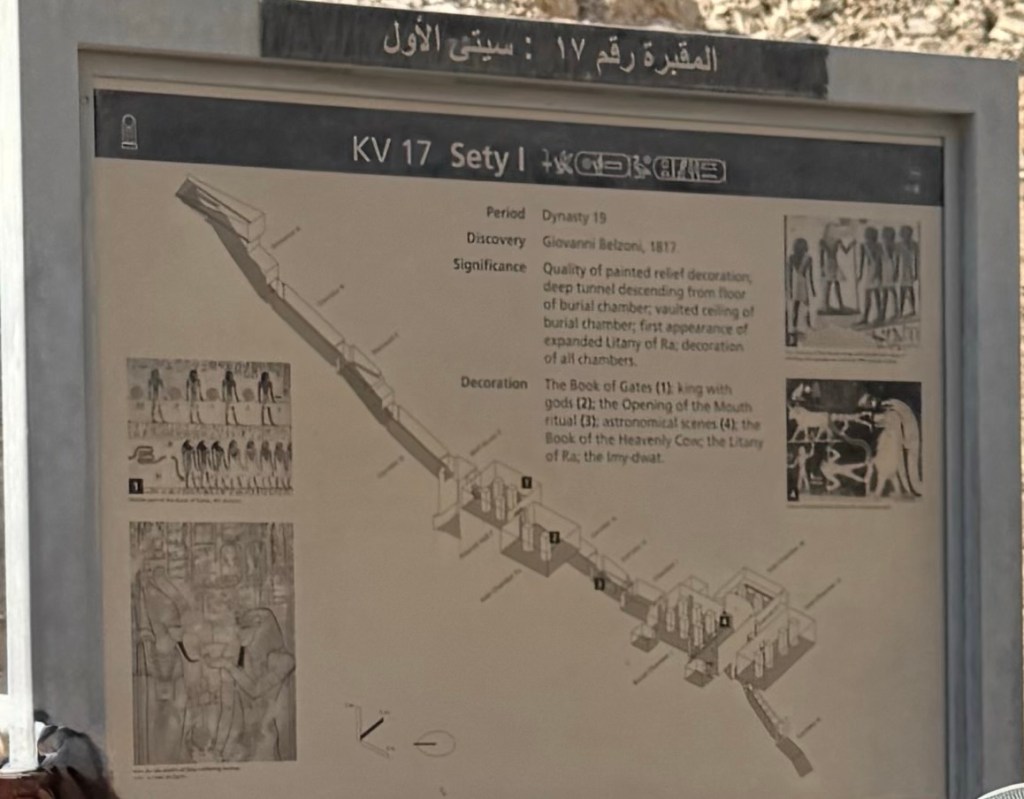
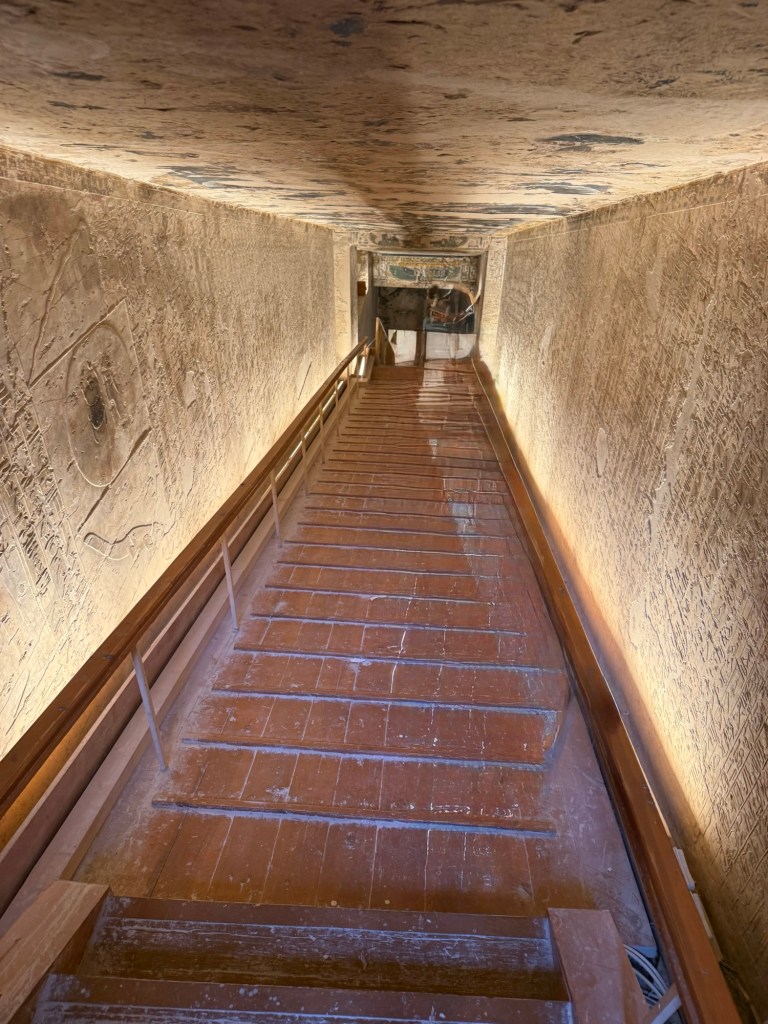
Sety I:

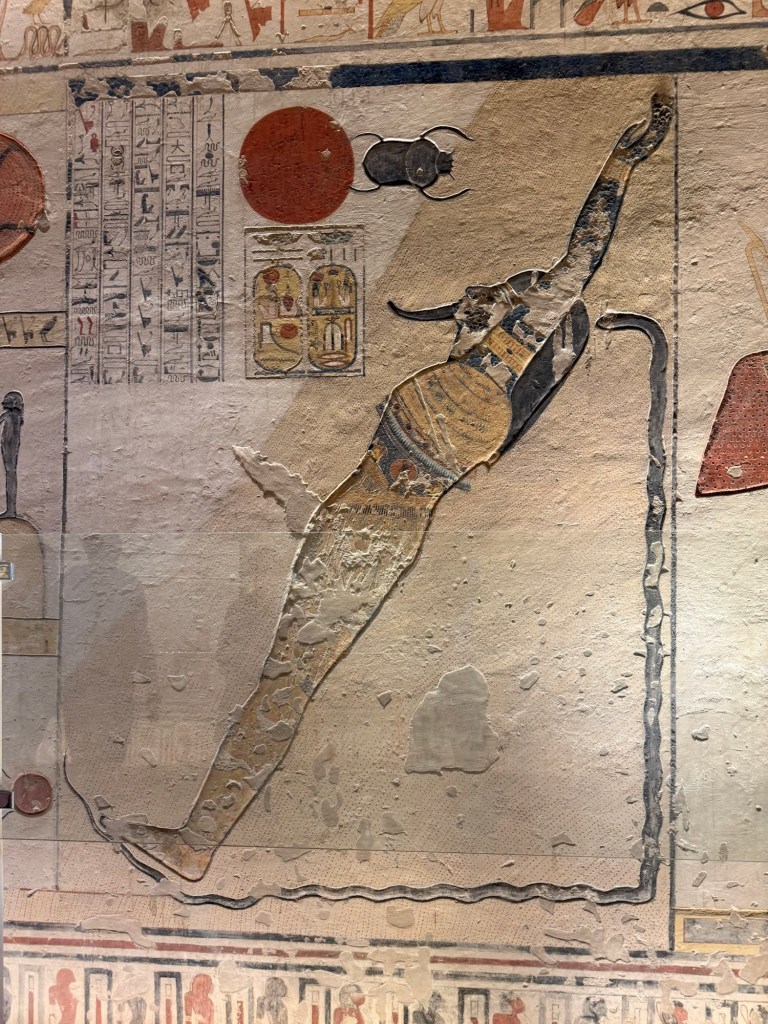
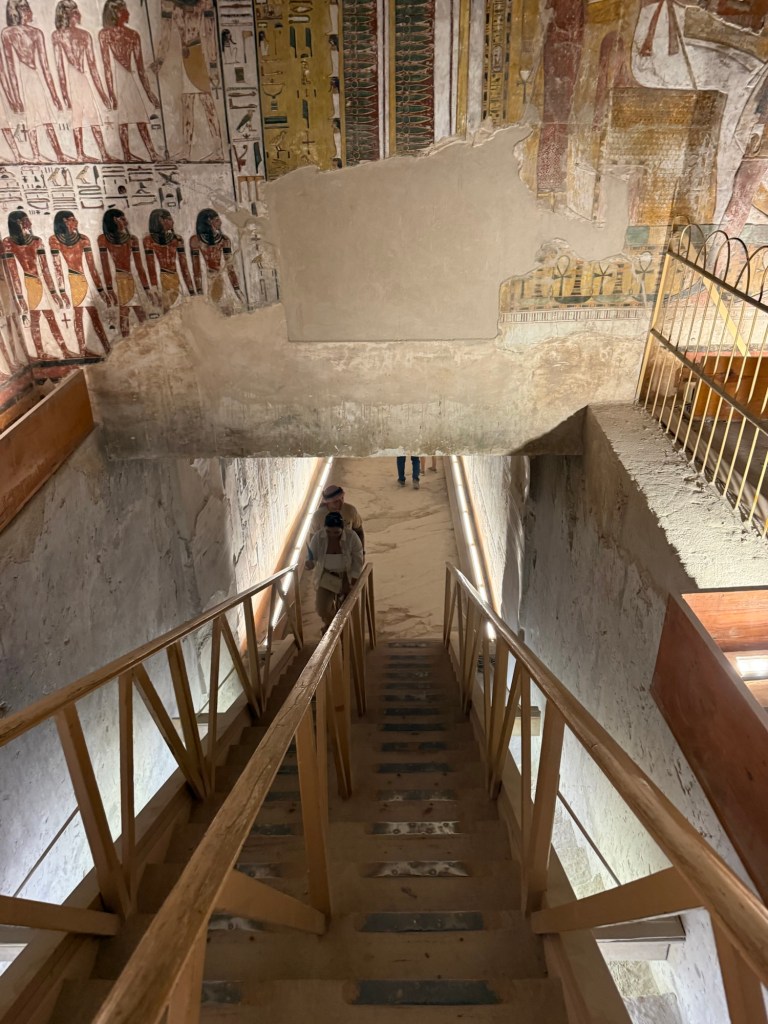
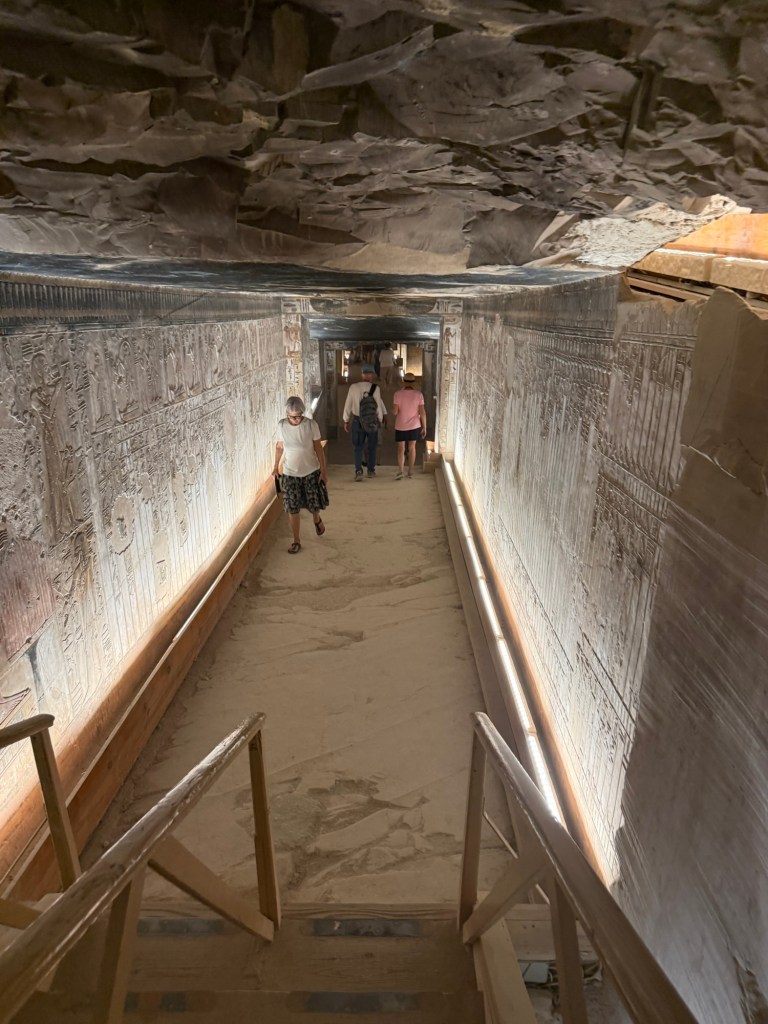
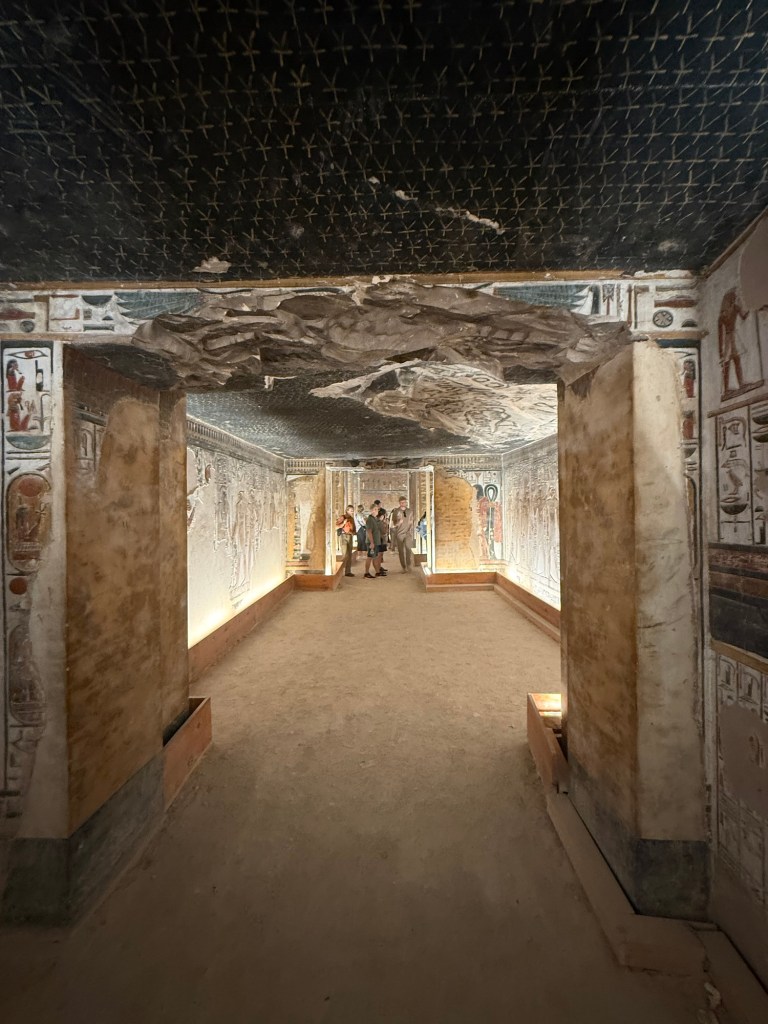
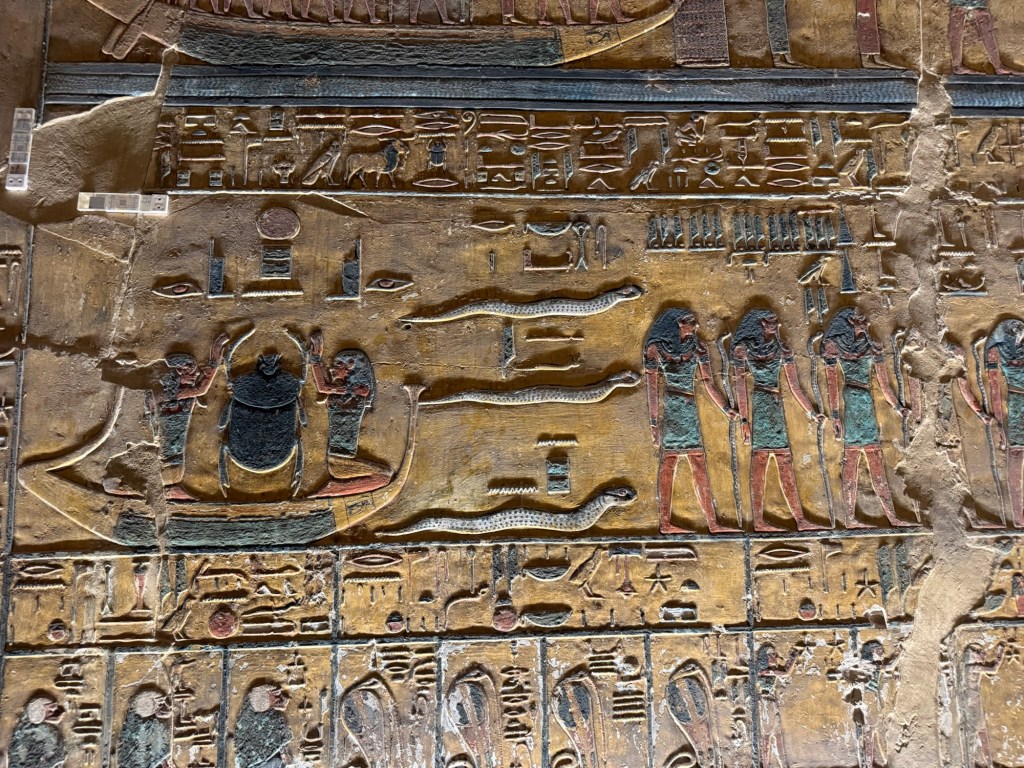
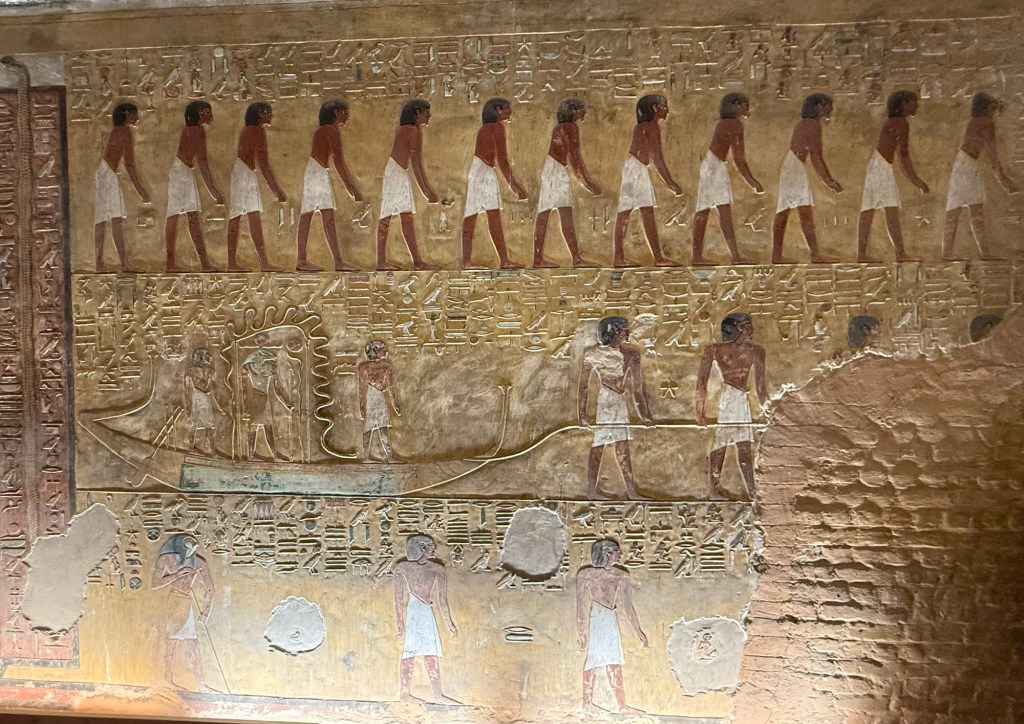
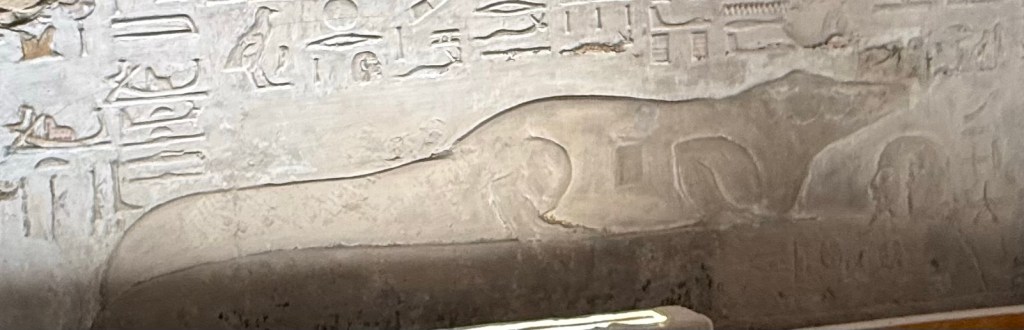
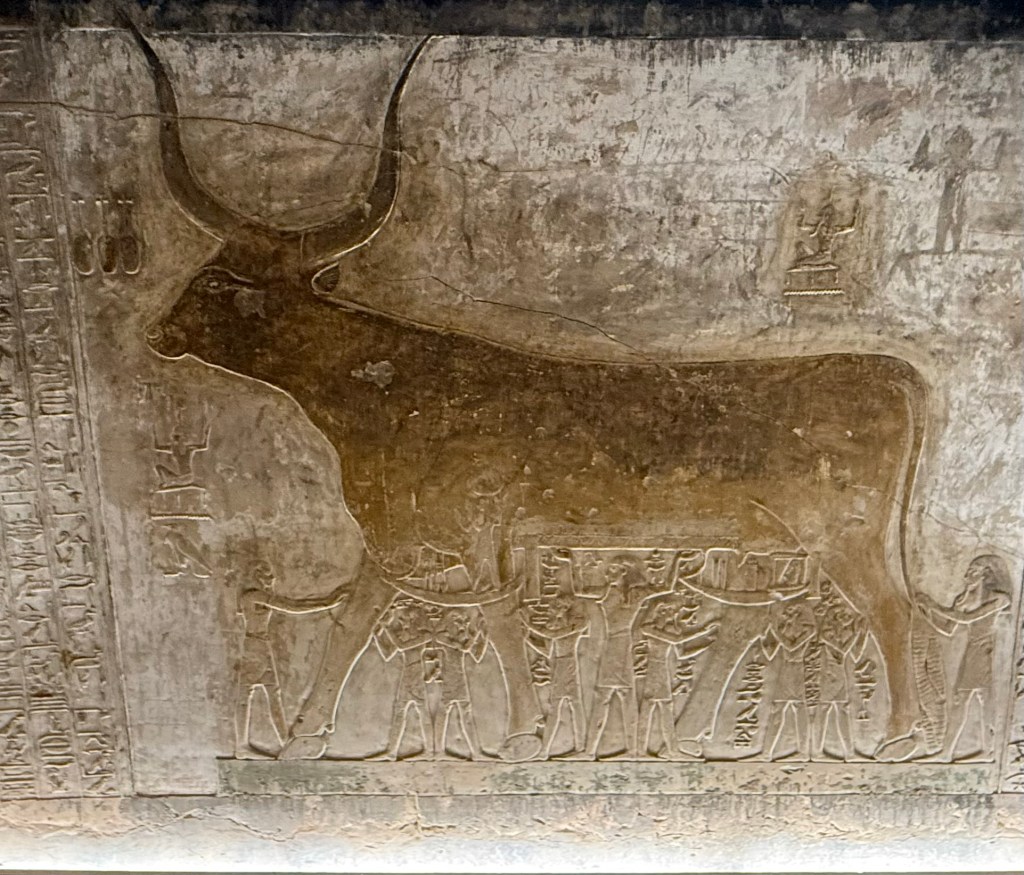
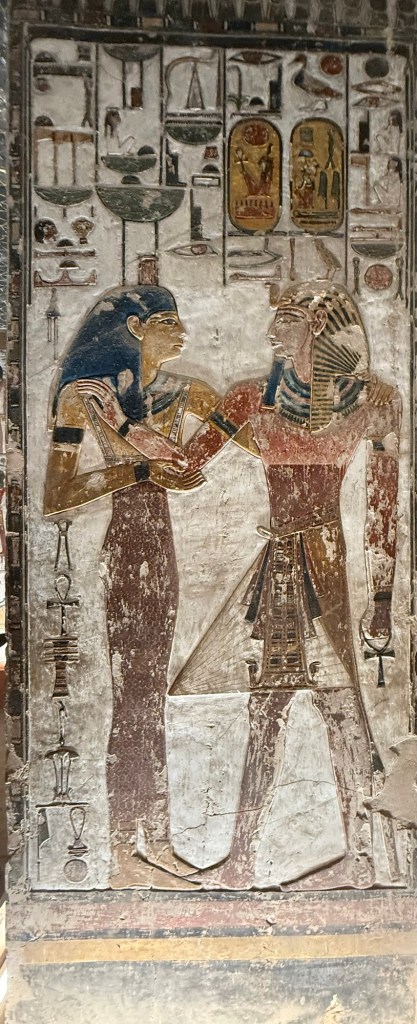
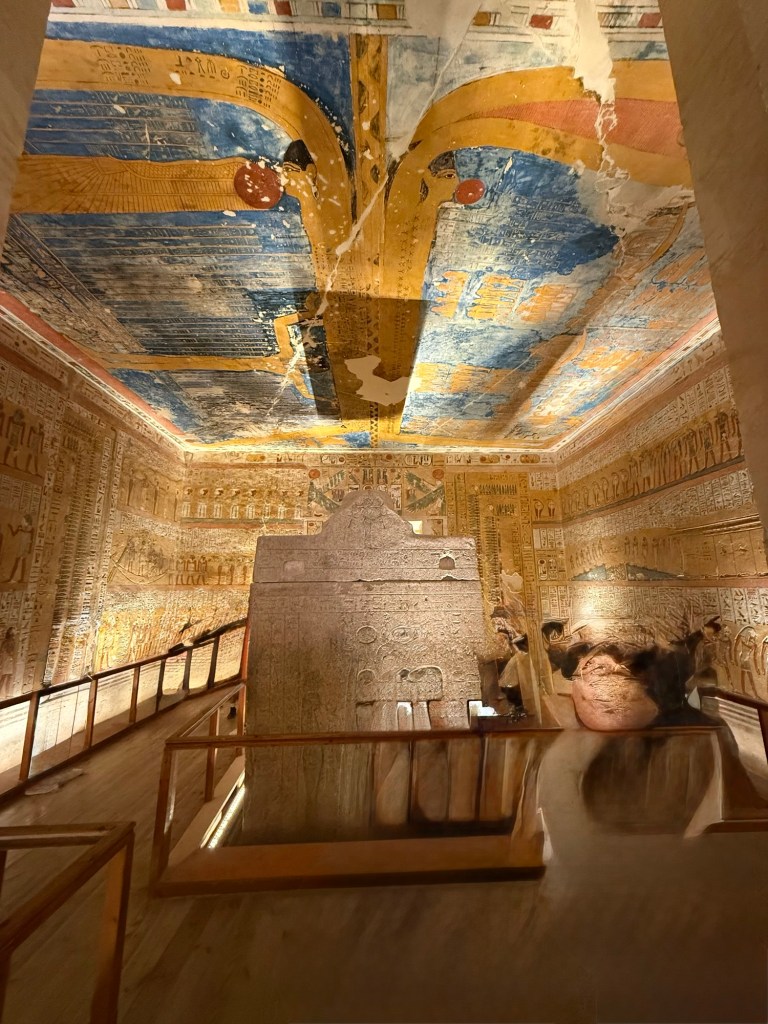
The tomb of Sety/Seti I is the tomb of PharaohSeti I of the 19th Dynasty. It is one of the most decorated tombs in the valley, and is one of the largest and deepest tombs in the Valley of the Kings. In a word? Magnificent!

Rameses III

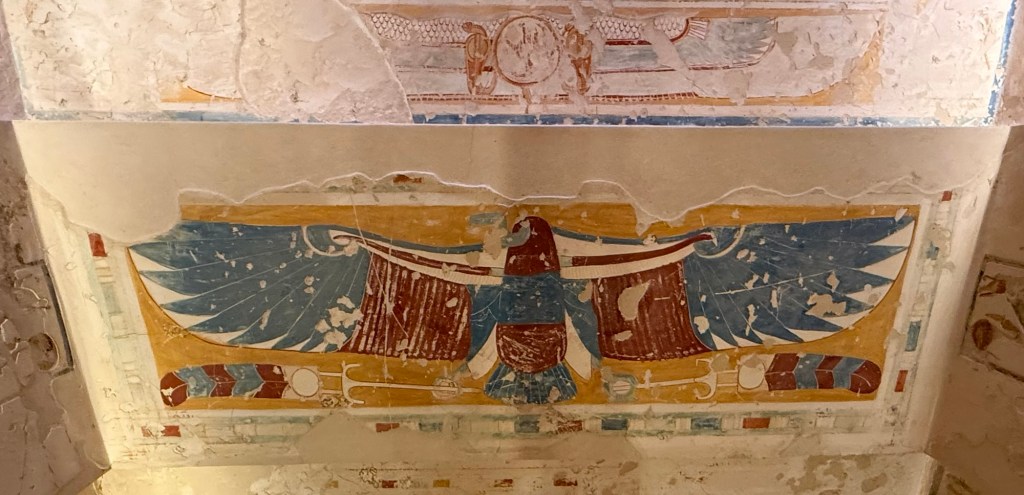
This tomb contains scenes from various religious books, including the Book of Gates (not Bill) and the Book of the Dead.

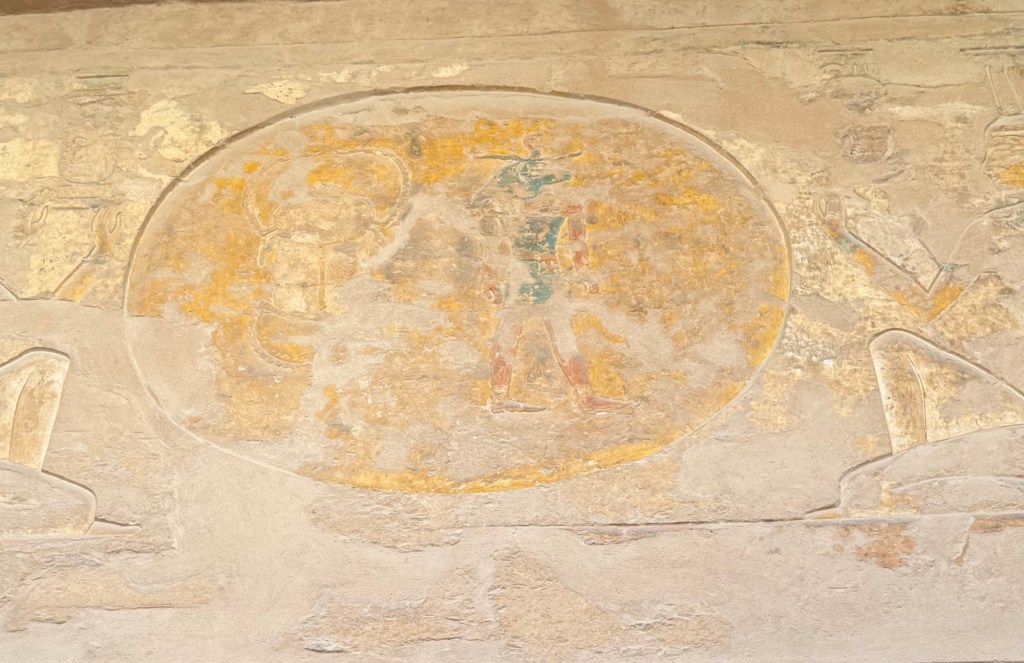
Tutankhamen….enough said….
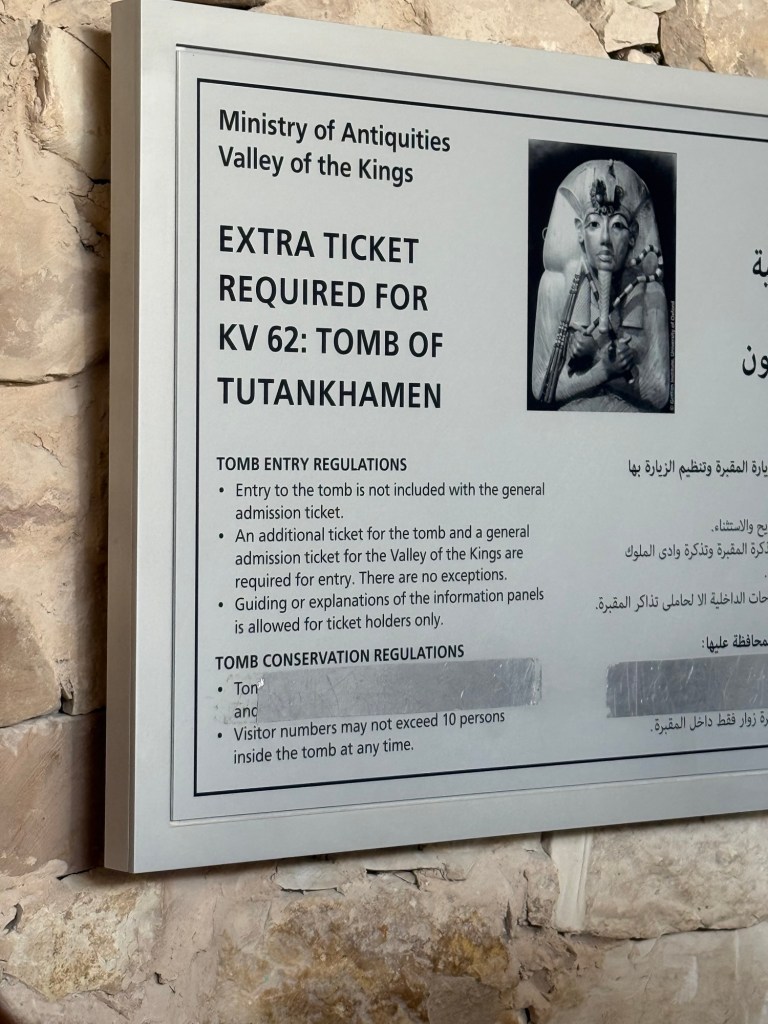
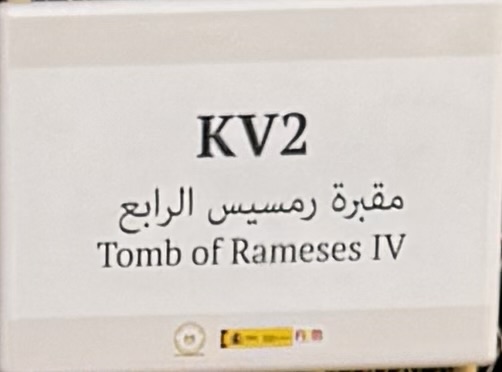
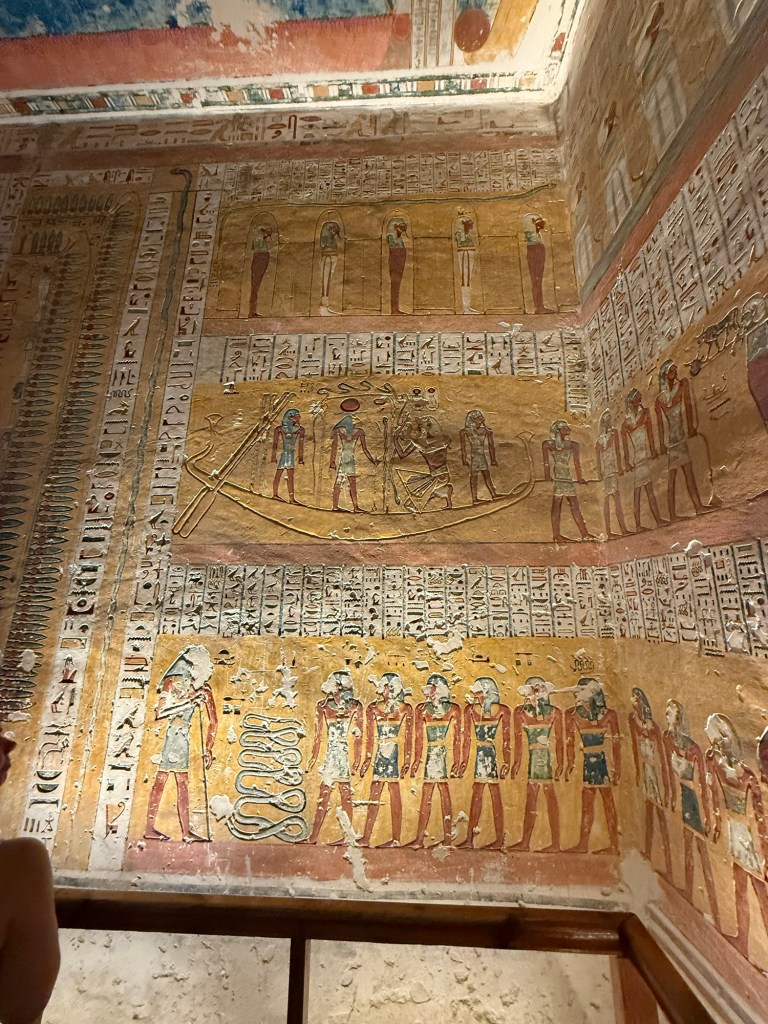
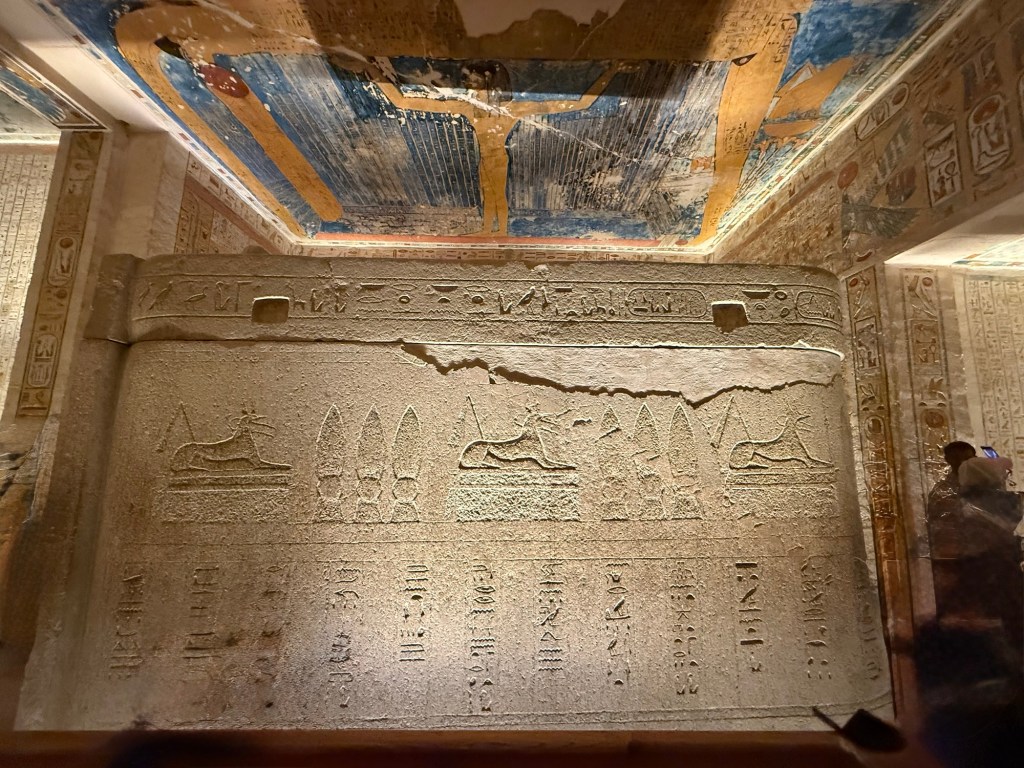
Rameses IV’s tomb is located low in the main valley, between tombs KV 7 & 1. It has been open since antiquity and contains a large amount of graffiti.
Hatshepsut Temple

Hatshepsut (c.1473–1458 BC), the queen who became pharaoh, built a magnificent temple at Deir al-Bahari, on the west back of Luxor. It lies directly across the Nile from Karnak Temple, the main sanctuary of the god Amun.

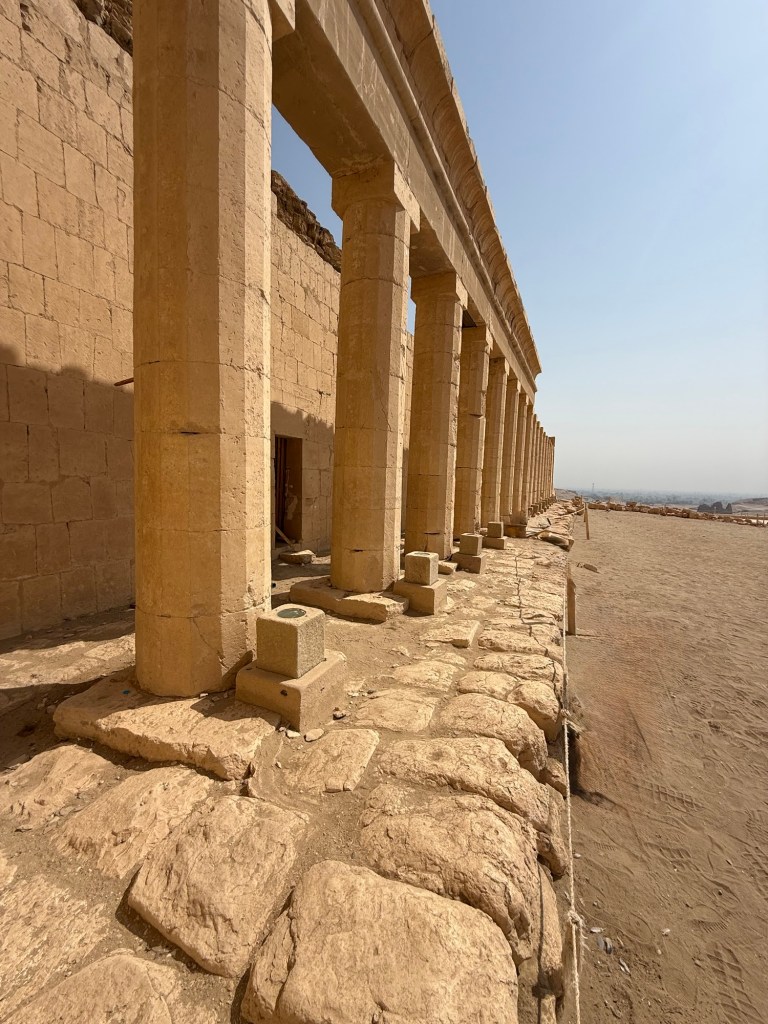
The temple consists of three levels each of which has a colonnade at its far end. On the uppermost level, an open courtyard lies just beyond the portico. Mummiform statues of Hatshepsut as Osiris, the god of the dead, lean against its pillars.
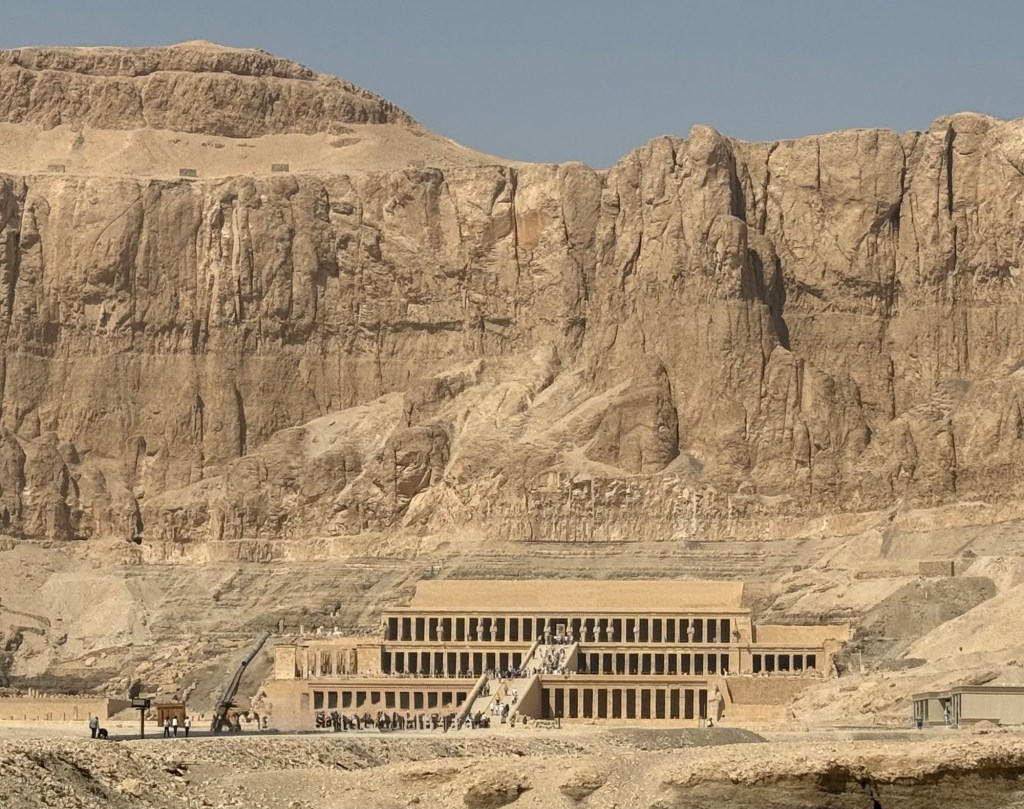
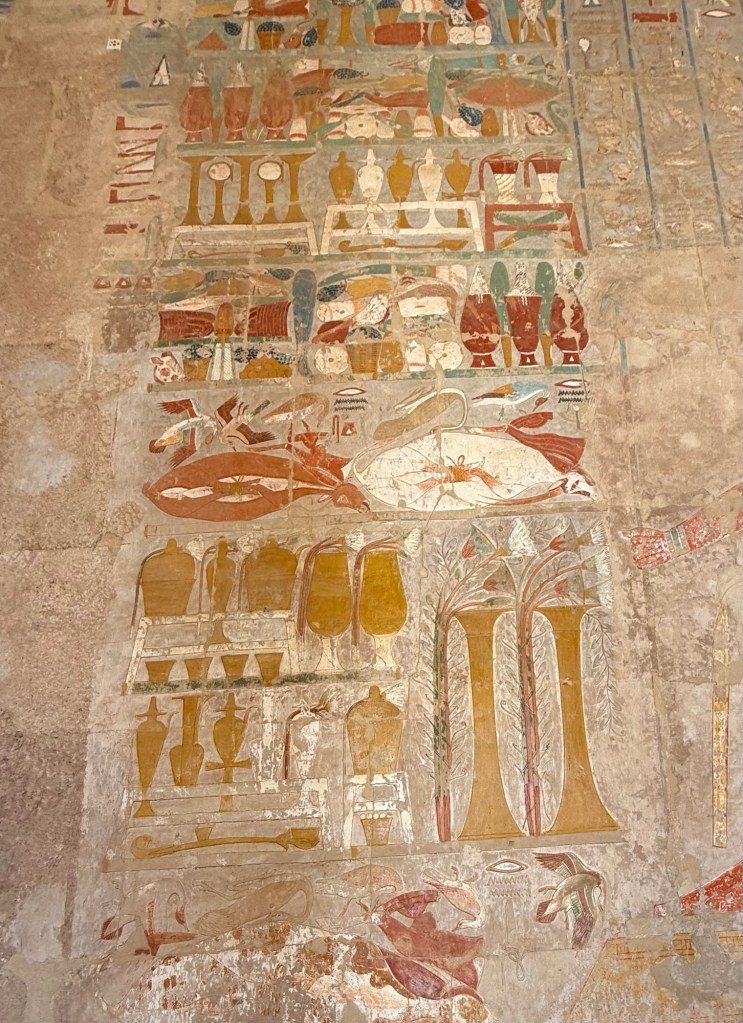
The temple’s walls are covered with beautiful painted reliefs depicting temple rituals, religious festivals, and even the transportation of obelisks from the quarry to their destination in Karnak Temple.
Coliseum of whoever..

Day 8 (#1): AMA Waterways’ Jordan Land Trip, Cairo and Nile Cruise

Coptic Cairo

By Paul Bryers

Our itinerary for the day includes visiting two Coptic Orthodox Christian churches and a Jewish Synagogue.
For religious context, Egypt’s population stands at approx 108 million, with 25% identifying as Christian, 300 as Jewish and the remaining population is Muslim.
The term “Coptic” refers to the Coptic language, the final stage of ancient Egyptian, or the Coptic Orthodox Church, the largest Christian community in the Middle East, which utilizes the Coptic language in its liturgy. Additionally, “Coptic” pertains to the Coptic culture and people, who are indigenous to Egypt and share a heritage tied to ancient Egypt, Christianity, and their unique history.

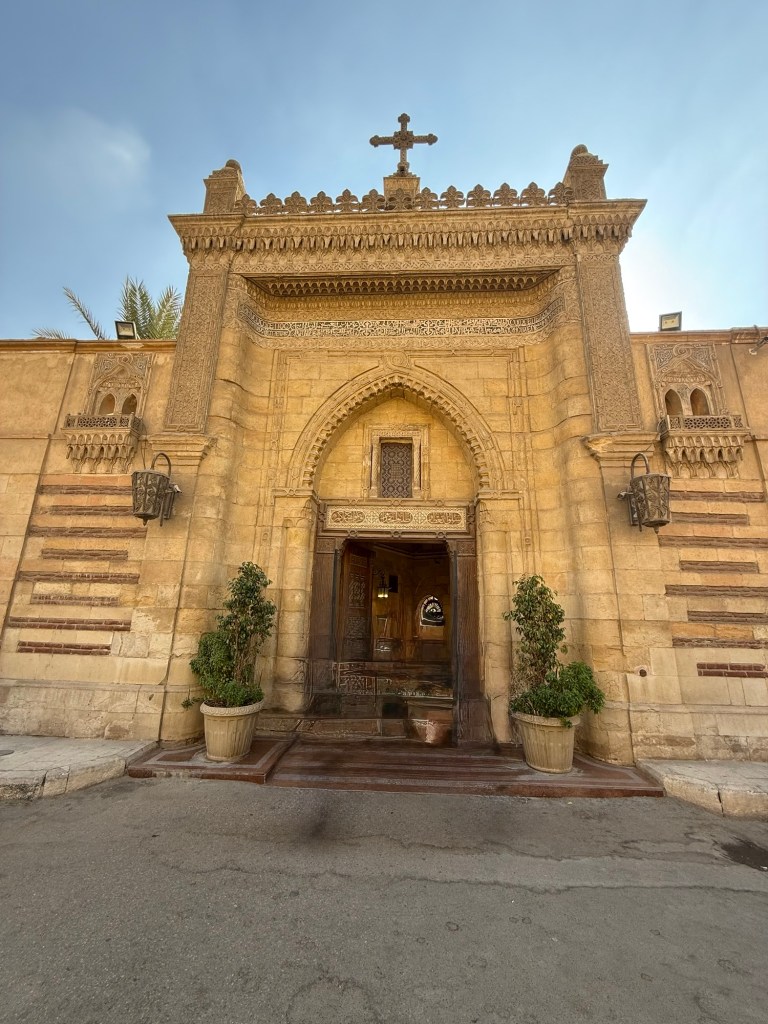
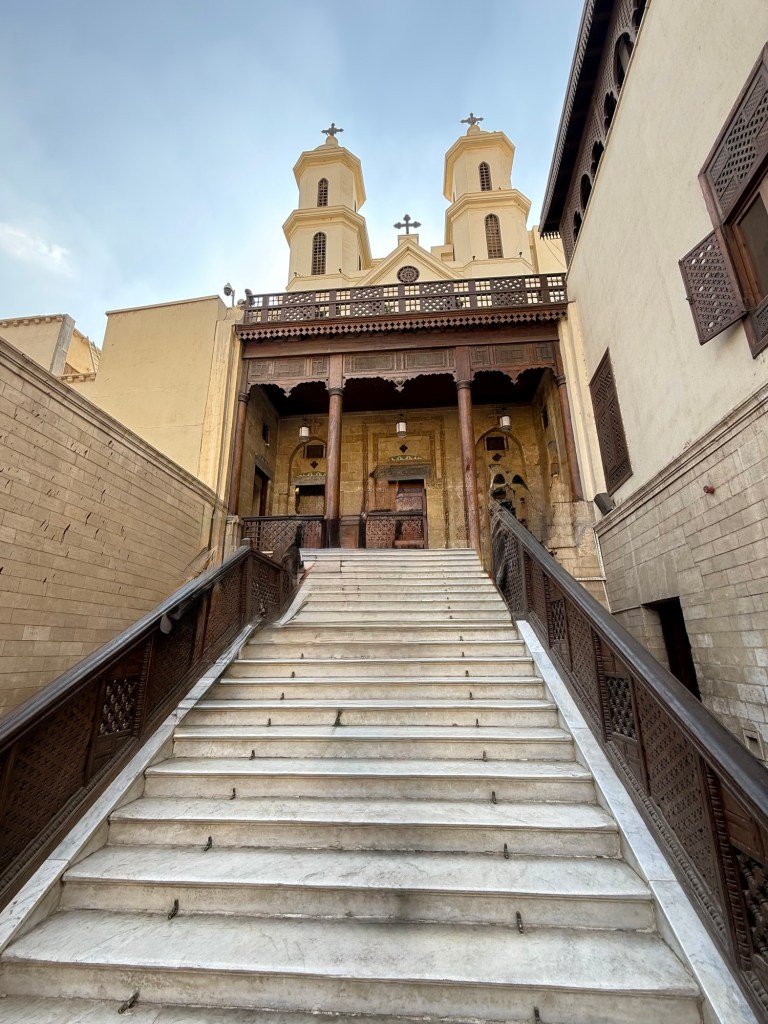
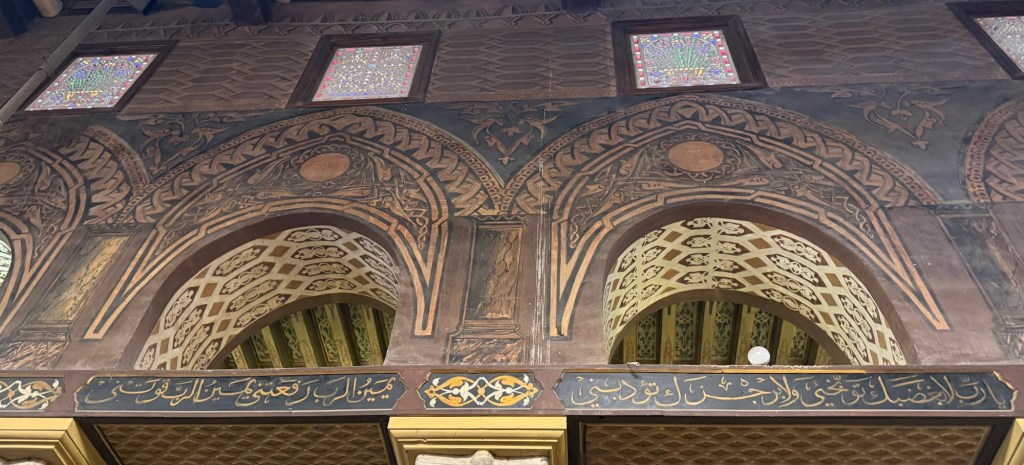
Hanging Church
The Hanging Church is also known as the Suspended Church or Al-Moallaqa. Its name derives from its construction on the southern gate of the Roman Fortress.

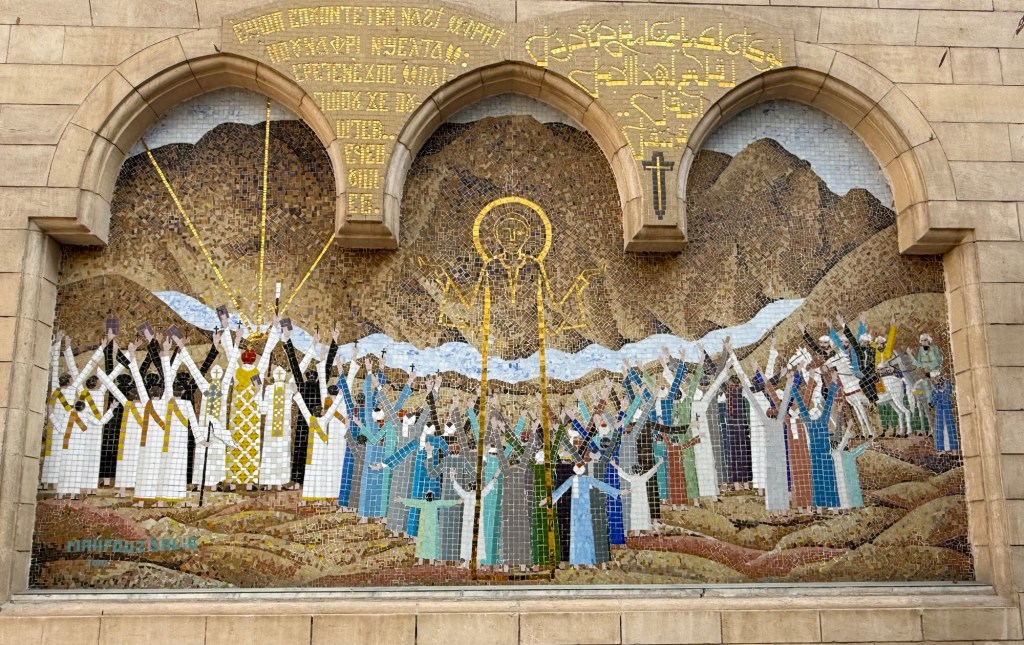
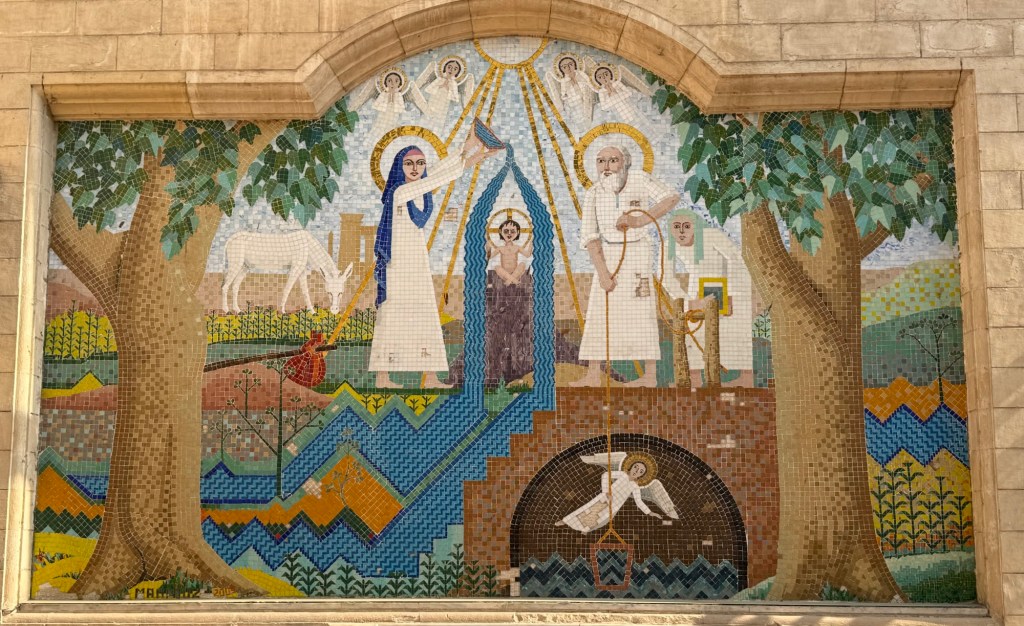
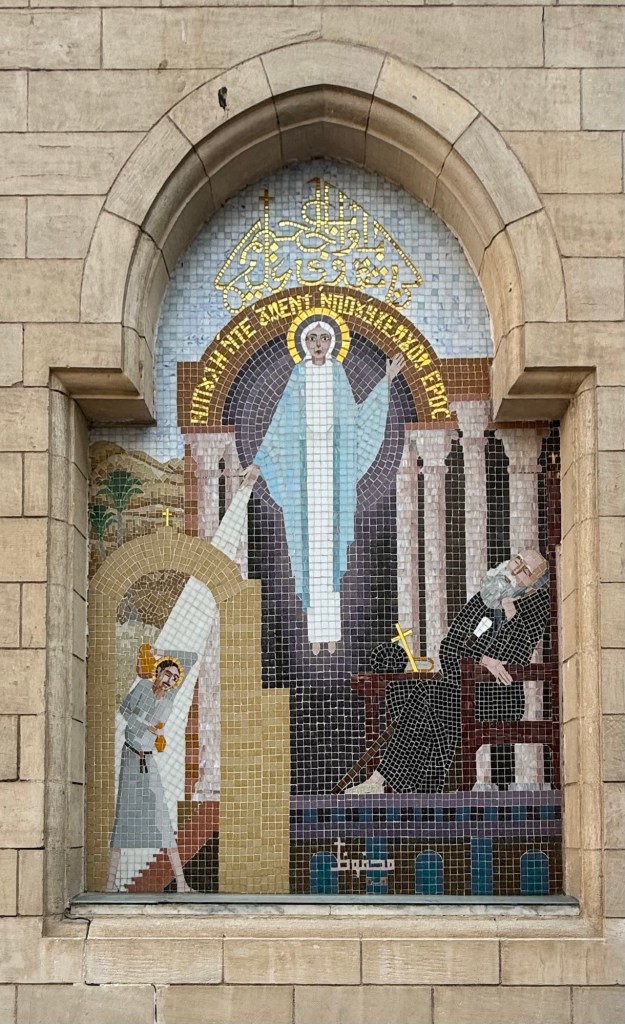
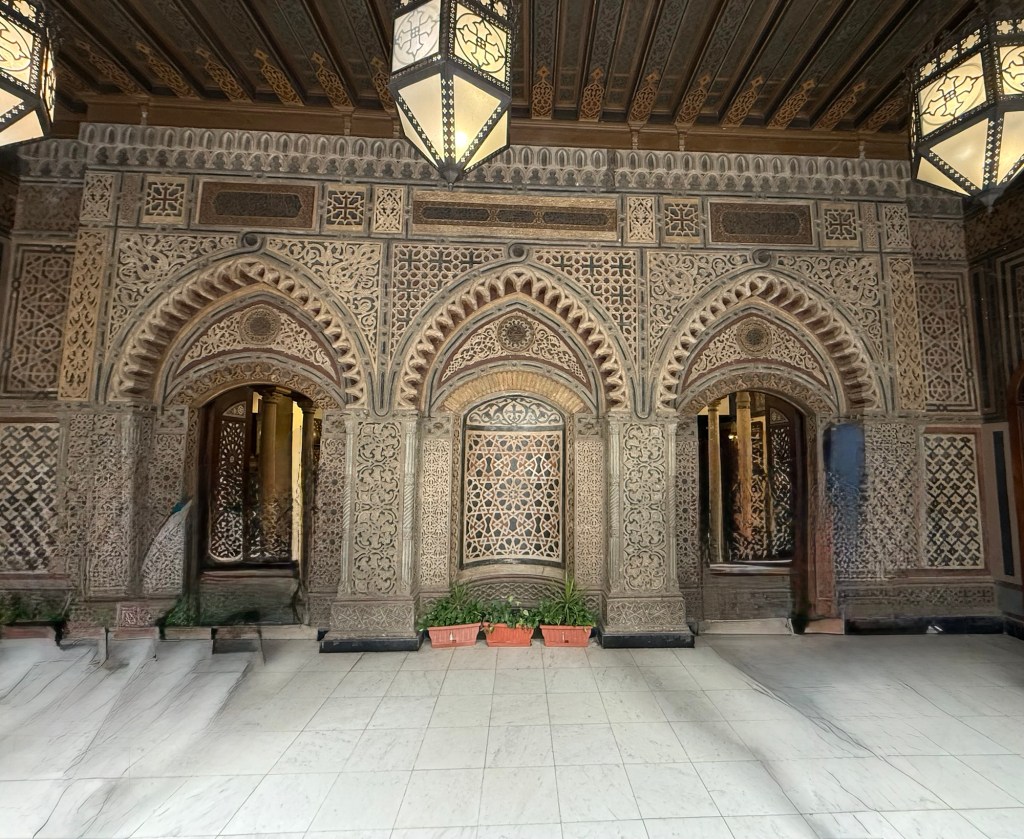
There are many modern mosaics in the courtyard.

Steps lead you up to the church.

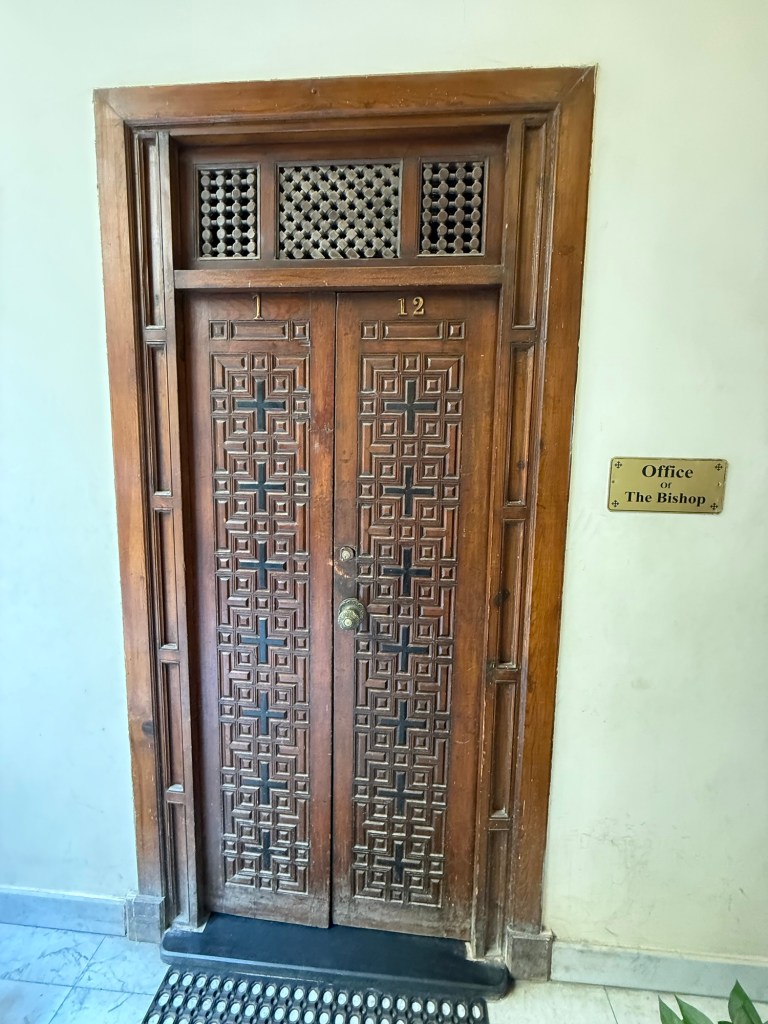
At the top of the steps is the Bishop’s Office.

The church’s foundation consists of logs of palm trees and layers of stones built above the ruins of the Roman fortress.

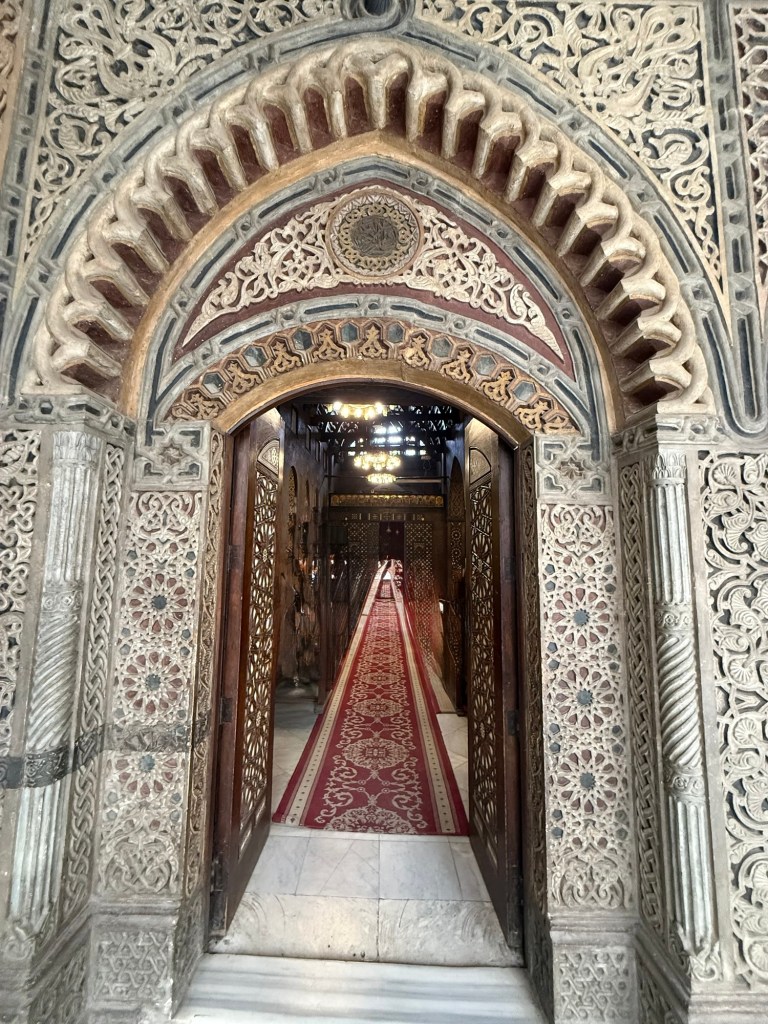
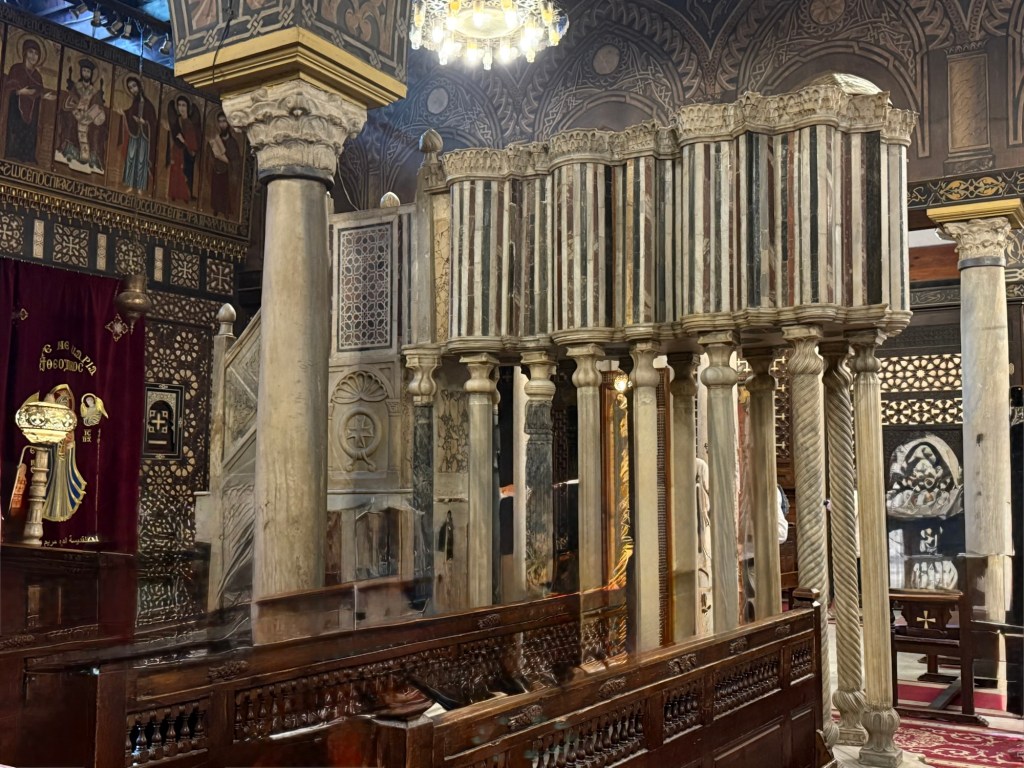
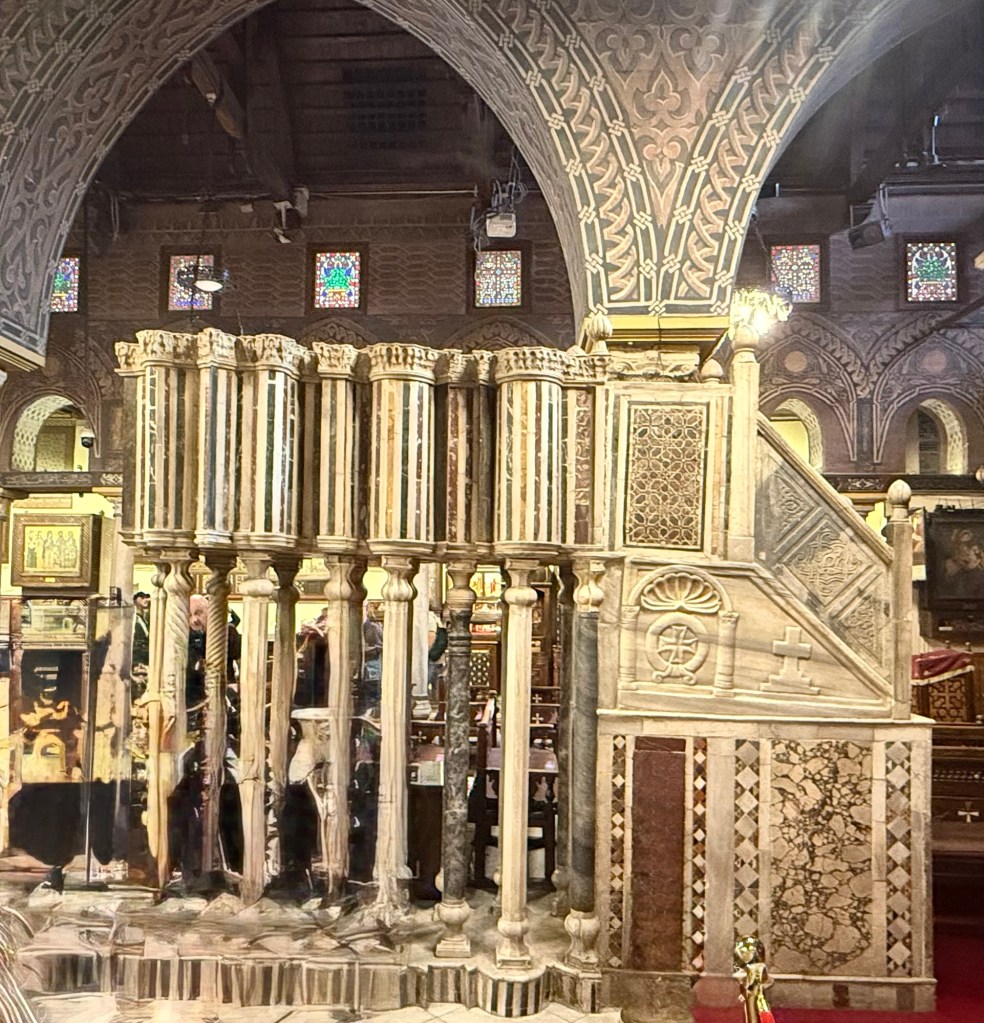
The impressive pulpit of the Church, dating back to the 5th century, rests on 15 slender columns. On either side of the pulpit, a cross is depicted above three steps, symbolizing the three days Jesus Christ spent in his tomb and his subsequent resurrection.

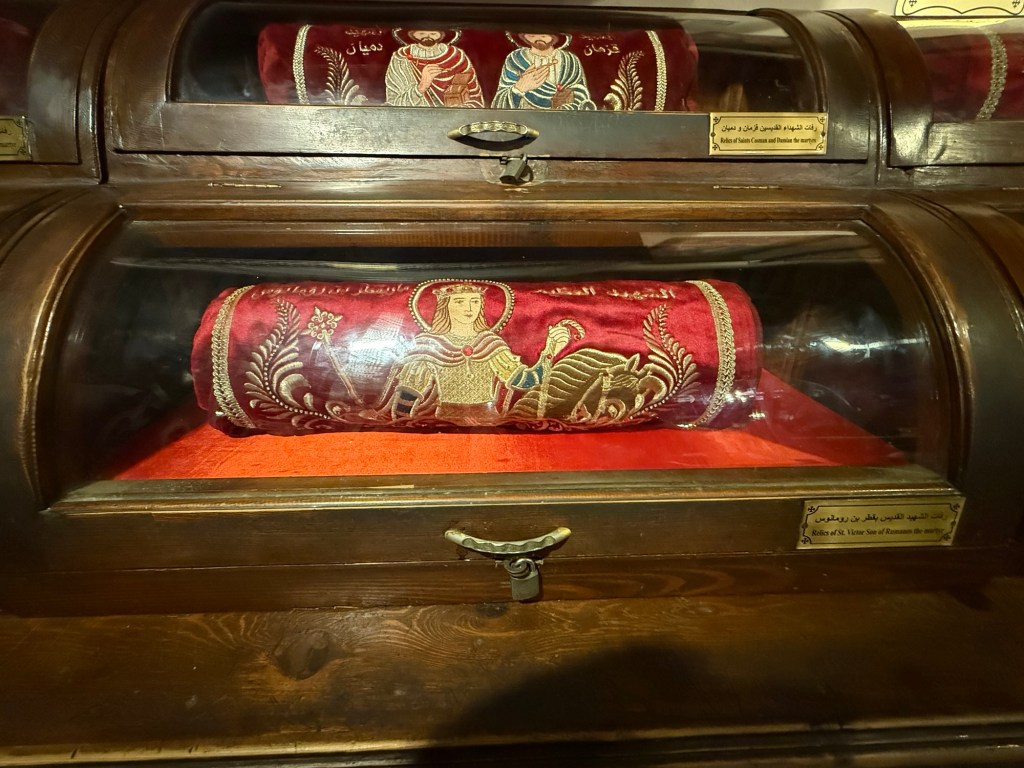
The church houses a total of 110 icons, including the “Coptic Mona Lisa,” which dates back to the 8th century A.D. and depicts Virgin Mary, Jesus Christ, and John the Baptist. As per Mona Lisa, those eyes follow you and remind you of your many sins.

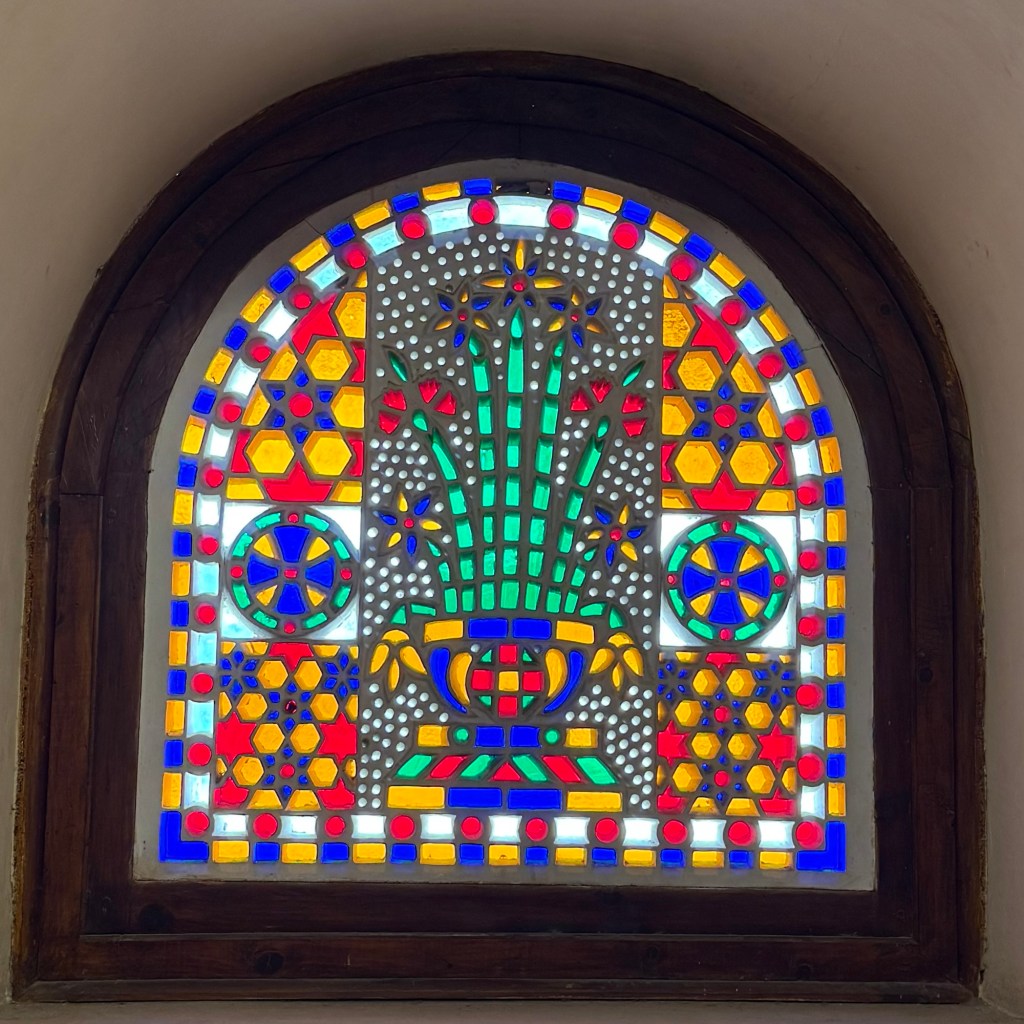
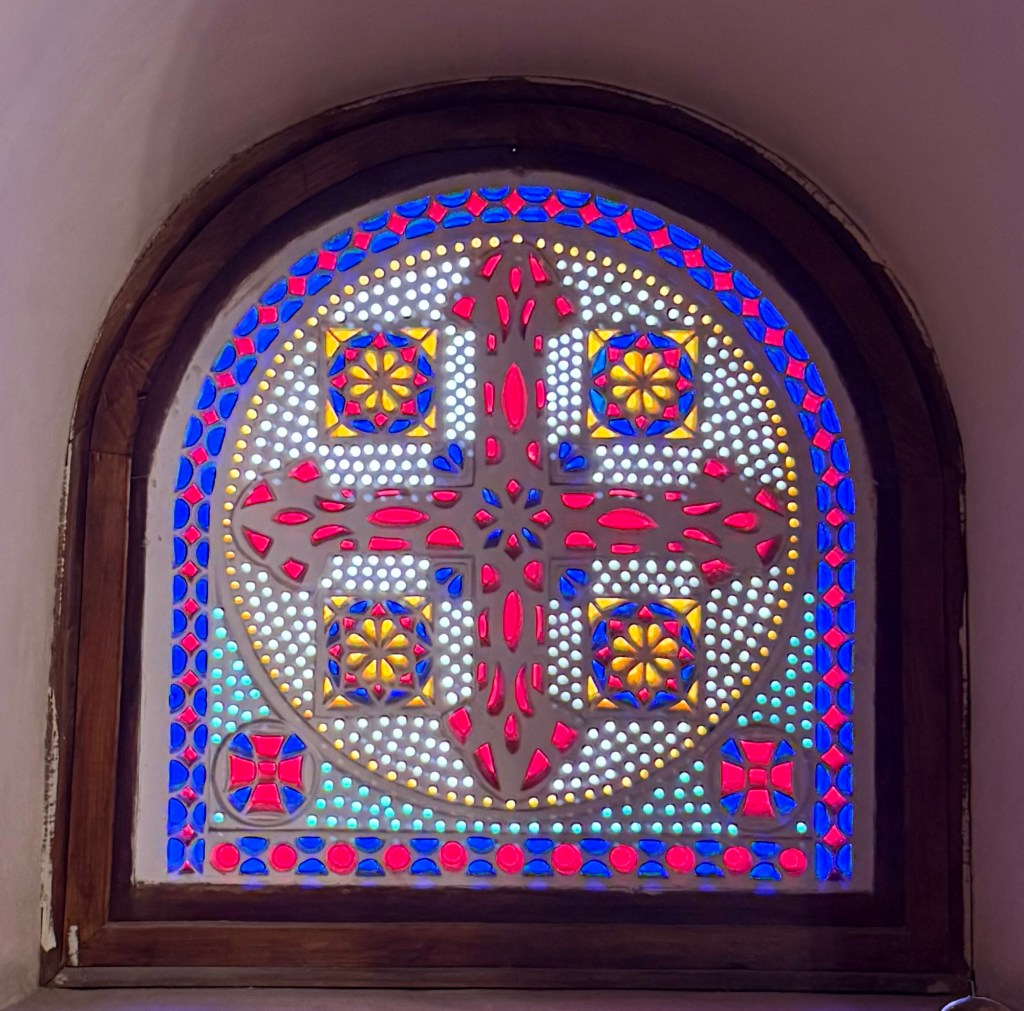
There was some small and pretty stained glass windows.

I encountered the priest of the Hanging Church hanging outside, who greeted me with a friendly “Hi.”

The experience was truly fascinating.

Abu Sarga (Cavern) Church
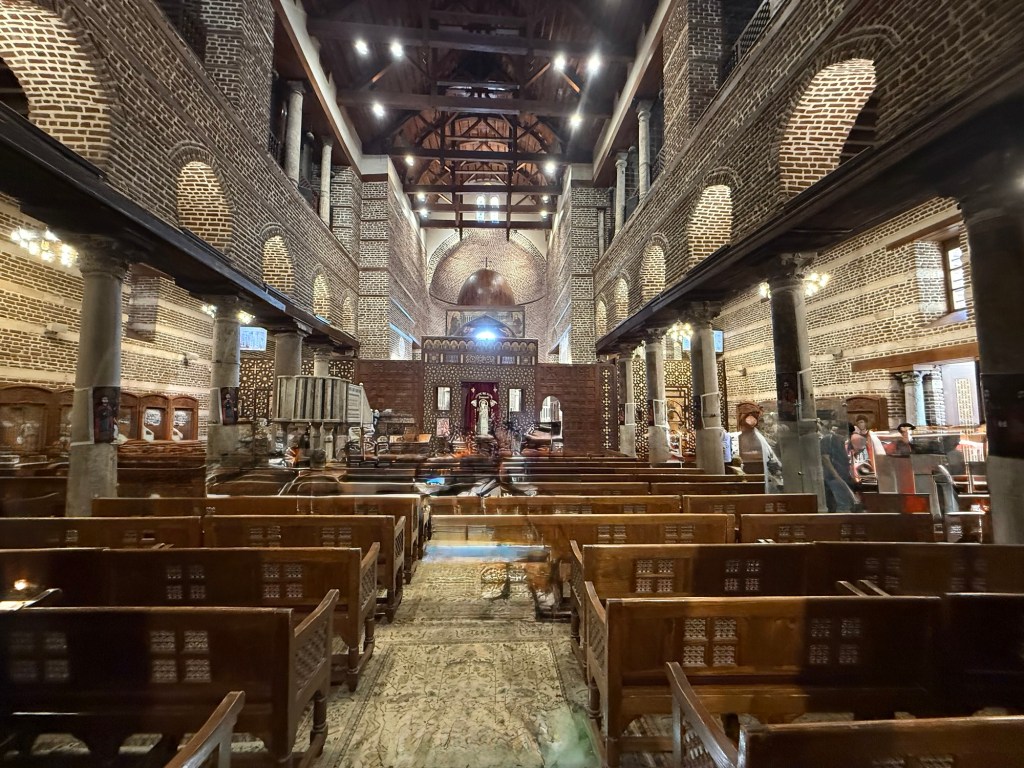
Abu Sarga is built on a basilican structure with a nave and two side aisles.

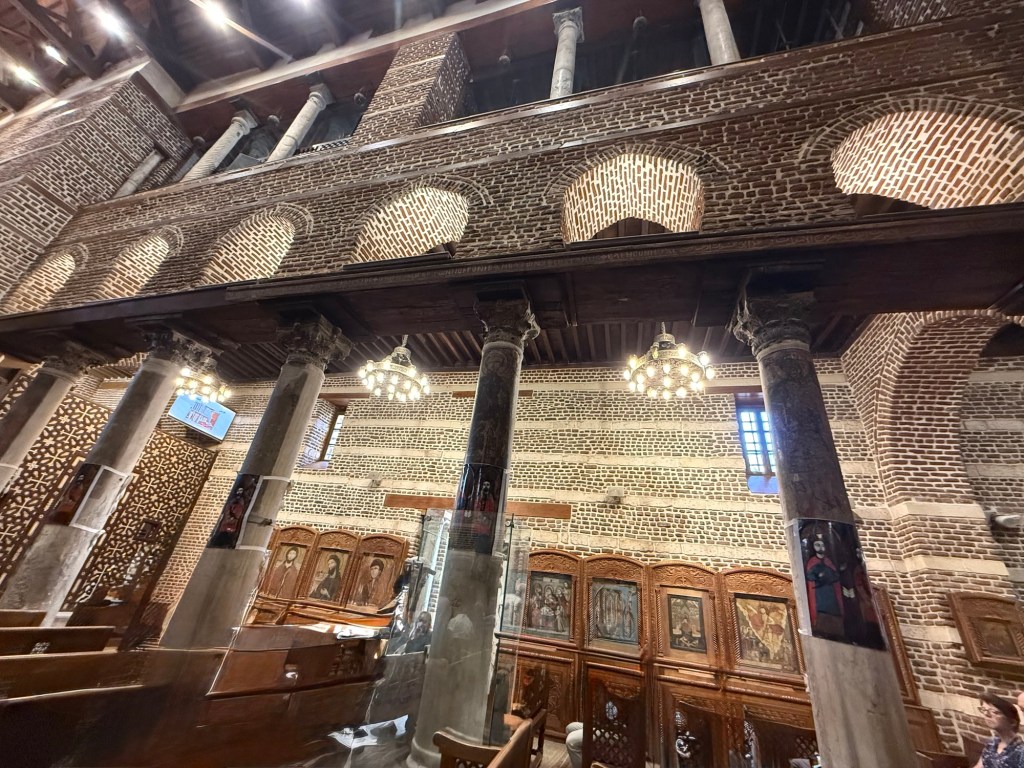
The west end of the church features a return aisle. Twelve columns, eleven of which are made of white marble and one of red granite, separate the nave from the aisles. Some of the marble columns display clear traces of figures, likely representing saints. Corinthian capitals, originating from older buildings, are placed between the column shafts and the wooden architraves.

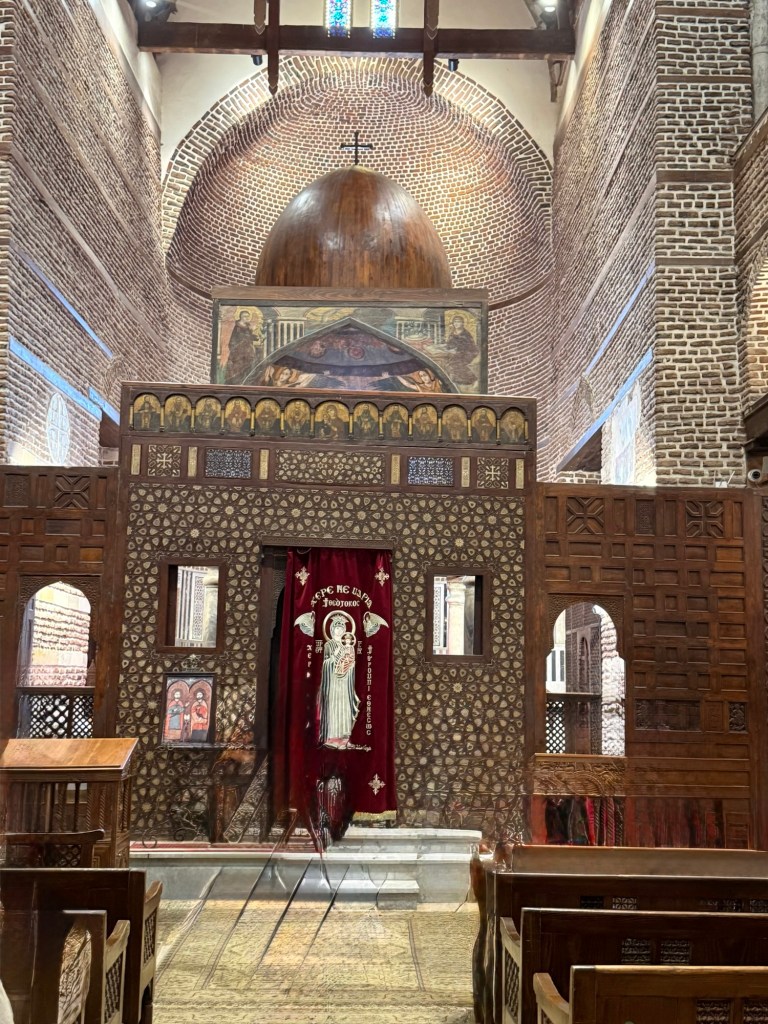
On the east side of the church, a tripartite sanctuary is separated from the congregation hall by an impressive wooden screen, beautifully decorated with ebony and ivory, with its oldest part dating back to the 13th century.

Exceptional icons depicting various scenes from the life of Christ, Virgin Mary, and diverse saints adorn the walls of Abu Sarga.

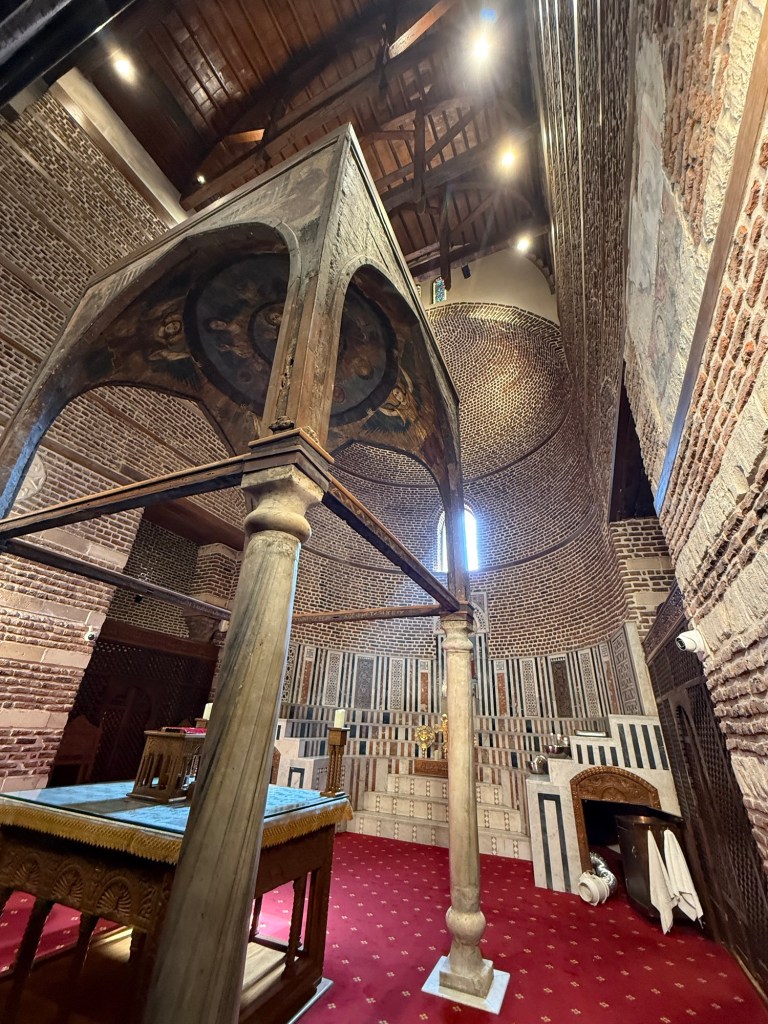
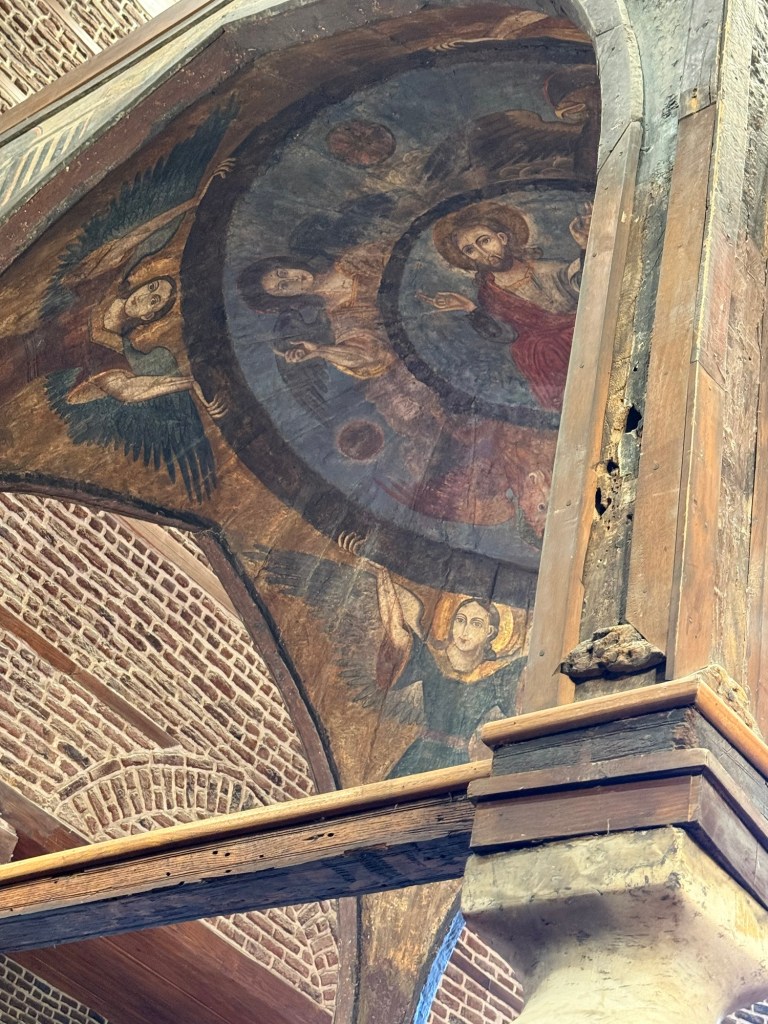
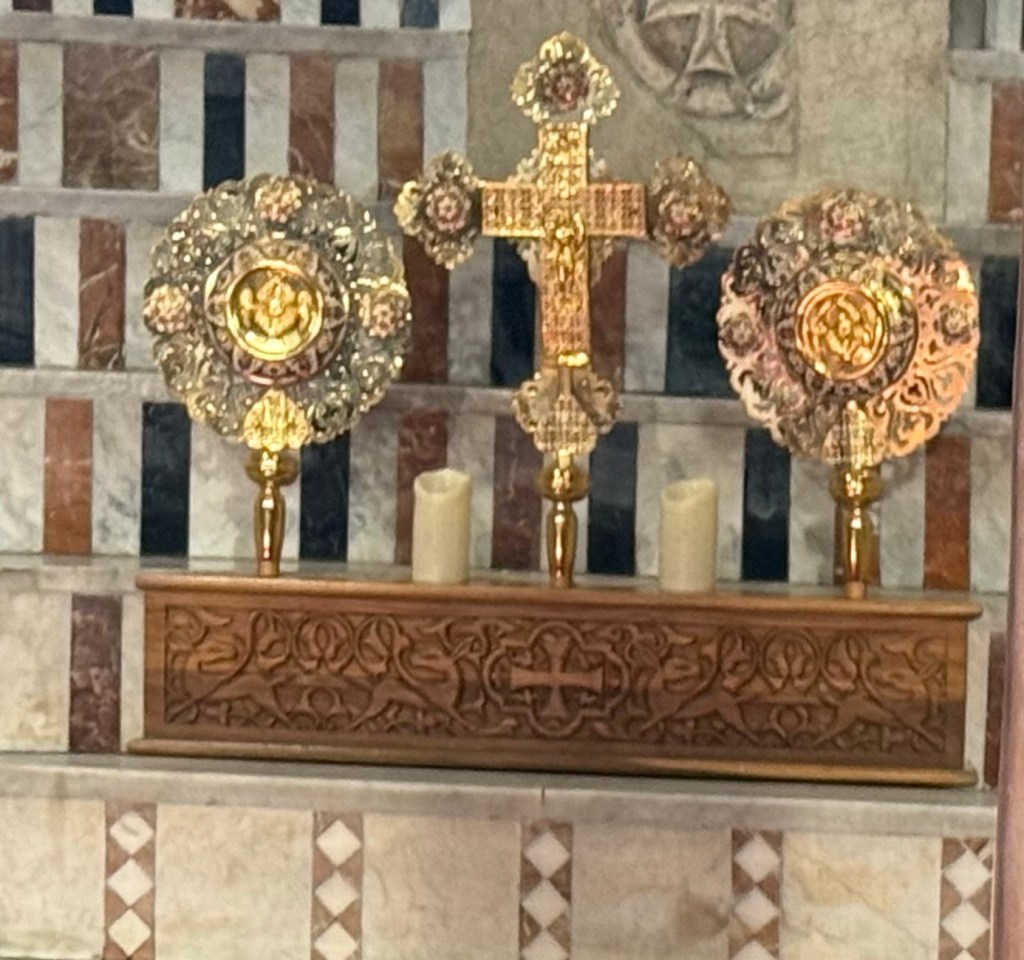
Inside its main sanctuary, a wooden canopy supported by four pillars is placed above the altar, painted with biblical scenes, including Jesus Pantocrator and Archangel Gabriel appearing to Virgin Mary. The apse behind the altar is richly decorated with strips of marble and mosaics.

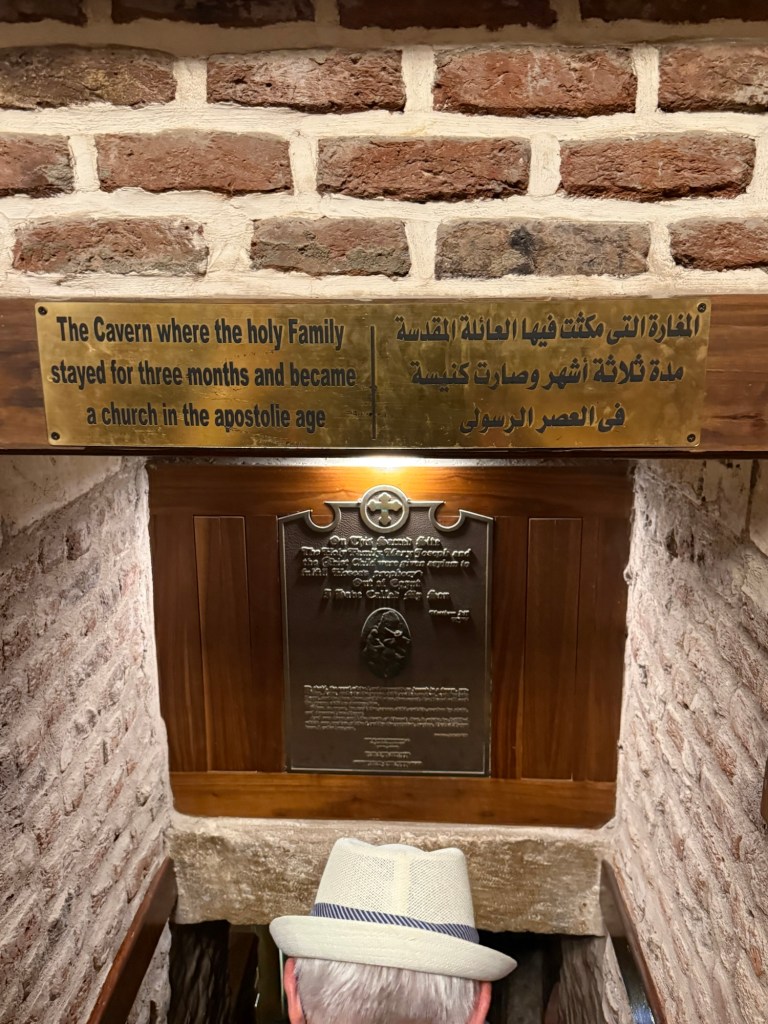
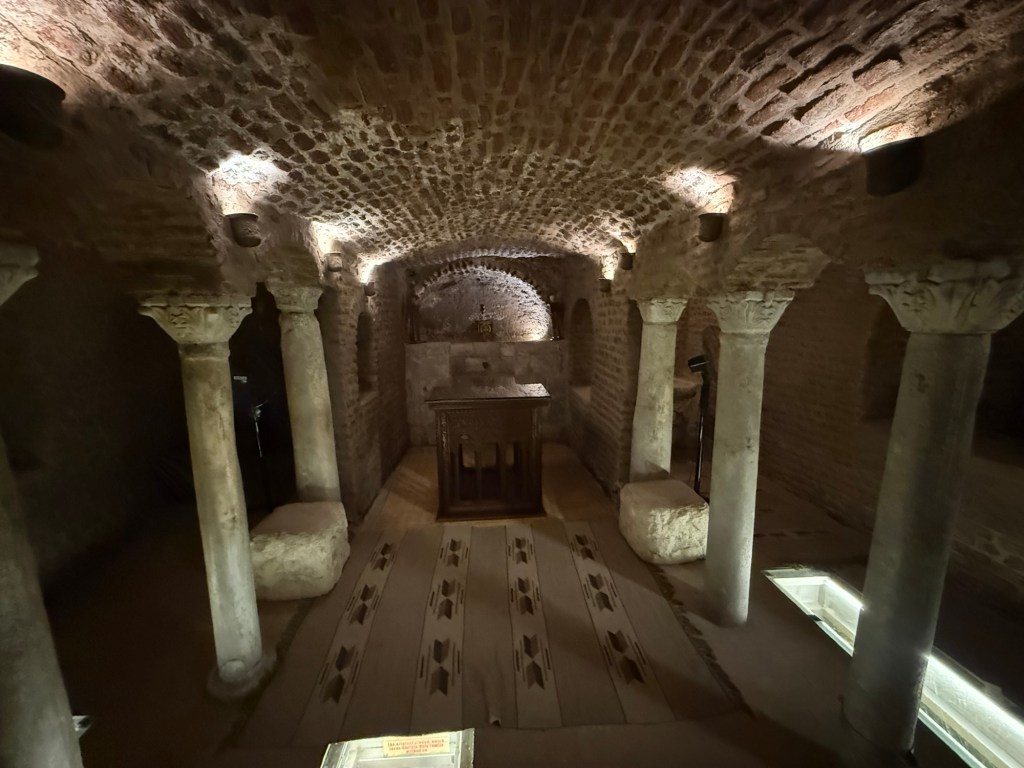
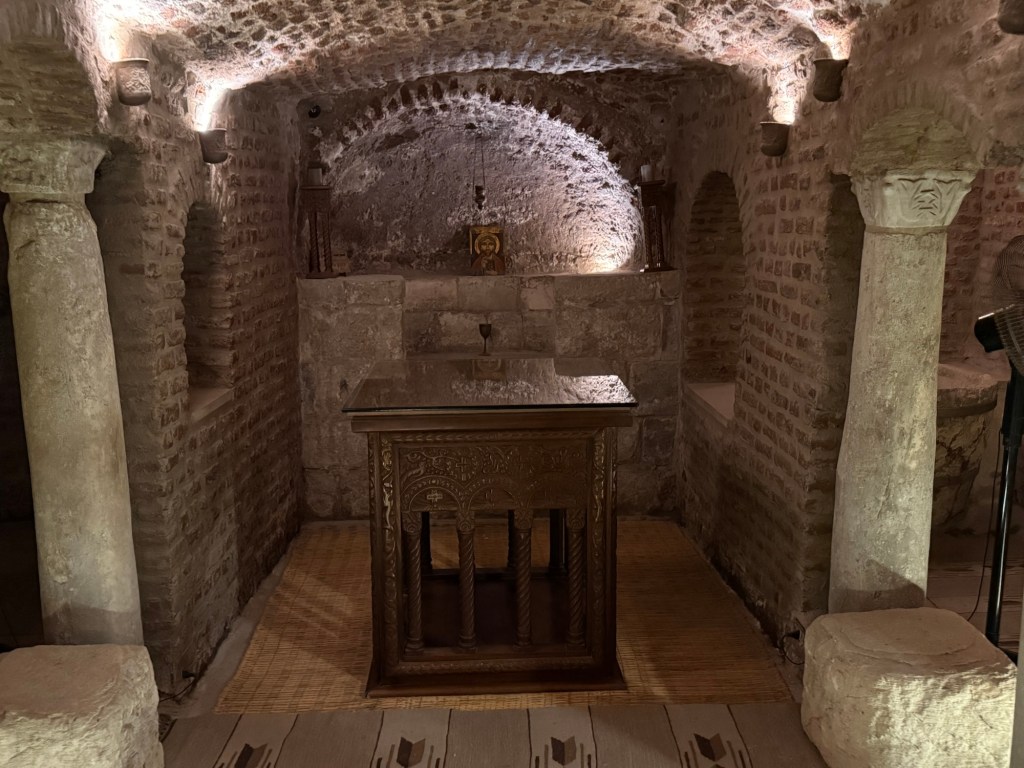
And then to The cavern…

Ben Ezra Synagogue
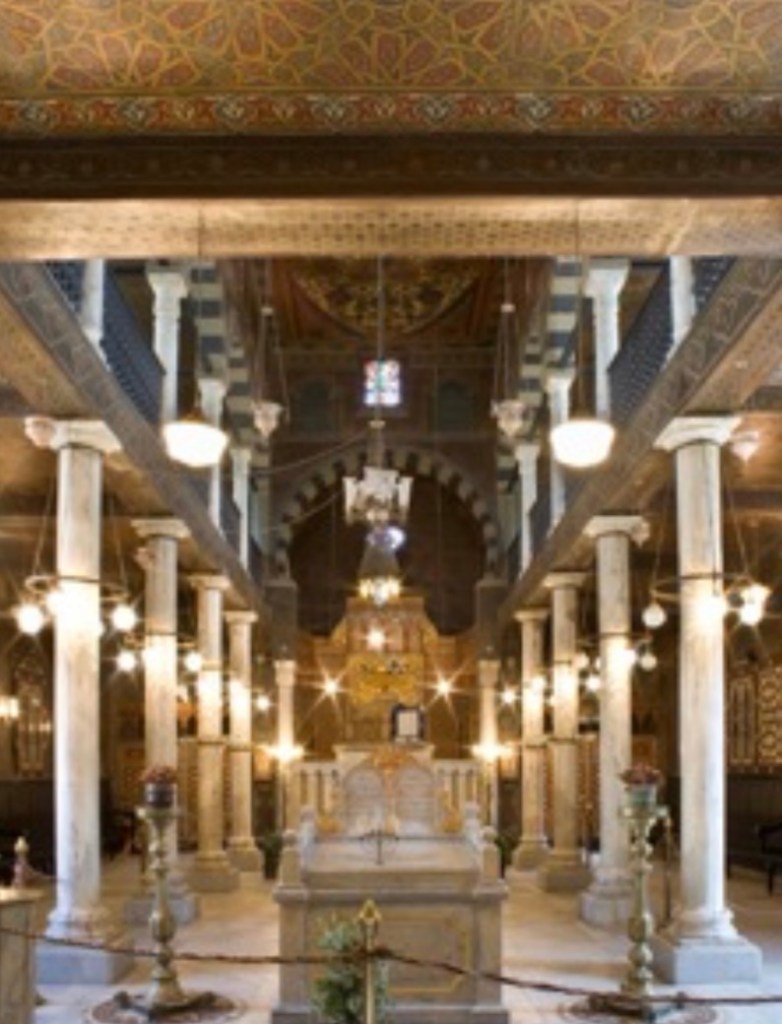
(No photography was allowed; the image shown is a low-quality one from online)
The Synagogue of Ben Ezra was originally a church. However, it was sold to pay the annual taxes imposed on the church by the government in 882 A.D. The synagogue is named after Abraham Ben Ezra, who purchased the church for 20,000 dinars. The basilican structure, featuring a nave and two aisles, is still recognizable. The synagogue has gained fame for its Geniza, an archive of ancient Jewish manuscripts comprising thousands of rare texts. While the synagogue may not have been particularly impressive, this may be attributed to the fact that it is government-run and there are only 300 Jews in the entire country of Egypt, according to the census.

Once again, we were faced with the challenge of seeing so much in such a short amount of time.

So, now we bid farewell to Cairo for seven nights as we fly to Luxor to embark on our ship, the AMA Lilia, for our Nile cruise.

We will return to Cairo for one last night on October 23.

Day 7: AMA Waterways’ Jordan Land Trip, Cairo and Nile Cruise

Citadel of Saladin and the Egyptian Museum including King Tut, Cairo

By Paul Bryers

This morning, we convened with our AMA Guide, Mohammed, at 10:30 am, a respectable hour, and promptly headed for the hills, literally.

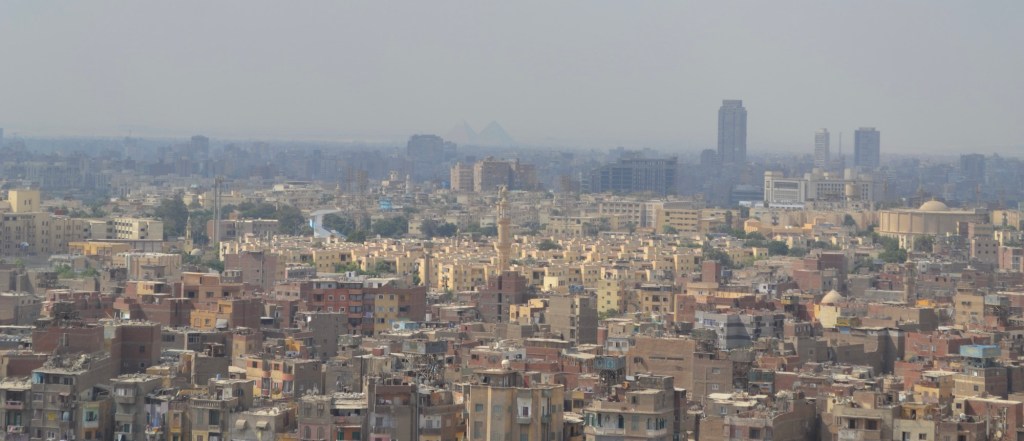
The Citadel of Saladin is one of the most iconic monuments in Islamic Cairo and among the most impressive defensive fortresses dating to the Middle Ages. Strategically situated on the Muqattam Hills, it afforded a formidable defensive position and offered, as it still does today, an unrestricted panoramic view of Cairo all the way to Giza. We could just make out the Great Pyramid.

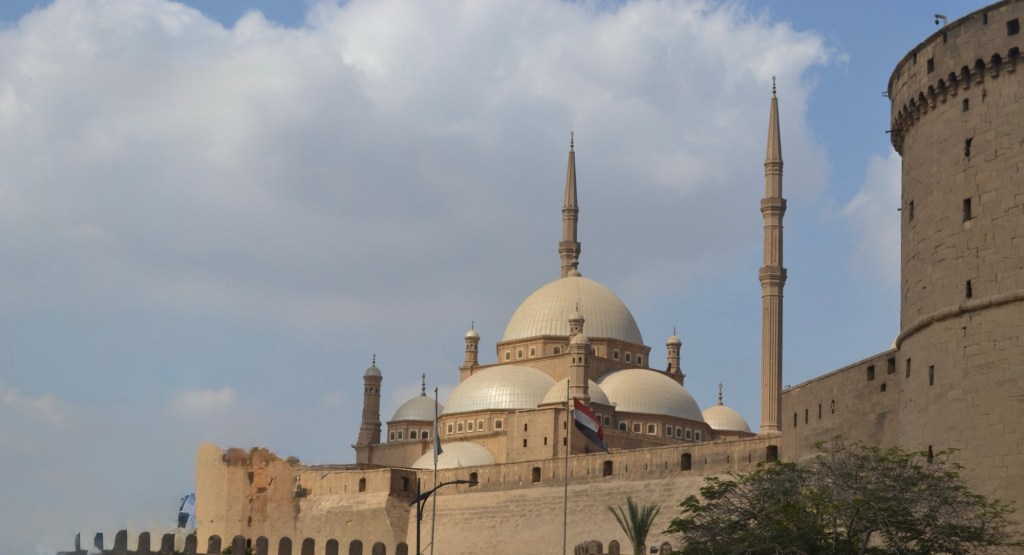
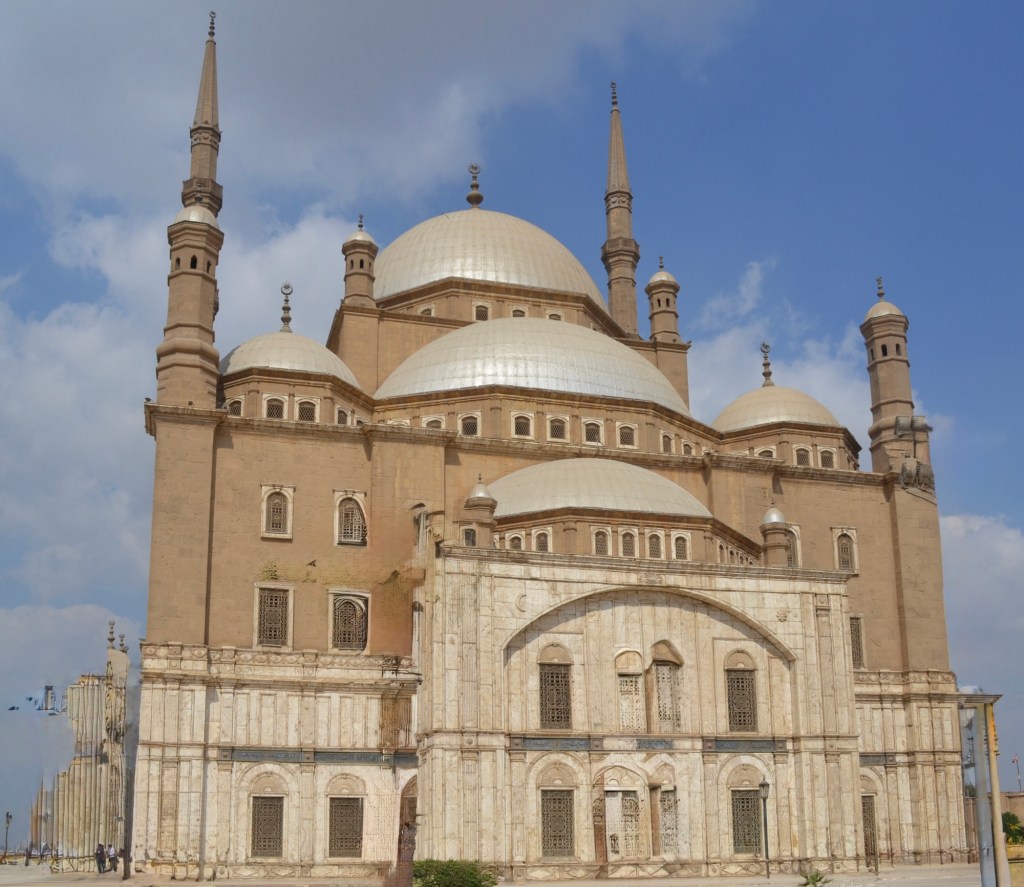
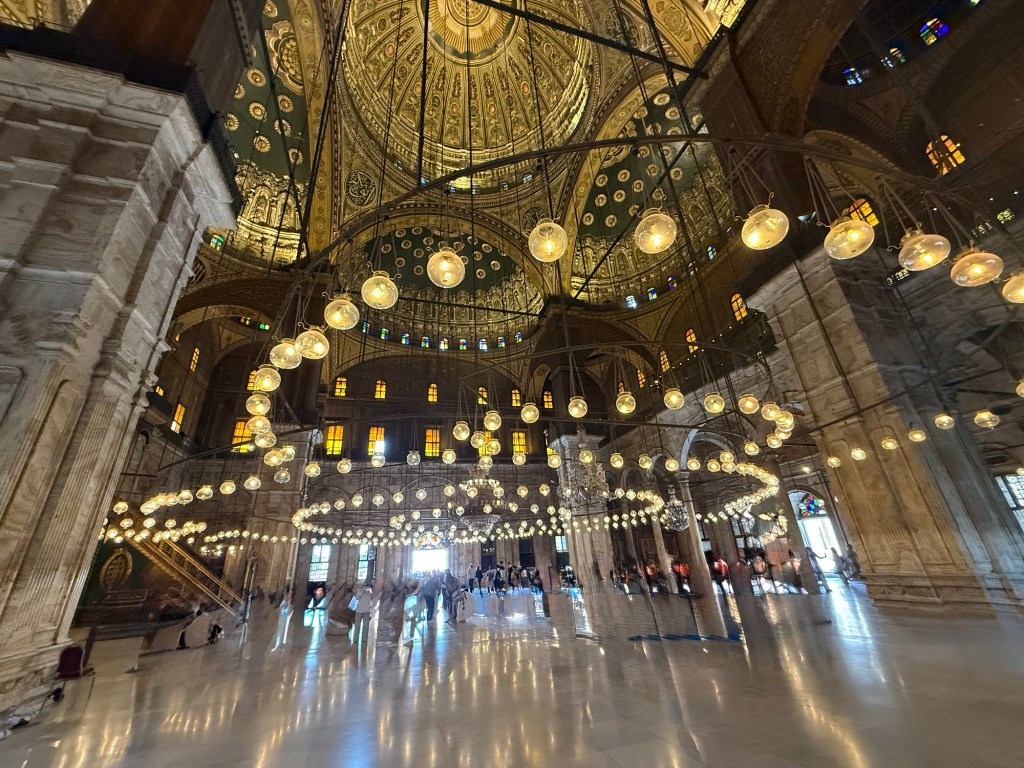
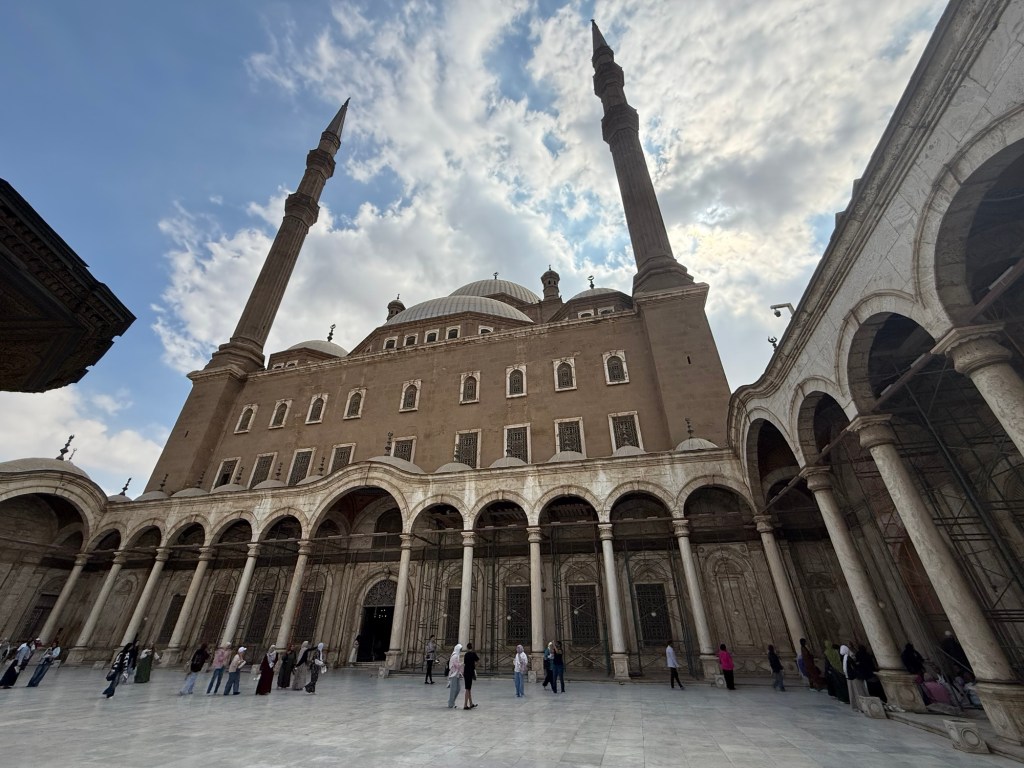
The Mosque of Muhammad Ali is located inside the Citadel. It was built by Muhammad Ali Pasha in 1848 AD on the site of Mamluk palaces. This mosque is known as the “Alabaster Mosque”, in reference to its marble paneling on its interior and exterior walls. The mosque’s twin minarets are the highest in all of Egypt, each reaching a height of 84 meters.

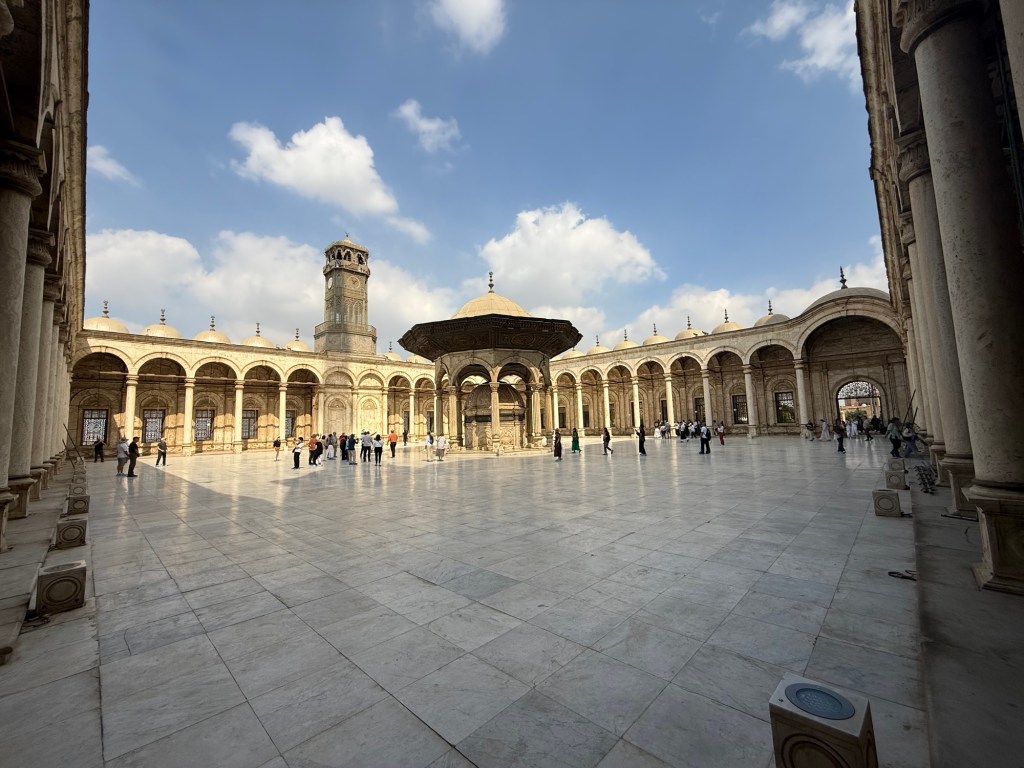
The limestone mosque was built in the Turkish style that consists of an open court and prayer hall.

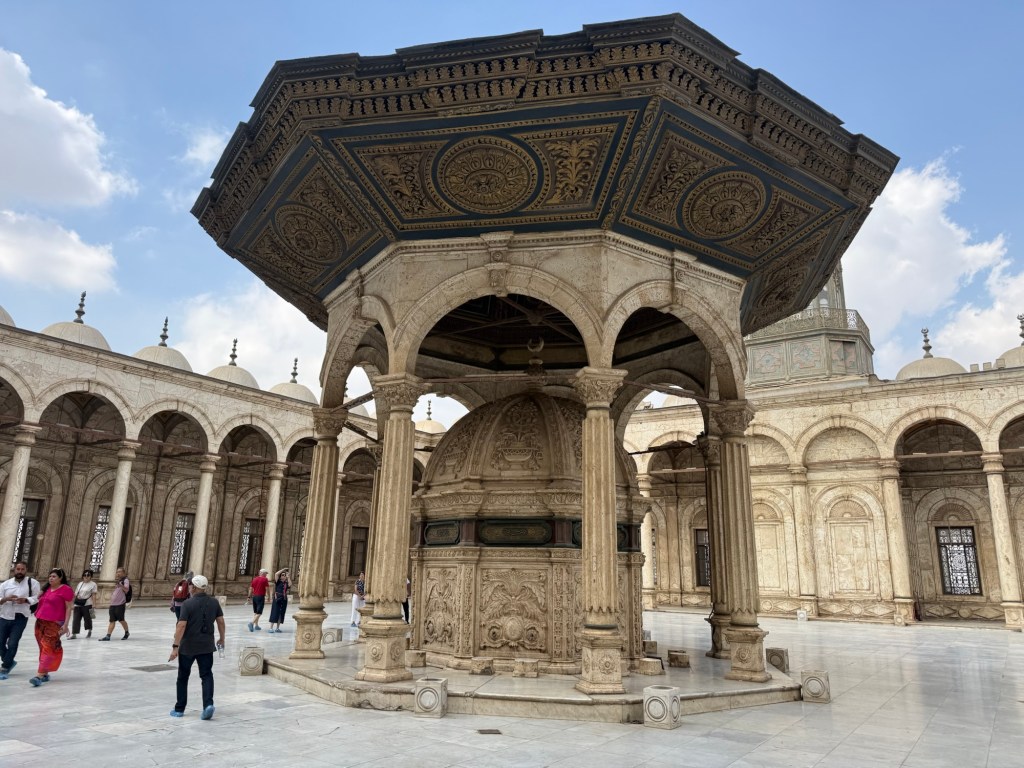
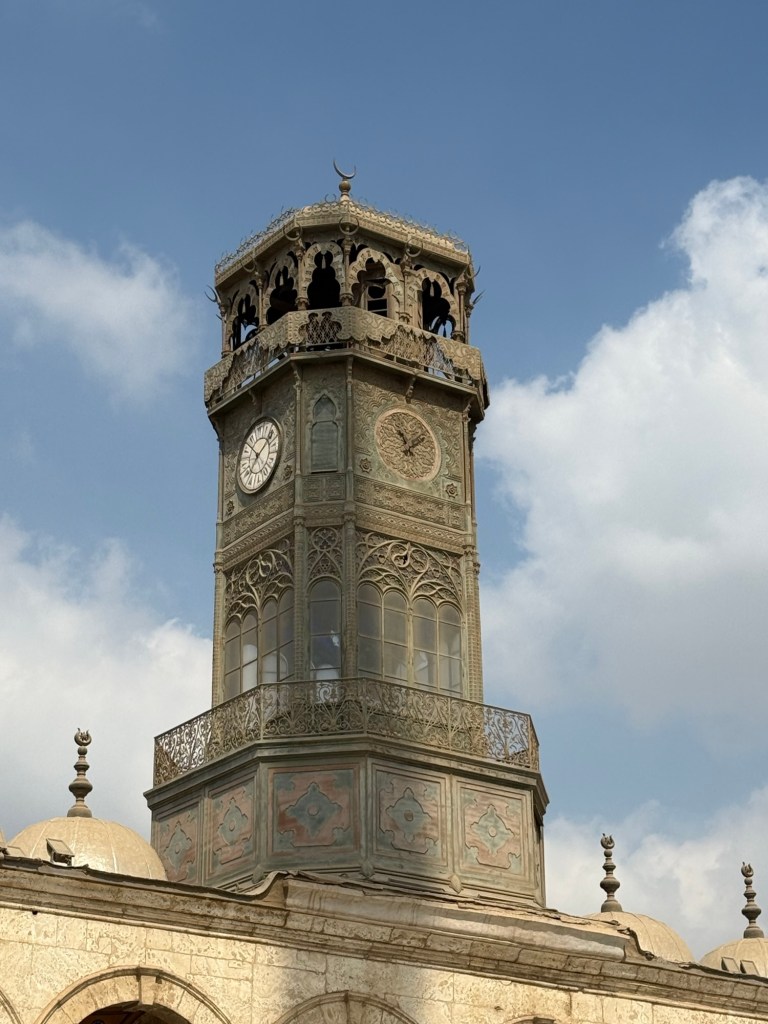
The outer open court contains a fountain with a gloriously decorated vase and a copper clock tower, which was gifted to Muhammad Ali Pasha by Louis Philippe of France.

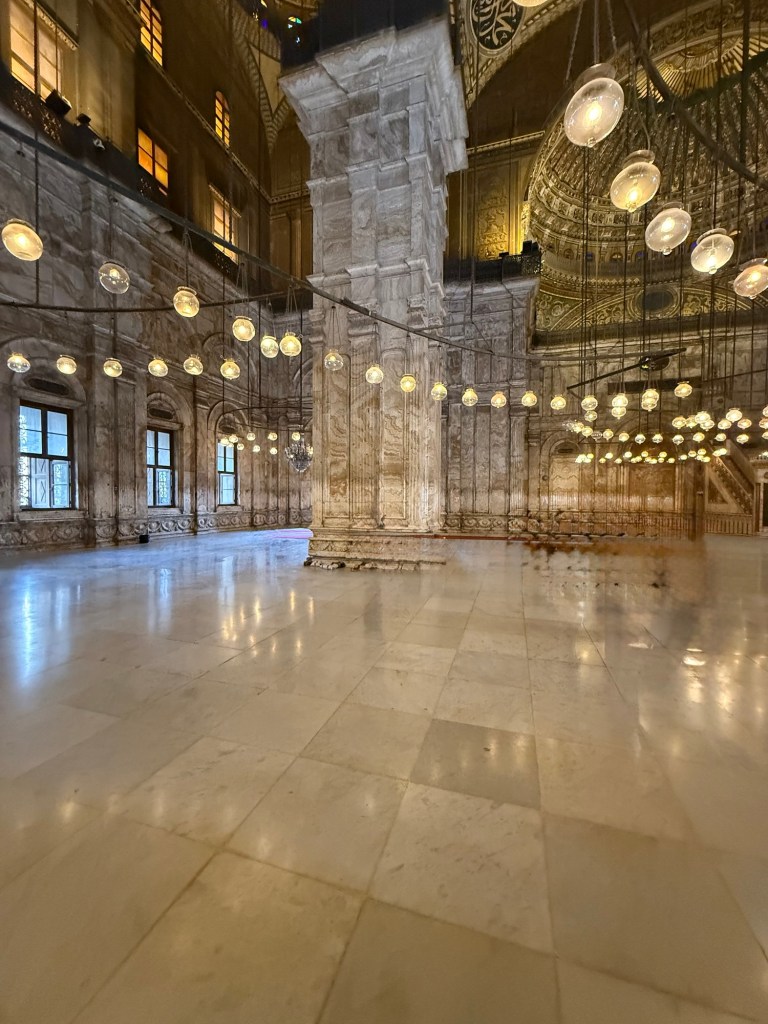
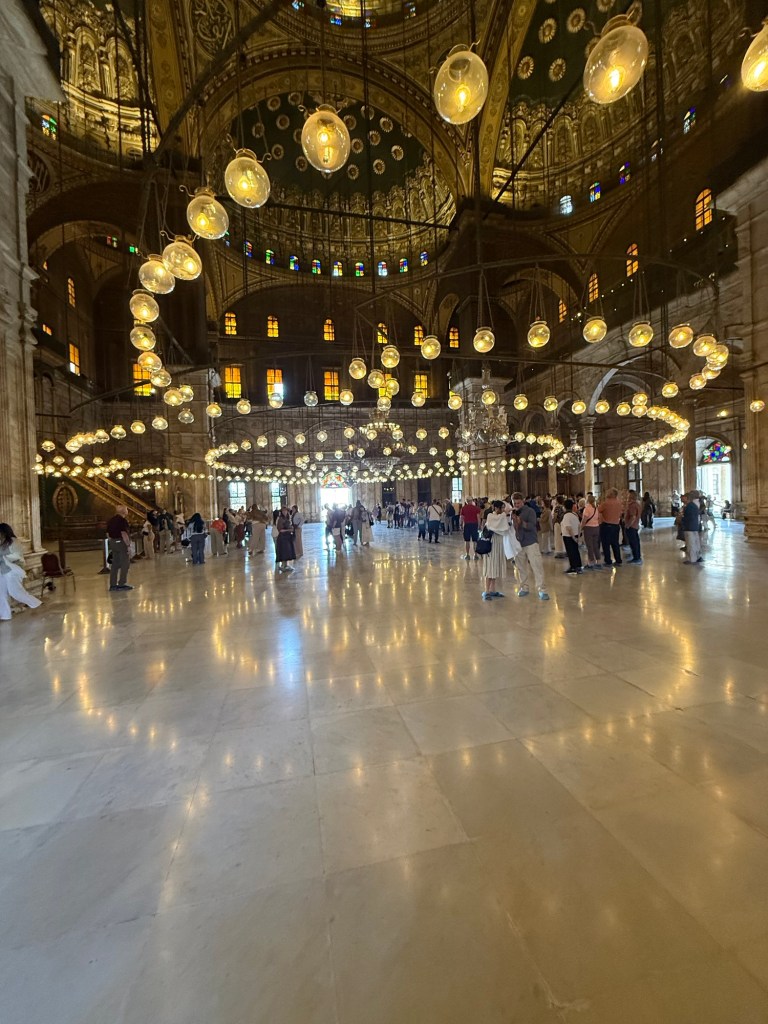
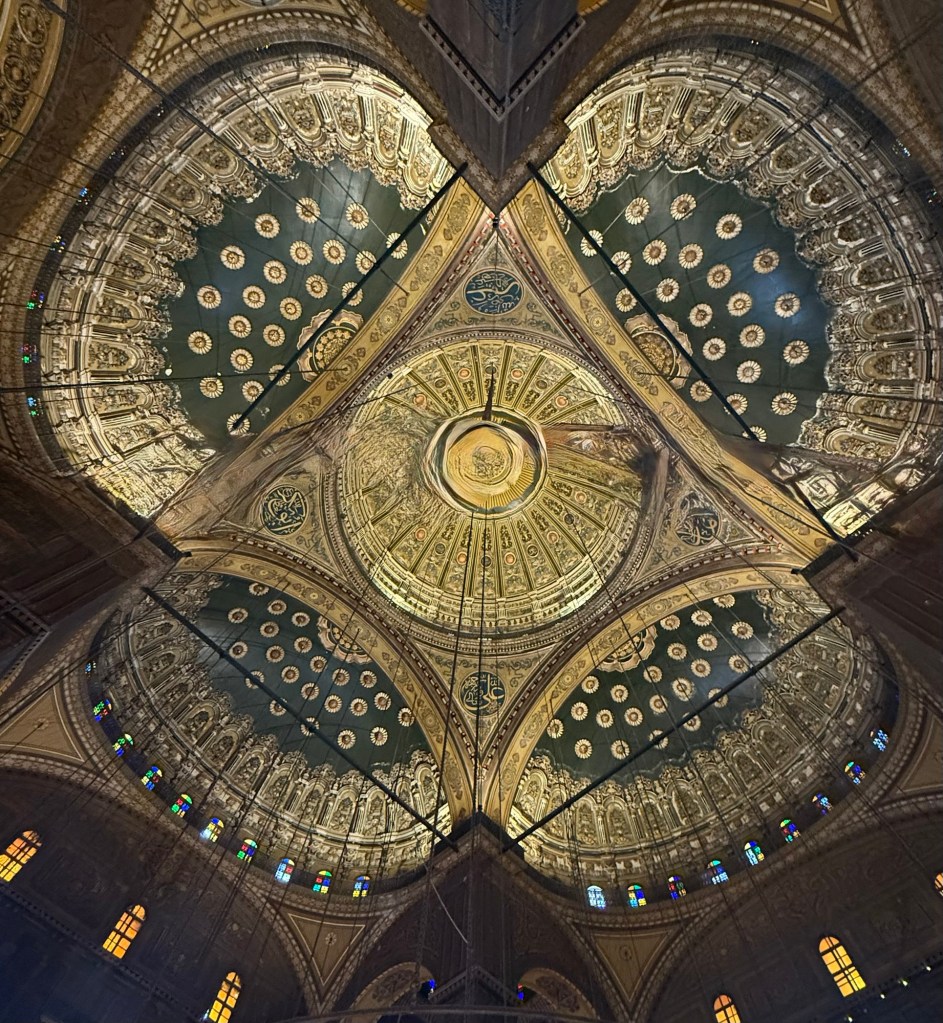
The prayer hall is a square space that is surmounted with a large central dome which is surrounded by four semi-domes and four shallow domes in the corners. There are two minbars (pulpits) inside the mosque. The original of the two is made of wood decorated in green. The other was a later addition made of marble.

The ceilings are a dazzle of blues and golds, leading to a severe case of photographic neck pain!

After a lavish Egyptian lunch at the Nile Ritz, we walked to the Egyptian Museum (EM).

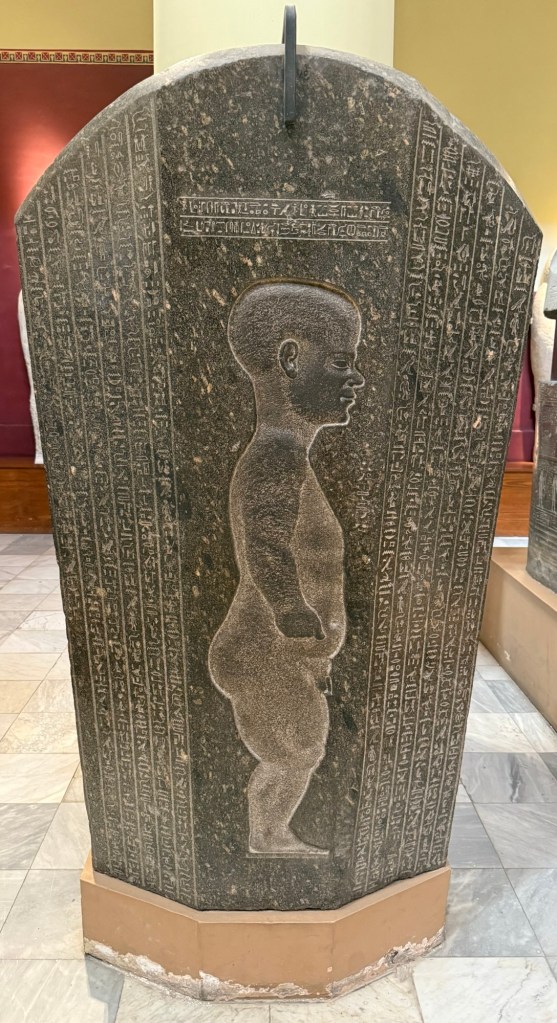
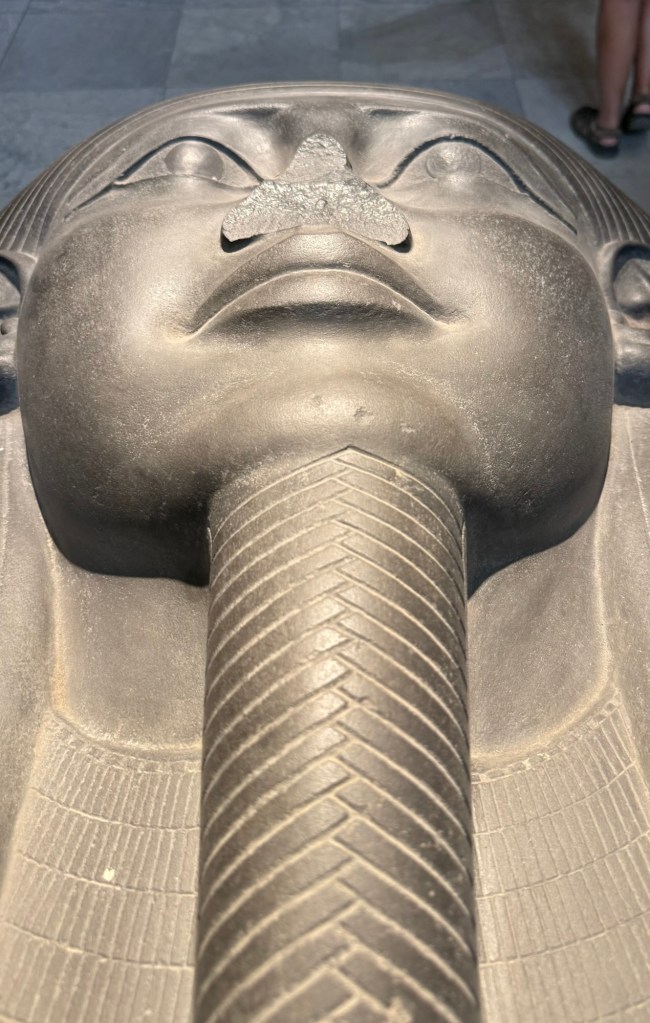
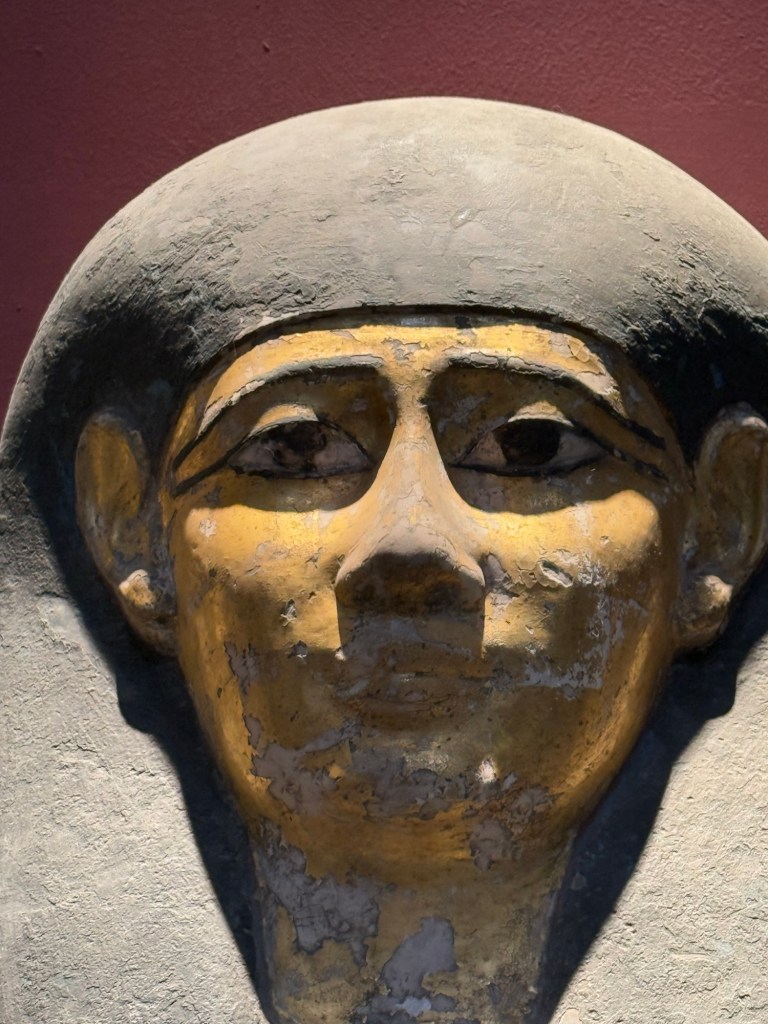
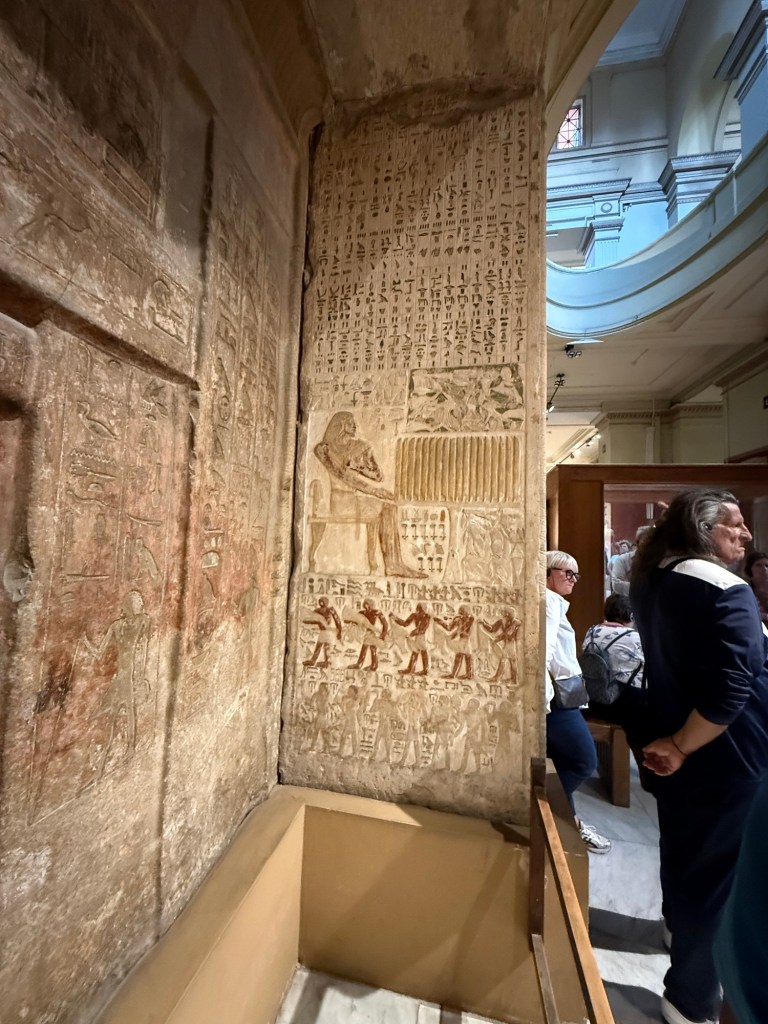
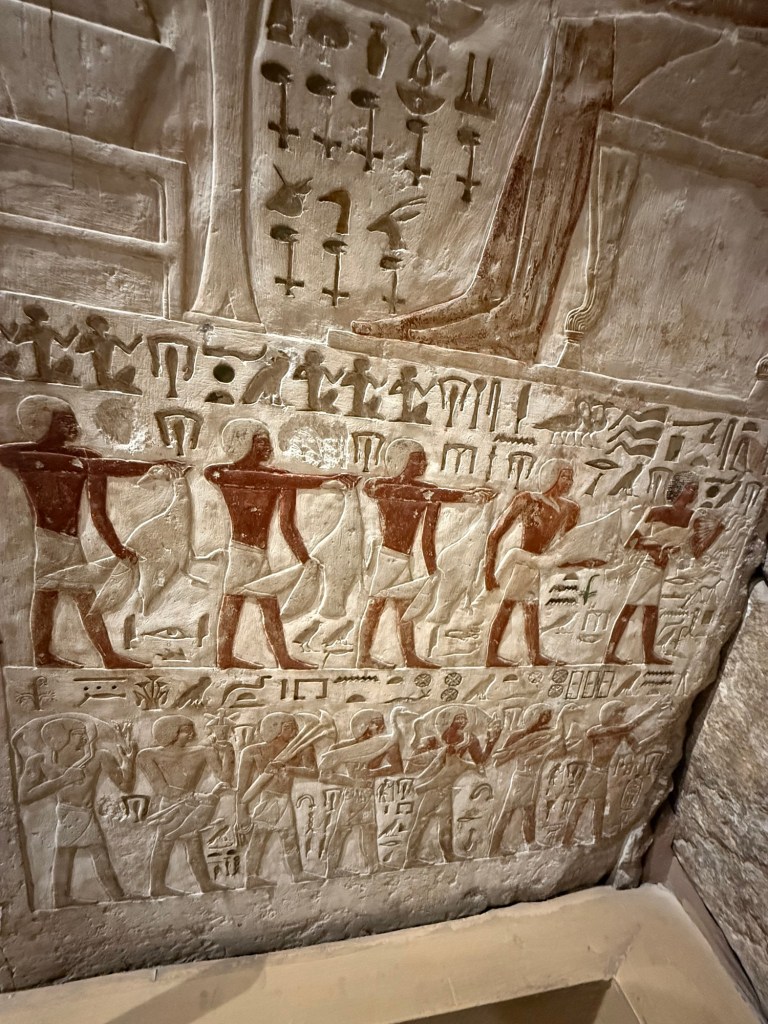
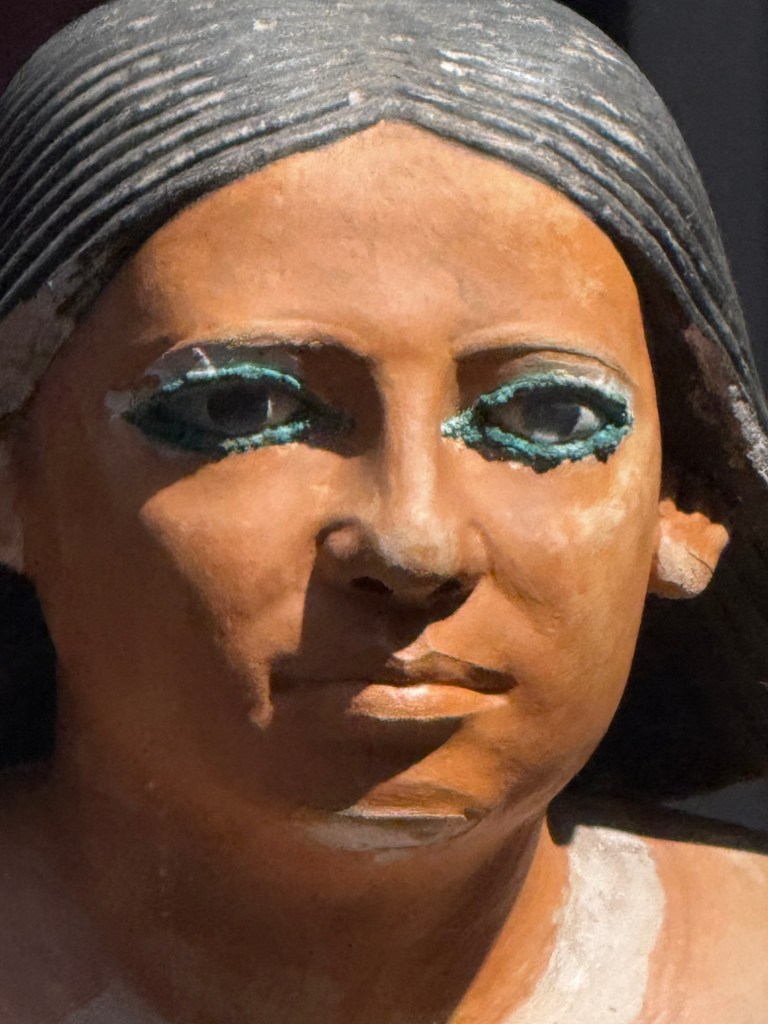
This museum has a plethora of statues and artifacts and is much more manageable than the Grand EM we visited yesterday.

Notably, this is the home of the Tutankhamun exhibition. In a few days it will move to the GEM.

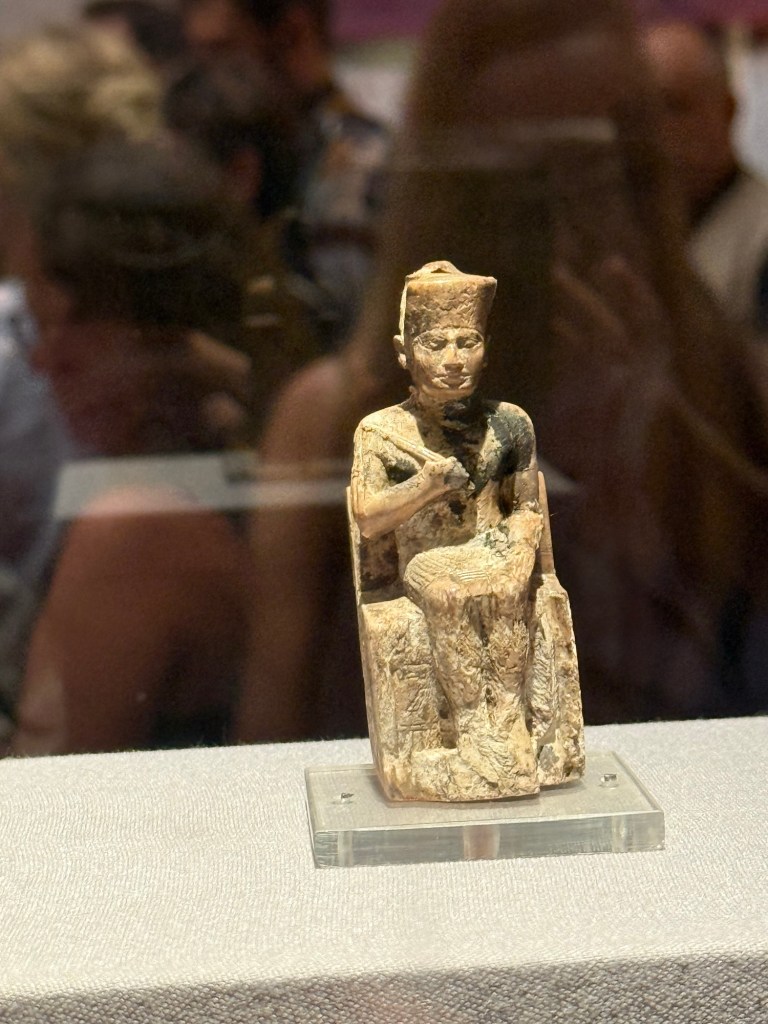
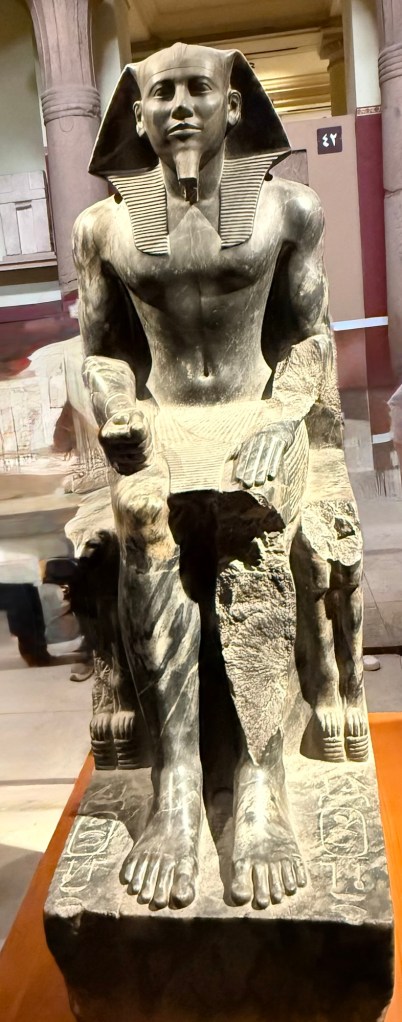
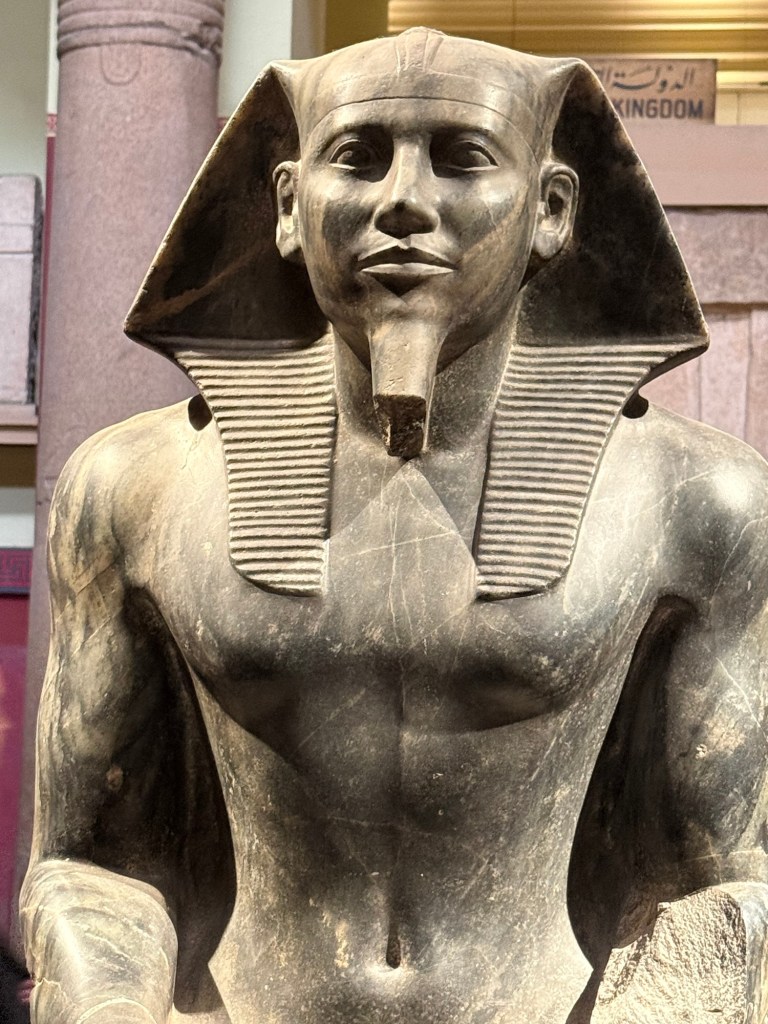
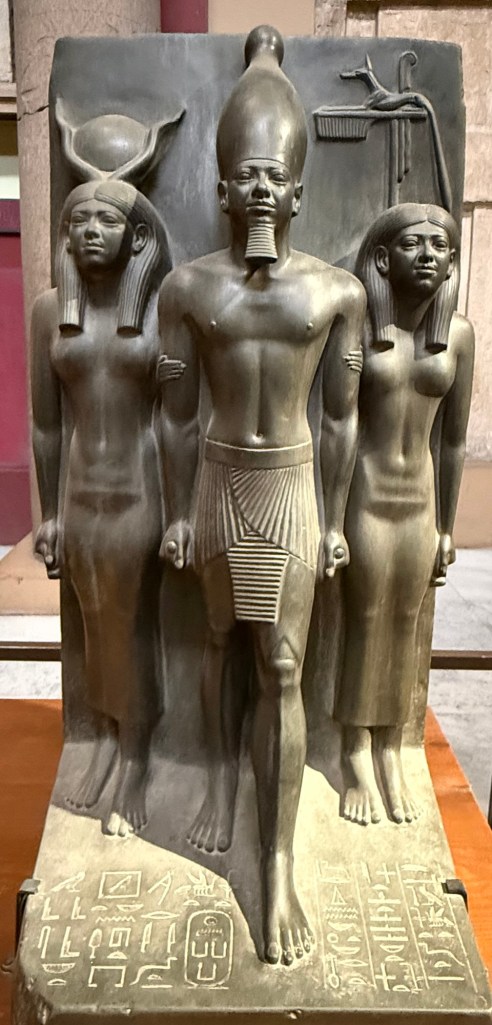
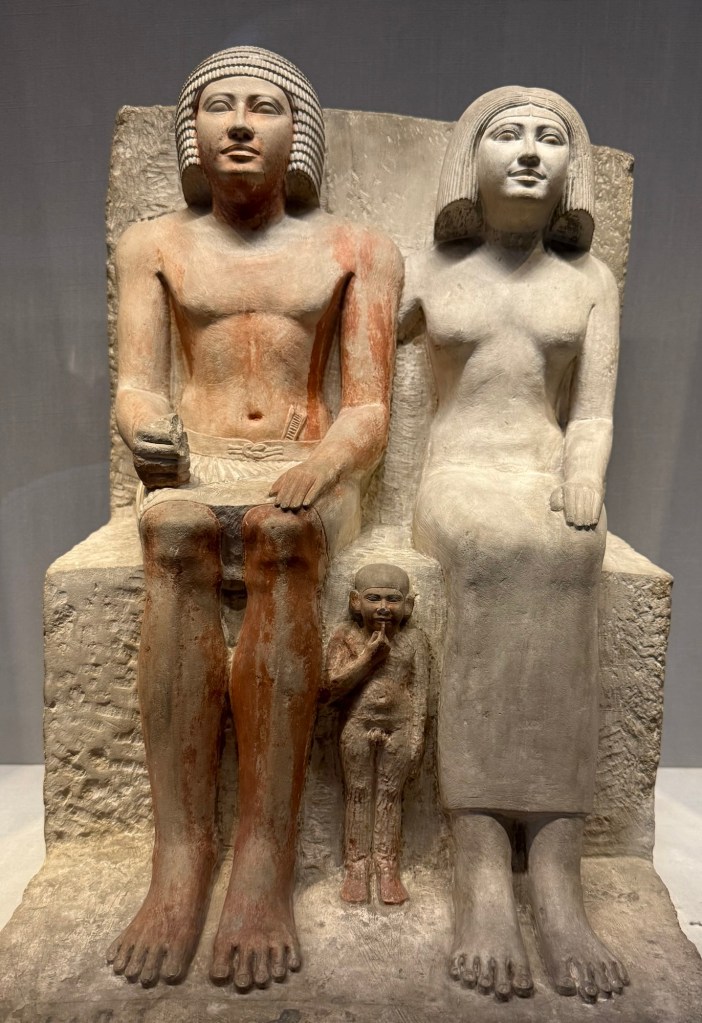
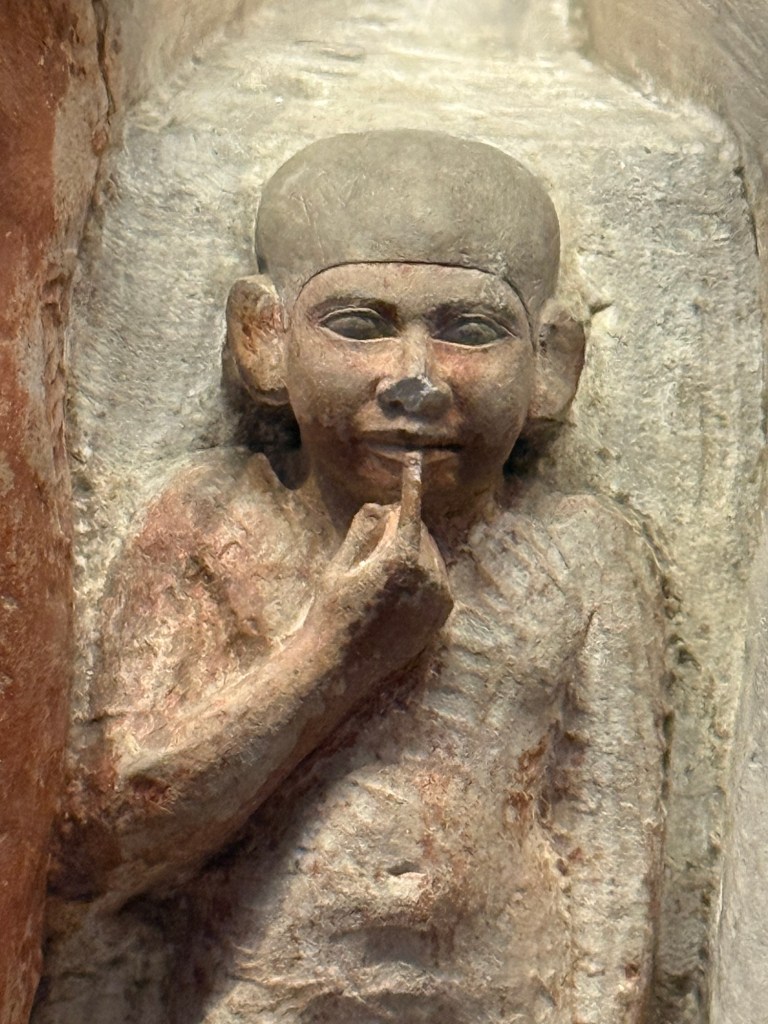
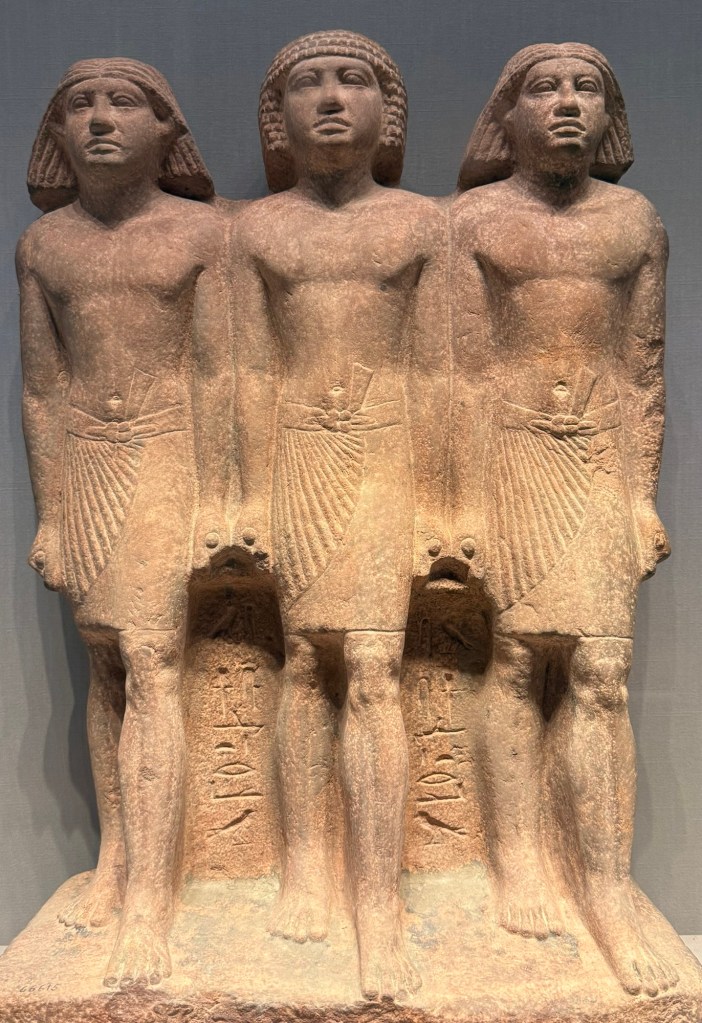
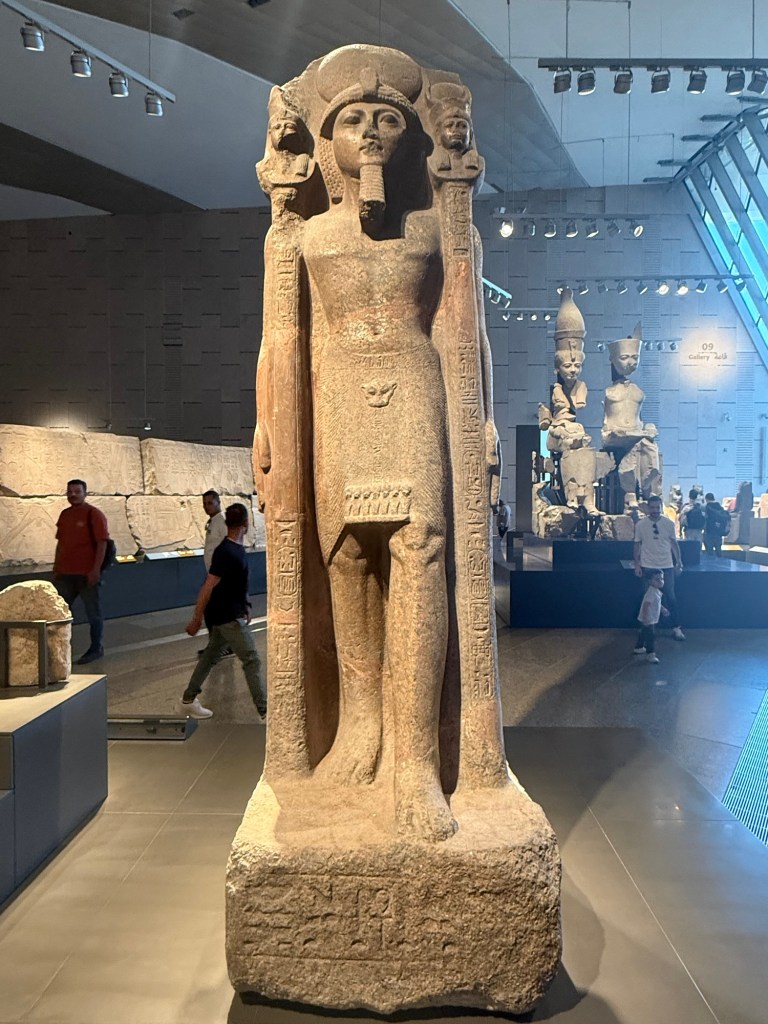
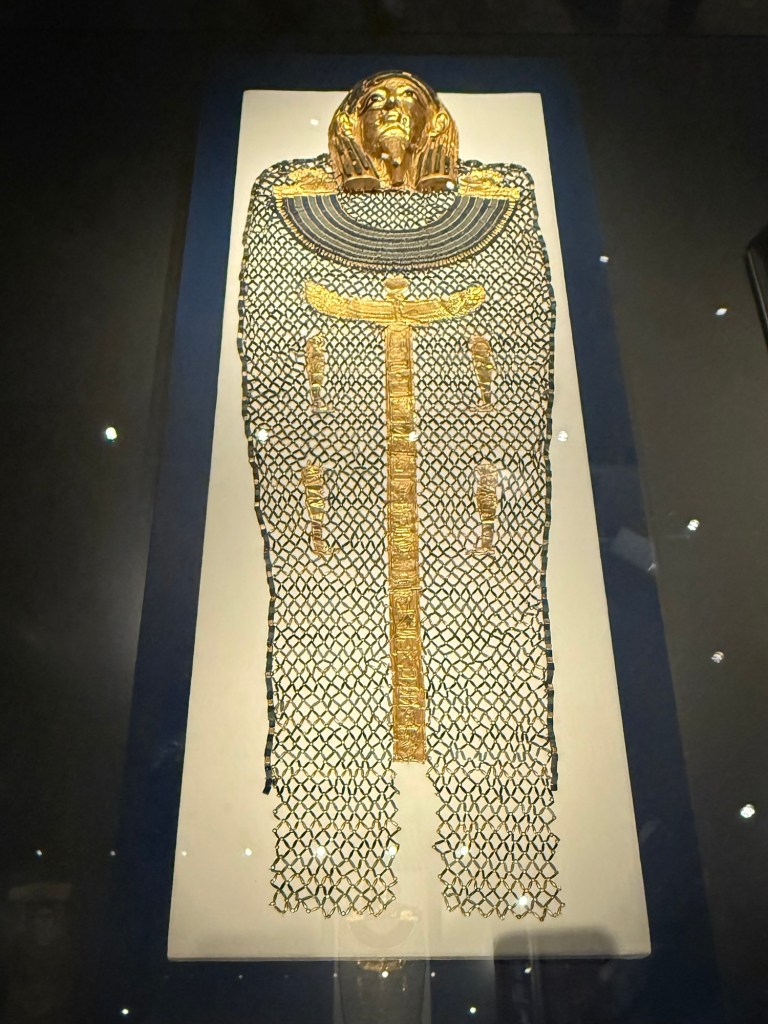
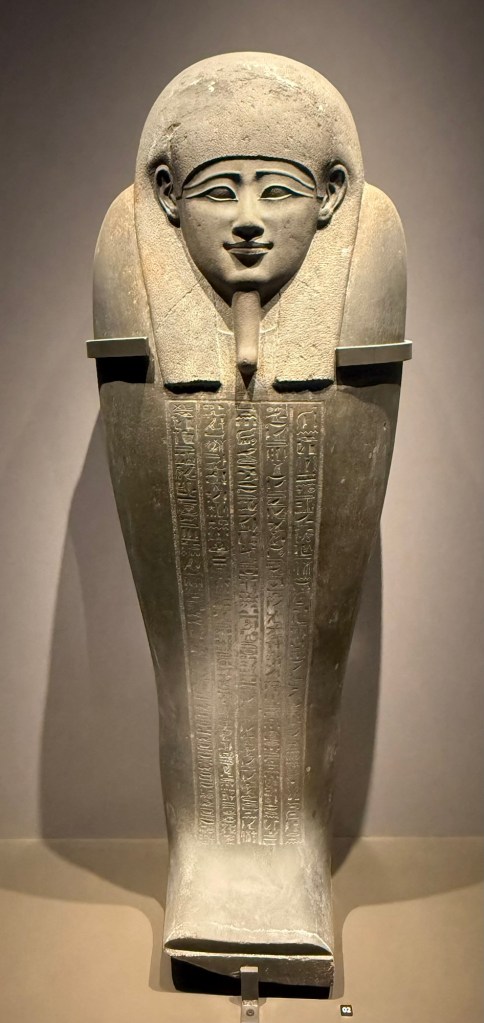
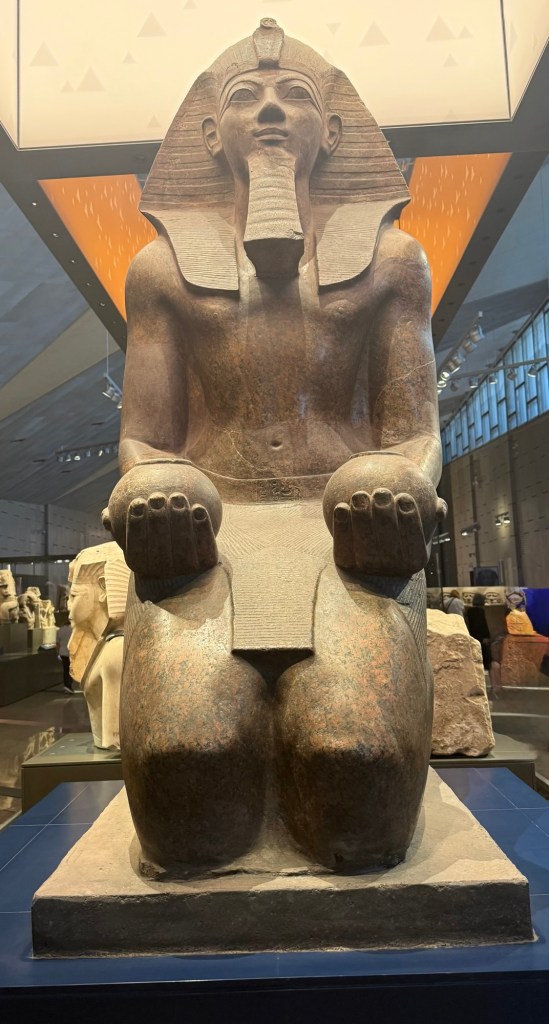
Again, I have not attempted to name each artifact – just enjoy them for their appearance.

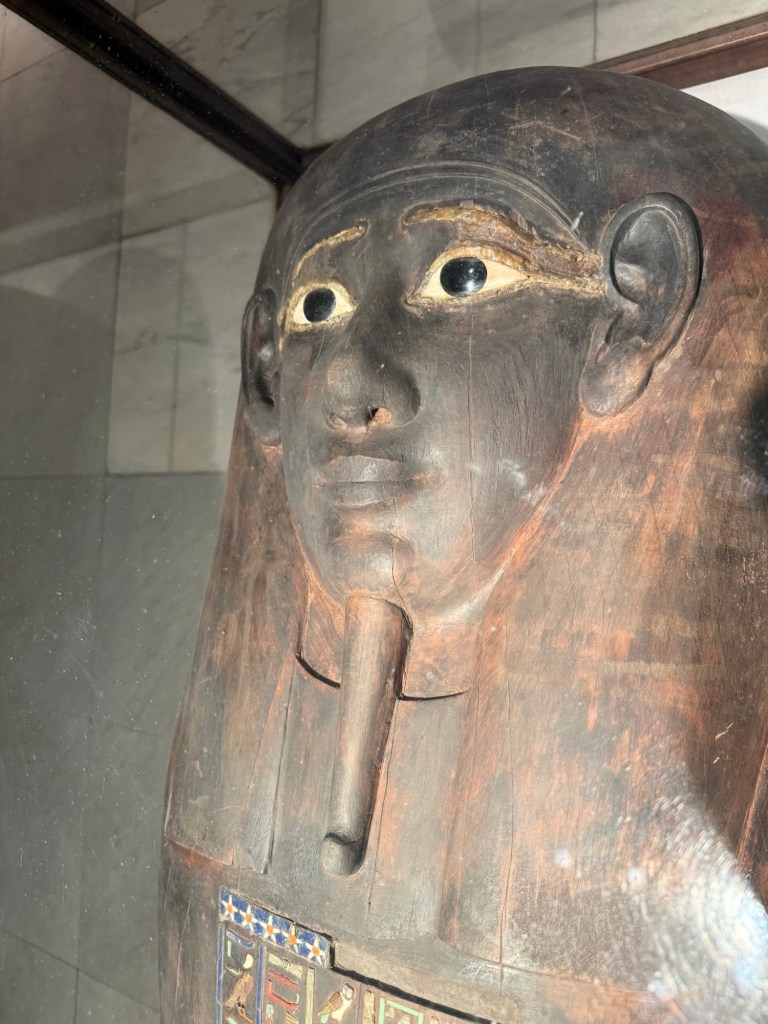
At last we reached King Tut! Note that as photography is not allowed these photos are courtesy of the EM.

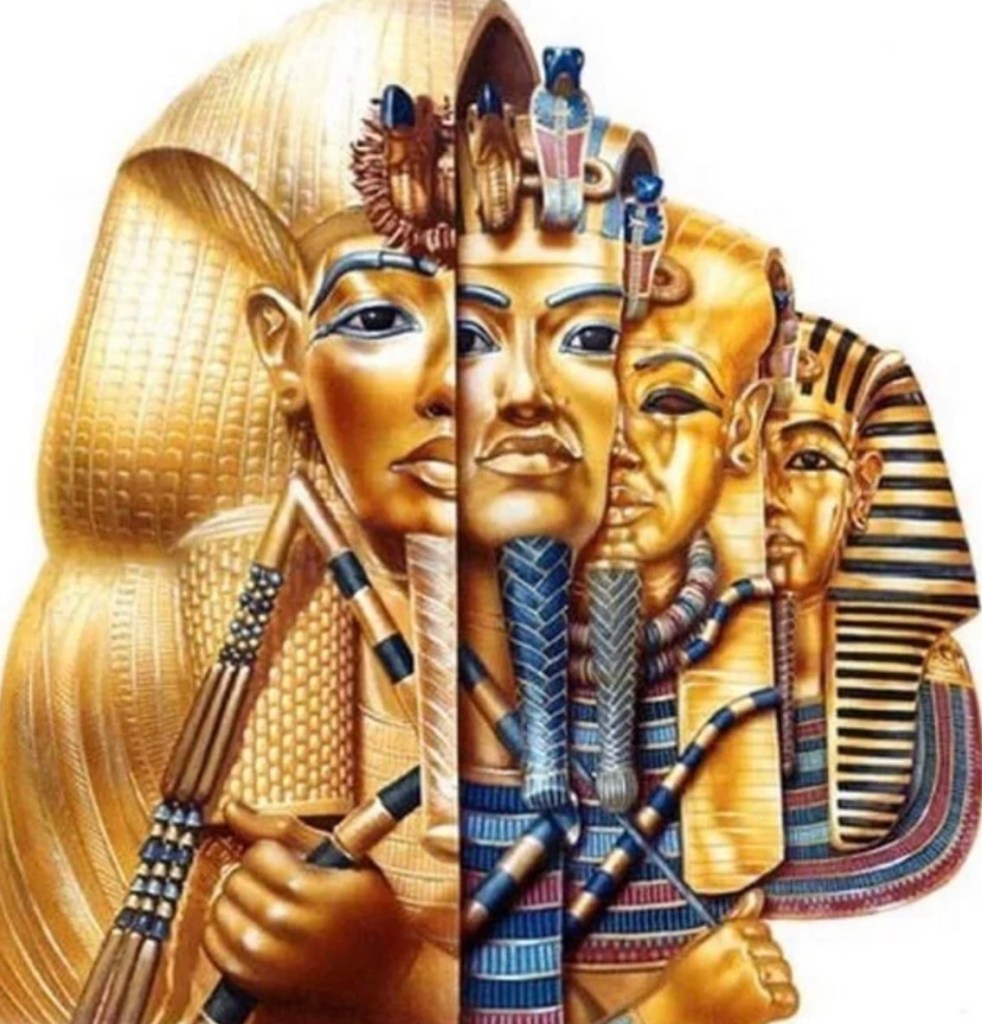
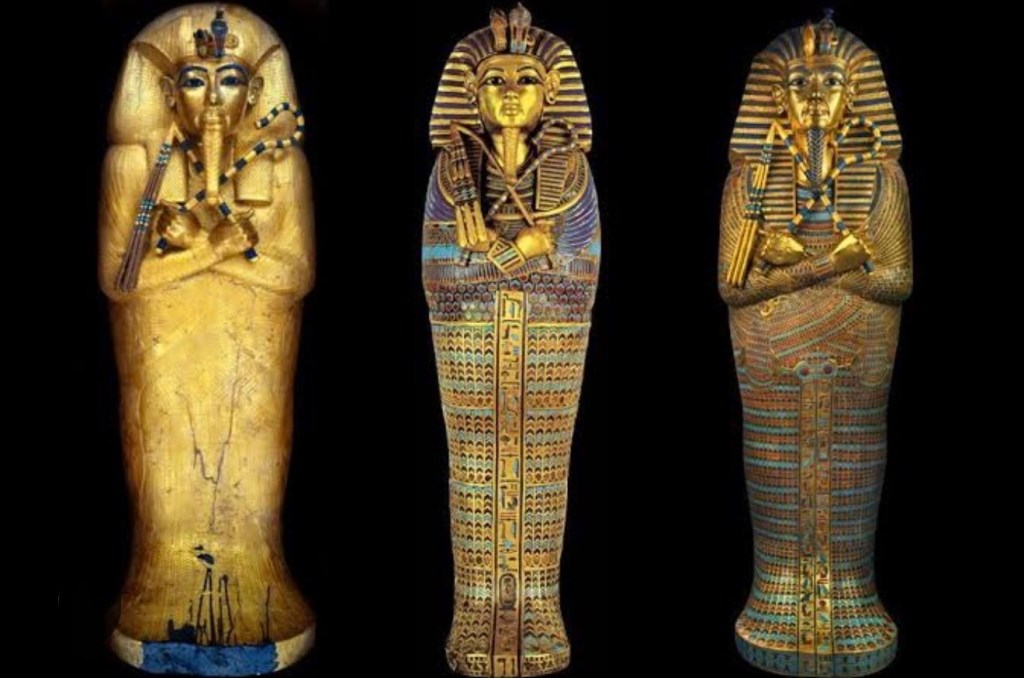
The fantastic exhibition consists of the funerary mask and the coffins.

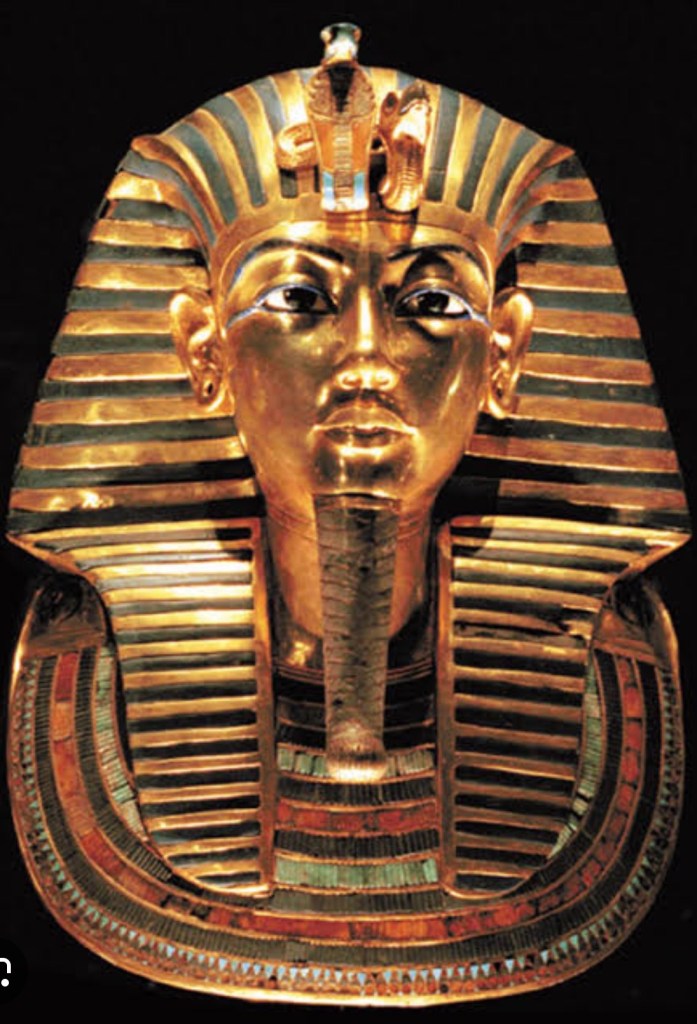
Solid Gold Funerary Mask
The mummy’s face was covered by the iconic solid gold mask, inlaid with semiprecious stones and glass.

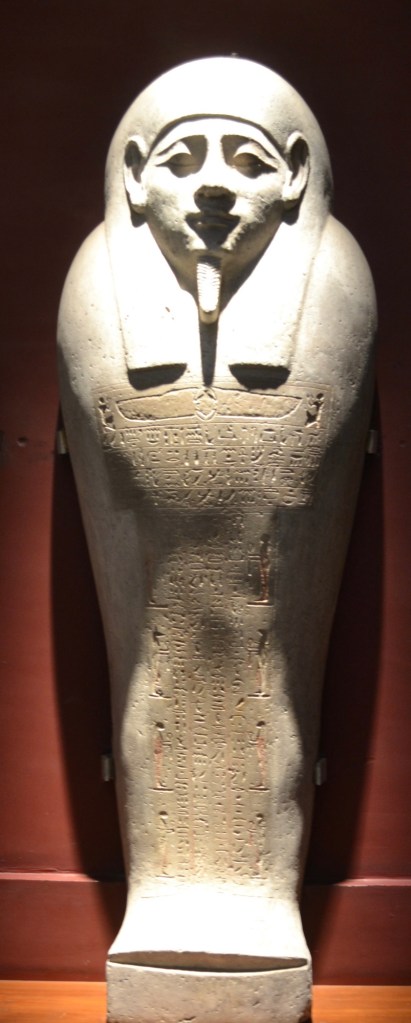
Outer quartzite sarcophagus
A large stone container that housed the three coffins. It is decorated with figures of protective deities at its corners.

Outer gilded wooden coffin
This is the largest of the three coffins and is made of gilded wood with inlays of semiprecious stones and glass. It is shaped like a human, portraying the king in his divine form.

Middle gilded wooden coffin
Nestled inside the outer one, this coffin is also made of gilded wood and is decorated with multicolored glass and semiprecious stones.

Innermost solid gold coffin
The most spectacular coffin, made entirely of 110.4 kg (243 lb) of solid gold. It was found inside the middle coffin, with the mummy wrapped in linen and placed within it.

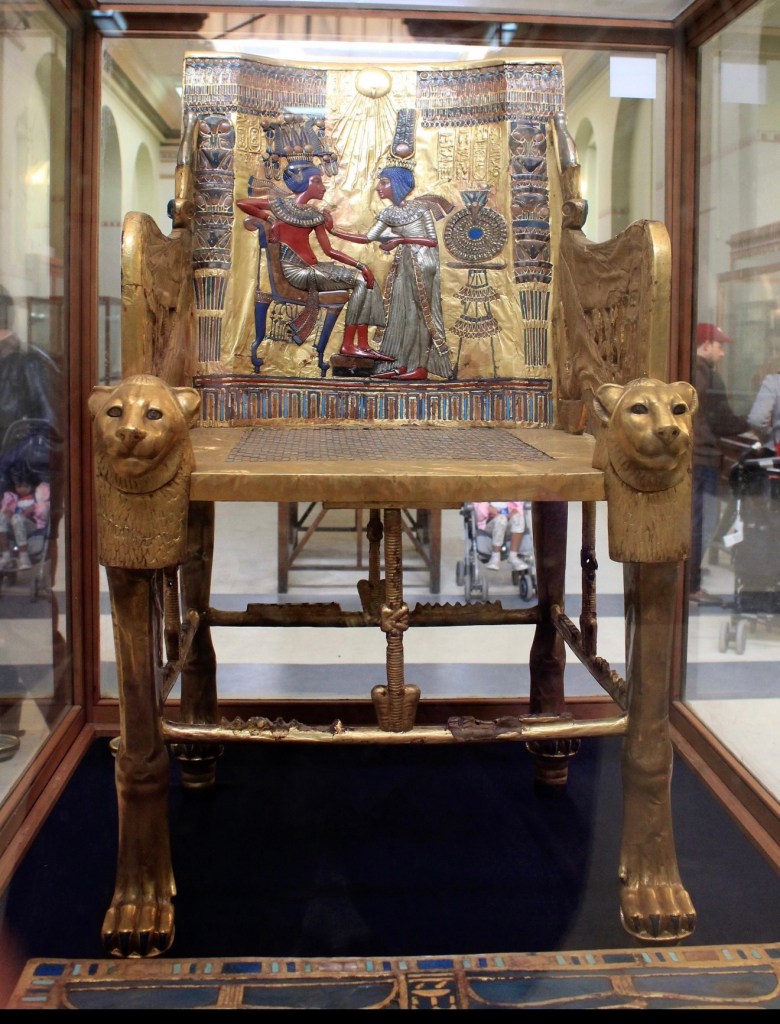
Gilded Throne

Another brilliant day courtesy of AMA Waterways!

Day 6: AMA Waterways’ Jordan Land Trip, Cairo and Nile Cruise

Saqqara, Great Pyramid of Giza, Sphinx and the Grand Egyptian Museum, Cairo

By Paul Bryers

Firstly, I must commend our AMA cruise leader, Sammy, for his exceptional organizational skills in creating an exhaustive day’s itinerary. Additionally, our AMA local guide, Mohammed, was extremely knowledgeable, making it challenging to absorb all the information, but I managed to grasp the key points 😃 .

The colossal pyramids and equally colossal statues are a hallmark of ancient Egyptian civilization.

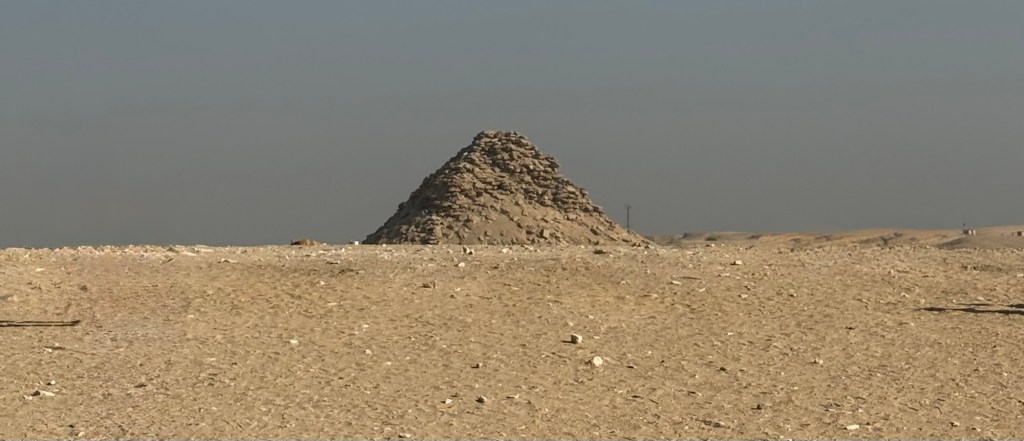
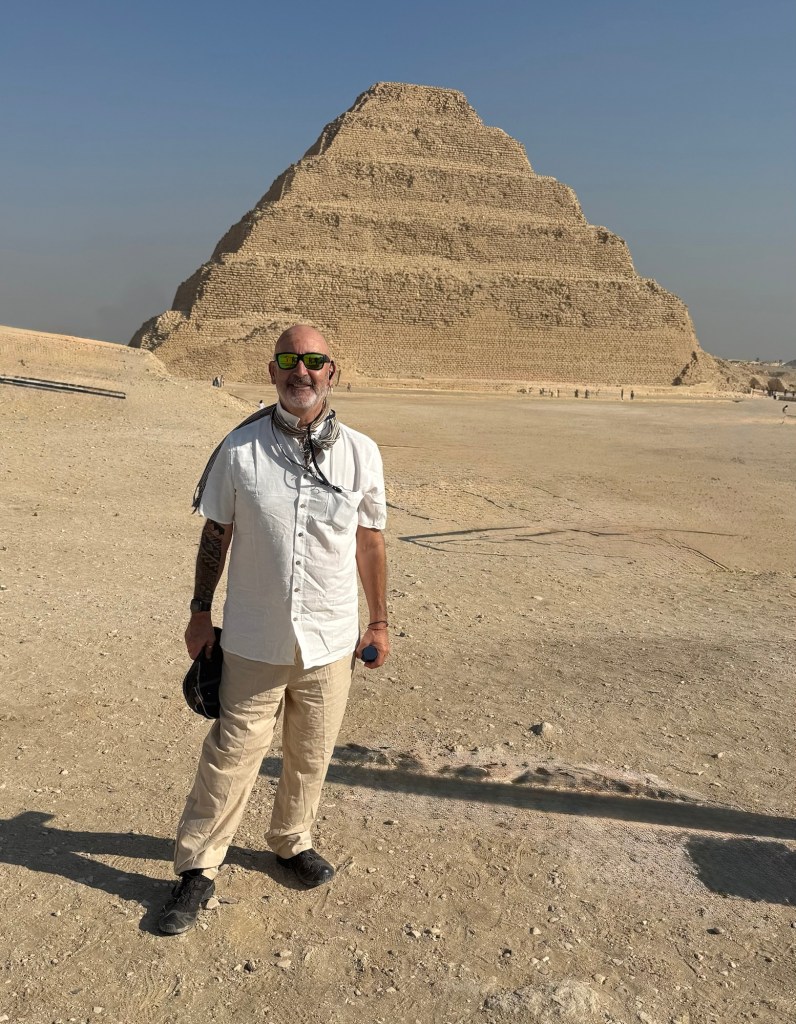
Our first stop, Saqqara, is a vast archaeological site in Egypt that served as the necropolis for the ancient capital of Memphis and is home to the world’s oldest pyramid, the Step Pyramid of Djoser.

Steps Pyramid

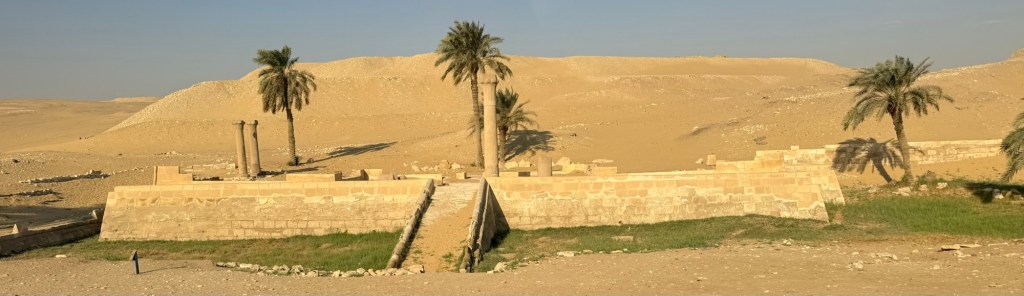
Upon arrival at the site, we were greeted by the port that served the area in ancient times. Due to the Aswan and other dams, there is no longer a water presence in the area.

Old Port

The port was followed by the pet cemetery – another King comes to mind…

Pet Cemetery

Saqqara was a major burial ground for royalty and nobility for over 3,000 years and contains numerous other pyramids, mastaba tombs, and funerary complexes. The site is a UNESCO World Heritage Site and is renowned for its historical significance as the birthplace of pyramid architecture.

The Blueberries took time to have a group photo…what a handsome bunch…

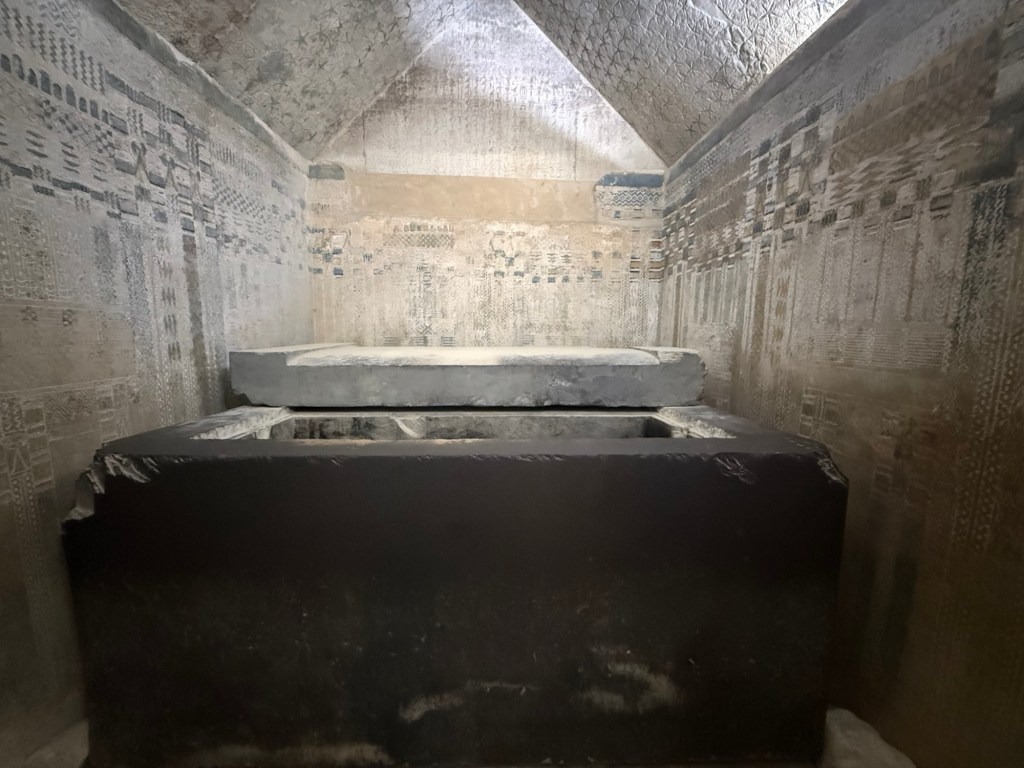
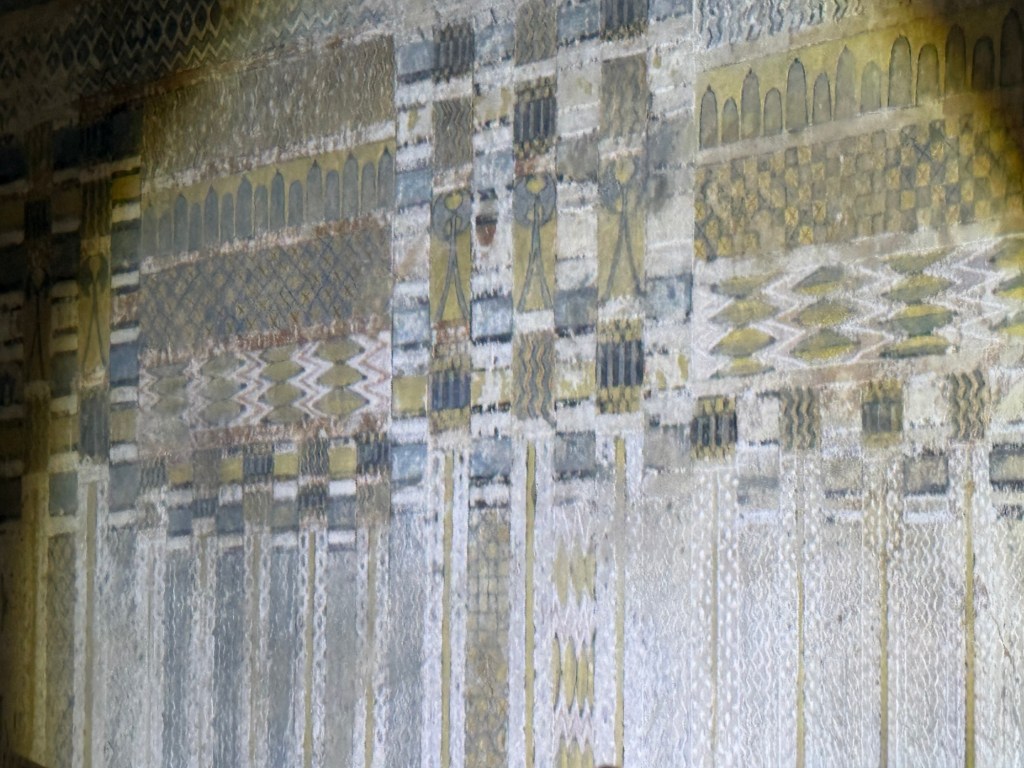
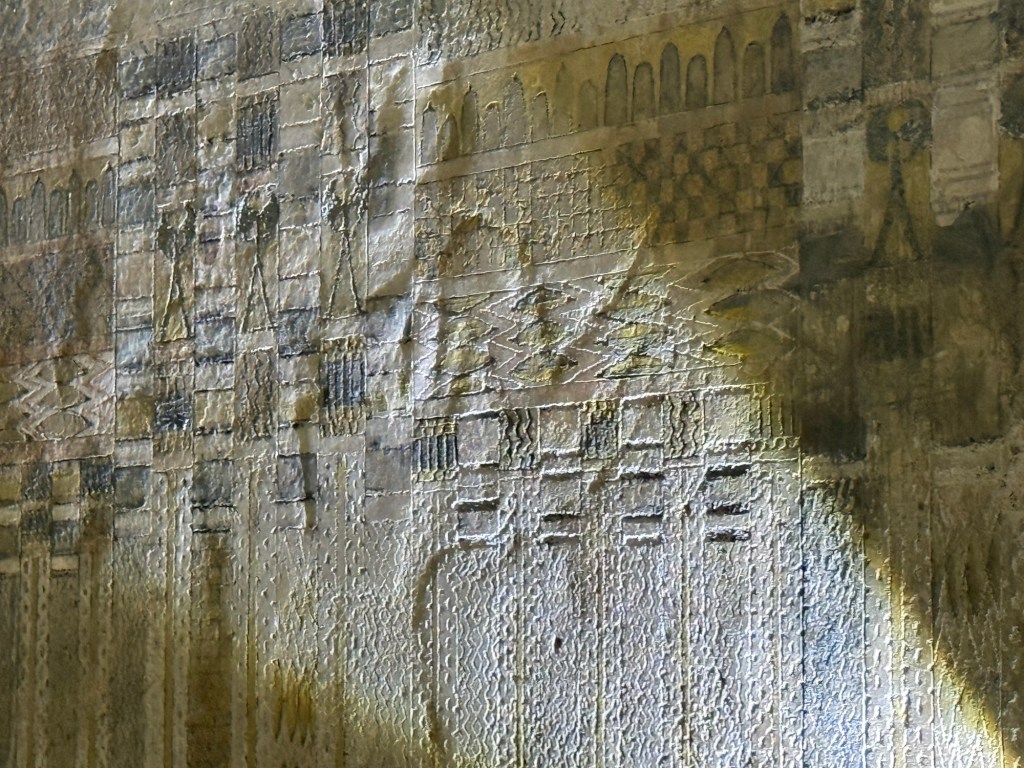
I walked down int Steps Pyramid , crouched like a wee Scottish gnome, to the burial chamber. Initially, it was not very impressive until the guide illuminated the walls with his torch, revealing vibrant colors and reliefs that were otherwise hidden.

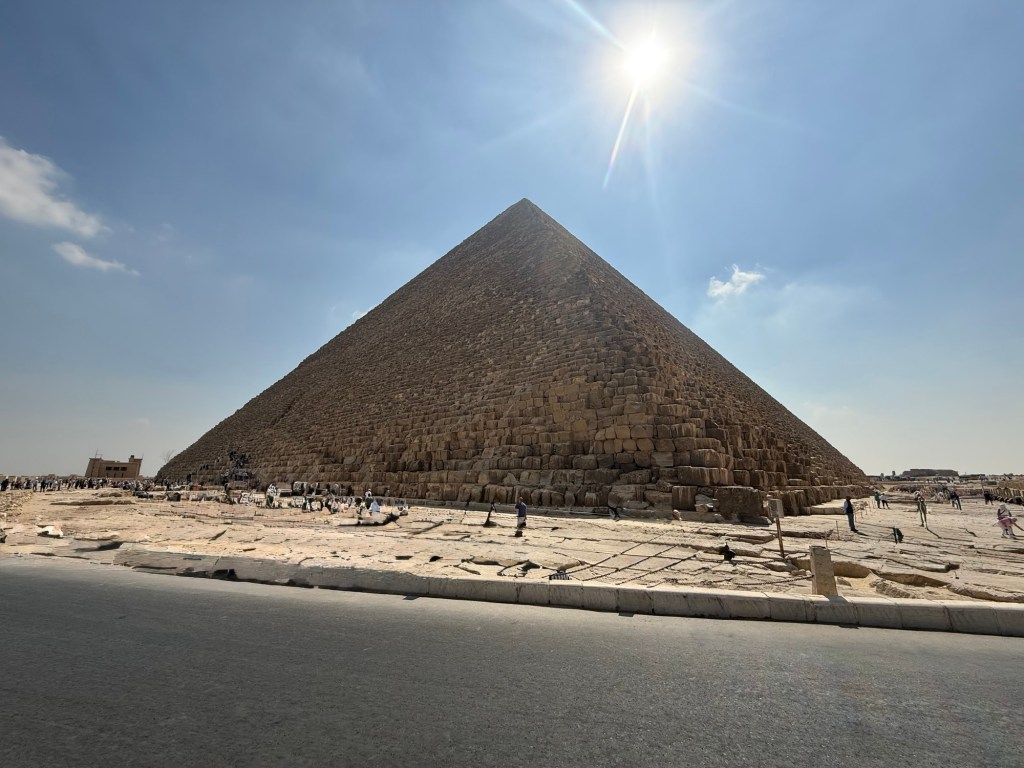
The Great Pyramid of Giza is the largest of the three pyramids in Giza, built around 2580–2560 BC as a tomb for Pharaoh Khufu. It was the tallest man-made structure in the world for nearly 3,800 years and is the only one of the Seven Wonders of the Ancient World to remain largely intact. Its intactness is indeed impressive. The pyramid is composed of millions of limestone and granite blocks, with internal chambers including the King’s Chamber and the Grand Gallery.

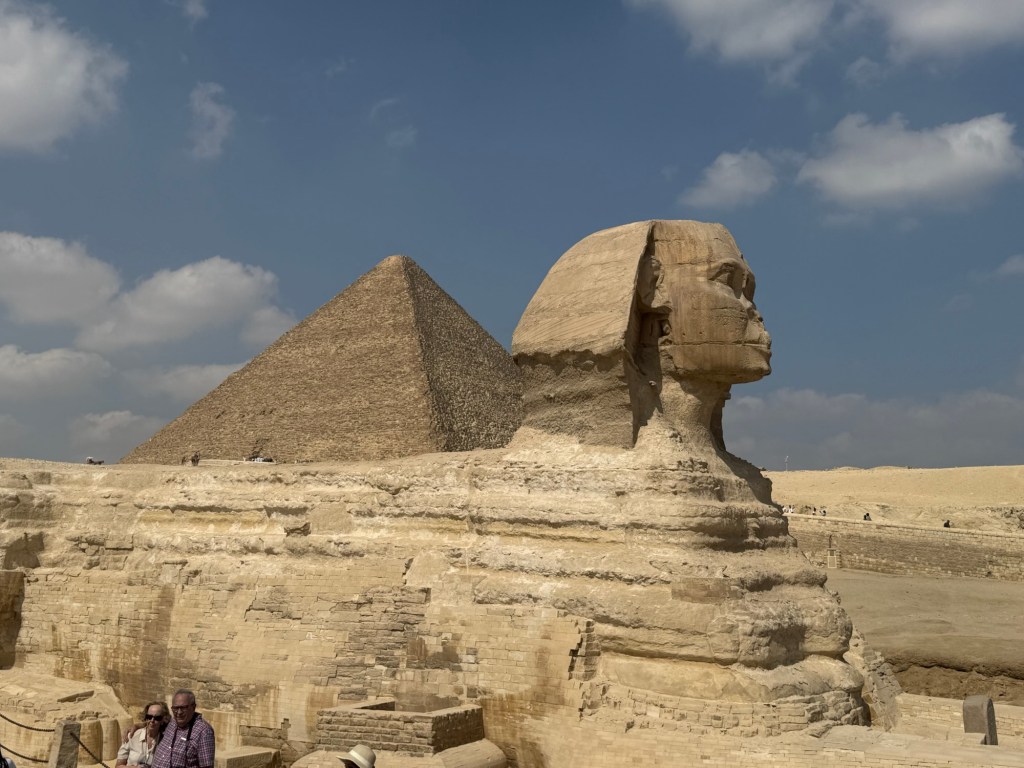
The Great Sphinx of Giza is the most famous cat in the world. It was carved directly out of the bedrock during the 4th Dynasty (c.2613–2494 BC), making it extremely old. Ancient Egyptian sphinxes represented the king with the body of a lion, demonstrating his power, and the human head symbolizing intelligence.

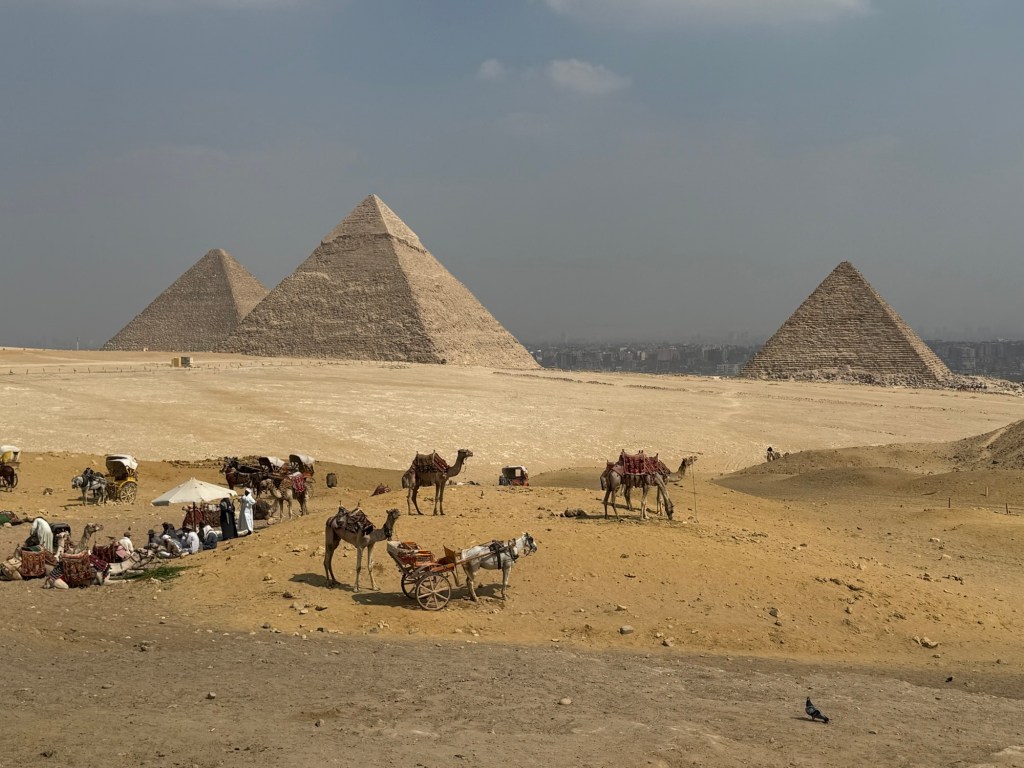
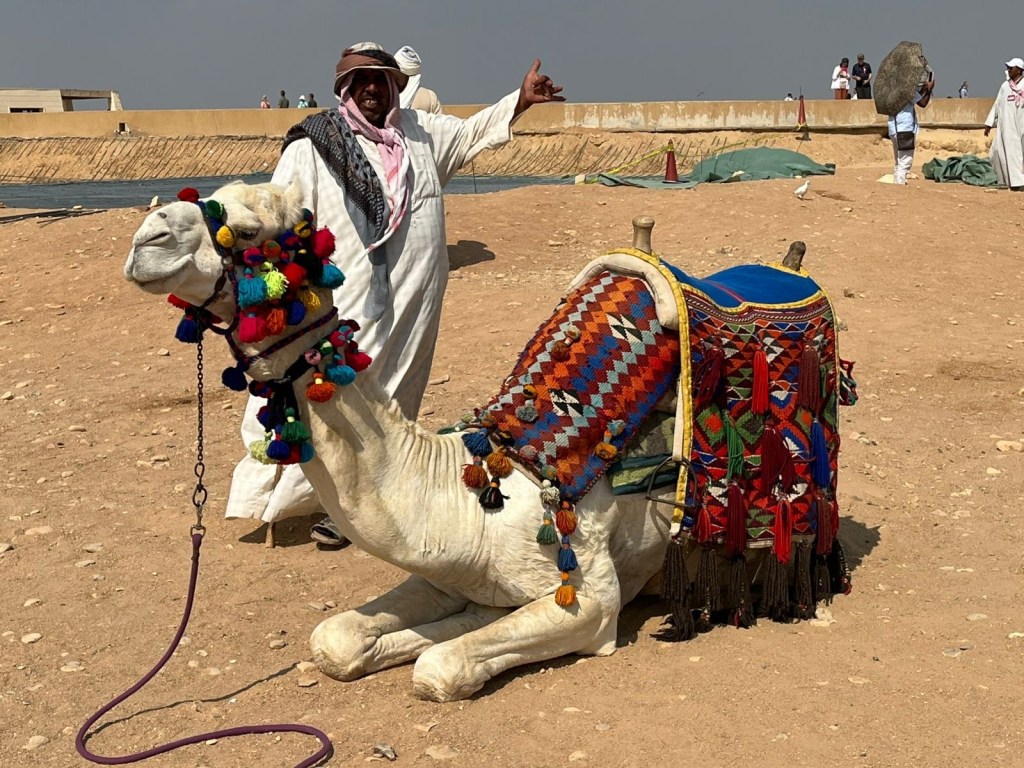
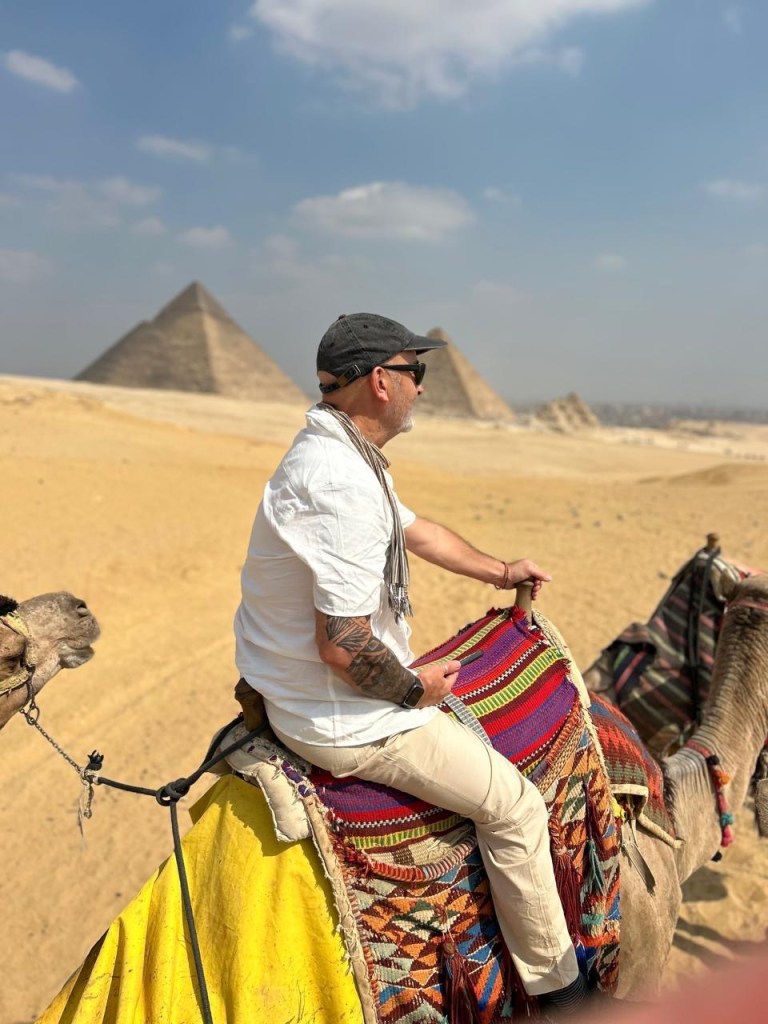
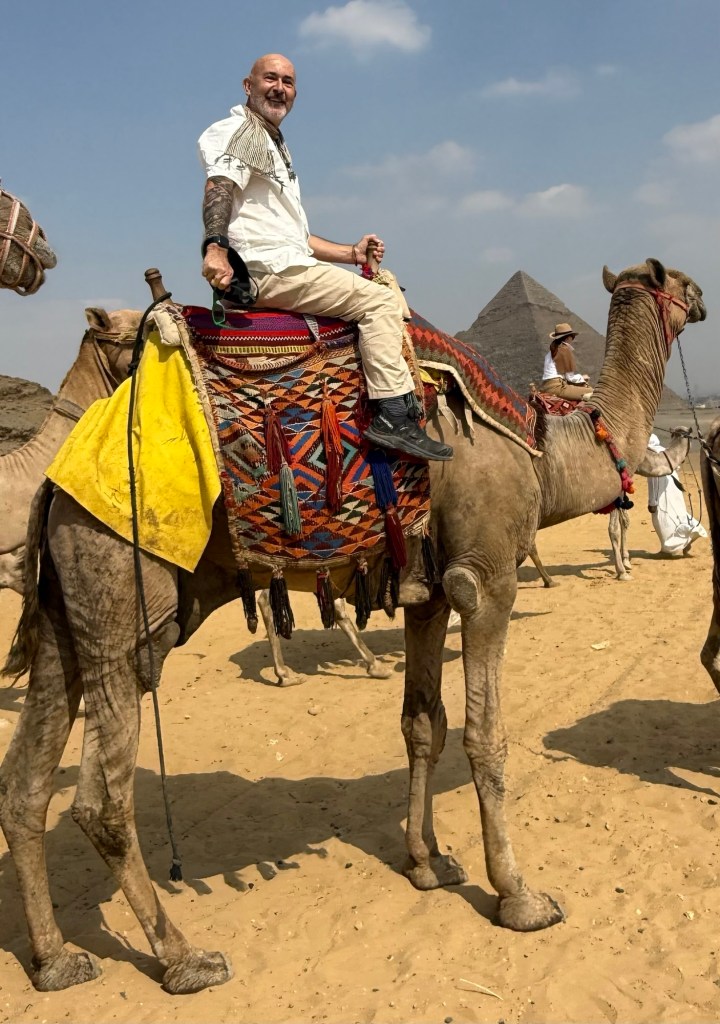
Camel time? You can’t come to Giza and not do a wee camel ride, and get the ubiquitous photo in front of the Great Pyramid.

My camel, Camilla, was a little frisky while the camel behind, Clarisa, was very friendly and chewed away while resting her chin on my leg – she had major camel breath – completely minging. All good though…

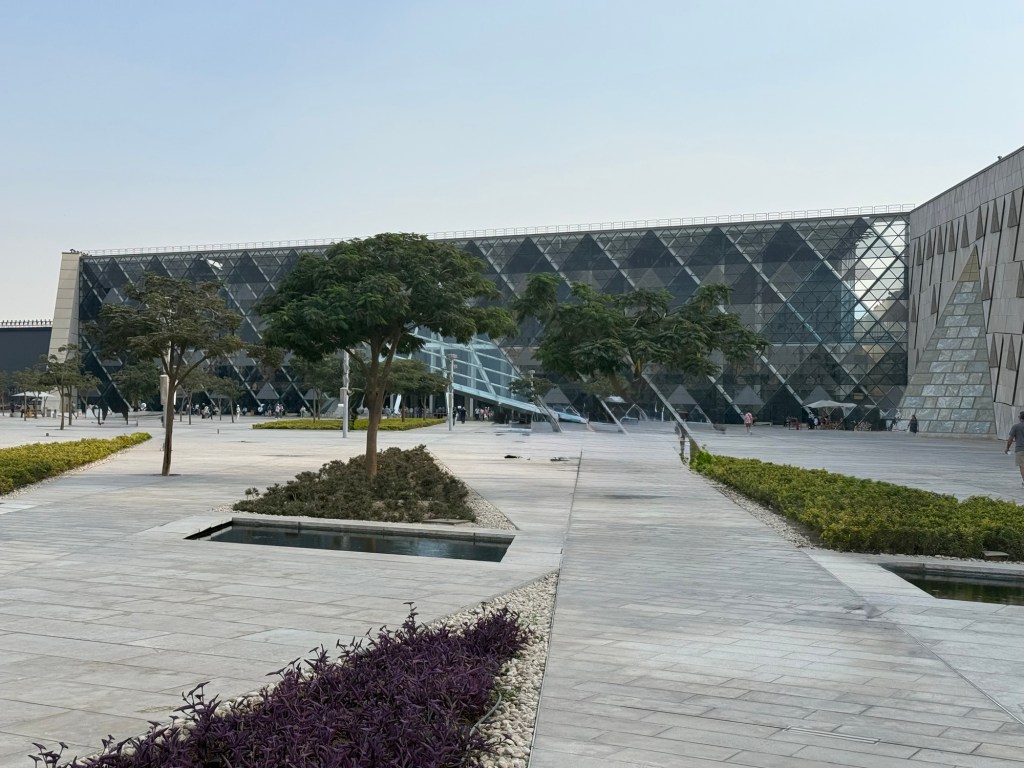
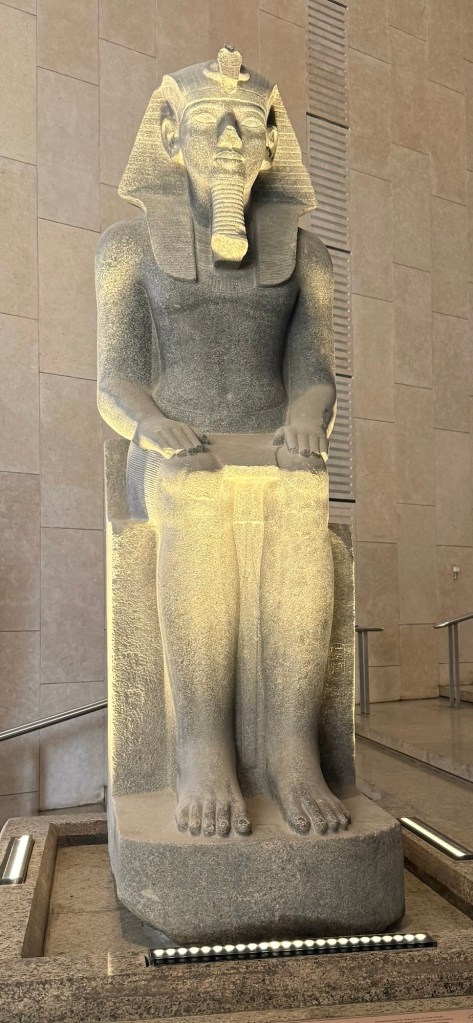
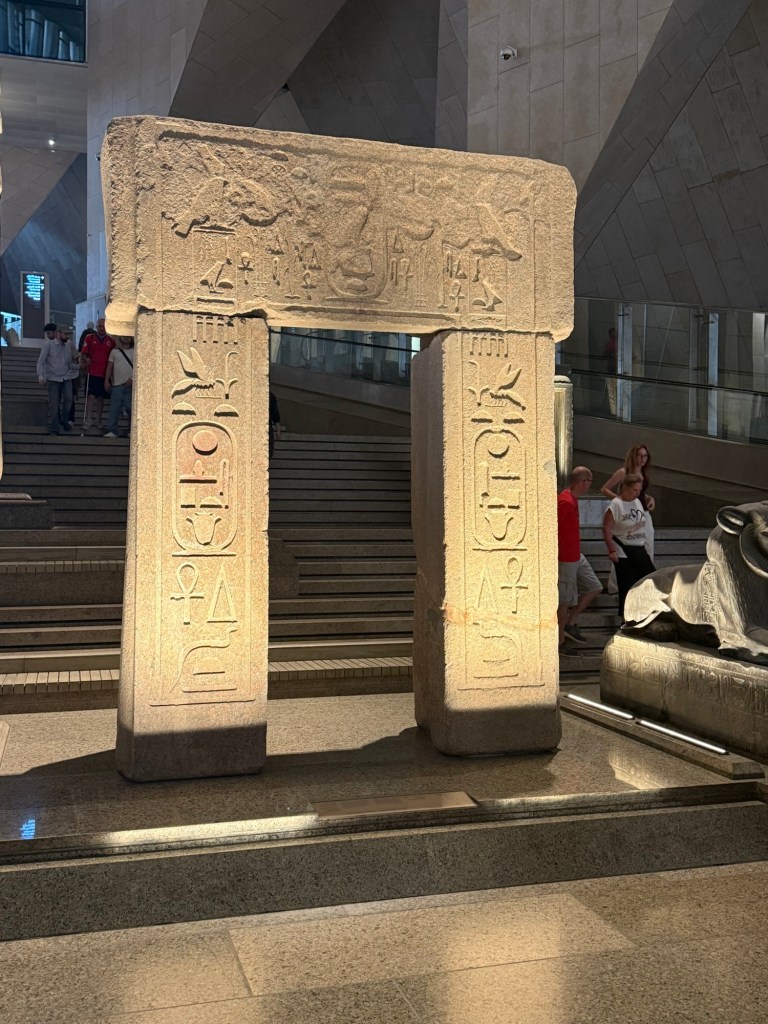
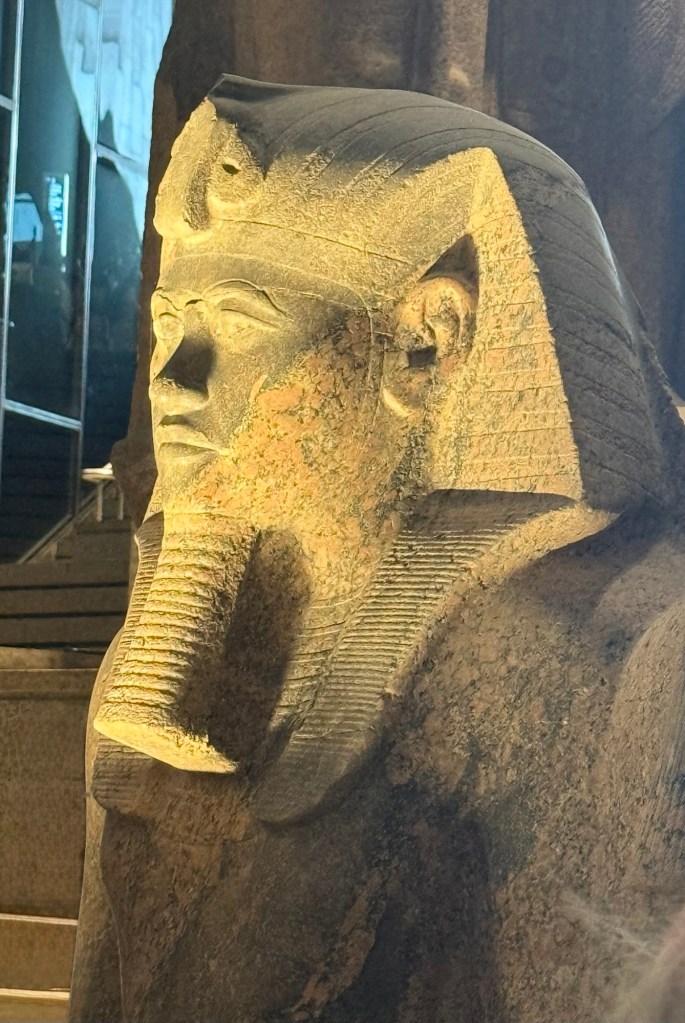
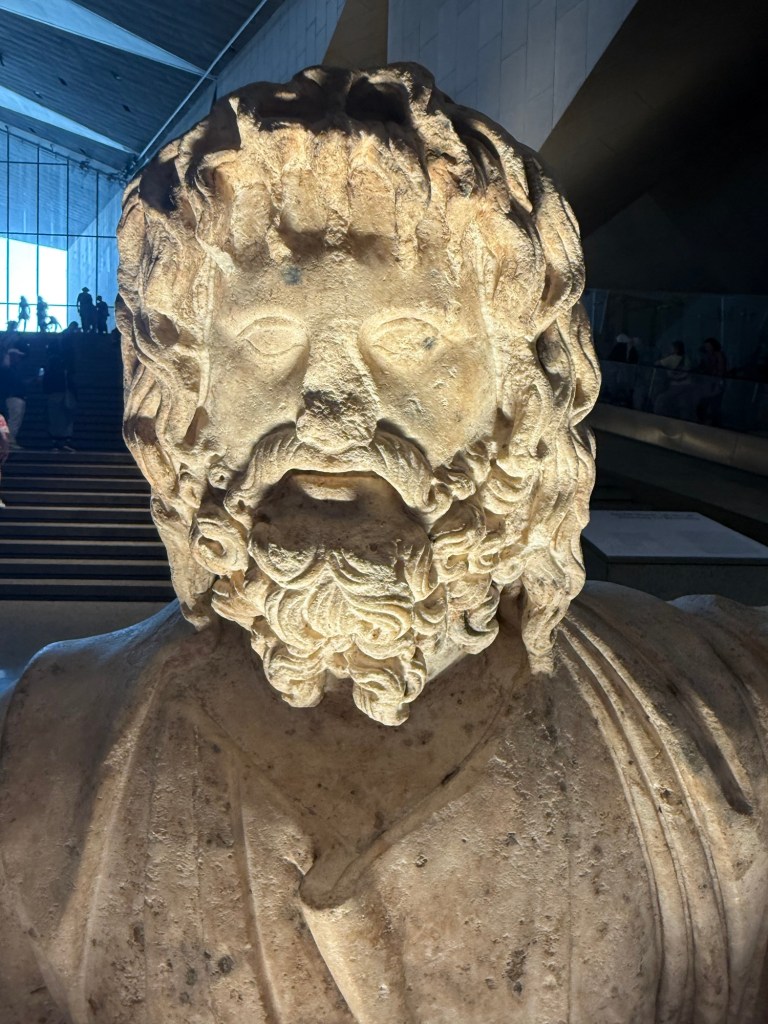
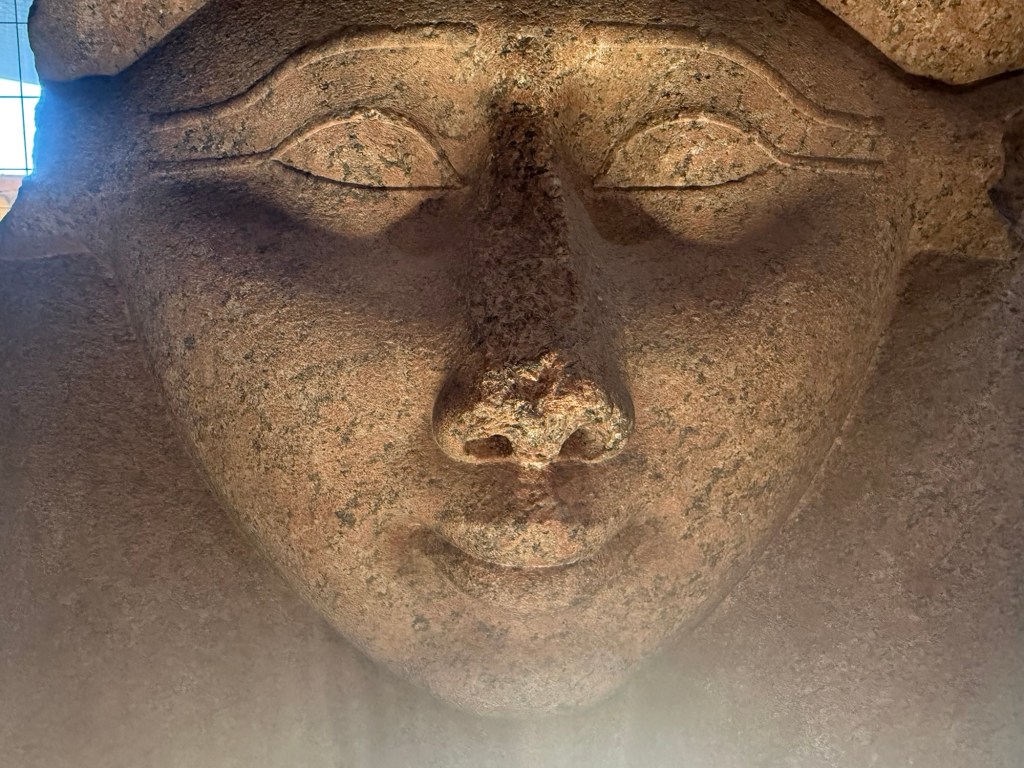
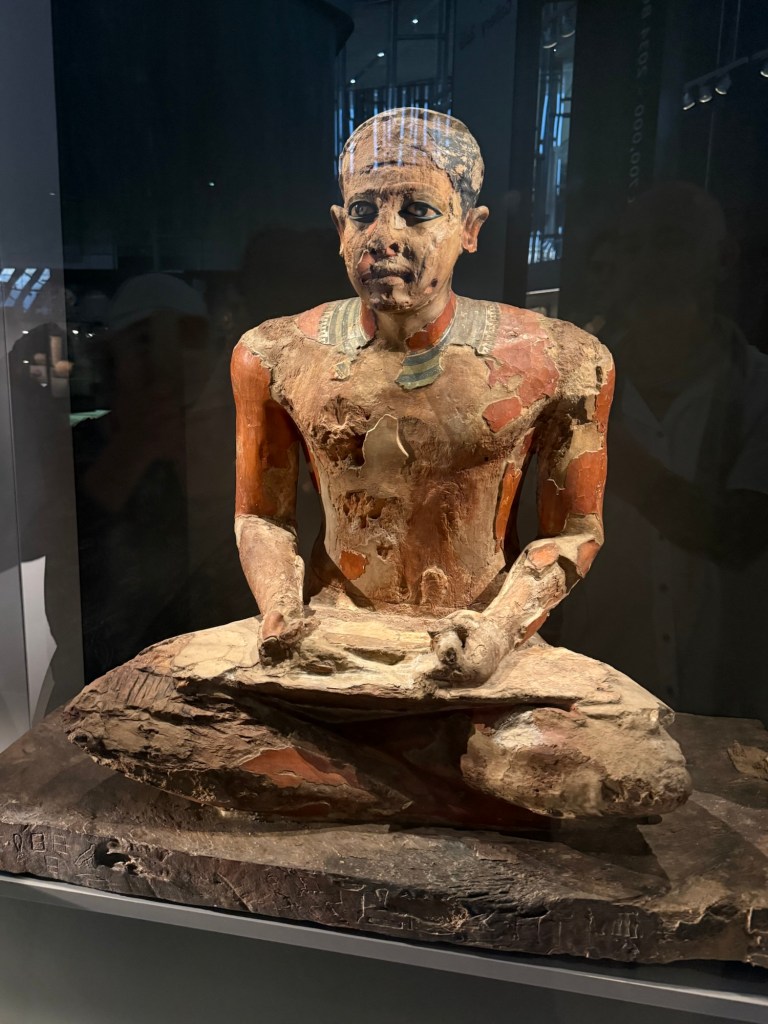
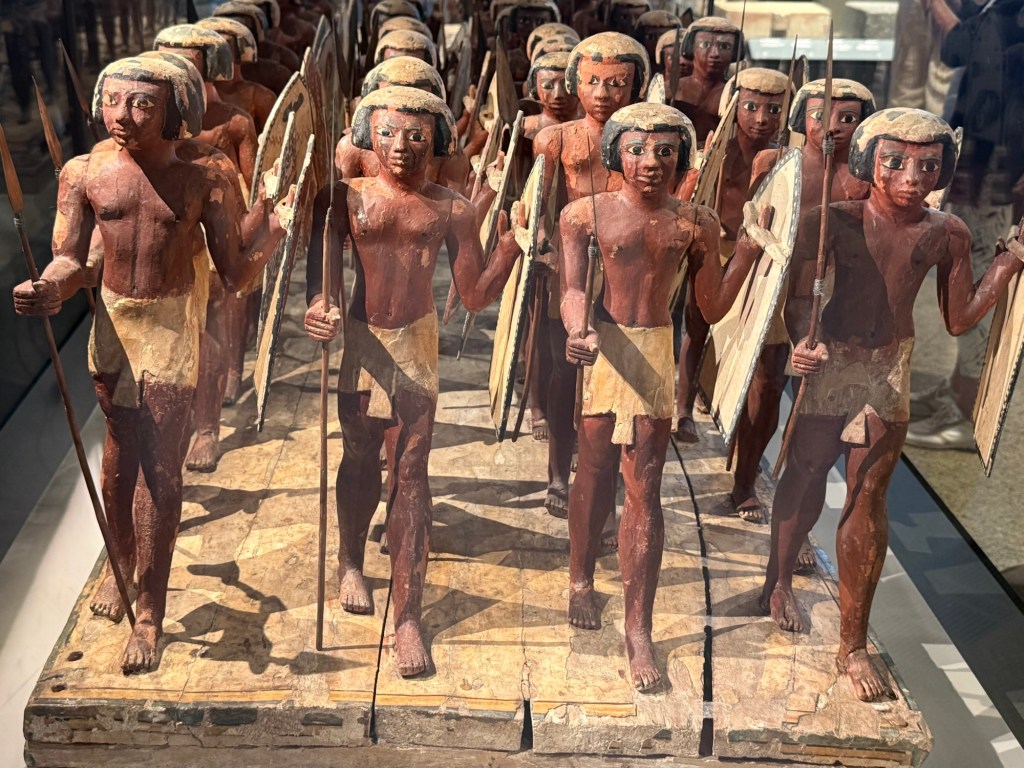
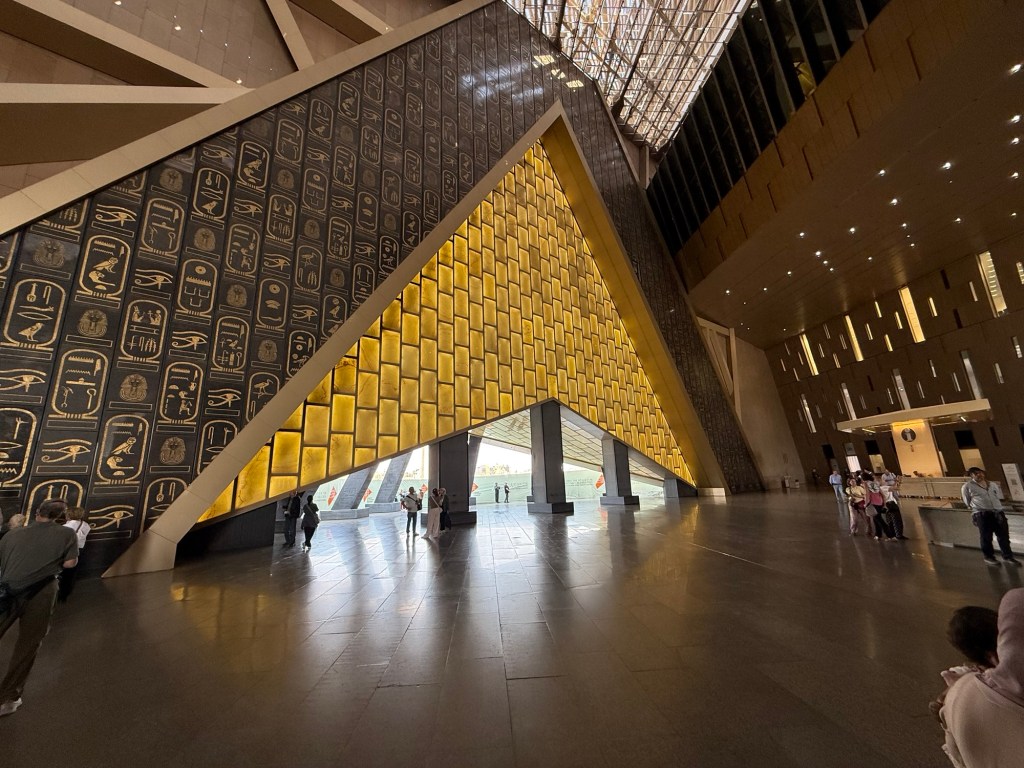
The Grand Egyptian Museum is a magnificent structure that has taken considerable time to build. It is the world’s largest archaeological museum, and one could easily spend days exploring its vast collections. Unfortunately, our visit was limited to 2 hours, which was insufficient to fully appreciate the impressive relics on display.

I’m not going to even attempt to name all these marvelous relics as I only had time for a wee swatch aw most of them, but I think you will enjoy just seeing their beauty.

What an AMAday!

Day 5: AMA Waterways’ Jordan Land Trip, Cairo and Nile Cruise

Drive Petra to Madaba, Jordan and Fly to Cairo

By Paul Bryers

Thus, our Jordanian excursion has come to a close, but our Egyptian adventure is yet to begin.

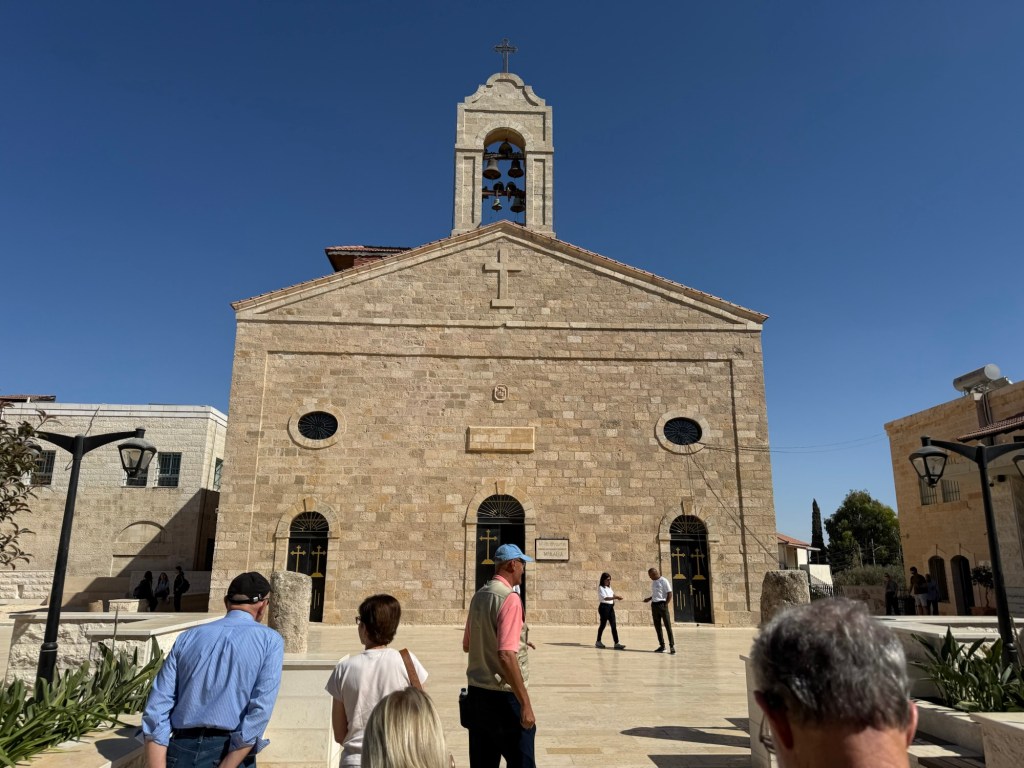
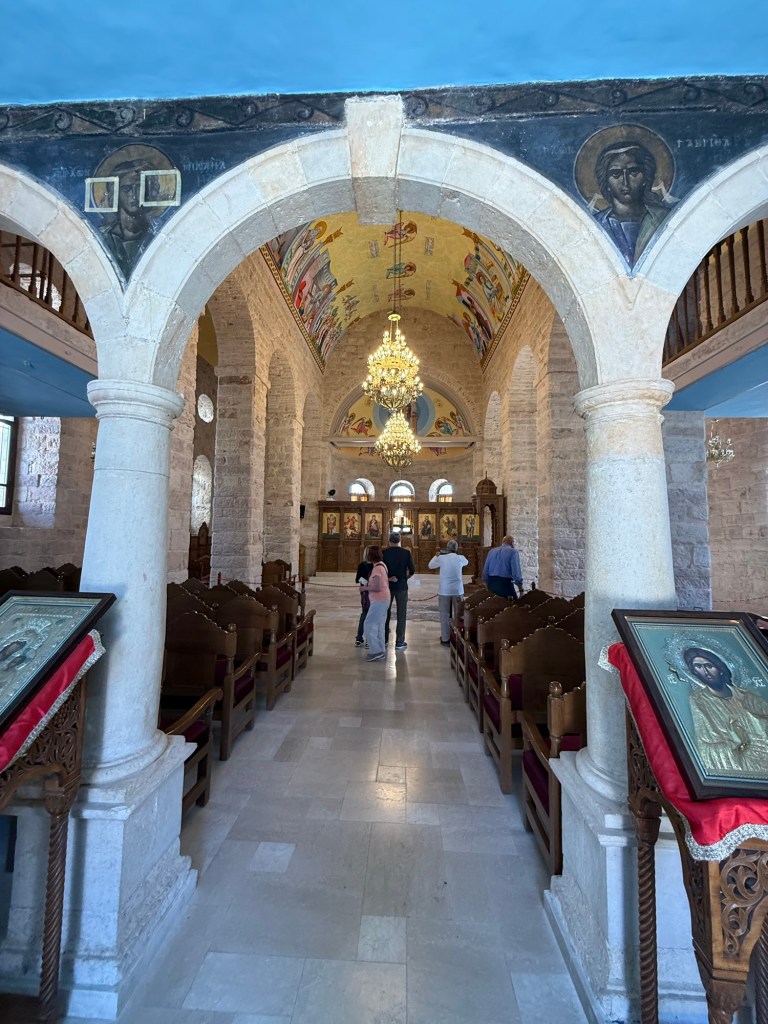
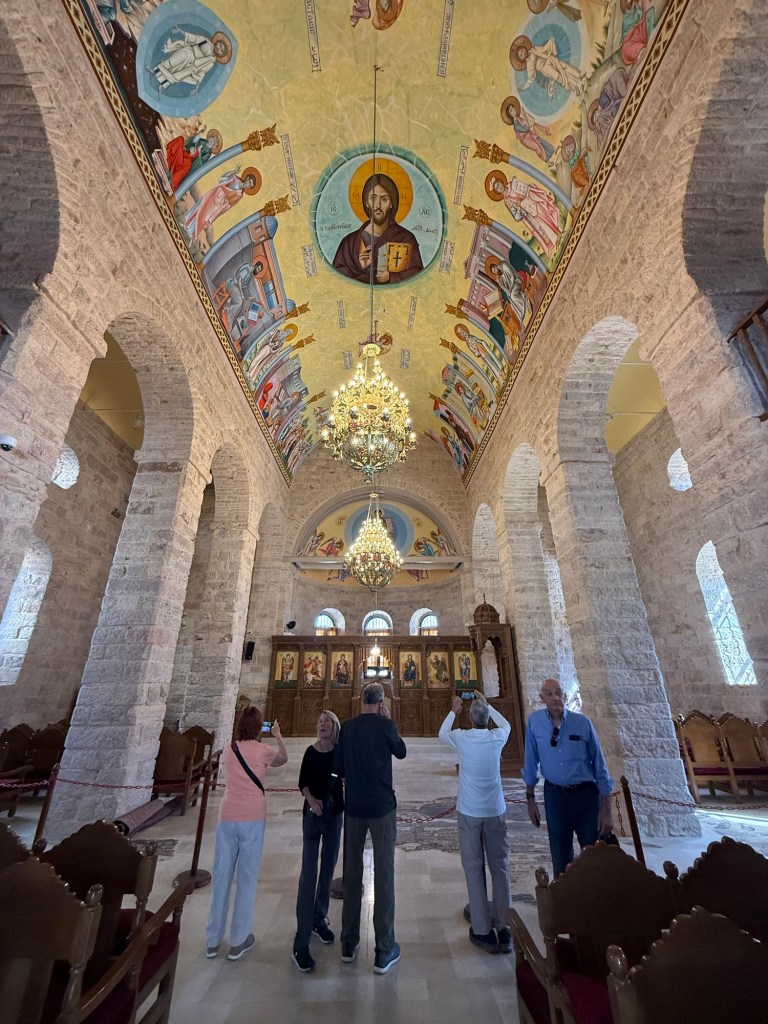
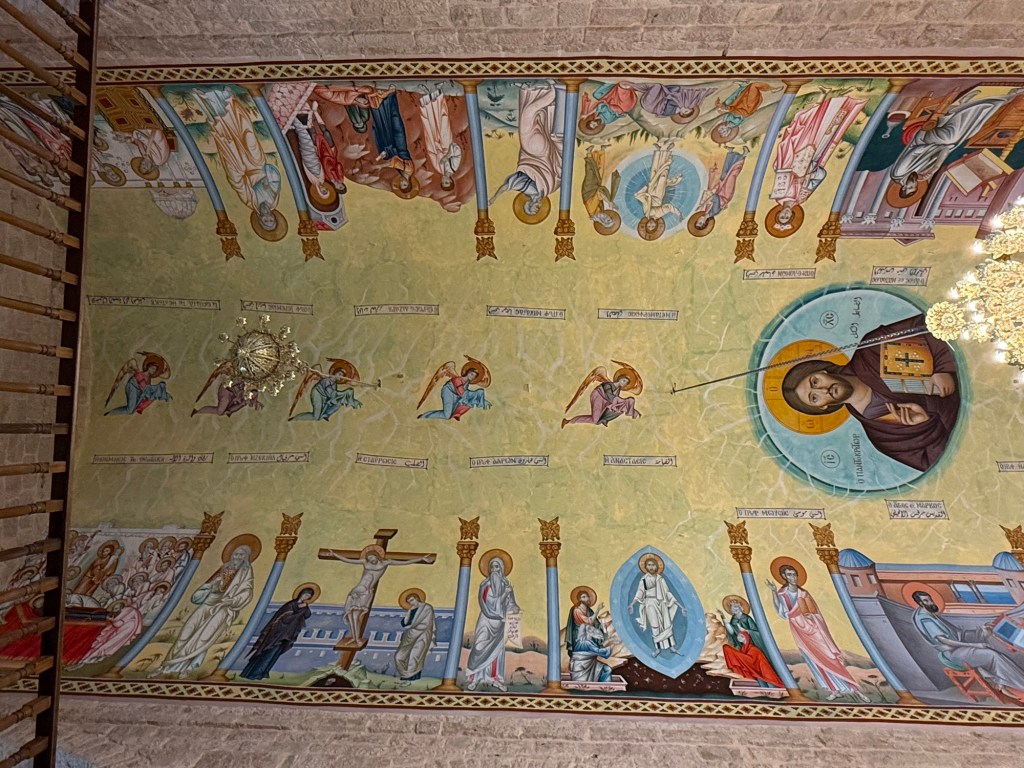
We departed Petra at a reasonable hour and proceeded to Madaba to visit the Greek Orthodox St George’s Church and the ancient map of the Levantine.

The church was aesthetically pleasing, and the mosaic floor map was truly remarkable, demonstrating surprising accuracy.

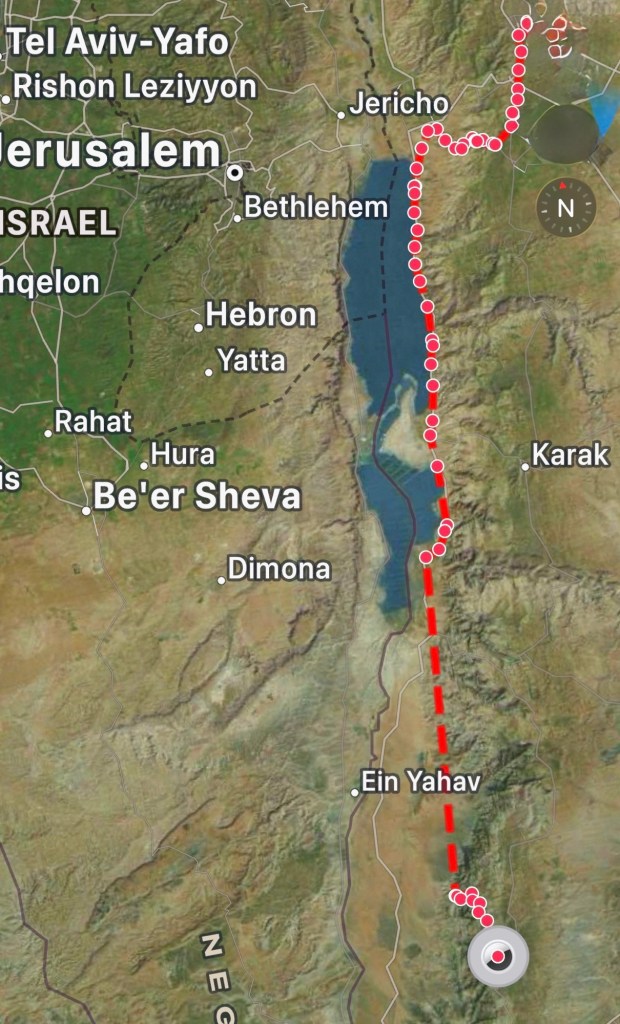
We were able to identify a significant portion of our 4-day trip on the map, which correlated nicely with a fellow traveler’s Apple Tag locations.

We then enjoyed a delightful farewell lunch and subsequently made our way back to Amman Airport for our 55-minute flight to Cairo.

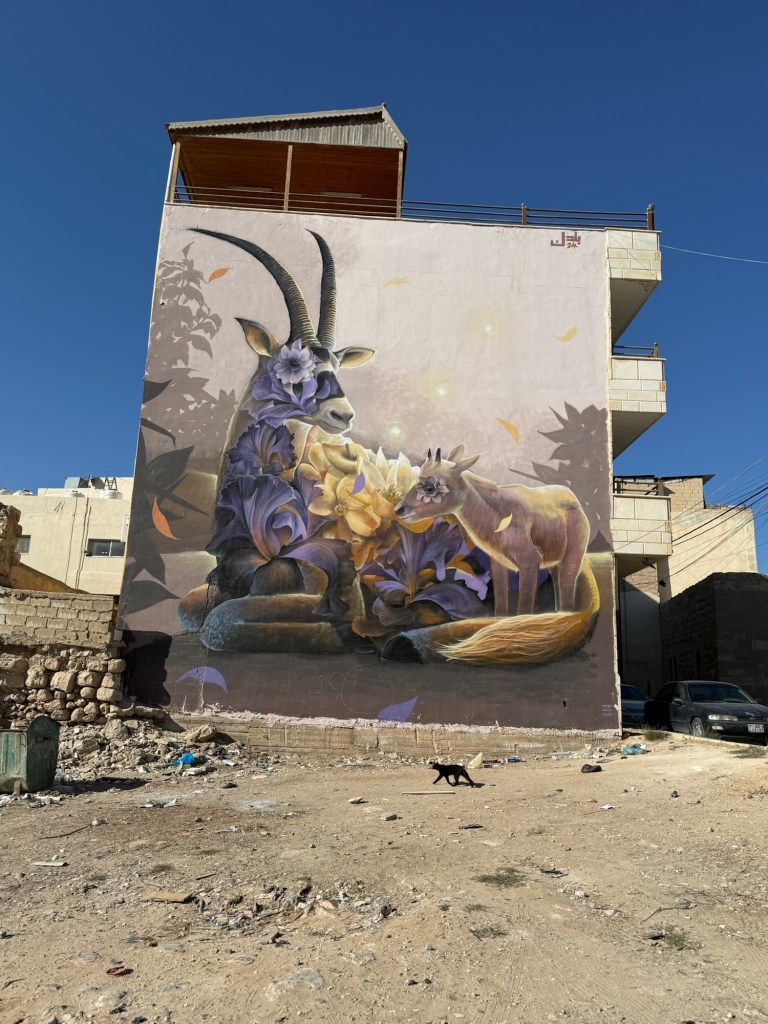
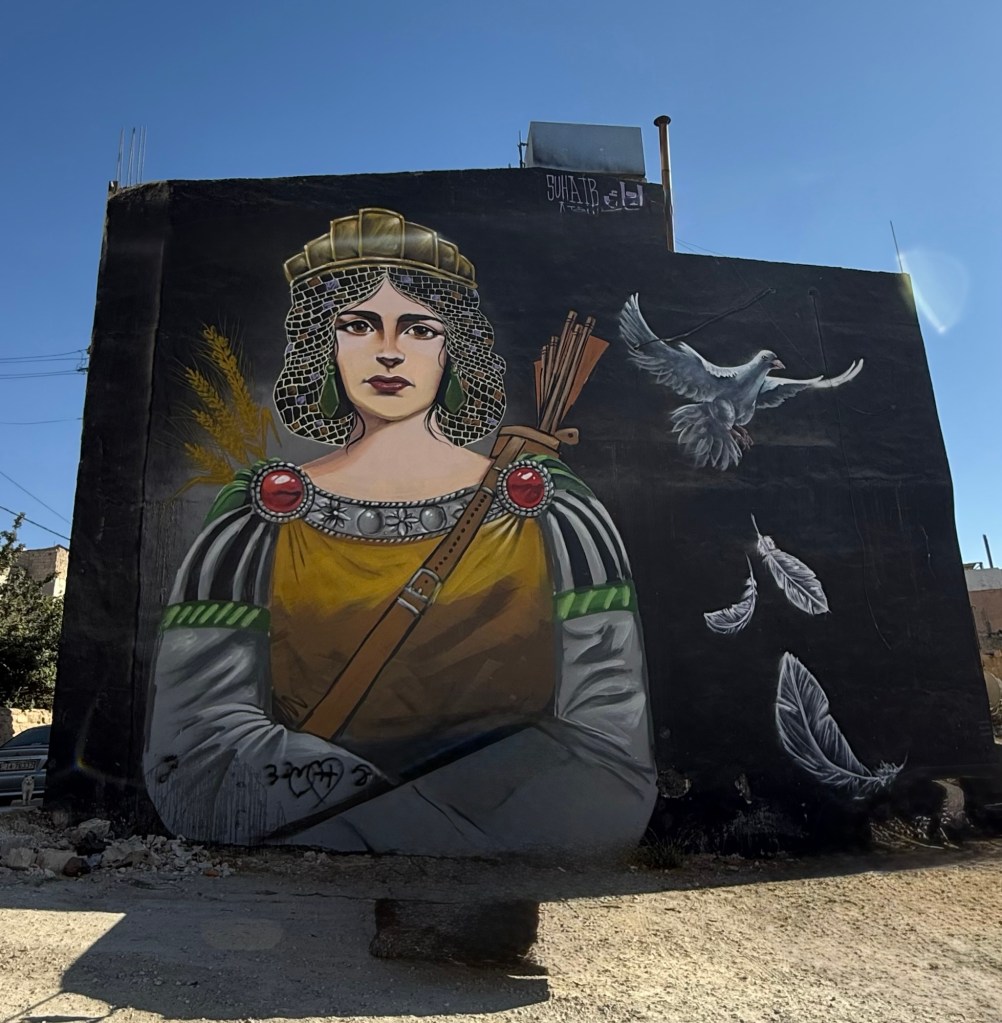
Outside the restaurant were a couple of lovely gable end paintings.

Day 2: AMA Waterways’ Jordan Land Trip, Cairo and Nile Cruise

Jerash and Amman Old City Tour, Jordan

By Paul Bryers

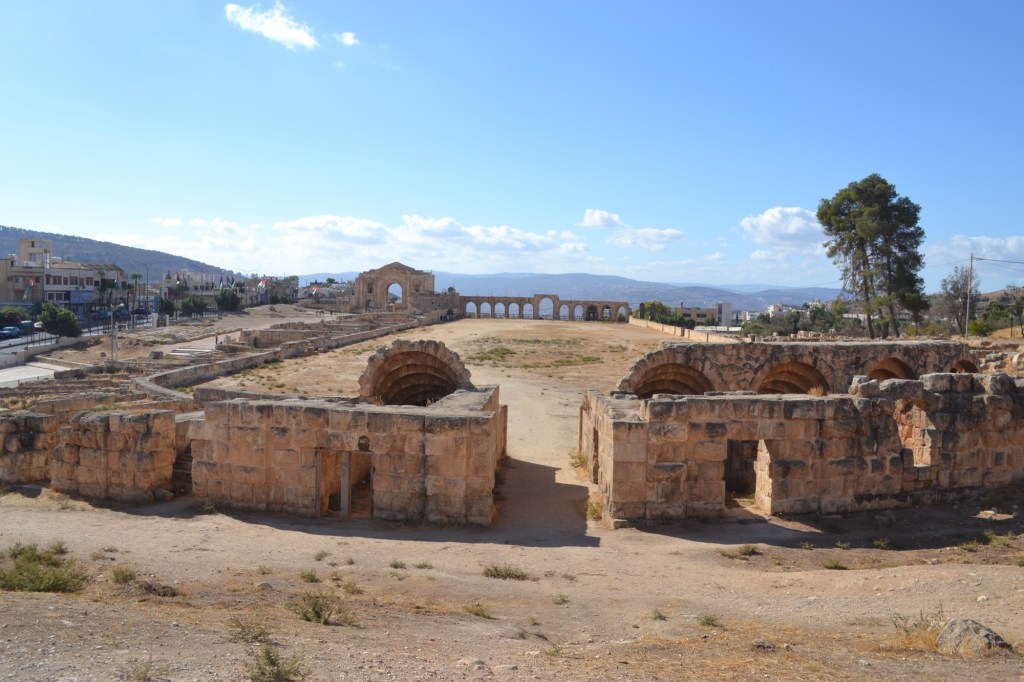
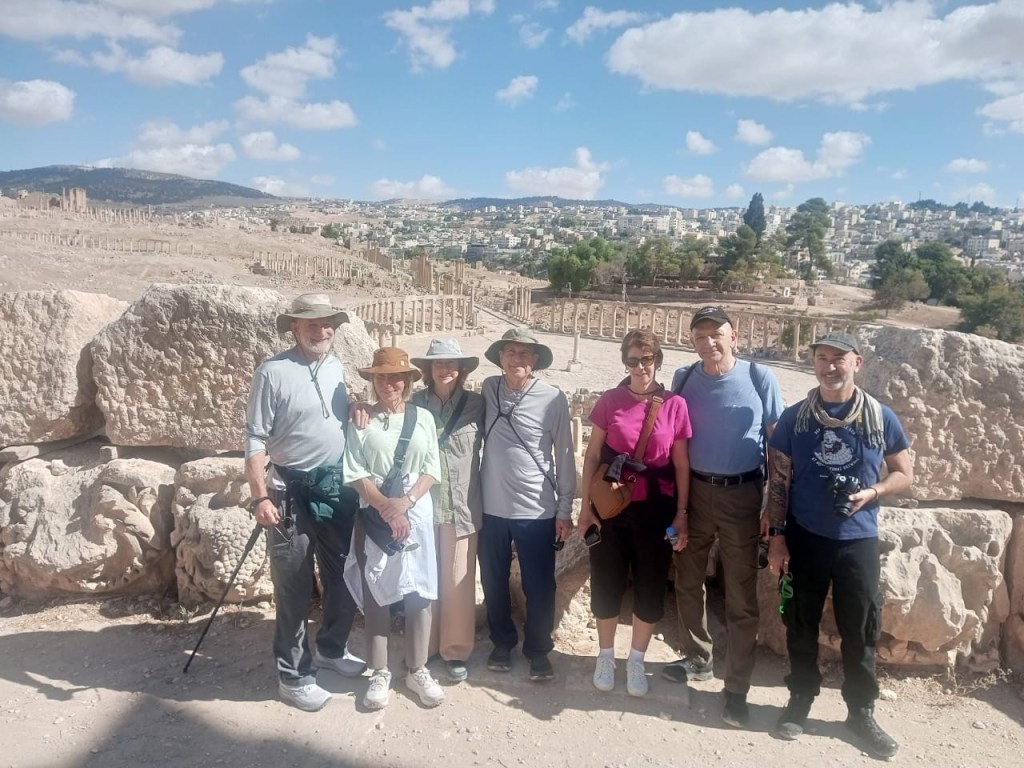
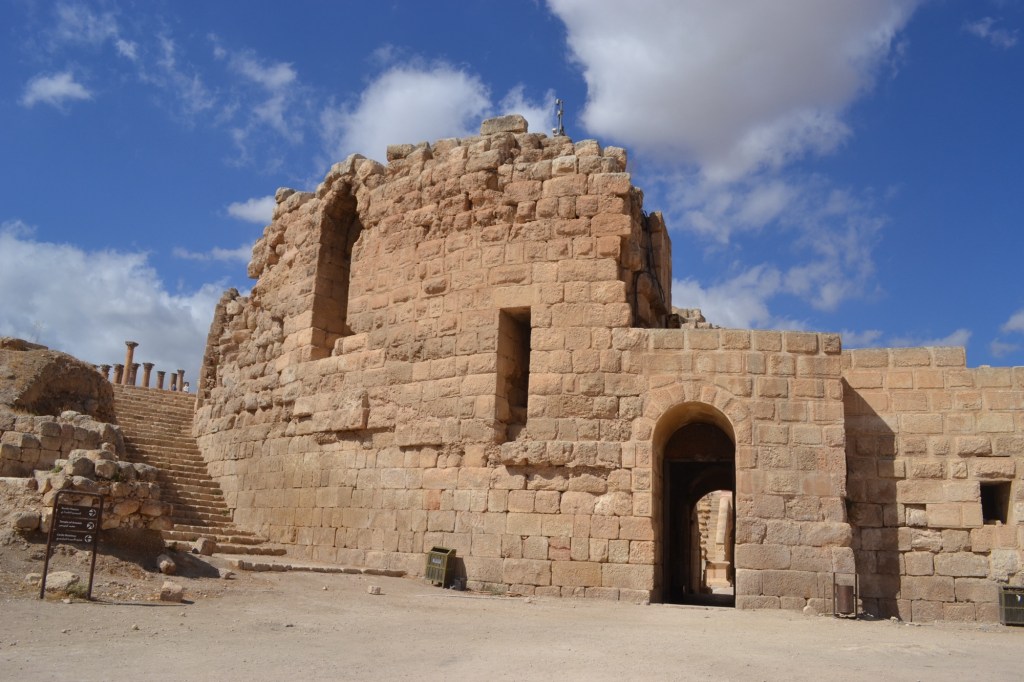
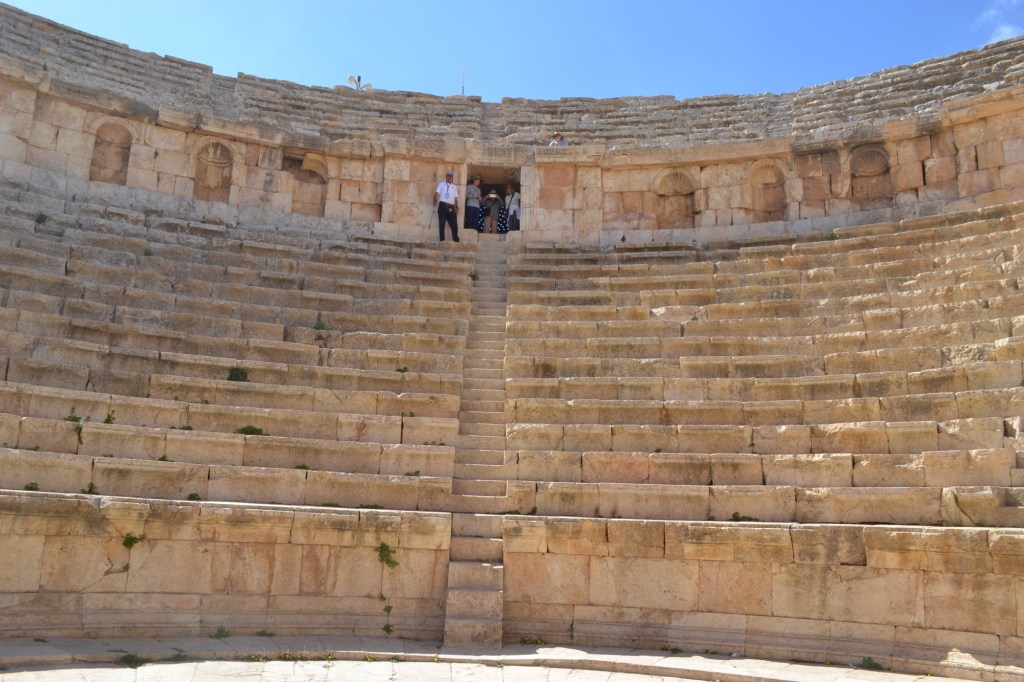
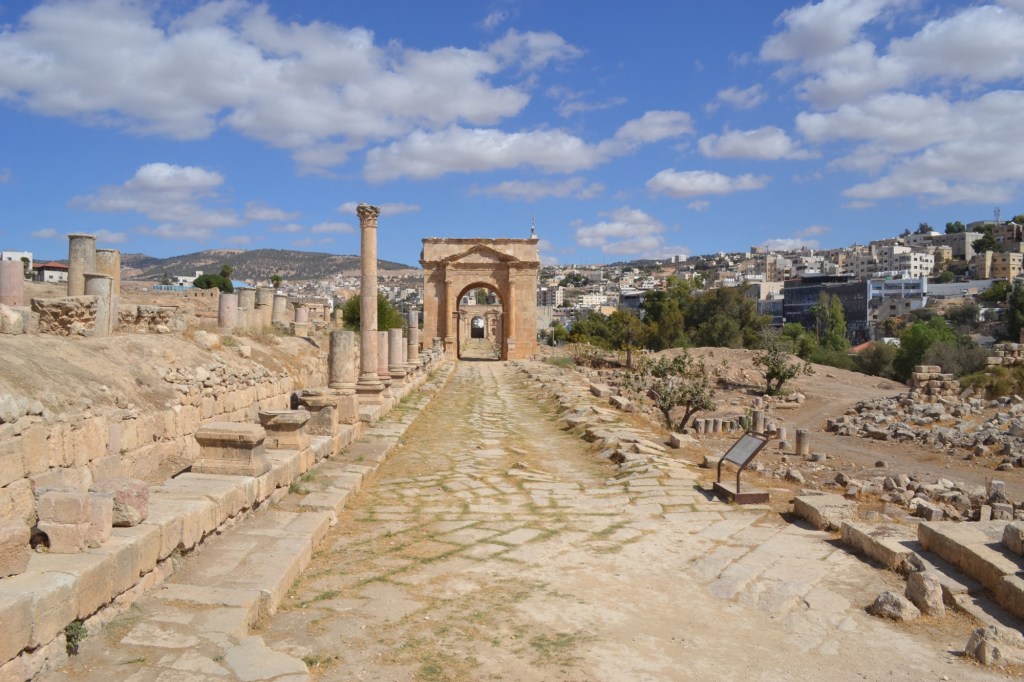
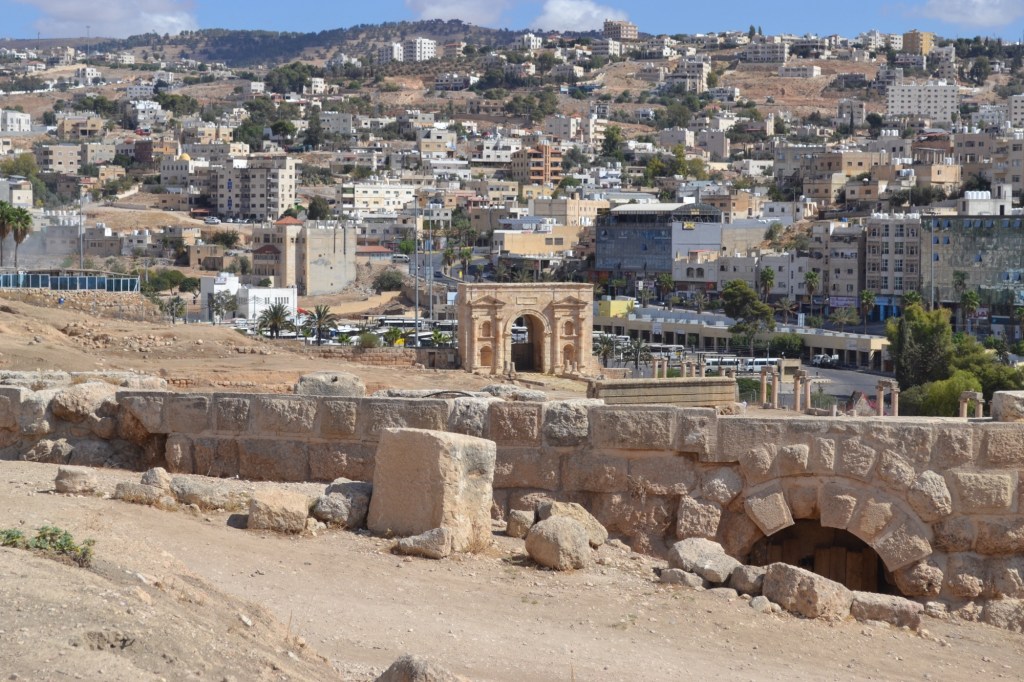
This morning, accompanied by our knowledgeable guide Eyad, we explored the ancient city of Jerash.

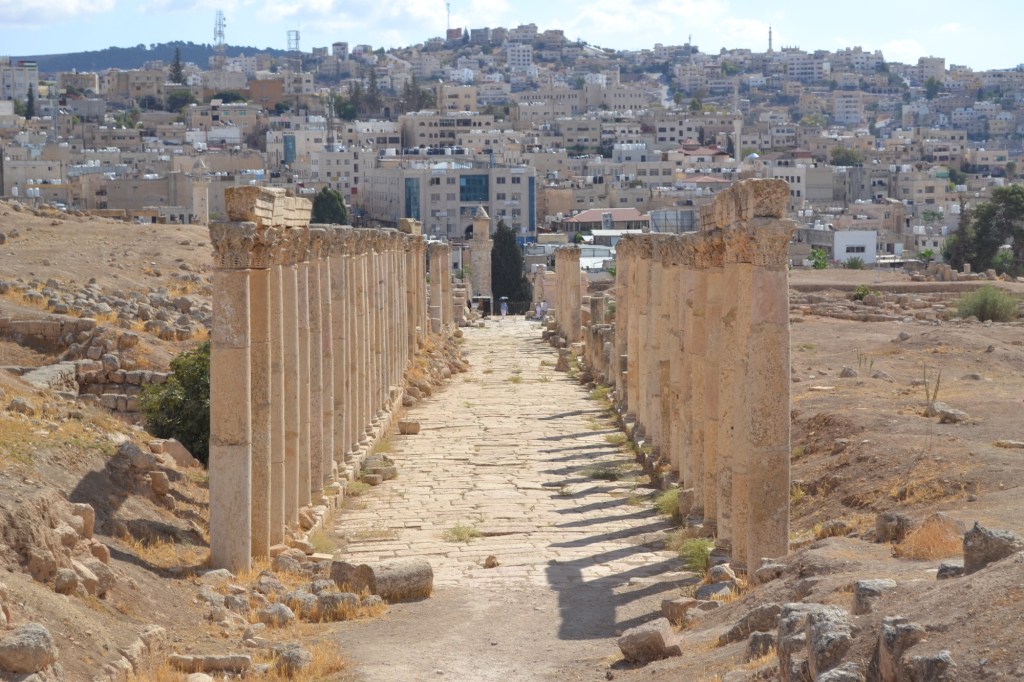
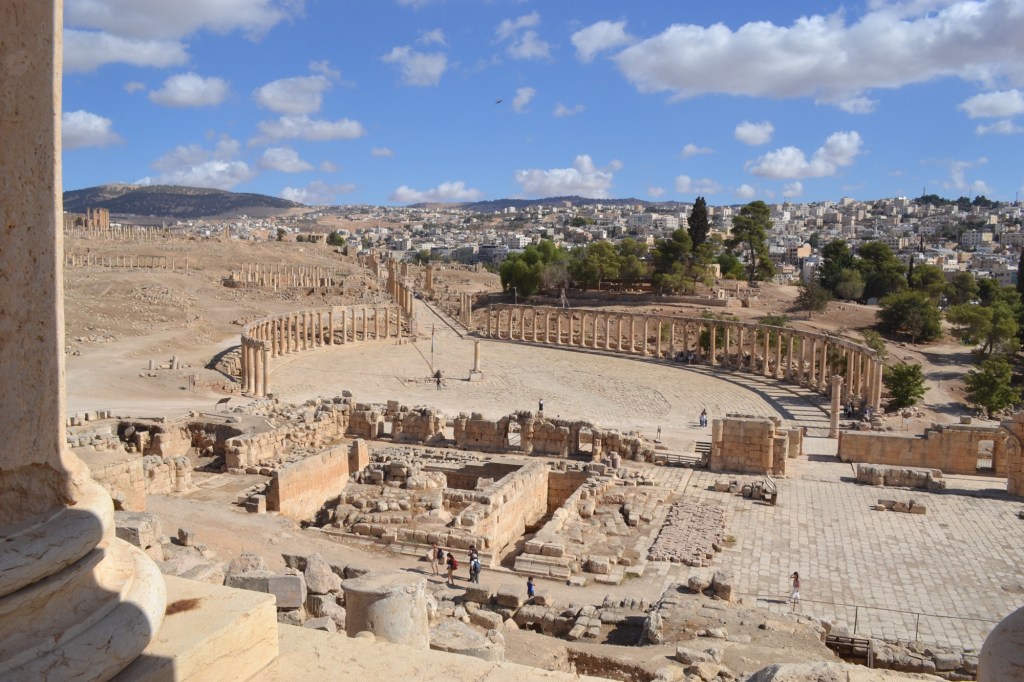
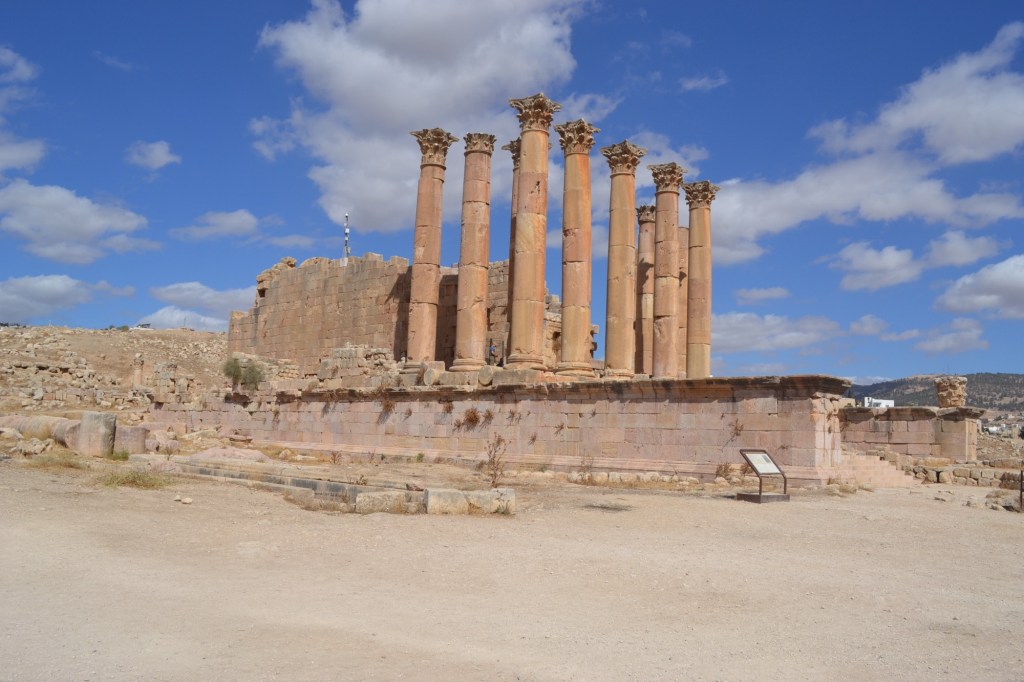
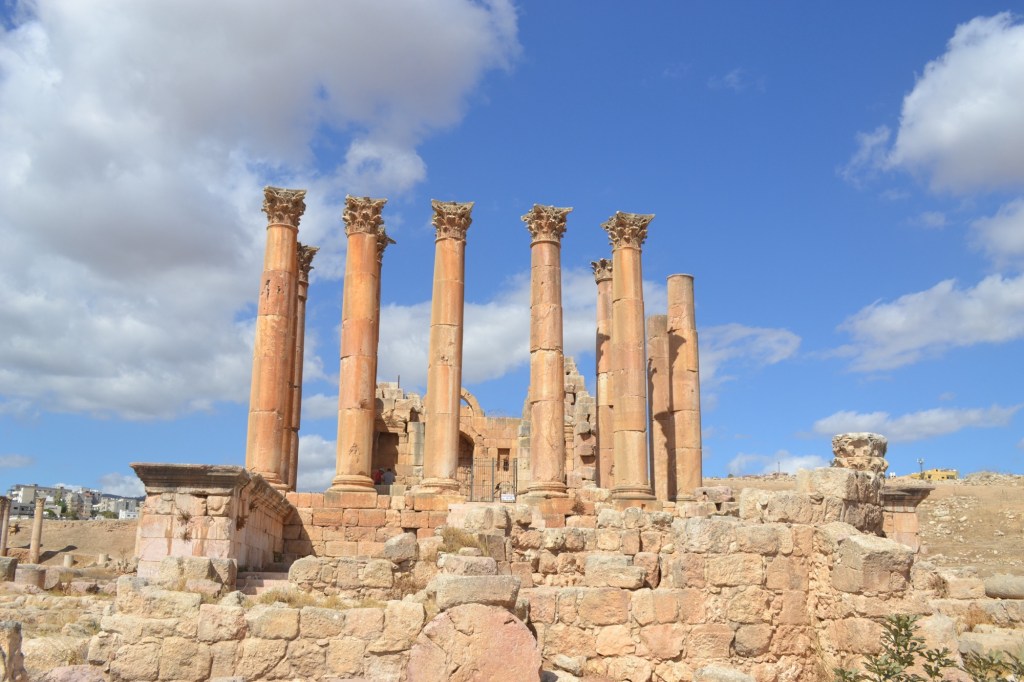
Often referred to as a Rome away from Rome, Jerash is a remarkably well-preserved large-scale Roman provincial city, offering a unique glimpse into Graeco-Roman and Eastern cultures.

Notable architectural features include:

Hadrian’s Gate – named after the same Roman Emperor who commissioned Hadrian’s Wall in Scotland to mark the northern boundary of the Roman Empire.

A vast circus where chariot racing took place

Pillar-lined streets and sidewalks in the shape of a Cross

Cardo Maximus, a large oval plaza at the intersection of these roads

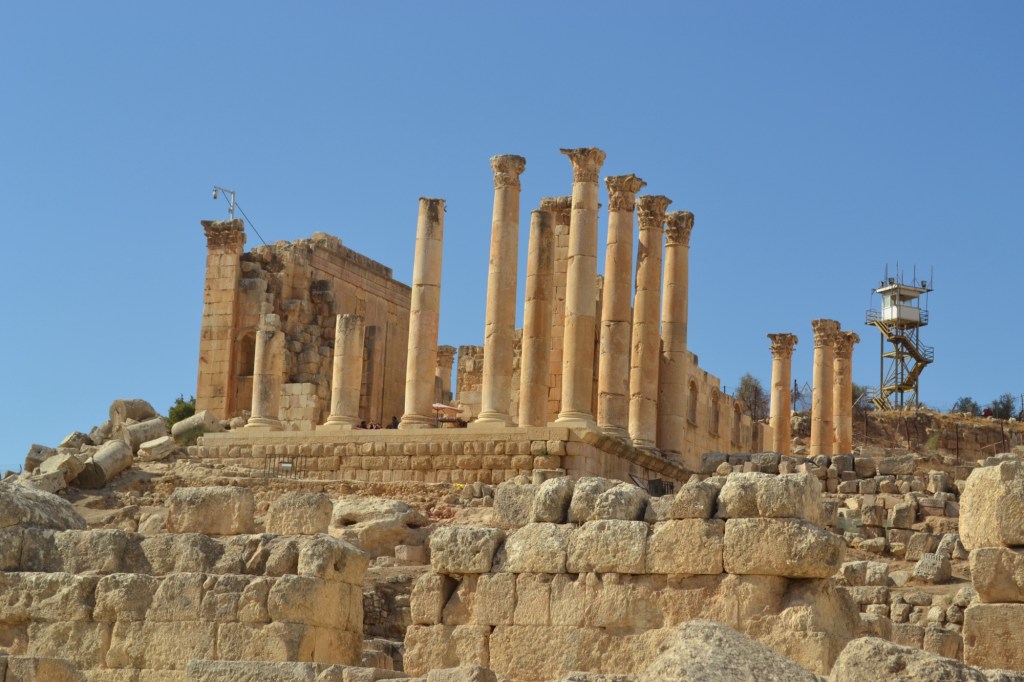
Temple of Zeus

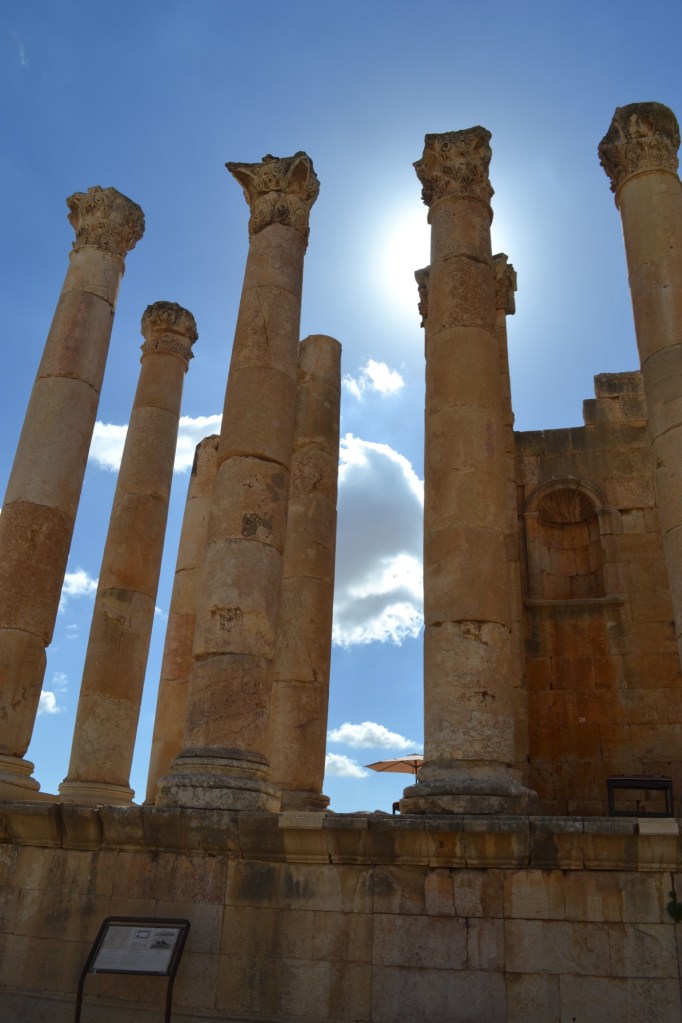
Temple of Artemis

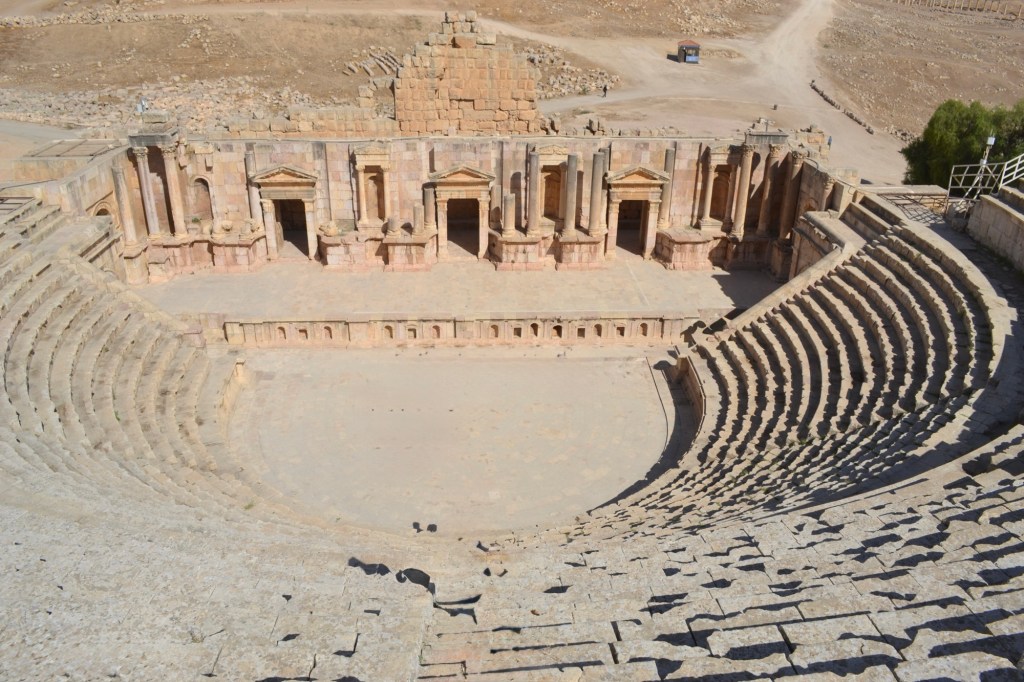
North and South Theaters

Damascus Gate

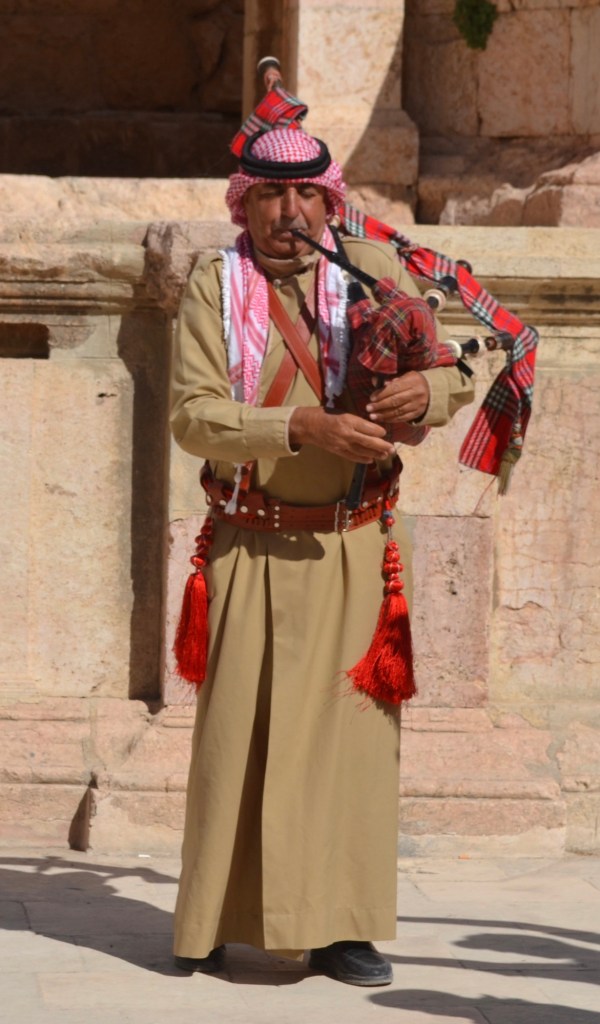
During our visit to one of the theaters, we encountered men dressed in traditional Jordanian attire playing bagpipes – specifically, Amazing Grace. Interestingly, bagpipe music is a popular genre in Jordan, a legacy of the Scottish troops stationed there.

The UK and Jordan enjoy a close relationship, partly due to the Hashemites, the royal family and leaders of Jordan, who received British support to overthrow Ottoman rule in the country during World War I and the Arab Revolt.

Beyond its archaeological significance, Jerash also hosts the Jerash Festival for Culture and Arts, bringing modern life and performances to the ancient stages.

Following a lavish and excellent lunch at a Lebanese restaurant, we returned to Amman to explore the Old City.

Amman’s old city, is the historic core of the capital, known for its ancient ruins, bustling souks, and cultural sites.

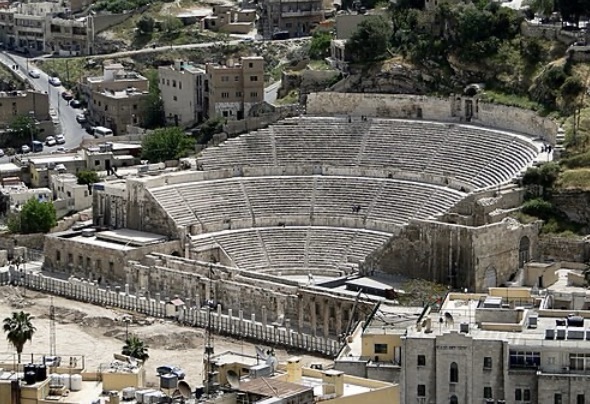
Key attractions include the Amman Citadel, perched on a hilltop, which offers panoramic views and archaeological remains from various eras, and the Roman Amphitheater – sight of many contemporary concerts.

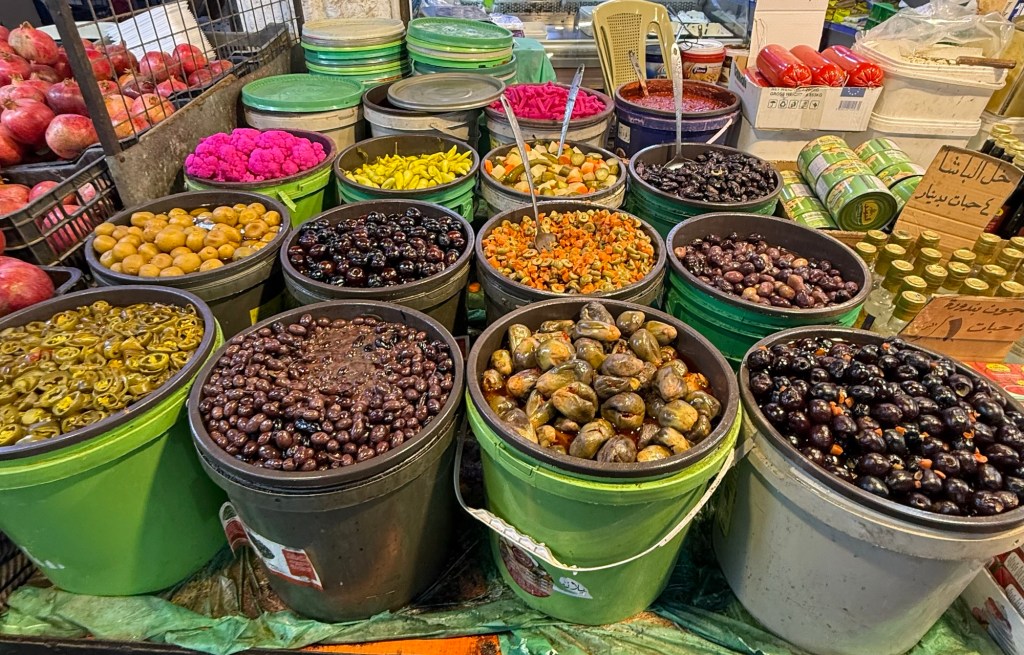
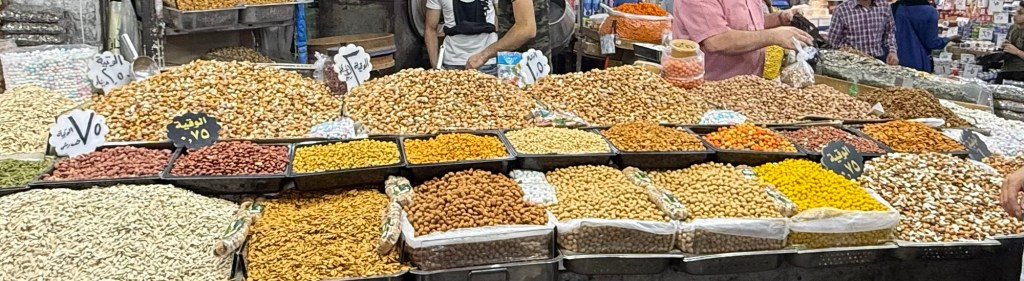
Next, we ventured into the heart of old Amman to visit the market, where I was captivated by the vibrant colors of the fruit and vegetables.

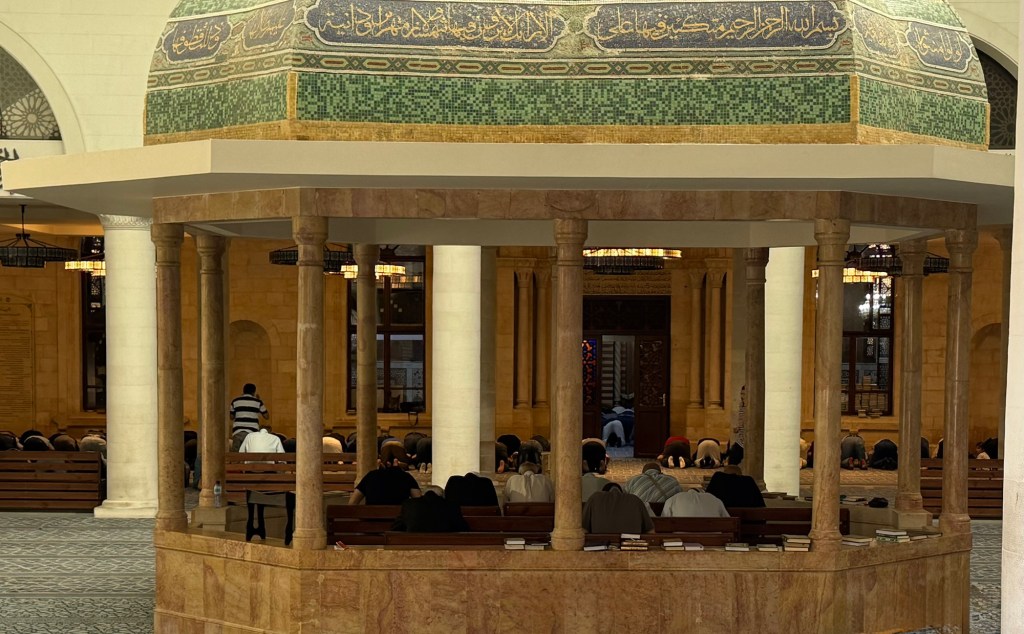
We had a quick look at the local Mosque.

We made a brief stop to sample some traditional Jordanian sweets.

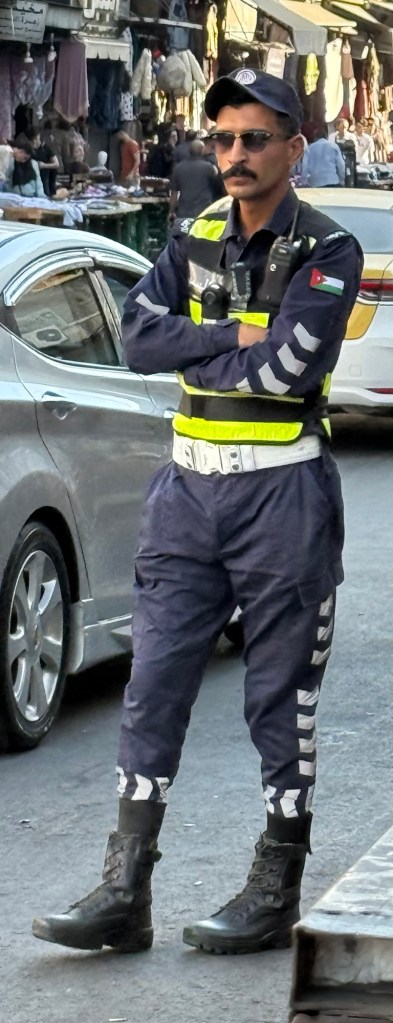
I took a secret photo of a traffic cop without getting arrested….

In conclusion, it was a highly enjoyable day.

Day 1: AMA Waterways’ Jordan Land Trip, Cairo and Nile Cruise

Amman, Jordan

By Paul Bryers

We met our AMA guide for the next four days, an unusually tall Jordanian who attributes his height to his mother, a Bedouin.

Today has been a leisurely day, which is welcome, as tomorrow will mark the beginning of a busy schedule with AMA that will last until October 24.

I have been chatting with St Regis staff, and they have shared that the Jordan tourism sector has been severely impacted by the Israeli-Palestinian conflict.

Fortunately, today’s news suggests that the worst of the conflict may be over.

Prior to the war, tourism accounted for approximately 15% of Jordan’s GDP.

However, due to the conflict, the number of US and European tourists has declined by about 65%, and hotels are currently only about 30% full.

While the situation in Gaza has clearly been far, far, far worse than here, it is still disheartening to see the Jordanian tourist industry so adversely affected.

Approximately 30 hotels have closed, resulting in the loss of thousands of jobs.

Reflecting this downturn, there are only seven AMA travelers participating in this Add-on Jordan Land Tour.

We will join the bulk of the group, consisting of, I guess, around 100 individuals, in Cairo on October 13.

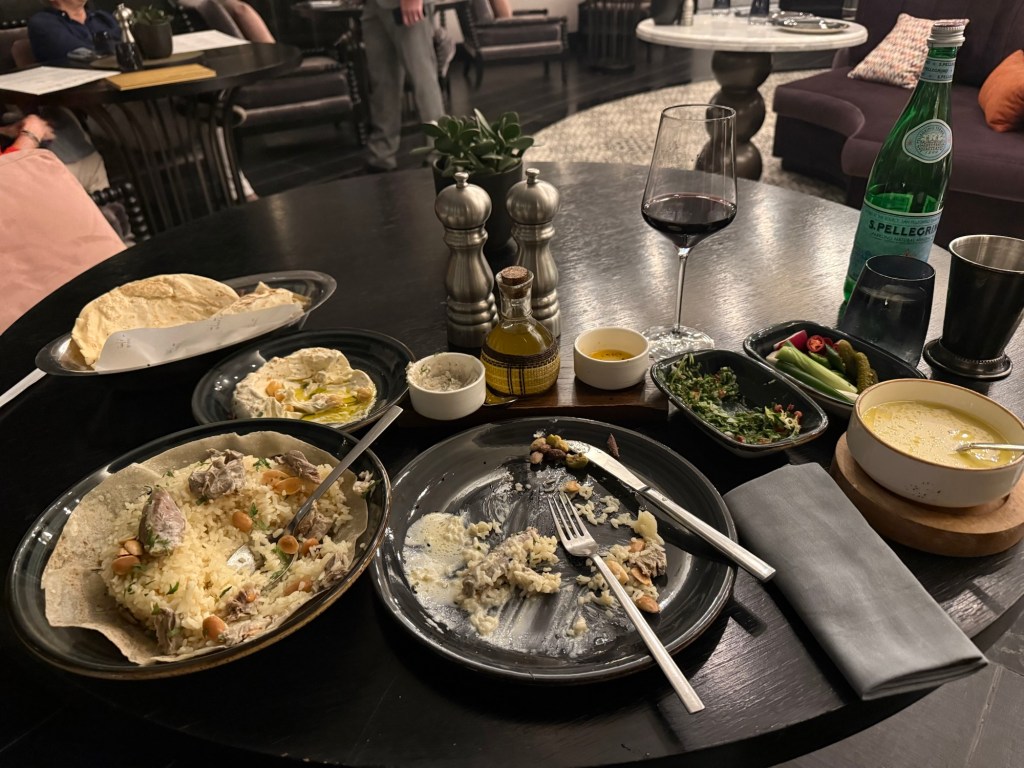
For dinner, I visited the St Regis’ Tamara Restaurant, which serves authentic Middle Eastern cuisine.

My server was extremely helpful in assisting me with my menu selections, and I simply requested that he choose traditional Jordanian dishes.

My pre-dinner cocktail consisted of a Raki Julep, comprising Raki, Triple sec, Lemon Juice, Cranberry Juice, and Mint.

For dinner, I was served Hummus Beiruti, consisting of chickpeas puree, chopped parsley, mint, pickles, and olive oil.

This was followed by Tabbouleh, a dish made from chopped parsley, vegetables, bulgur, molasses, lemon, and olive oil.

The main course was Lamb Mansaf, featuring local lamb, Jameed yogurt, turmeric rice, nuts, and parsley.

This meal was paired with a Jordan River Shiraz, characterized by earthy, beet-like flavors and hints of melon.

Piggy goes wild in Amman, Jordan

Despite feeling satiated, the staff continued to present additional dishes, including spicy olives and roasted nuts.

Day 0: AMA Waterways’ Jordan Land Trip, Cairo and Nile Cruise

Flight from Rome to Amman, Jordan

By Paul Bryers

I am thrilled to embark on this journey, as I have never flown Royal Jordanian before, nor have I visited Jordan. I thoroughly enjoy exploring new destinations, especially countries I have not previously visited.

Jordan is a low-middle income country, lacking the oil-rich resources of its Arab neighbors.

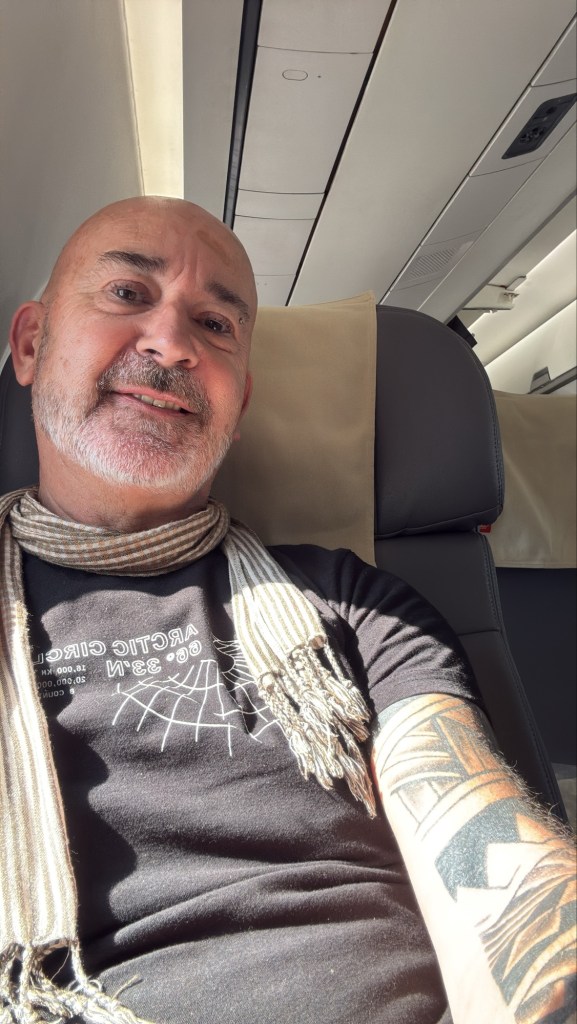
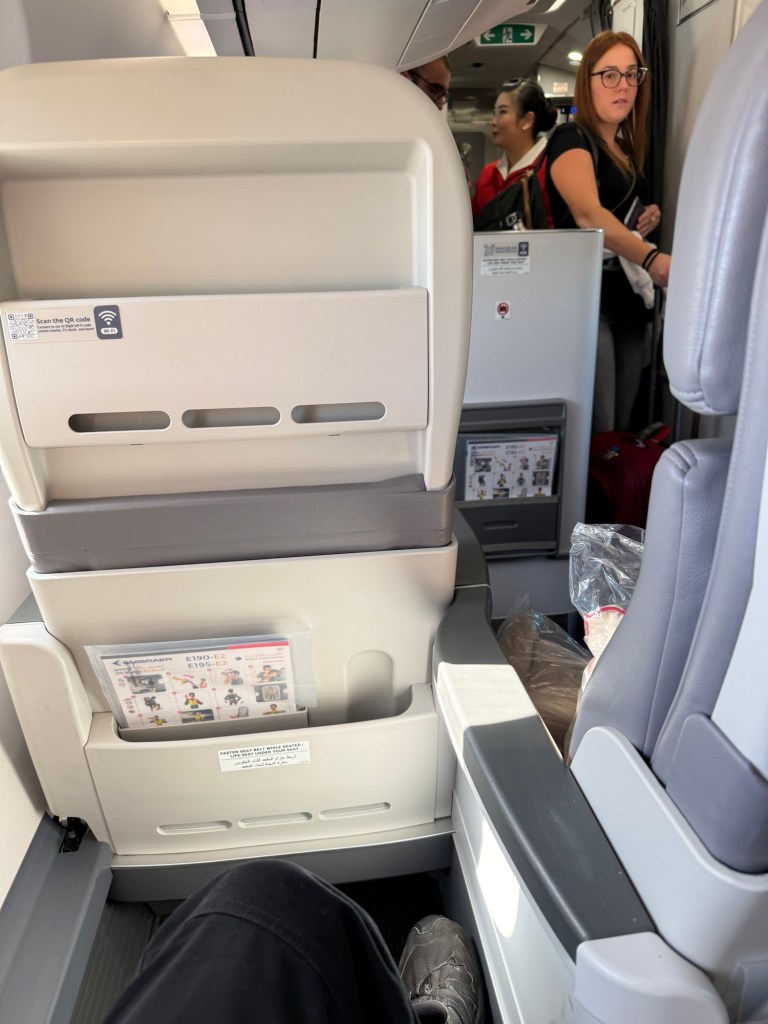
The flight was operated on an Embraer E190-E2, which seemed relatively small for a four-hour flight to the Middle East. The Business Class configuration was intriguing, featuring a 2-2 layout with each side staggered to provide additional legroom and recline.

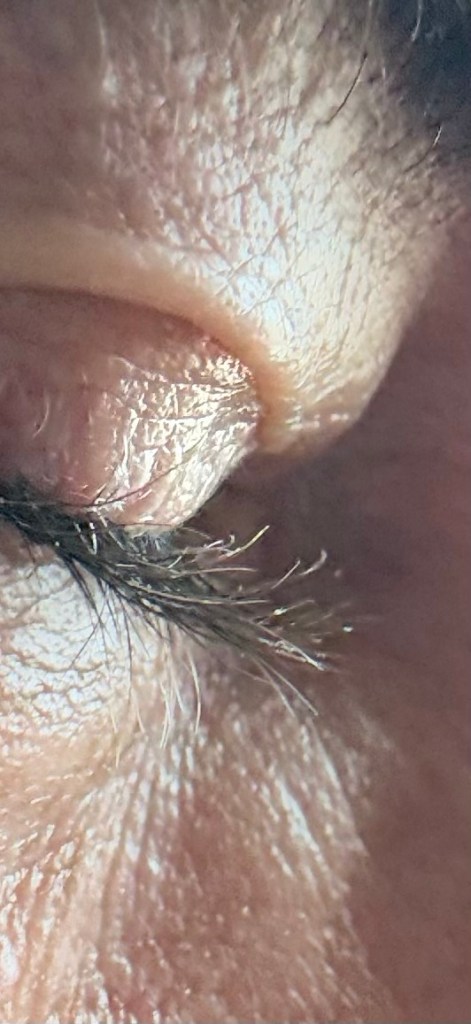
There were numerous solo male passengers on the flight, many of whom had distinctive long eyelashes. Based on their passports, they appeared to be Jordanian. This was advantageous, as I received several compliments aniyt my eyelashes in Italy but it was getting a bit tired. I must correct a misconception – I am not a cow.

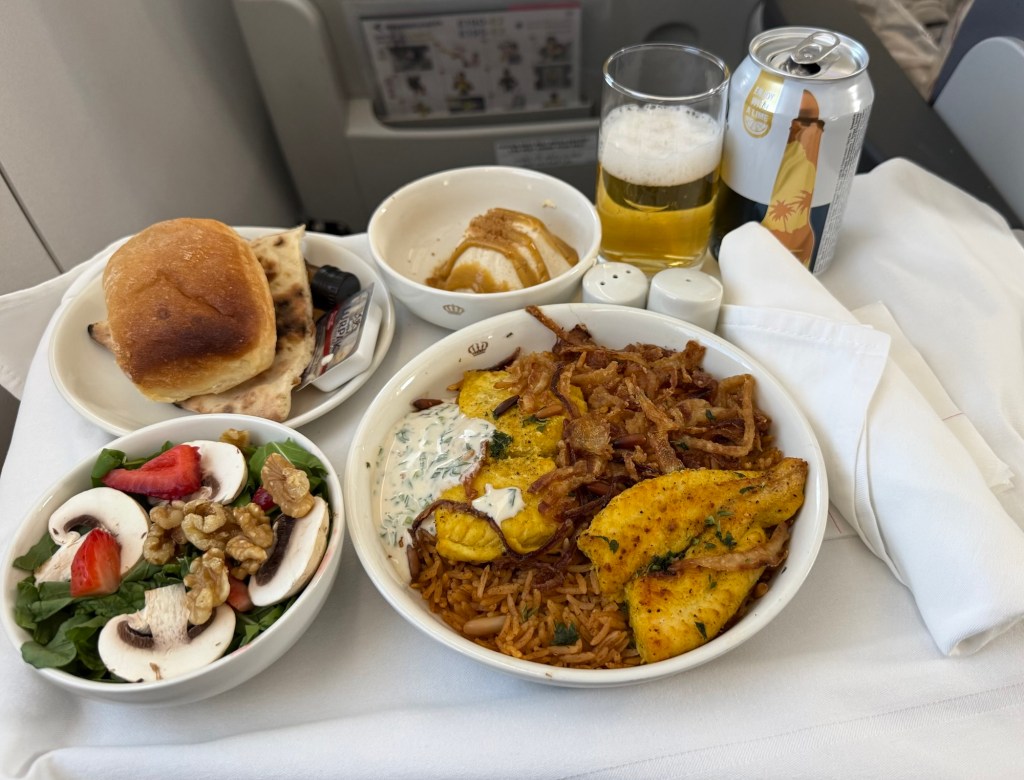
Dinner on board was exquisite, consisting of spicy fish with rice and other accompaniments.

For entertainment, there was a diverse selection of movies, and the e-Quran was also available.

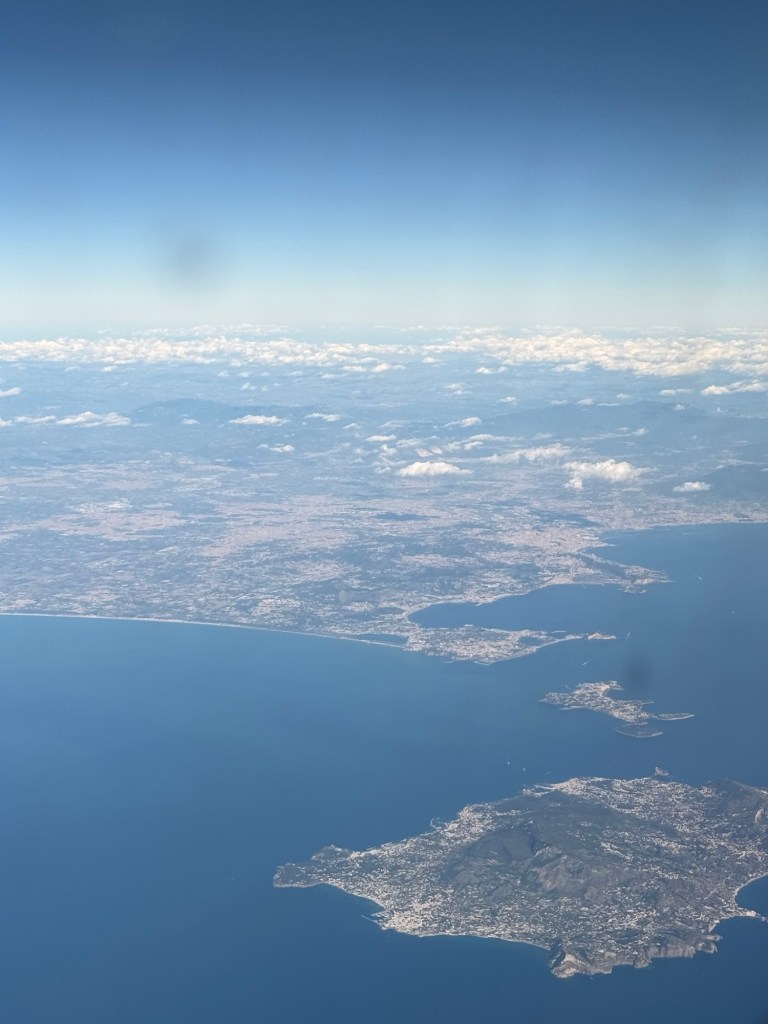
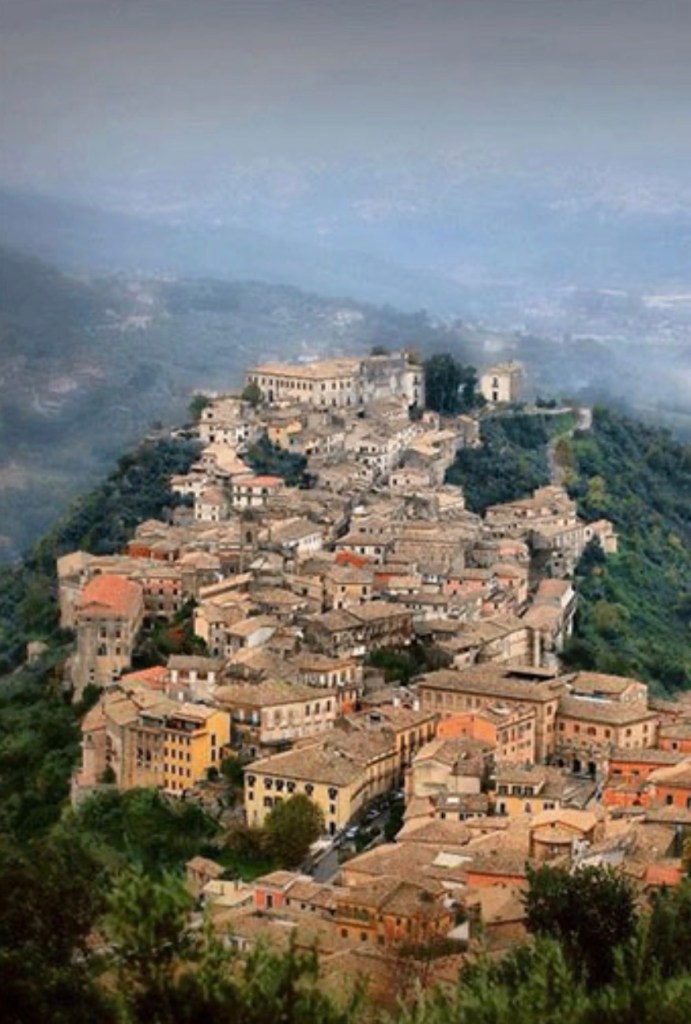
As we departed Italy, I caught glimpses of familiar locations, including Terracina, the coastal town we visited during our stay at Casa Gregoria, Naples, Sorrento, and the Amalfi Coast.

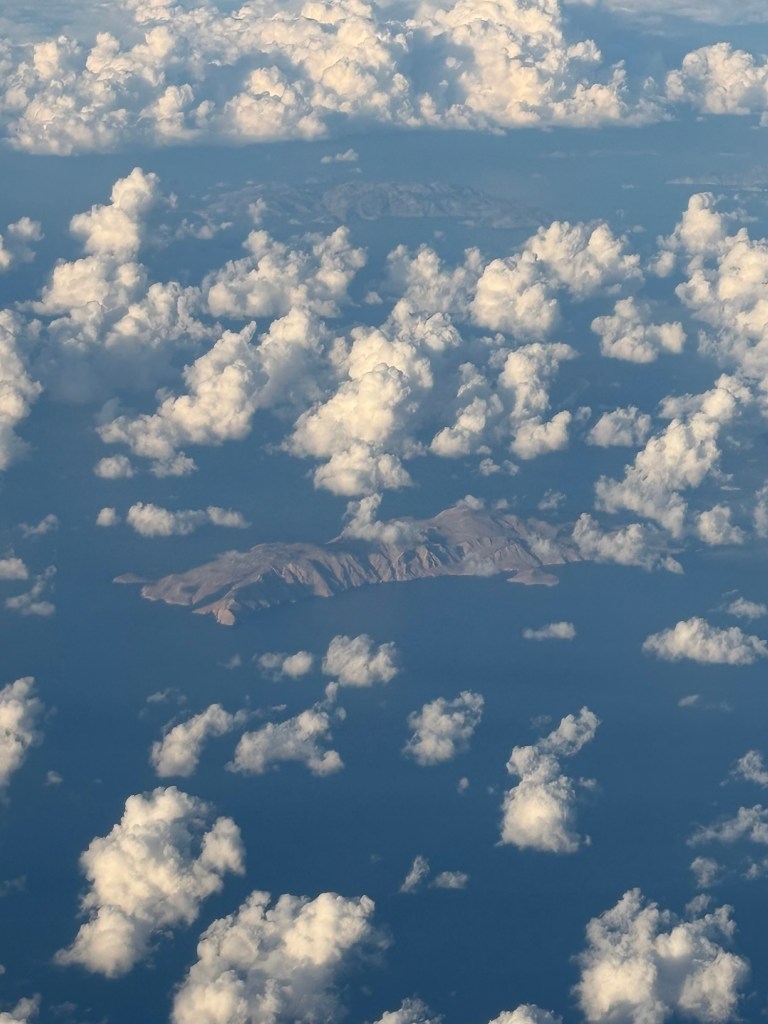
Our flight path took us over Greece’s mainland and numerous unidentified islands, as well as Crete, Rhodes, and Cyprus.

Upon reaching the Israeli coast, we flew over Tel Aviv and the West Bank. The latter stood out due to its relatively limited street and house lighting.

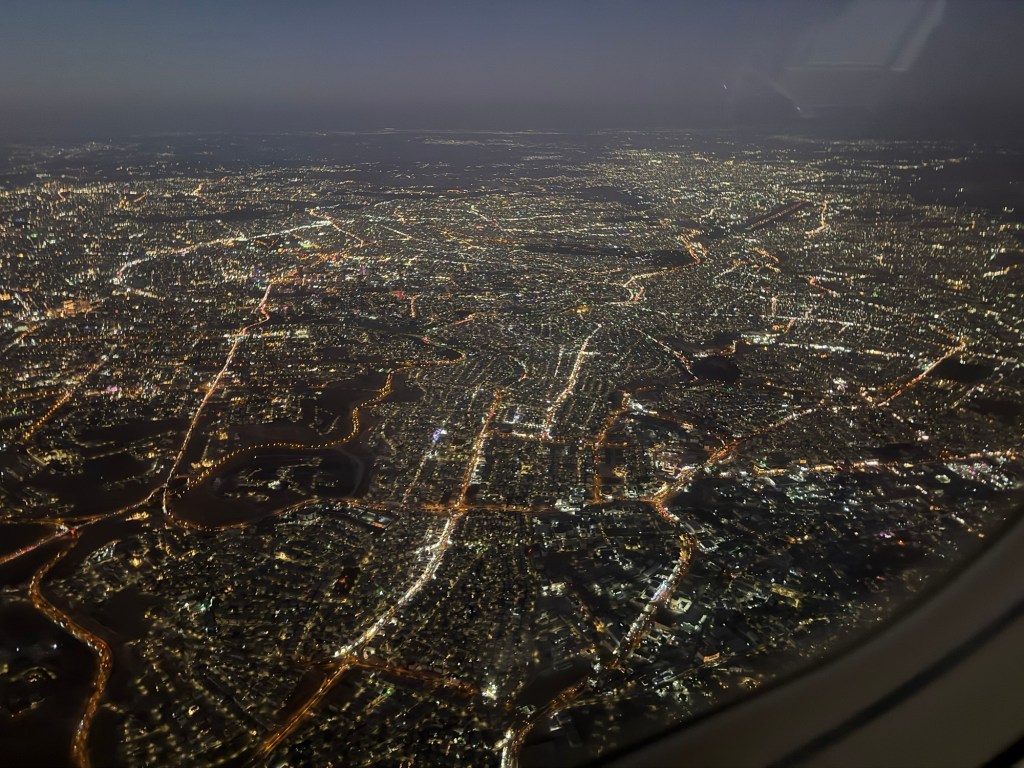
As we began our final descent in the fading light of day, we crossed the Jordan River, which forms the border with Israel, and flew over Amman before landing.

Nice hotel and room – Signia. They take security seriously. Searched car inside and underneath before entry to hotel entrance.

As a point of note, it is not necessary to obtain an e-Visa for tourism purposes beforehand, as visitors are still required to proceed to the Visa-on-Entry line to receive a stamp.

Day 5: Roma

By Paul Bryers

Thus concludes my Italian sojourn.

What a delightful experience! But it was ery busy in Roma so if yiu go definitely avoid early April through to end September. Ive noticed this in previous years too.

Particularly with my friend Lisa Warren DeMars – we have rekindled our friendship after a separation of a few years and I foresee cooking classes on the horizon!

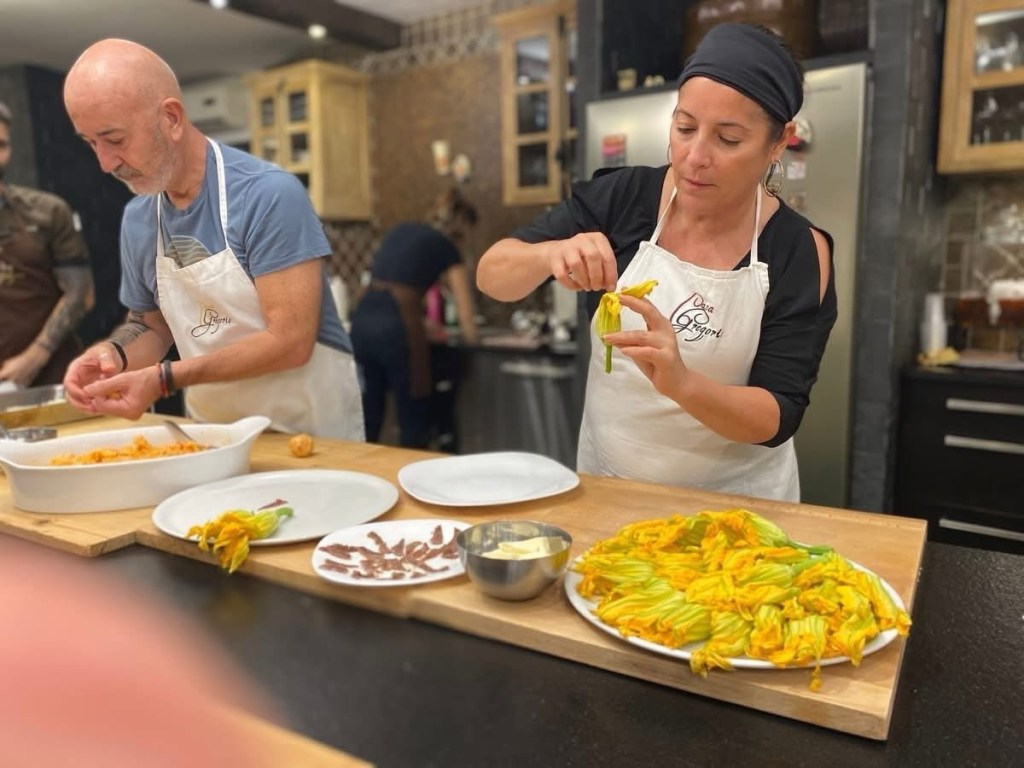
I highly recommend Casa Gregoria https://italyculinaryholiday.com/

If anyone is interested in joining me for Italian cooking classes in the mountains or coastal regions near Rome or Venice, please let me know.

NEXT ON MY TRAVEL BLOG:

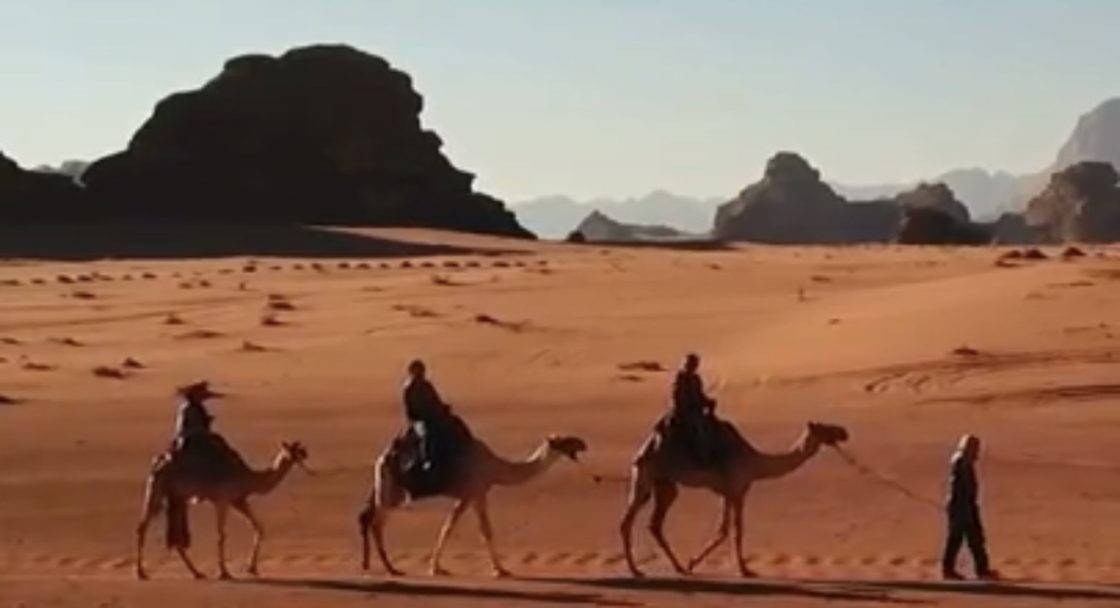
October 8 – 24: Jordan and Egypt

Days 2-4: Roma

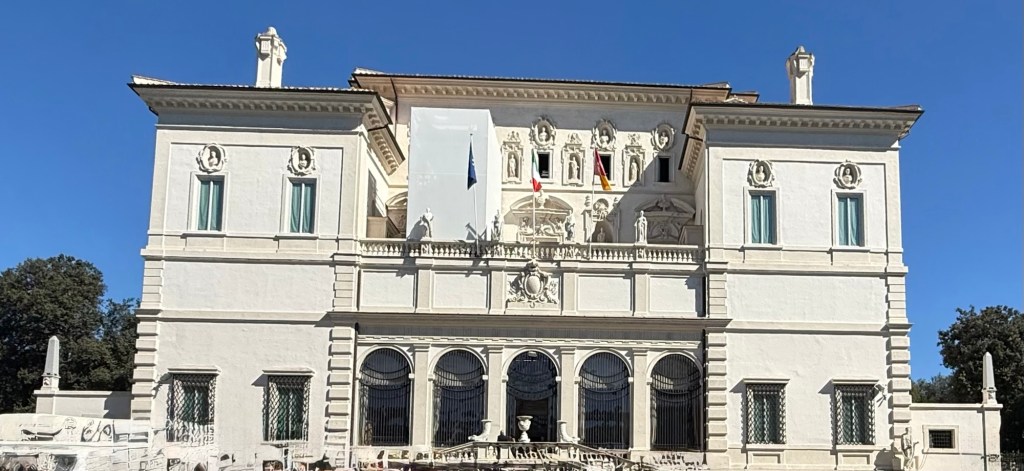
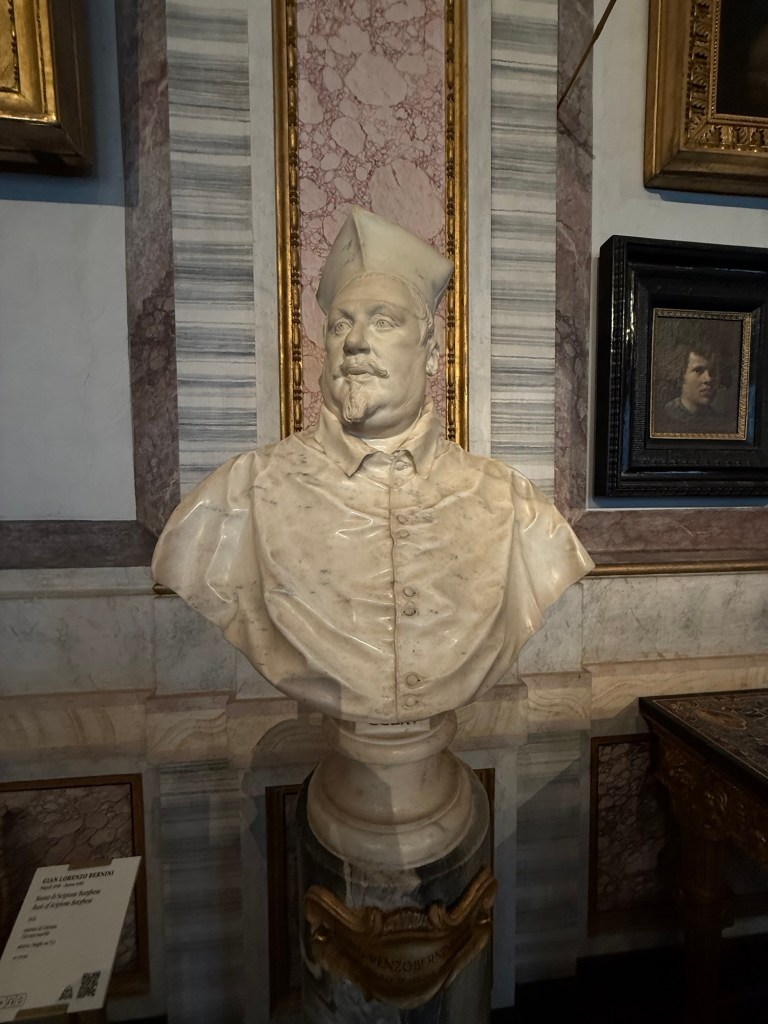
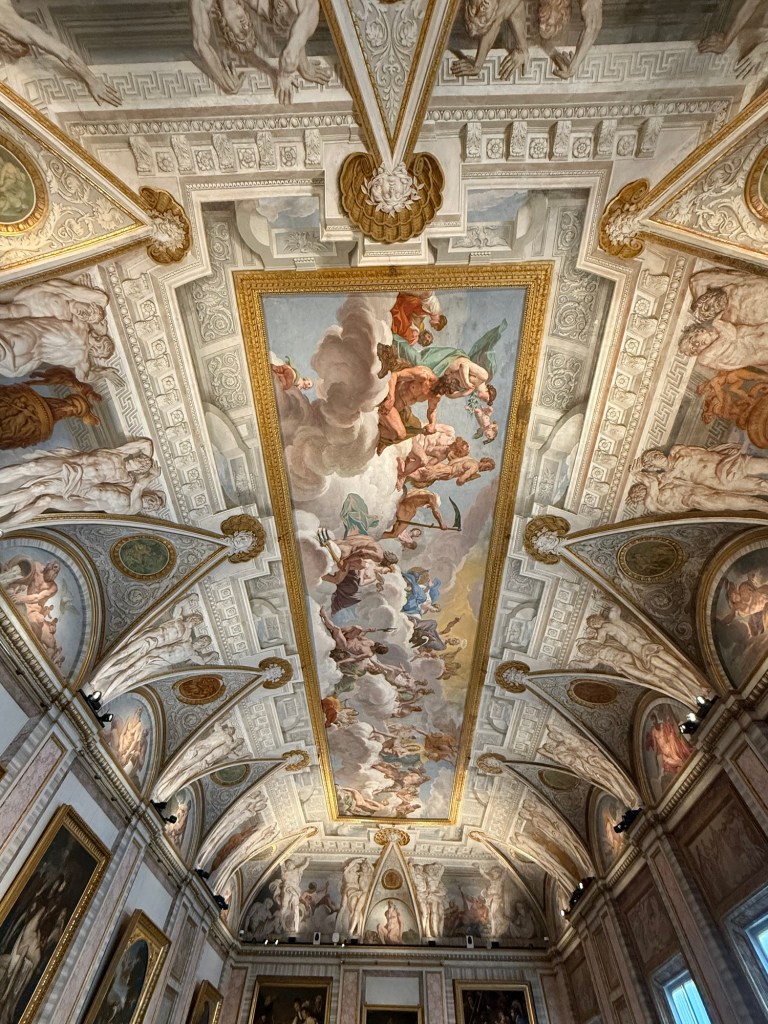
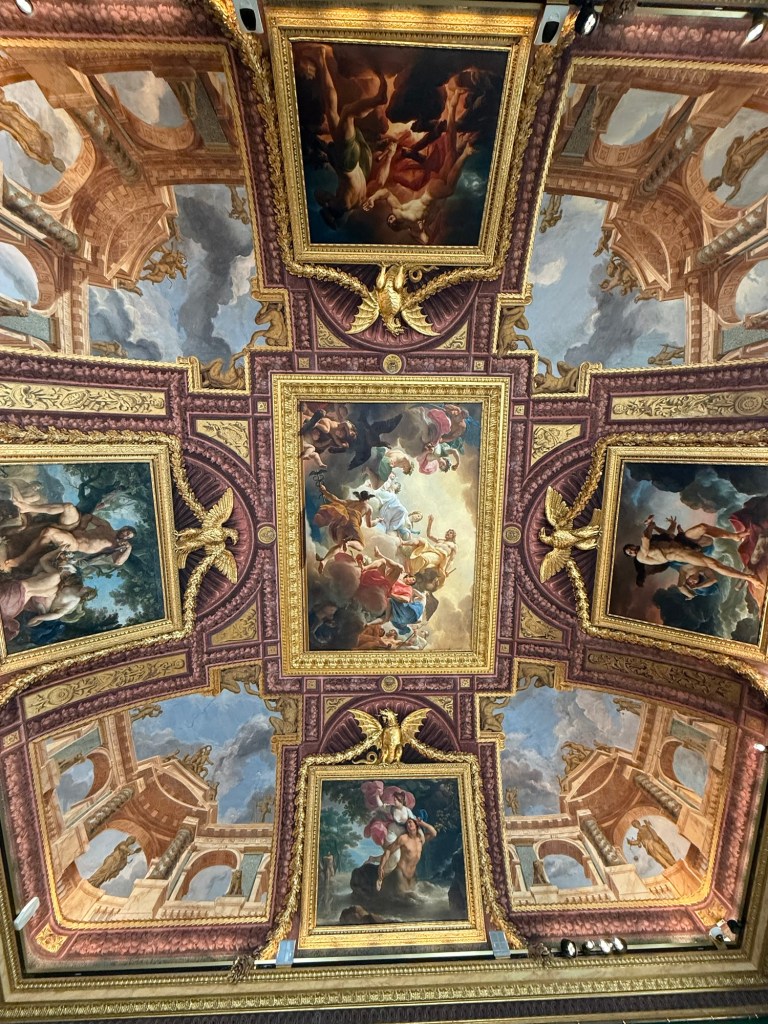
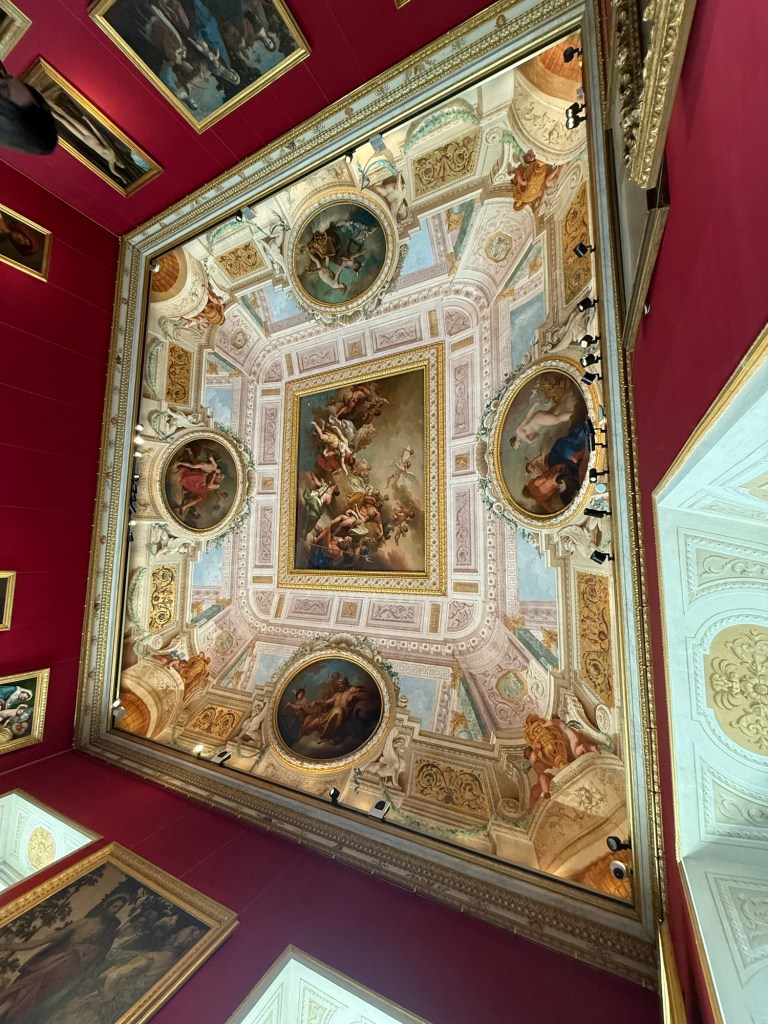
After 2 days laid up in bed I managed to go to Villa Borghese today to see incredible sculptures and paintings.

Villa Borghese

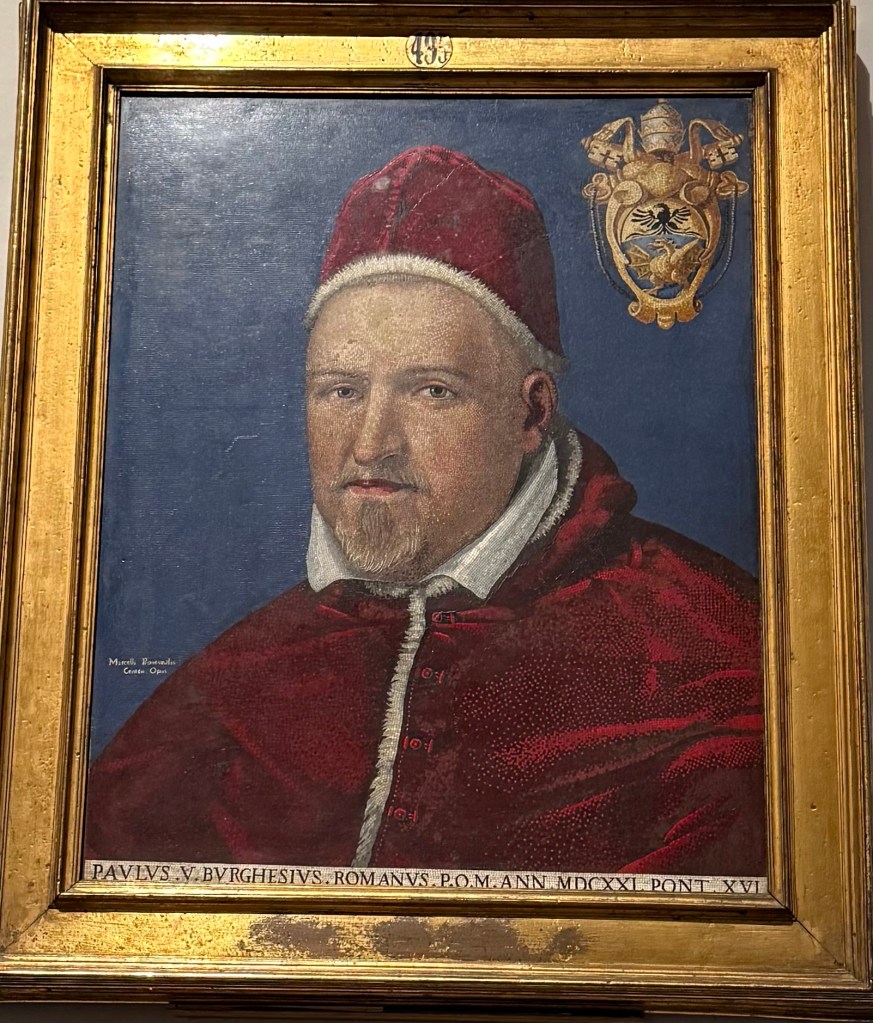
Mr Borghese – Politician and Religious Leader – he looked to find good reasons to display nude men and women in sculptures and paintings that would placate the more pious Christians….

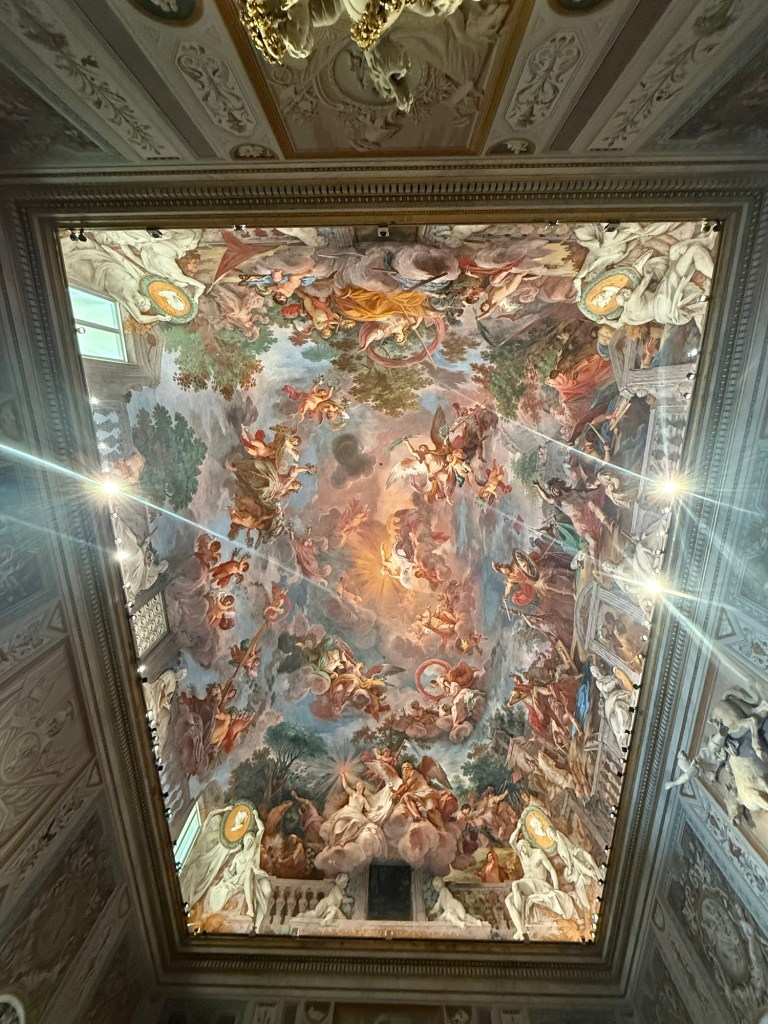
The ceilings are spectacular, challenging those in the Vatican Museums and St Peter’s Basilica.

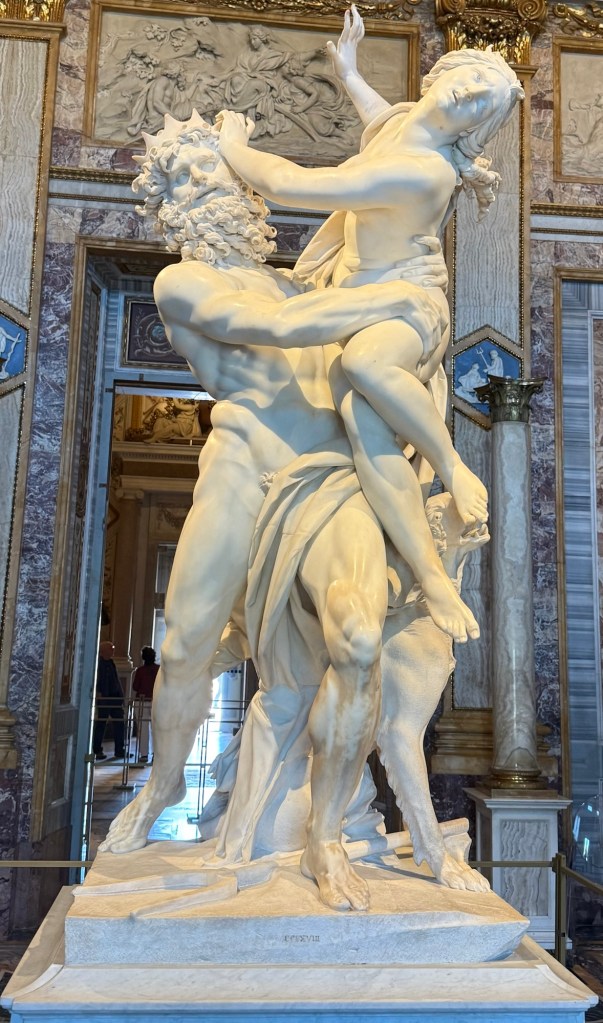
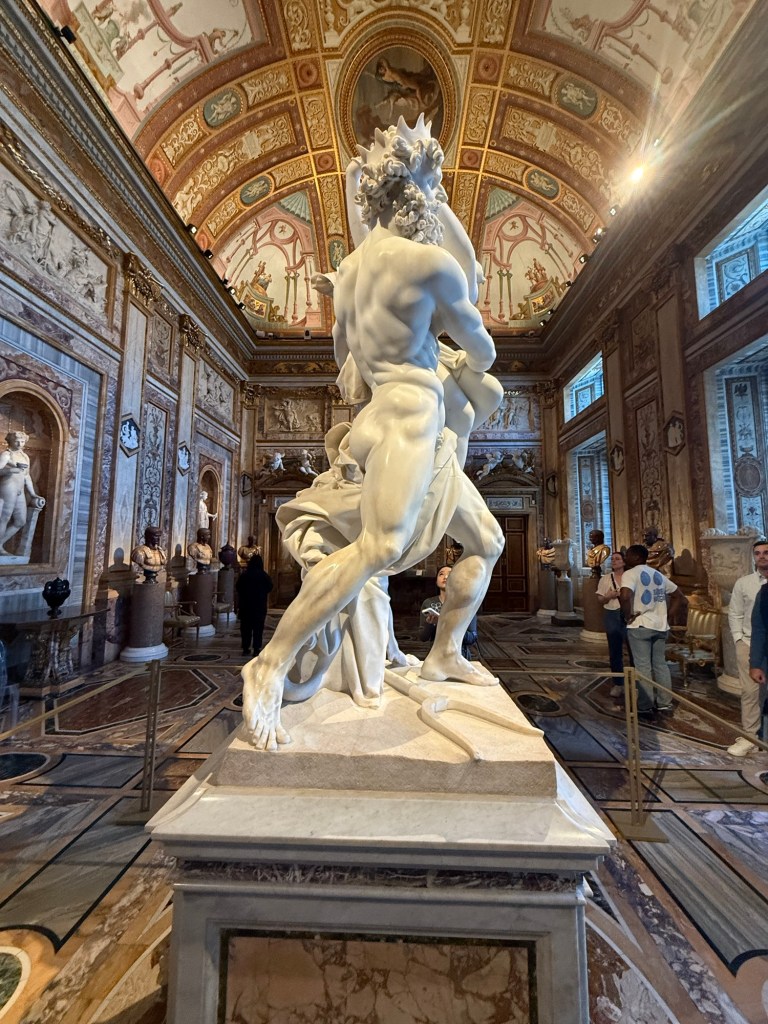
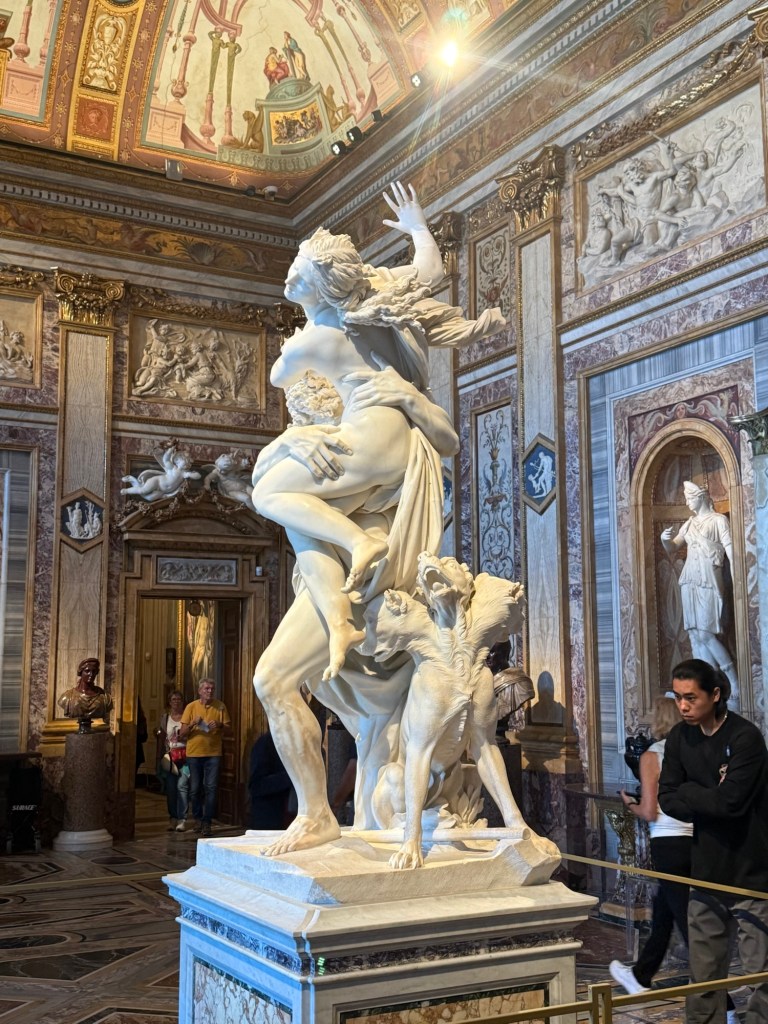
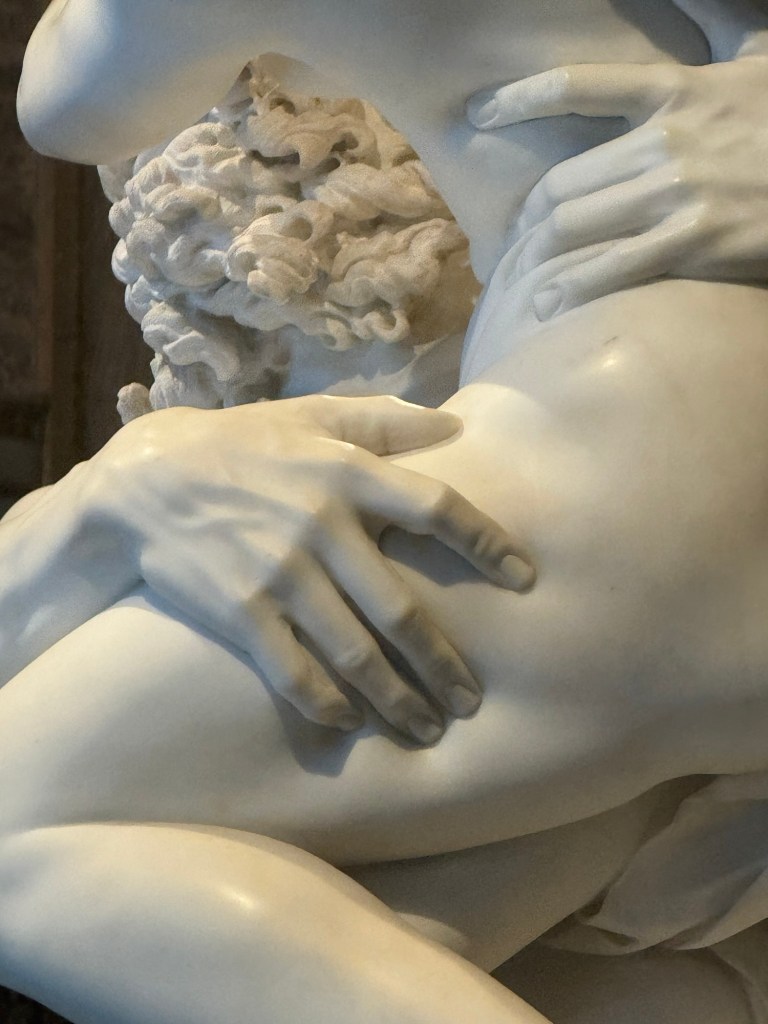
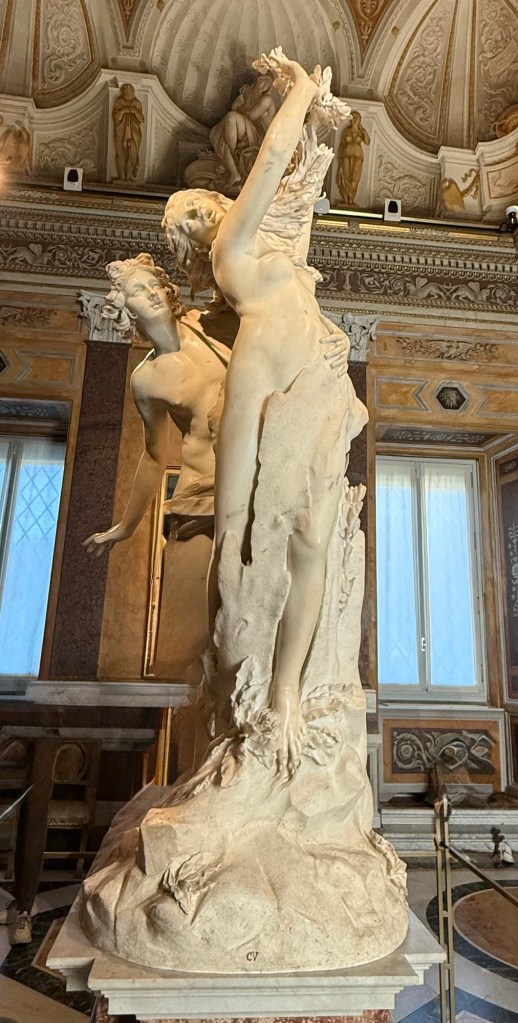
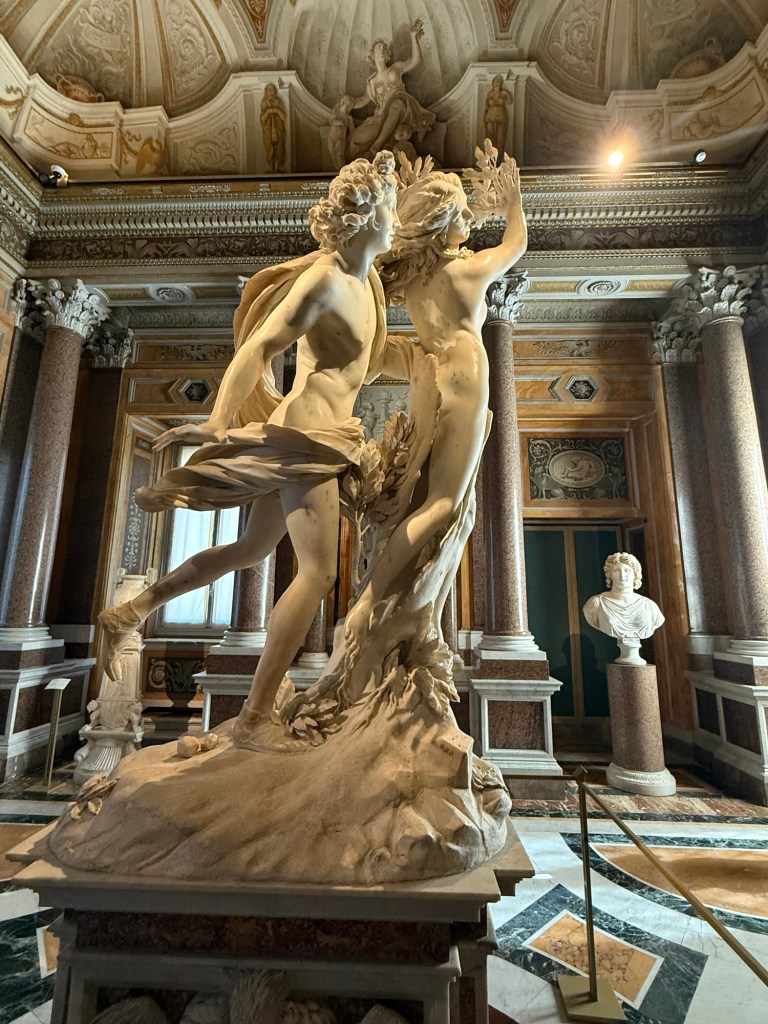
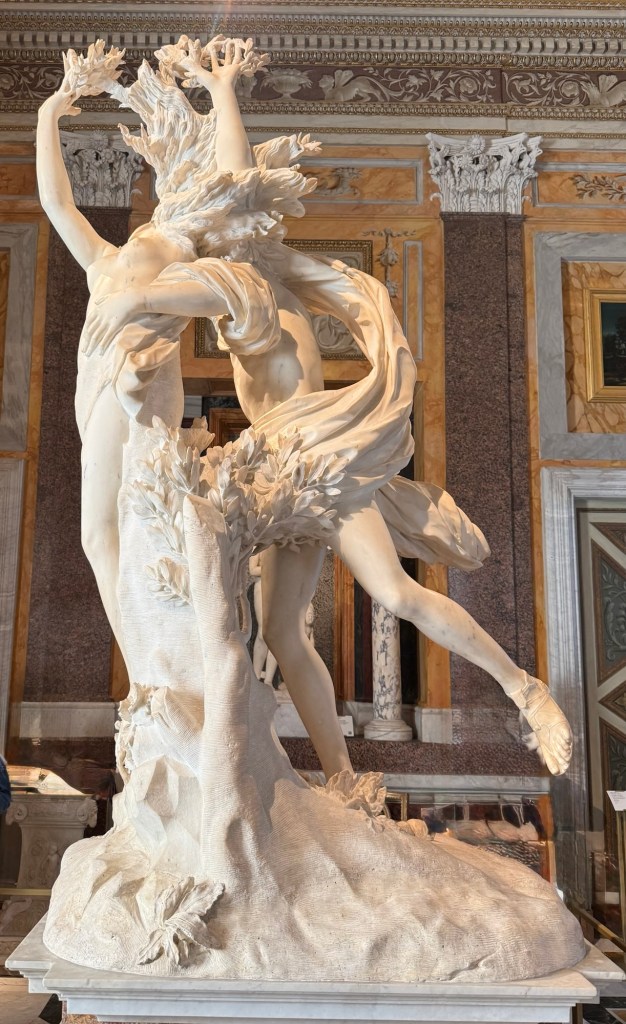
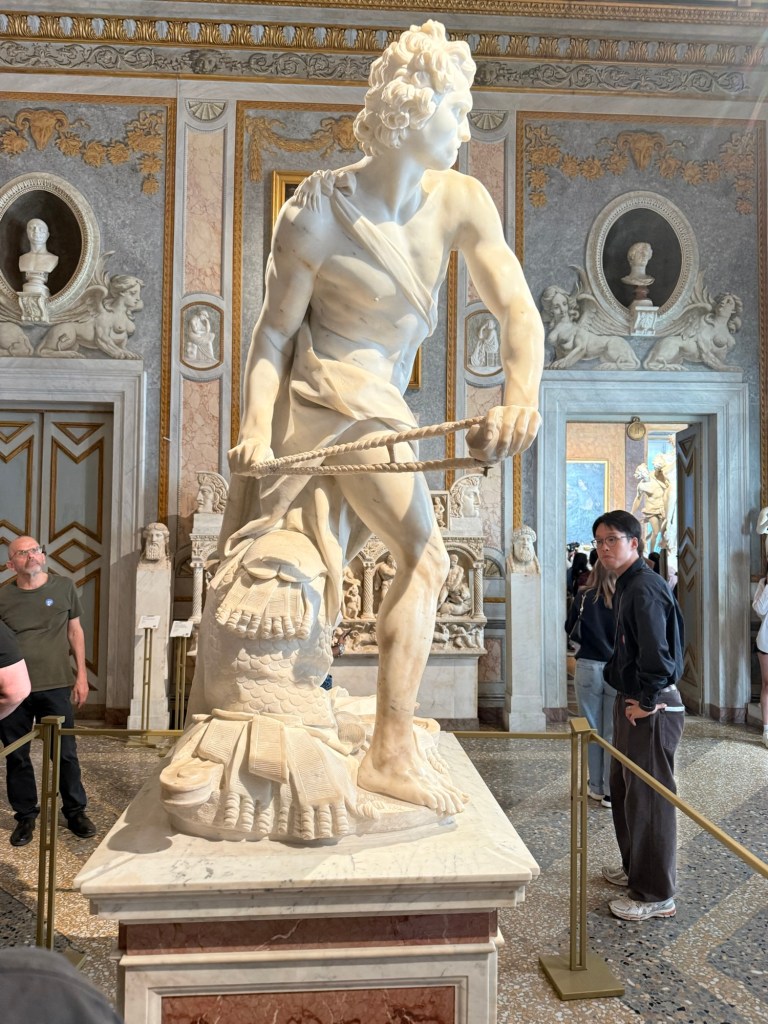
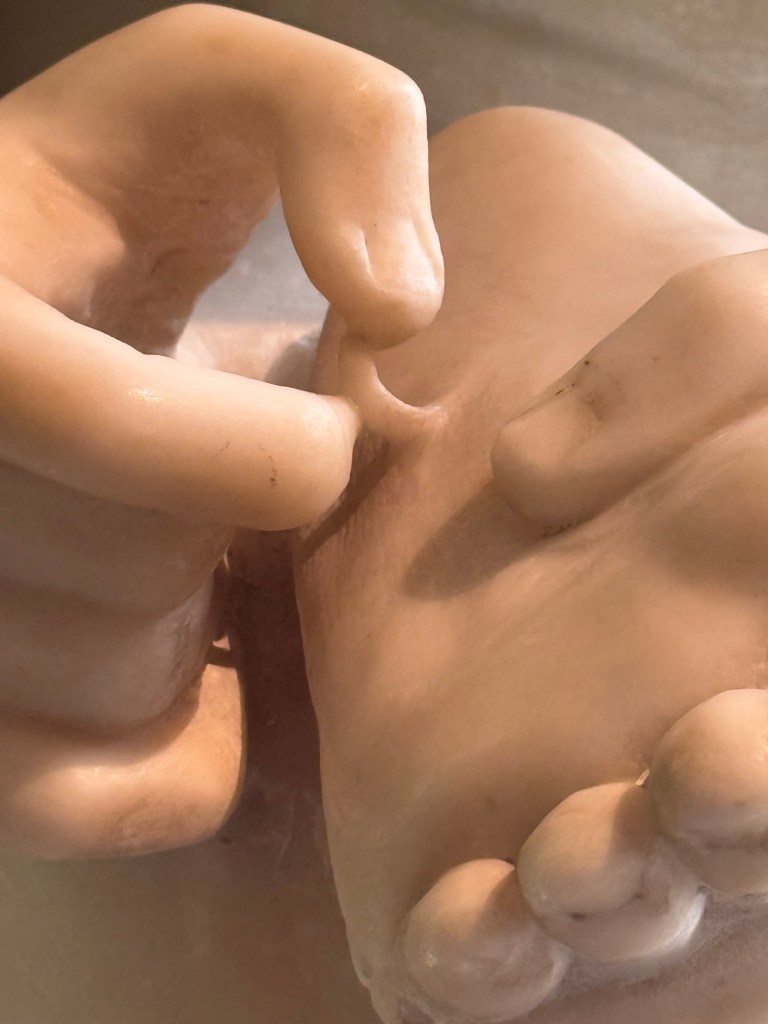
Most of the sculptures are by Gian Lorenzo Bernini …..look at the exquisite and realistic body details….anatomically perfect? Yes! Erotic? I leave that up to you….

The Rape of Persephone…

Apollo and Dafne – he is consumed by her but she can’t stand him so she turns into a tree…and begins to envelop him in the process…

David getting ready to slay Goliath…

Lad with a thorn in his foot…

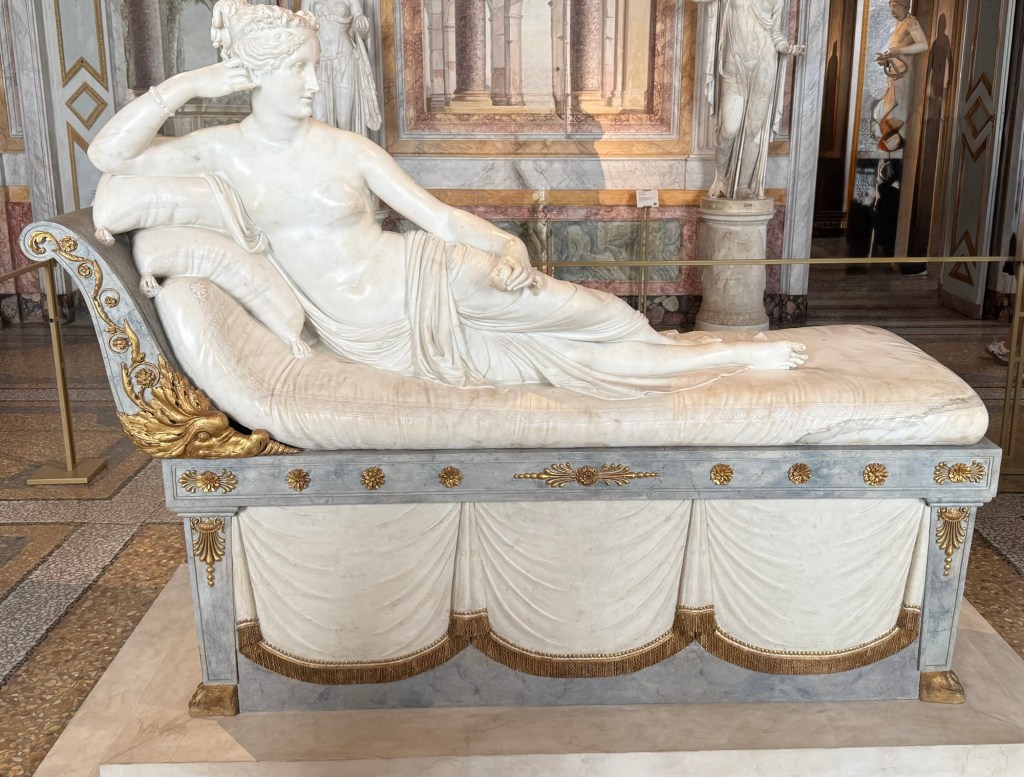
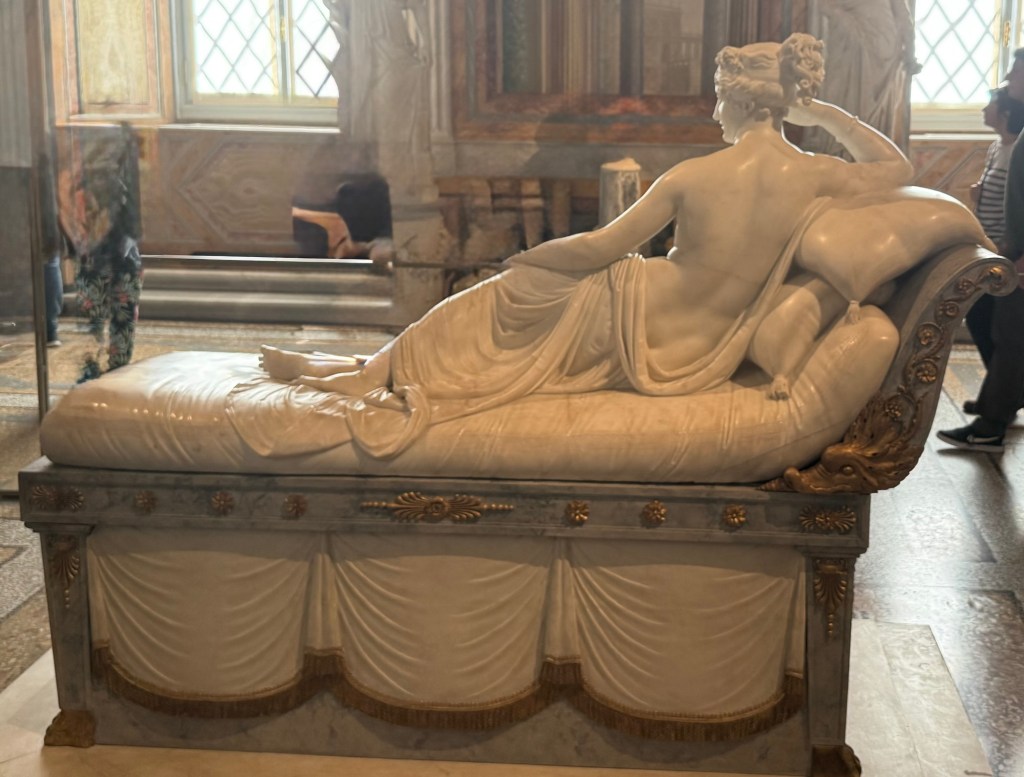
Napoleon’s Sister…

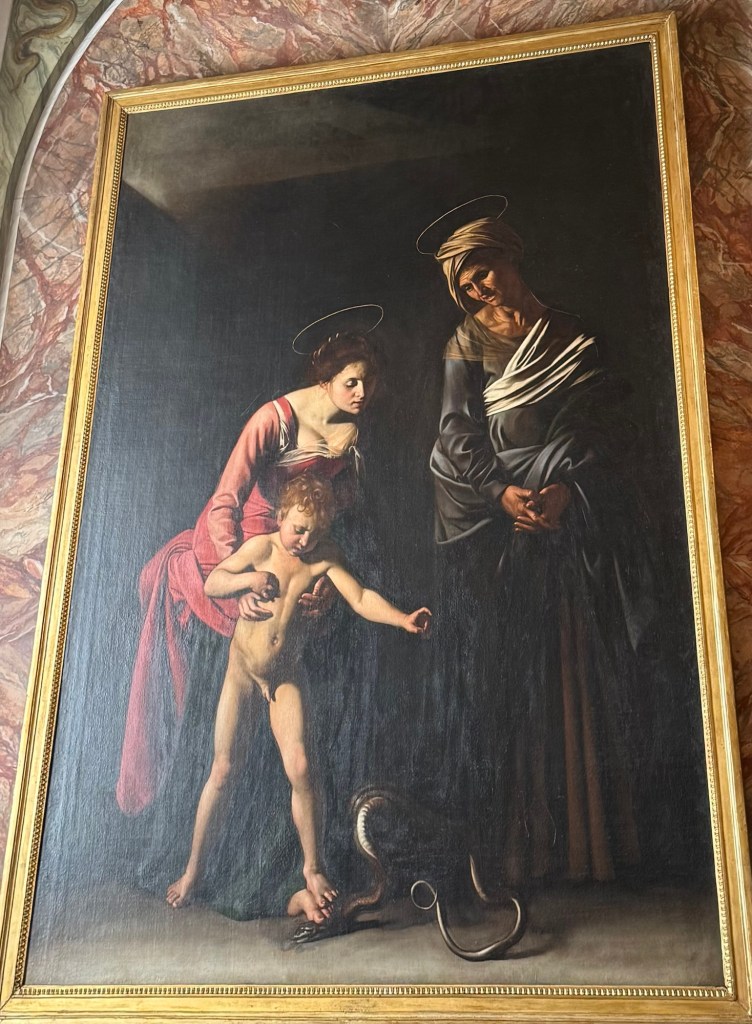
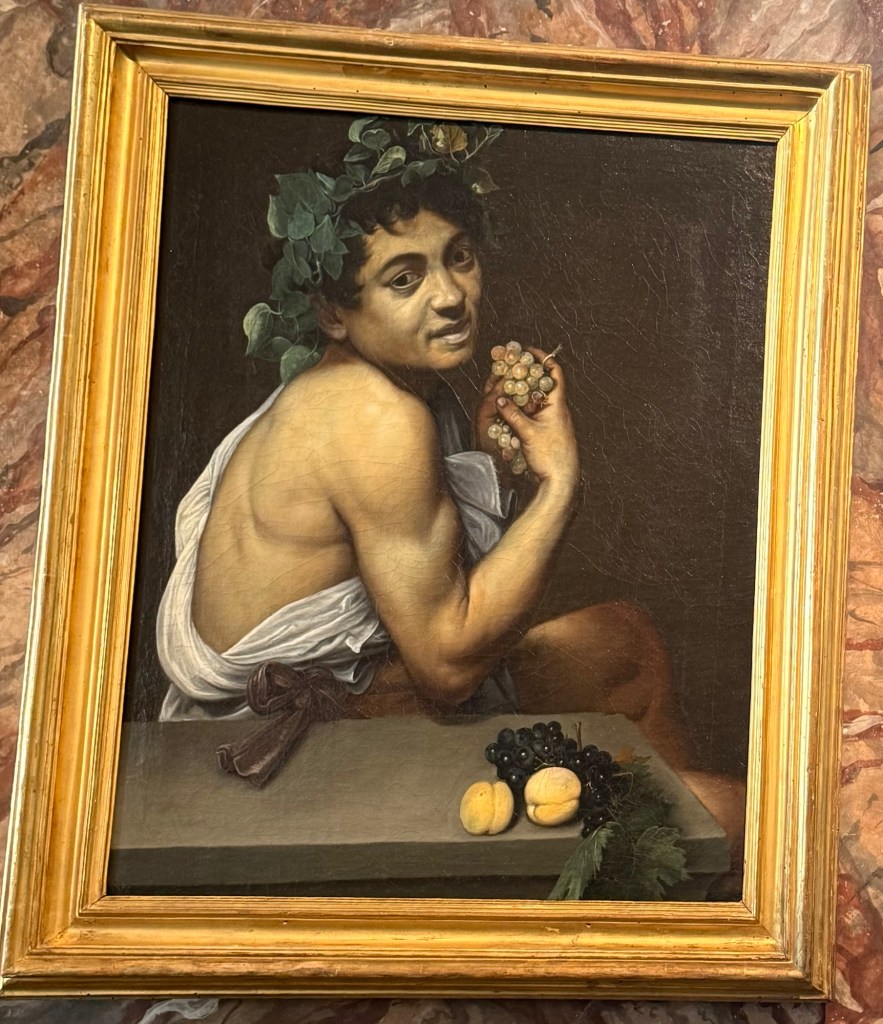
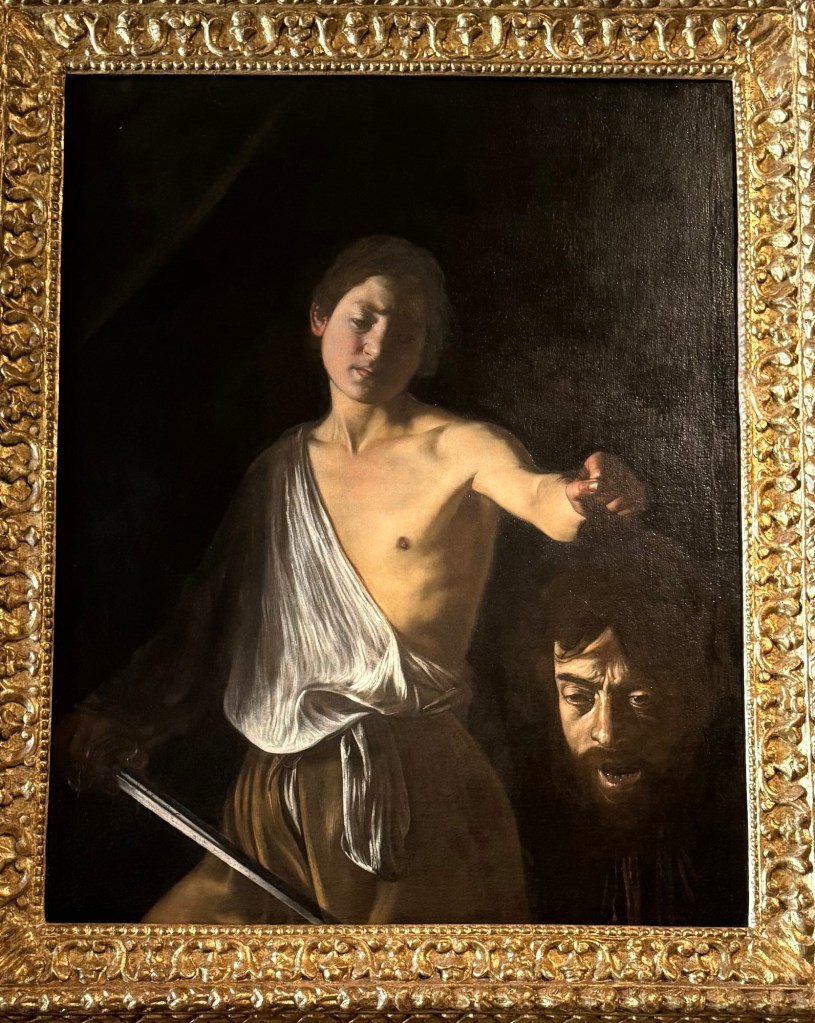
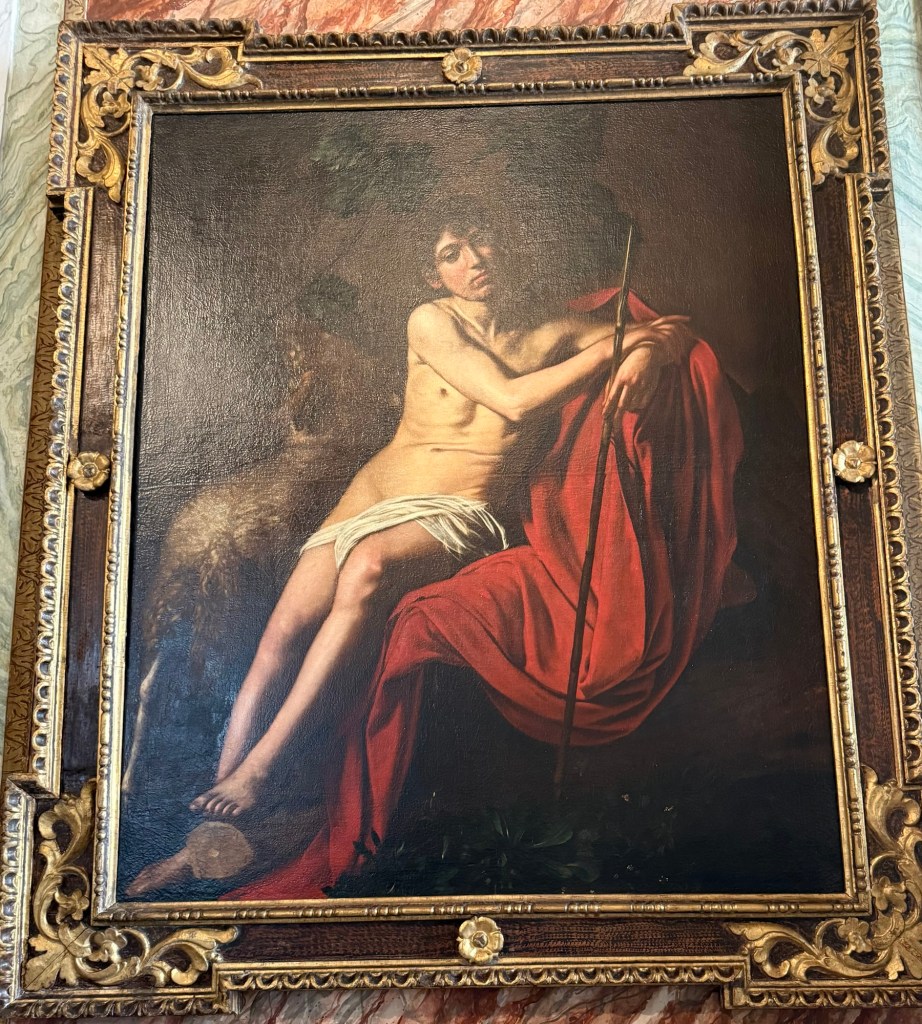
Most of the paintings are by Michelangelo Merisi da Caravaggio, that infamous gay guy who murdered at least one person.

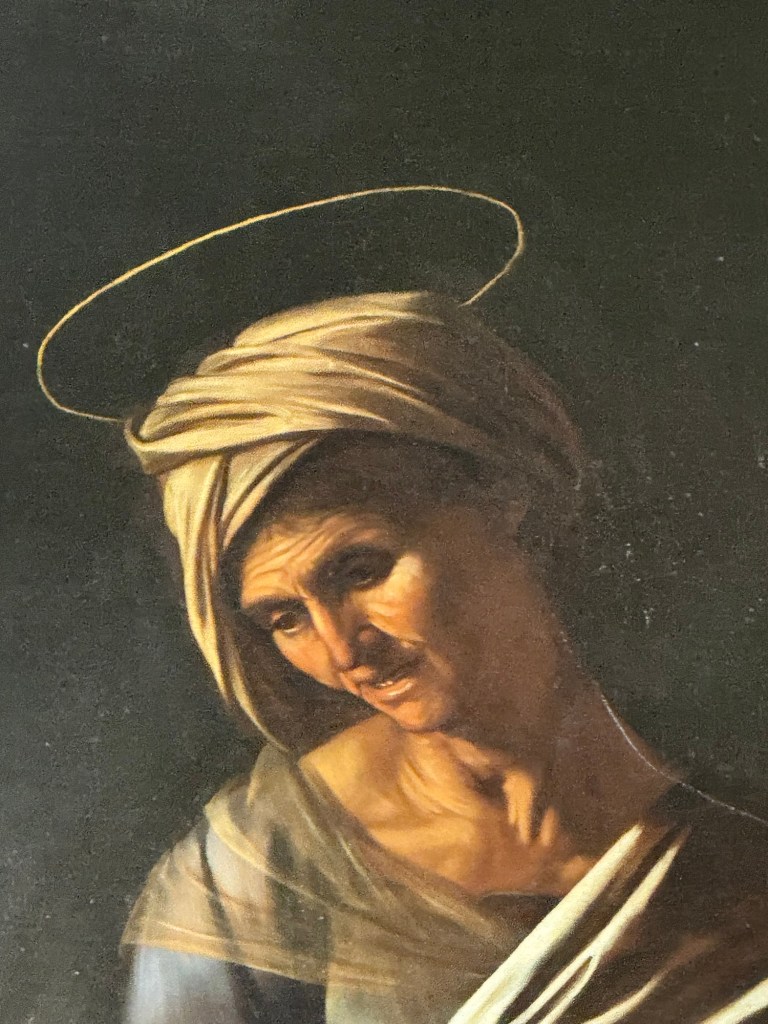
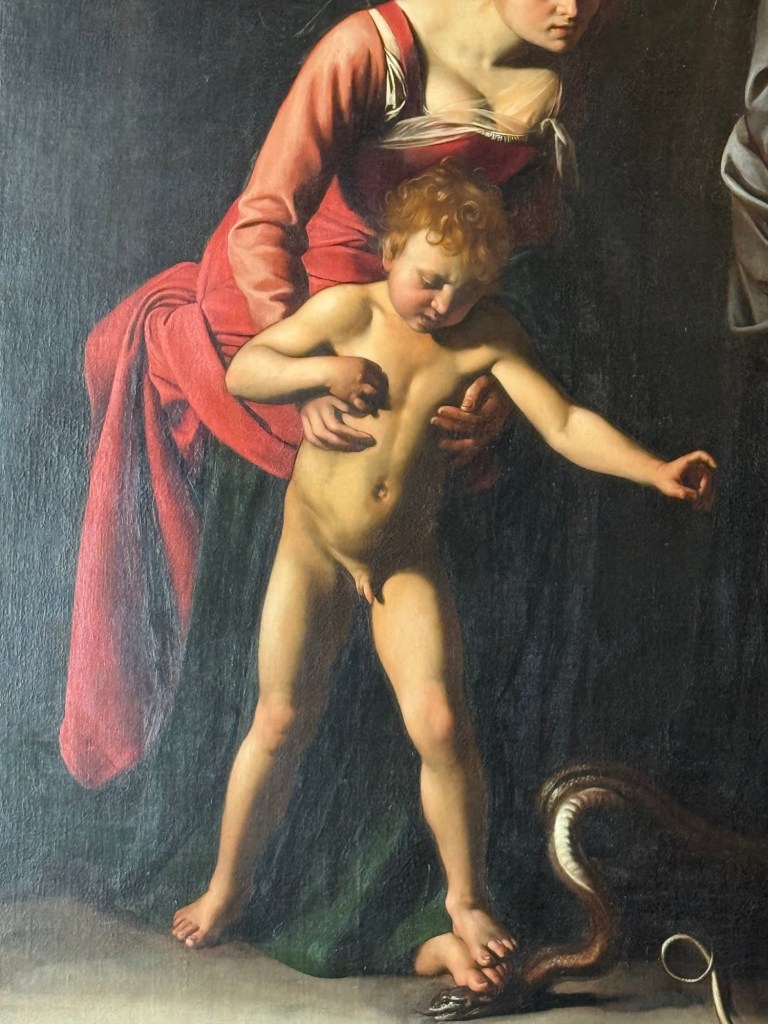
Madonna with Child and St Anne. Madonna looks a bit in the worldly side, St Anne is well worn and as for Jesus…..very Caravaggio.

Bad boy….

David again, this time with Goliath’s severed head….

Another bad boy…

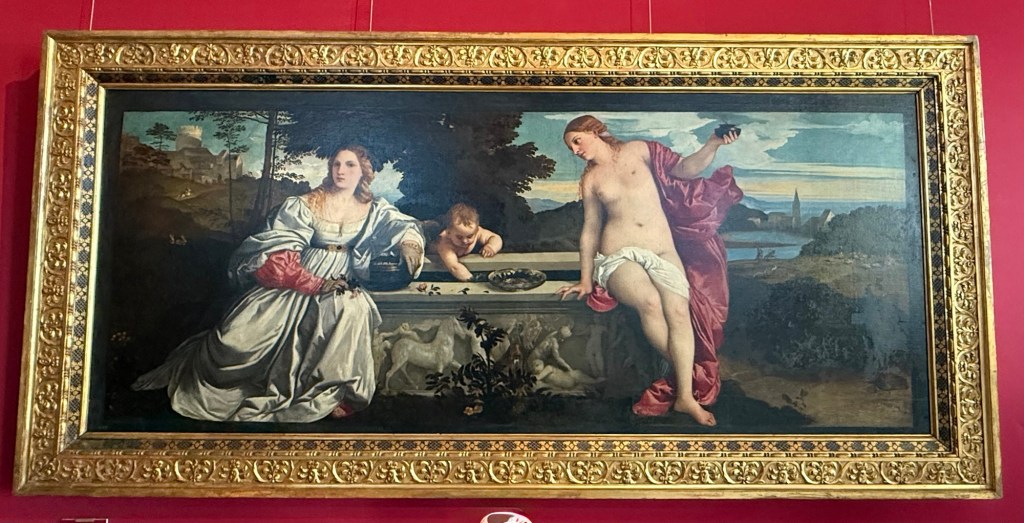
Titian…the lude girl and the good girl….which is which?