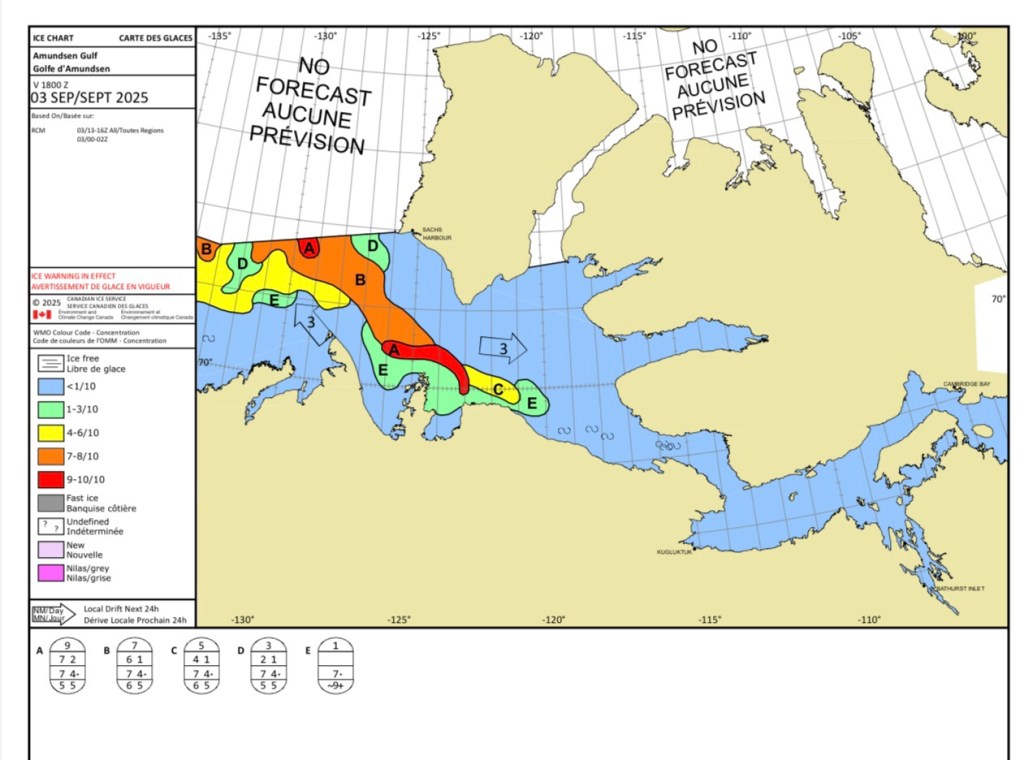
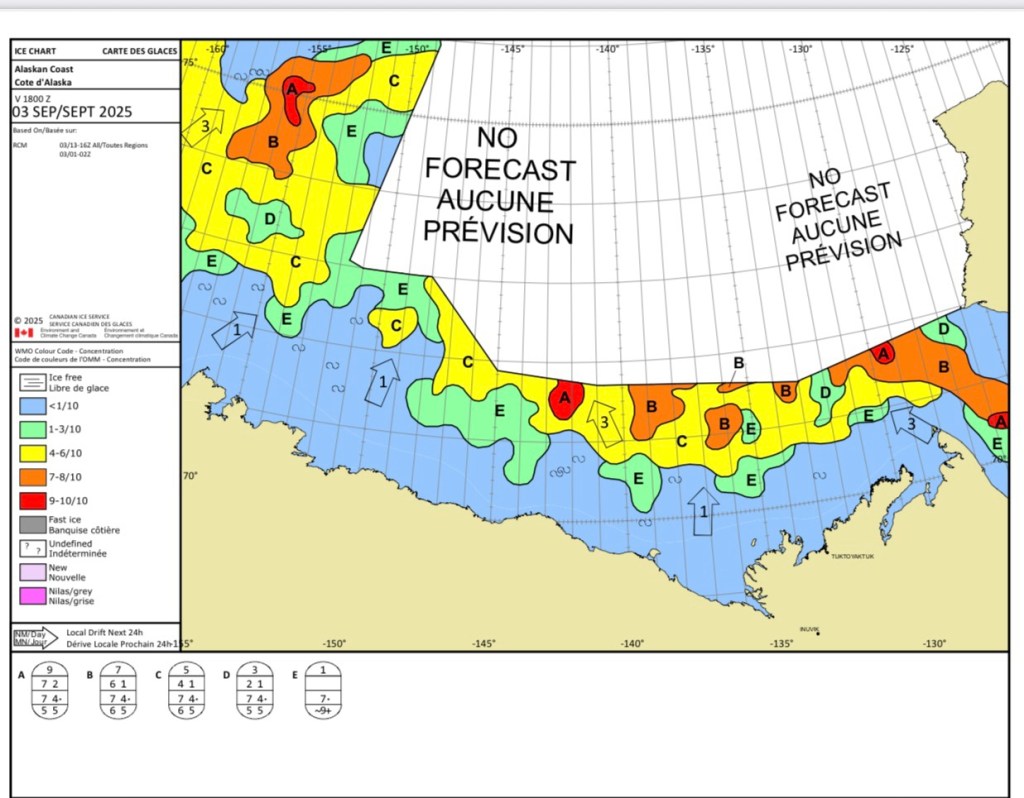
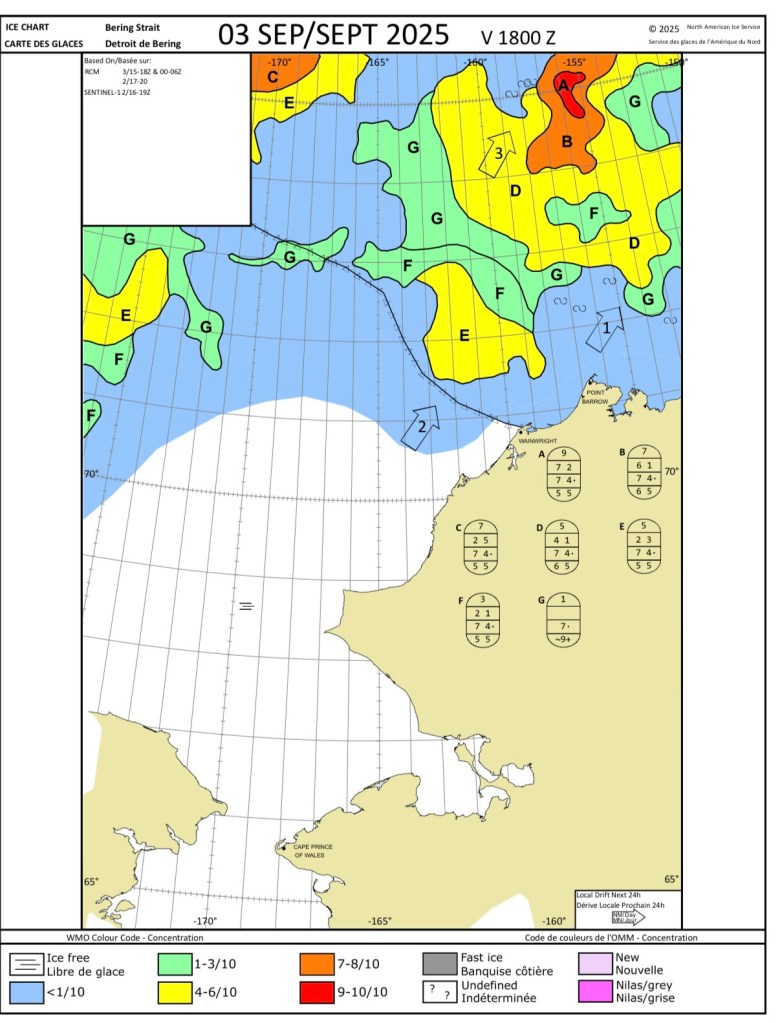
I’ve checked the ice conditions for the rest of our route through to Nome. It looks like we might have some more ice although I would doubt it will be as dense as this morning.
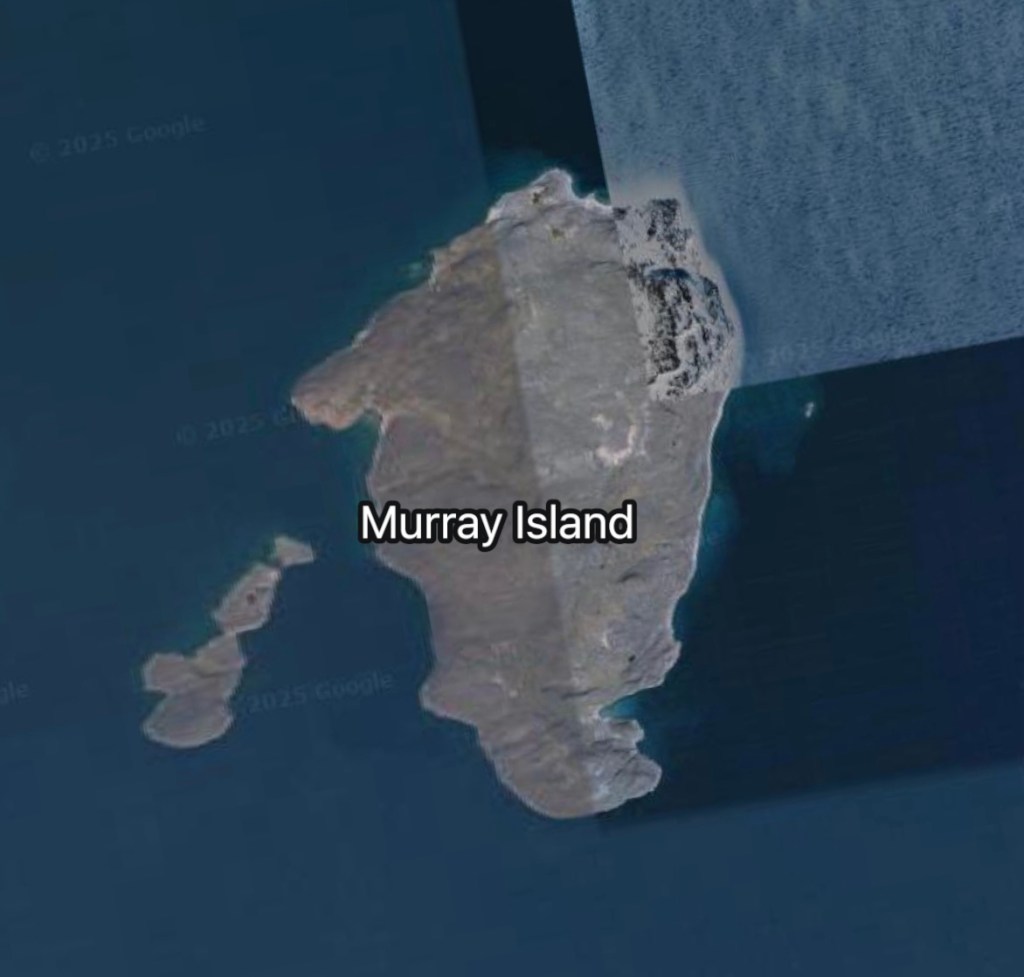
Murray Island, next to Edinburgh Island, is a small, uninhabited island, home to Arctic hare and the remains of caribou and fox.
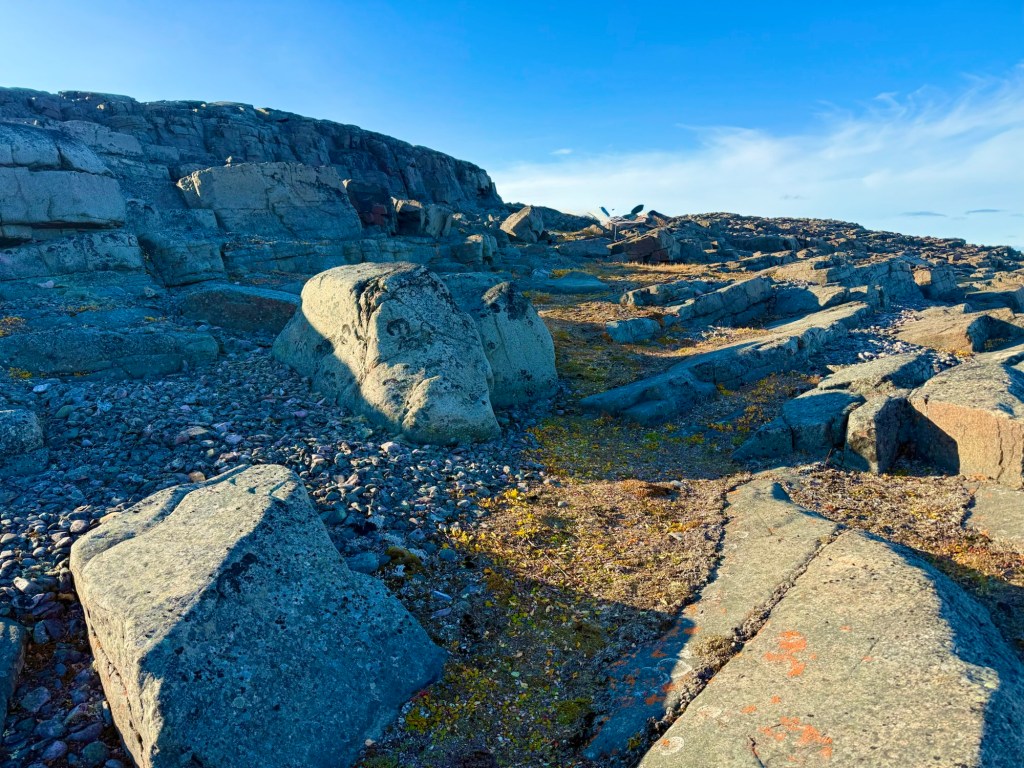
The stone cliffs were fragmented by constant seasonal freezing and thawing, resulting in a unique, cuboidal coastline reminiscent of Fingle’s Cave on the Isle of Staffa, Scotland, and the Giant’s Causeway, Northern Ireland.
Crushed rock cliff
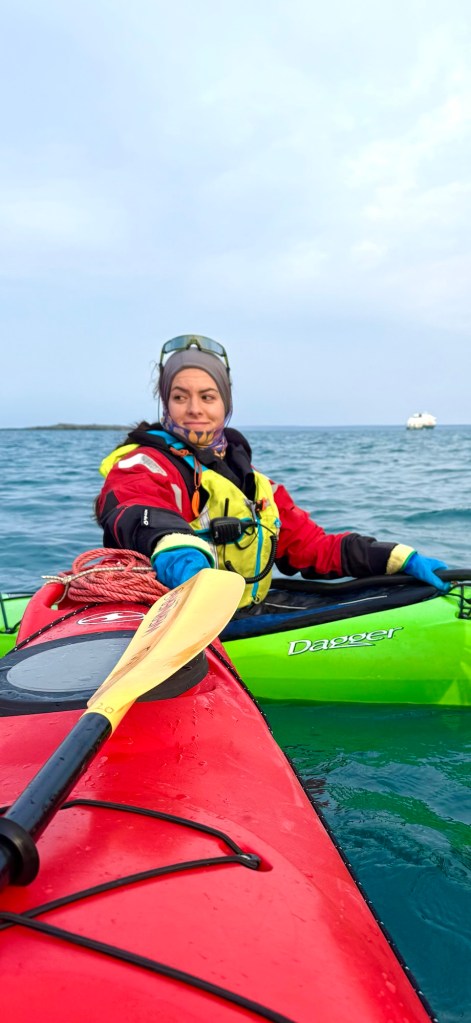
Our group’s kayaking excursion was a highly anticipated event, and we were thrilled to embark on this adventure in such an extraordinary location.
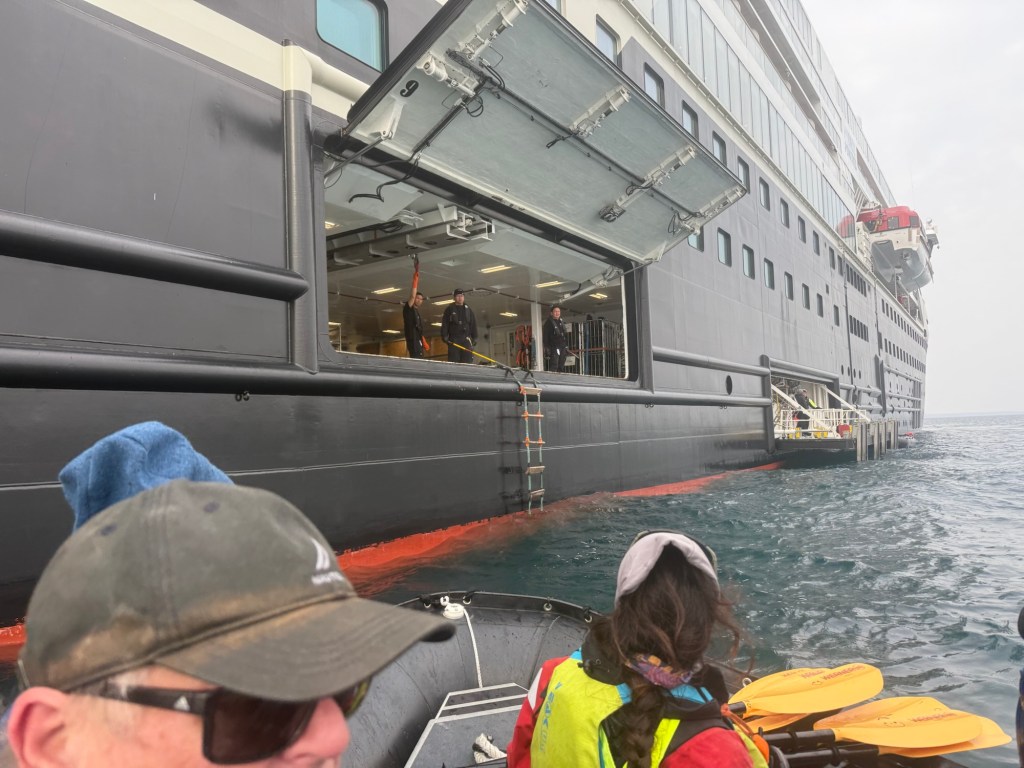
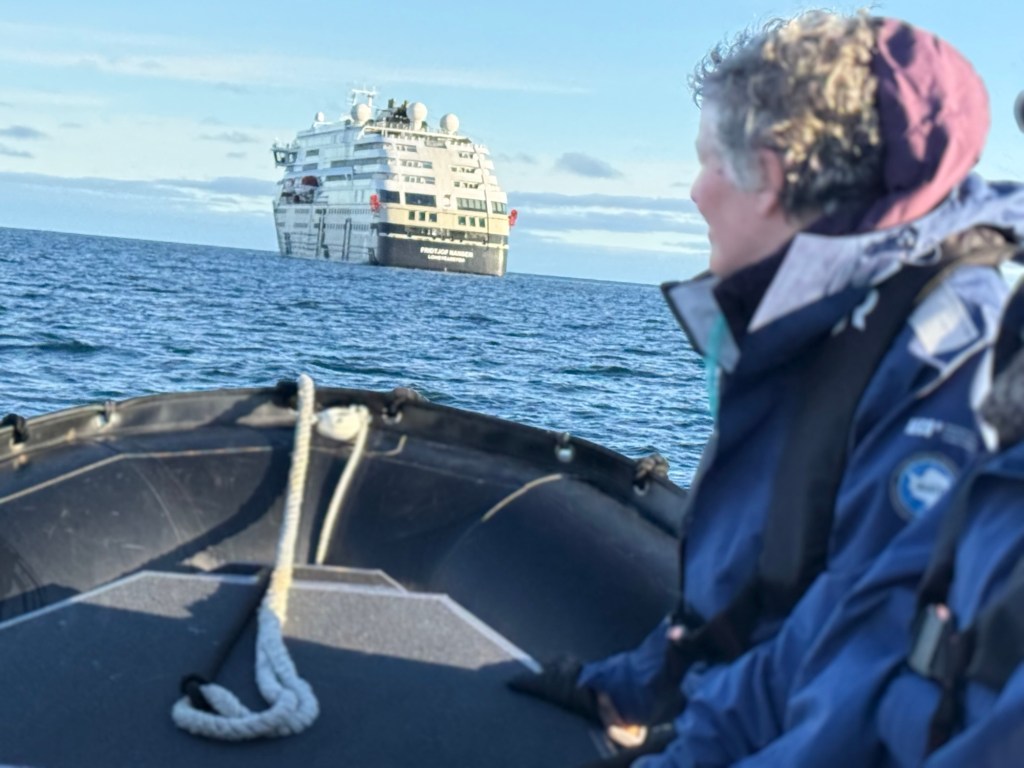
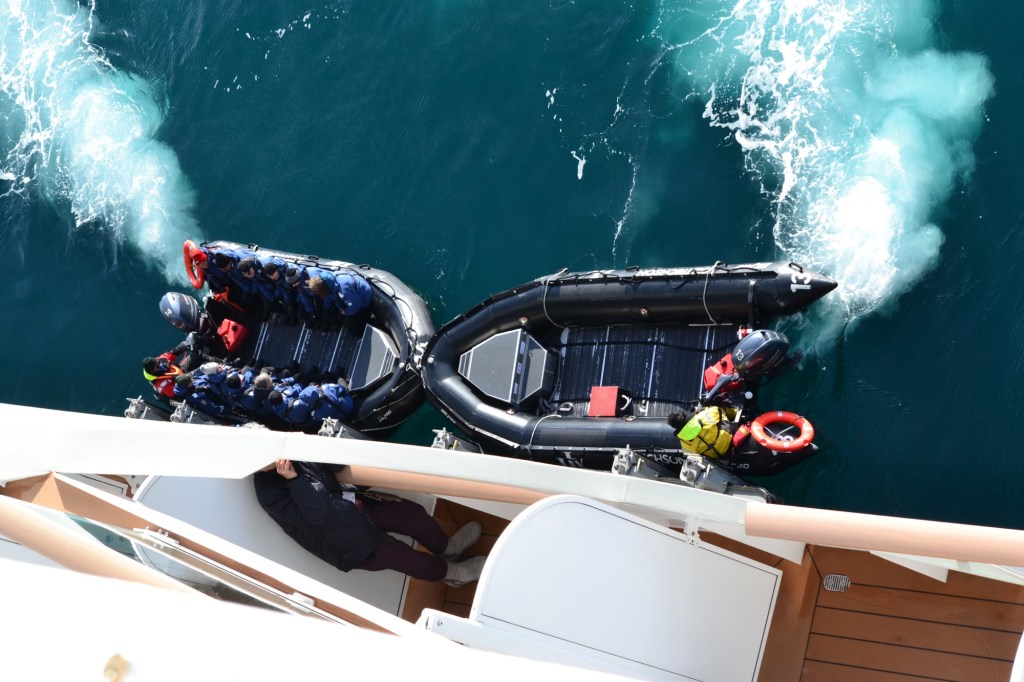
We disembarked from the ship on zodiacs, launching our kayaks from the mother ship and towing them behind our zodiacs, much like goslings following their mother goose.
The sea conditions were favorable, with waves reaching approximately 0.7 meters (2-3 feet) in height, allowing us to cruise comfortably close to the rocks.
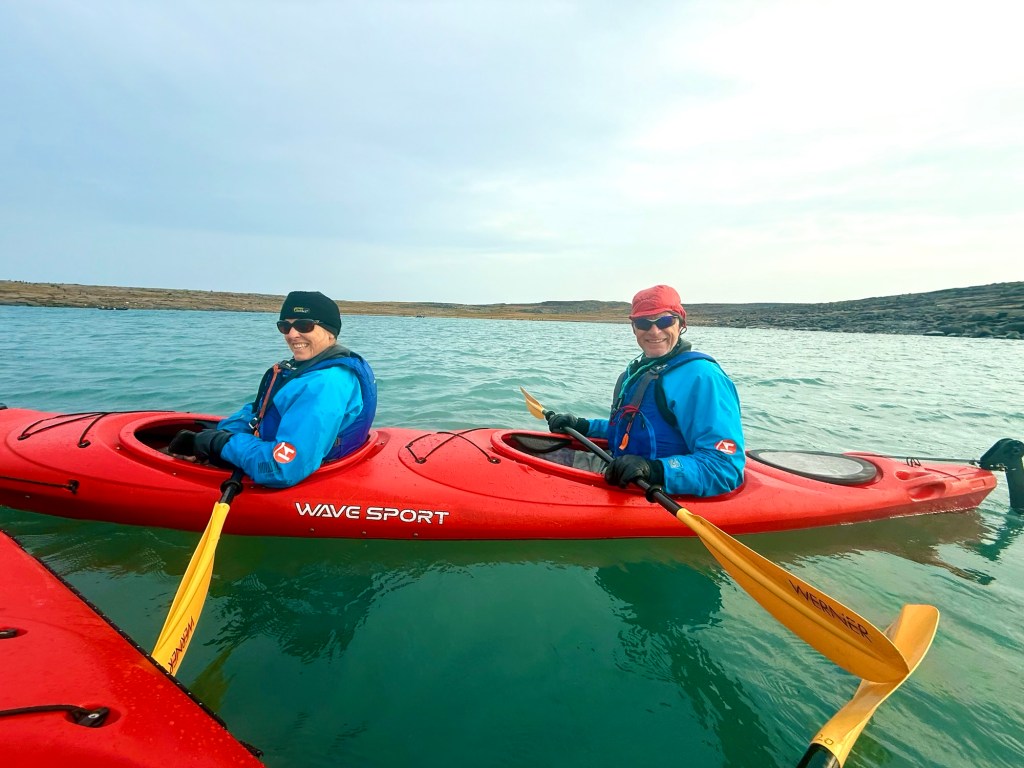
I teamed up with Jonas from Sweden who proved to be an excellent Captain of our kayak, Kal-El The Kayak.
My Captain, Jonas, in rear
We paddled for ~ 3-4 km (2.5 miles)..
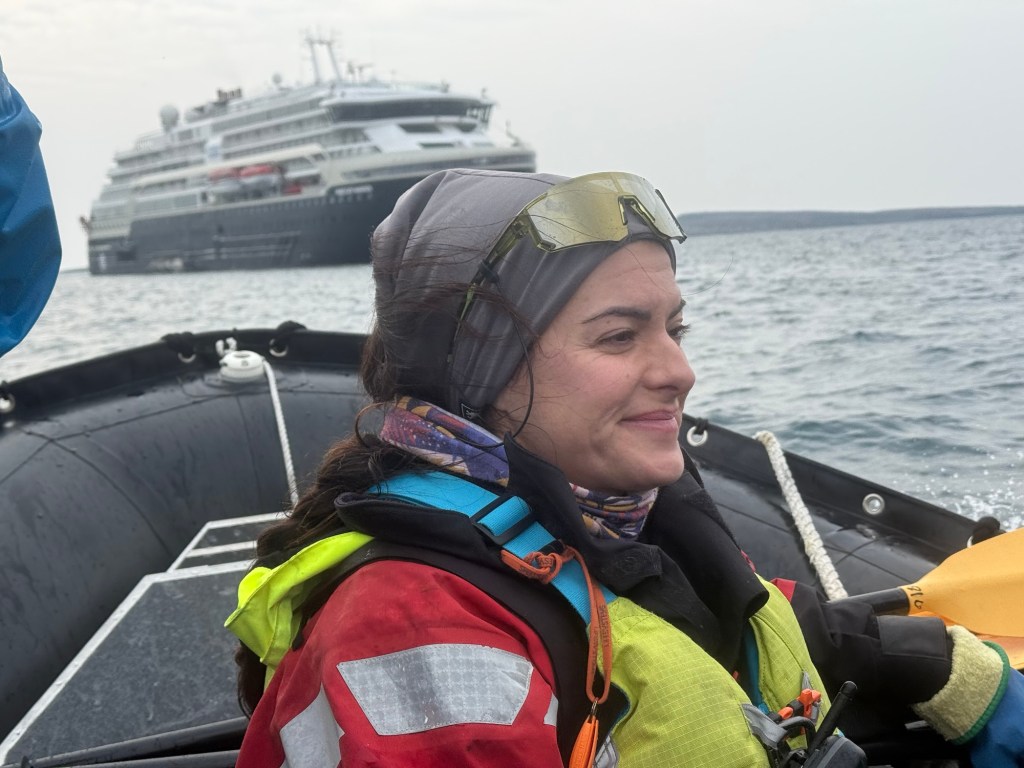
Guide Clarisa
We did not see any wildlife other than a large jelly fish but hidden in the depths below us would have been Kelpies, Jörmungandr and Hafgufa.
Later in the day, we smelt woodsmoke and the pleasant but unusual smell grew as we cruised West. This was apparently due to wild fires in the NE Territories – which are around 1000 km away ( 625 miles).
This woodsmoke combined with a local mist, resulting in a slightly yellow fog…
– Cruising Findlayson Islands to Murray Island, Nunavut, Arctic Canada
Well what a lovely surprise!
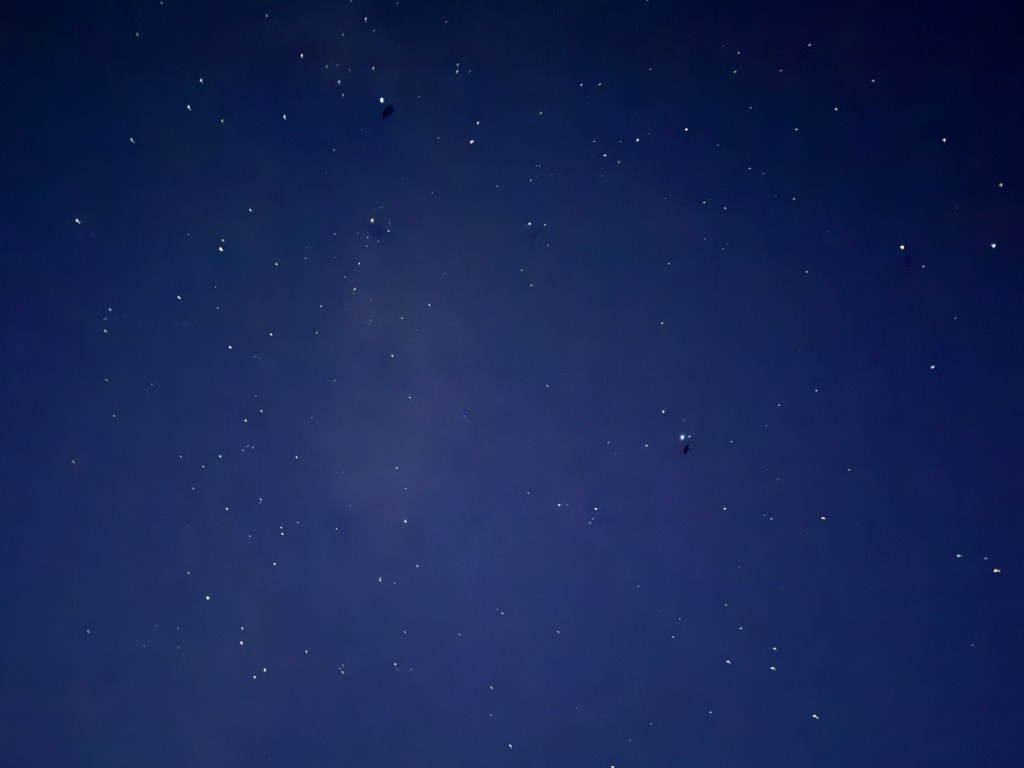
After a beautiful sunset, the stars – 1000’s of them, carpeting the sky in a banner of jewels – were revealed.
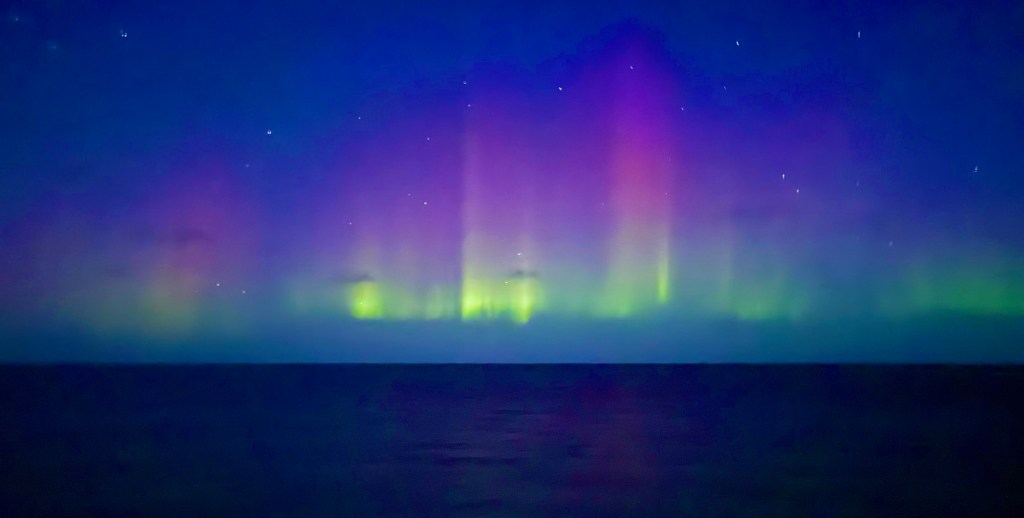
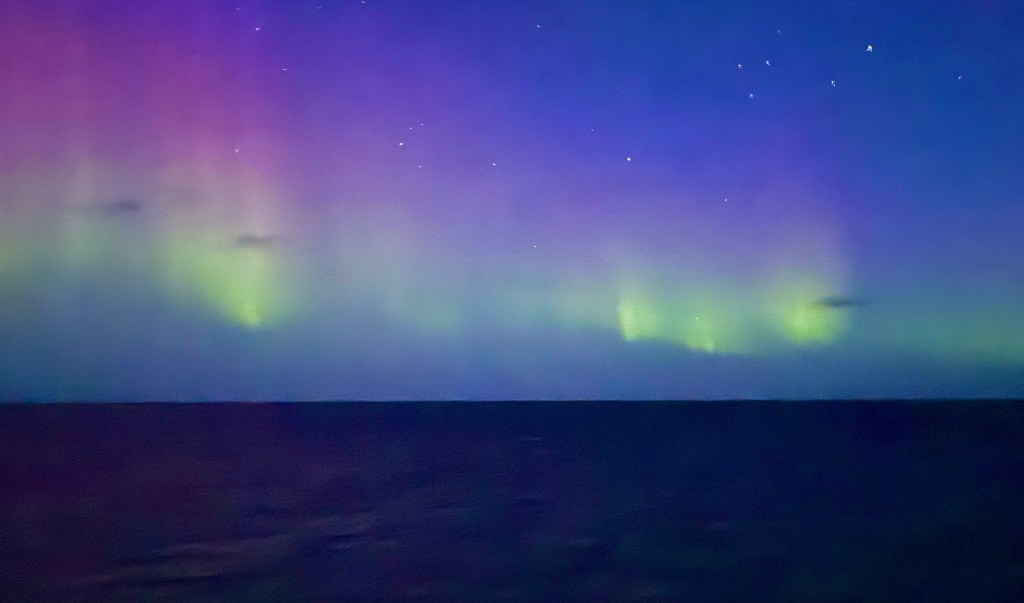
And then! A major sun storm delivers to us the Northern Lights, while looking South! Quite delightful…..the colors dancing upon the horizon, changing and moving in a fallen curtain….
Suddenly, an Arctic Plunge of Death was announced by our Captain!
Sea temperature of 4°C / 39°F.
No problem for a Scotty used to swimming off the West Coast of Scotland with Summer temps of 11°C / 52°F. Bring it on!
And no problem for a traveler like me with two Antártica plunges already in their pants…
OK, it was going to be as friggin cold as a West Coast preacher’s ass but that would not stop us….
First, a proclamation!
And then two angles of the main event, thanks to my camera crew…
Then it was back to the zodiac and ship. The water was so clear and fresh, mixed with the after effects of the plunge it took us to the edge of tears, but we did not succumb!
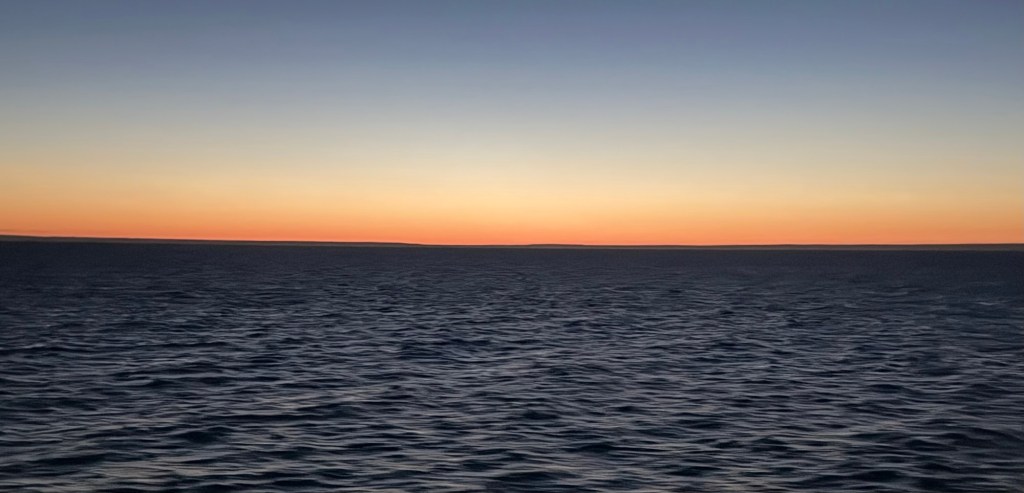
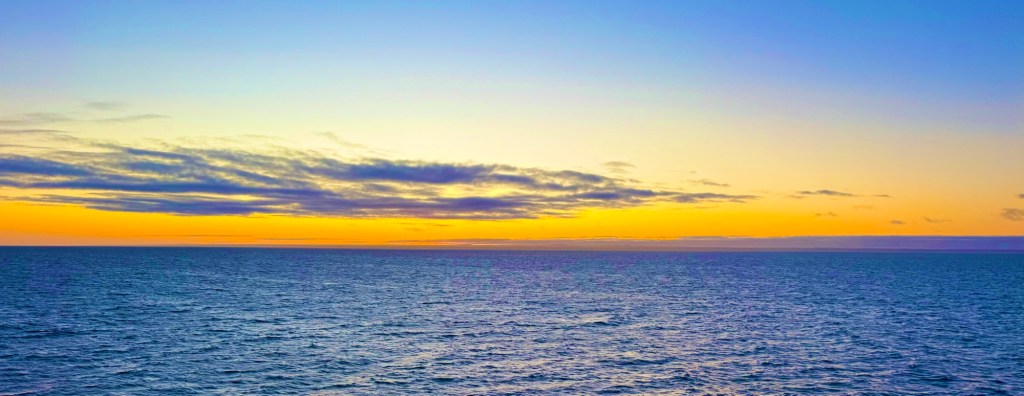
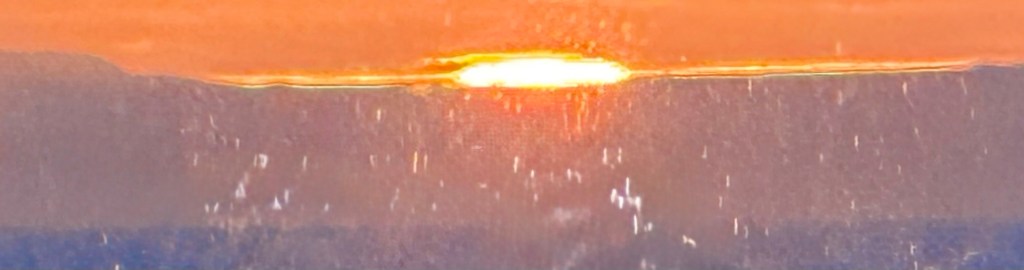
And then the day ended with the beauty of a thousand sunsets…
Ungahitak Island, Findlayson Islands, Nunavut, Arctic Canada
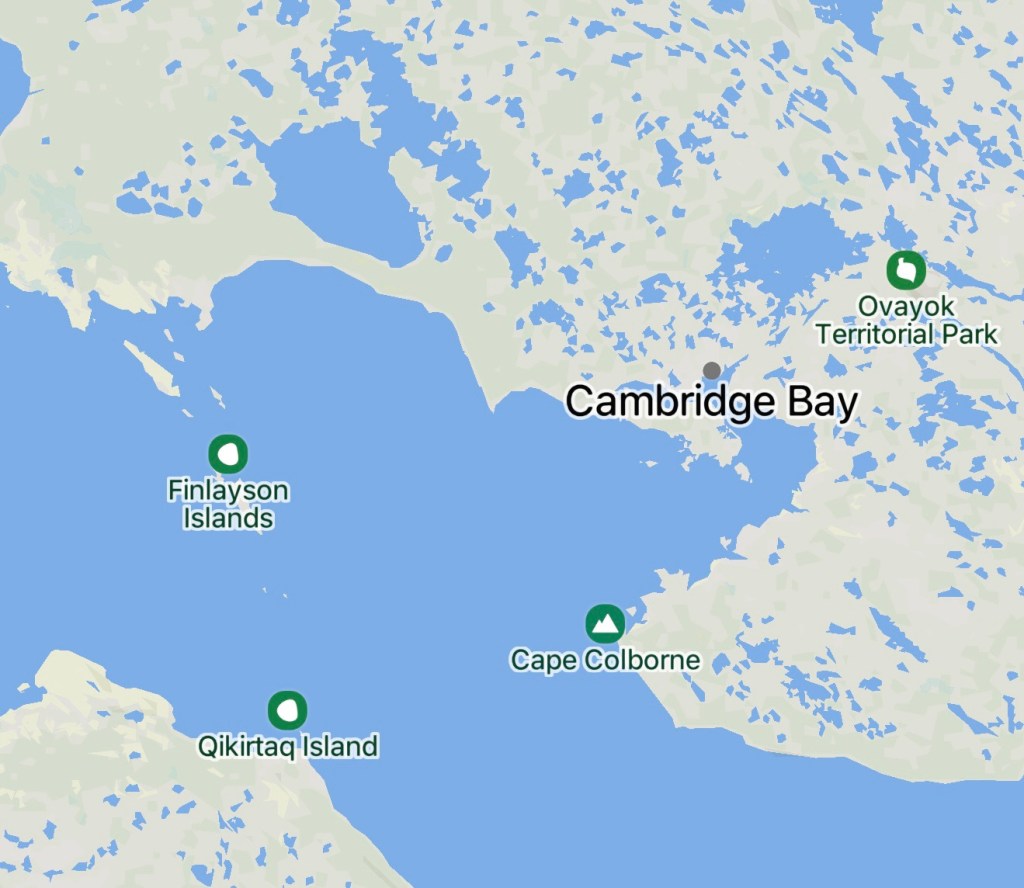
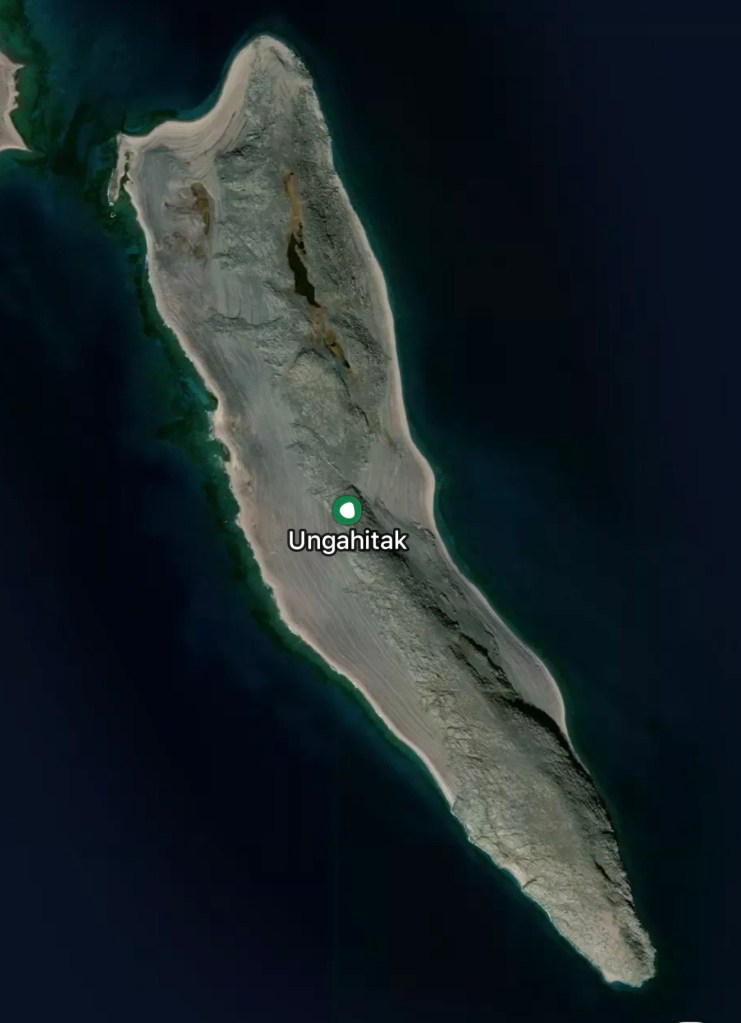
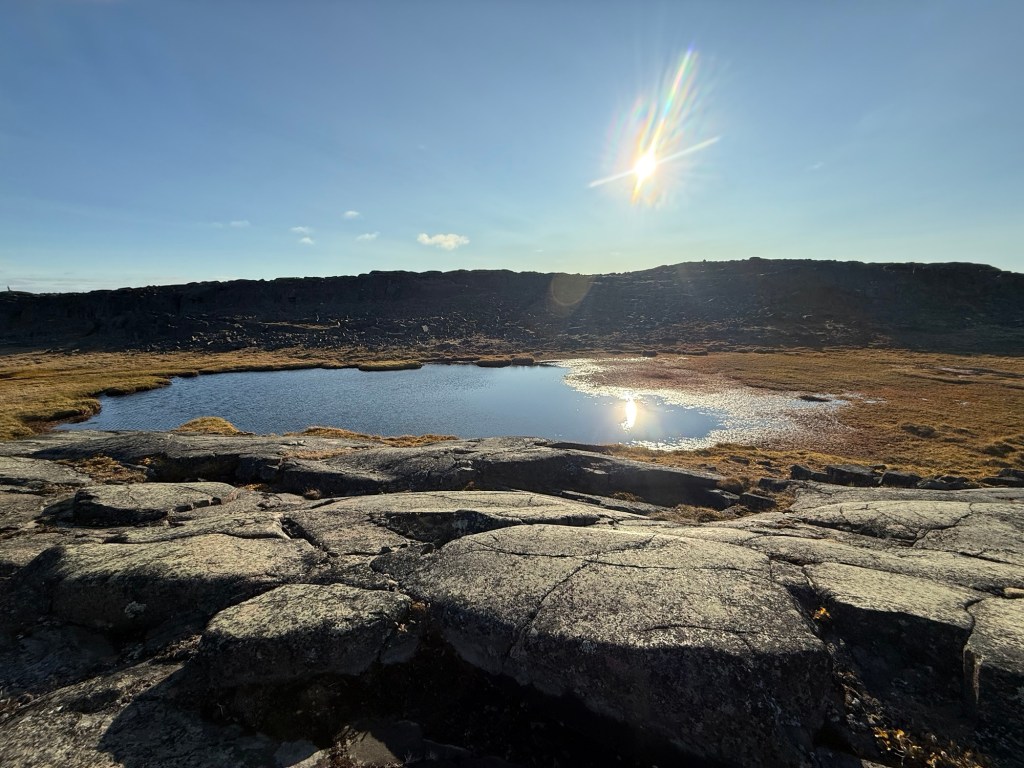
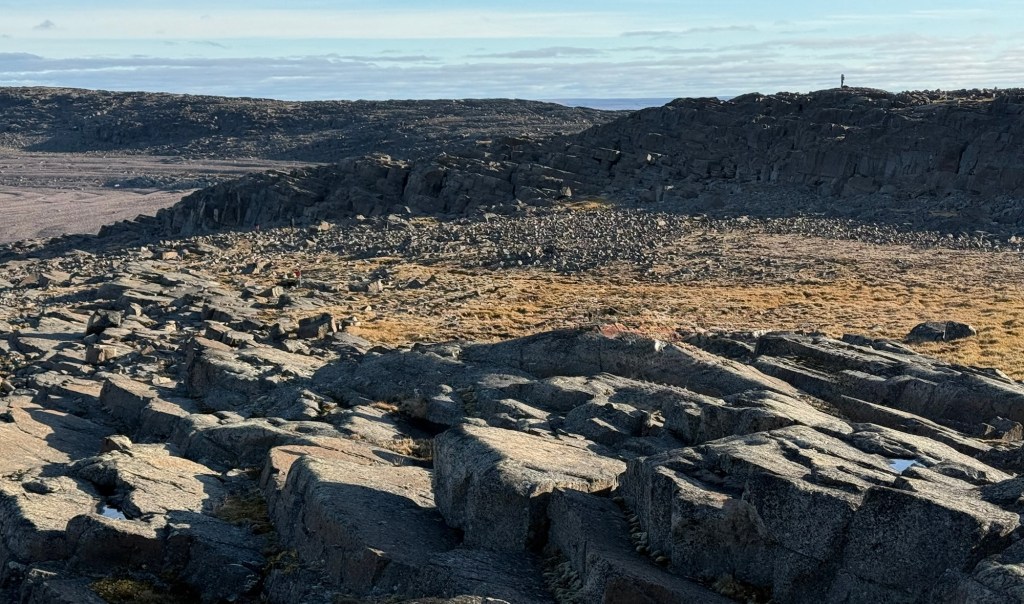
The Captain has taken us to the uninhabited island of Ungahitak in the Finlayson Islands, a surprising detour.
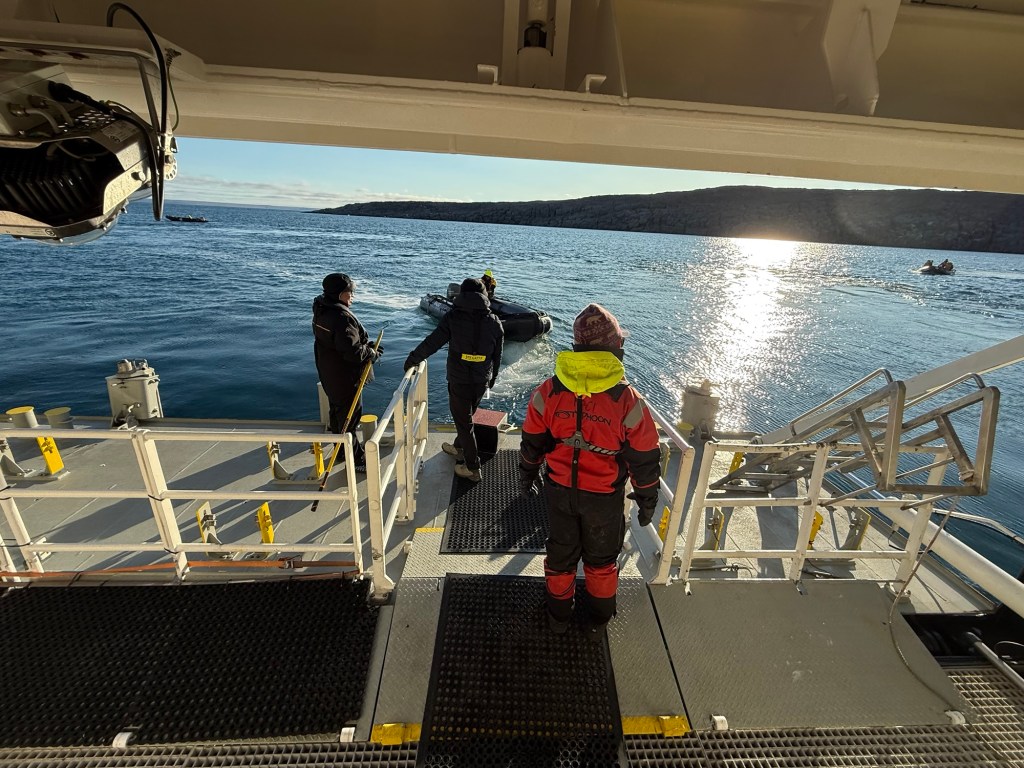
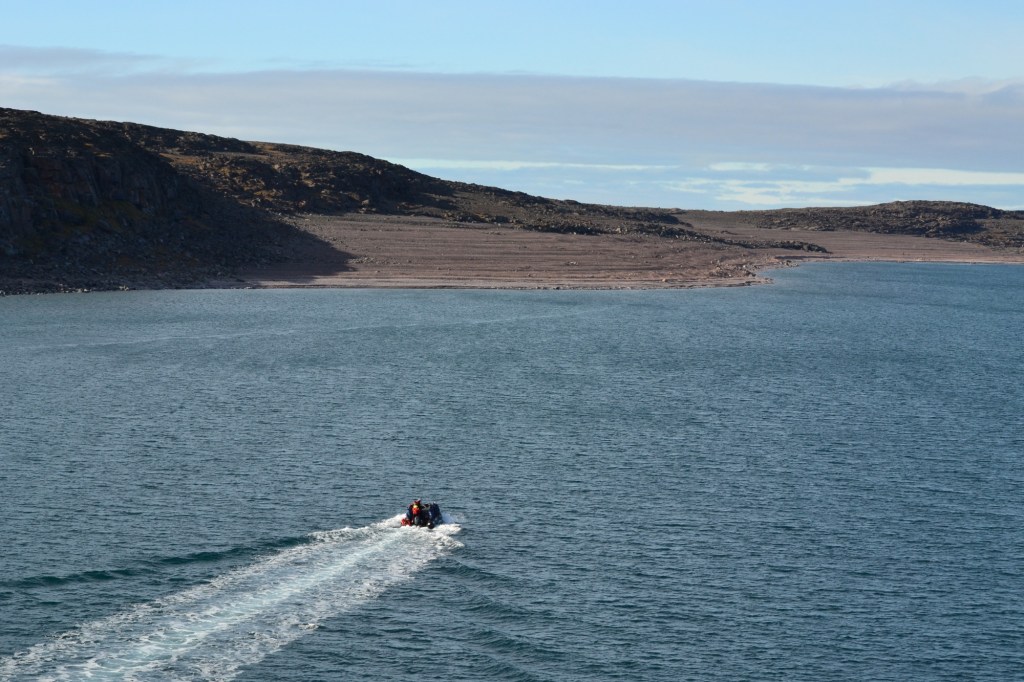
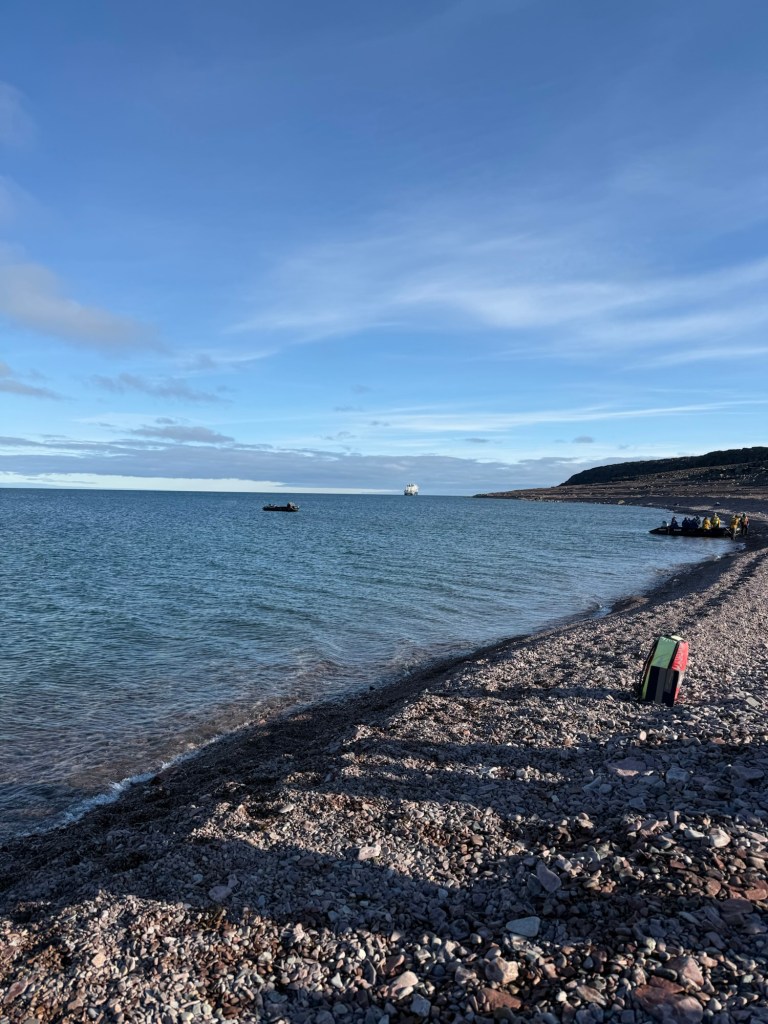
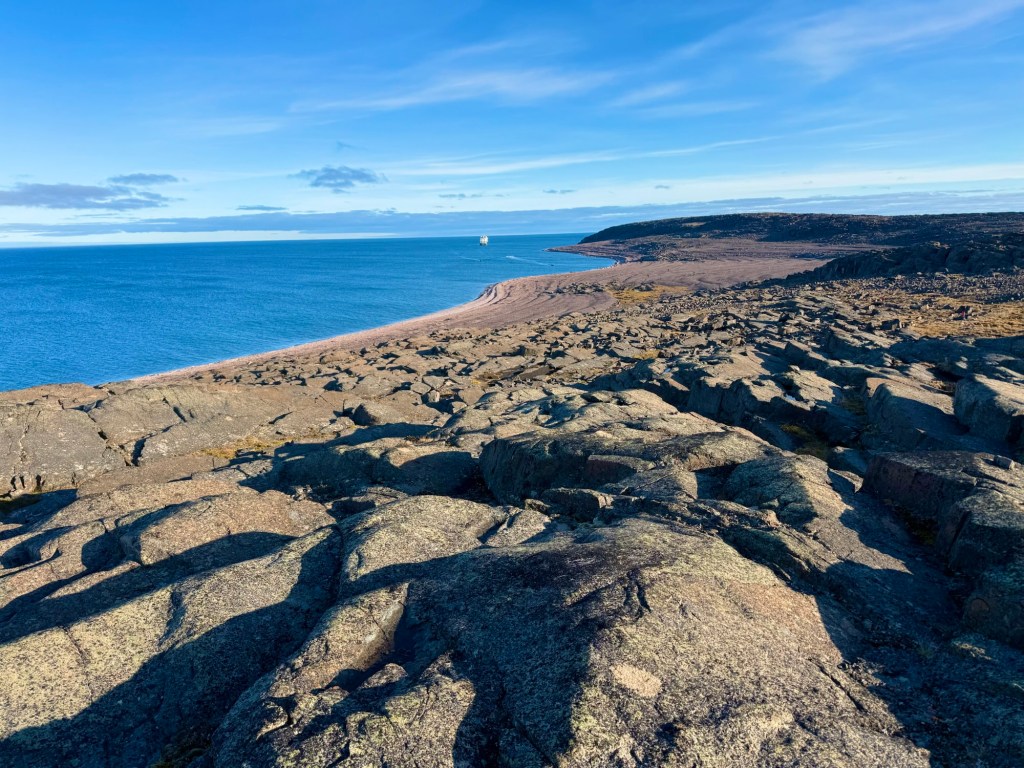
Basking in sunlight, the island’s rocky shores are a sight to behold. We launched the zodiacs and went forth into the unknown – the spirit of Scotland leading our hearts and minds.
We ascended to a high point and were rewarded with breathtaking views.
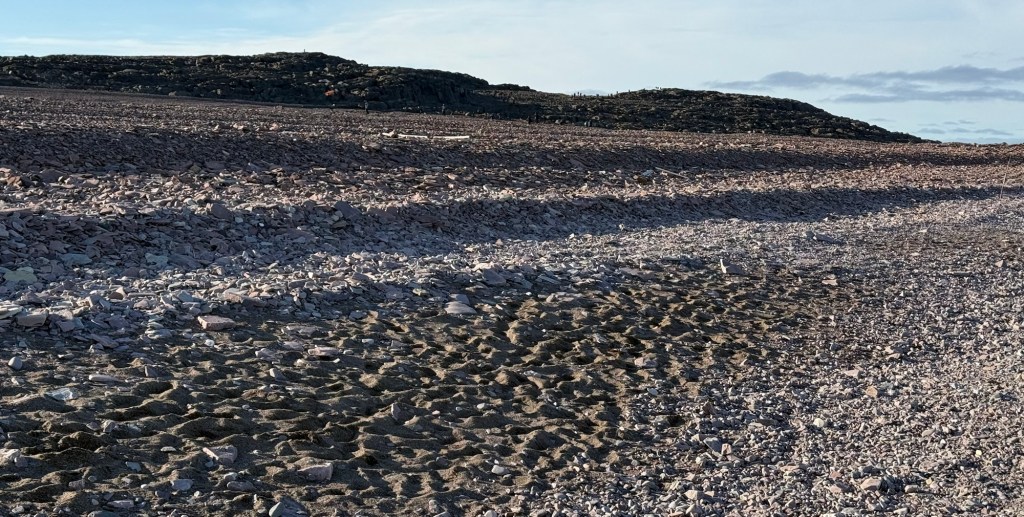
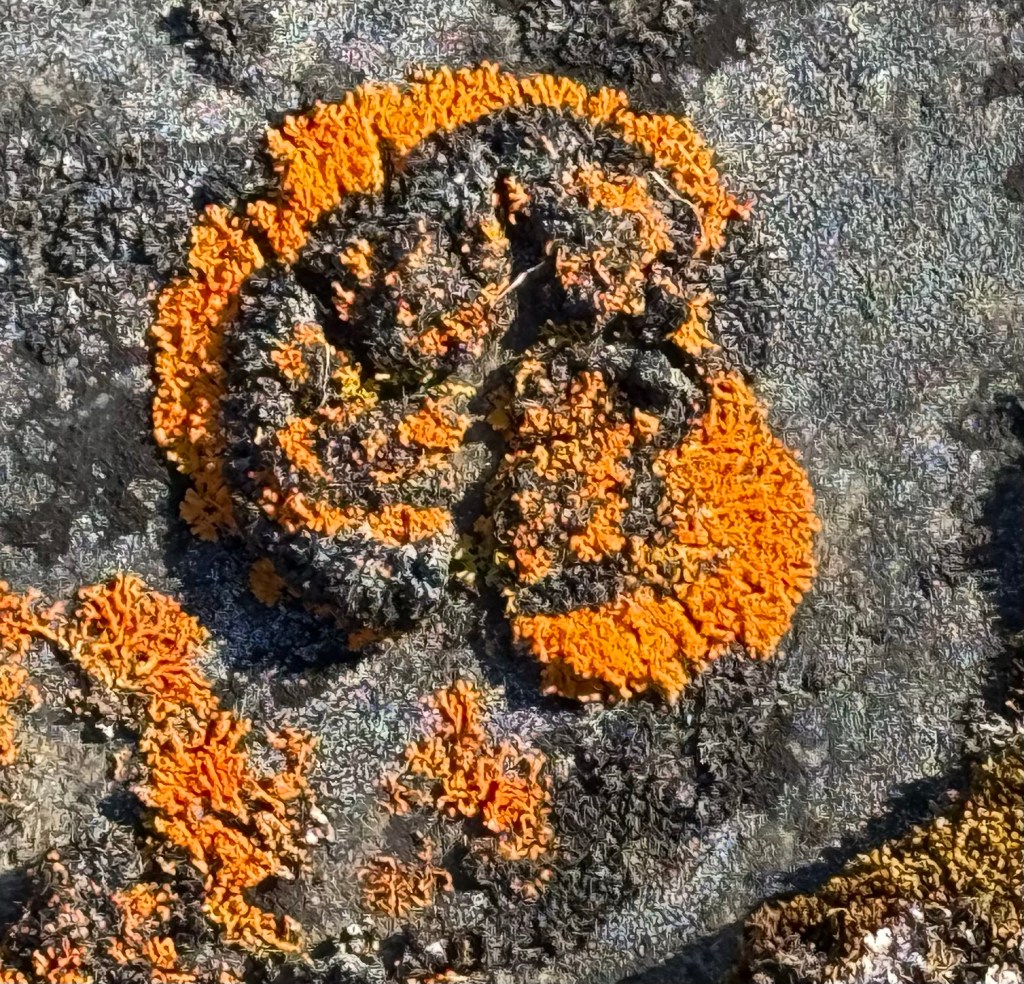
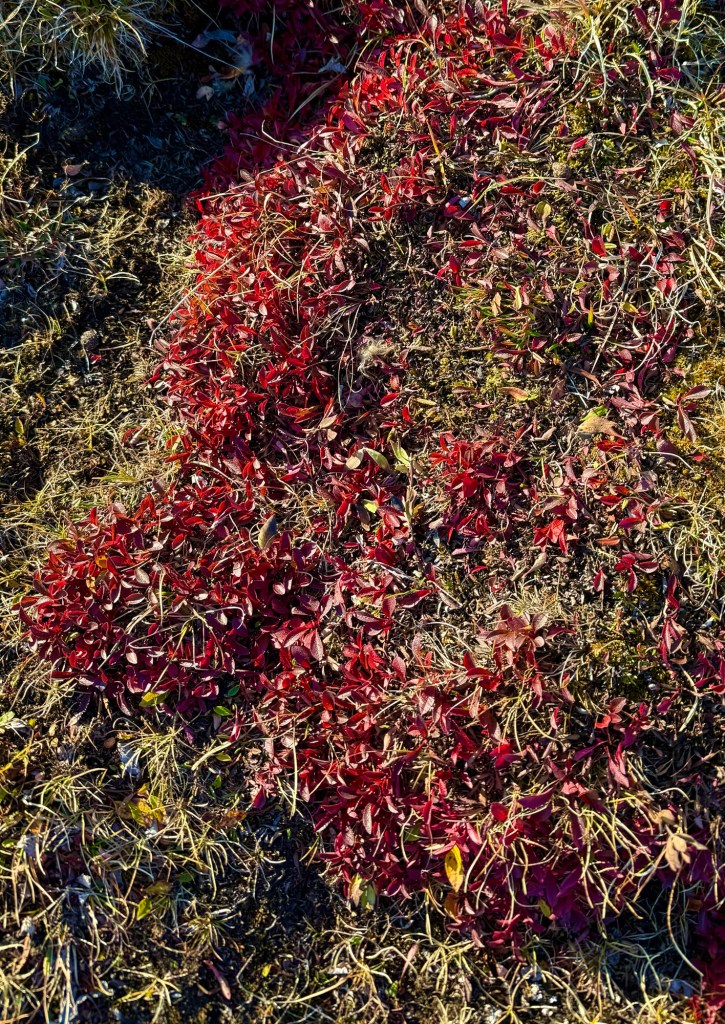
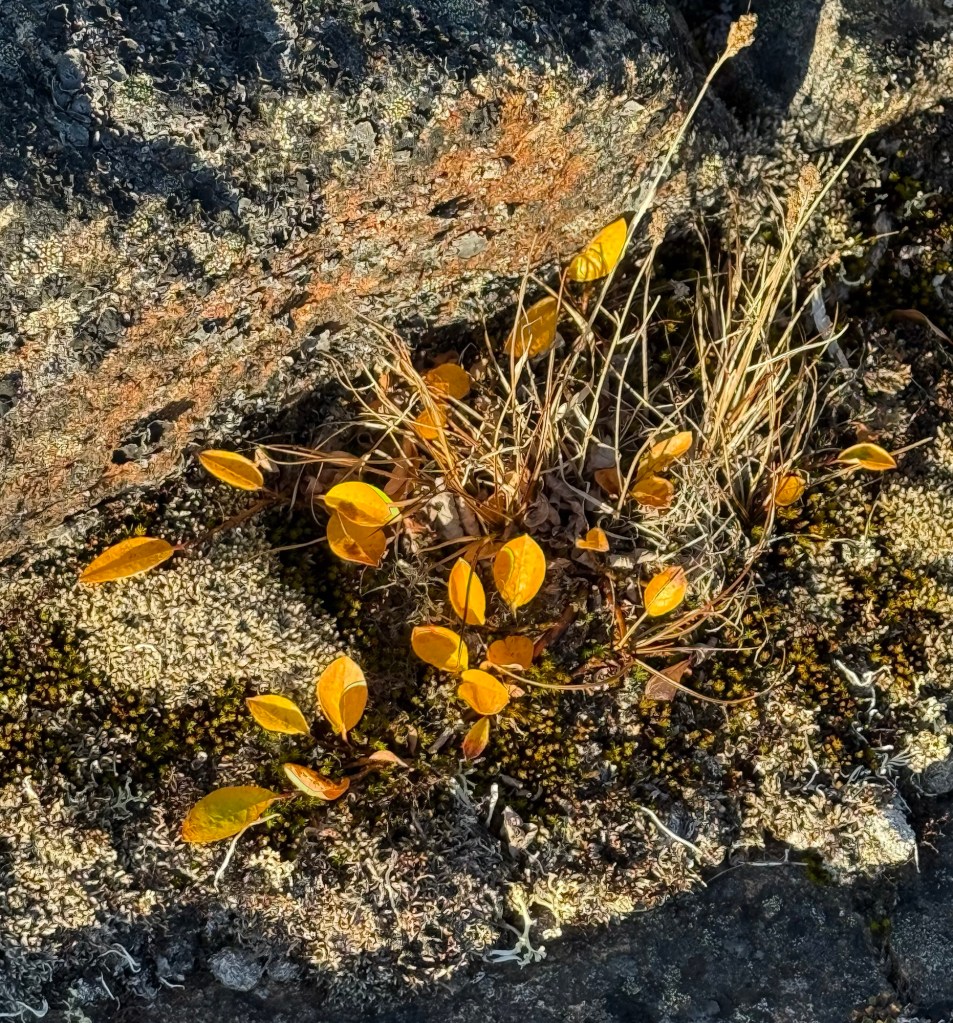
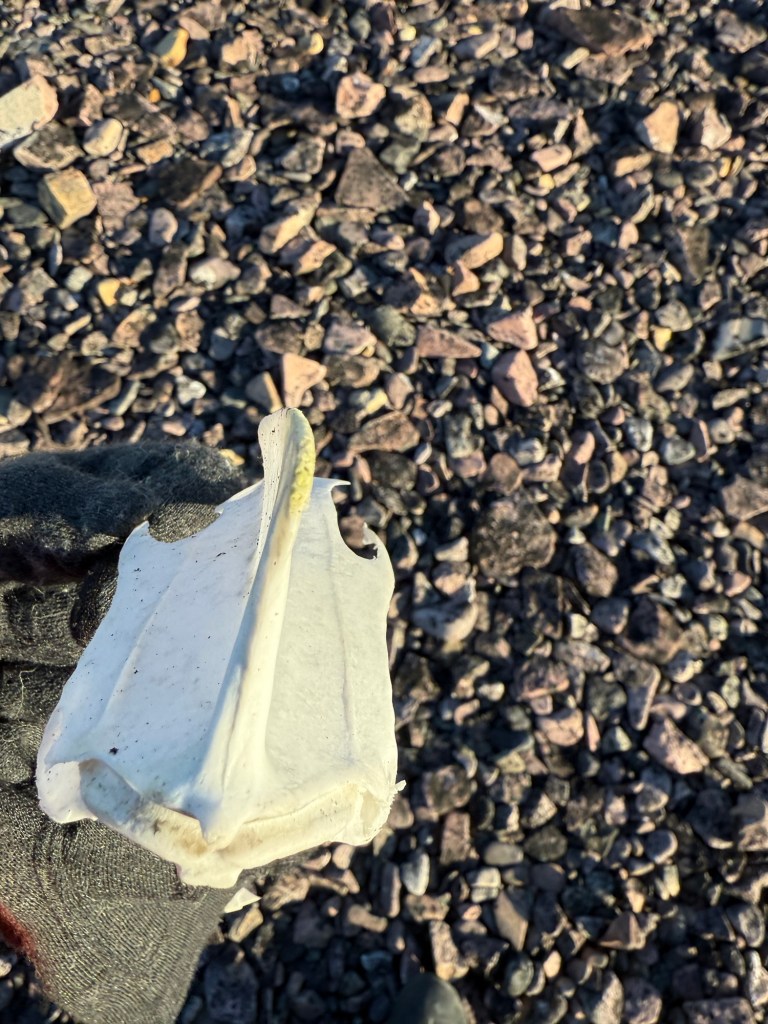
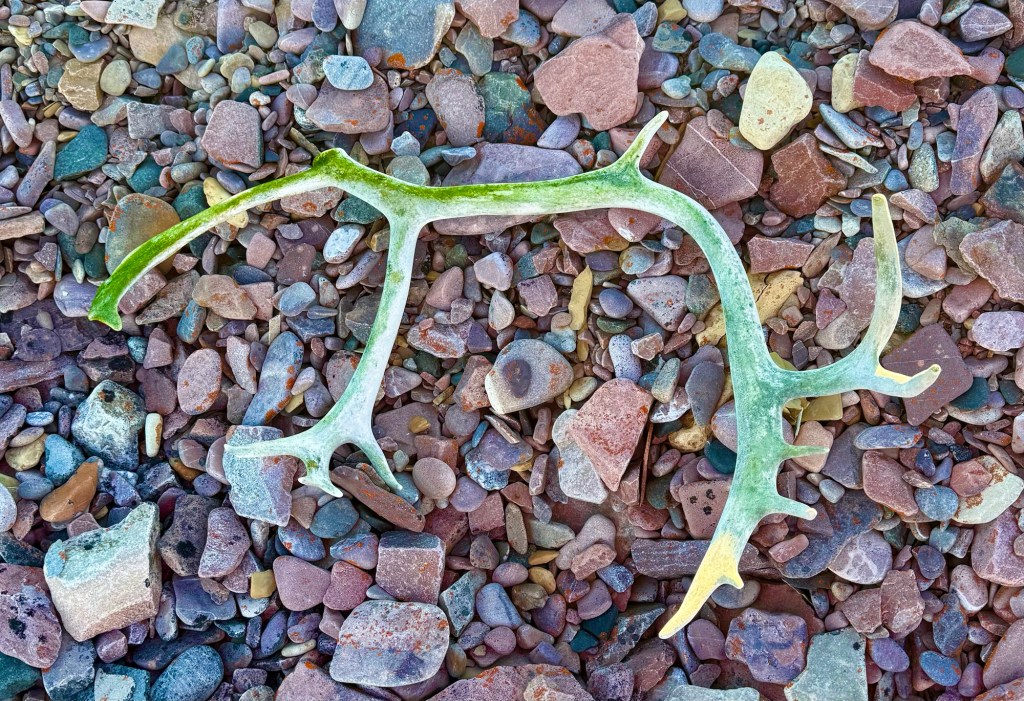
The island offered us abundant ground life – sunburst lichen and others – as well as skeletons and antlers from eons ago; a treasure trove of Arctic delights.
I had anticipated our departure from Cambridge Bay last night, but this was not the case.
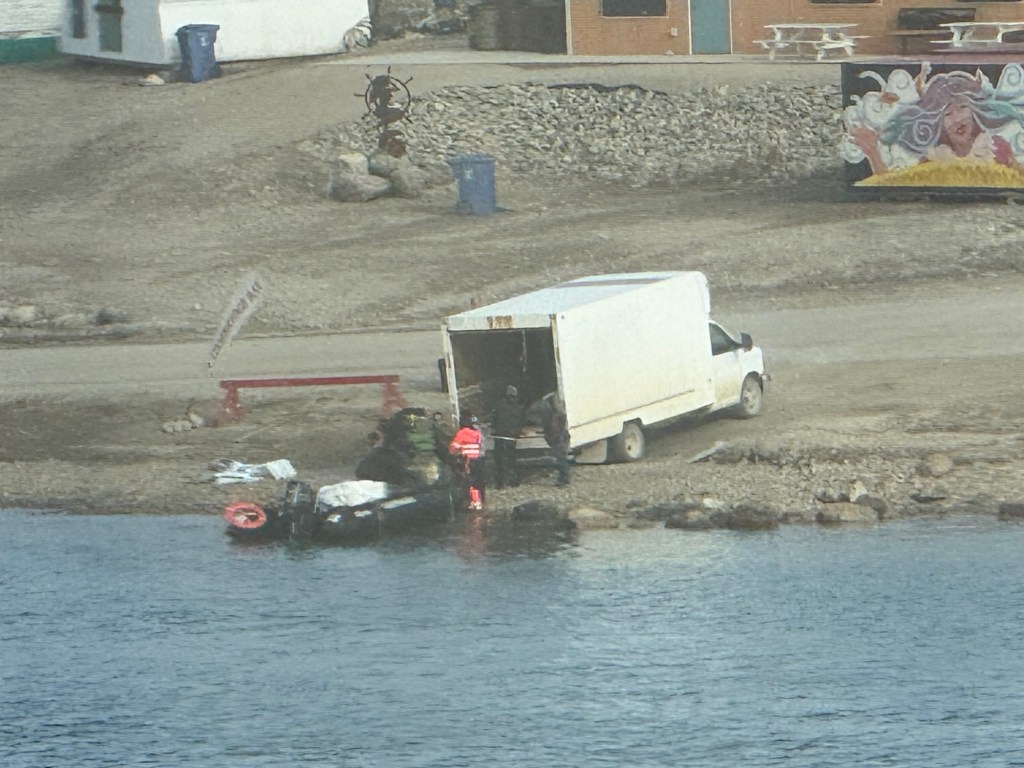
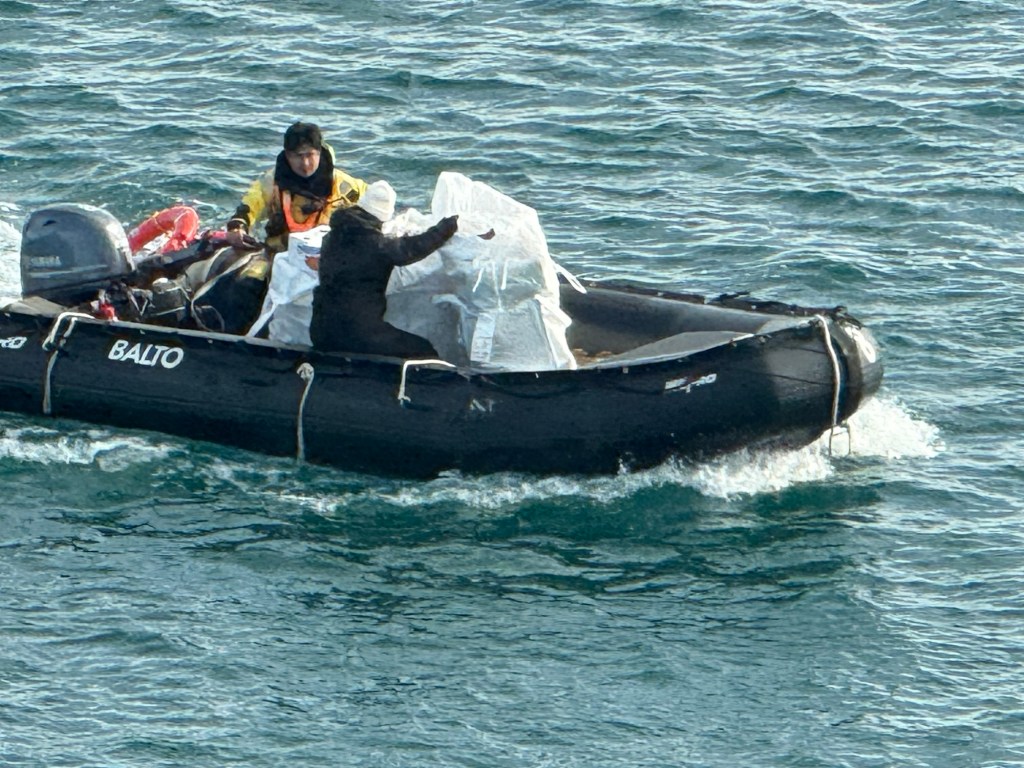
Apparently, we were awaiting the arrival of supplies by air, which landed around 10 am. These essential supplies, including fresh bananas, were subsequently transferred to our ship via zodiac.
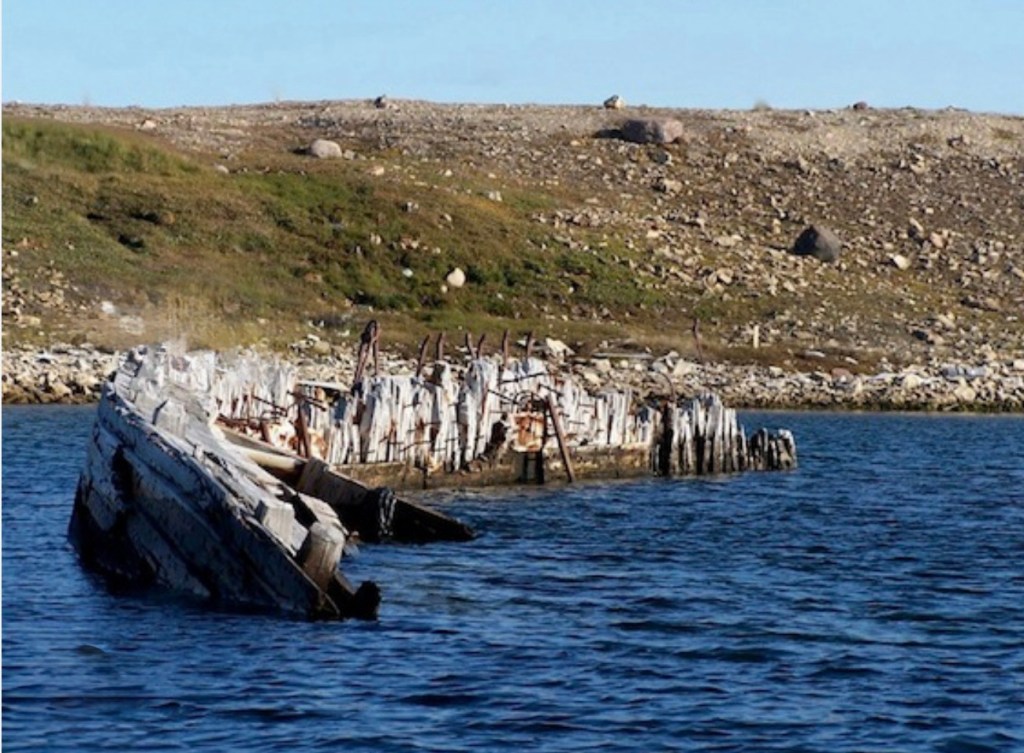
Meanwhile, we embarked on zodiacs to visit the renowned Maud Memorial in Cambridge Bay. The Maud, formerly commanded by explorer Roald Amundsen, set sail from Kristiana, now Oslo, in July 1918, bound for the North Pole via the Northwest Passage. Amundsen successfully led the first expedition to navigate the Northwest Passage. However, the Maud never reached the North Pole under Amundsen’s command. Due to financial difficulties, he sold the vessel to the Hudson Bay Company in 1920, which utilized it as a floating warehouse until it sank in 1930.
The photograph depicts the wreck of the Maud as it appeared in the waters off Cambridge Bay in 2015.
Credit: Unknown
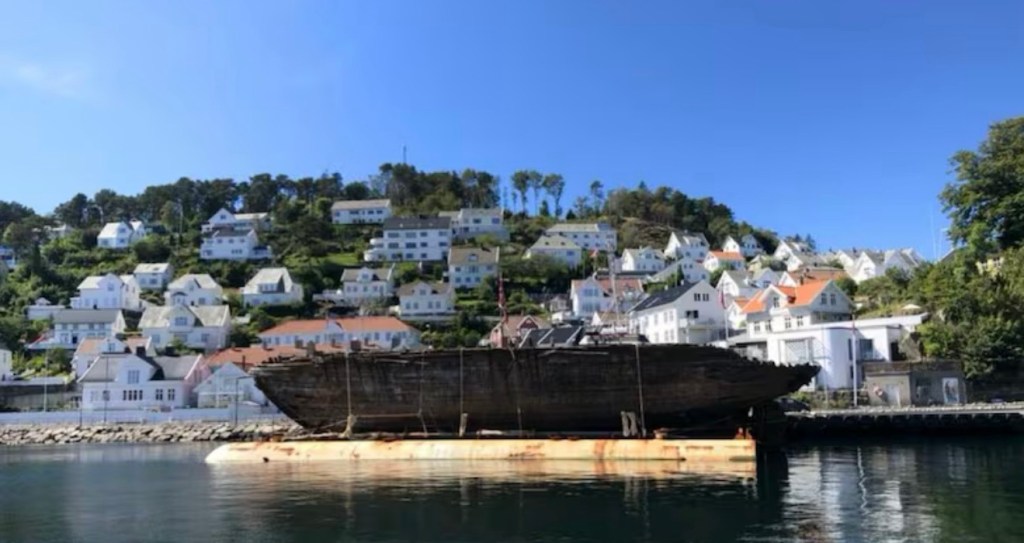
In 2016, a team of four Norwegians launched the ‘Maud Returns Home’ initiative, rescuing the Maud from the shallow coastal waters of Cambridge Bay. The Maud successfully arrived in Farsund, Norway, in August 2018.
Credit: Unknown
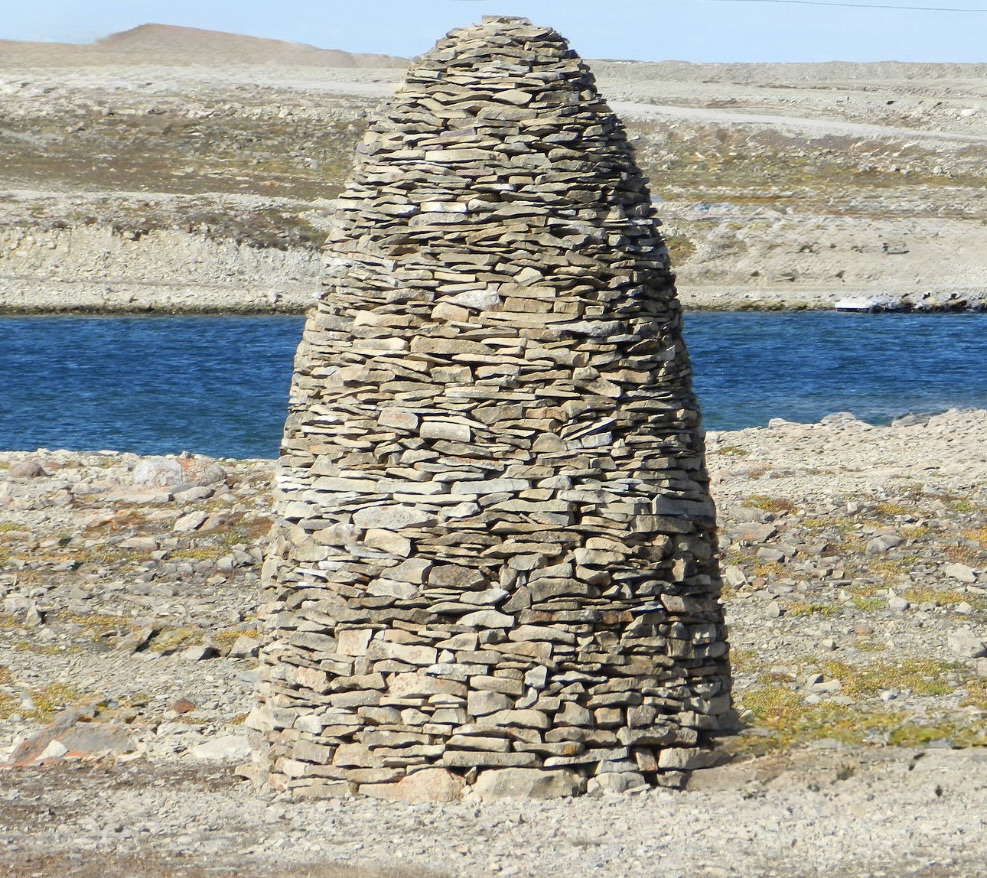
A stone cairn in Cambridge Bay commemorates the Maud.
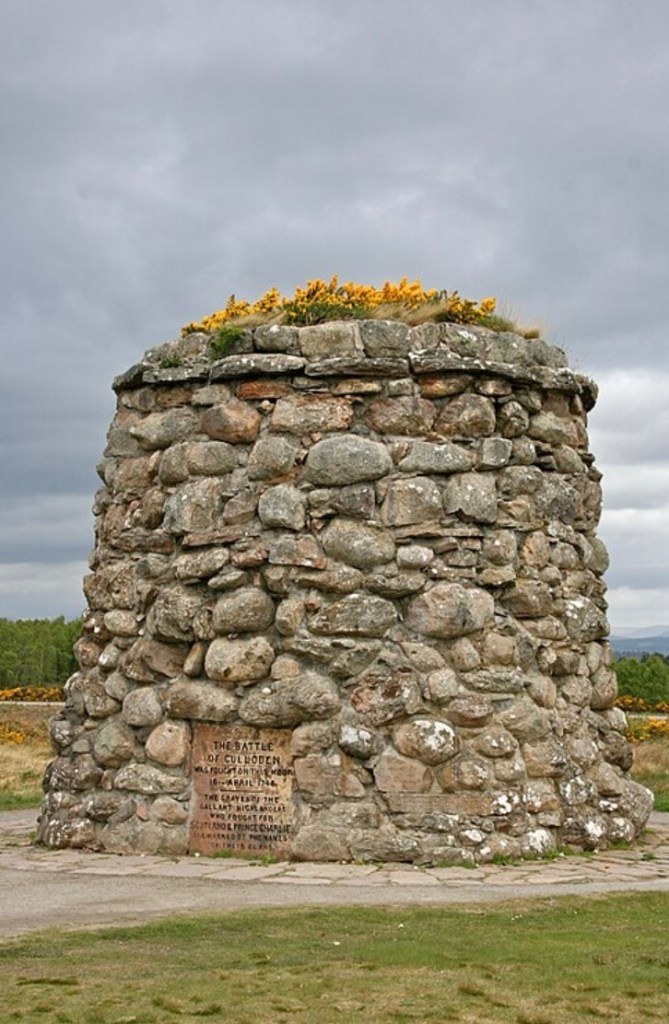
As an aside, it reminds me of the cairn to commemorate the Battle of Culloden on Culloden Moor, Scotland, my birthplace.
Still Sheltering in Cambridge Bay, Nunavut, Arctic Canada.
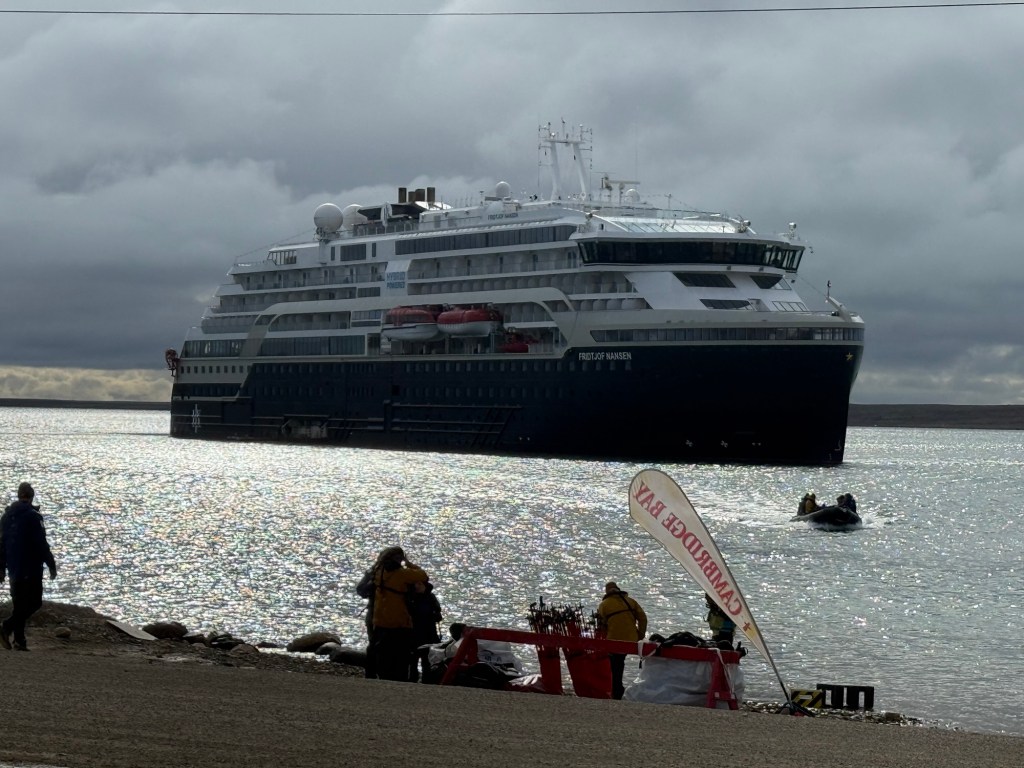
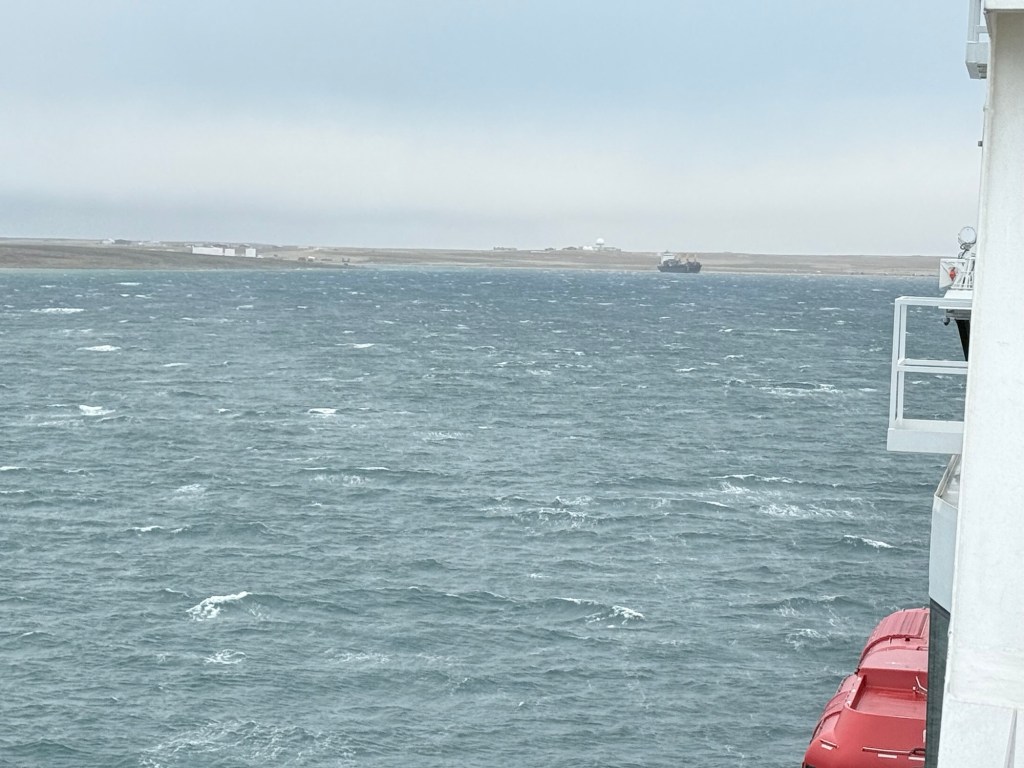
We remain sheltered in Cambridge Bay as the storm outside appears to have been severe, but our skilled Captain maintained the vessel’s stability using side thrusters.
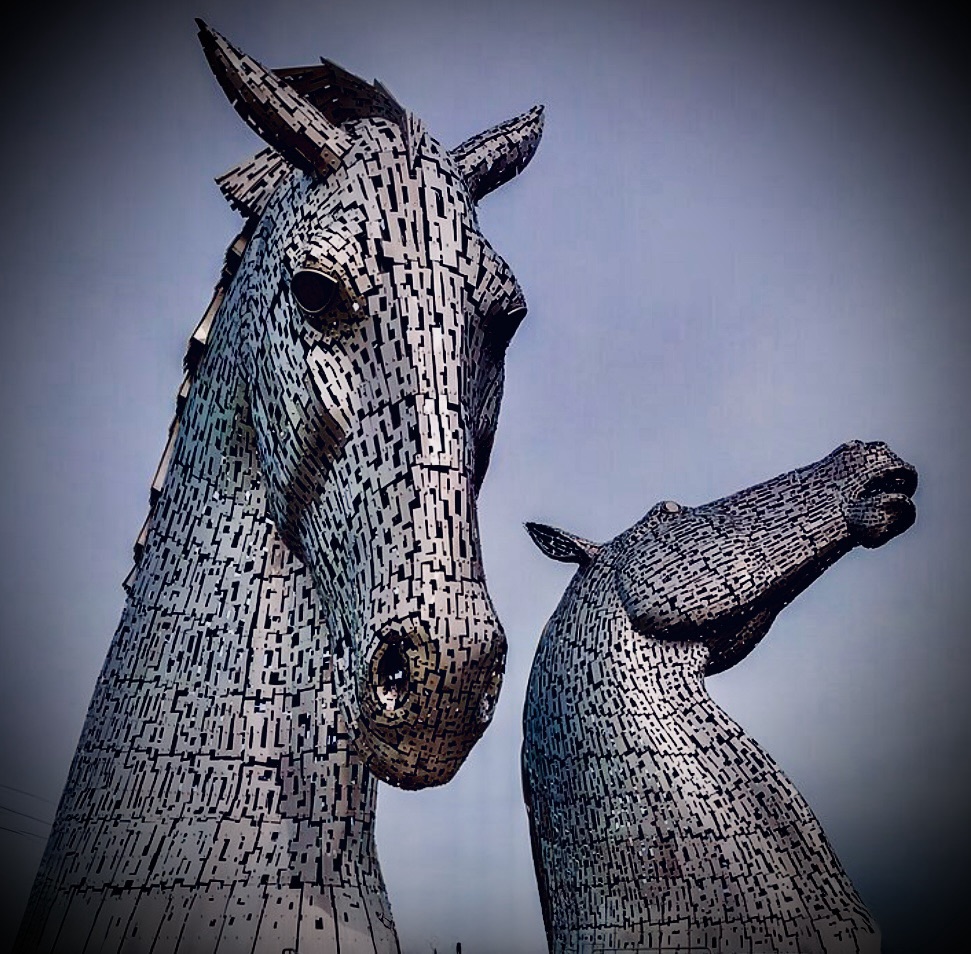
According to secret reports which were leaked to me, two Kelpies on vacation from Scotland attempted to lure the Captain and crew into the turbulent Ocean during the night but were unsuccessful https://www.historic-uk.com/CultureUK/The-Kelpie/
This morning, Zodiac landings commenced as scheduled, with only a few white horses visible.
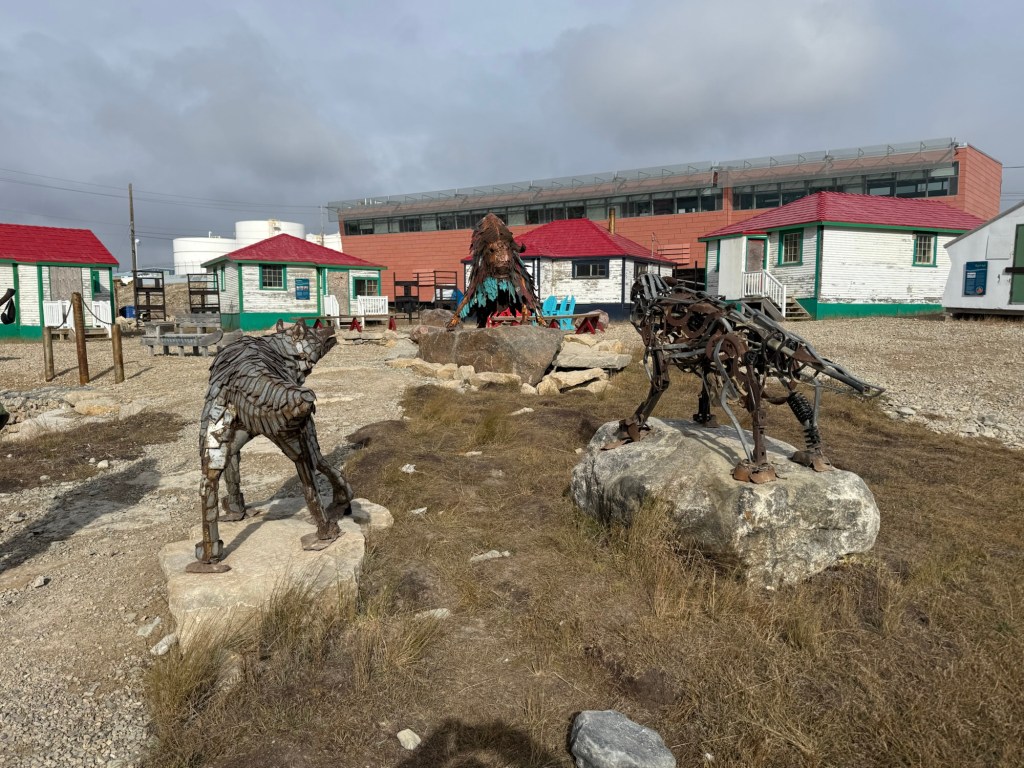
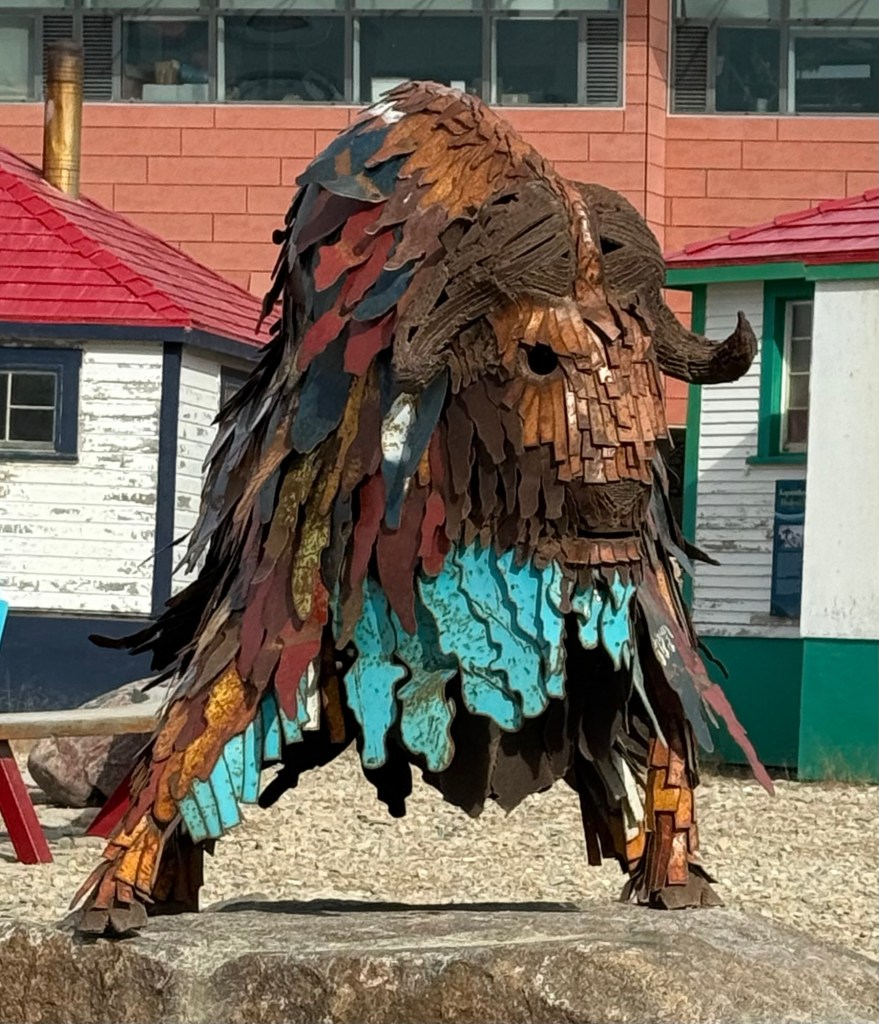
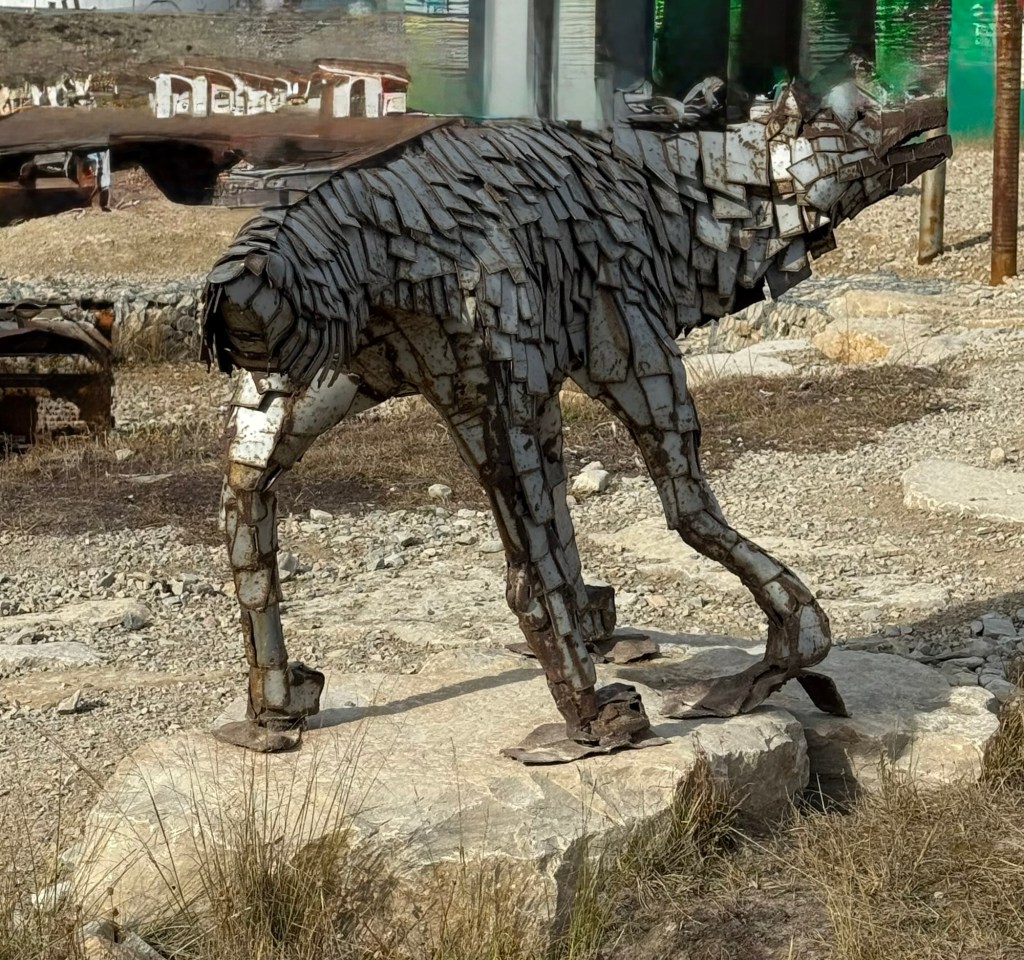
Near the shoreline, metal sculptures of a Musk Ox and Wolves were observed.
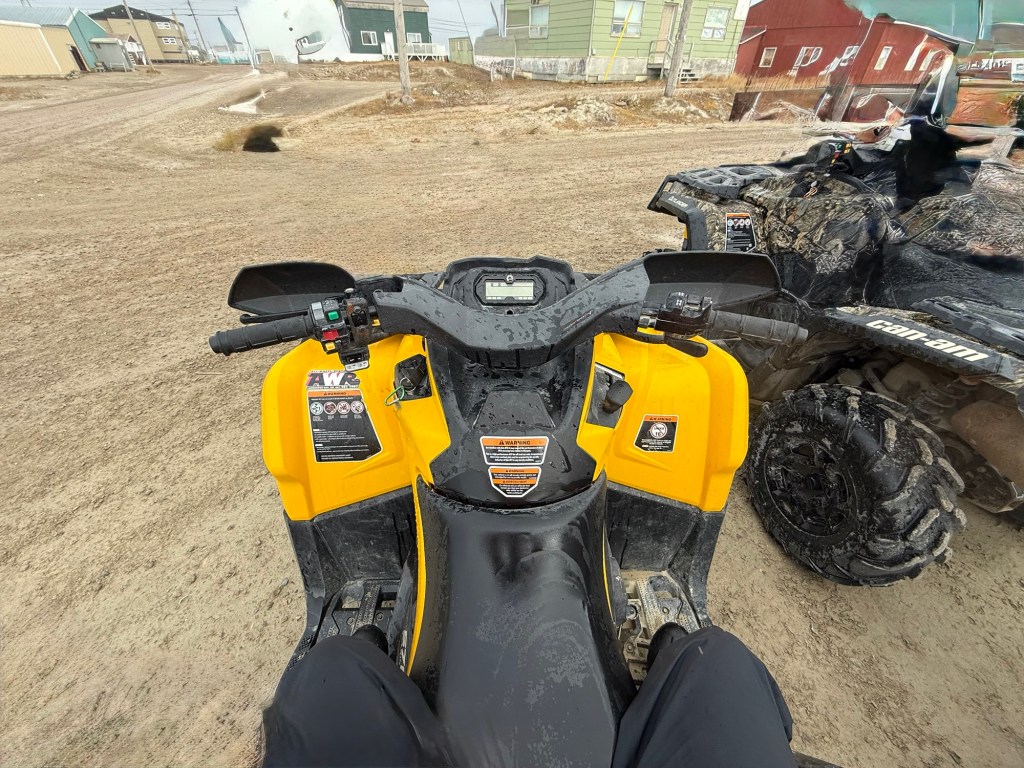
Unfortunately, I was unable to participate in the planned ATV excursion into the tundra. Despite the challenges HX faces in organizing excursions, there is clearly room for improvement. In defense of HX, they are providing a full refund.
Still my little yellow ATV and I had a few moments together which we will cherish forever.
Fortunately, the weather has cleared significantly.
Sheltering in Cambridge Bay, Nunavut, Arctic Canada
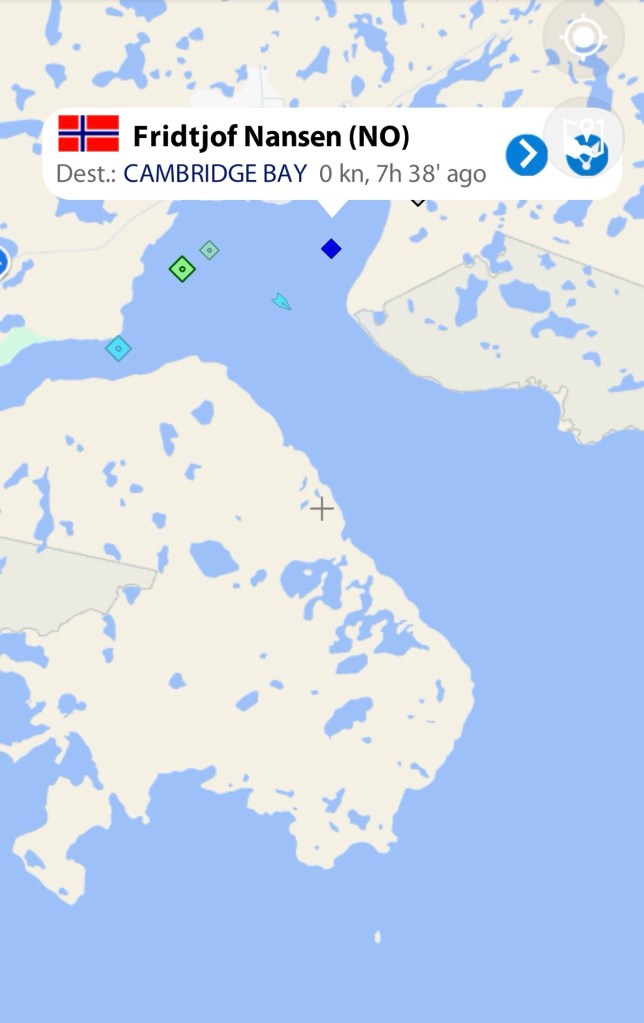
We made it safely into Cambridge Bay. I see what the Captain meant about a tricky port to navigate – he was literally weaving our 21,761 tonne ship between the guidance bouys. Way to go Captain Aron Håpoldøy!
However, so far, the storm has been moderate and we are pretty much sheltered in the bay – maybe it will become more severe later. I hope so….
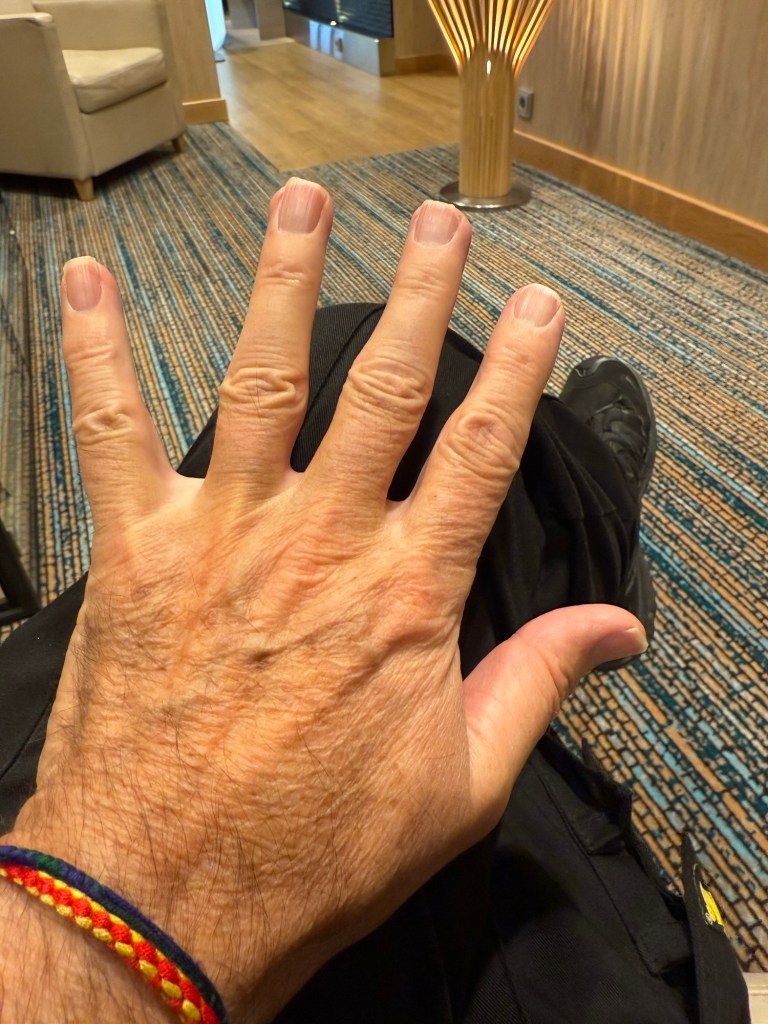
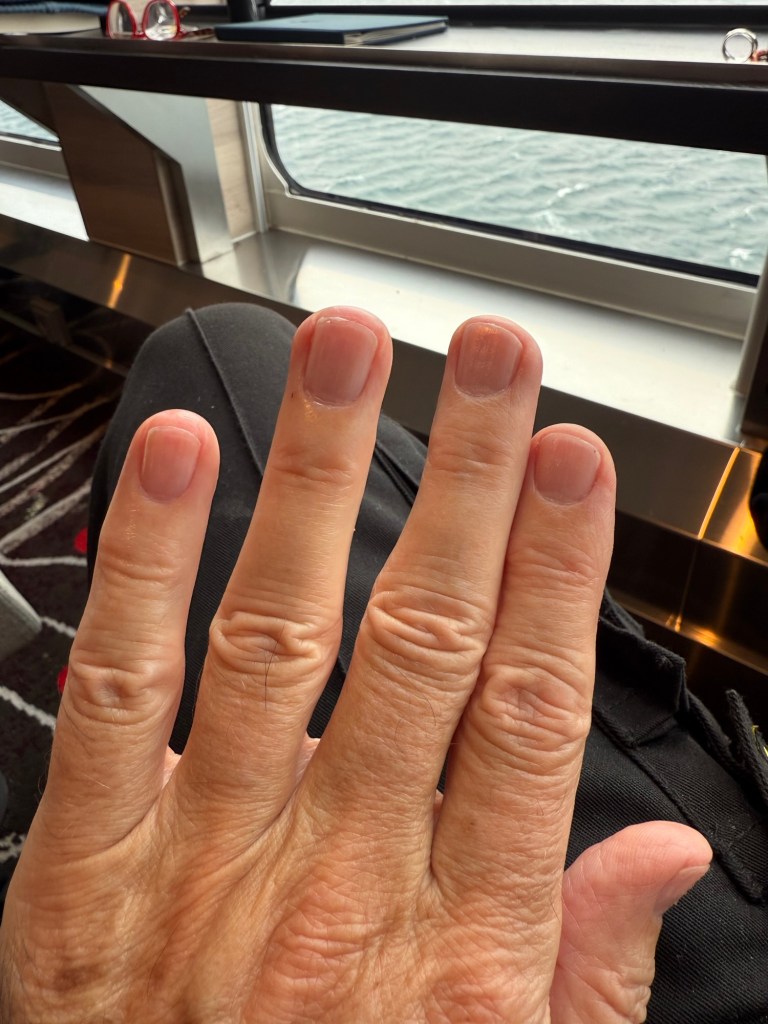
Because of the wind and waves, we were not allowed to go ashore in the Zodiacs. I got my nails done instead – my first manicure!
Before and after…..
BeforeAfter!
In the meantime here is a wee poem…
Cambridge Bay Storm
The wind whispers promise on the Arctic shore, while white horses rise from the blue bay floor.
Harbor boats lie moored and bob, Water swallows land, yet resilience guides us through life’s ebbs and flows.
And in the wind, a quiet strength prevails, a timeless hymn of northern days that never fail.
Rooted, yet free in nature’s grasp, a storm-bound traveler on icebound land, transformed.
Storm!! Cruising past Jenny Lind Island towards Cambridge Bay, Nunavut, Arctic Canada
We were meant to stop and do landings/hike at Jenny Lind Island, named for the Swedish born opera singer, Jenny Lind. You may recall that the character Jenny Lind featured in the movie The Greatest Showman, where she sang the beautiful song “Never Enough” (https://youtu.be/kUkRoIMyqFo?si=YUHFZeT9h4ssaK53)
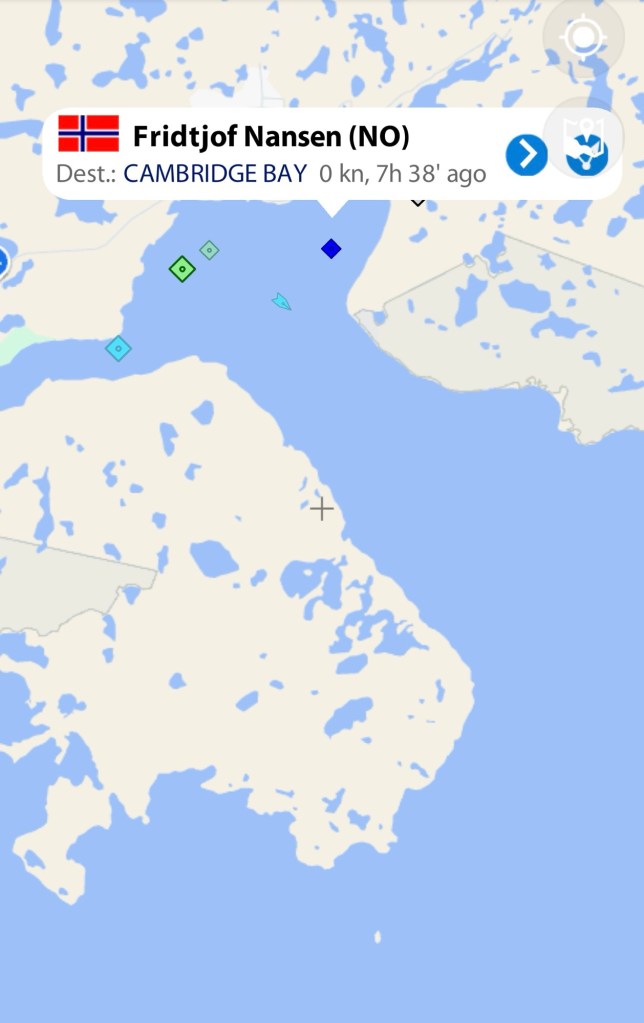
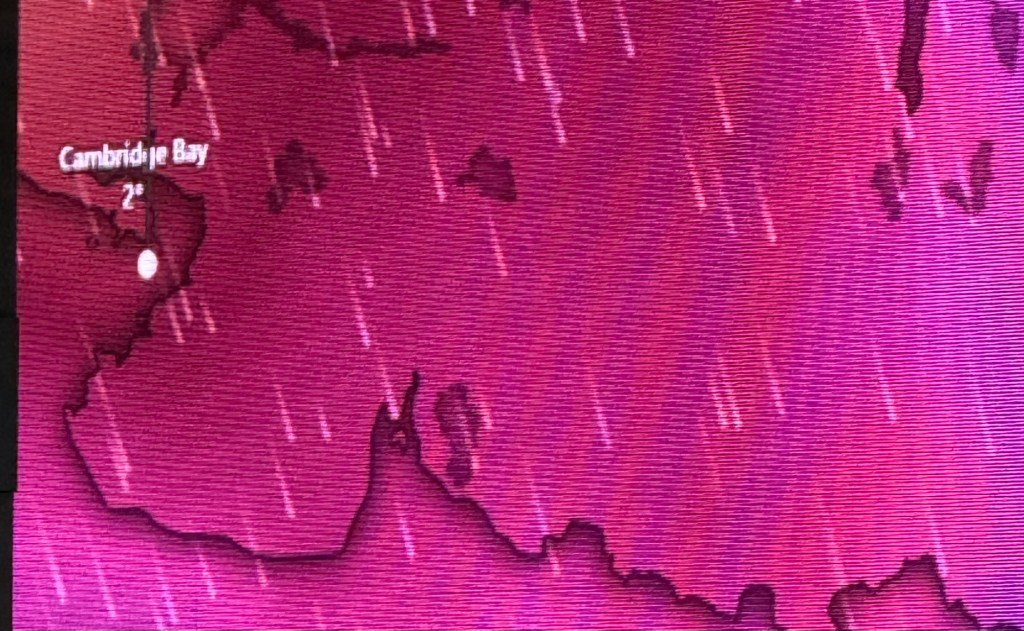
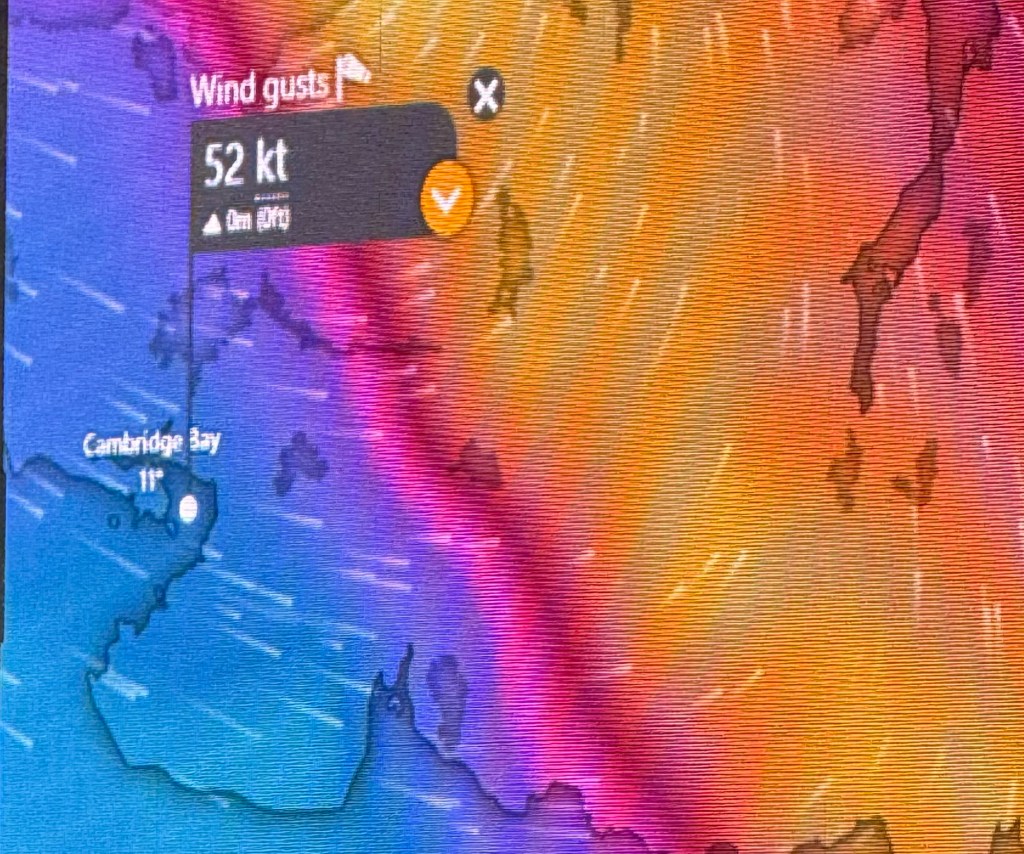
However, due to approaching severe weather (Force 10 gale) we are now racing straight for the shelter of Cambridge Bay.
Winds:
– 48–55 knots – 55–63 mph – 89–102 km/h – 24.5–28.4 m/s
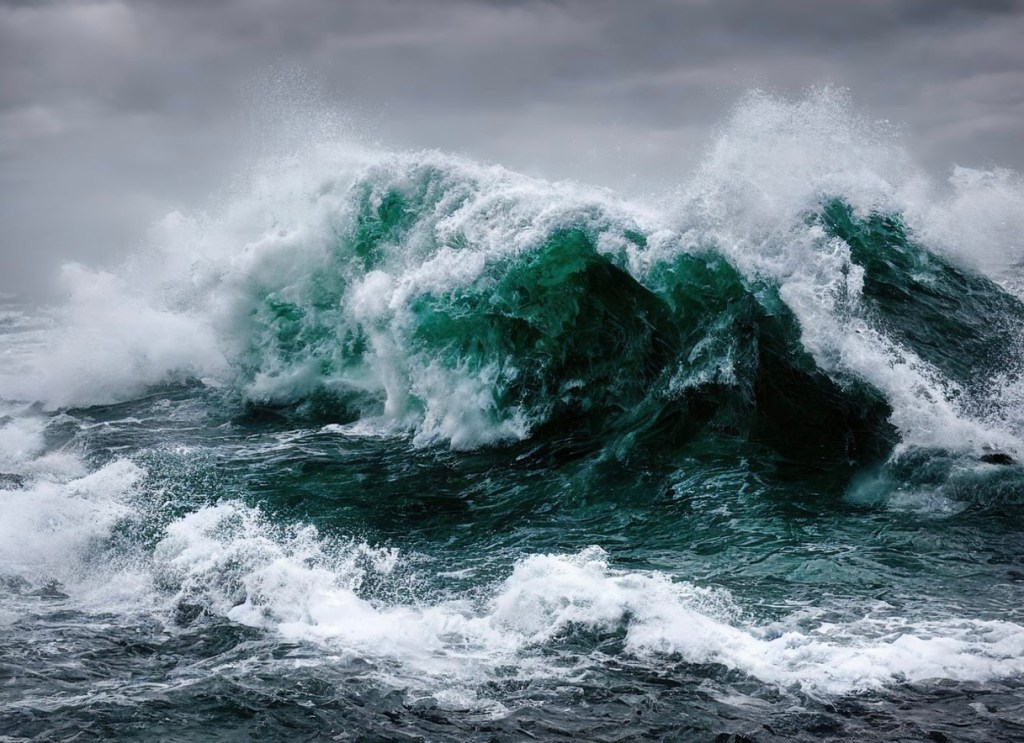
Waves:
– 29–41 ft
– 9–12.5 m
The problem with Cambridge Bay is the entry is very narrow and it’s difficult to get in esp. in a storm. So we have a small window to gain entry to the safety of the port.
How exciting! Hopefully a more interesting post for you guys later today.
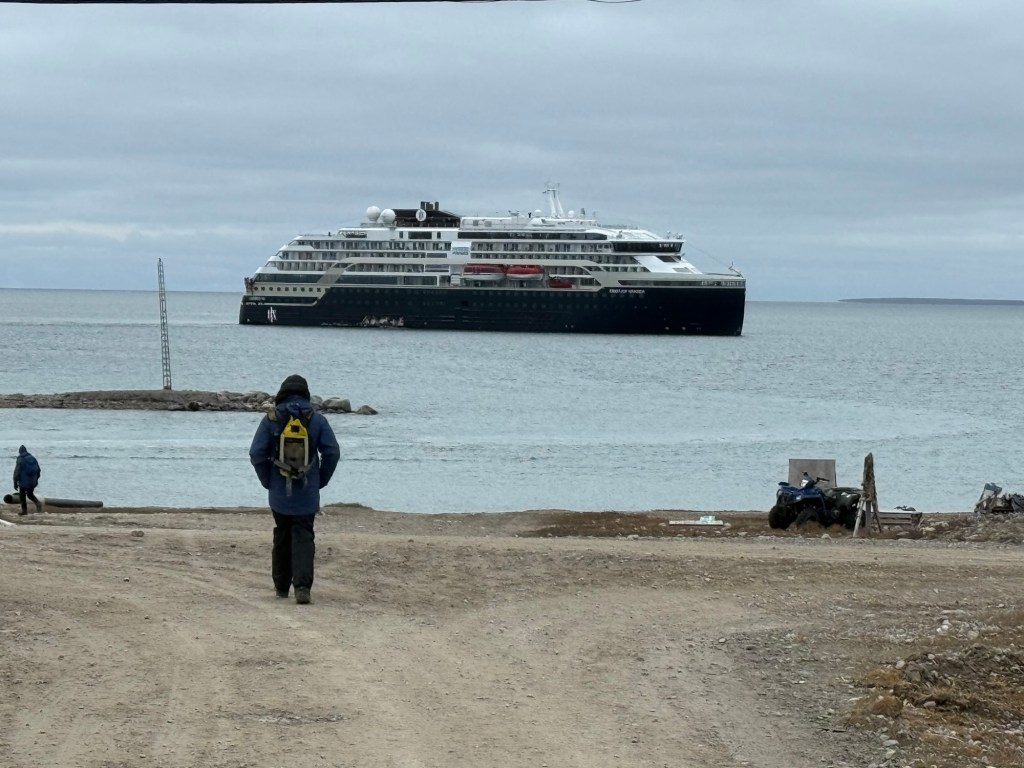
Upon arrival by zodiac, we registered and met some of the friendly locals.
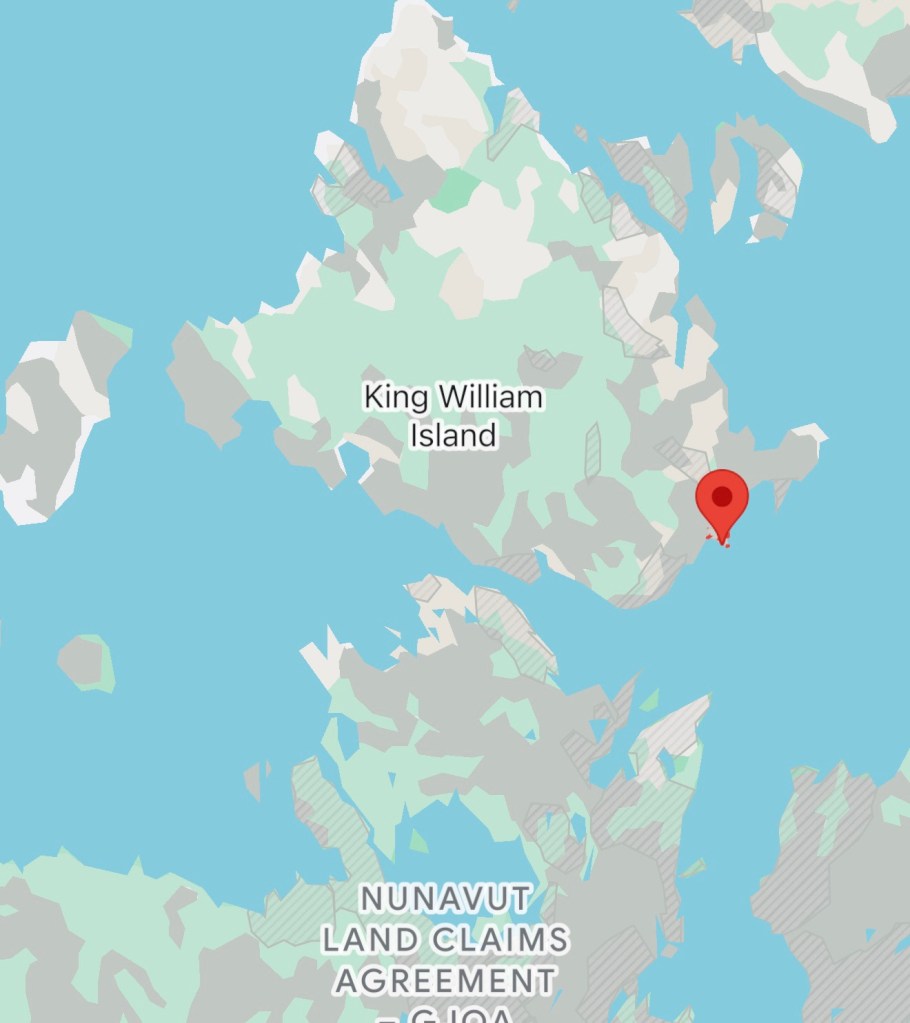
Gjøa Haven, also known as Uqsuqtuuq in Inuktitut, translates to “place of plenty blubber,” referring to the abundance of sea mammals in the area. Alternatively, it could also refer to some of us guests on MV Fridjtof Nansen who have been indulging in the Arctic cuisine. One guest even remarked that my t-shirts were too tight, a comment that was both shockingly rude and potentially true.
Gjoa Haven is renowned for its excellent dog sledding opportunities and diverse wildlife, including caribou, muskox, polar bear, geese, swans, falcons, and ducks. During our visit, we spotted some dogs. Crickets…
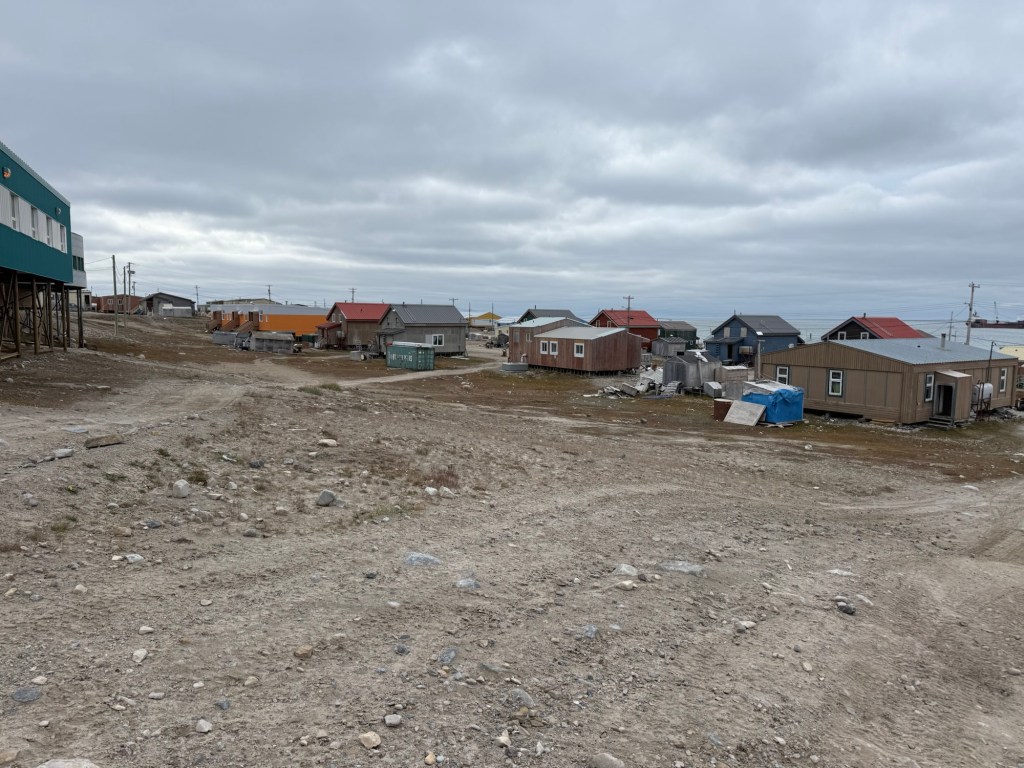
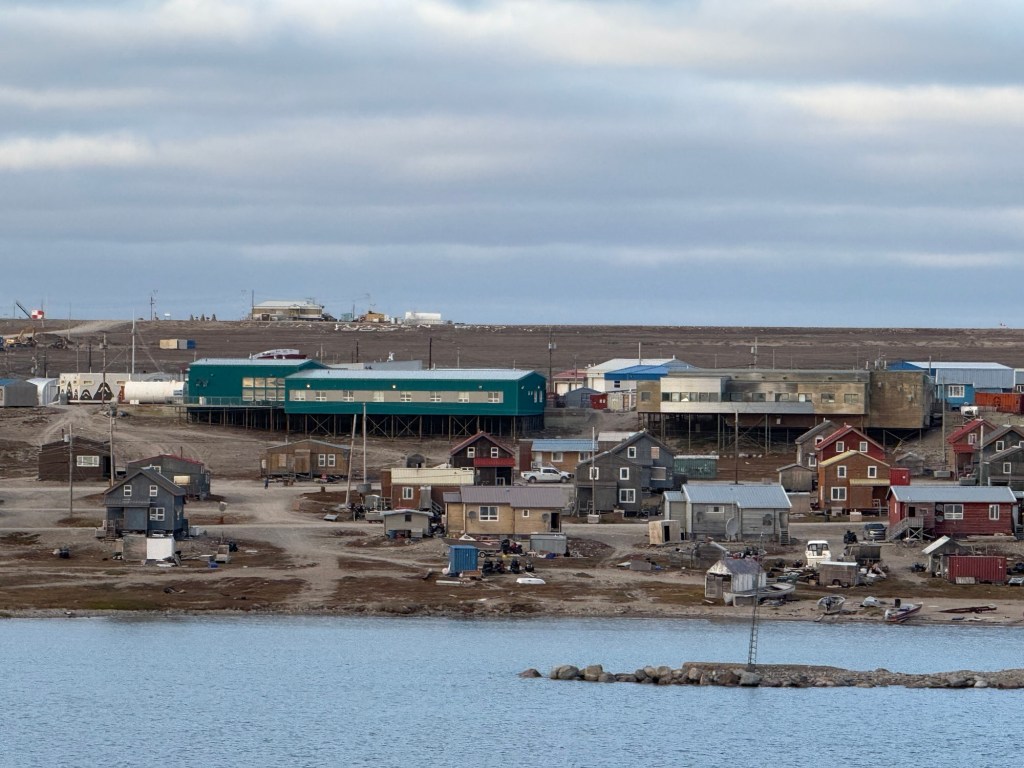
Historically, the town’s population has grown significantly, from 110 residents in 1961 to 1,349 in 2021, according to the census, as many Inuit have relocated from traditional camps to access healthcare and educational facilities.
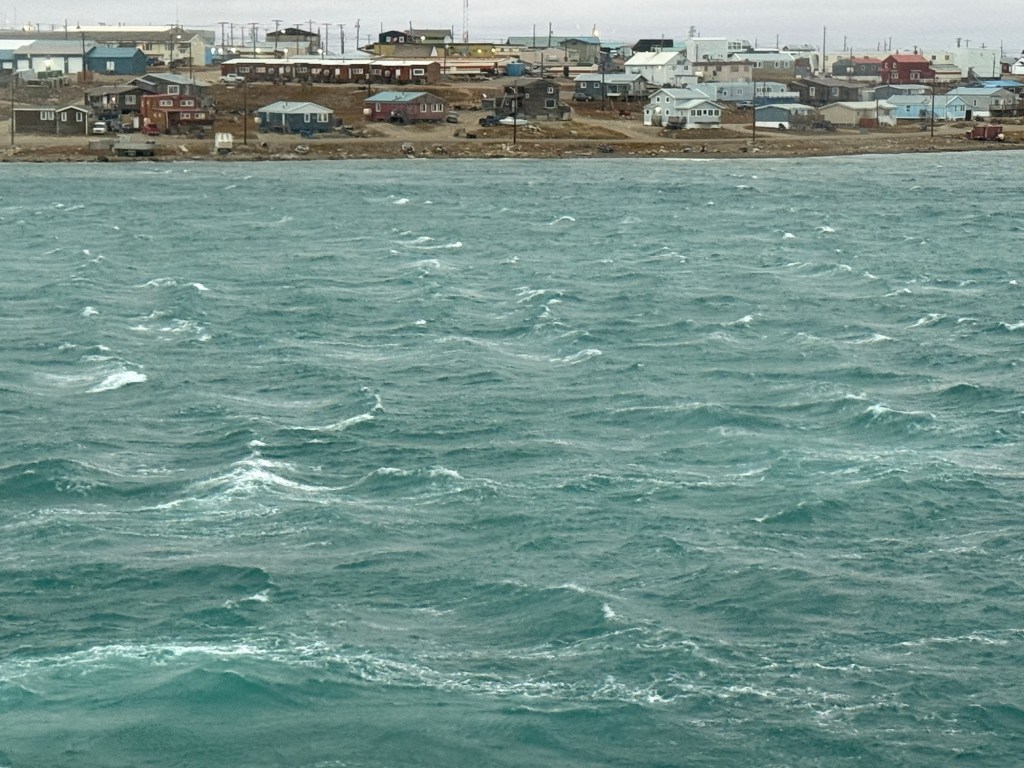
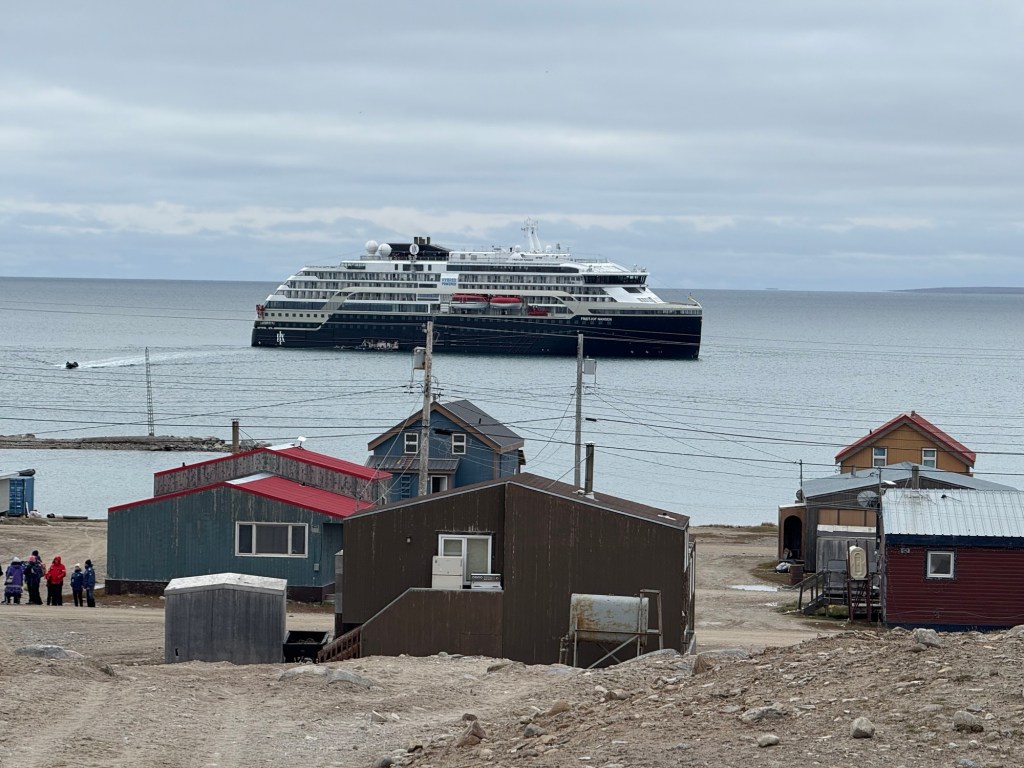
The town comprises numerous cabins, each with its unique appearance.
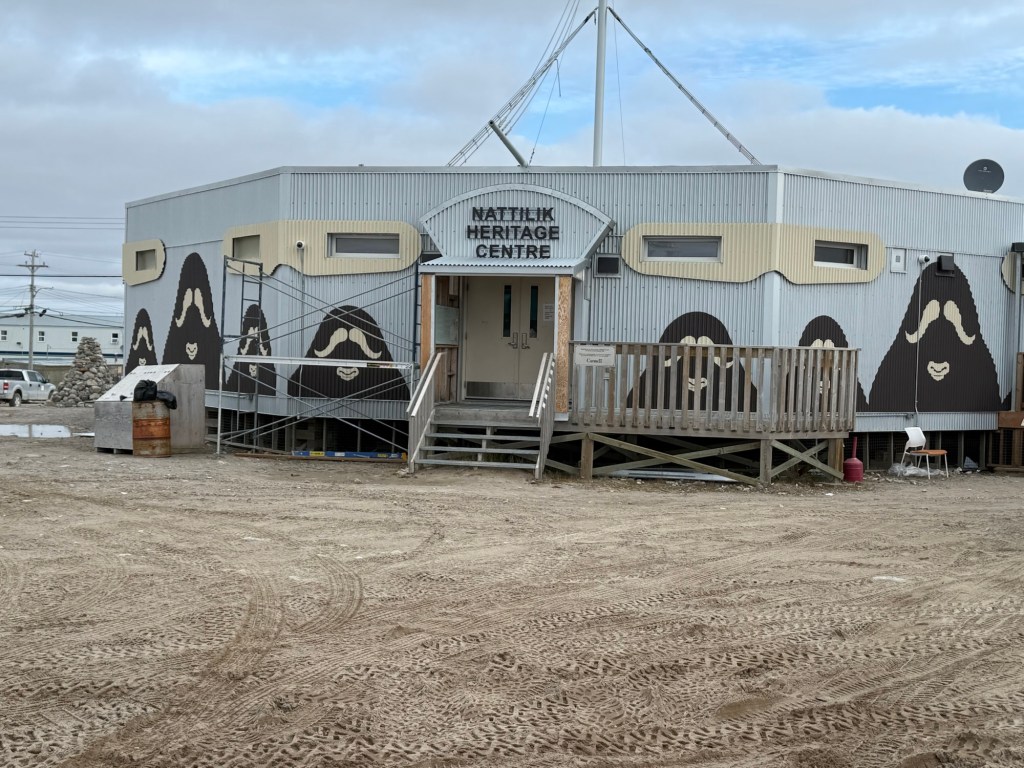
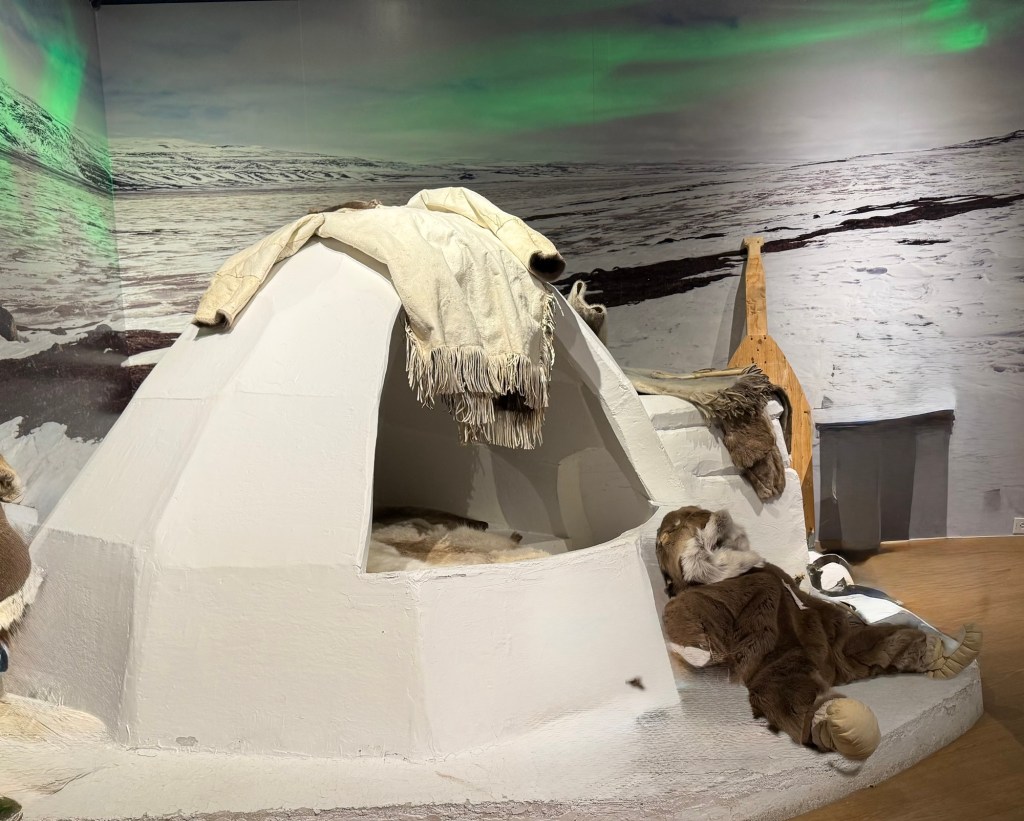
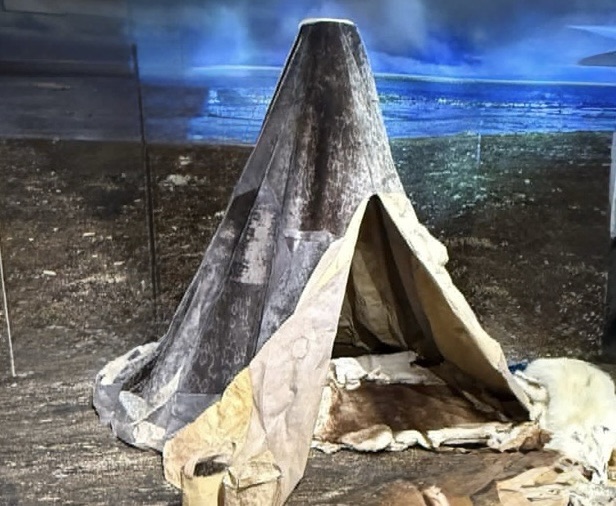
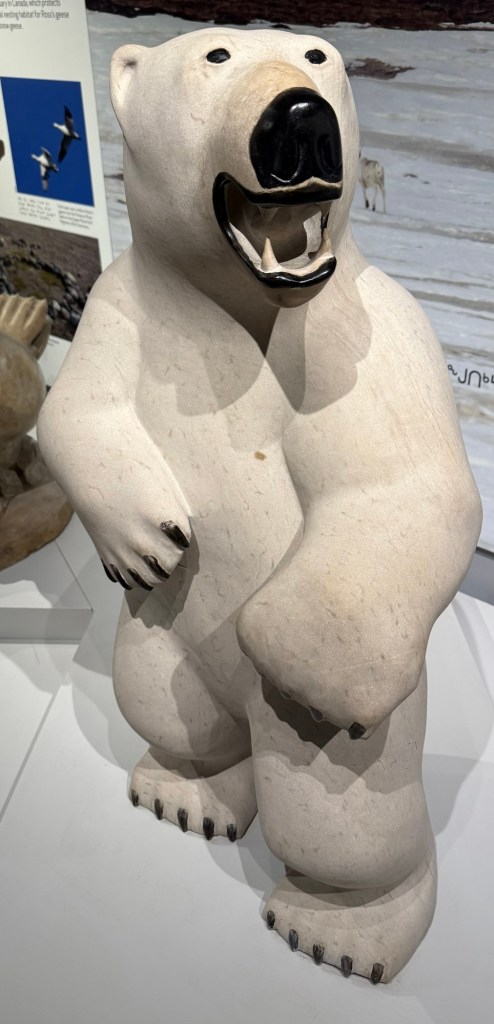
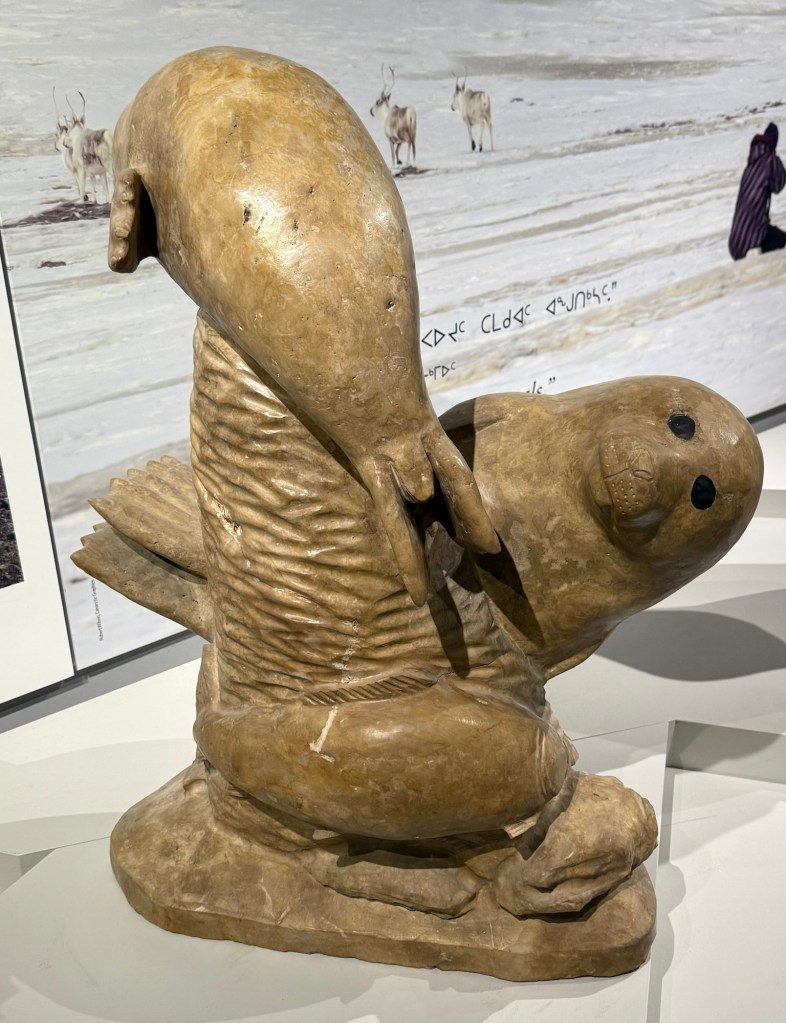
The Naeselik Heritage Centre showcases various artifacts from the Inuit past, although it was extremely hot inside during our visit.
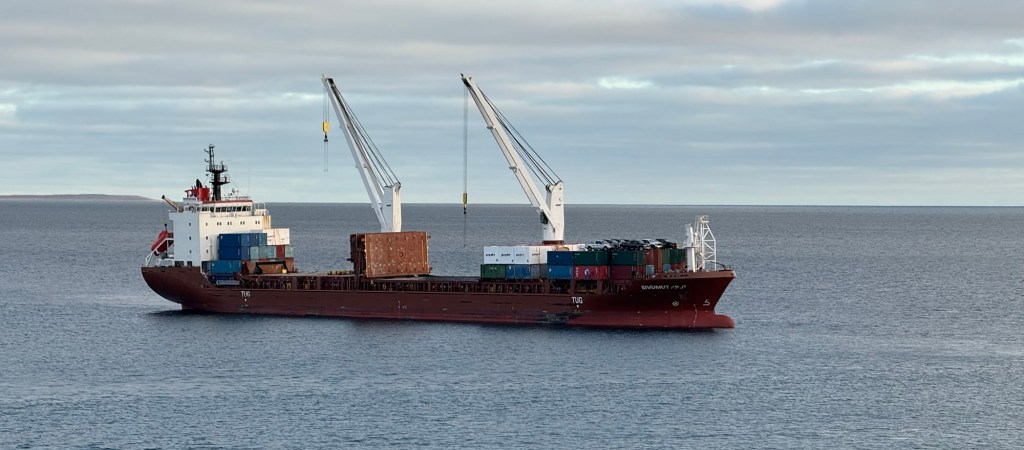
The community is served by the Gjoa Haven Airport and an annual supply sealift; this ship was in during our visit.
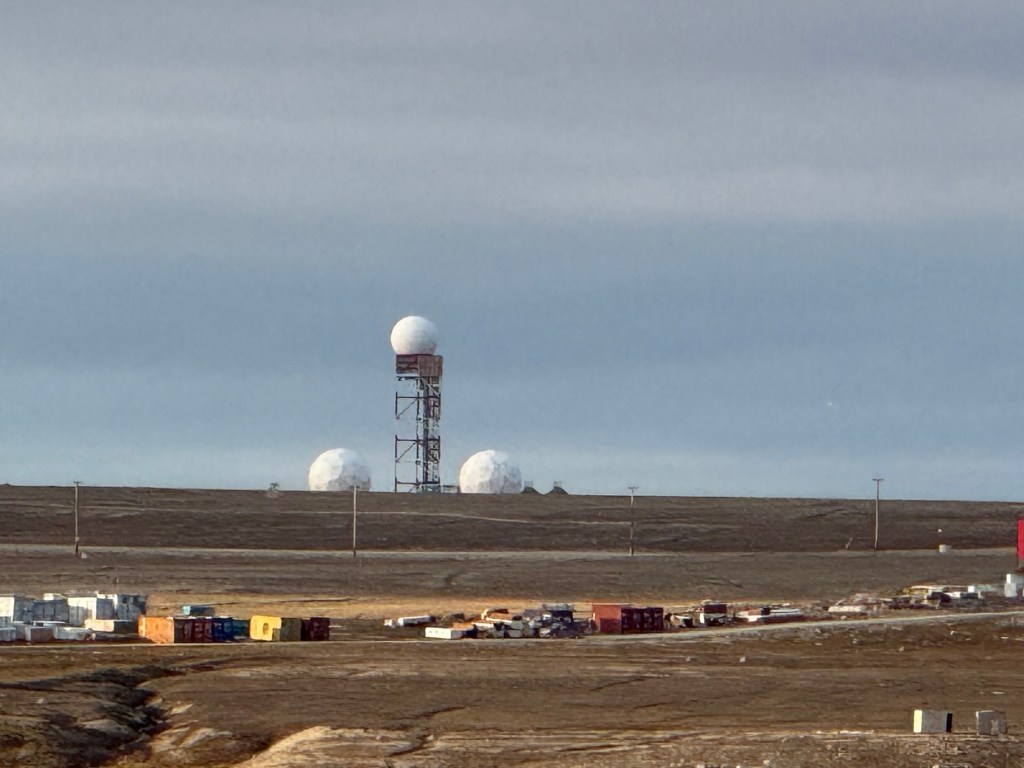
The area is home to CAM-CB, a North Warning System site for incoming missiles. Comforting.










 seetheworldtravelblog