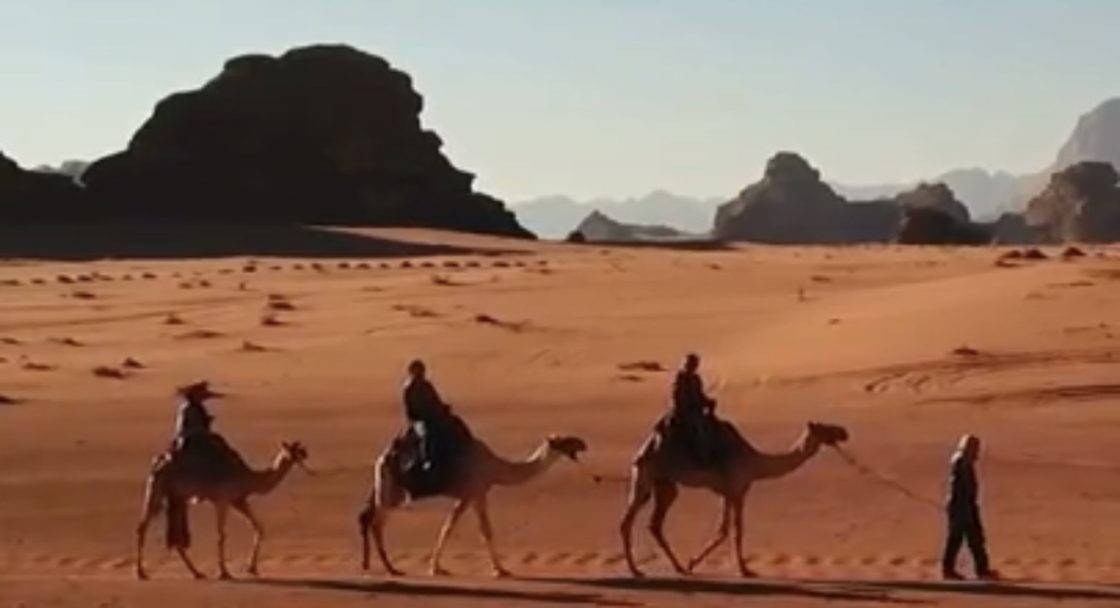
Morning Itinerary: The Nile Dams, Cruising the Nile on Feluccas, Motor Boating to Agilkia Island and Temple of Philae, Nubean Culture and Dancing
~ 40°C/104°F
By Paul Bryers
A comprehensive understanding of the Aswan area necessitates a basic knowledge of the city’s location and the dams.
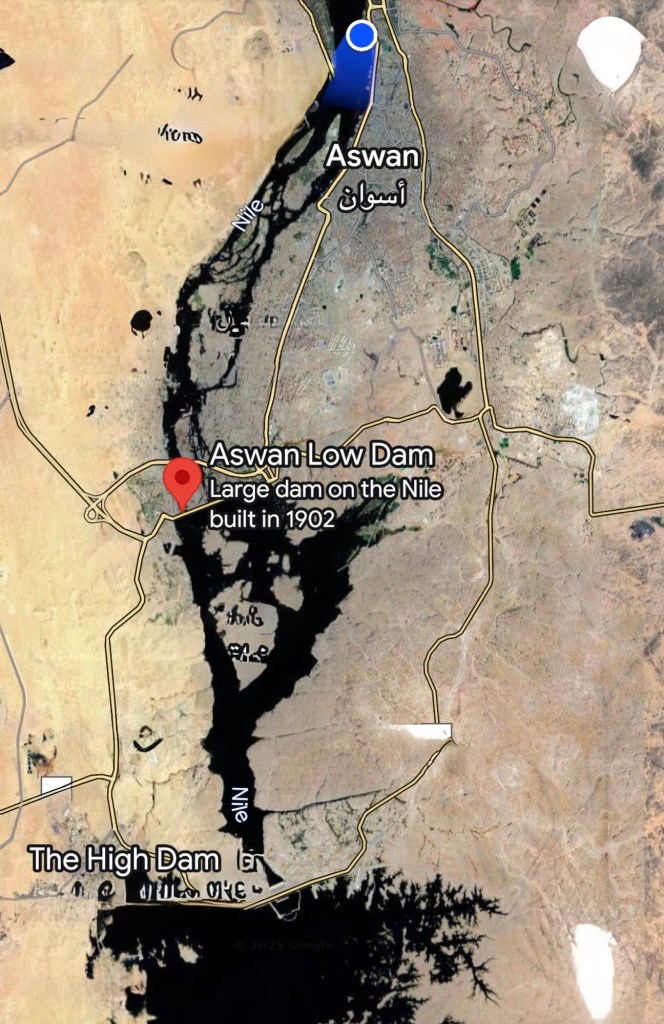
Aswan City, where our AMALilia was docked, is situated downstream of both dams.

Between the City and the first dam are several islands, including Elephantine Island as mentioned later.
There are two Aswan Dams: the older Low Dam constructed by the British and the newer High Dam built by the Egyptians, located further upstream.
The British constructed the Low Dam between 1899 and 1902 to facilitate irrigation. However, due to inadequate water storage capacity, it underwent two expansions, ultimately leading to the construction of the larger High Dam further upstream.
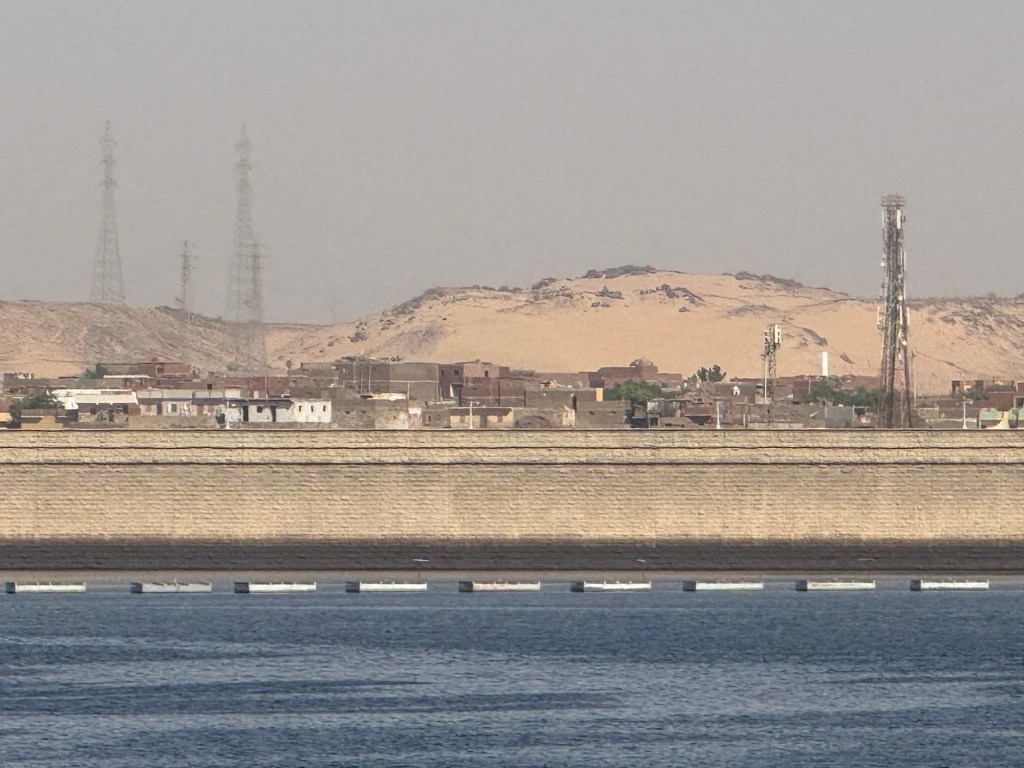
Development of the High Dam commenced in 1960 and was completed in 1968, with its official inauguration taking place in 1971. Approximately 57 million cubic yards of earth and rock were utilized in the dam’s construction, resulting in a mass several times that of the Great Pyramid at Giza.
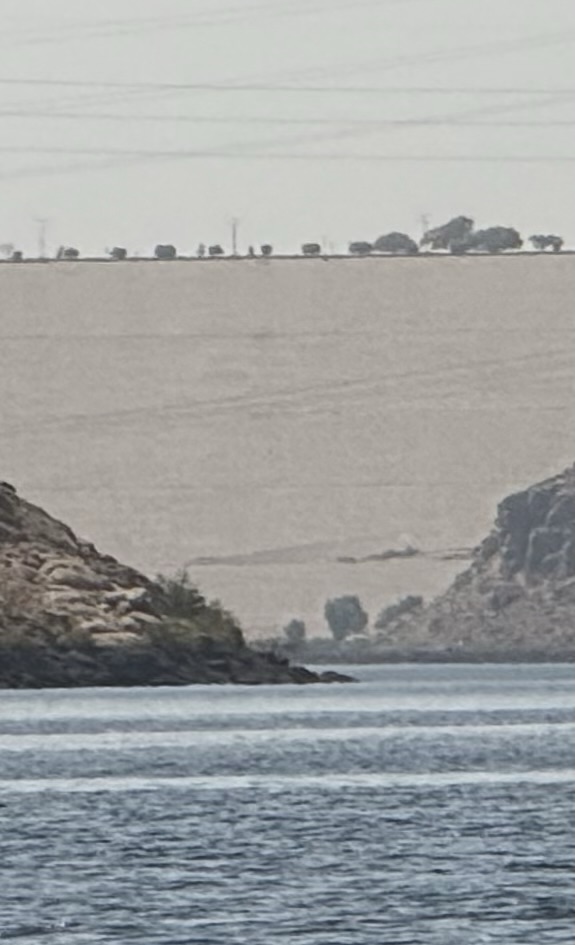
The massive water reservoir created by the dam, measuring 300 miles in length and 10 miles in width, is known as Lake Nasser.
The construction of Lake Nasser necessitated the resettlement of 90,000 Egyptian laborers and Sudanese Nubian travelers.
Additionally, numerous ancient structures, most notably the carvings of Abu Simbel, required relocation.
So, having set the scene…
Elephantine Island:
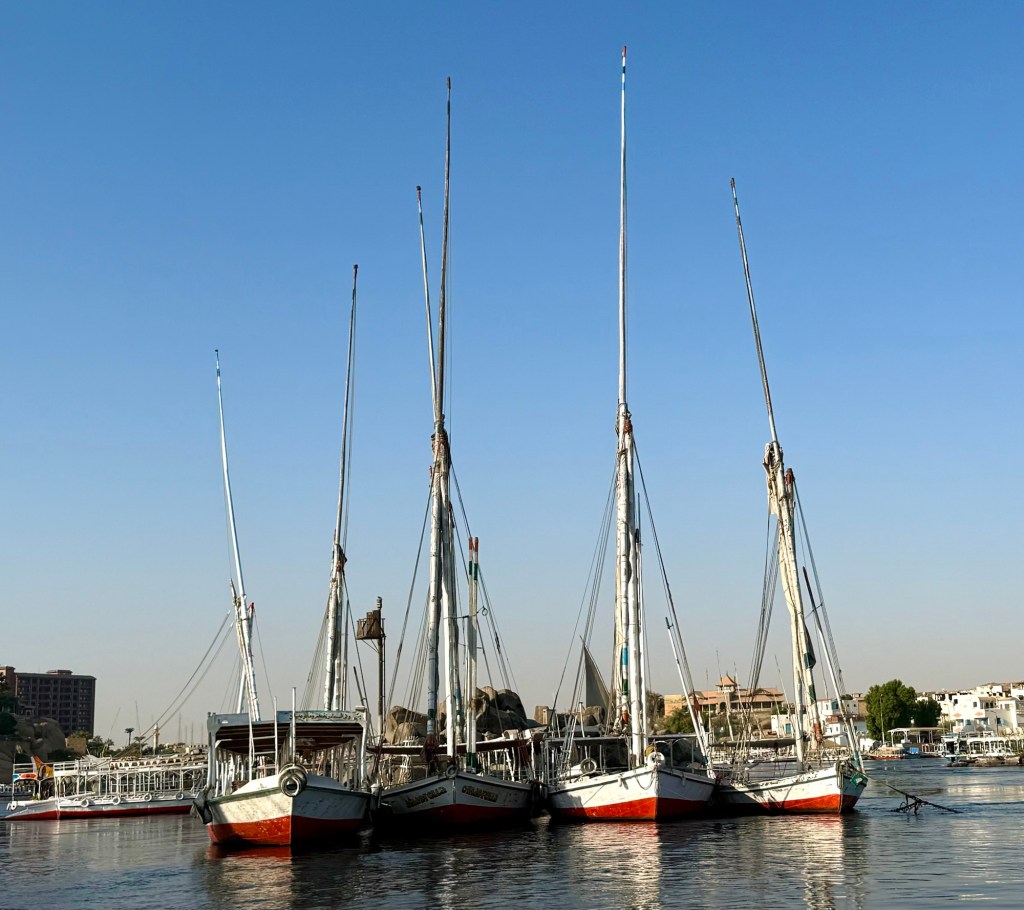
We embarked on a peaceful felucca ride from our ship docked in Aswan City, to pass through Elephantine Island.

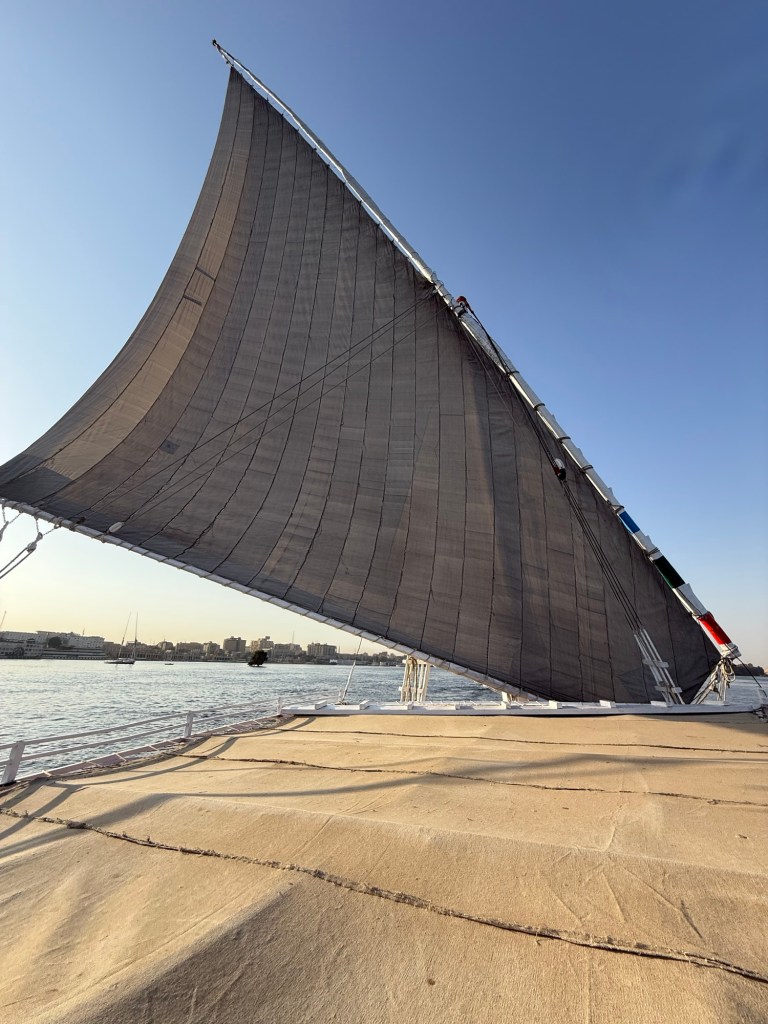
Our wonderful AMA Guide Mohammed was there to set the scene…

….and the crew entertained us…
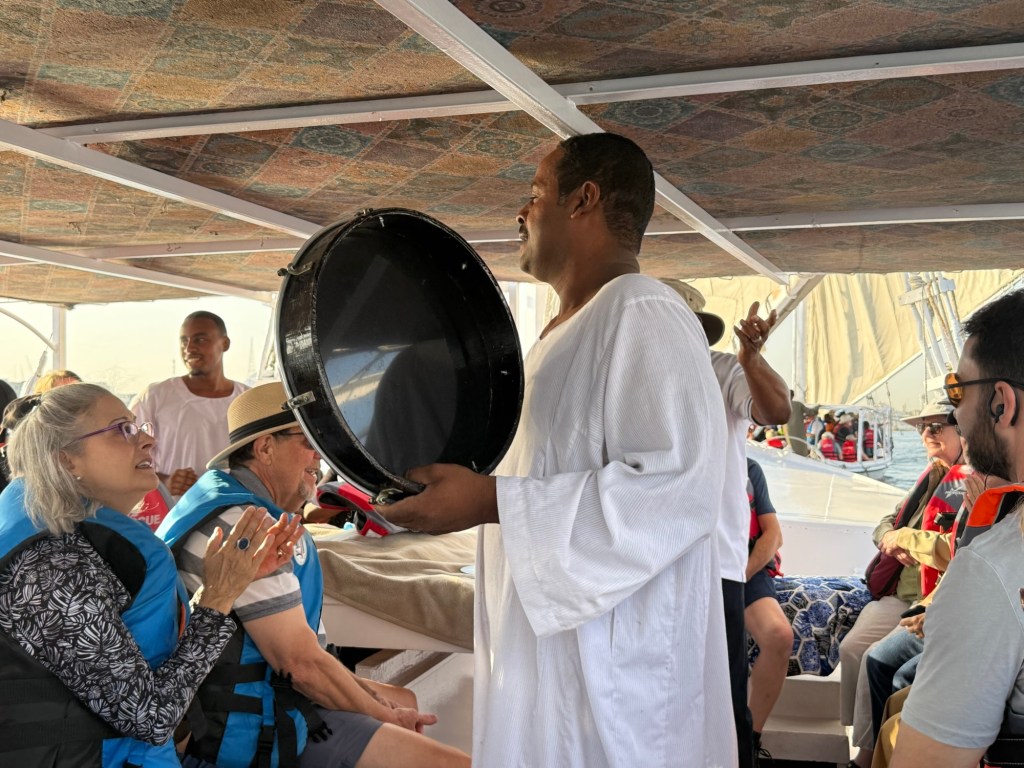
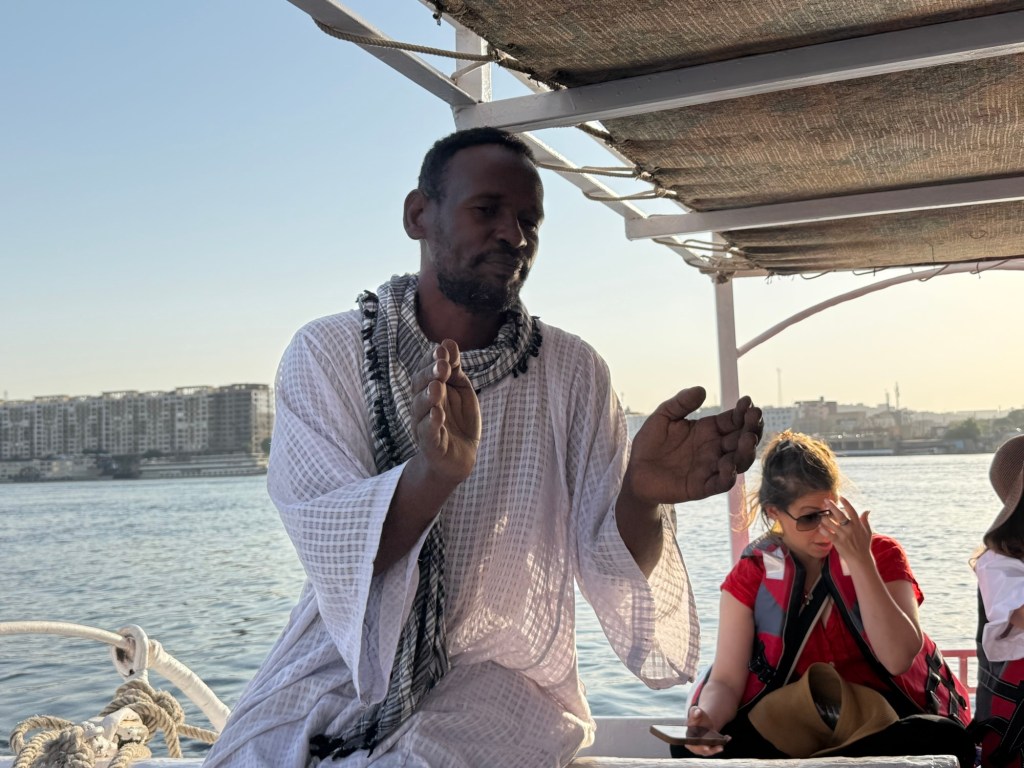
Elephantine Island, situated on the west bank of the Nile, flourished as a significant trading center during the Pharaonic era. Locals claim the island is home to the legendary Egyptian god Khnum.
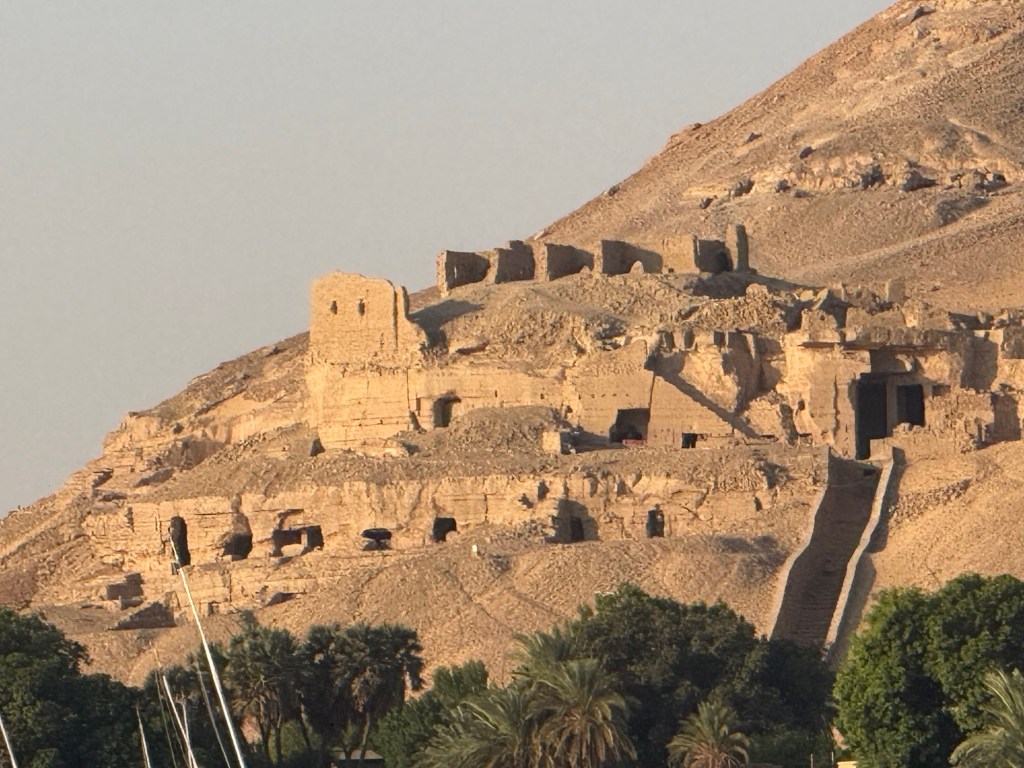
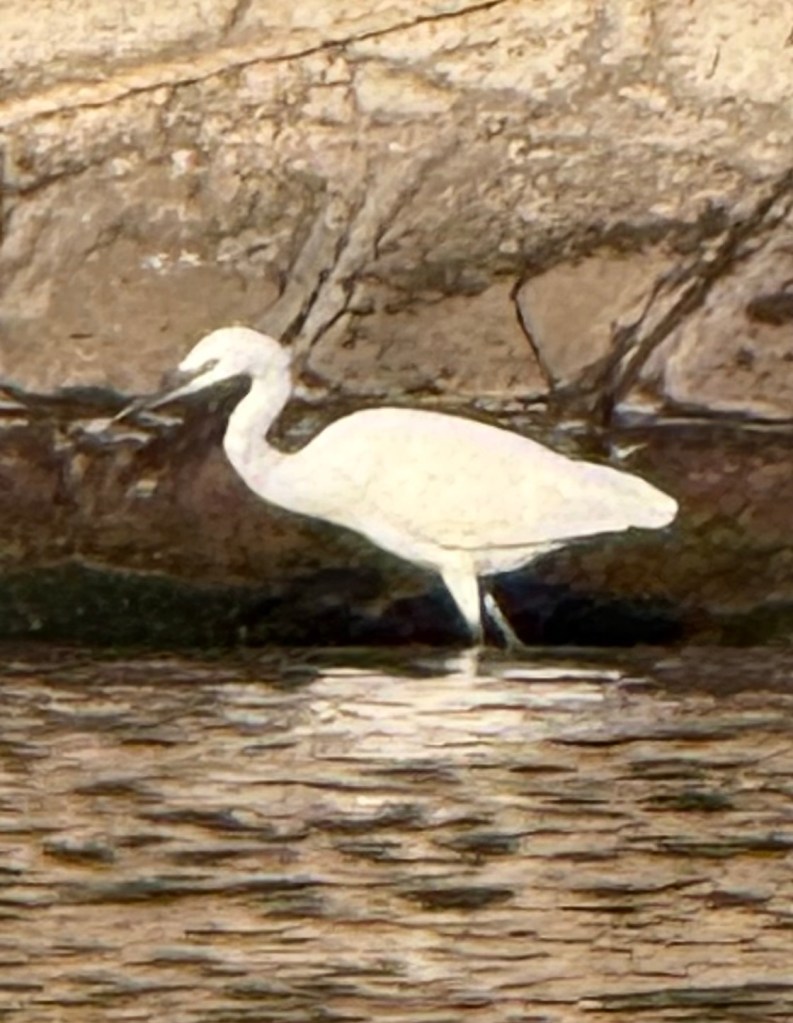
Herons and egrets were fishing or flying around.


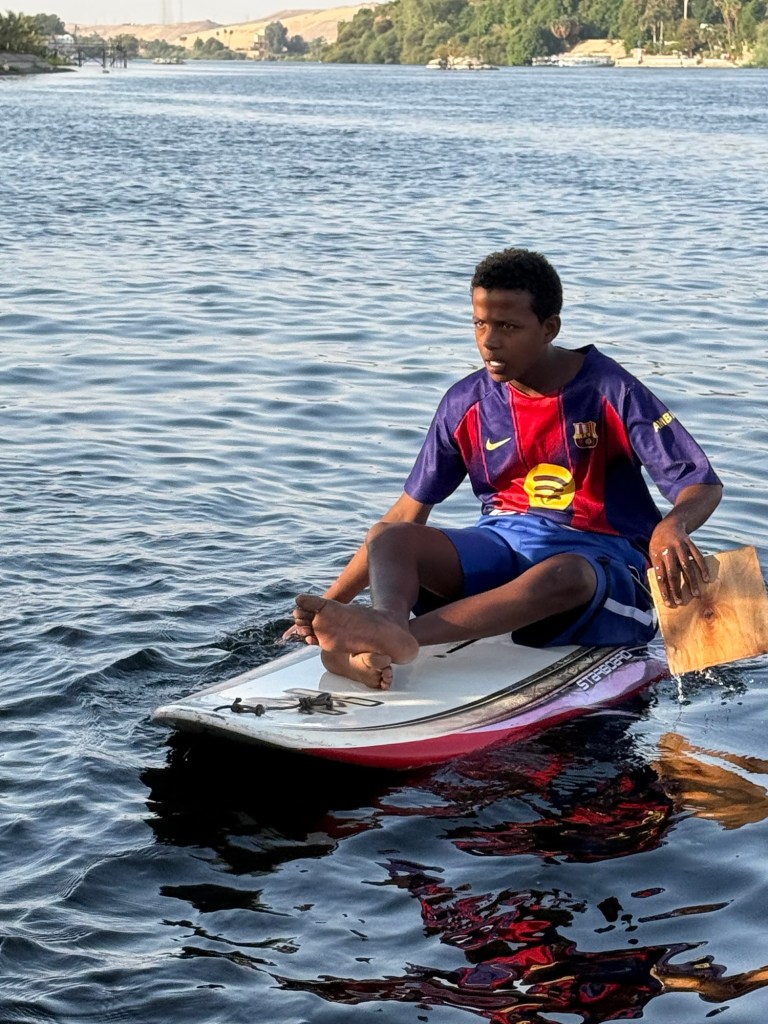
In addition, some very small friendly pirates were singing for a donation. Bless.
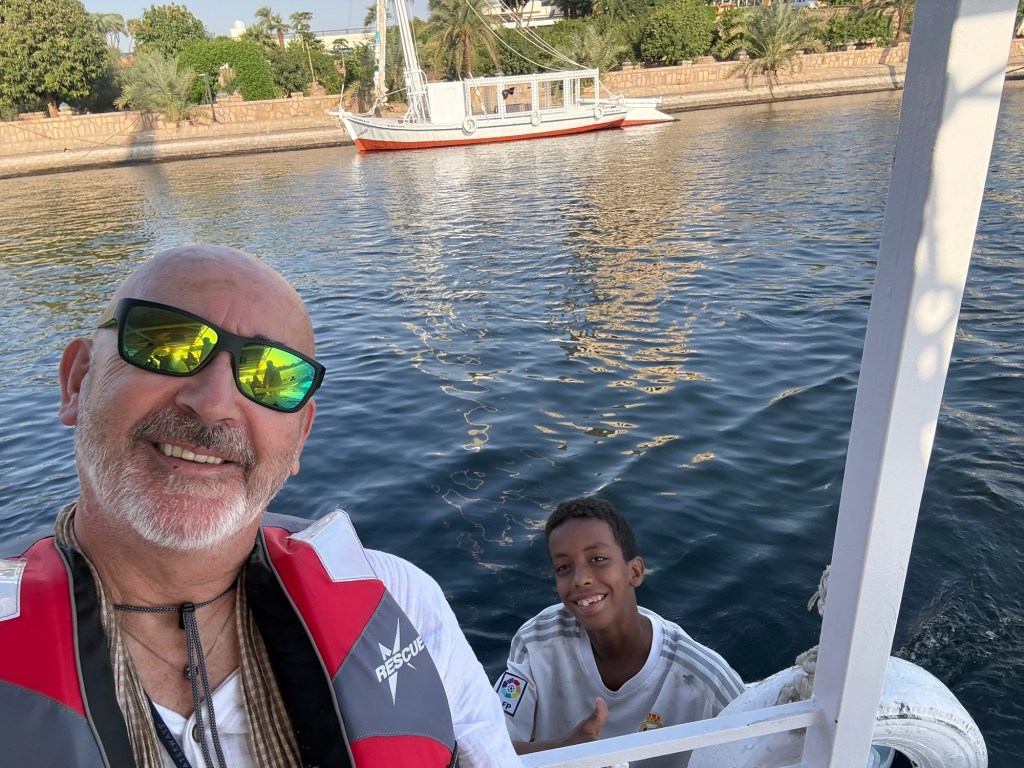
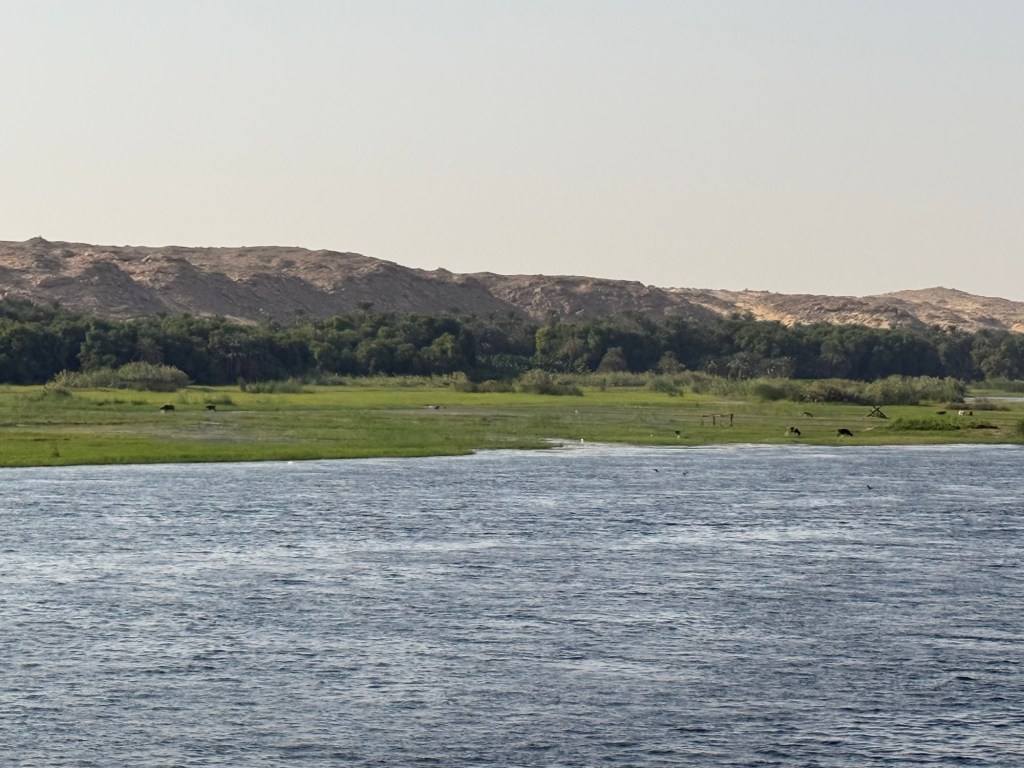
Between the two dams lies an engorged Nile, with several islands within. We explored two of these islands by motorboat.

Agilkia Island and Temple of Philae:
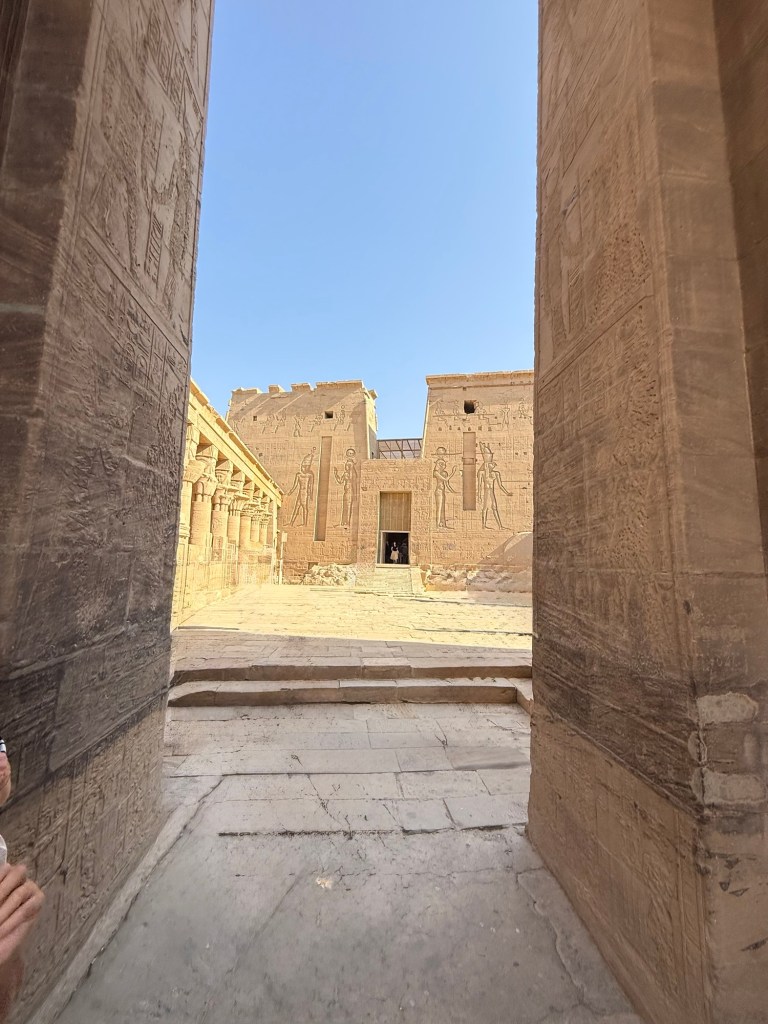
This island home to the UNESCO-designated Philae Temple complex, boasting one of the most stunningly restored and preserved hieroglyphs in Egypt. Constructed between 380 BC and 362 BC, the temple is dedicated to the goddess Isis, the wife of Osiris and mother of Horus. While Isis’ temple is impressive, Horus’s temple is even more impressive.

Key features of the Temple include:
A large first pylon gateway with outer courtyard of columns
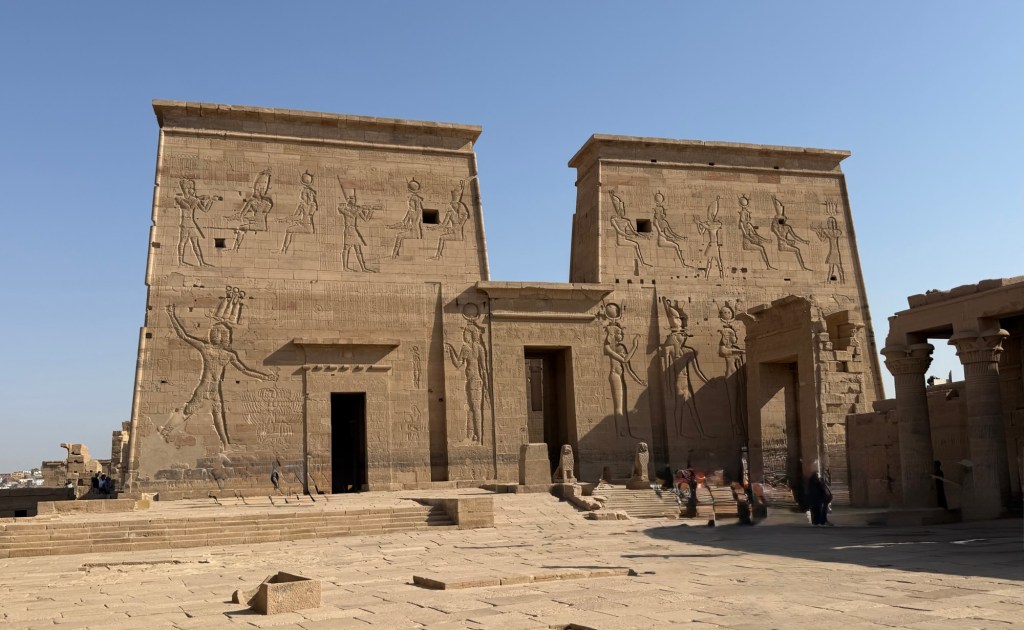
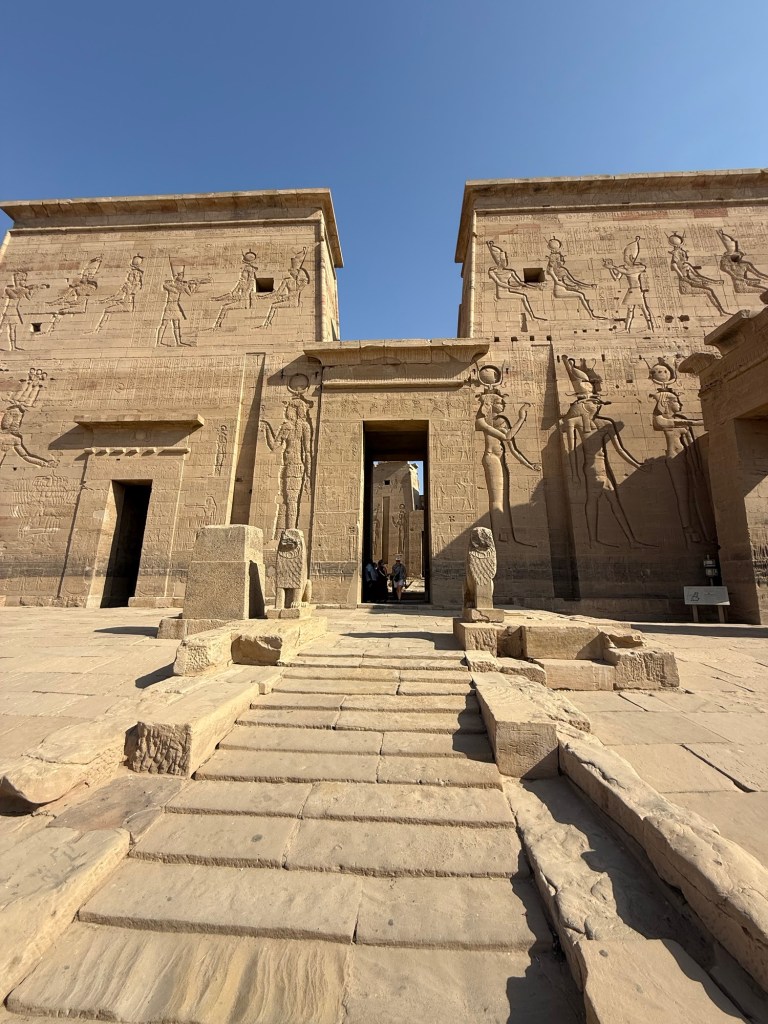
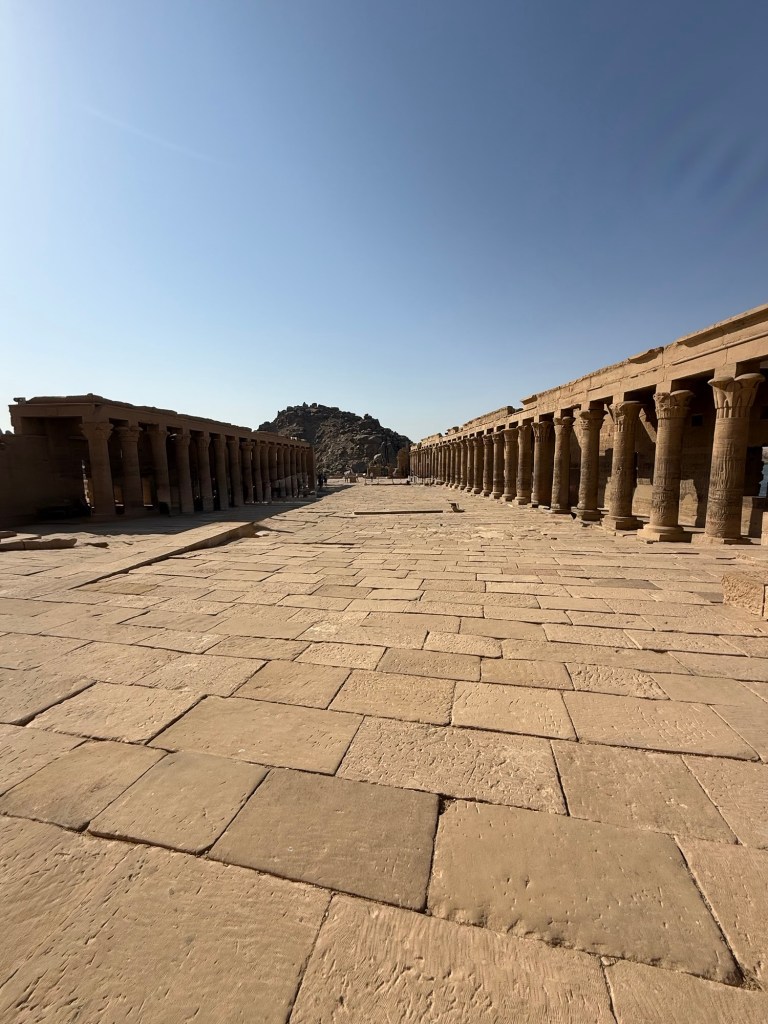
A central courtyard with a second pylon and outside columns of the Birthing Hall….

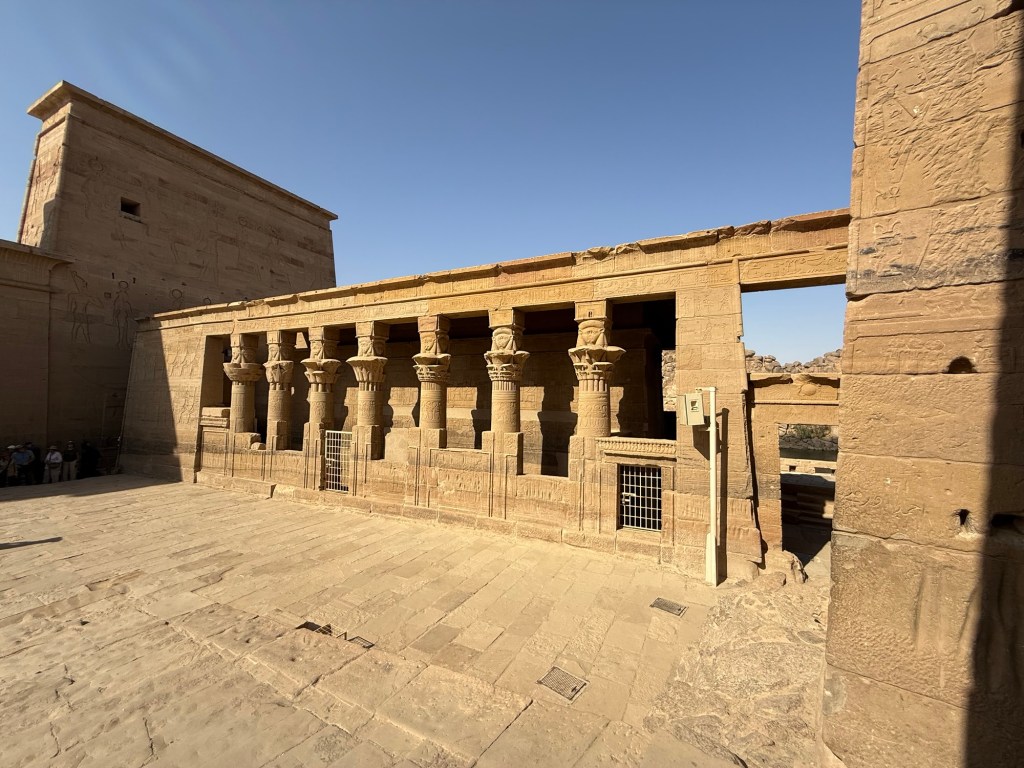
A Birthing Hall (Mammisi). This hall is surrounded on three sides by a colonnade of floral topped columns each crowned with a sistrum and Hathor-headed capital. The Mammisi was a common feature of Ptolemaic temples and the example on Philae is similar in layout and decoration to the examples at Edfu. The mammisi from Philae served as a model for developing a typical birth house plan with pronaos and surrounding ambulatory.
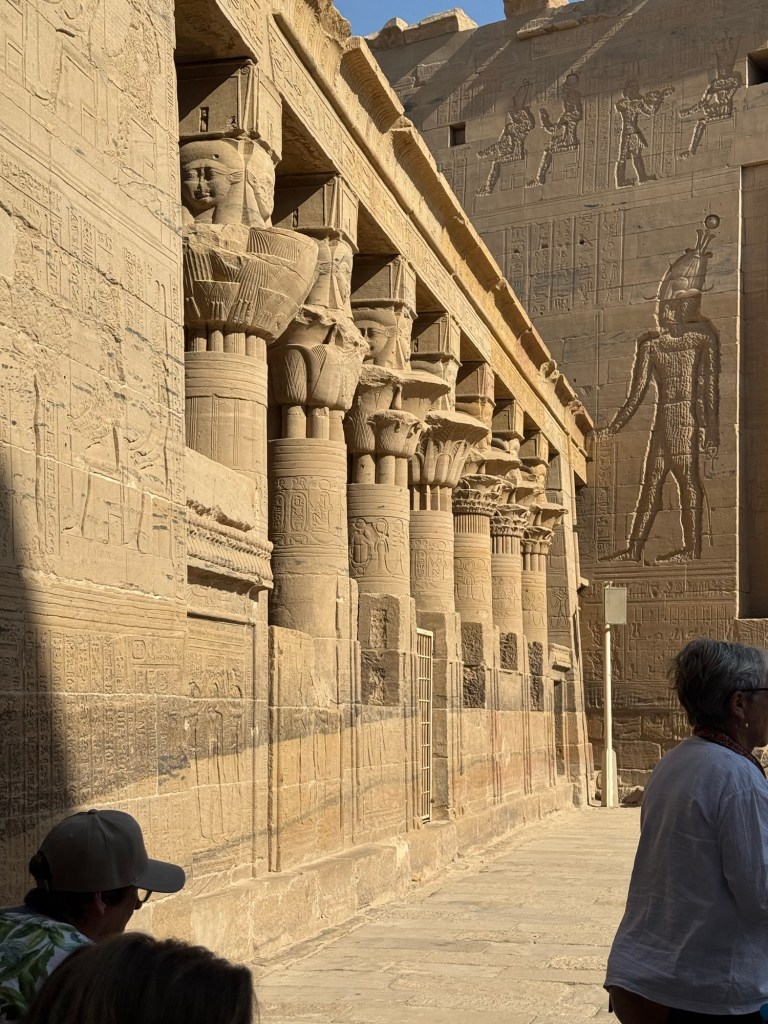

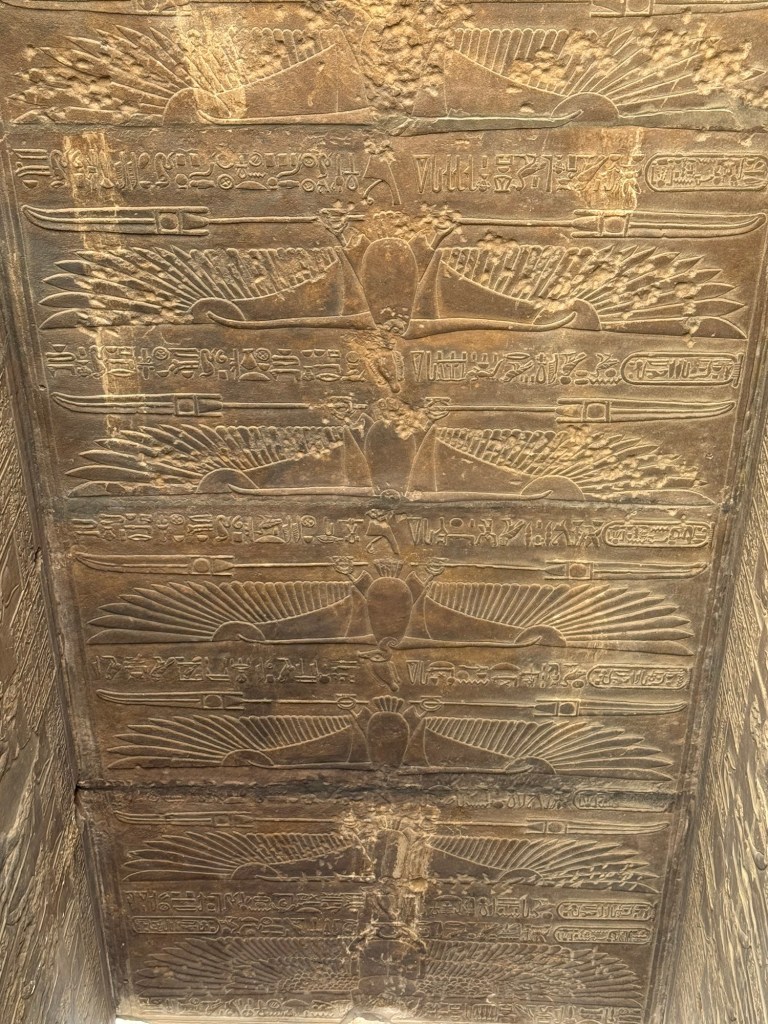
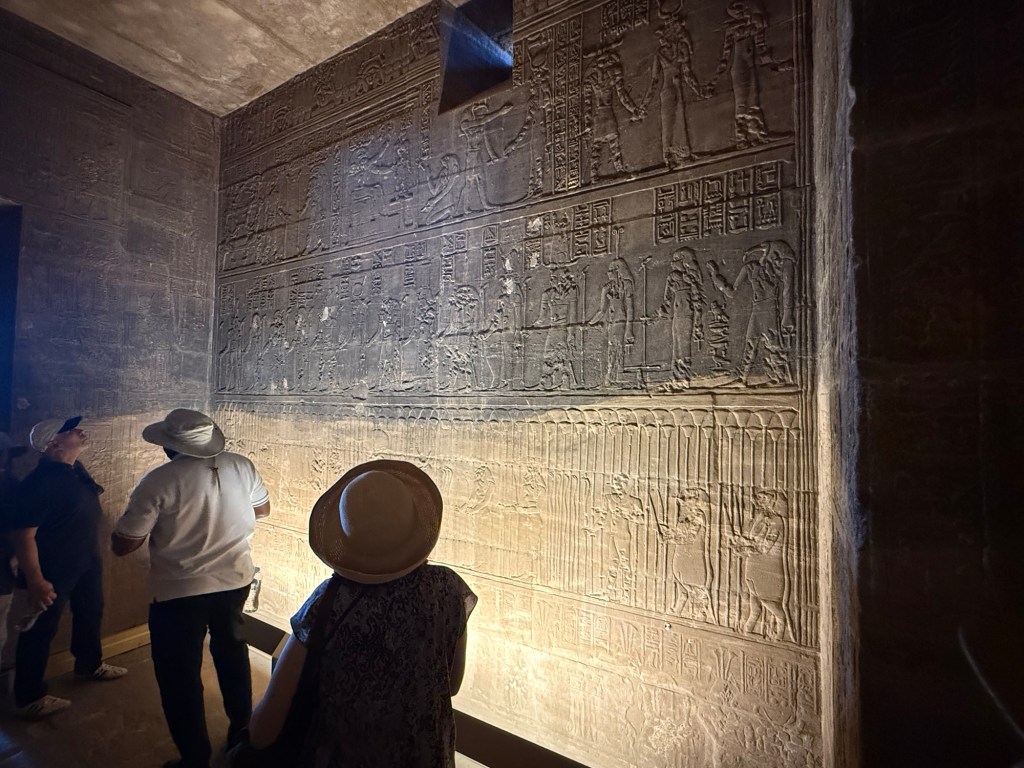
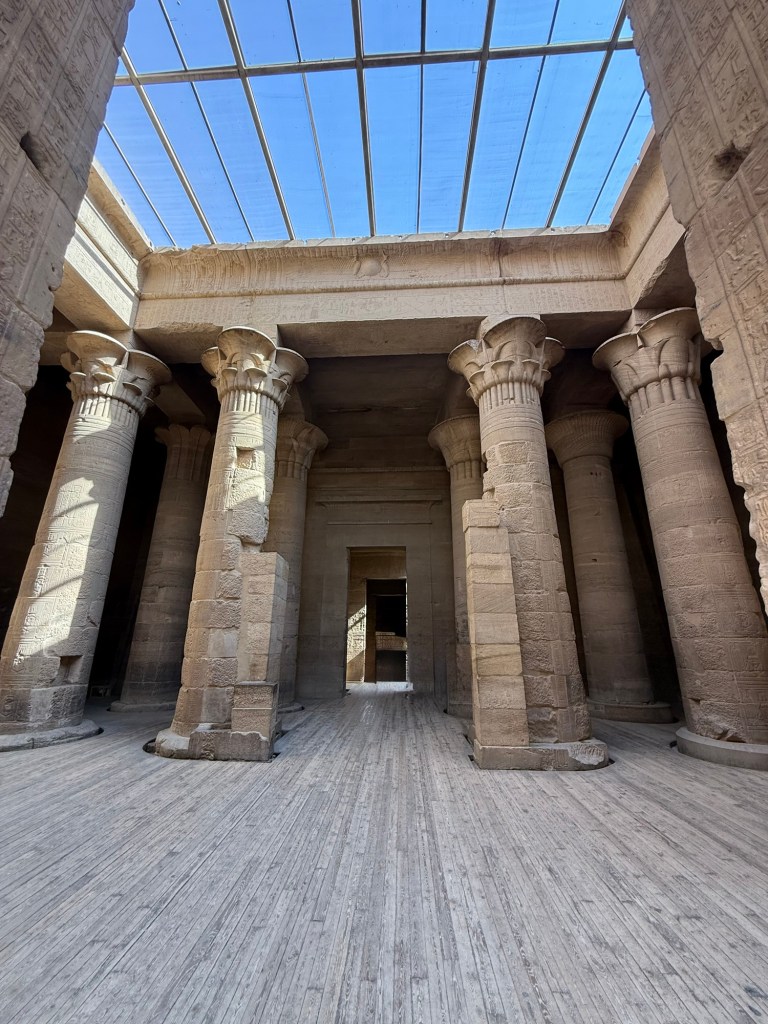
A typical hypostyle hall with high columns.

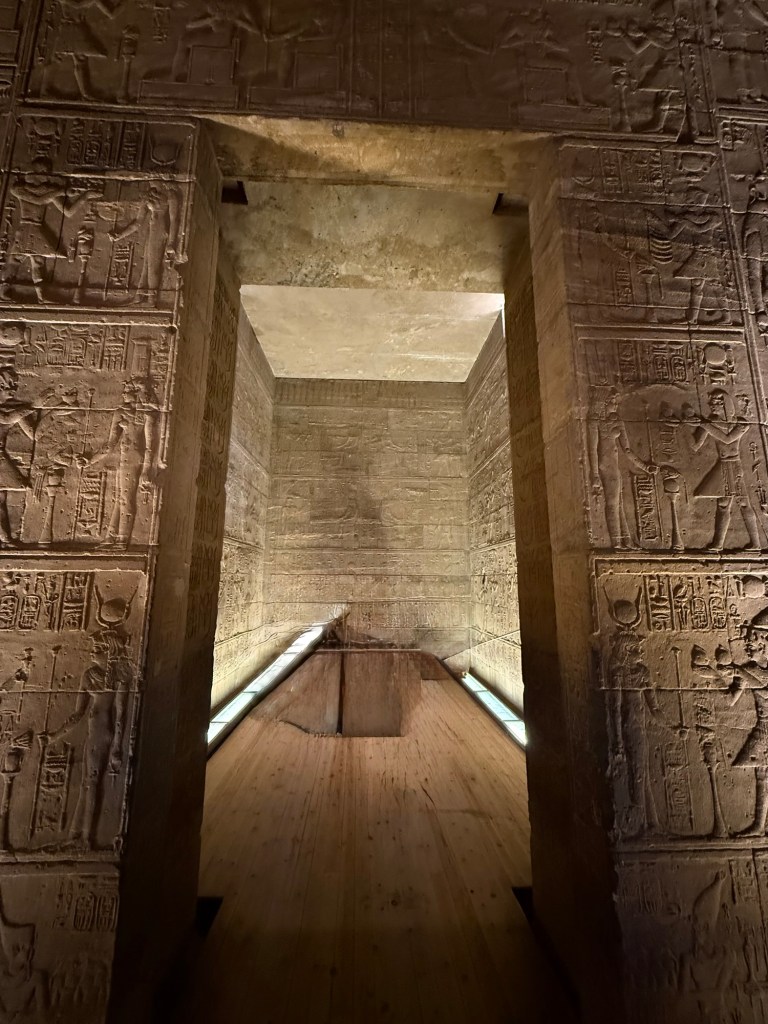
An inner sanctuary. To get to this inner sanctuary required going through 5 sub- sanctuaries (I think that was number and nomenclature). I’m sure you’ll let me know….


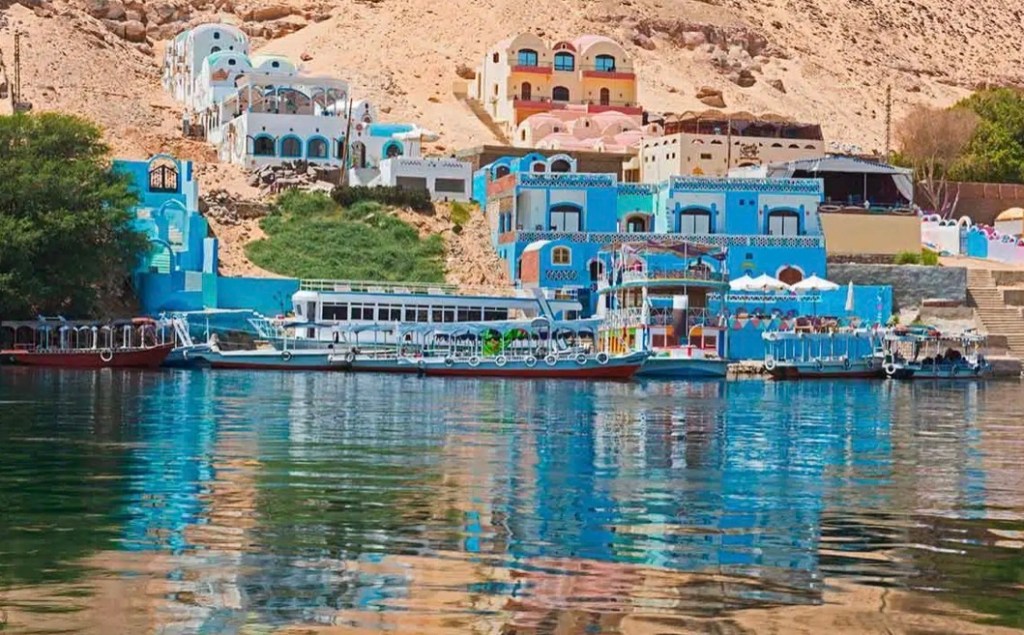
Nubian Village of Hessa:
As we motorboated to another island and the vibrant Nubian Village of Hessa, we felt a cooling breeze on our faces.
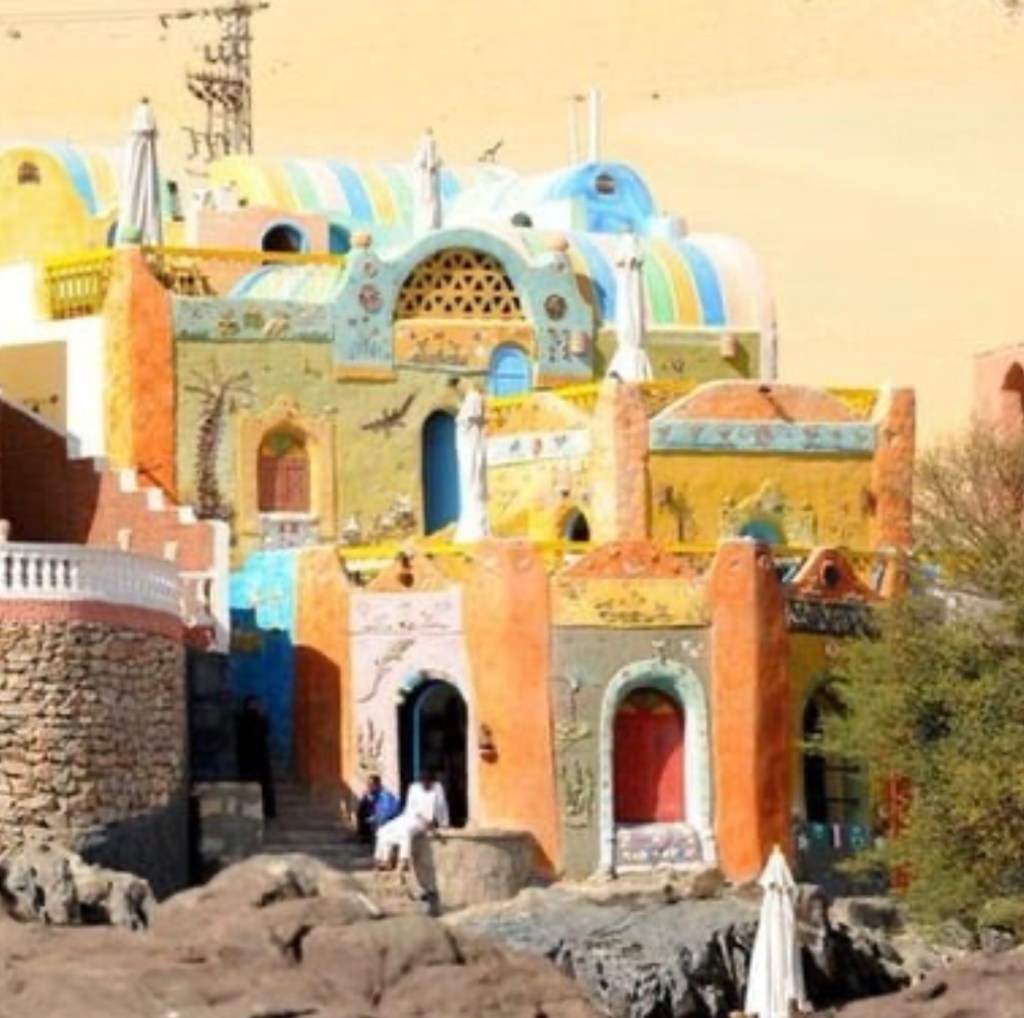
Note, some of the Nubian photos are from Google.
The warm and friendly Nubian people welcomed us with local music, and we danced together.
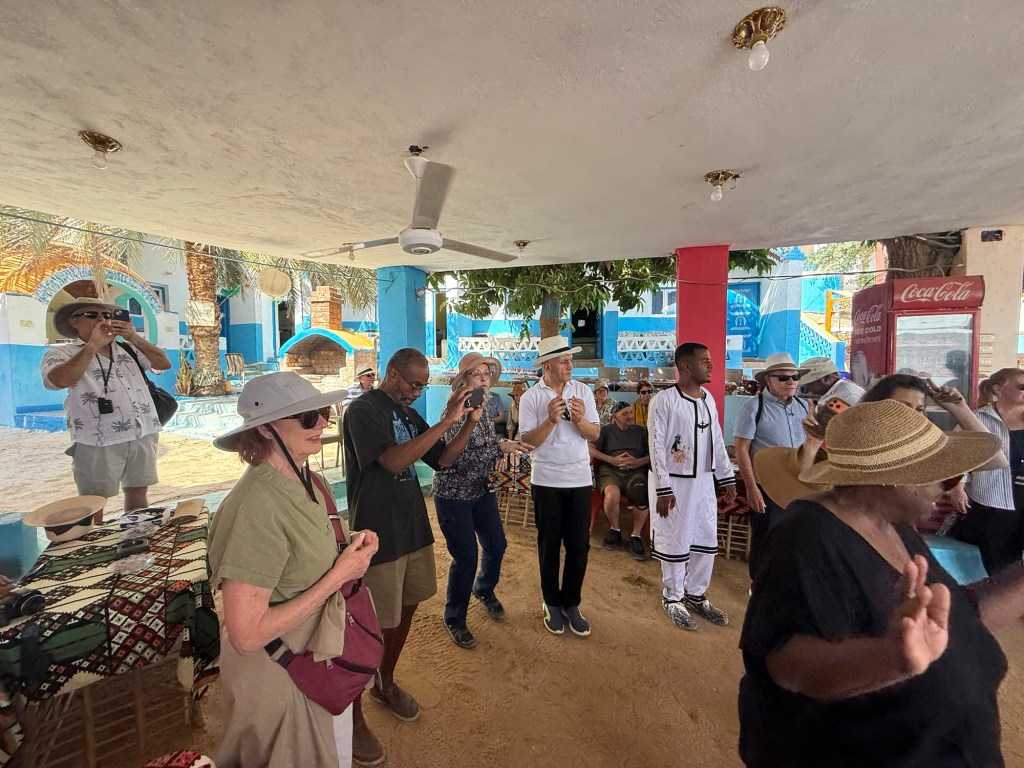
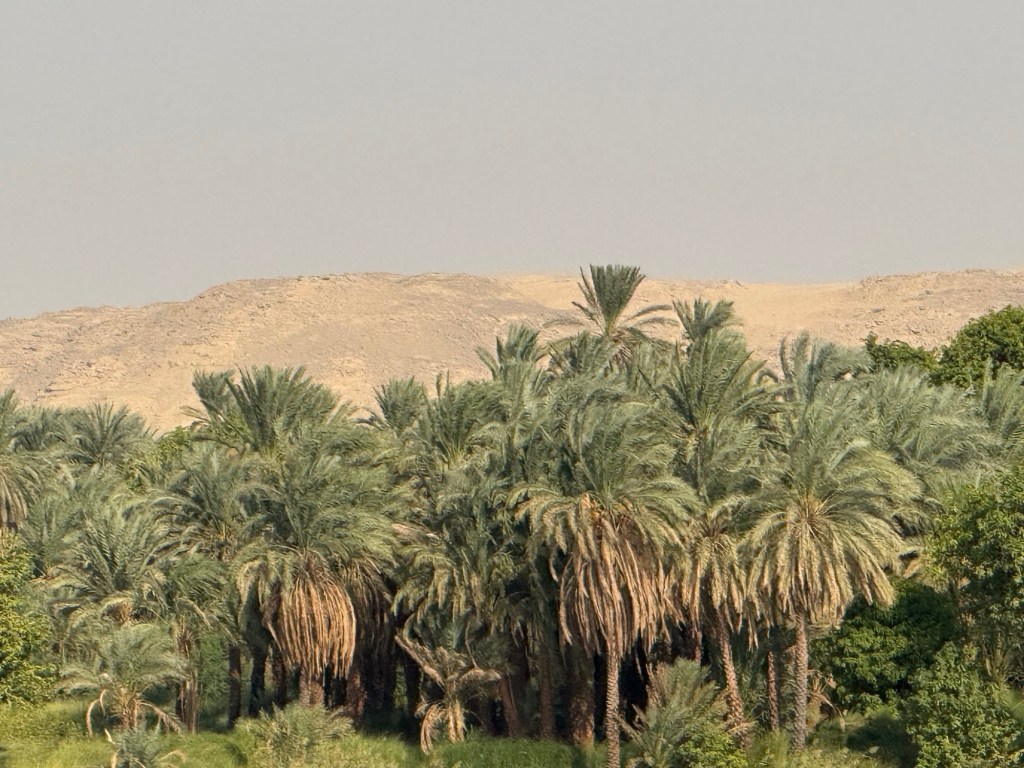
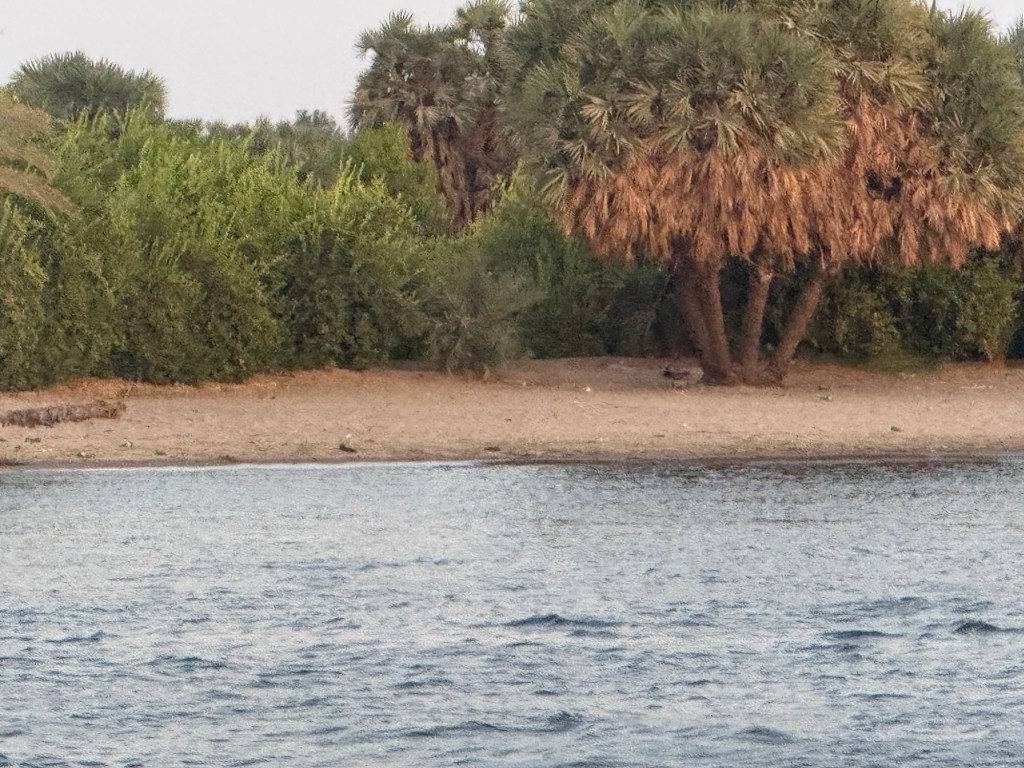
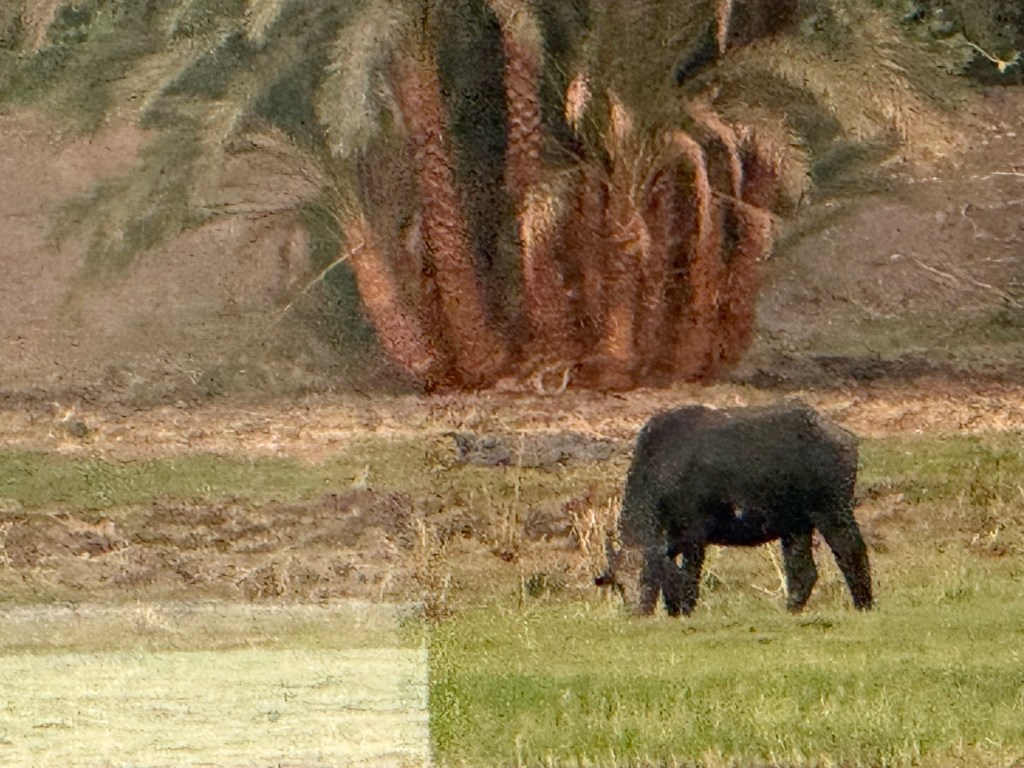
The Nubian houses, constructed from mud, are often colored blue or orange. Palm trees and gardens are ubiquitous, with residents raising chickens and goats on their farms. Some locals engage in selling handicrafts, while women specialize in drawing Henna for tourists.
And so, what a fun patched morning; as they say, another great AMADay, even though it’s just Noon.
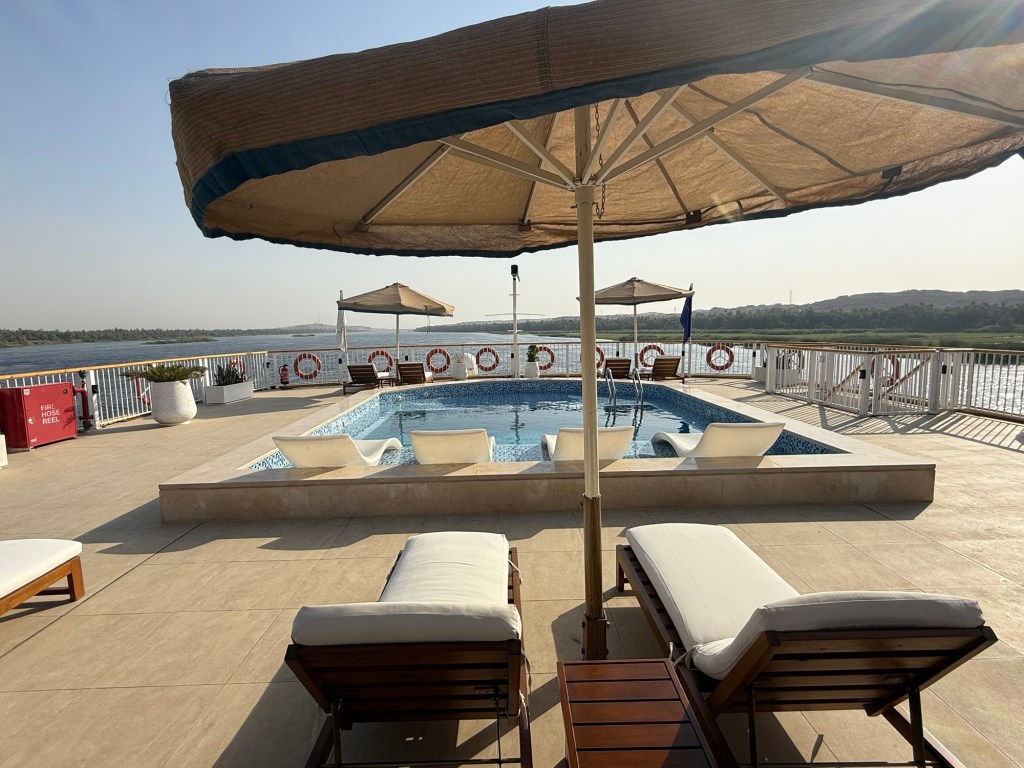
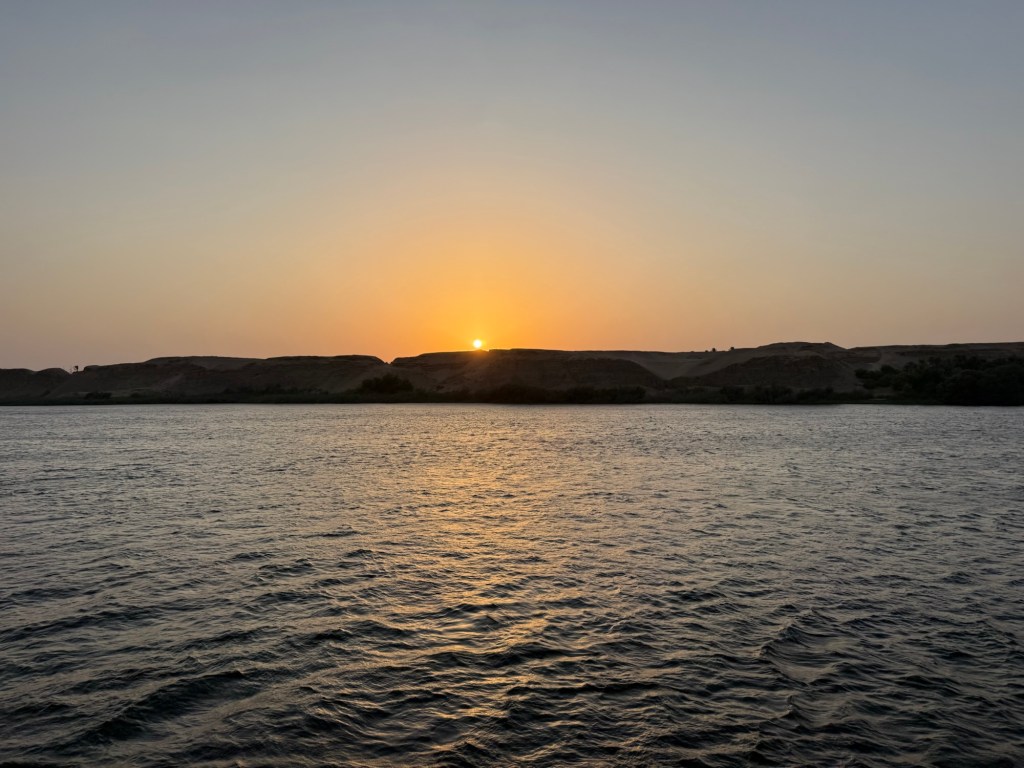
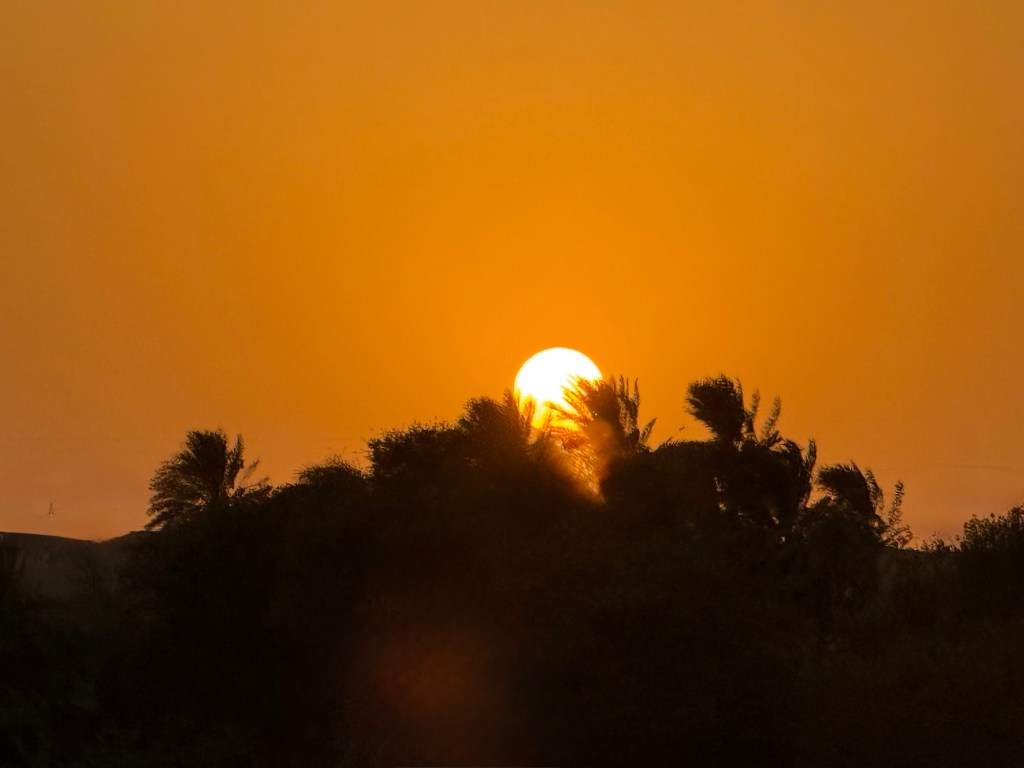
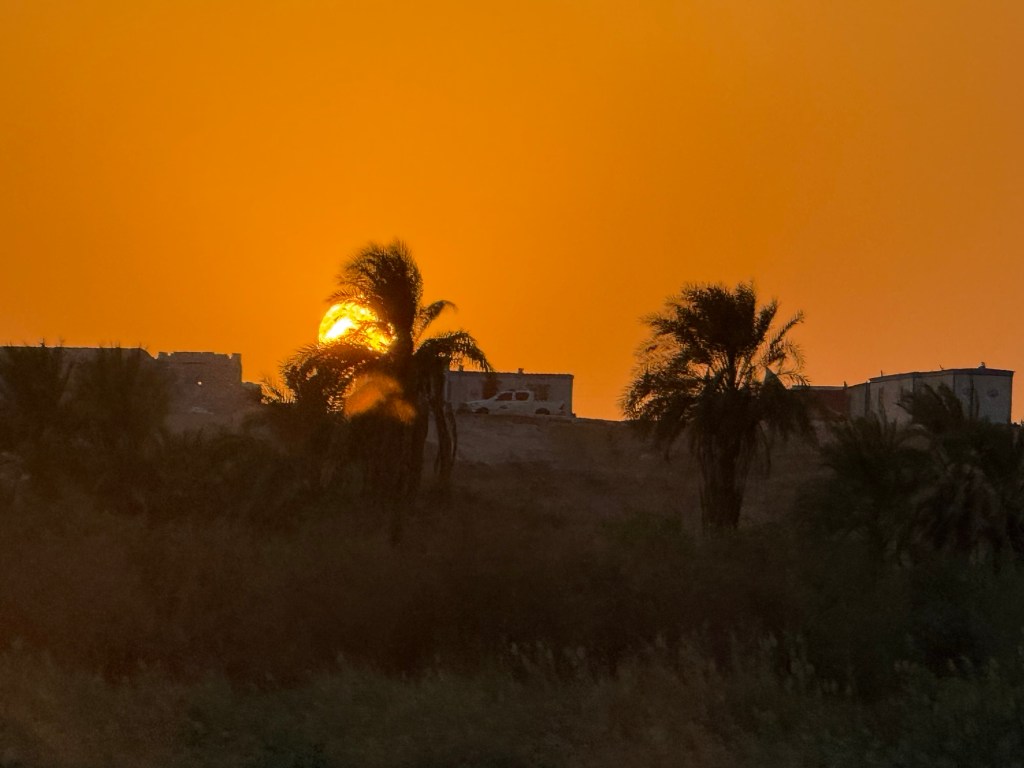
And now it’s time for an afternoon of pool, a sunset, cocktails and dinner.

 seetheworldtravelblog