Morning Itinerary: Cruising the Nile towards Luxor, Egypt ~ 25°C/75°F (at 8 am)
By Paul Bryers
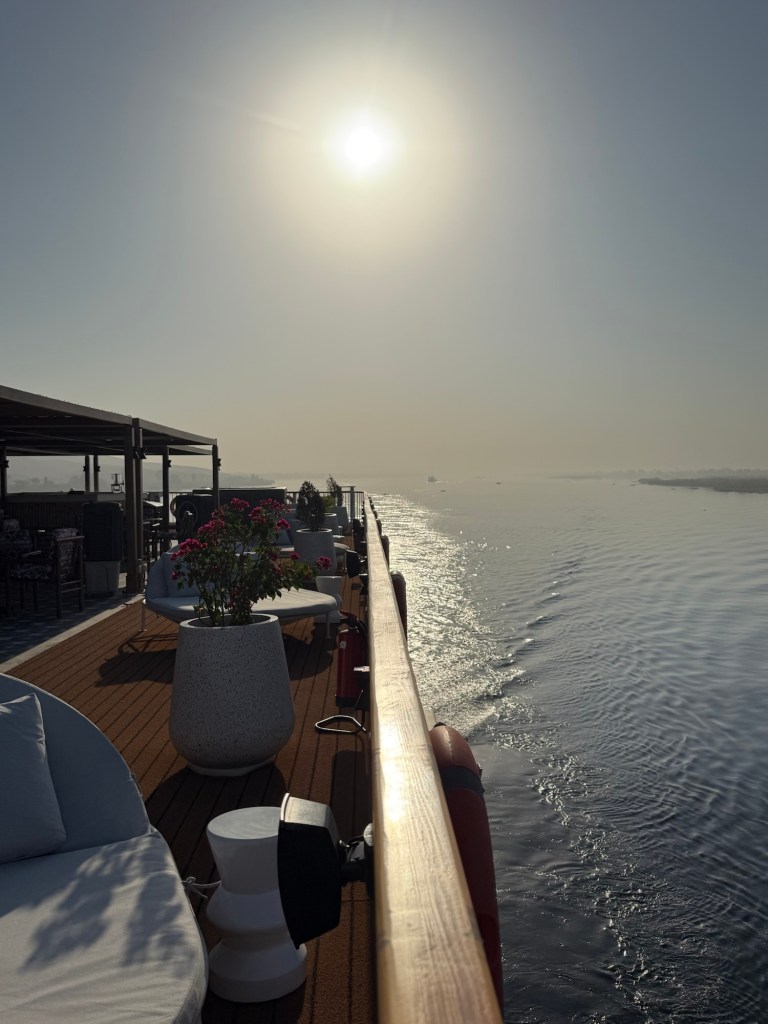
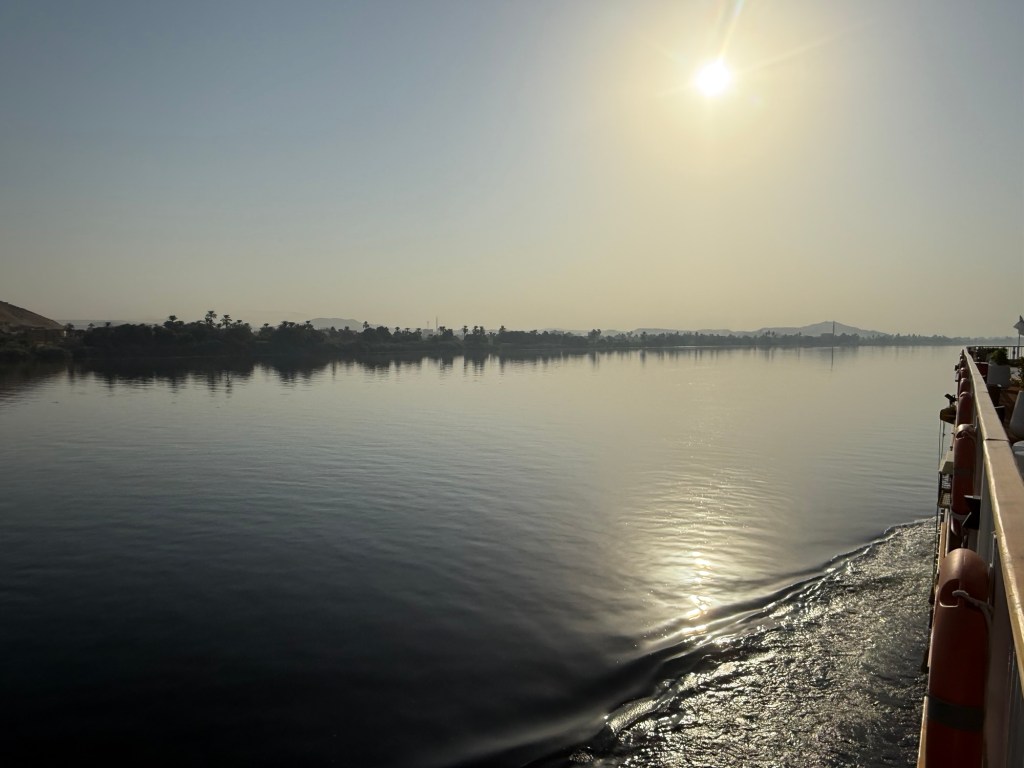
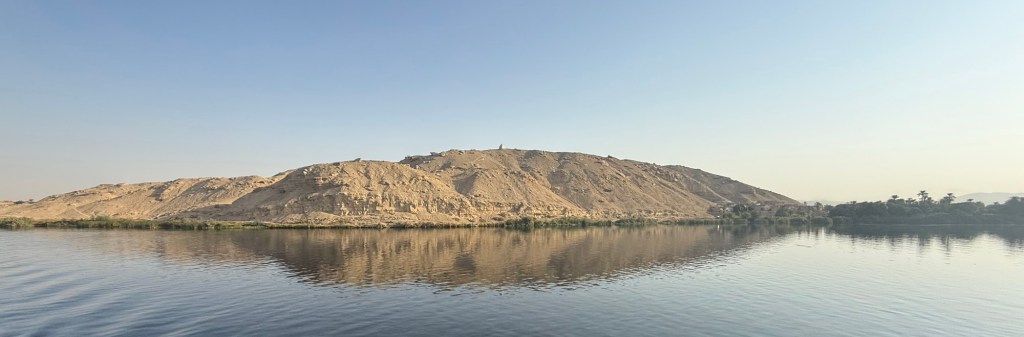
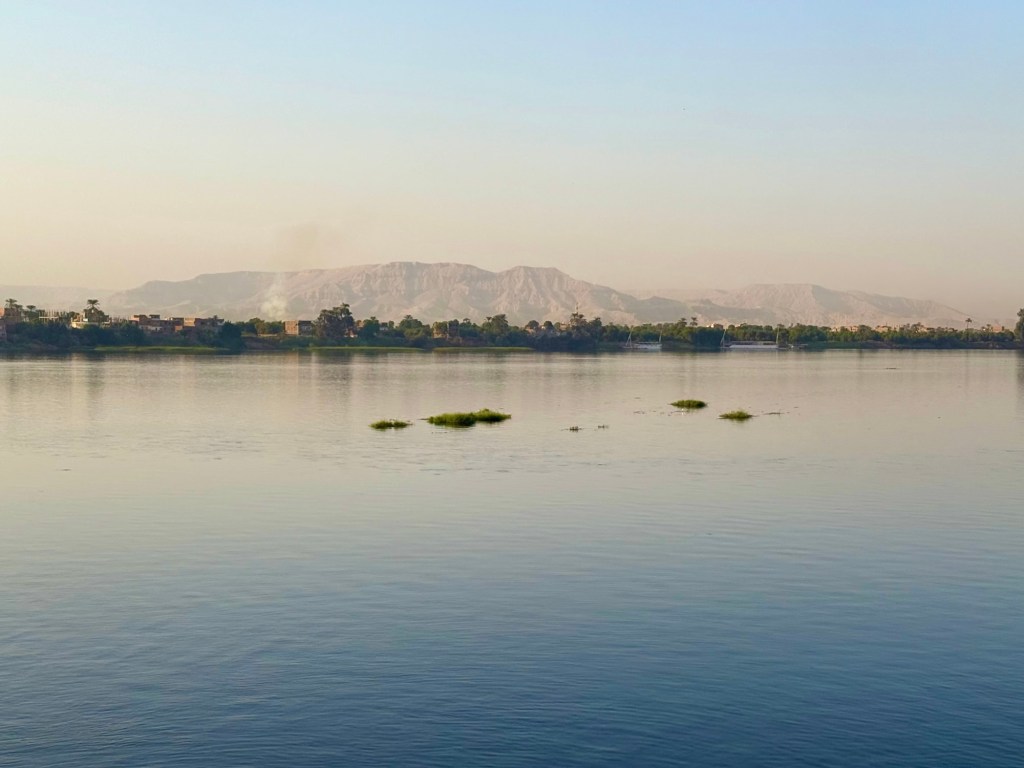
This morning was beautiful, with ideal conditions for cruising down the Nile from Upper to Lower Egypt. The Egyptian Gods were smiling upon us…
The temperature was a pleasant 25°C/77°F (at ~ 8.30 am) on the top deck.
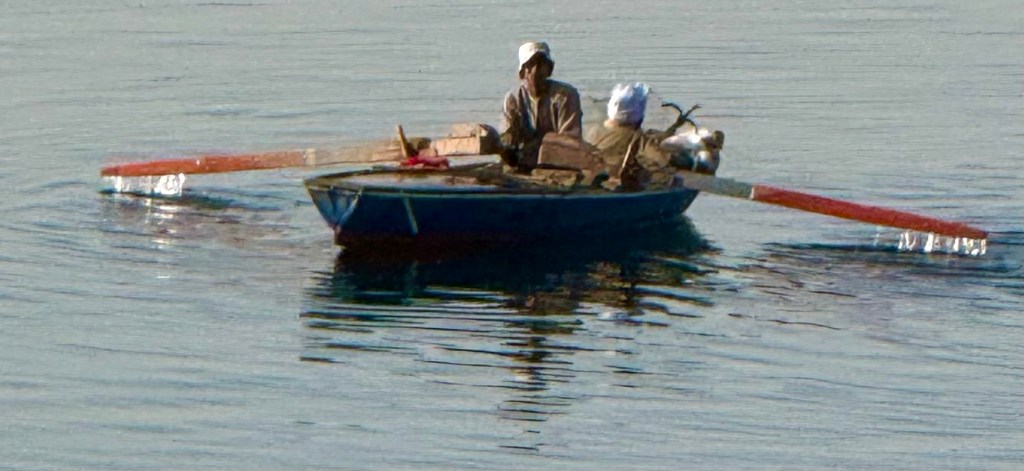
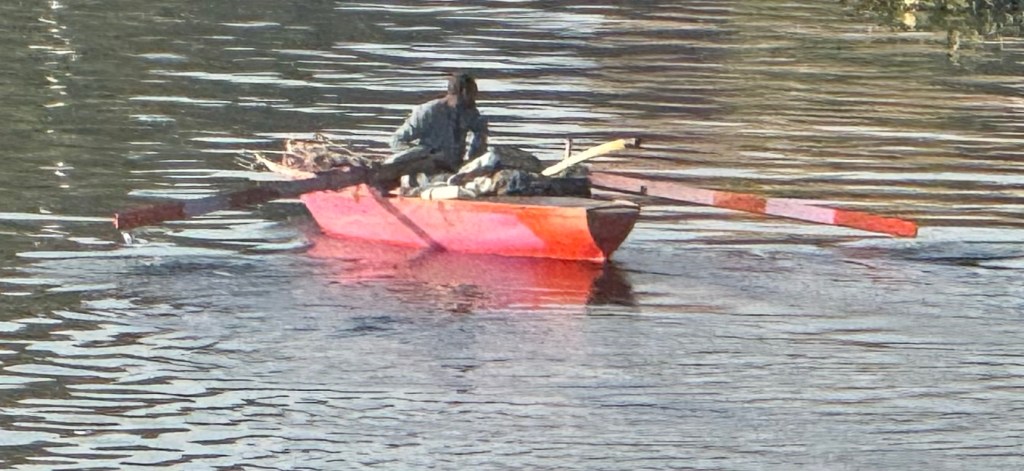
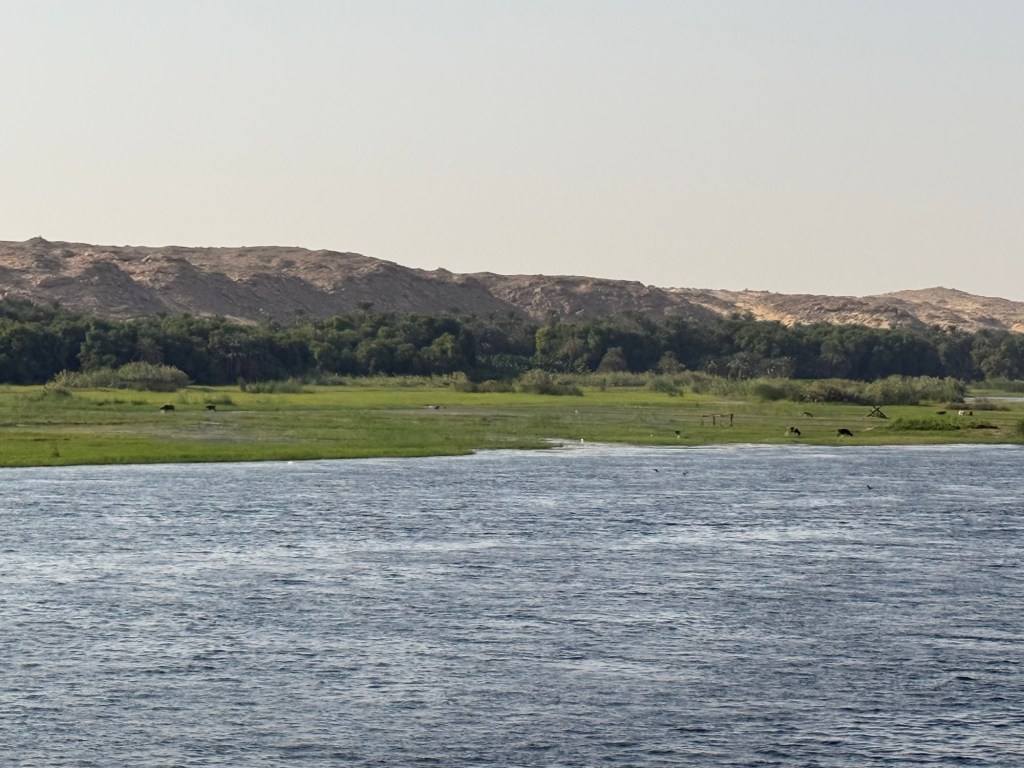
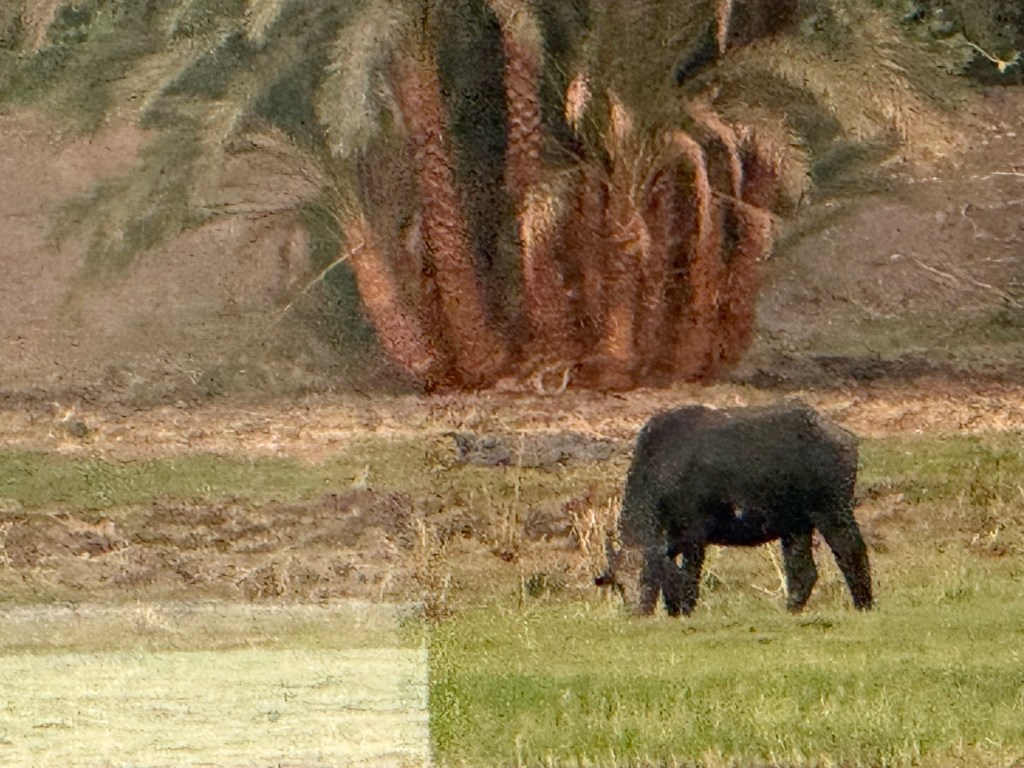
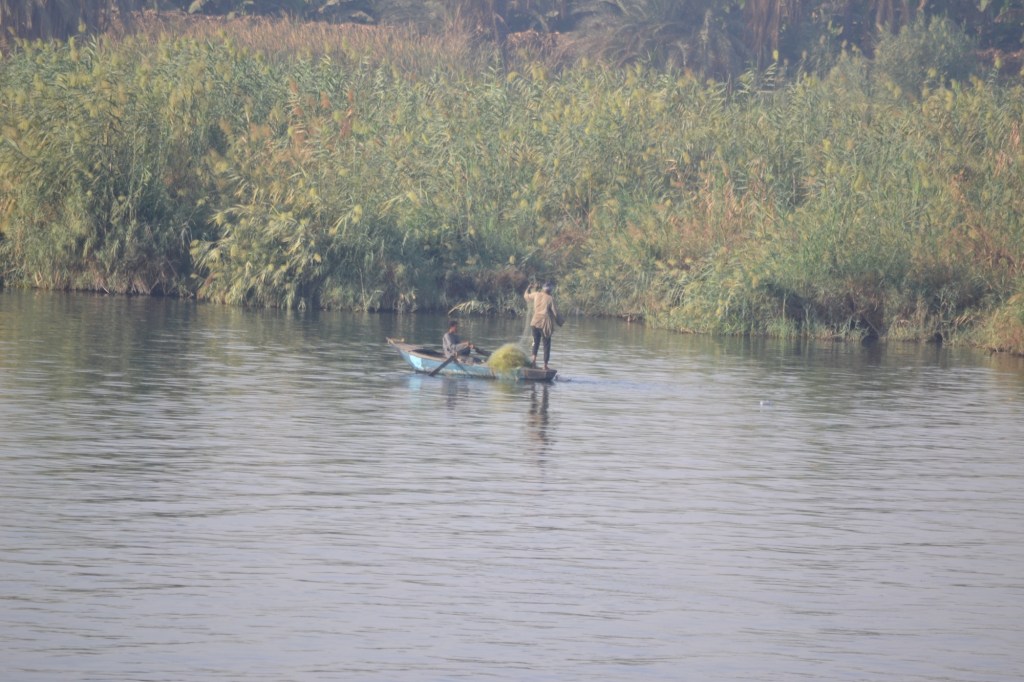
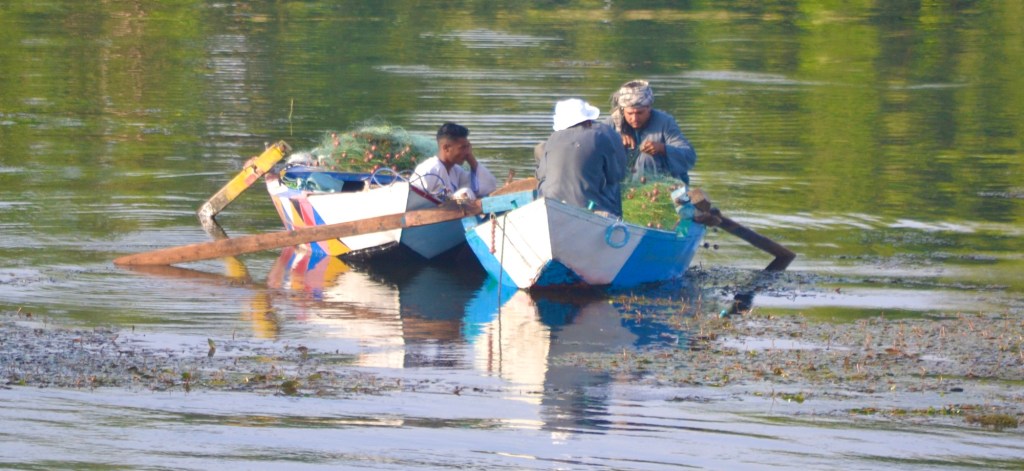
The river was peaceful, and fishermen were engaged in their daily activities.
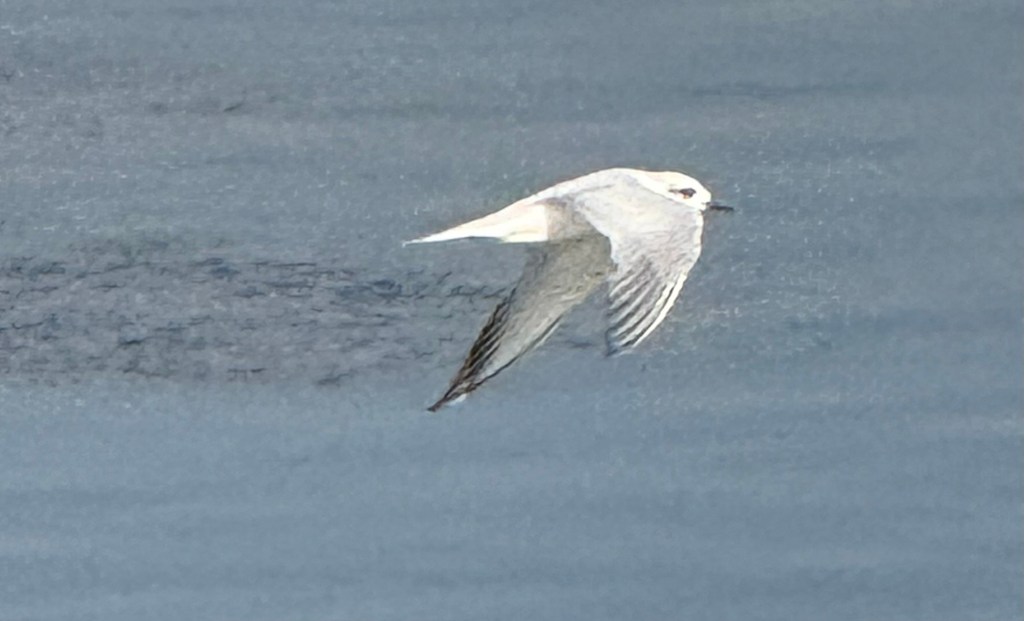
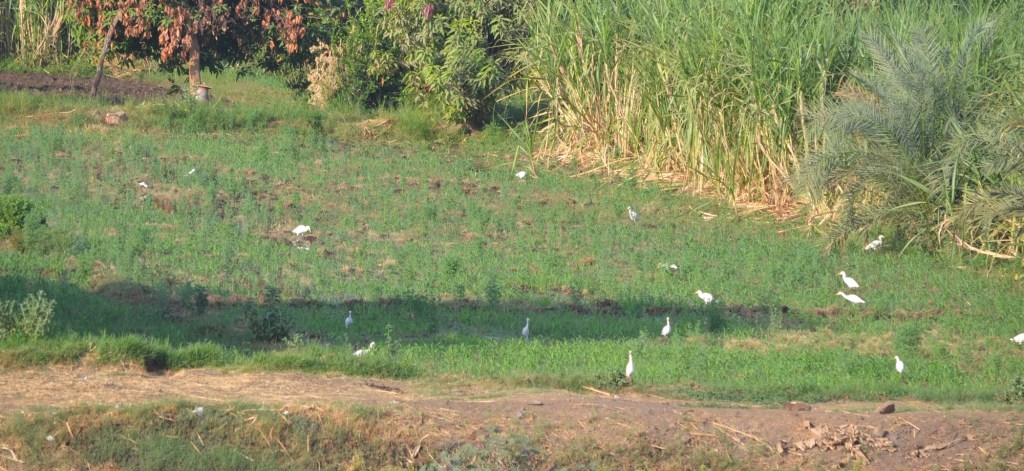
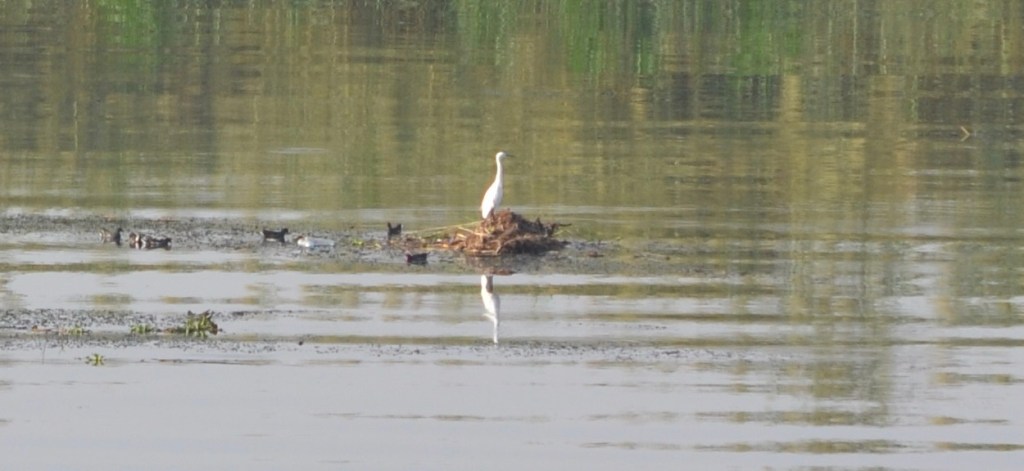
There were a few birds around.
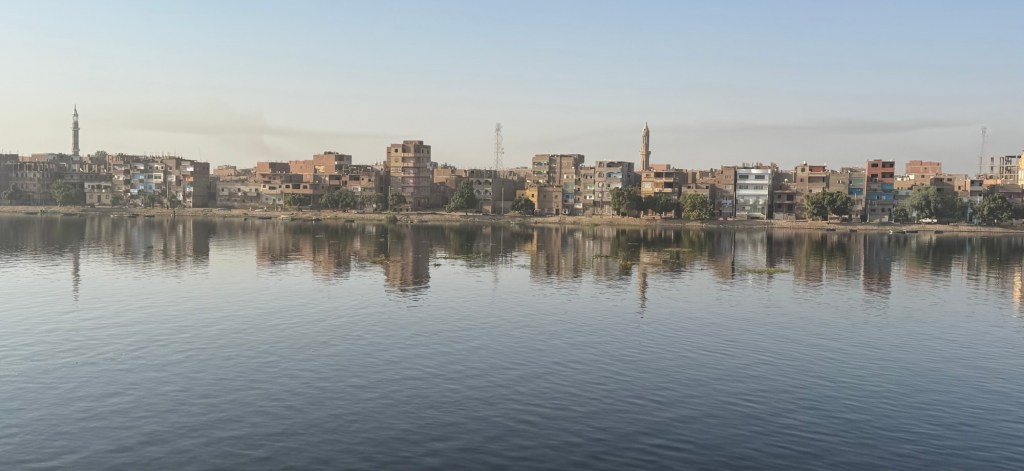
As we glided past a town, it appeared serene.
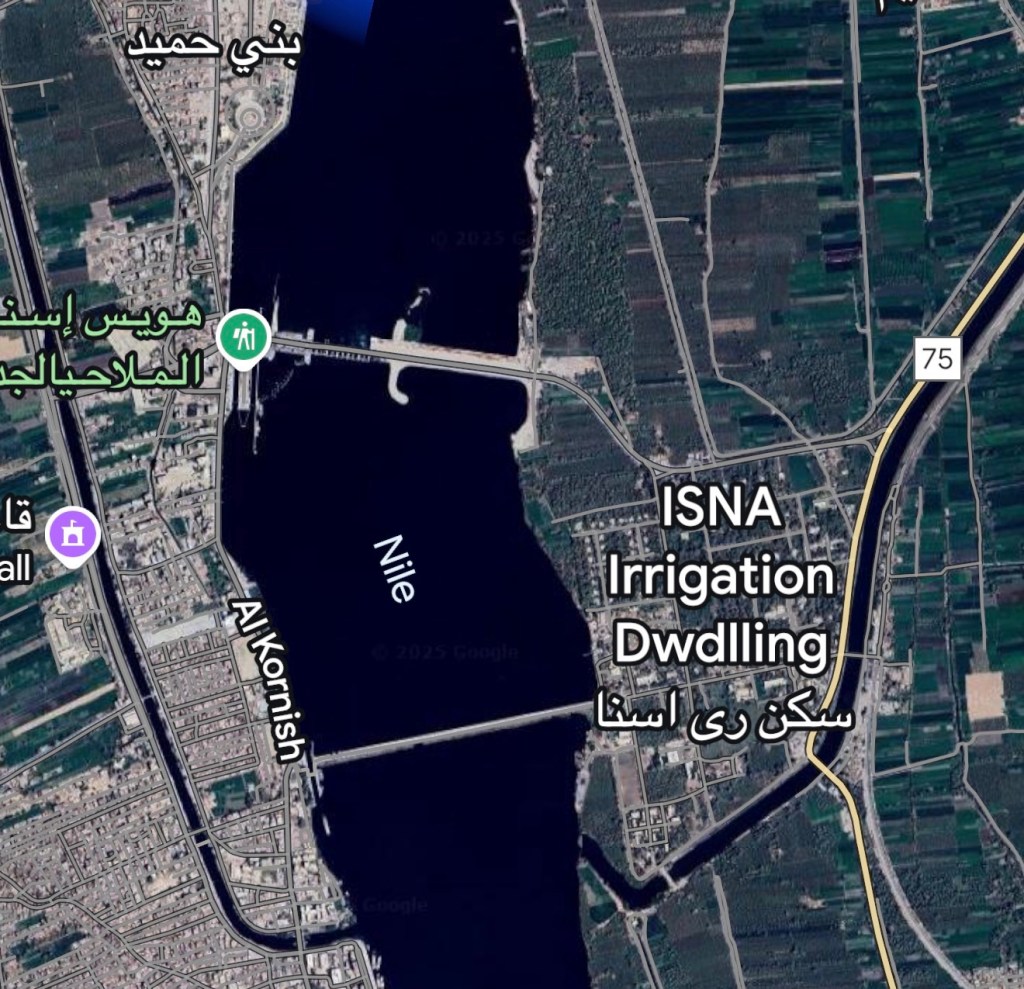
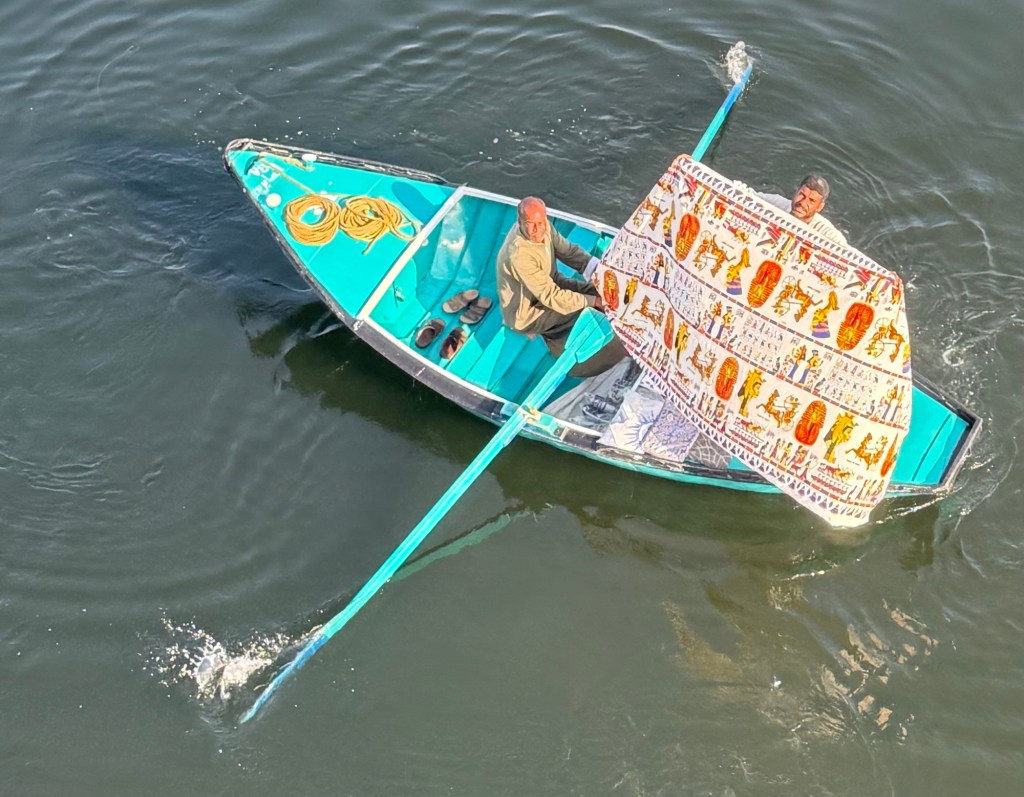
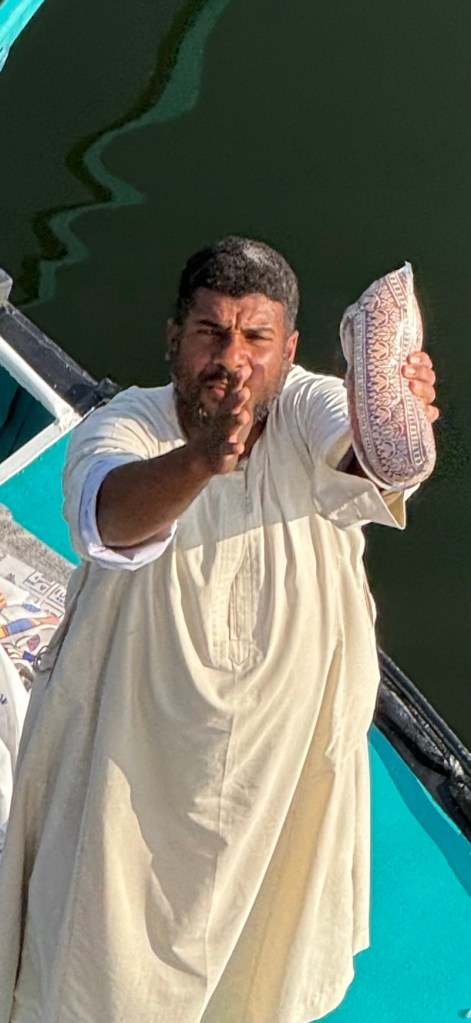
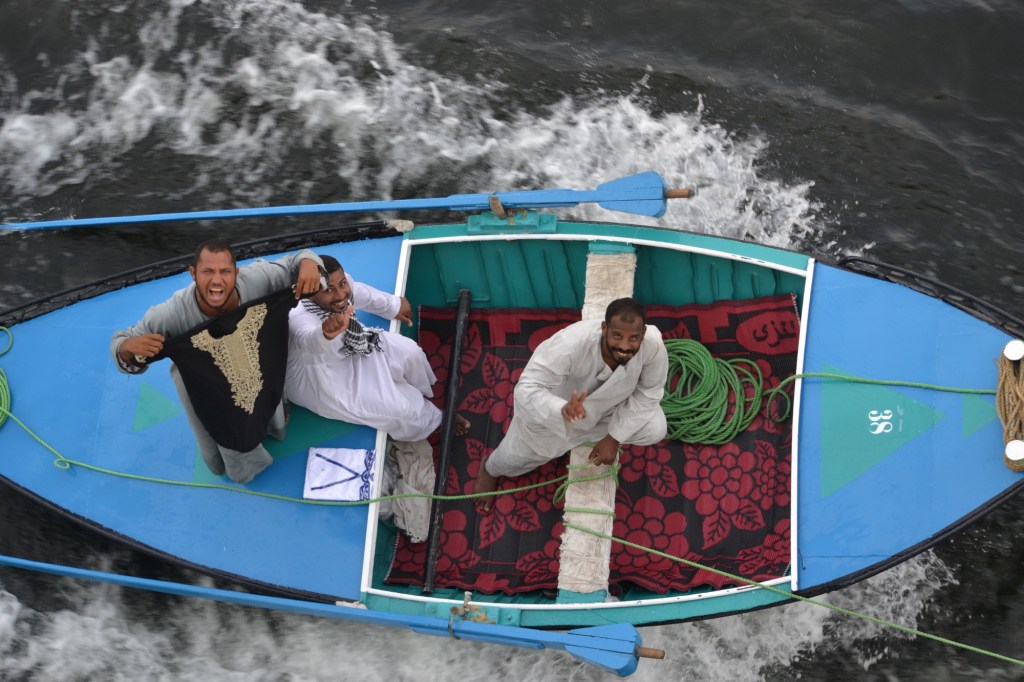
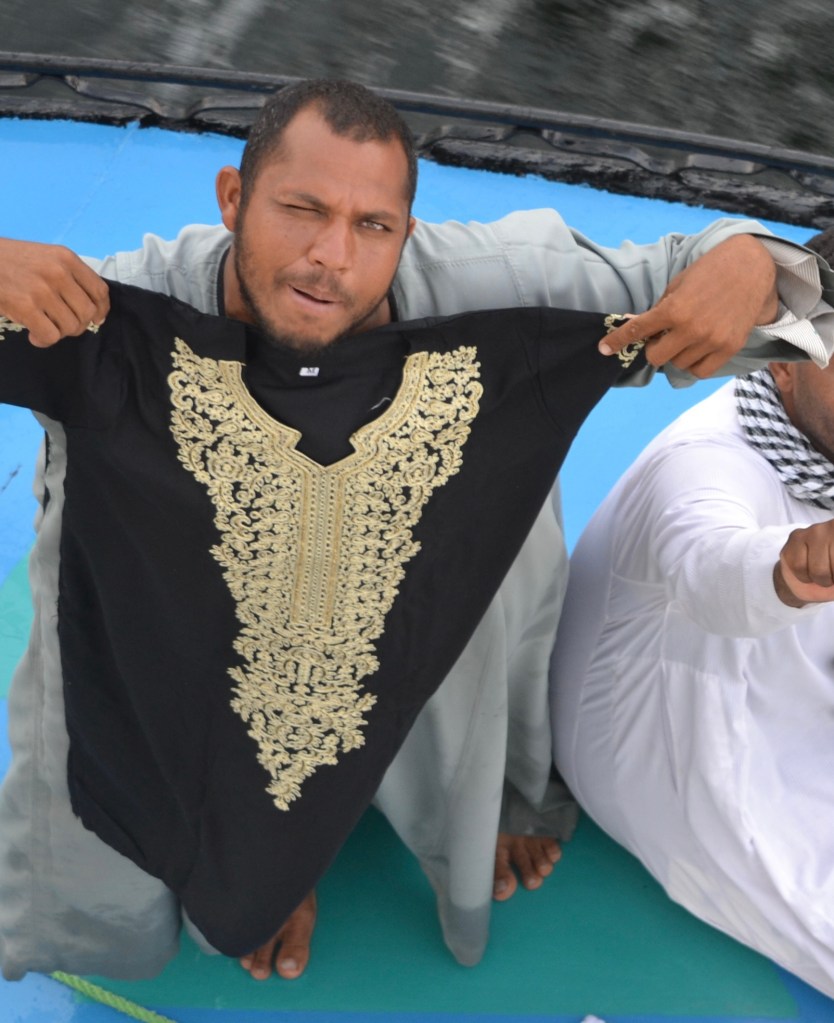
Upon reaching the old and new locks at Esna, friendly locals playfully attacked the boat, launching scarves and tablecloths. Fortunately, no one was physically injured, although some wallets were lightly impacted, with losses of a few dollars. 😃
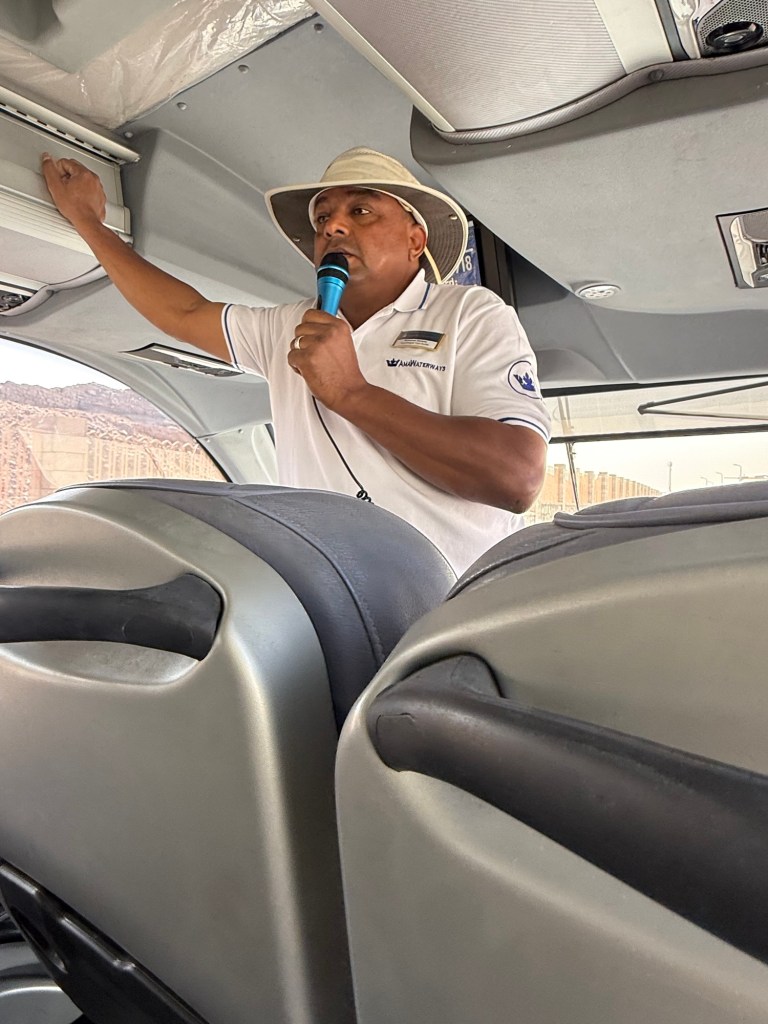
So a great morning, but then I slept through our AMA Cruise Director (Sameh) Mandatory Disembarkation Talk, so I shall be in trouble..
It’s was a 5 am start this morning but we were as excited as kids at Christmas about our Abu Simbel visit.
It was a 35 min flight from Aswan to Abu Simbel.
As alluded to yesterday, the building of the Aswan High Dam in the 60’s and the resultant formation of Lake Nasser precipitated an international effort from 1964 – 8 to move the magnificent carvings of Abu Simbel to a new location 65 meters higher and 200 meters back from the Lake.
I managed to get a photo of the Temples from the aircraft.
Crappy photo from flight
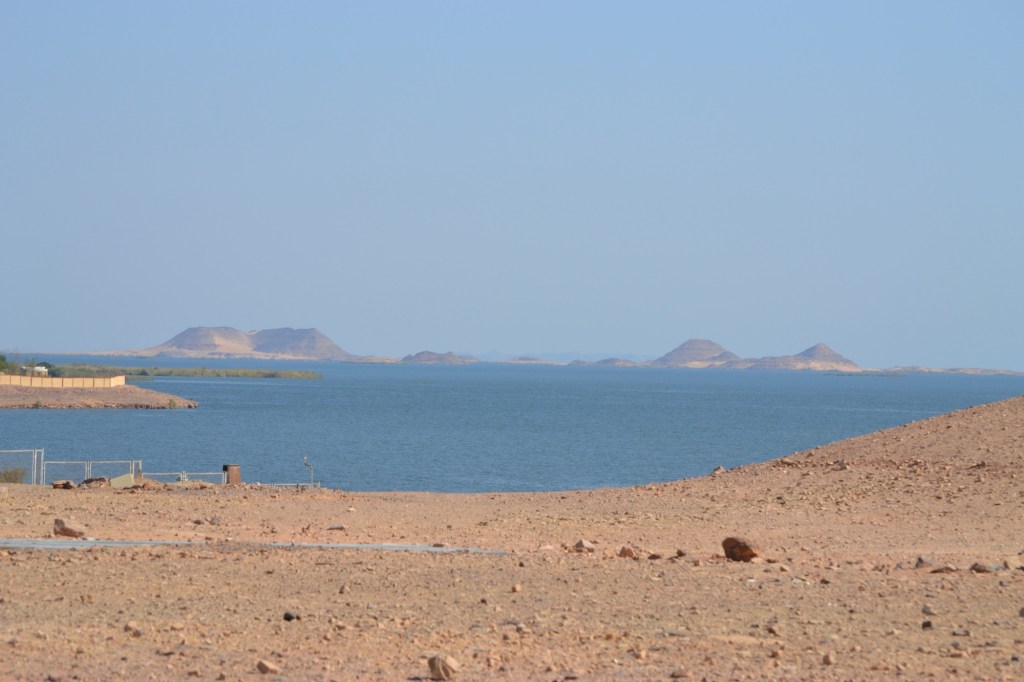
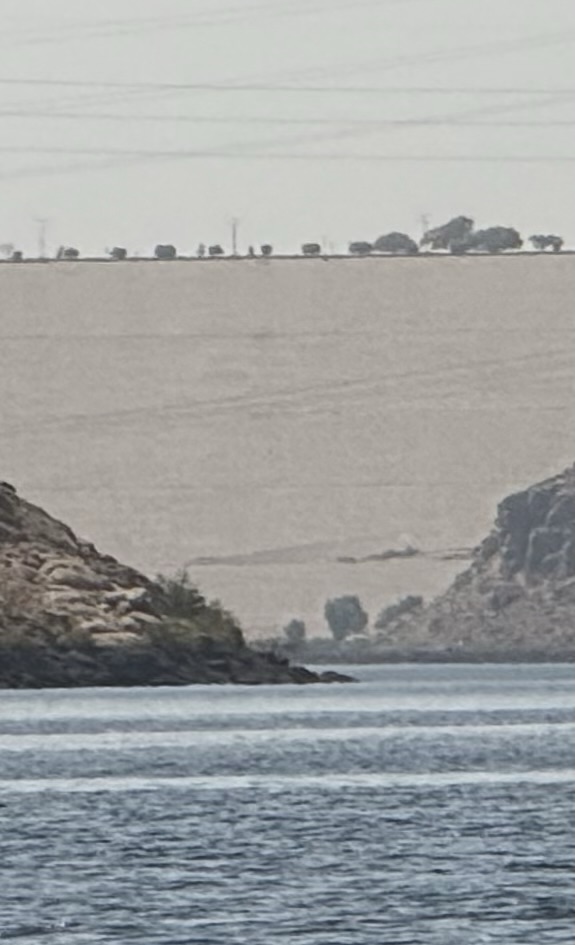
The Lake is very beautiful from ground level…
Lake Nasser
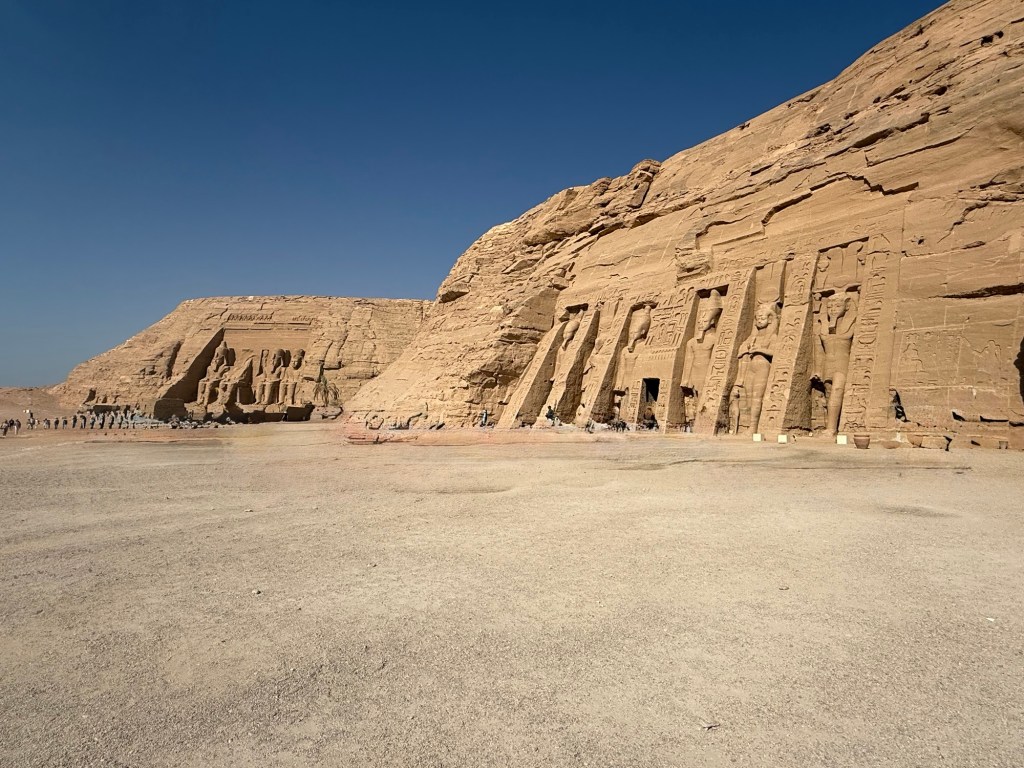
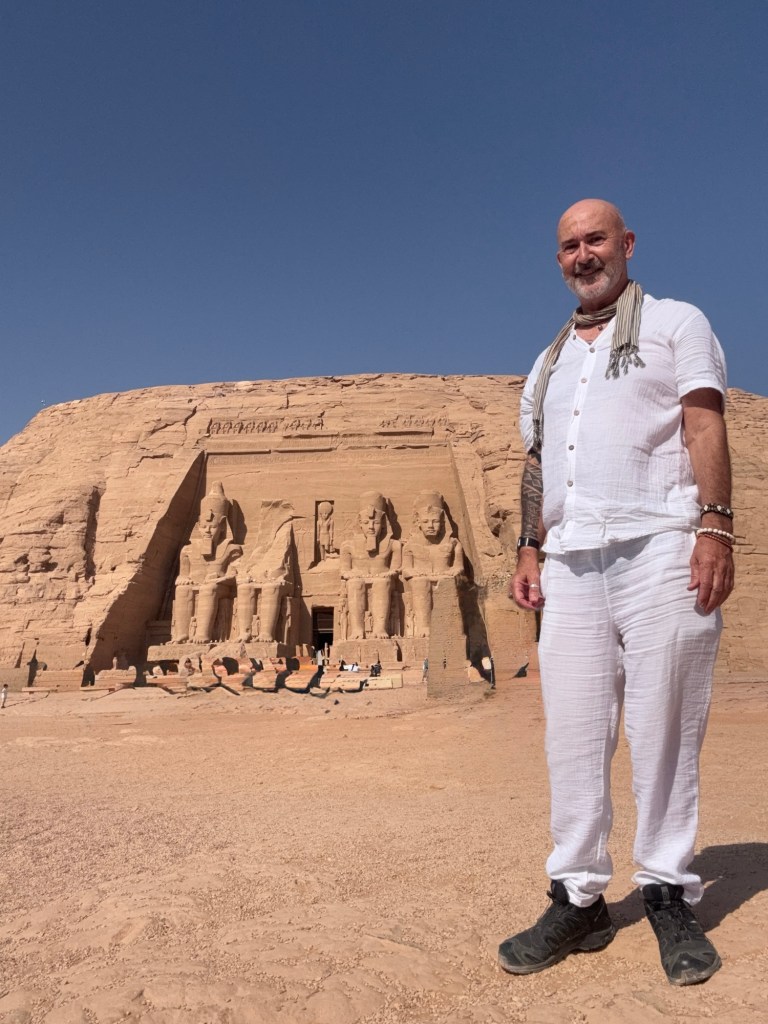
Abu Simbel is a historic site comprising two massive rock-cut temples (Great and Small Temples) in the village of Abu Simbel near the border with Sudan.
Great (left) and Small (right) Temples
These temples were commissioned by Ramses II in the 13th century BC.
Grand Temple:
The Great Temple, which took about twenty years to build, was completed around year 24 of the reign of Ramesses the Great (which corresponds to 1265 BC).
The Great Temple is famous for the four colossal statues of Ramses II and its unique solar alignment, which illuminates the sanctuary twice a year during the Sun Festival on February 21 and October 22. Just two days too early!!
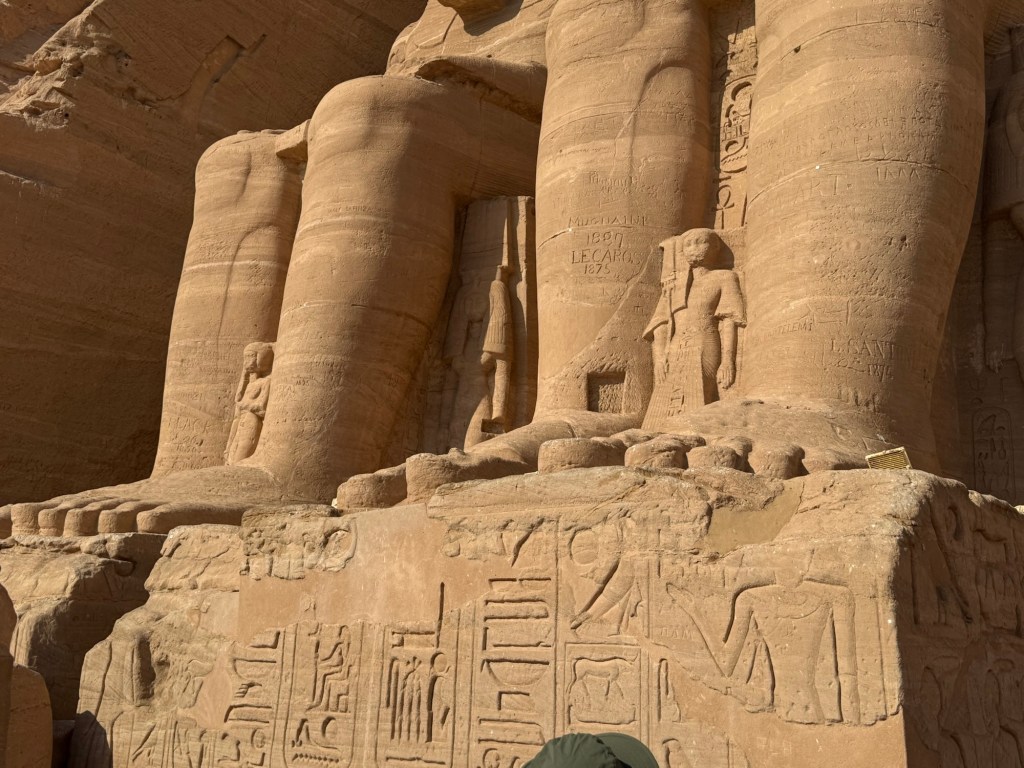
The statue to the immediate left of the entrance was damaged in an earthquake, causing the head and torso to fall away; these fallen pieces were not restored to the statue during the relocation but placed at the statue’s feet in the positions originally found.
The façade behind the colossi is 33 m (108 ft) high and 38 m (125 ft) wide. It carries a frieze depicting twenty-two baboons worshipping the rising sun with upraised arms and a stele recording the marriage of Ramesses to a daughter of king Ḫattušili III, which sealed the peace between Egypt and the Hittites.
His wife, Nefertari, and children can be seen in smaller figures by his feet.
The entrance doorway itself is surmounted by bas-relief images of the king worshipping the falcon-headed Ra Horakhty, whose statue stands in a large niche.
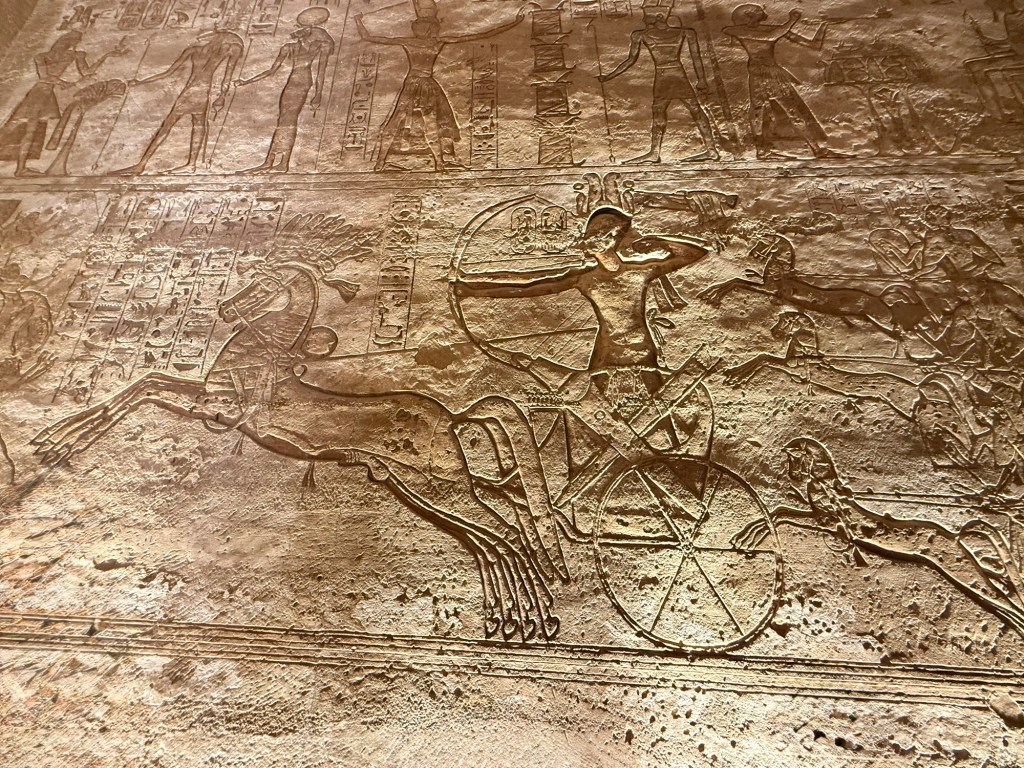
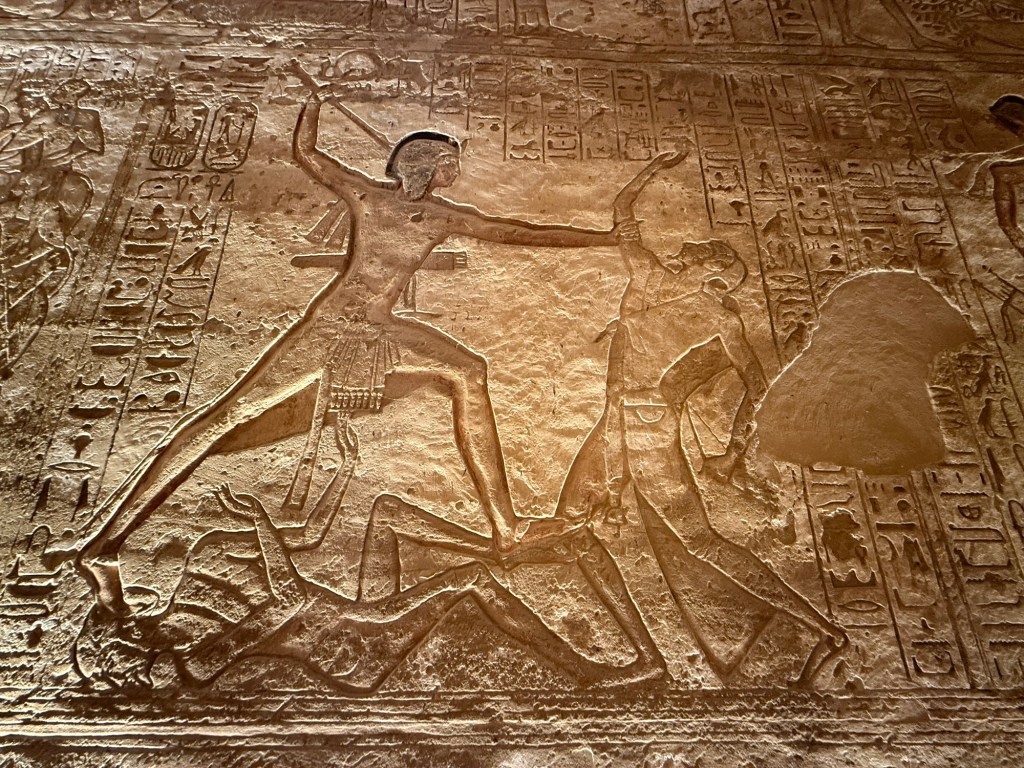
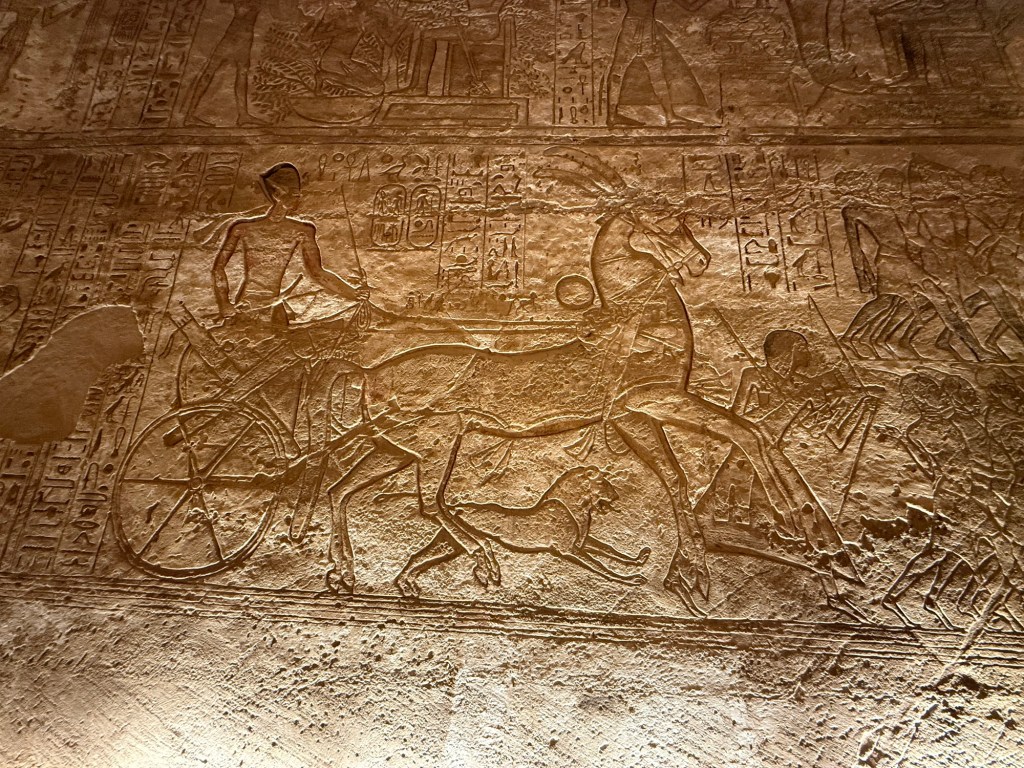
Sculptures inside the Great Temple hall commemorate Rameses II’s heroic leadership at the Battle of Kadesh.
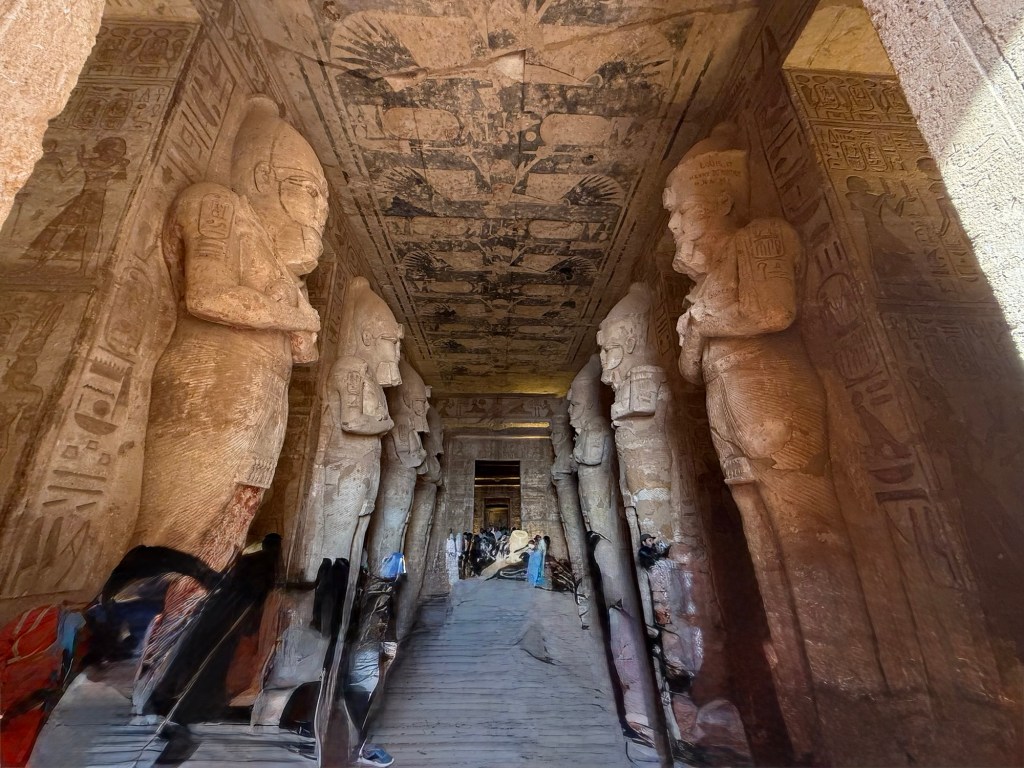
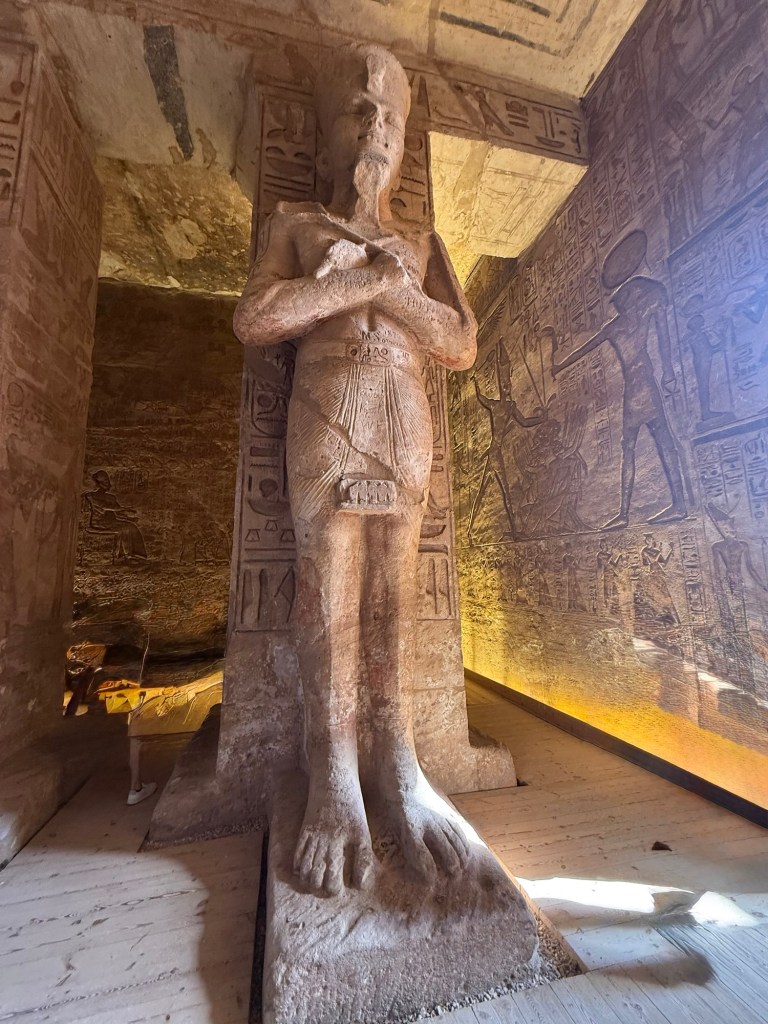
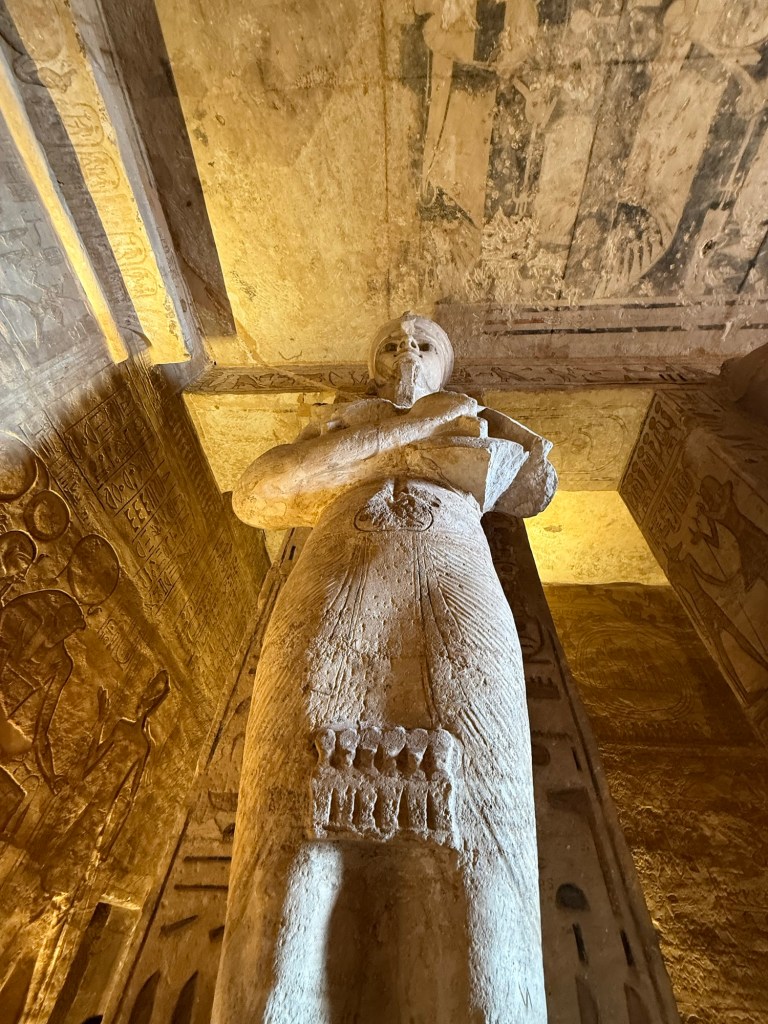
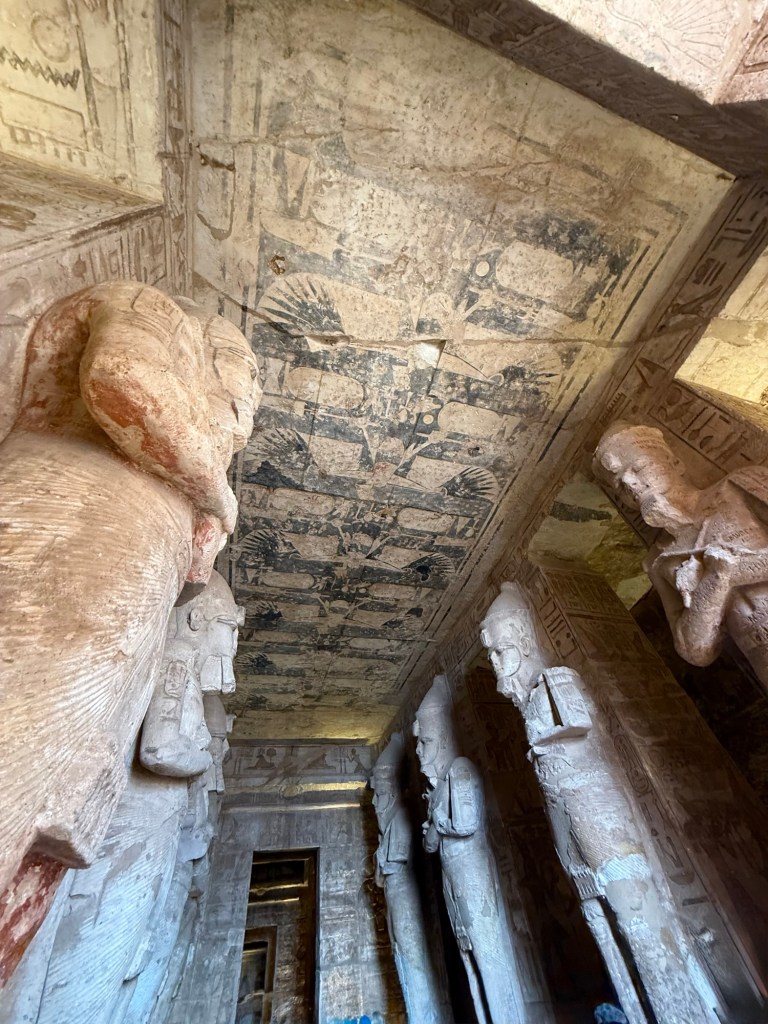
The hypostyle hall is supported by eight huge pillars depicting the deified Rameses linked to the god Osiris, the god of fertility, agriculture, the afterlife, the dead, resurrection, life and vegetation, to indicate the everlasting nature of the pharaoh.
The colossal statues along the left-hand wall bear the white crown of Upper Egypt, while those on the opposite side are wearing the double crown of Upper and Lower Egypt.
It was dedicated to the gods Amun, Ra-Horakhty, and Ptah, as well as to the deified Ramesses himself.
The bas-reliefs on the walls of the pronaos depict battle scenes in the military campaigns that Ramesses waged.
Much of the sculpture is given to the Battle of Kadesh, on the Orontes river in present-day Syria, in which the Egyptian king fought against the Hittites.
The most famous relief shows the king on his chariot shooting arrows against his fleeing enemies, who are being taken prisoner.
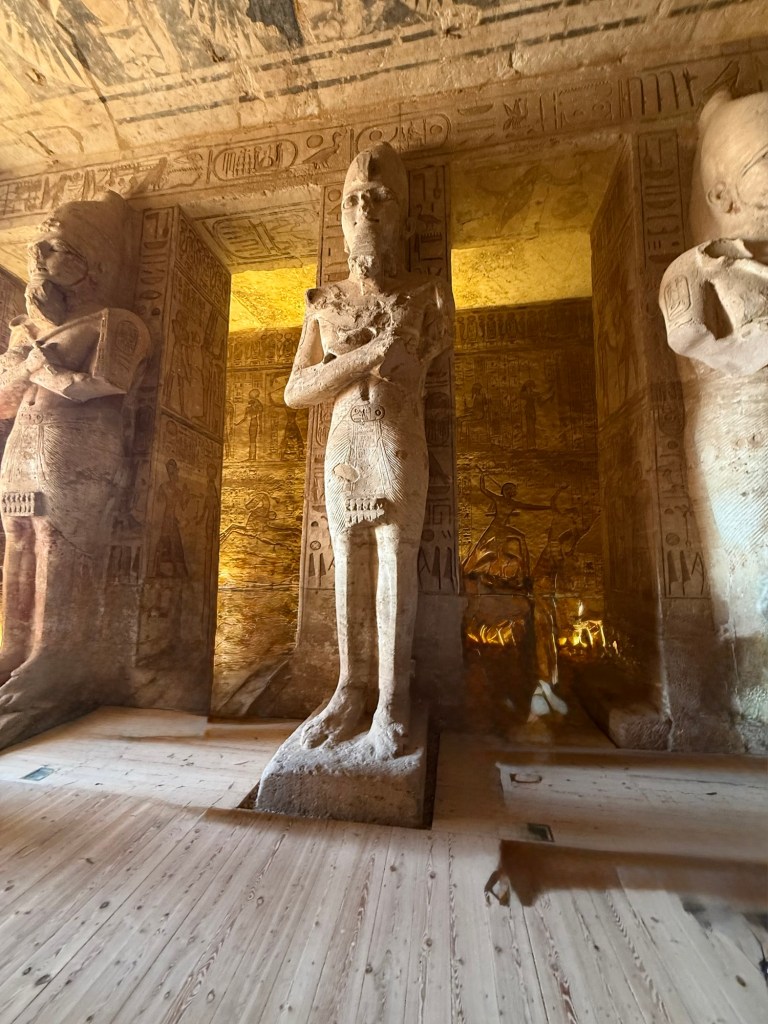
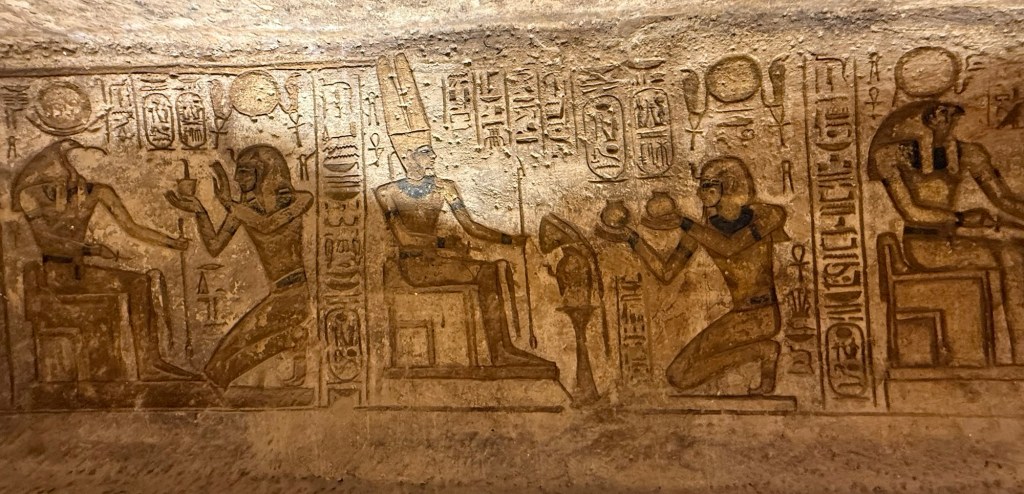
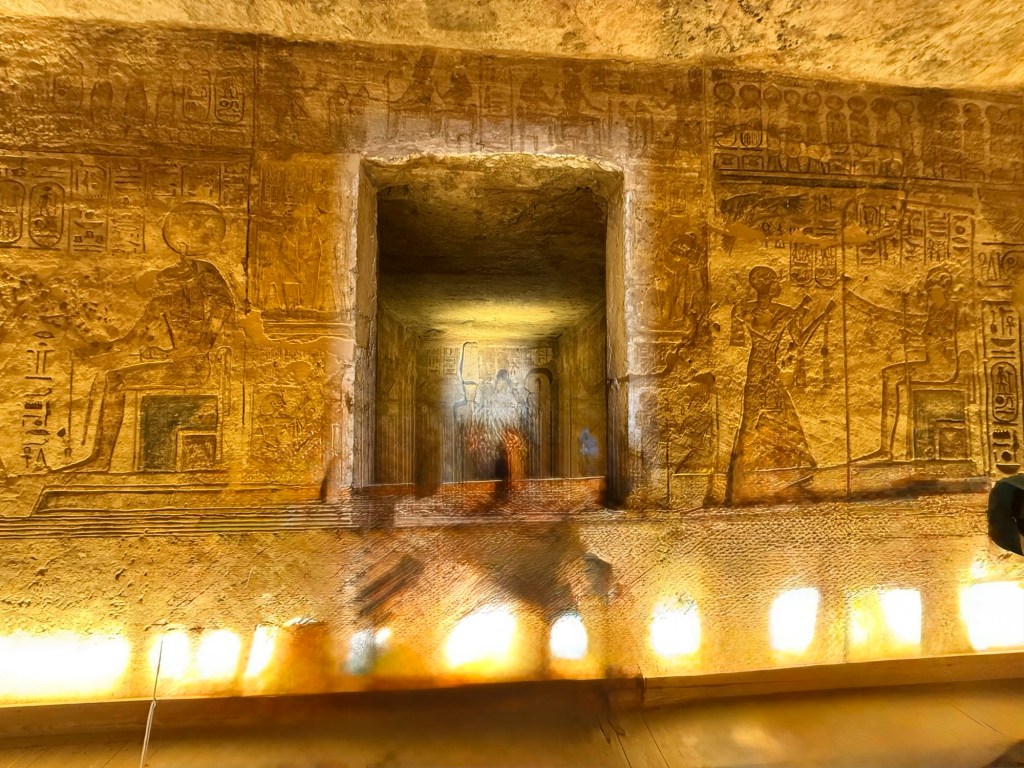
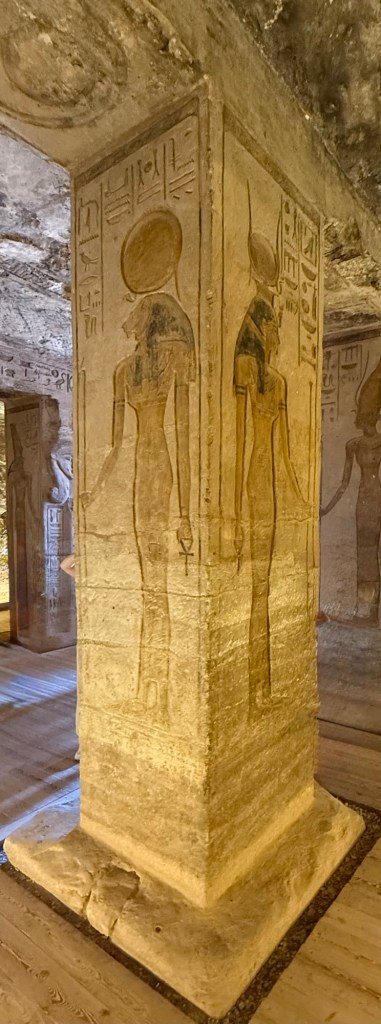
From the hypostyle hall, one enters the second pillared hall, which has four pillars decorated with beautiful scenes of offerings to the gods.
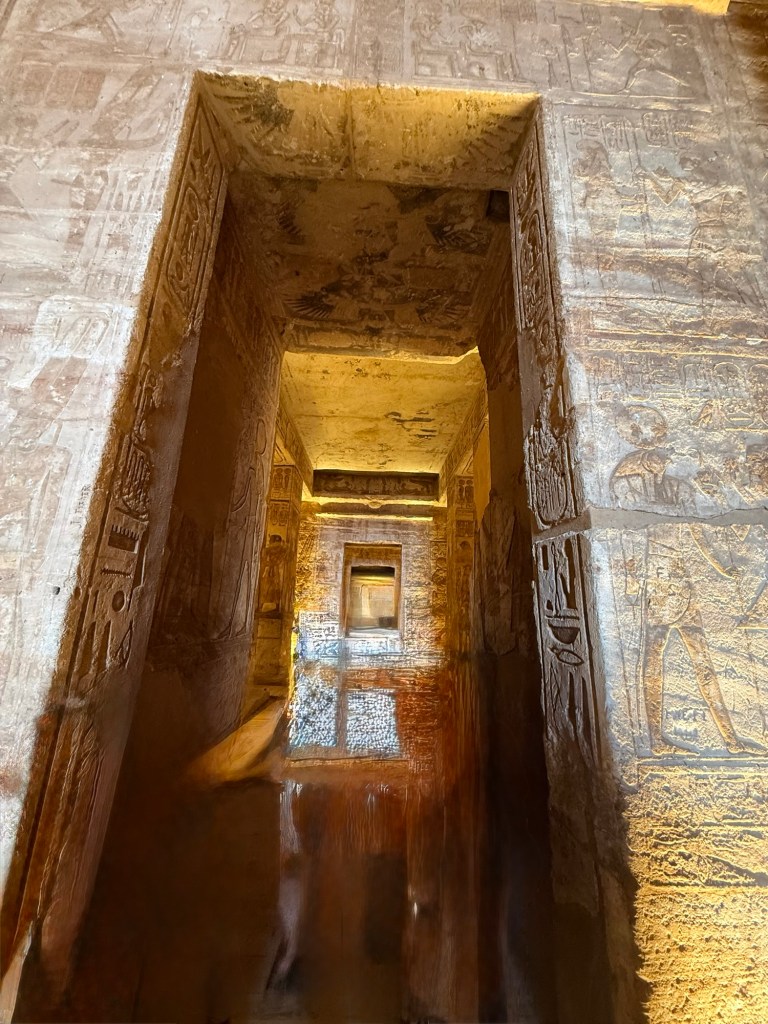
Many doorways lead further the inner sanctuary..
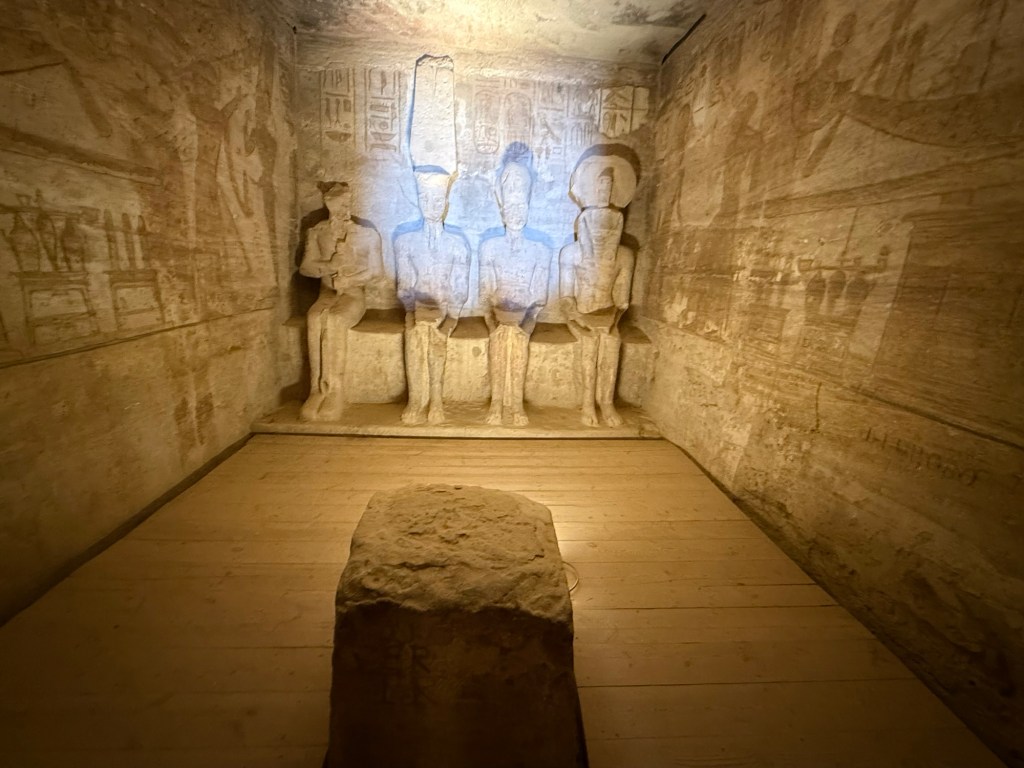
There are depictions of Ramesses and Nefertari with the sacred boats of Amun and Ra-Horakhty. This hall gives access to a transverse vestibule, in the middle of which is the entrance to the sanctuary. Here, on a black wall, are rock cut sculptures of four seated figures: Ra-Horakhty, the deified king Ramesses, and the gods Amun Ra and Ptah. Ra-Horakhty, Amun Ra and Ptah were the main divinities in that period and their cult centers were at Heliopolis, Thebes and Memphis respectively.
The Small Temple:
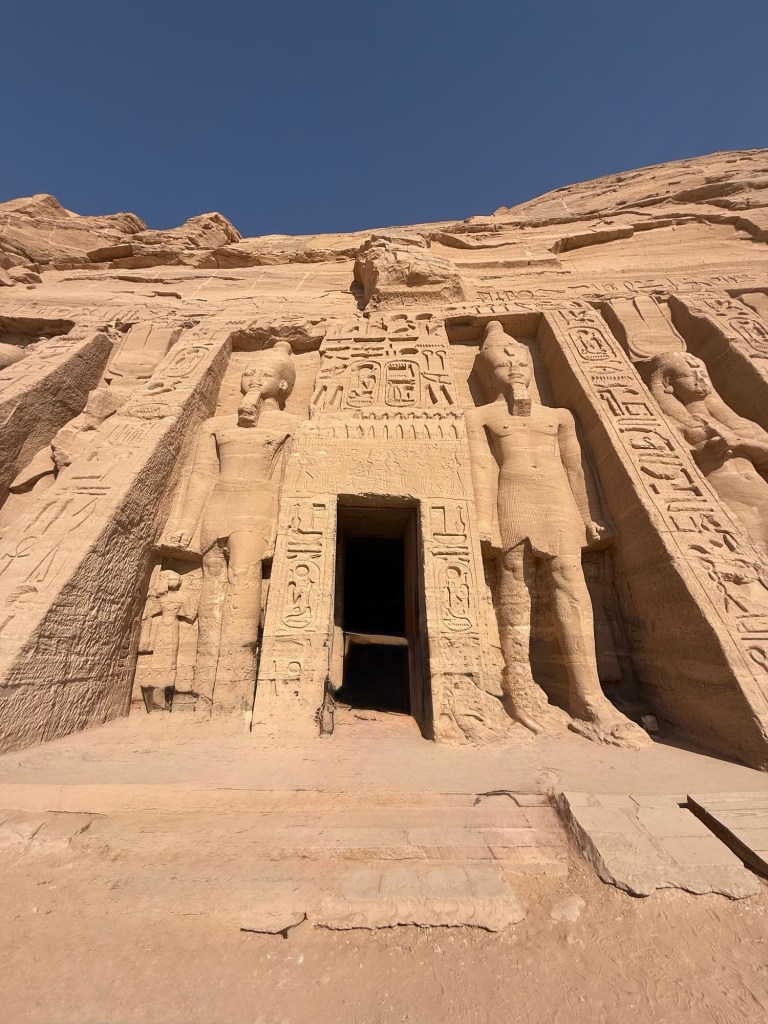
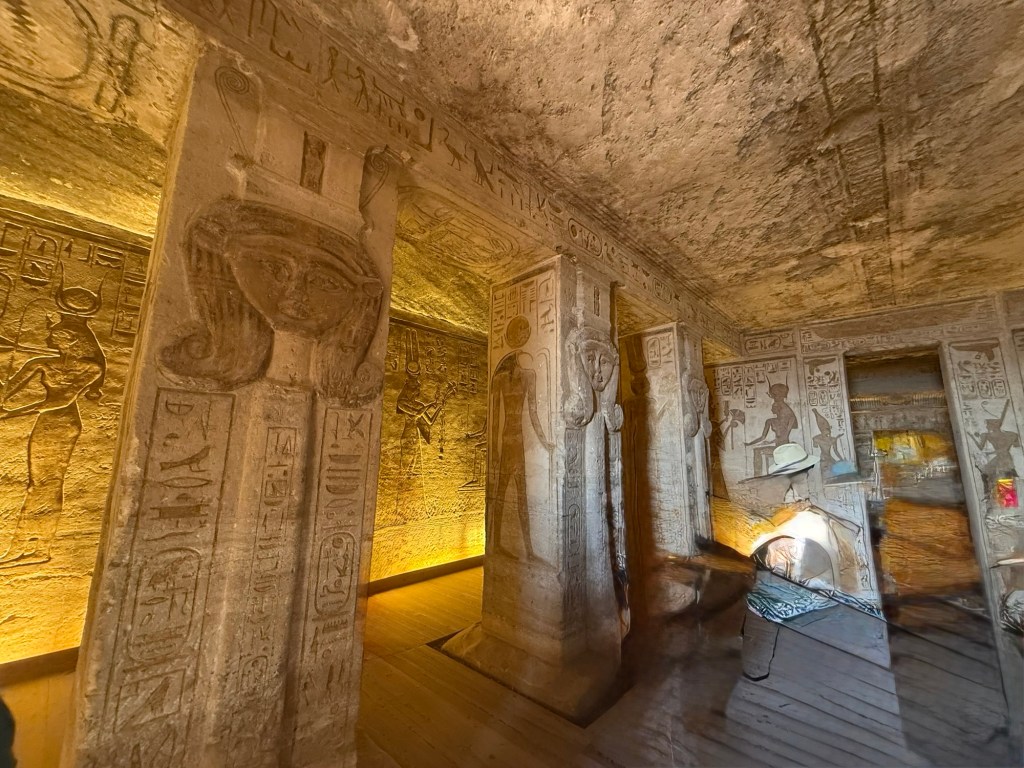
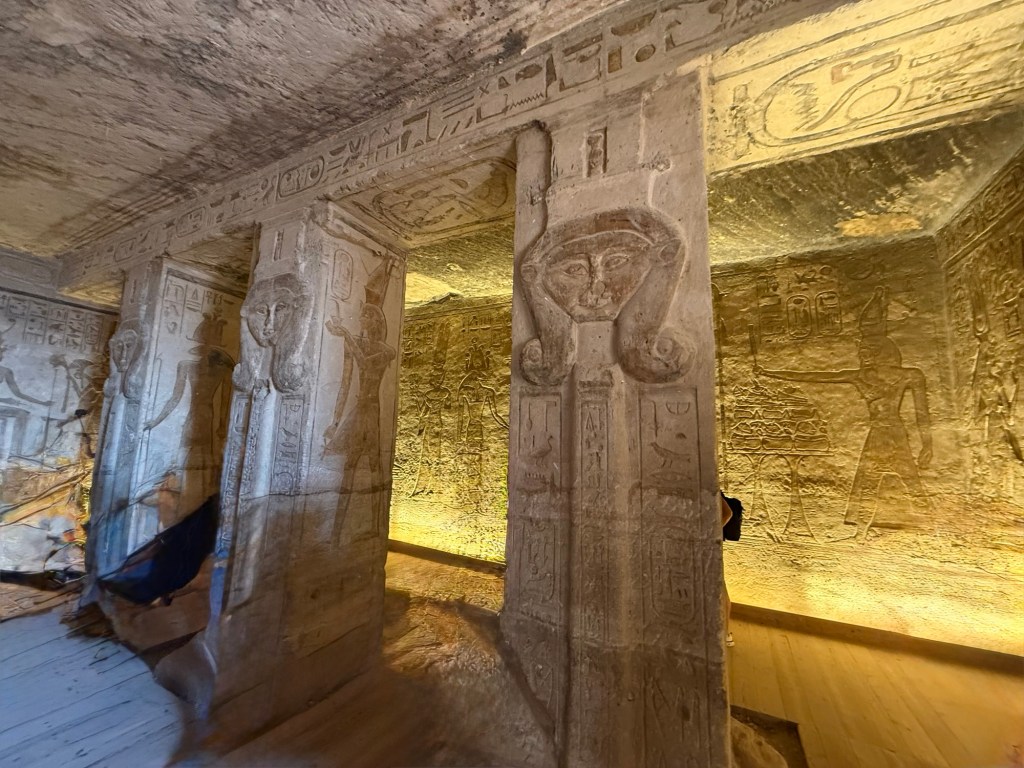
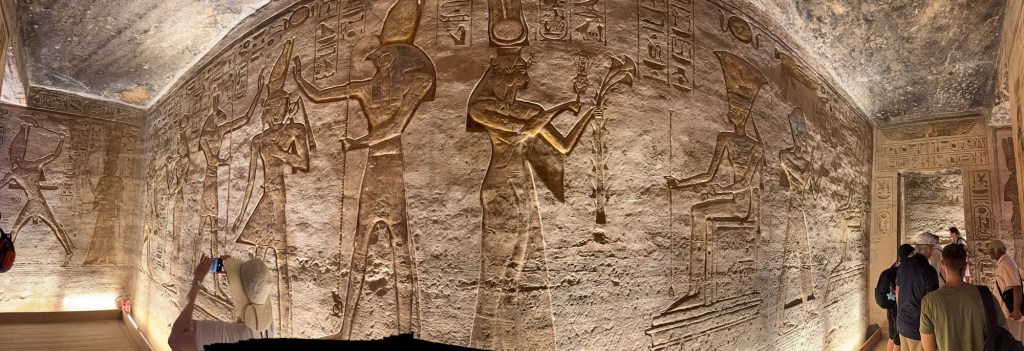
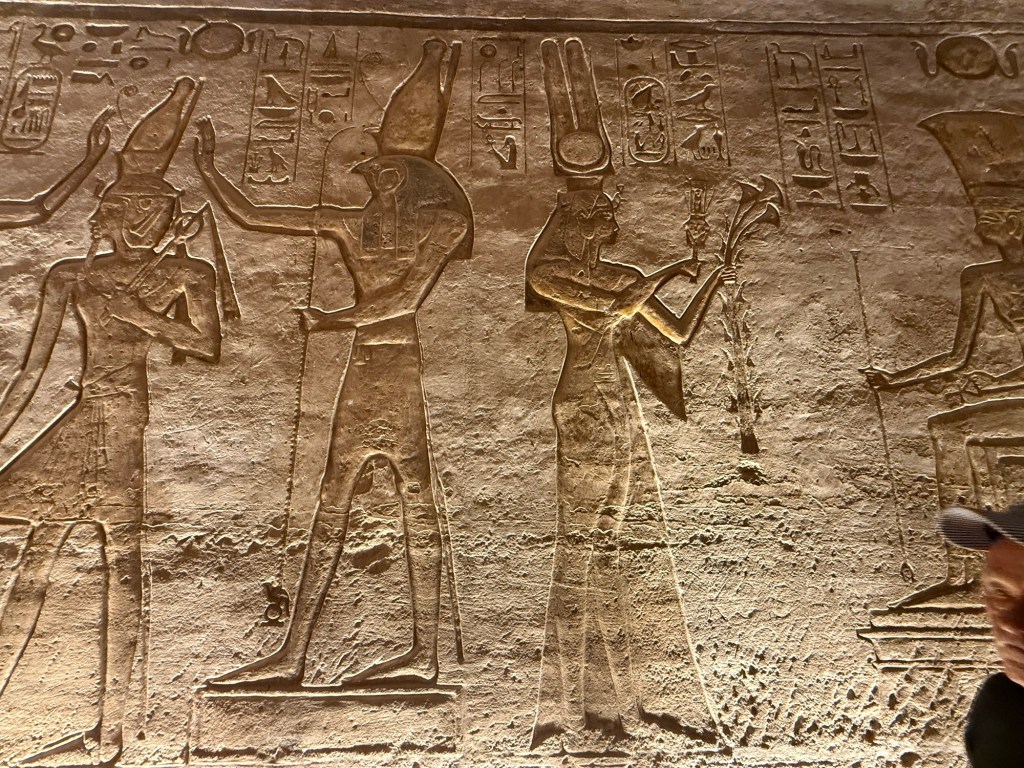
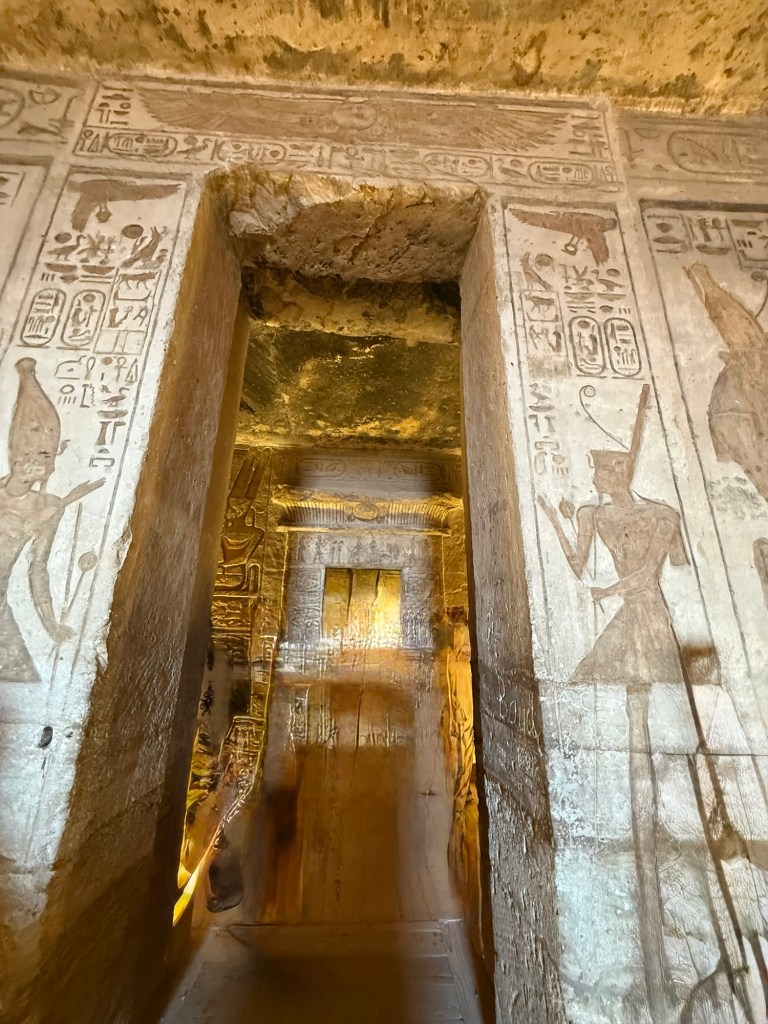
The smaller temple of Hathor and Nefertari was built about 100 m (330 ft) northeast of the temple of Ramesses II and was dedicated to the goddess Hathor and Ramesses II’s chief consort, Nefertari.
Morning Itinerary: The Nile Dams, Cruising the Nile on Feluccas, Motor Boating to Agilkia Island and Temple of Philae, Nubean Culture and Dancing ~ 40°C/104°F
By Paul Bryers
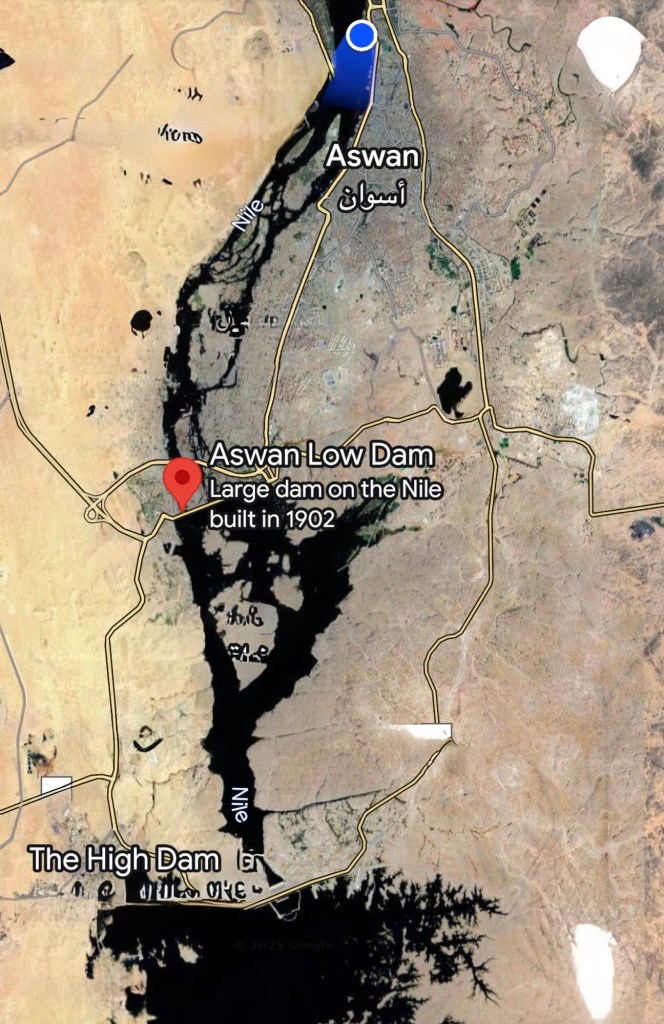
A comprehensive understanding of the Aswan area necessitates a basic knowledge of the city’s location and the dams.
Map of Aswan City, Low and High Dams. Nile runs South to North ie bottom to top of photo.
Aswan City, where our AMALilia was docked, is situated downstream of both dams.
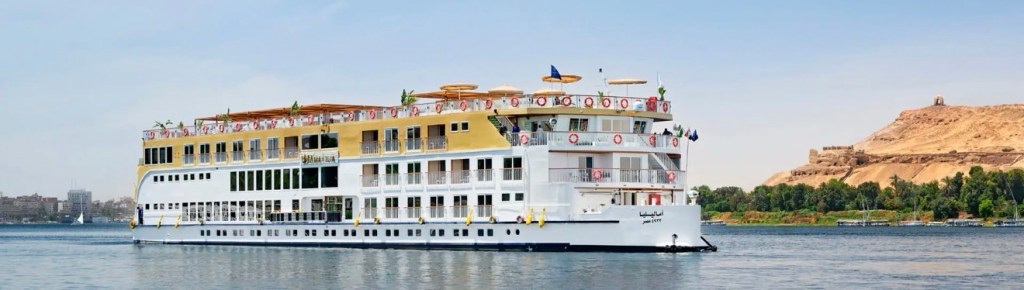
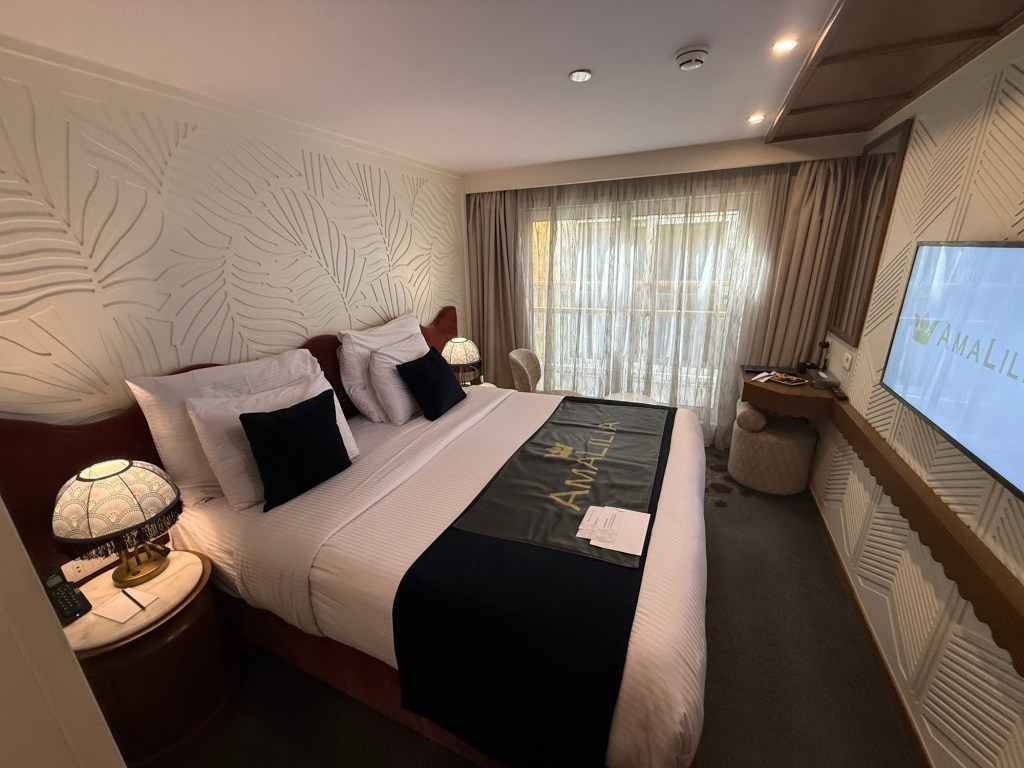
AMALilia
Between the City and the first dam are several islands, including Elephantine Island as mentioned later.
There are two Aswan Dams: the older Low Dam constructed by the British and the newer High Dam built by the Egyptians, located further upstream.
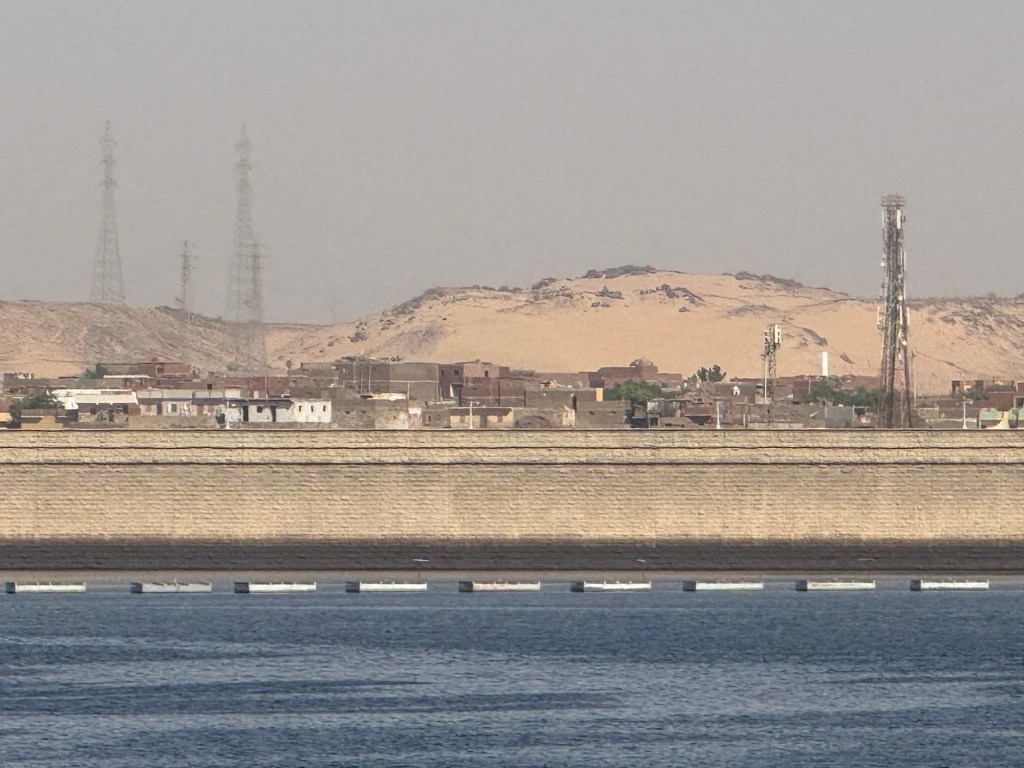
The British constructed the Low Dam between 1899 and 1902 to facilitate irrigation. However, due to inadequate water storage capacity, it underwent two expansions, ultimately leading to the construction of the larger High Dam further upstream.
Low Dam
Development of the High Dam commenced in 1960 and was completed in 1968, with its official inauguration taking place in 1971. Approximately 57 million cubic yards of earth and rock were utilized in the dam’s construction, resulting in a mass several times that of the Great Pyramid at Giza.
High Dam
The massive water reservoir created by the dam, measuring 300 miles in length and 10 miles in width, is known as Lake Nasser.
The construction of Lake Nasser necessitated the resettlement of 90,000 Egyptian laborers and Sudanese Nubian travelers.
Additionally, numerous ancient structures, most notably the carvings of Abu Simbel, required relocation.
So, having set the scene…
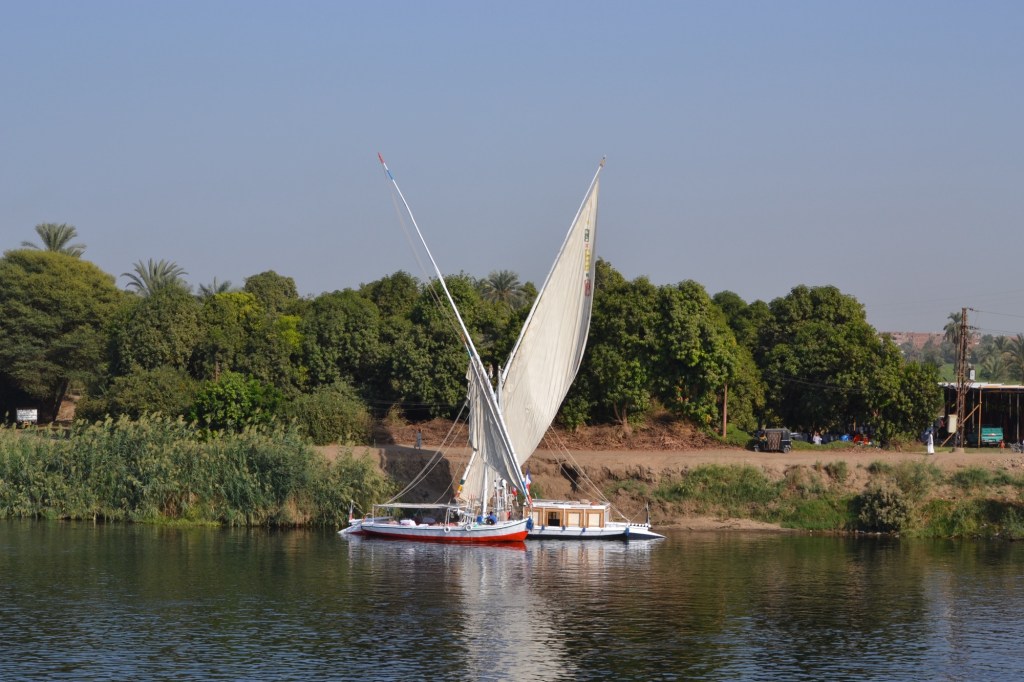
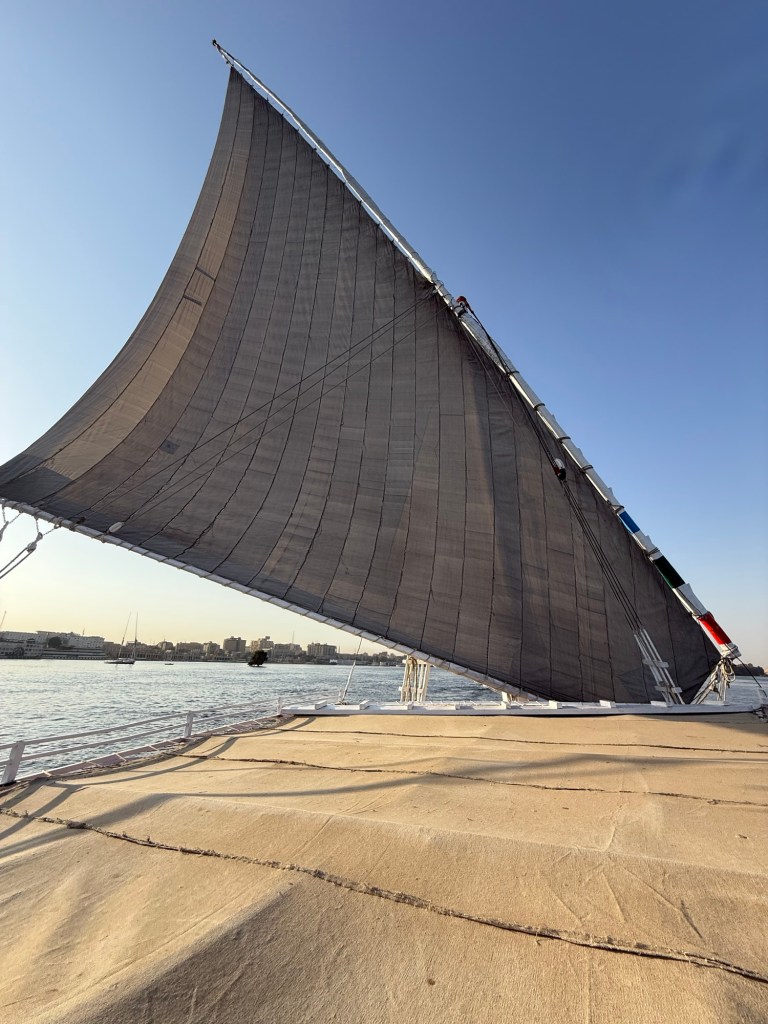
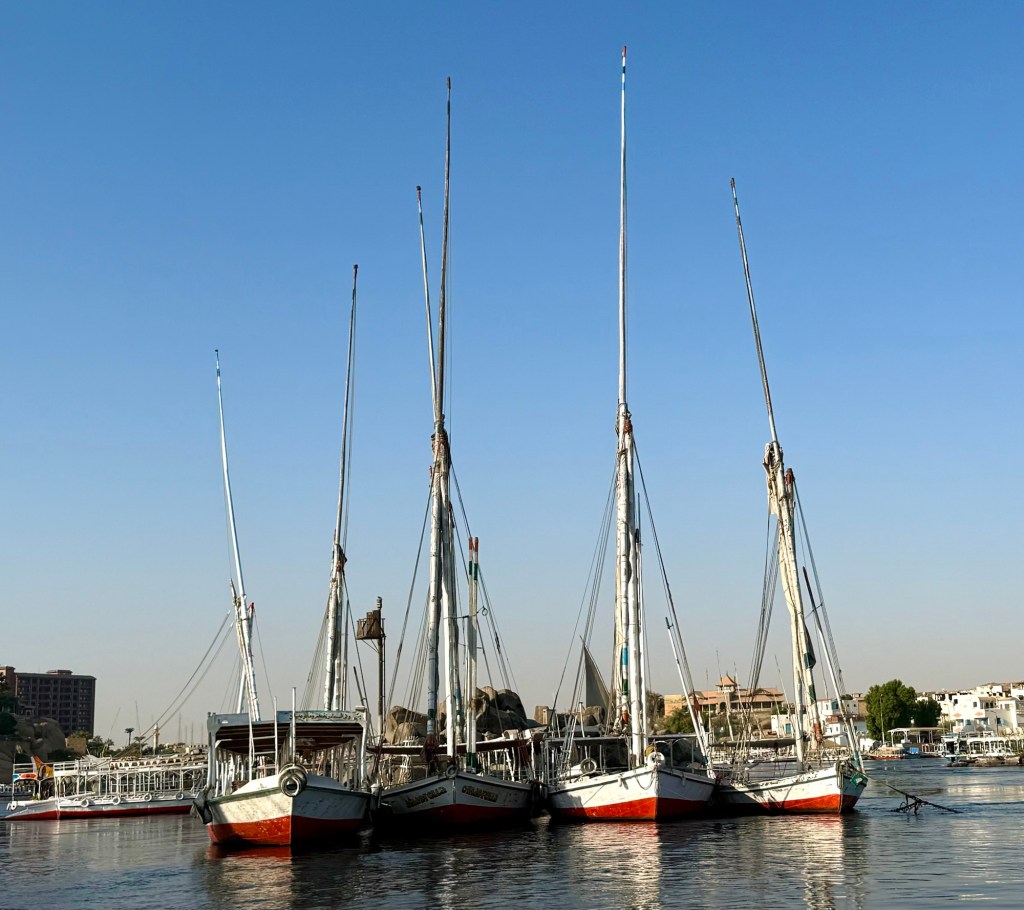
Elephantine Island: We embarked on a peaceful felucca ride from our ship docked in Aswan City, to pass through Elephantine Island.
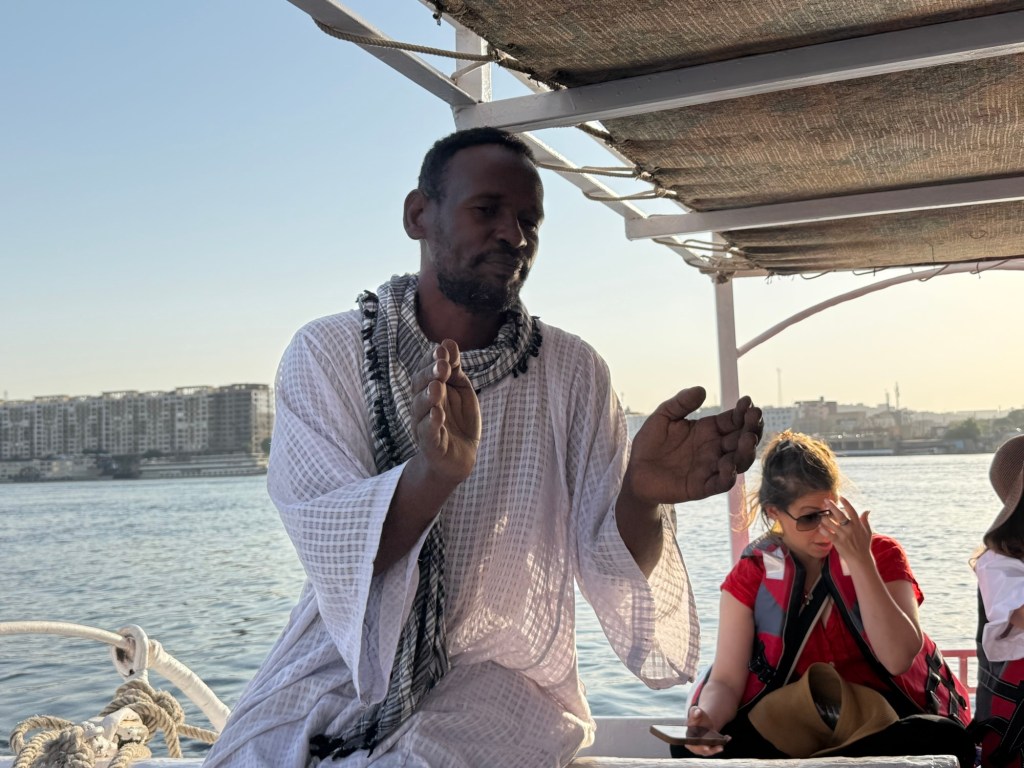
Our wonderful AMA Guide Mohammed was there to set the scene…
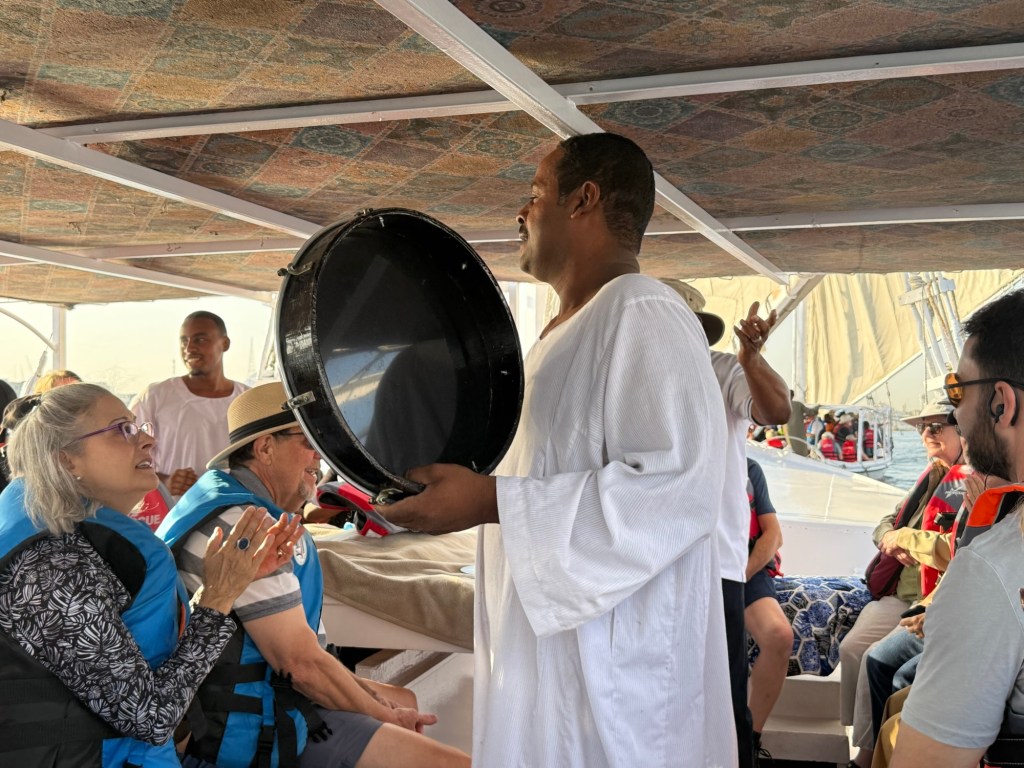
….and the crew entertained us…
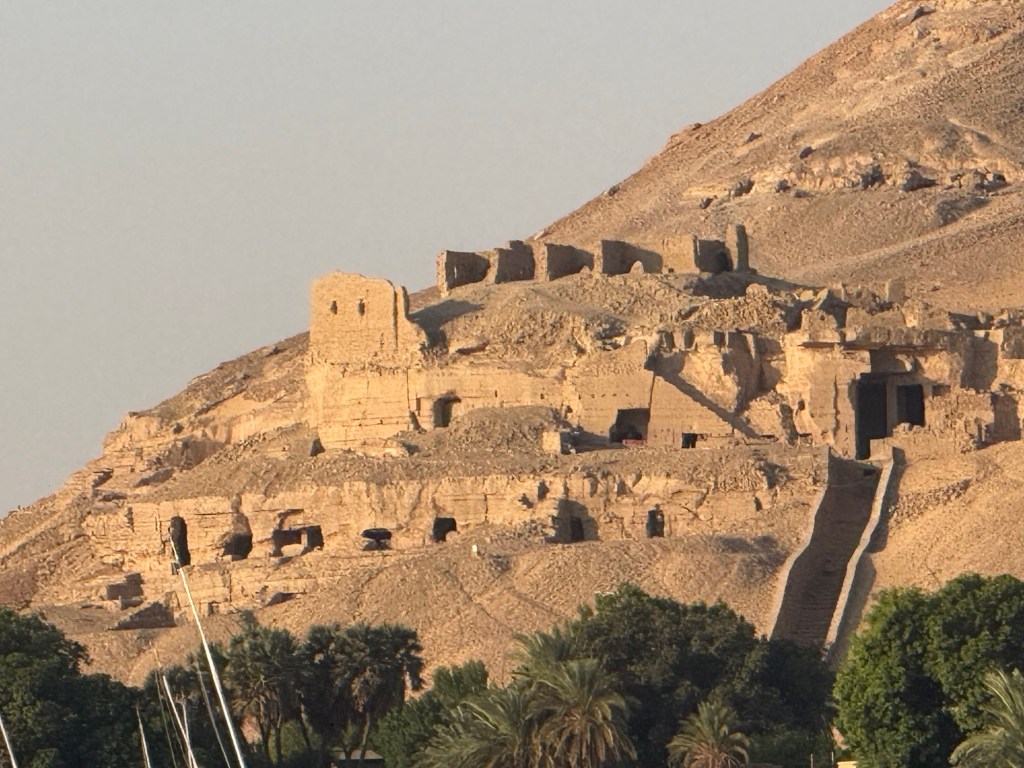
Elephantine Island, situated on the west bank of the Nile, flourished as a significant trading center during the Pharaonic era. Locals claim the island is home to the legendary Egyptian god Khnum.
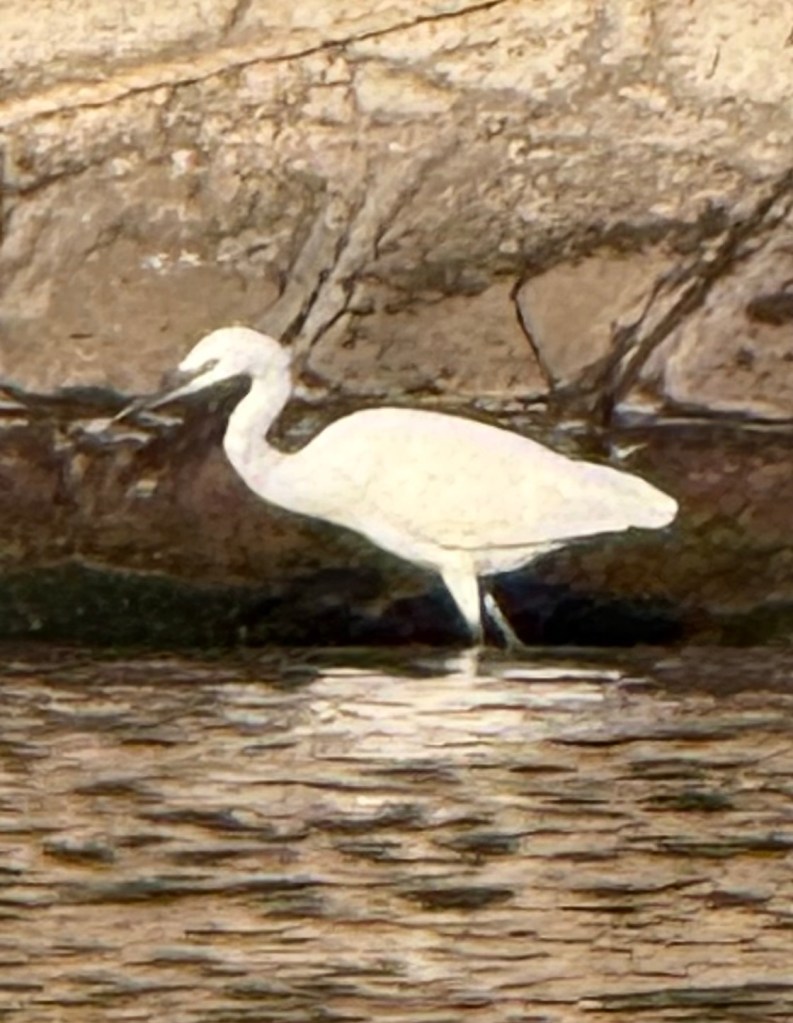
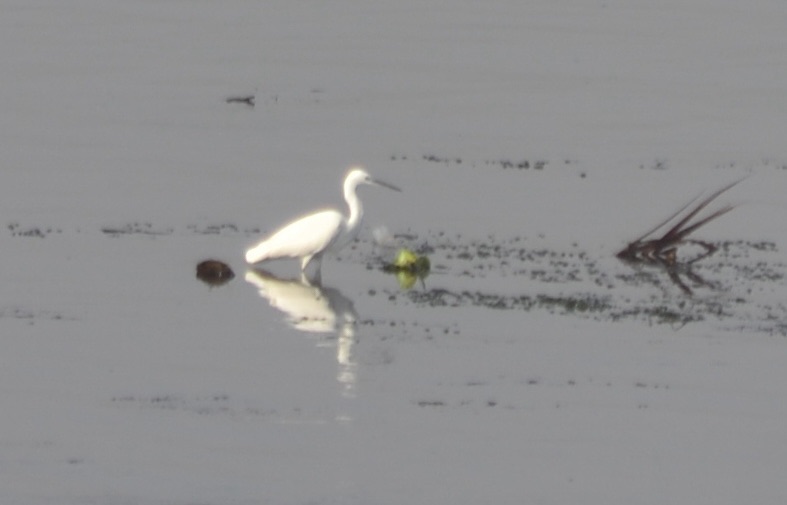
Herons and egrets were fishing or flying around.
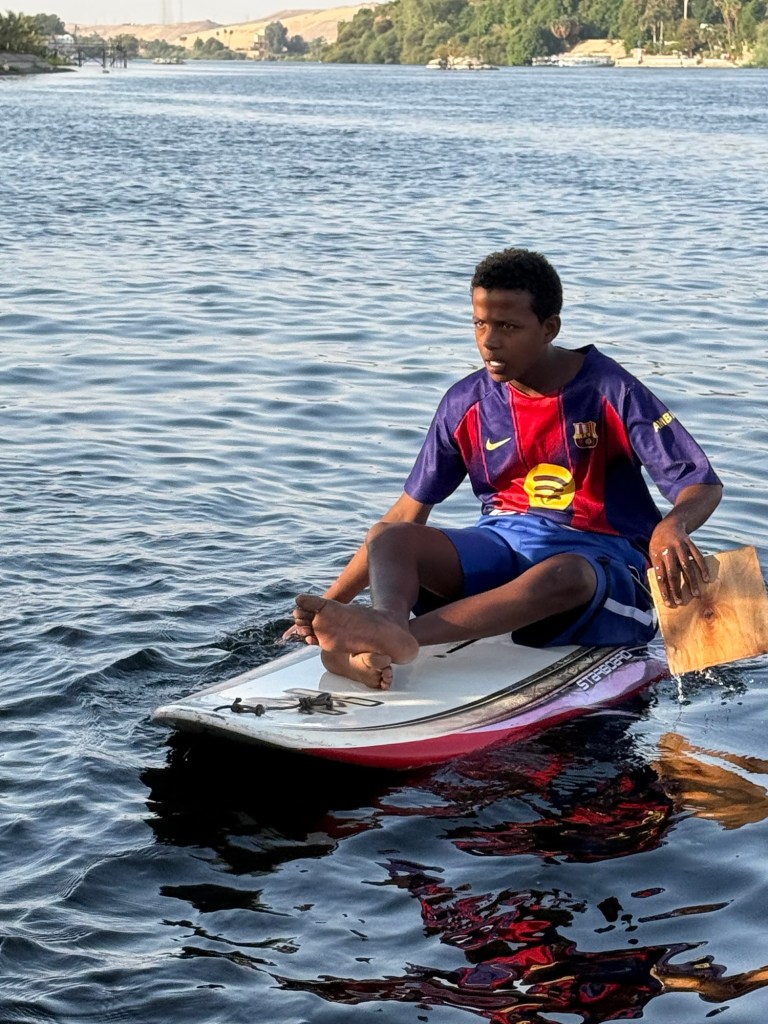
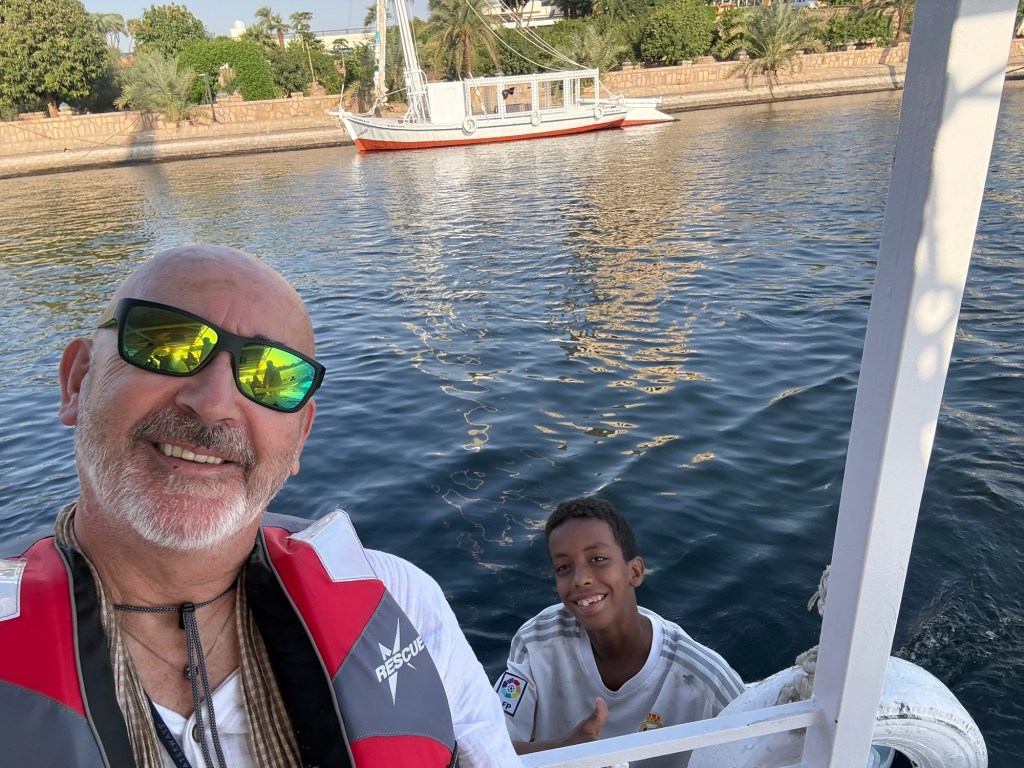
In addition, some very small friendly pirates were singing for a donation. Bless.
Between the two dams lies an engorged Nile, with several islands within. We explored two of these islands by motorboat.
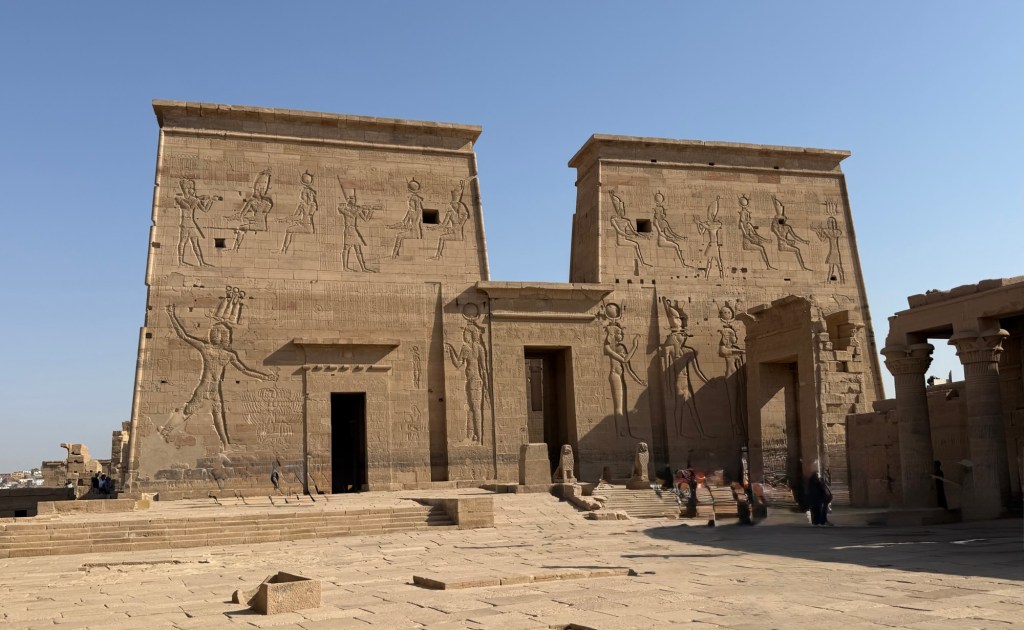
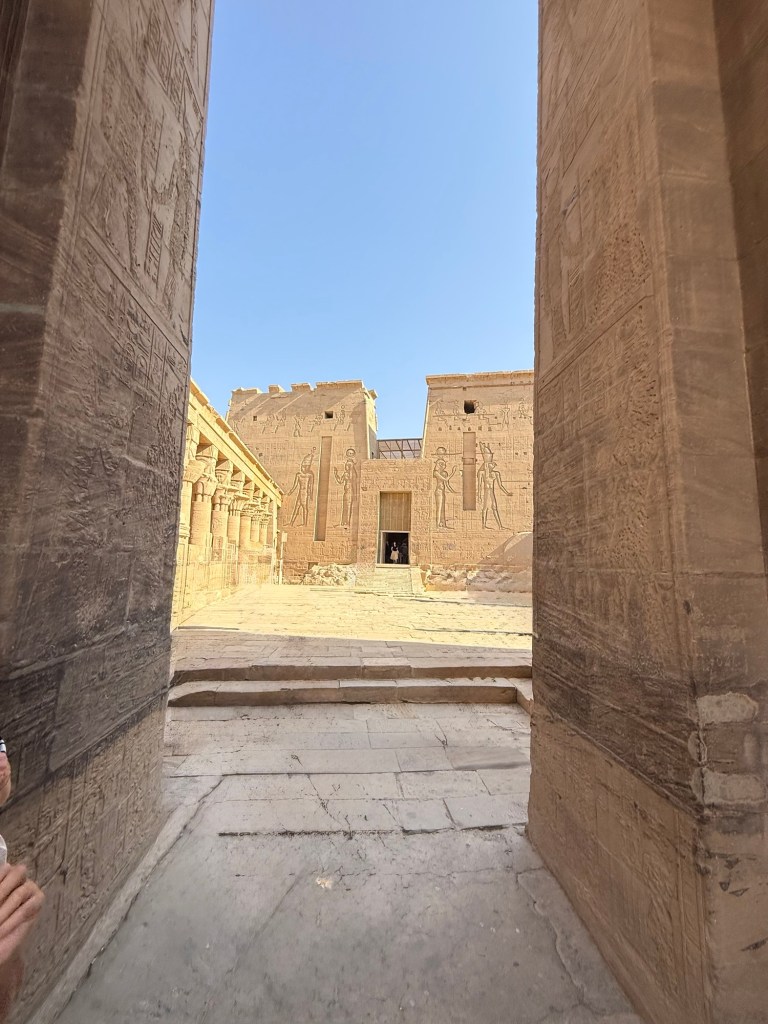
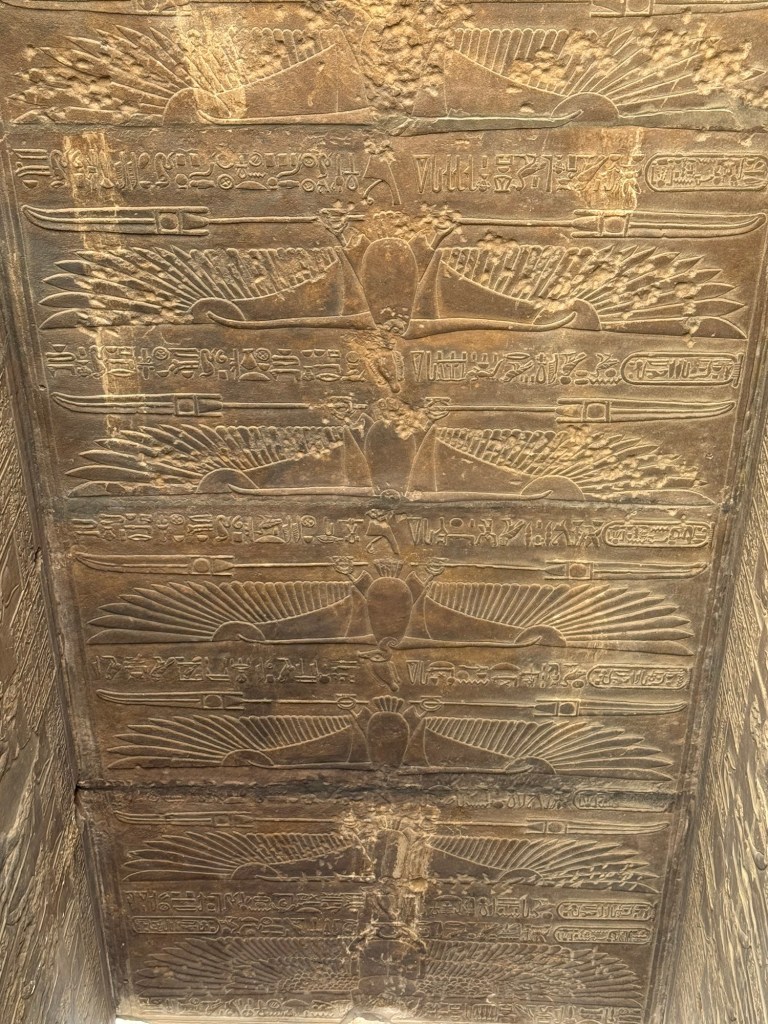
Agilkia Island and Temple of Philae: This island home to the UNESCO-designated Philae Temple complex, boasting one of the most stunningly restored and preserved hieroglyphs in Egypt. Constructed between 380 BC and 362 BC, the temple is dedicated to the goddess Isis, the wife of Osiris and mother of Horus. While Isis’ temple is impressive, Horus’s temple is even more impressive.
Key features of the Temple include:
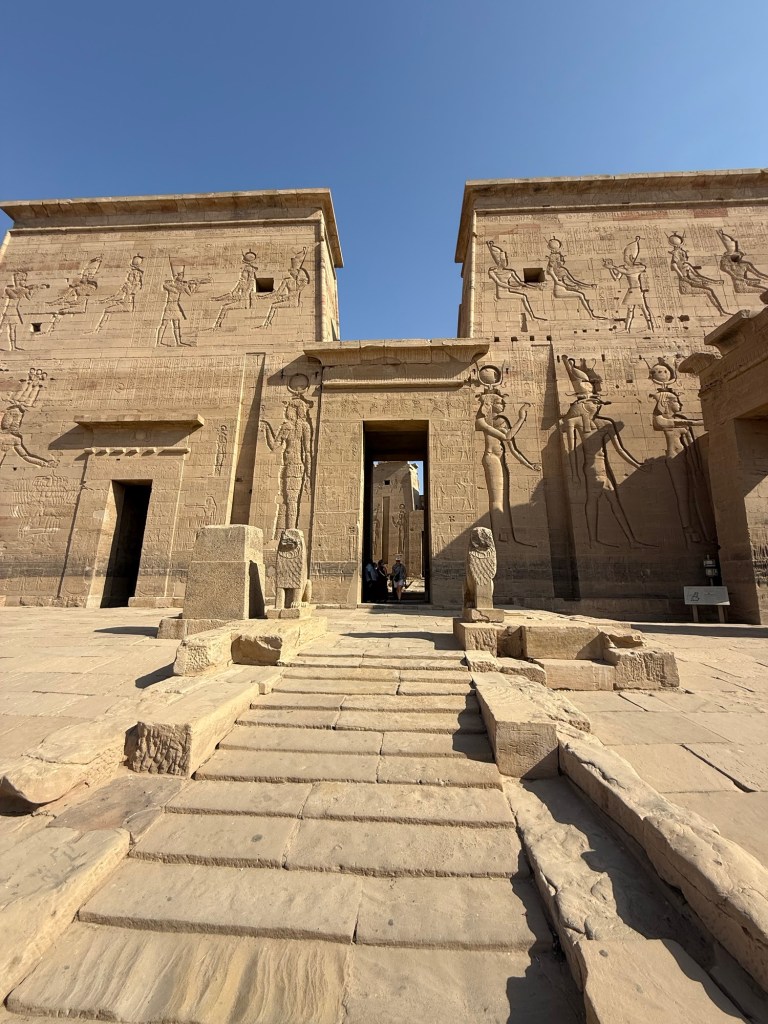
A large first pylon gateway with outer courtyard of columns
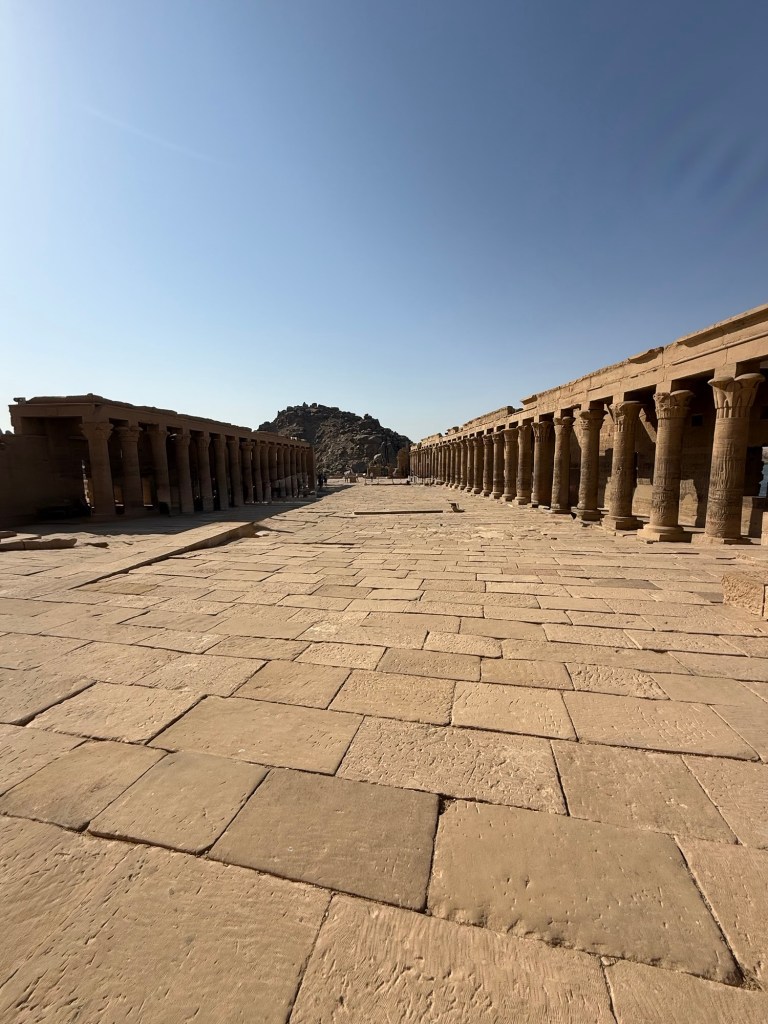
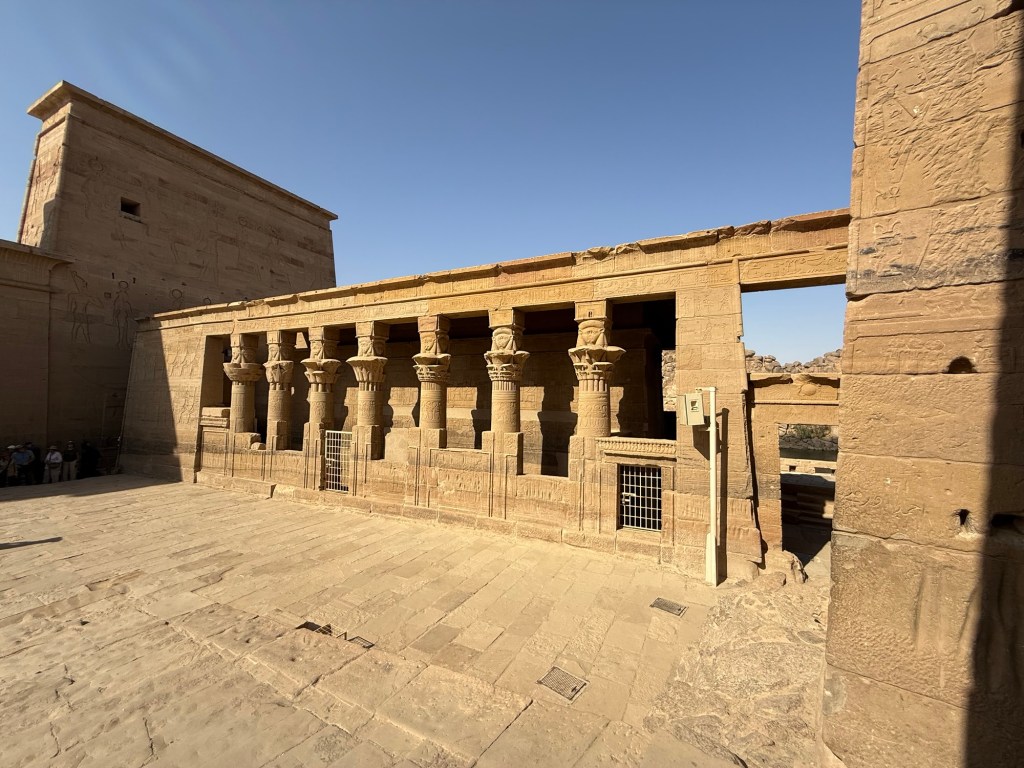
A central courtyard with a second pylon and outside columns of the Birthing Hall….
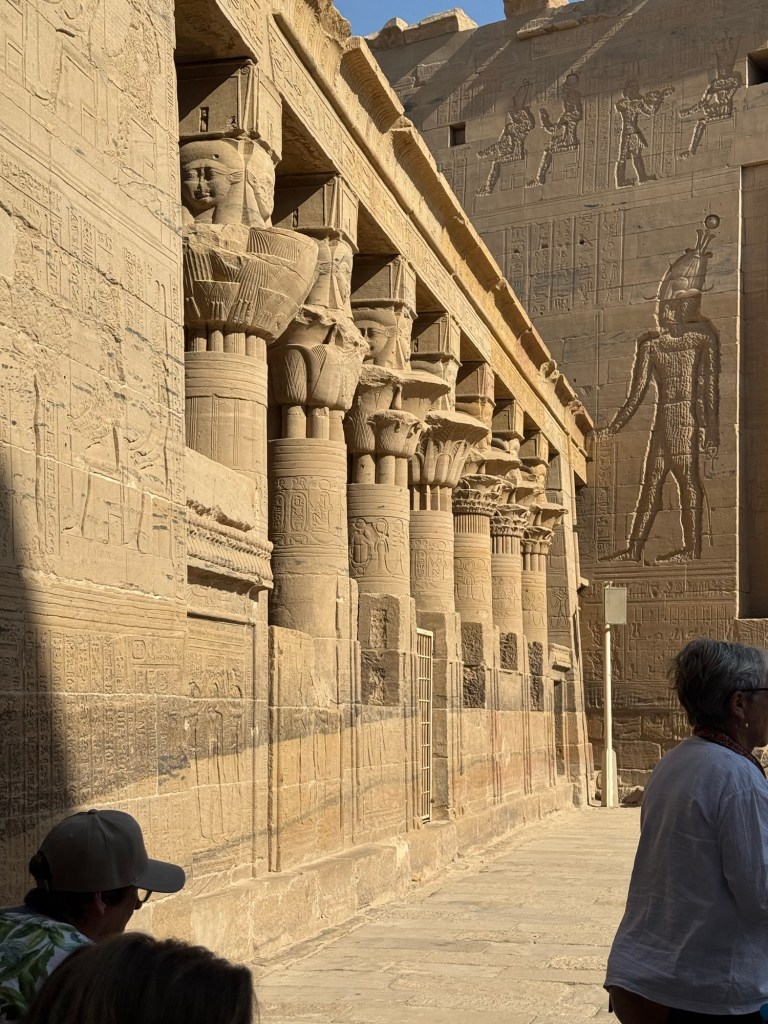
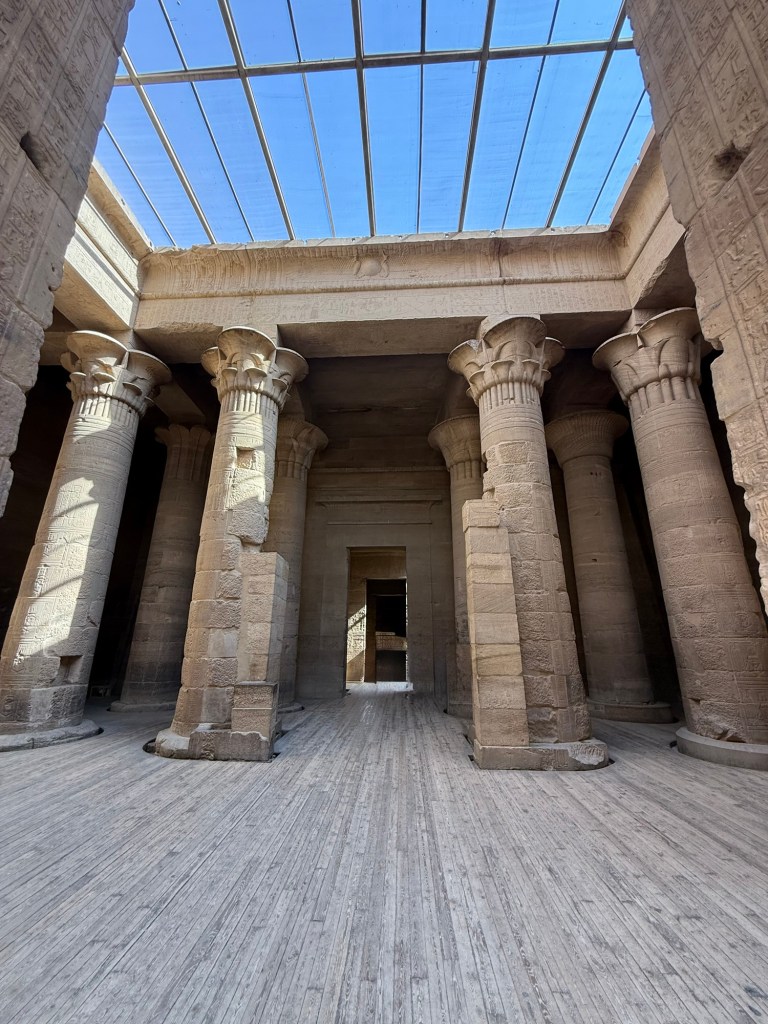
A Birthing Hall (Mammisi). This hall is surrounded on three sides by a colonnade of floral topped columns each crowned with a sistrum and Hathor-headed capital. The Mammisi was a common feature of Ptolemaic temples and the example on Philae is similar in layout and decoration to the examples at Edfu. The mammisi from Philae served as a model for developing a typical birth house plan with pronaos and surrounding ambulatory.
A typical hypostyle hall with high columns.
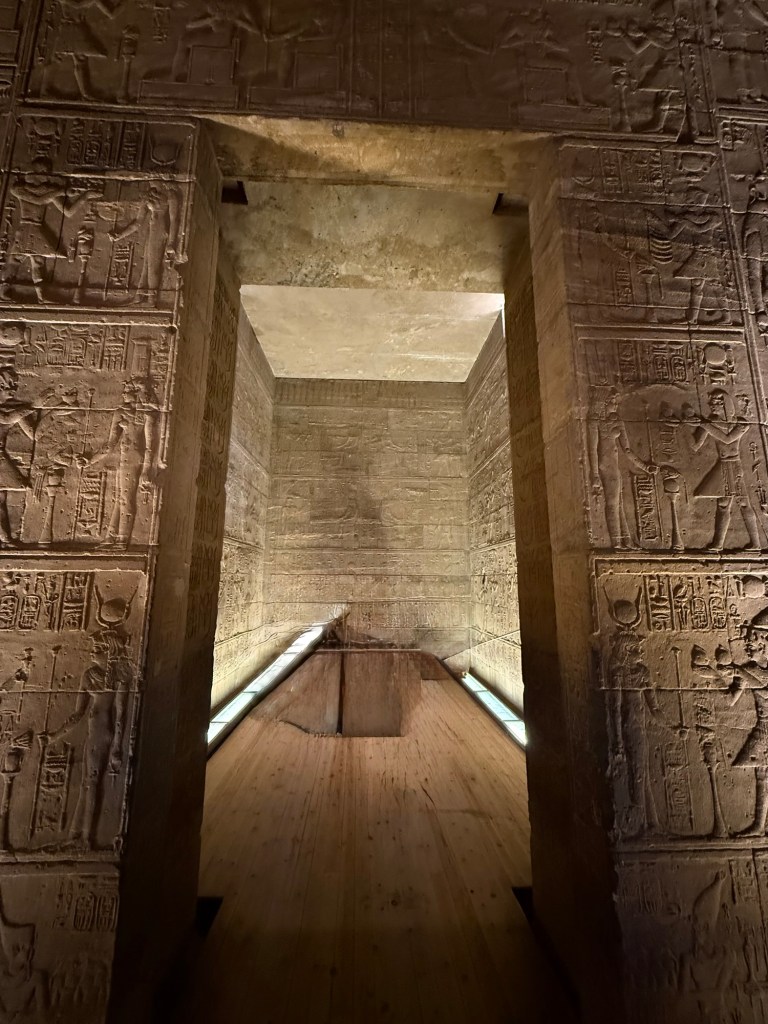
An inner sanctuary. To get to this inner sanctuary required going through 5 sub- sanctuaries (I think that was number and nomenclature). I’m sure you’ll let me know….
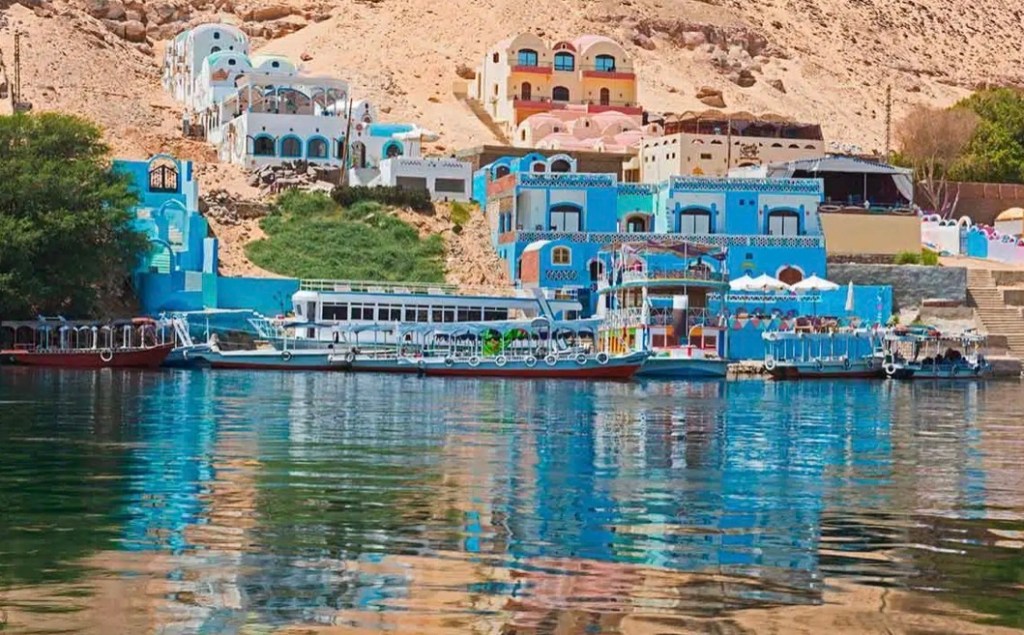
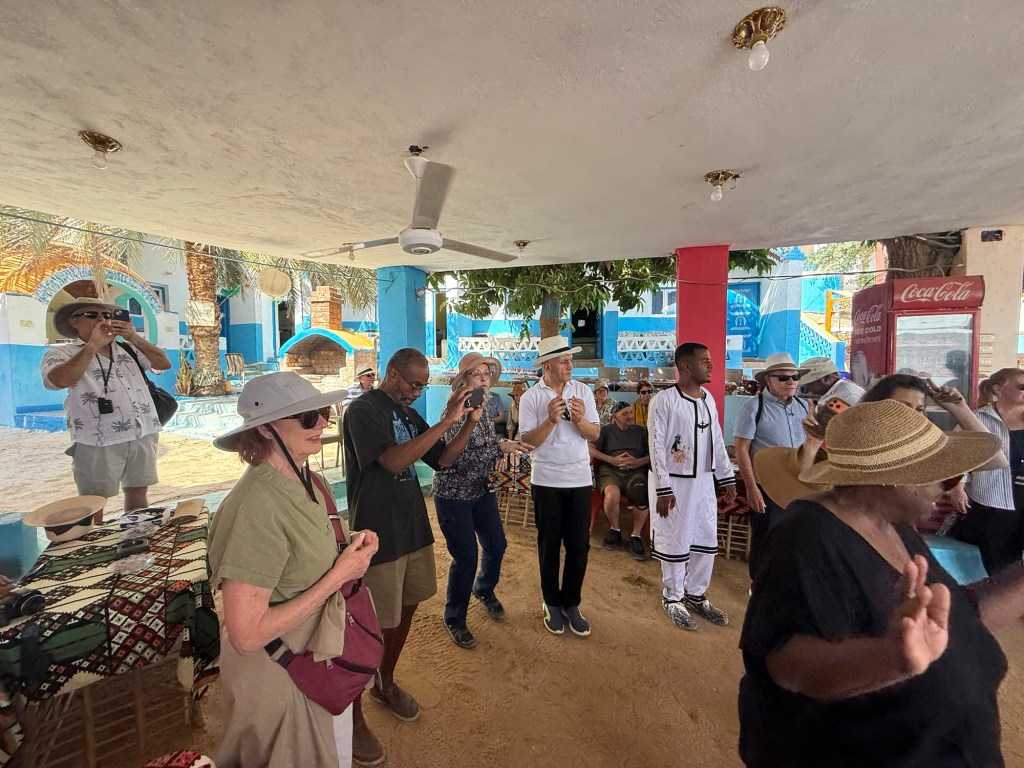
Nubian Village of Hessa: As we motorboated to another island and the vibrant Nubian Village of Hessa, we felt a cooling breeze on our faces.
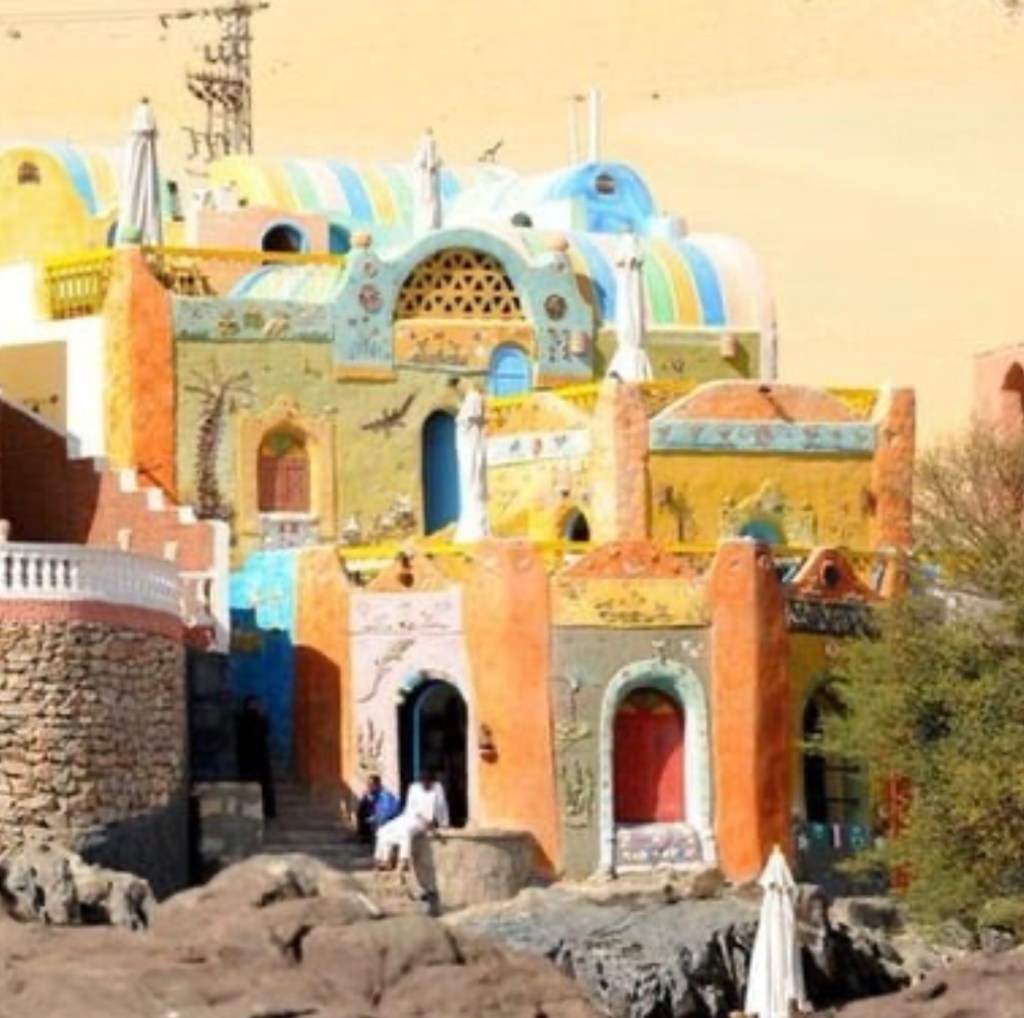
Note, some of the Nubian photos are from Google.
The warm and friendly Nubian people welcomed us with local music, and we danced together.
The Nubian houses, constructed from mud, are often colored blue or orange. Palm trees and gardens are ubiquitous, with residents raising chickens and goats on their farms. Some locals engage in selling handicrafts, while women specialize in drawing Henna for tourists.
And so, what a fun patched morning; as they say, another great AMADay, even though it’s just Noon.
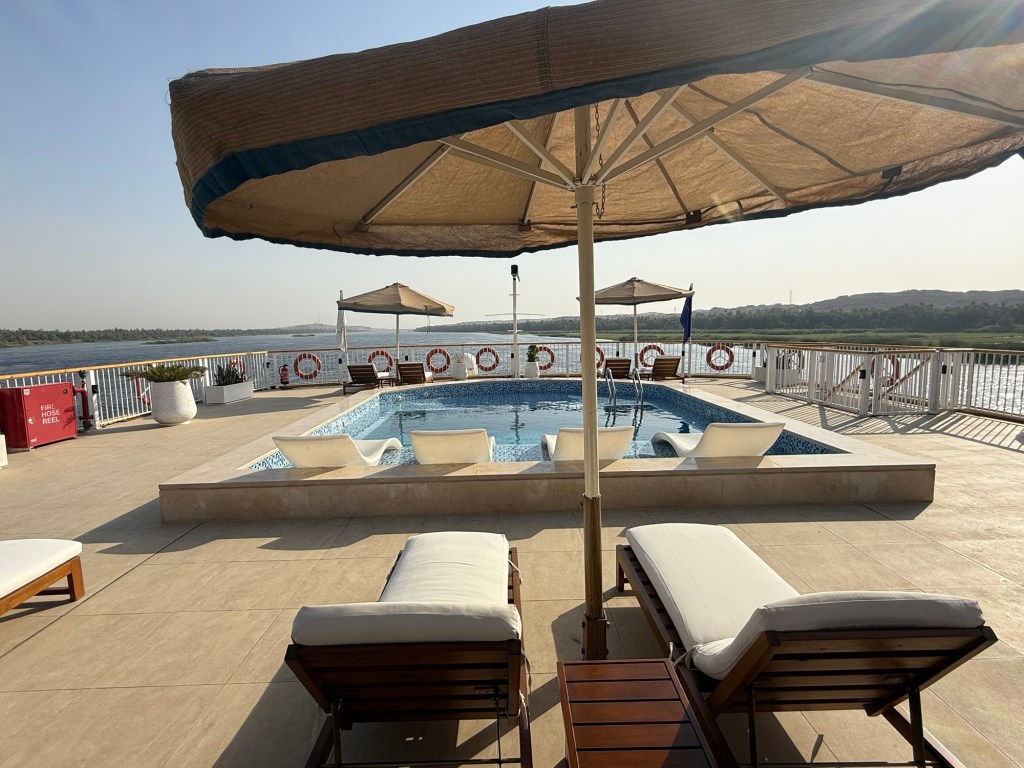
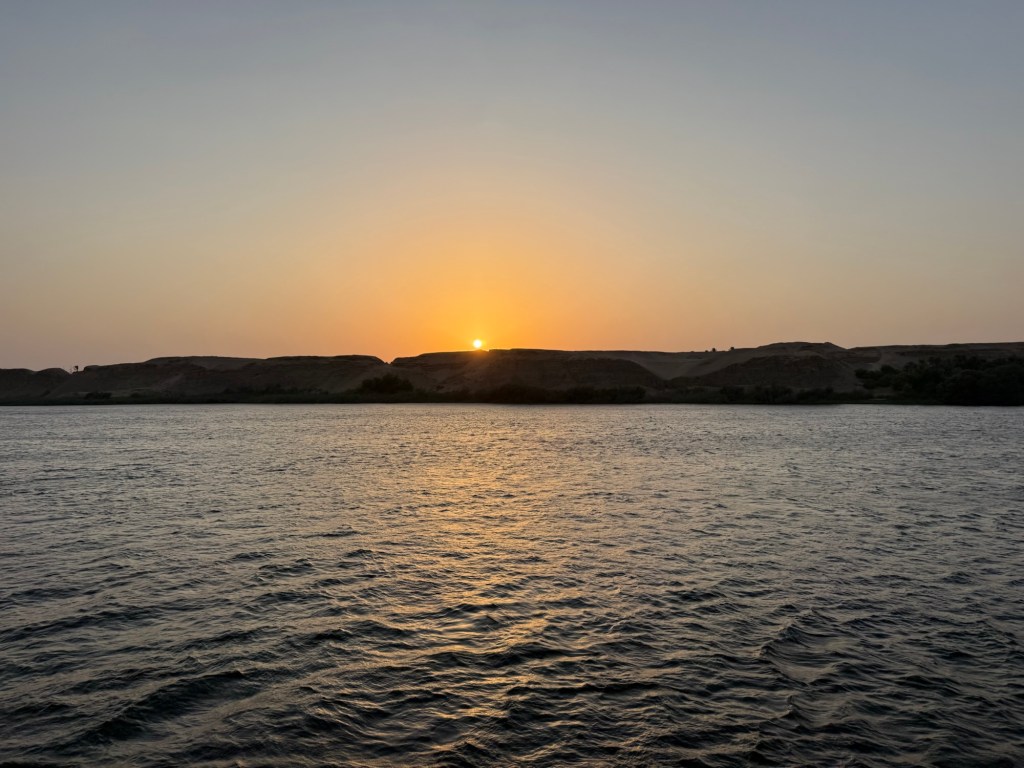
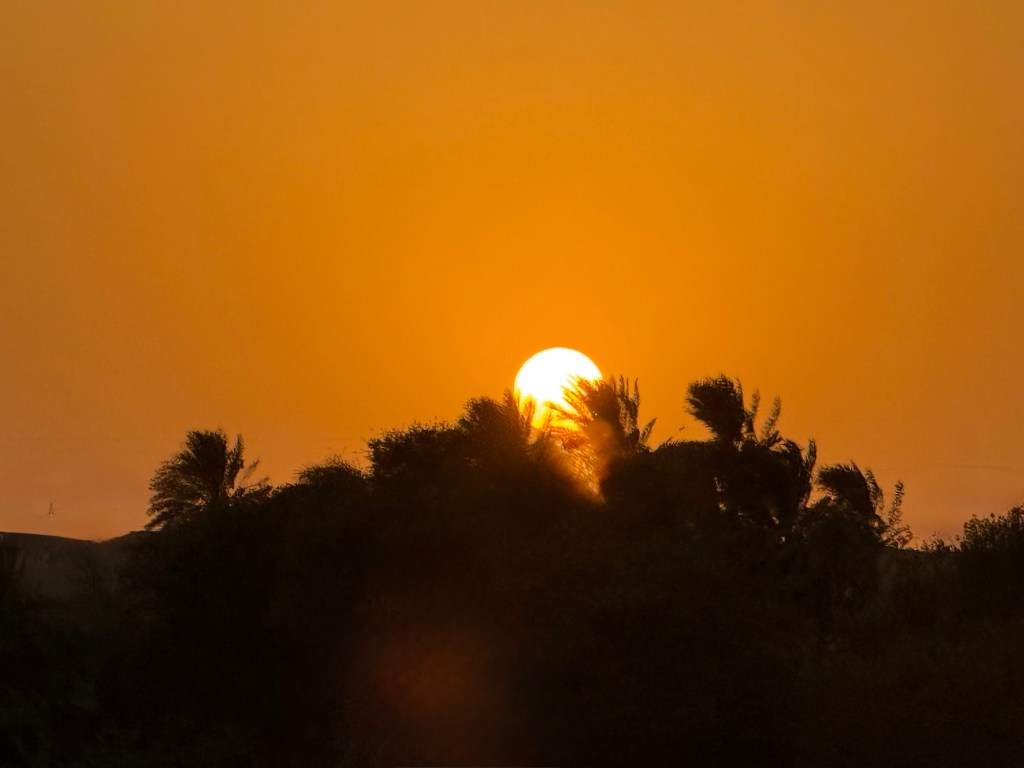
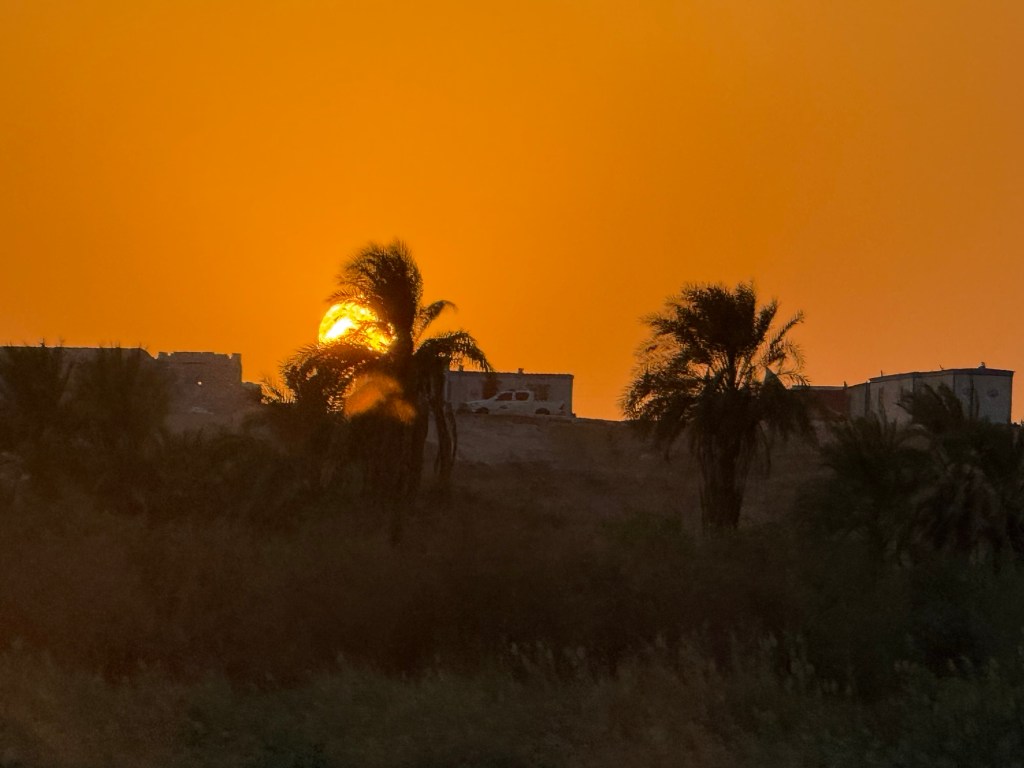
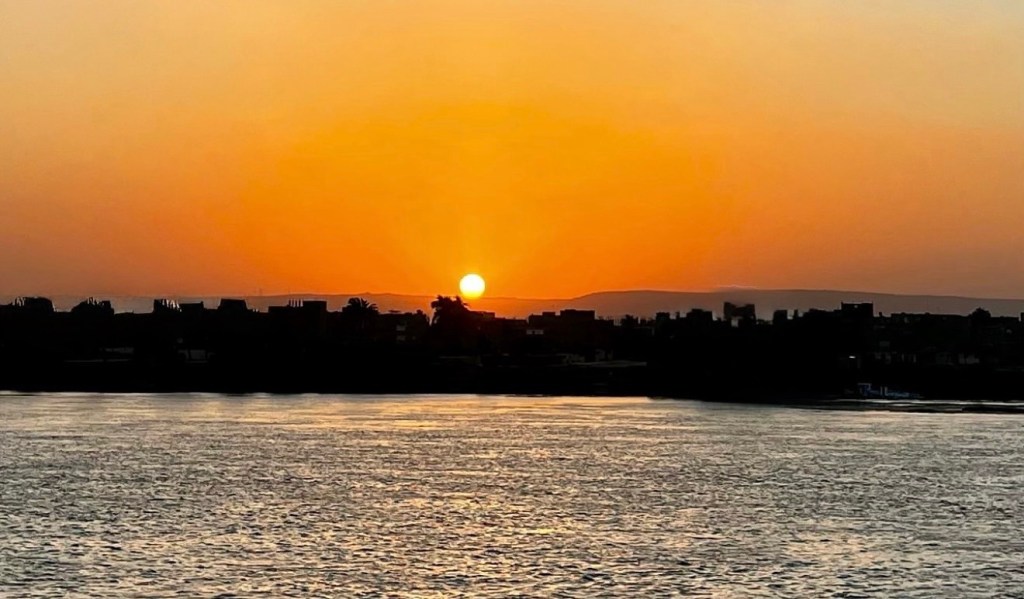
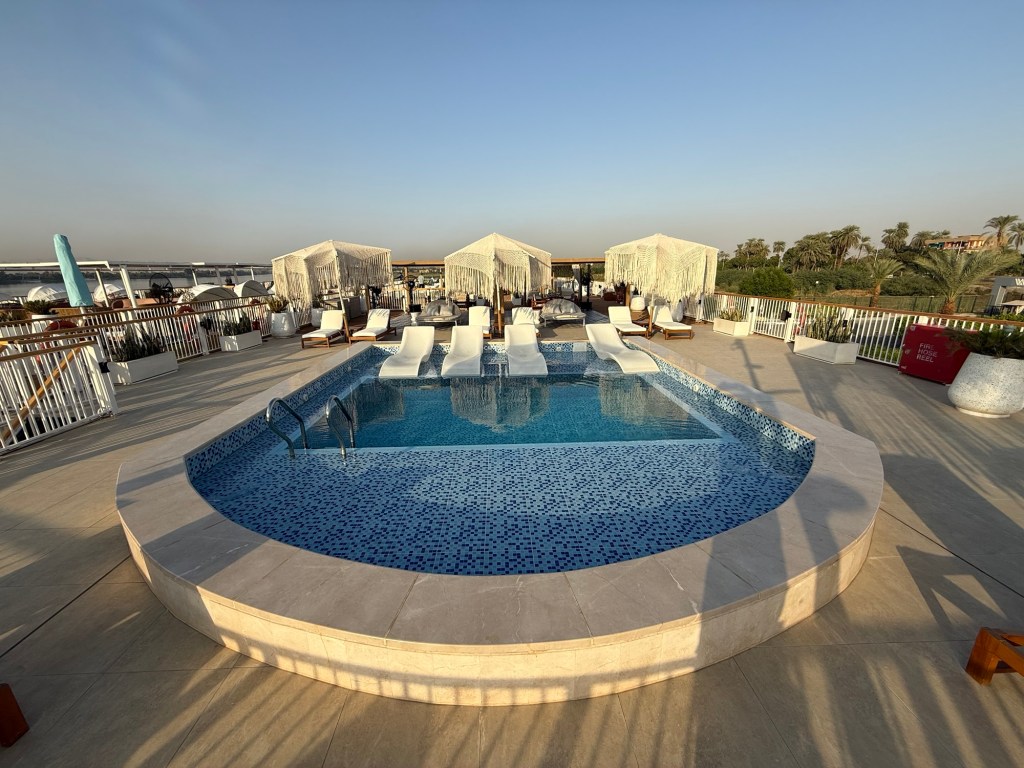
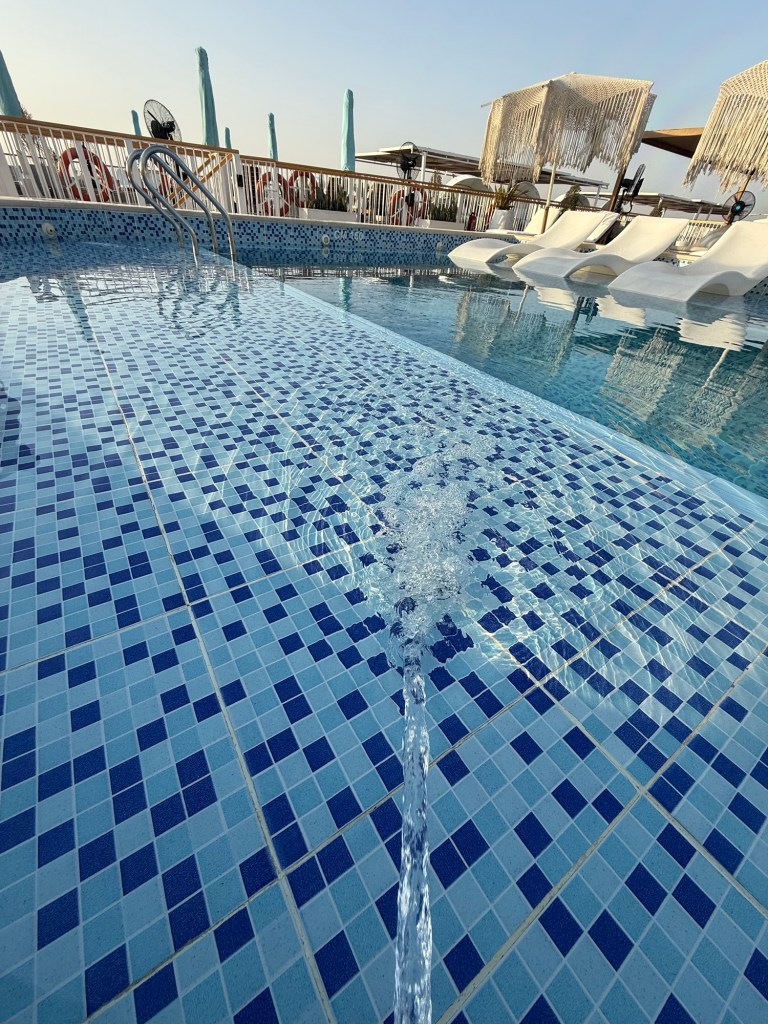
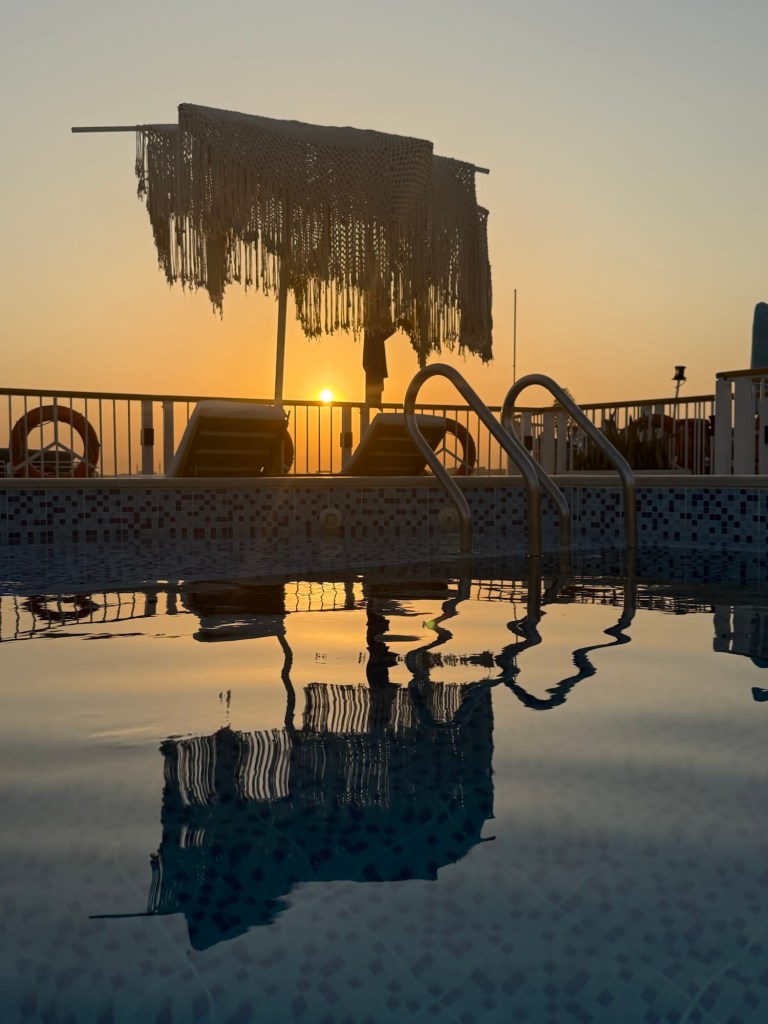
And now it’s time for an afternoon of pool, a sunset, cocktails and dinner.
Afternoon and Evening: Cruising from Temple of Horus to Aswan ~ 25°C/78°F
By Paul Bryers
At this point, it is worth reflecting on the River Nile – named after Agatha “Nile Crocodile” Christie (Let’s see who actually reads this).
The River Nile is arguably the most important river globally. The human species may not be here as we know it today without this river.
At approximately 6,650 km (4,130 mi), it is among the longest rivers globally.
The Nile flows northwards from Upper to Lower Egypt into the Mediterranean Sea.
Its drainage basin covers eleven countries:
Democratic Republic of the Congo
Tanzania
Burundi
Rwanda
Uganda
Kenya
Ethiopia
Eritrea
South Sudan
Sudan
Egypt.
The Nile plays a significant economic role in these nations’ economies and is the primary water source for South Sudan, Sudan, and Egypt.
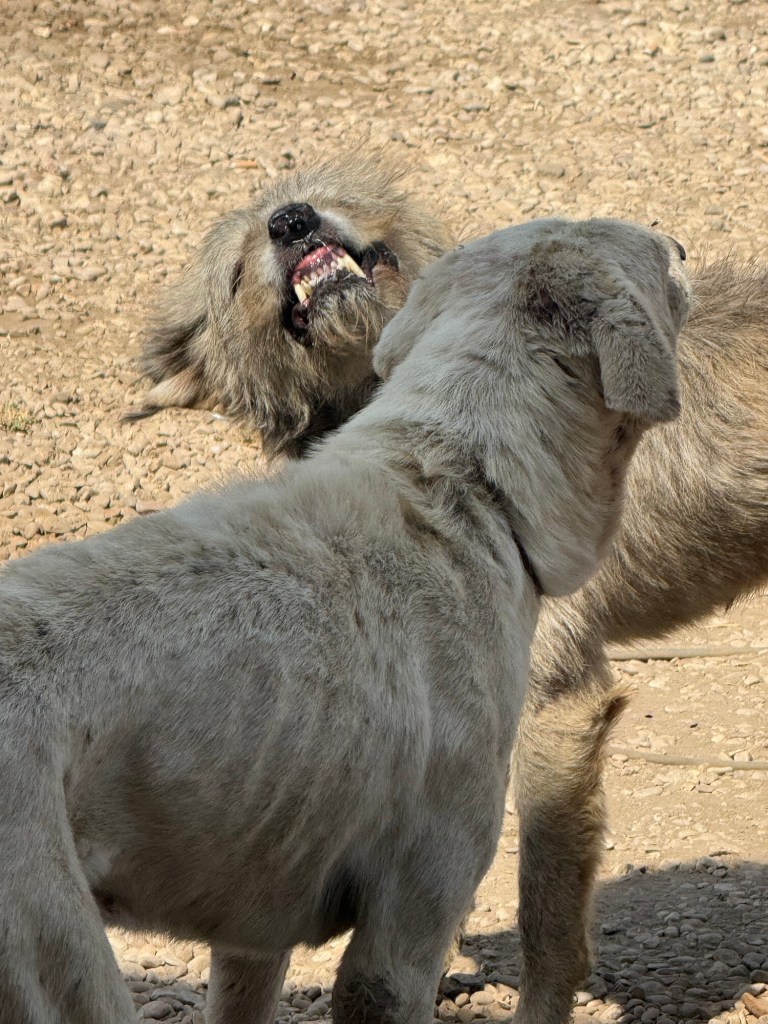
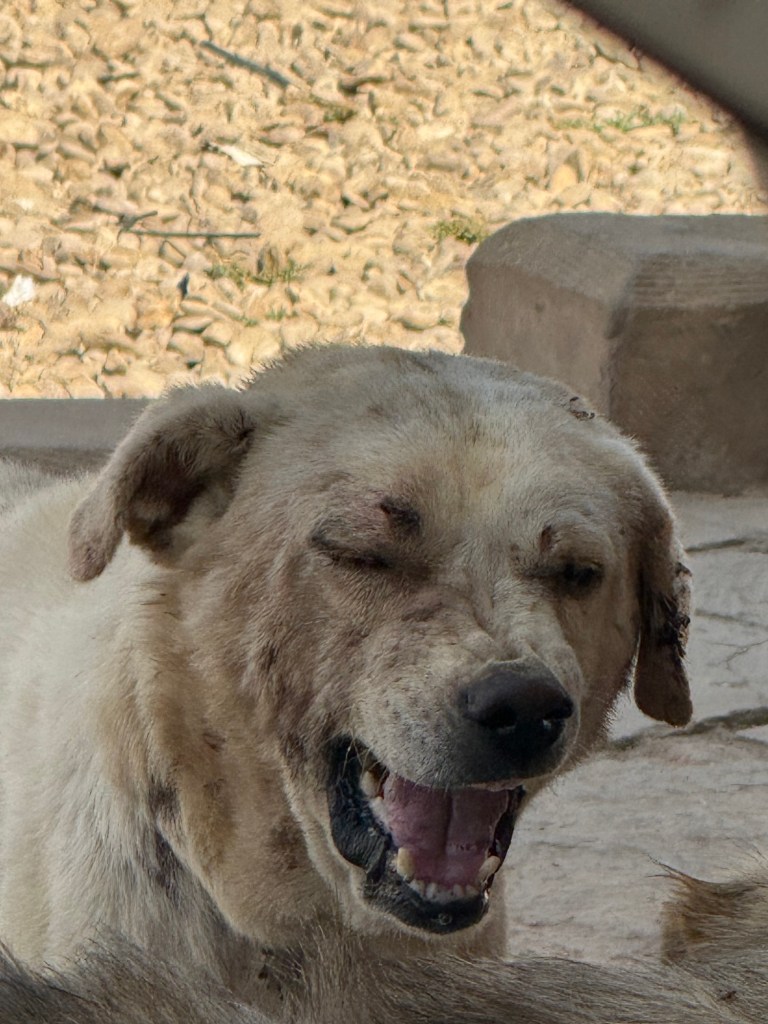
As we left the Temple of Horus, there was the major alpha dog show – all bark and snarl and no substance.
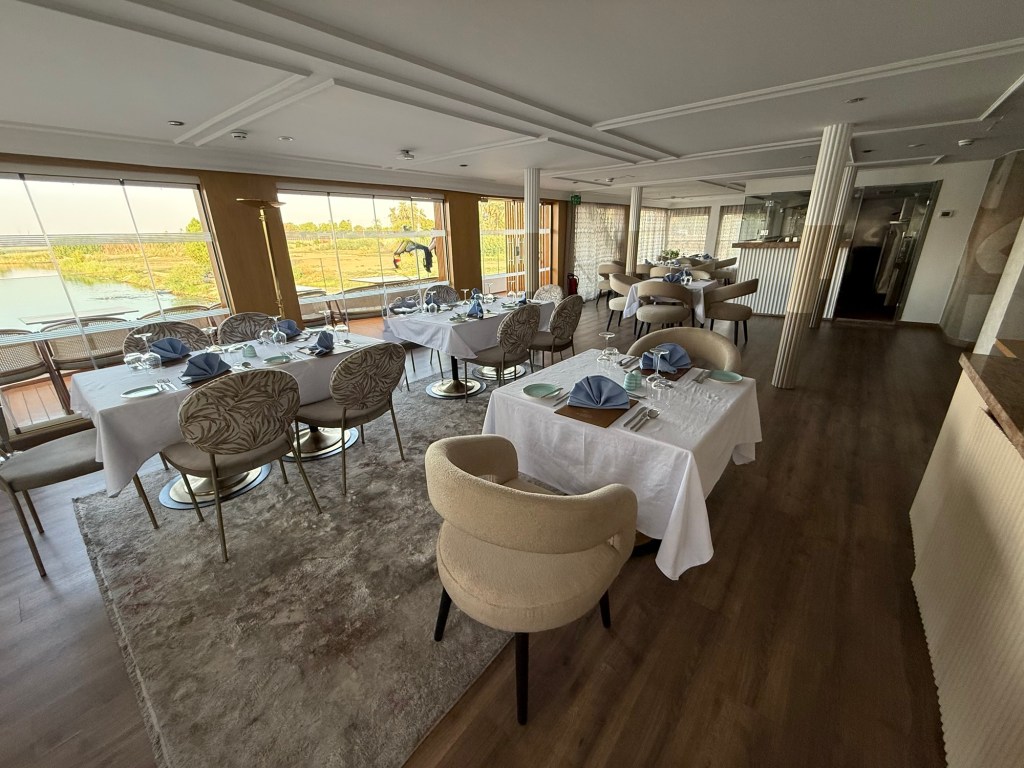
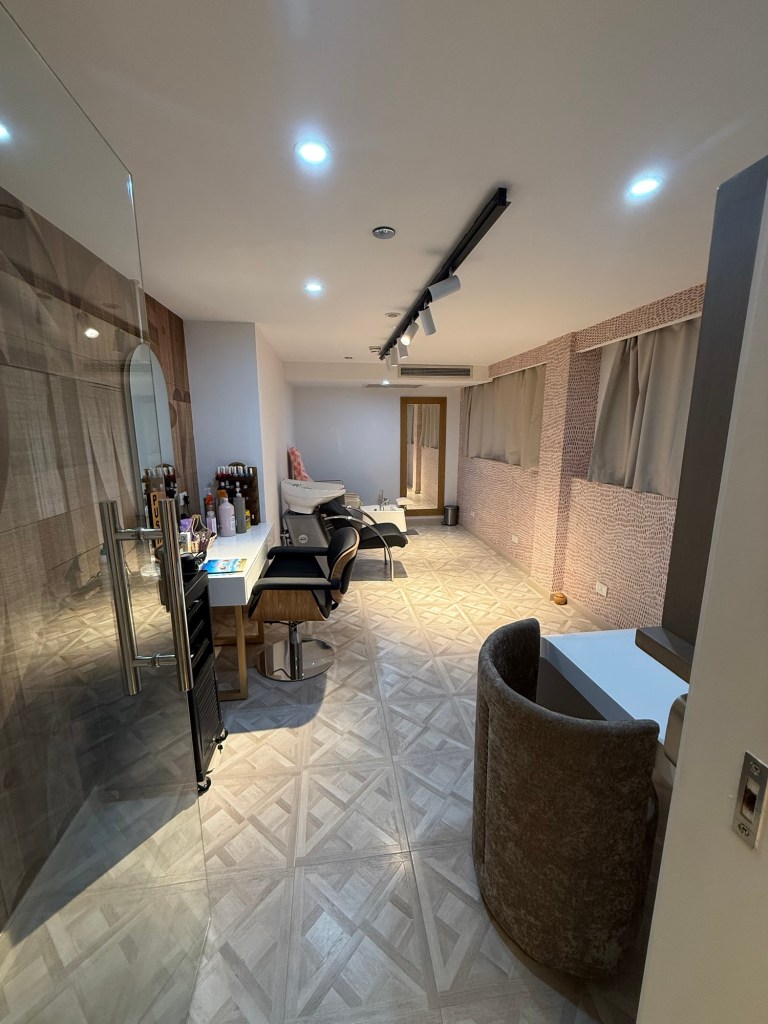
Following the exertion of visiting the Temple of Horus, we had a lovely afternoon and evening cruising the Nile, during which I took photos, enjoyed a massage, spent time by the pool, attended the AMA Family Reunion (as a past AMA cruiser, this being my sixth), Happy Hour, and had dinner at Chef’s Table.
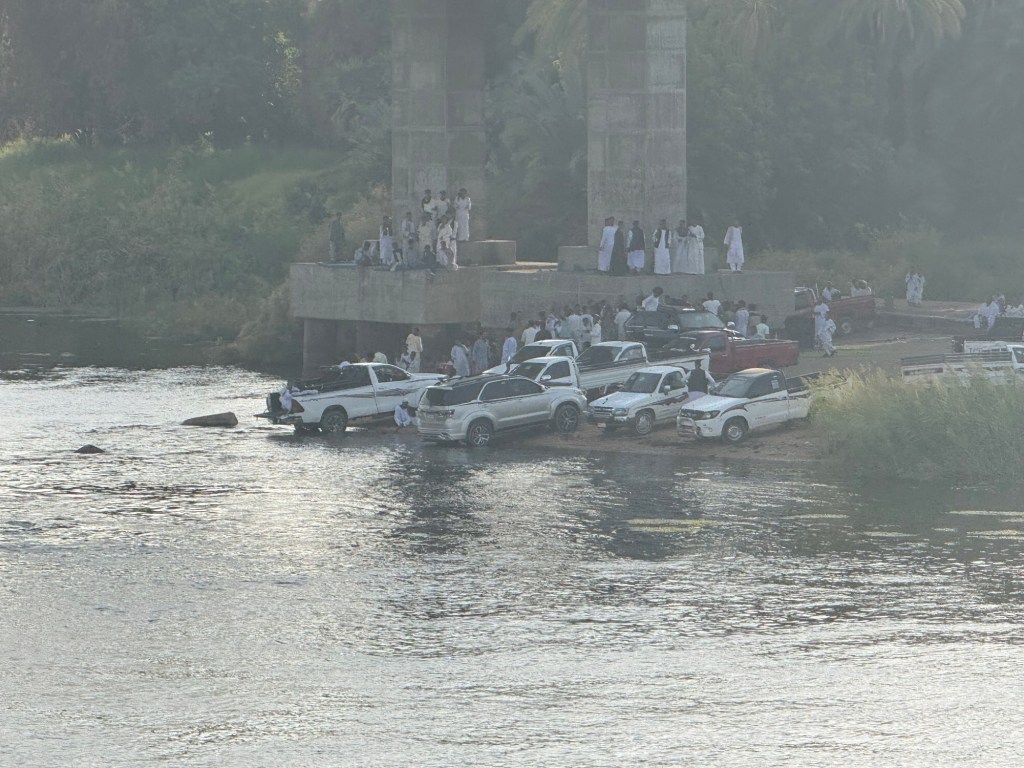
Then, there was the Nile Party for Blokes with Trucks.
Late Morning Itinerary: Temple of Horus ~ 39°C/102°F
By Paul Bryers
AMALilia
Once again, our intrepid AMA Guide Mohammed set the scene for our visit.
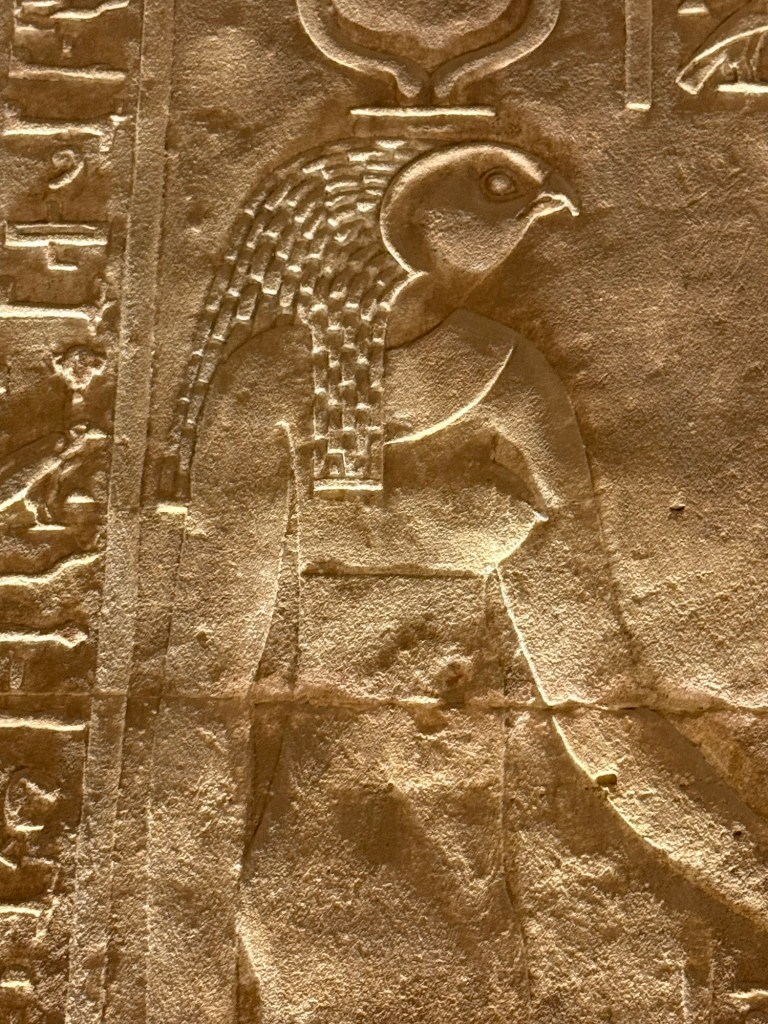
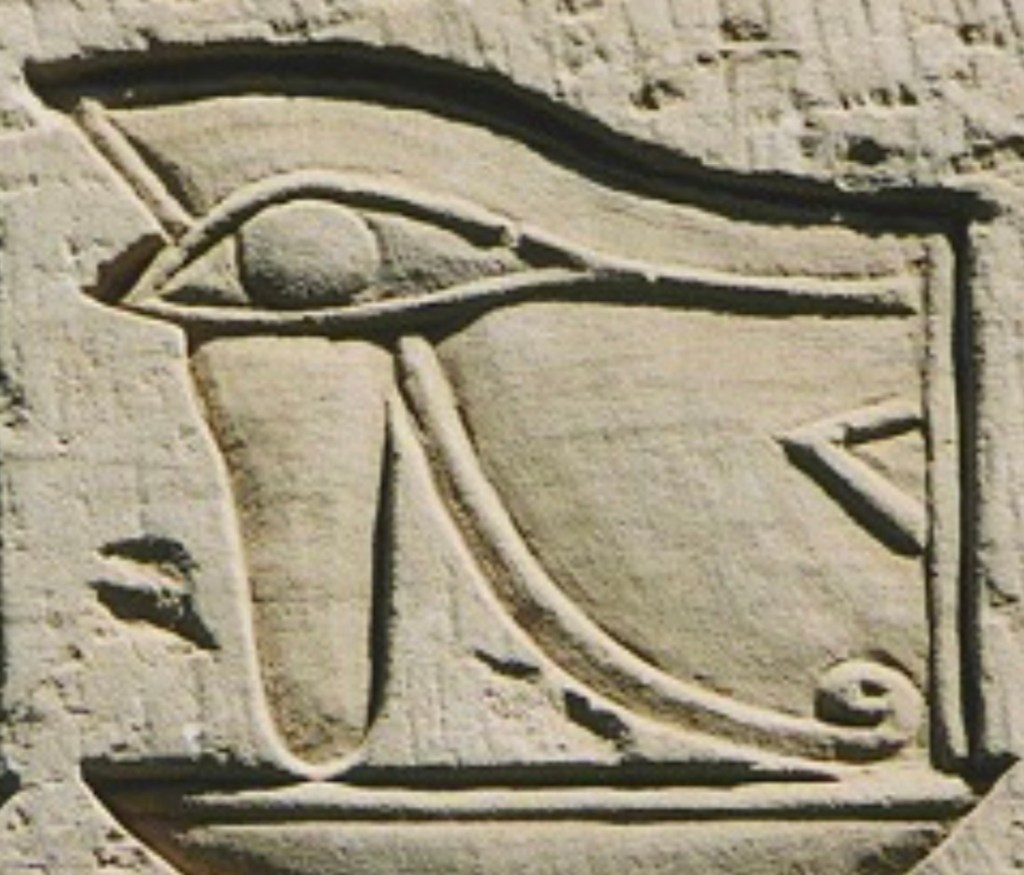
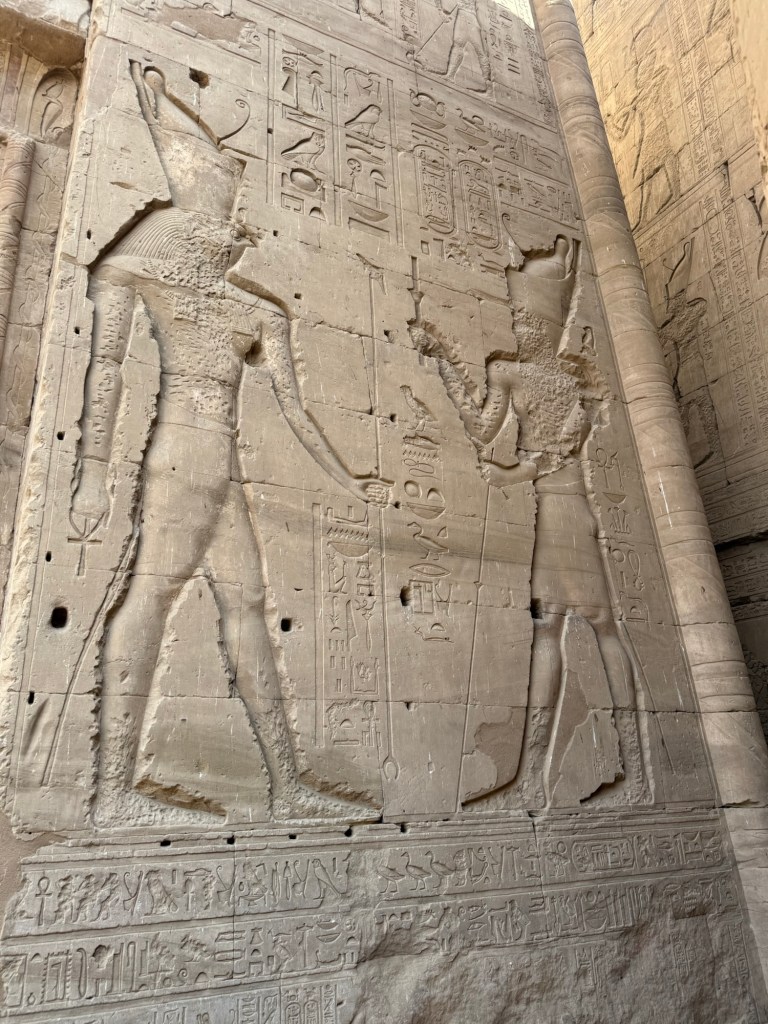
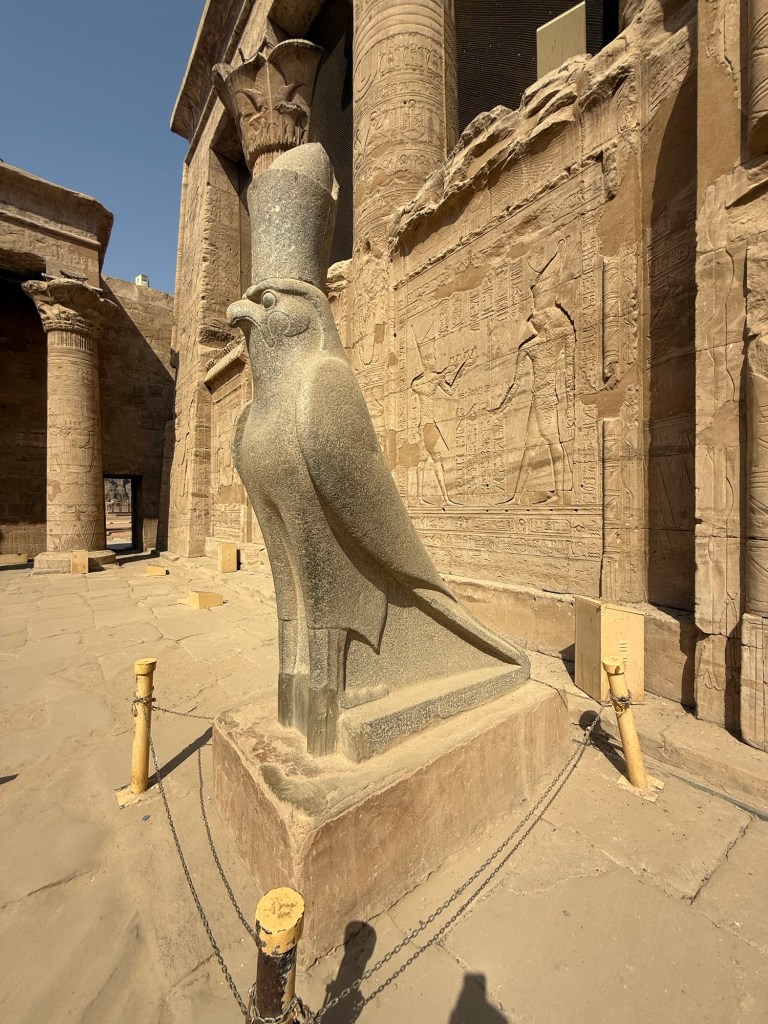
Horus is an ancient Egyptian falcon-headed god associated with kingship, the sky, and protection. He is the son of Isis and Osiris and became the rightful king after avenging his father’s death by defeating his uncle, Set. His name means “the one who is above,” and his symbol, the Eye of Horus, represents health and healing after he lost his eye in the battle against Set.
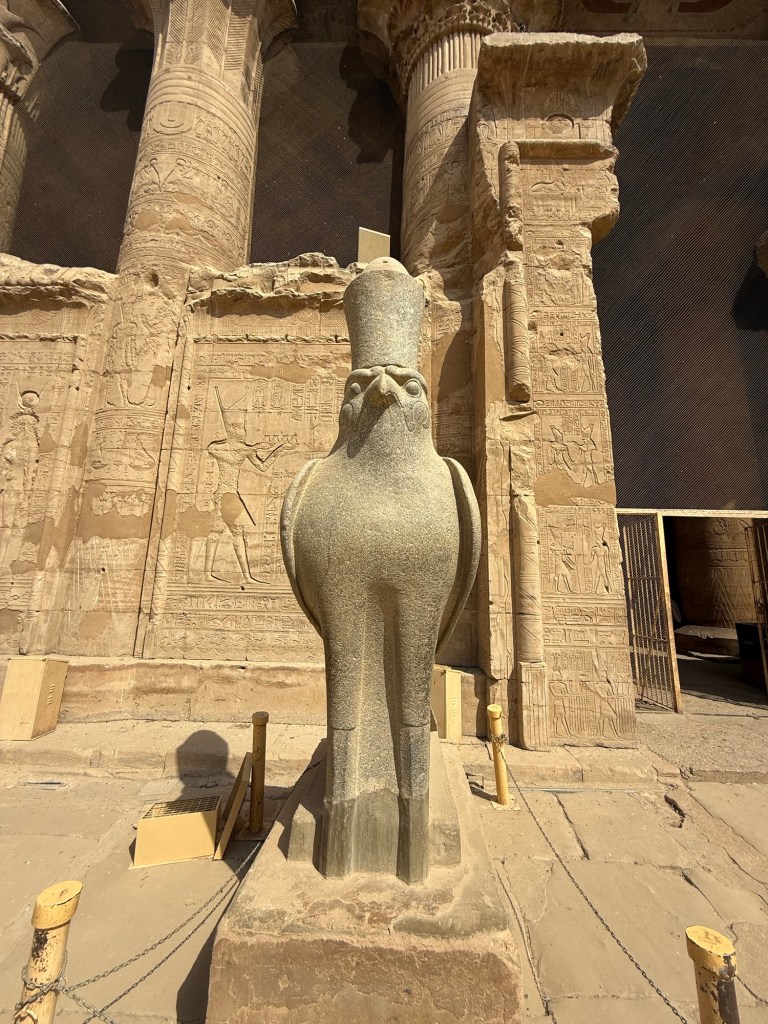
Statues or Images of Horus..
…and the Eye of Horus
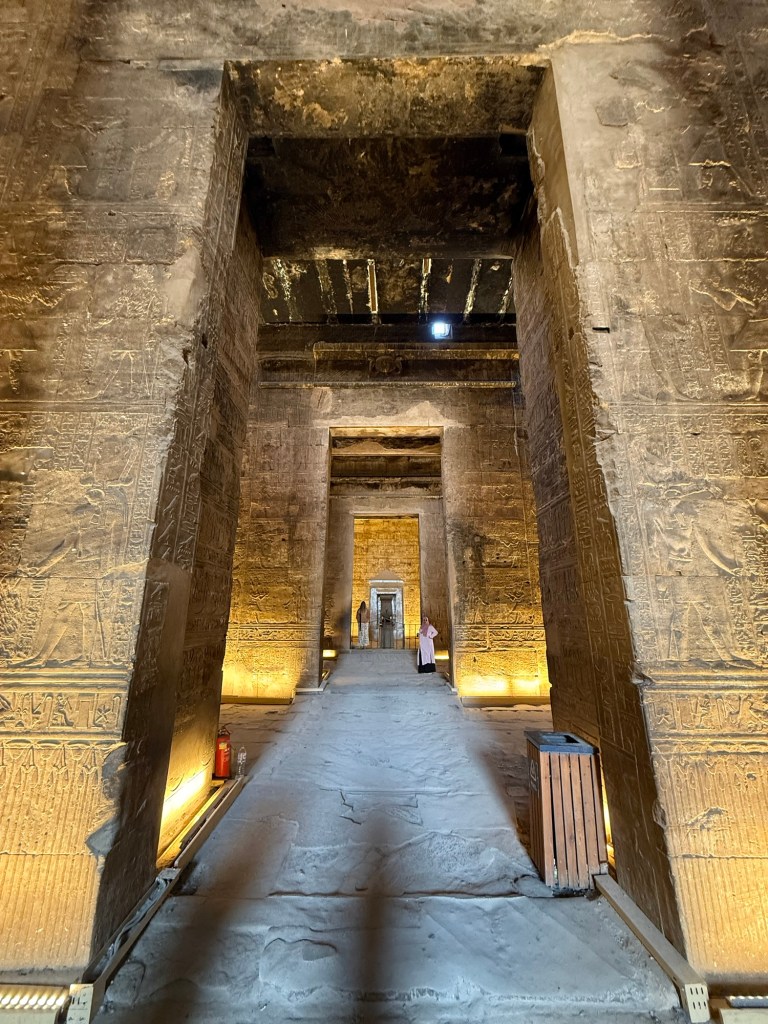
The Temple of Horus is a remarkably well-preserved ancient temple. The Temple’s preservation was largely due to it being buried under about 12 meters (39 feet) of desert sand and silt from the Nile until the 19th century.
Built during the Greco-Roman period between 237 and 57 BC, it is one of the best examples of a classical Egyptian temple due to its complete state.
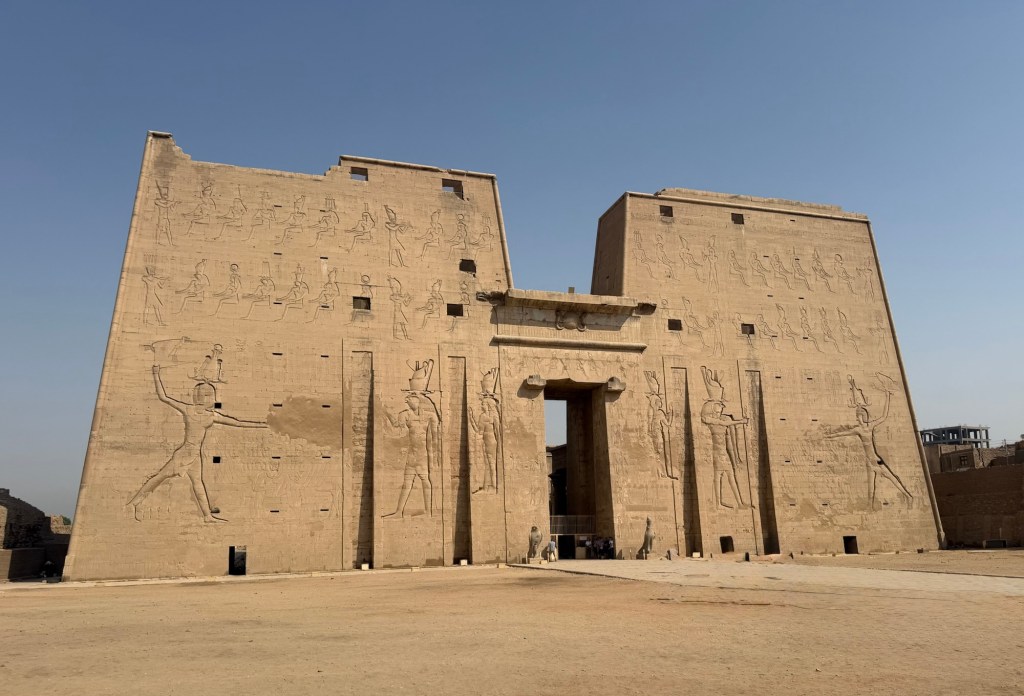
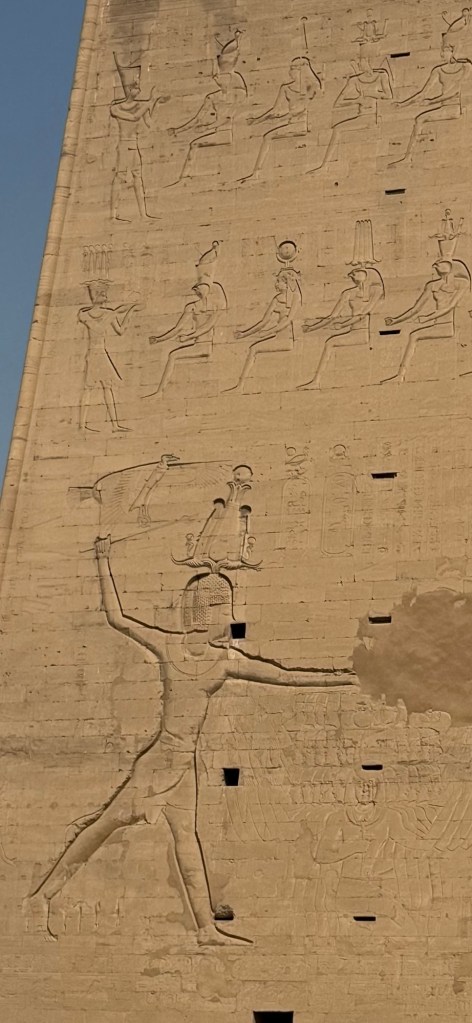
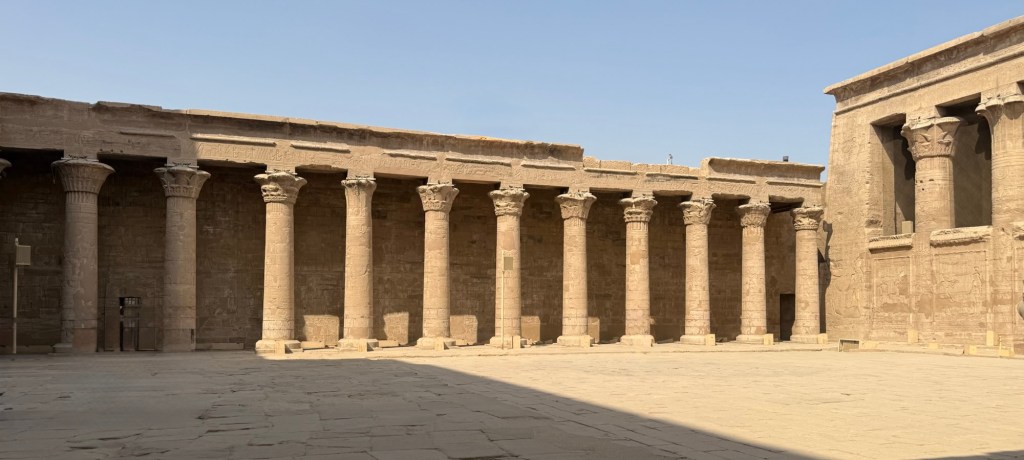
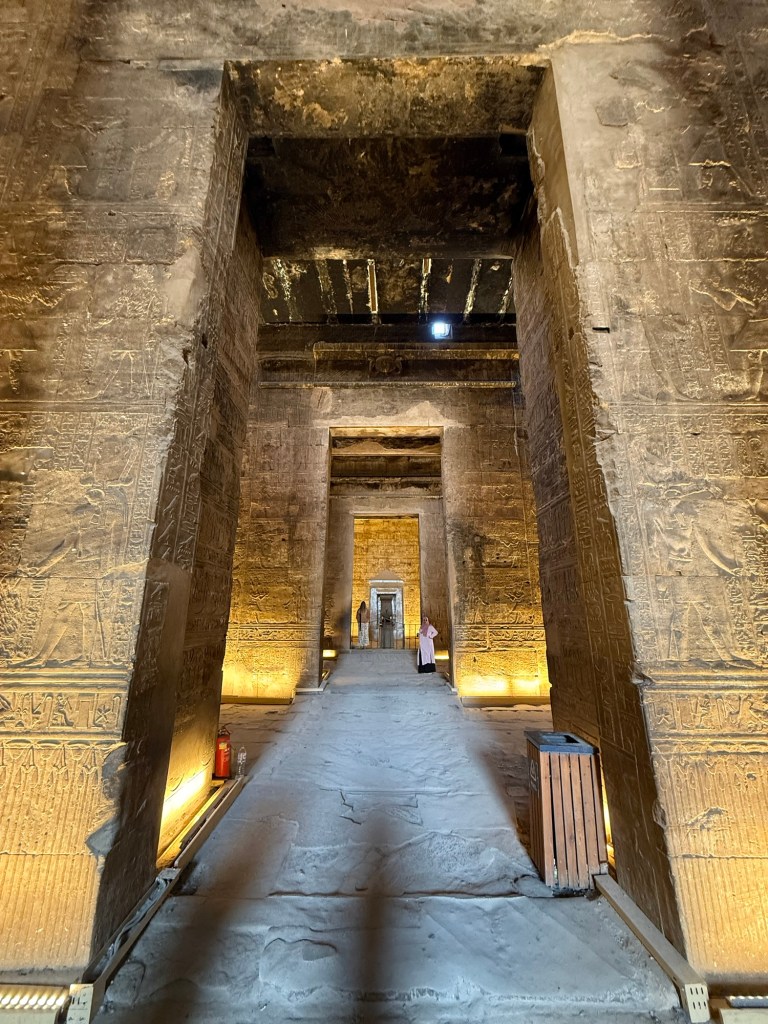
Key features include a massive pylon gateway, heavily decorated outer and inner walls, a courtyard with 32 columns, a hypostyle hall, and an inner sanctuary.
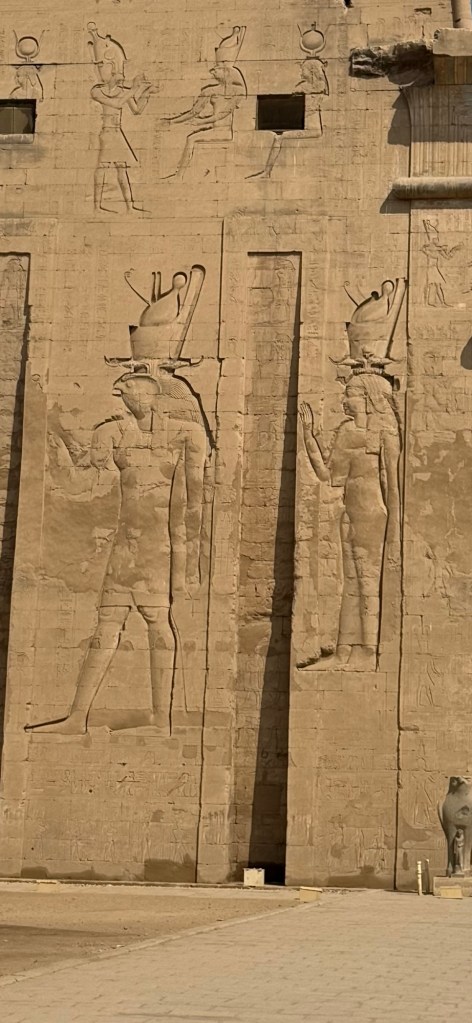
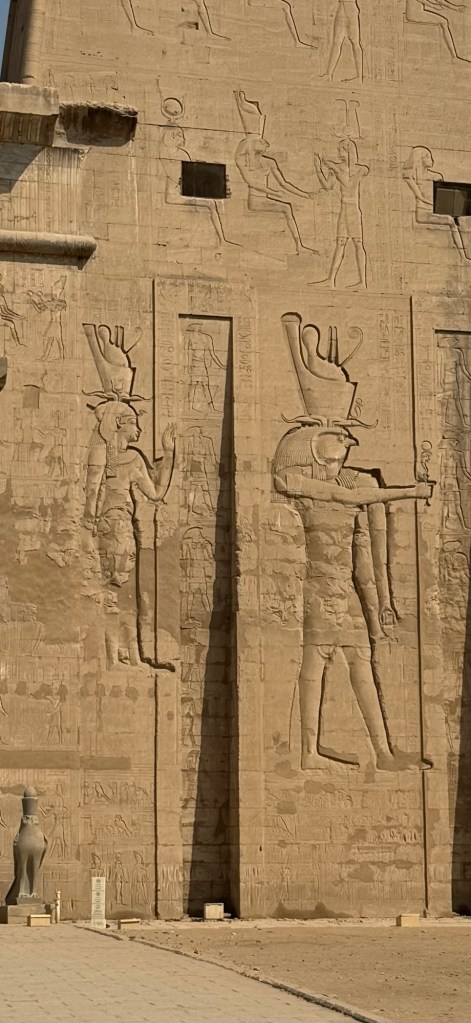
The towering entrance pylon, 36 meters high and 70 meters wide, is decorated with a large relief of Ptolemy XII smiting enemies before Horus and Hathor.
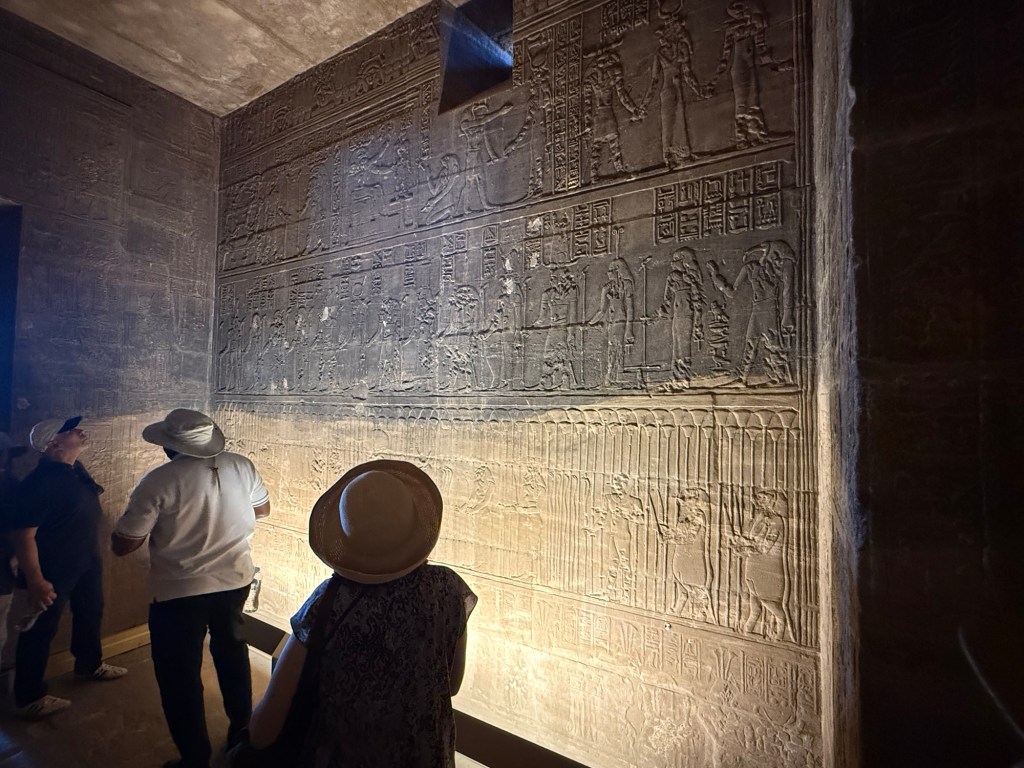
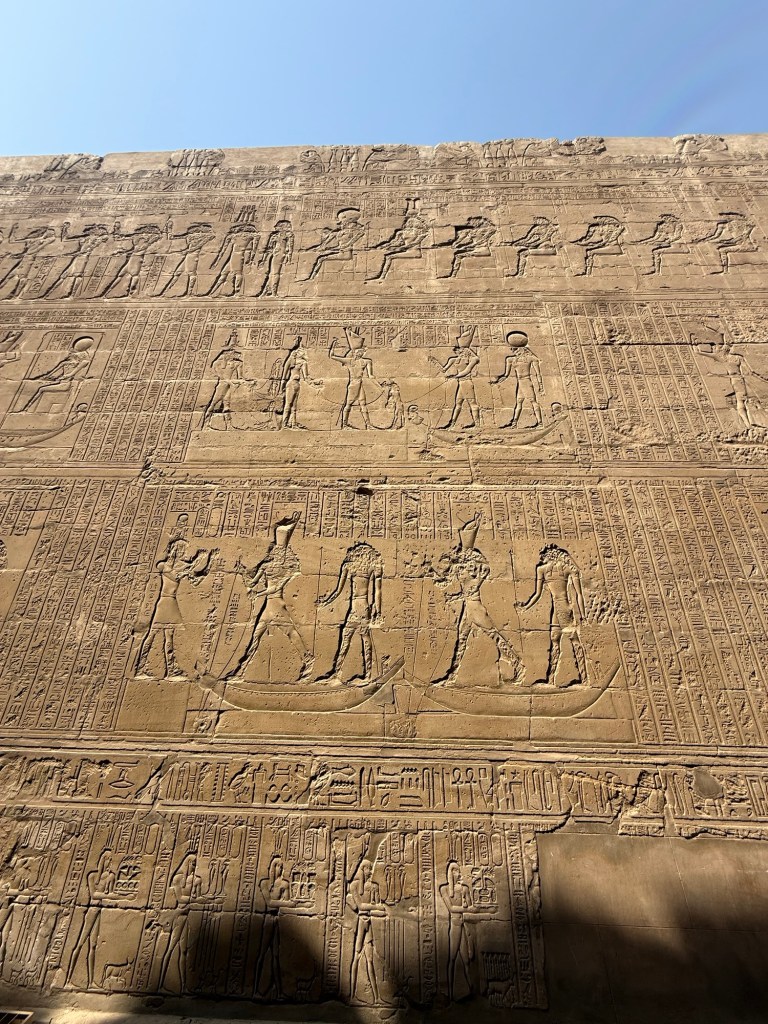
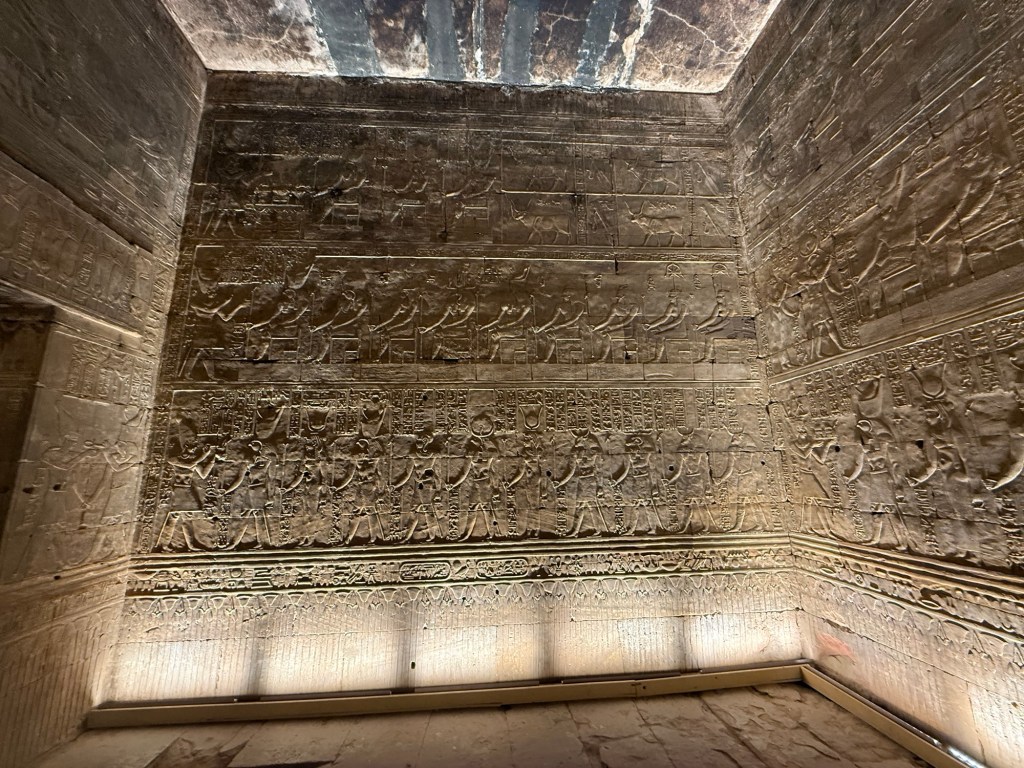
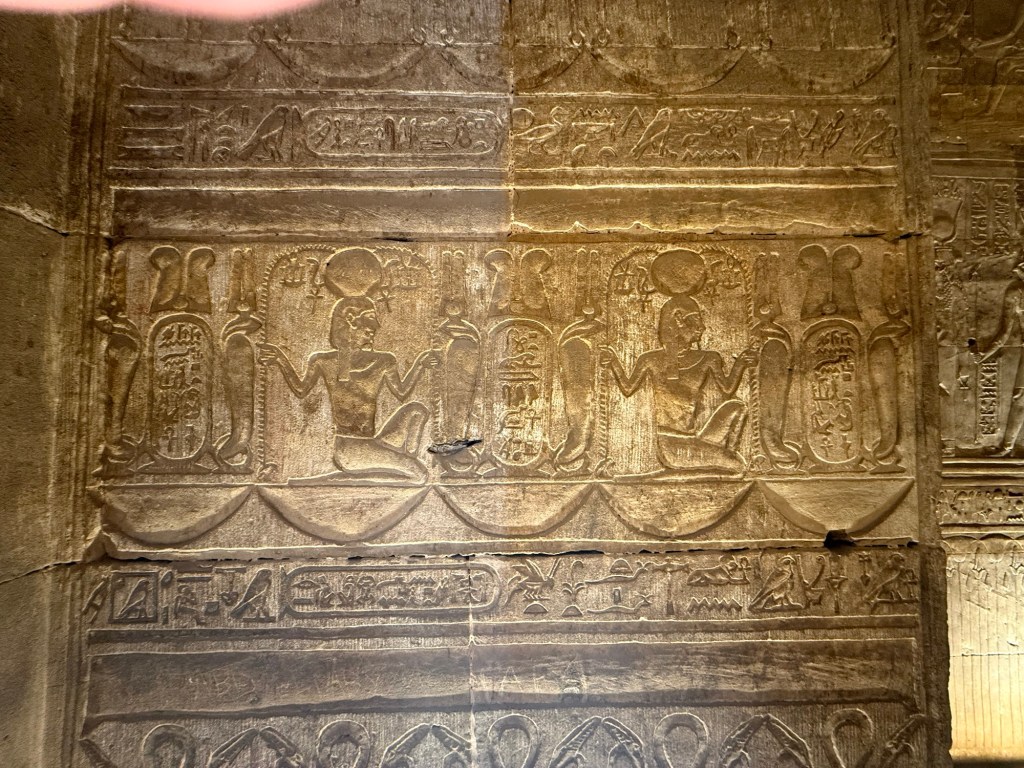
Inner and outer walls are impressive in the detail of their depictions of Horus’ exploits.
The entry to the courtyard is guarded by Horus.
A large peristyle court is surrounded by columns and features reliefs depicting the “Feast of the Joyous Union,” the sacred marriage of Horus and Hathor.
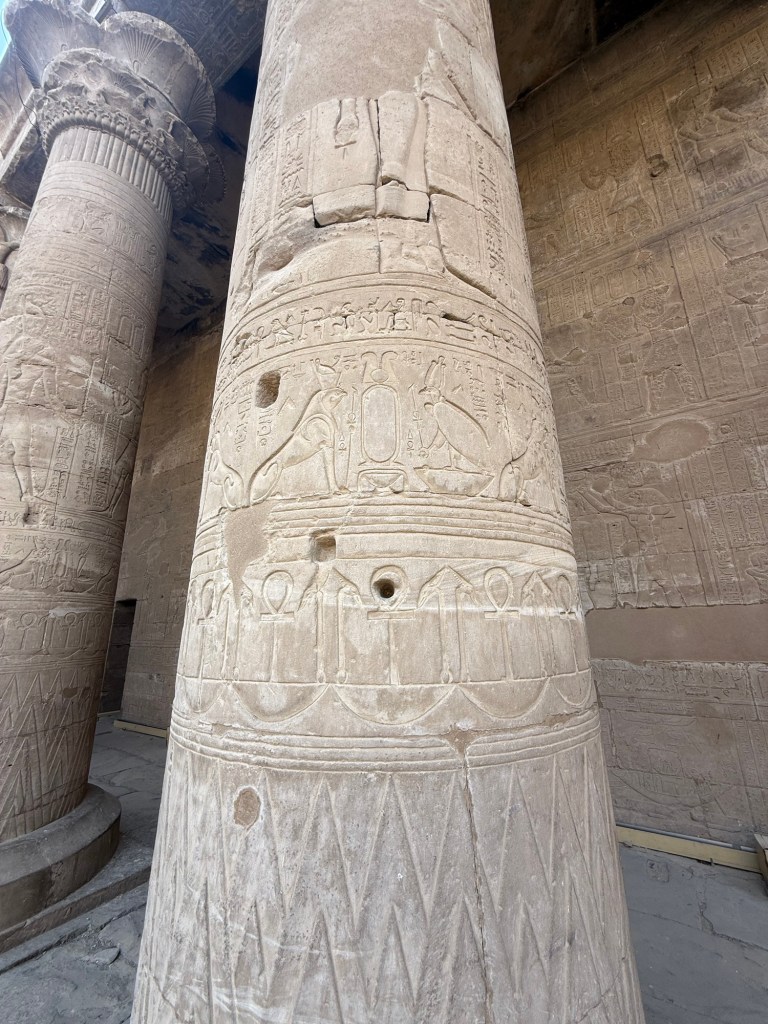
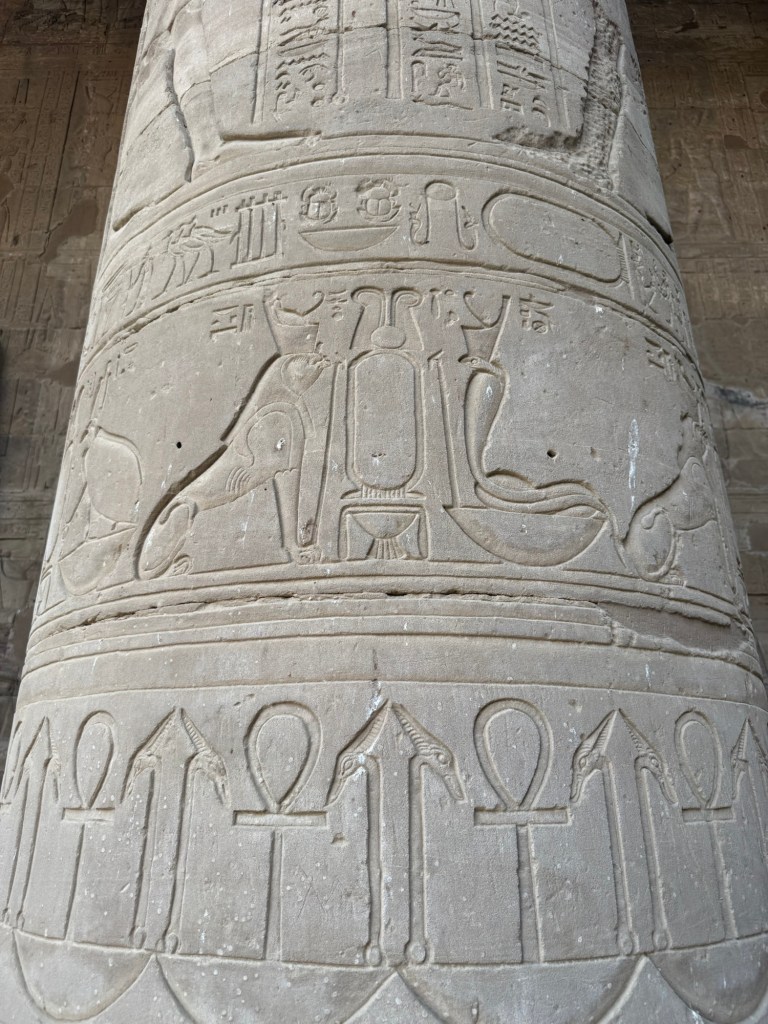
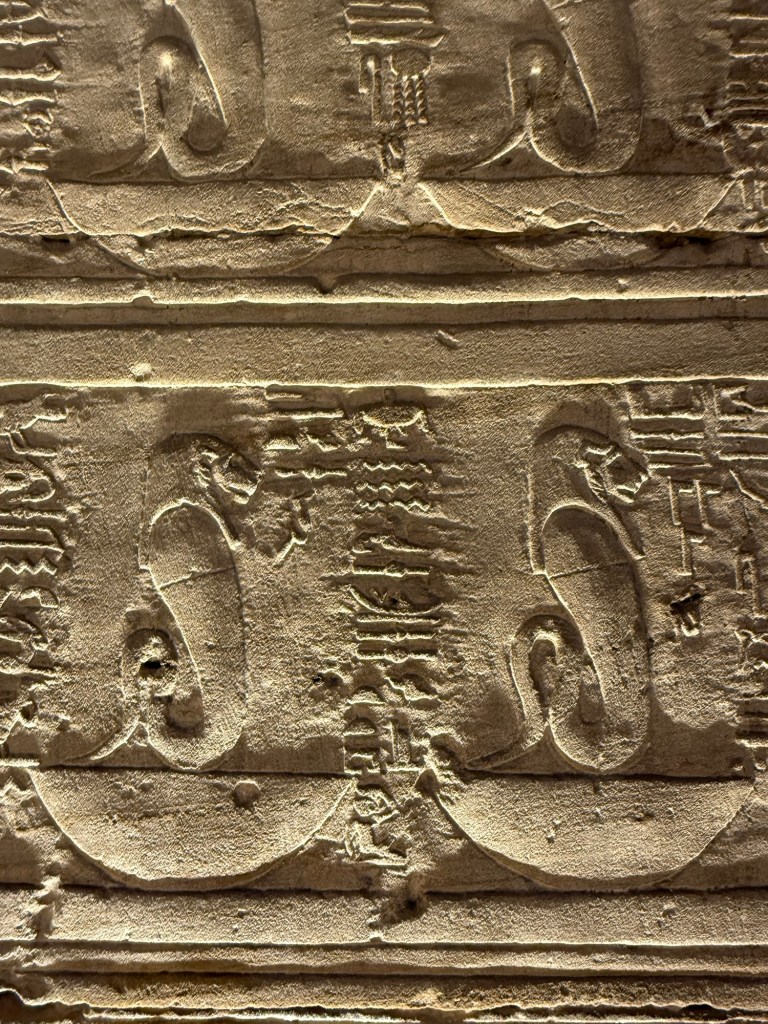
The temple columns are covered in well-preserved reliefs and hieroglyphs detailing religious myths, pharaonic rituals, and the eternal struggle between Horus and his bad Uncle Seth.
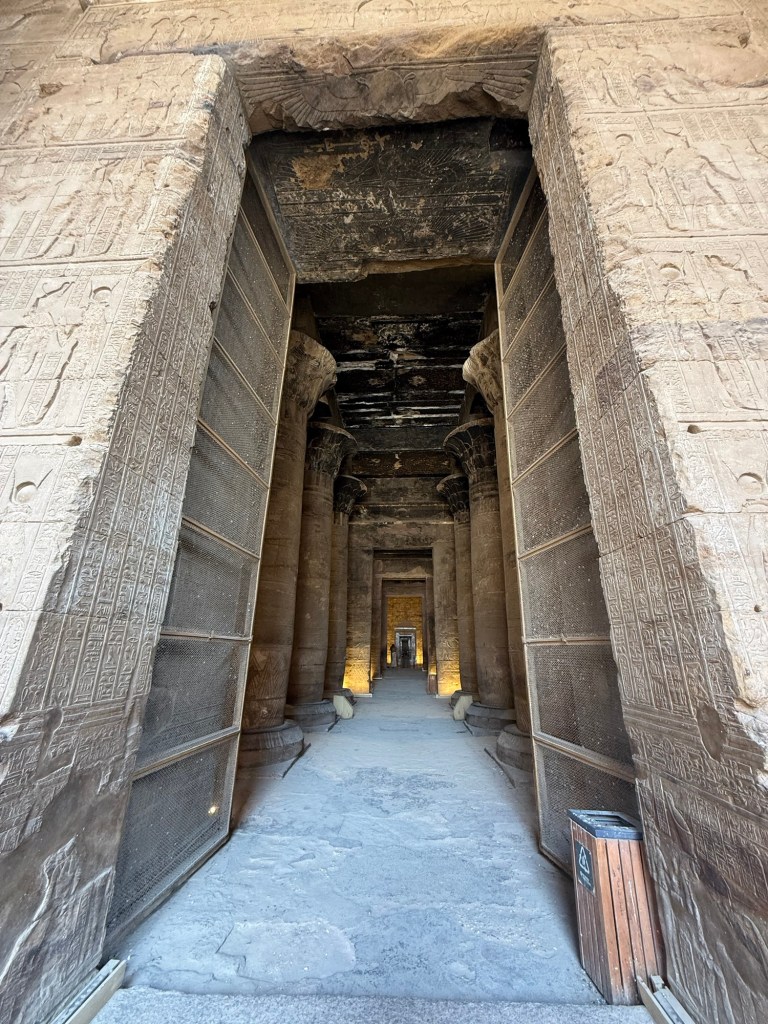
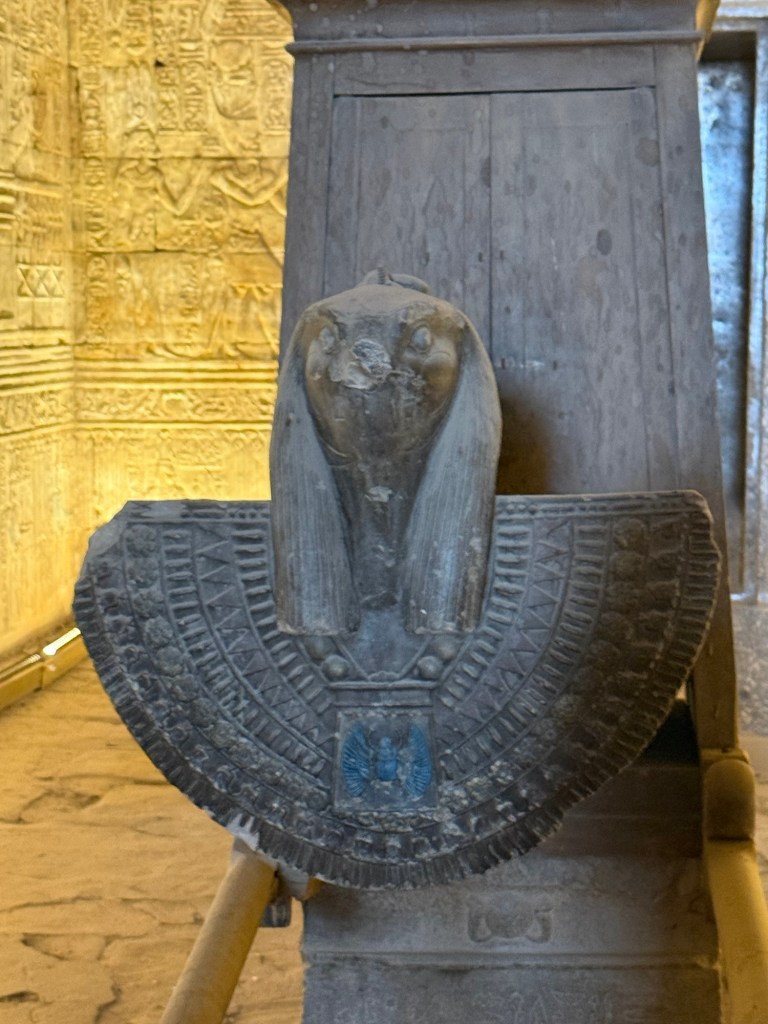
The hypostyle hall is a massive, roofed hall supported by many columns, leading toward the temple’s inner sanctuary. The hall is also known for its impressive size, and the statues of Horus as a falcon guarding its entrance.
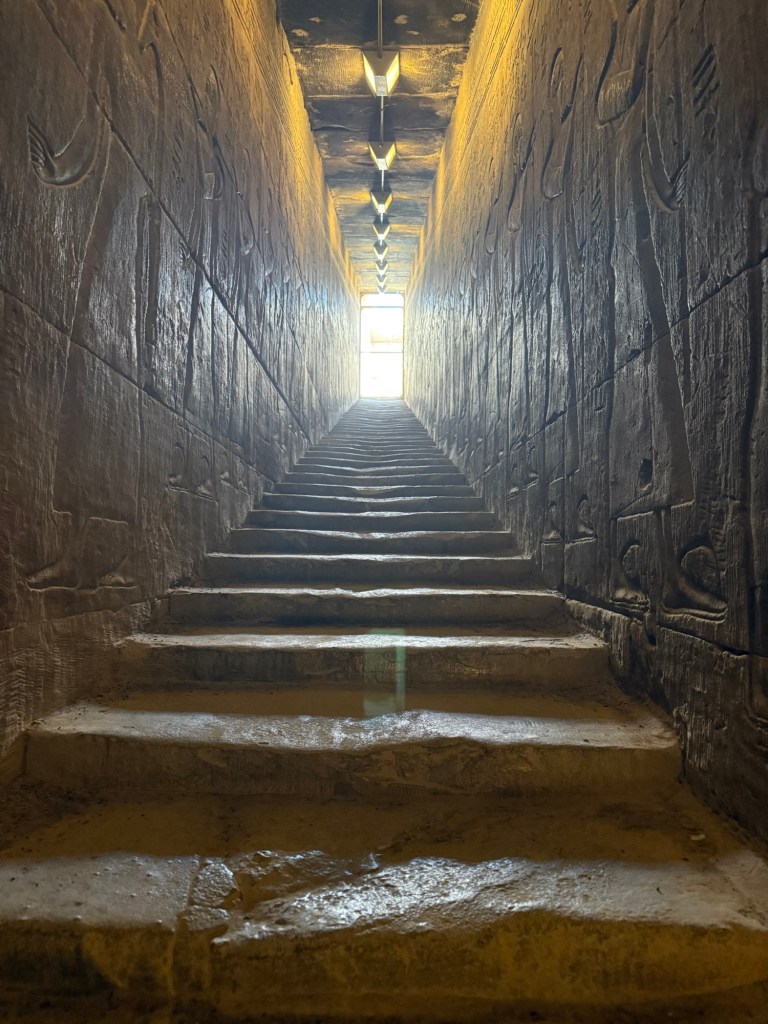
Within the hall, secluded entrances lead you to secret chambers within the temple walls. Spooky.
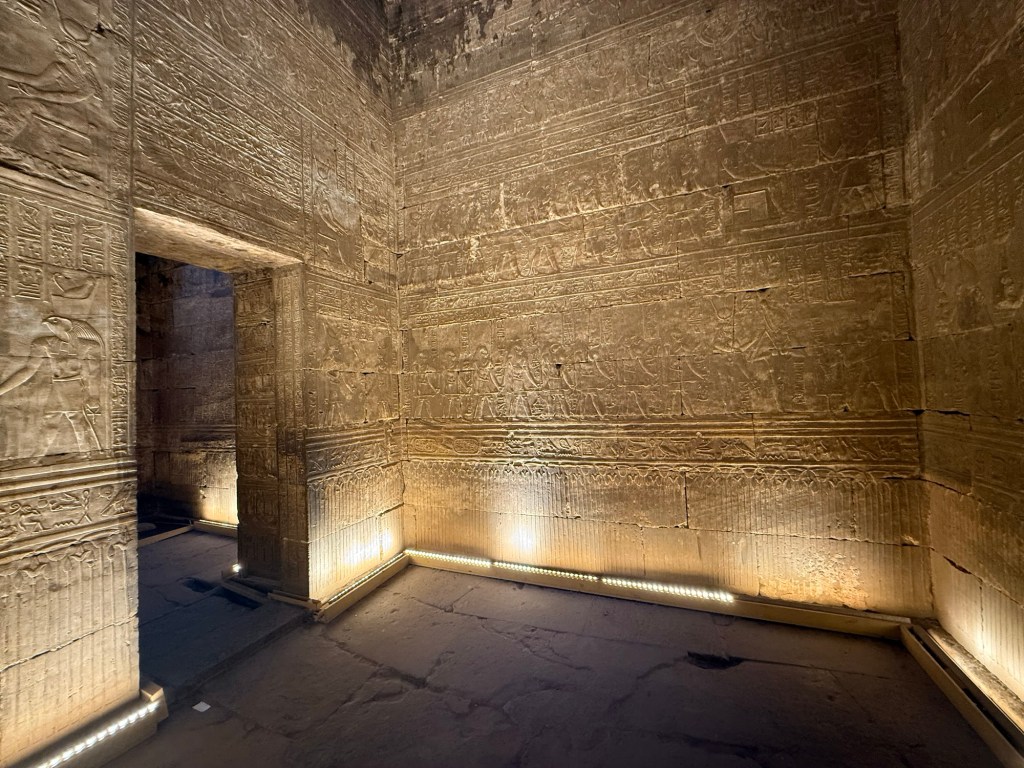
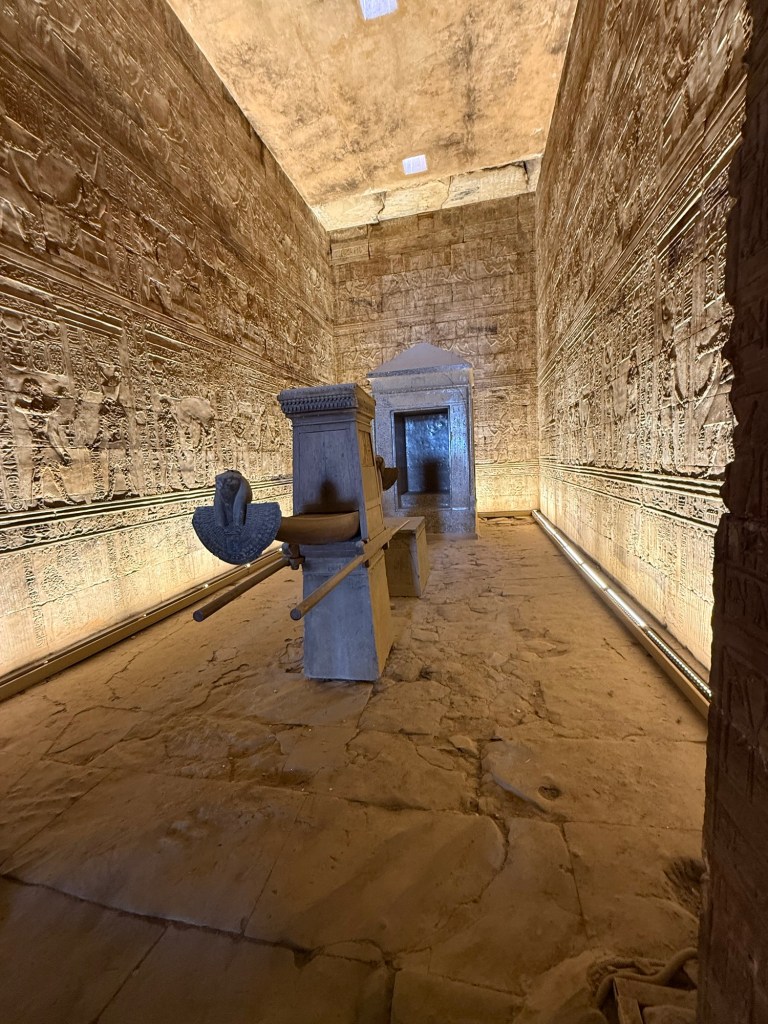
The inner sanctuary is guarded by Horus and contains reliefs and religious scenes and once housed a sacred bark for the god’s statue.
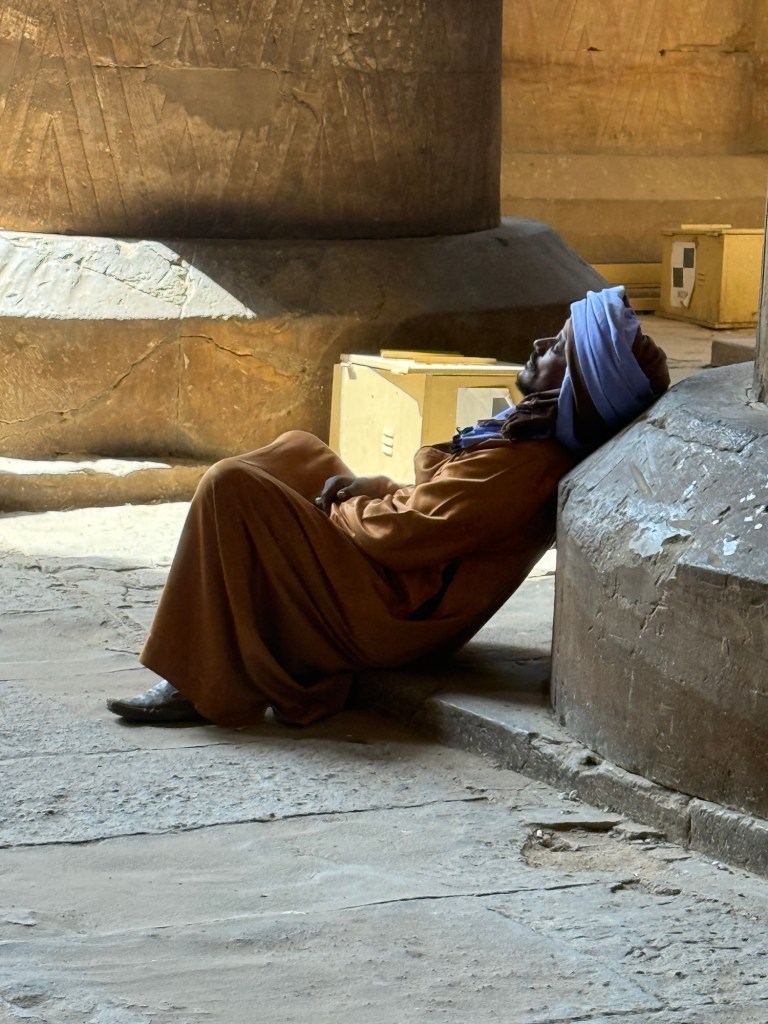
The guard seems to be having a wee siesta. Quite right. The heat and humidity in the temple are pretty bad.
Early Morning Itinerary: Cruising the Nile from Esna Dock to Edfu ~ 39°C/102°F
By Paul Bryers
We departed Esna Dock around 6:30 am, having cleared the locks the previous evening.
Which reminds me, late yesterday evening some pirates attempted to board us – they were friendly pirates and their crime was to tie their small boat to our mighty AMALilia and try to sell us their wares – all apparently made by their mothers and sisters. I did not succumb, yet…
Anyway, back to today. While the morning started quite clear, it got significantly more hazy as the hours progressed – not sure whether fine sand or pollution; mebbies a bit of both.
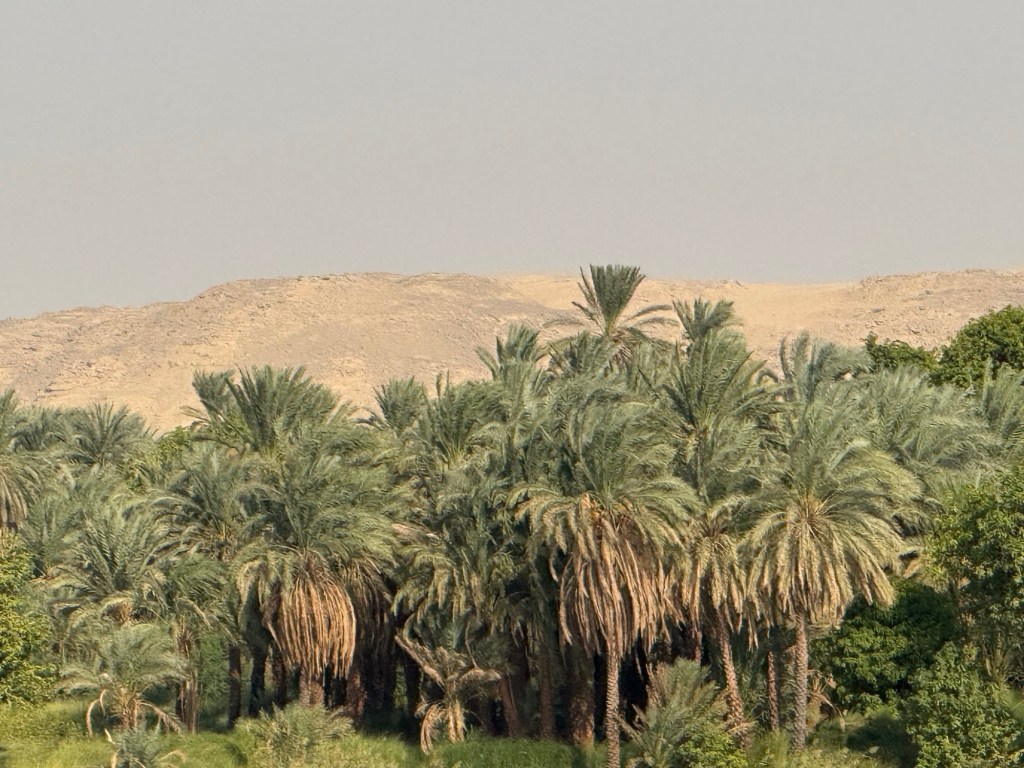
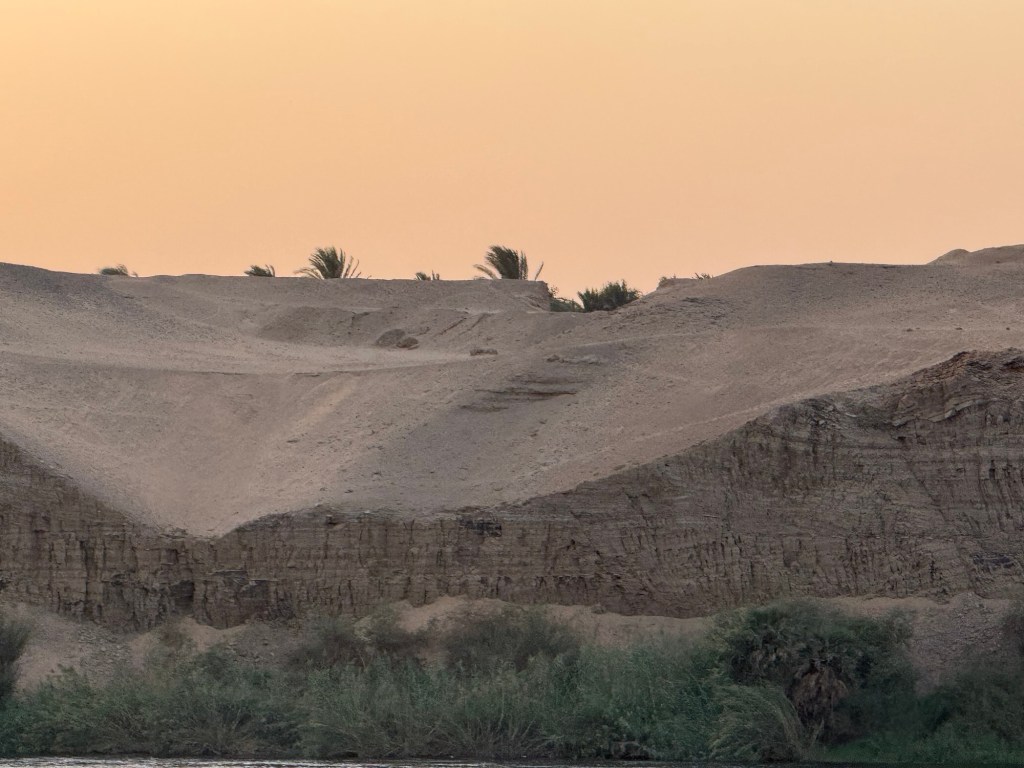
The distant views to the mountains were lovely.
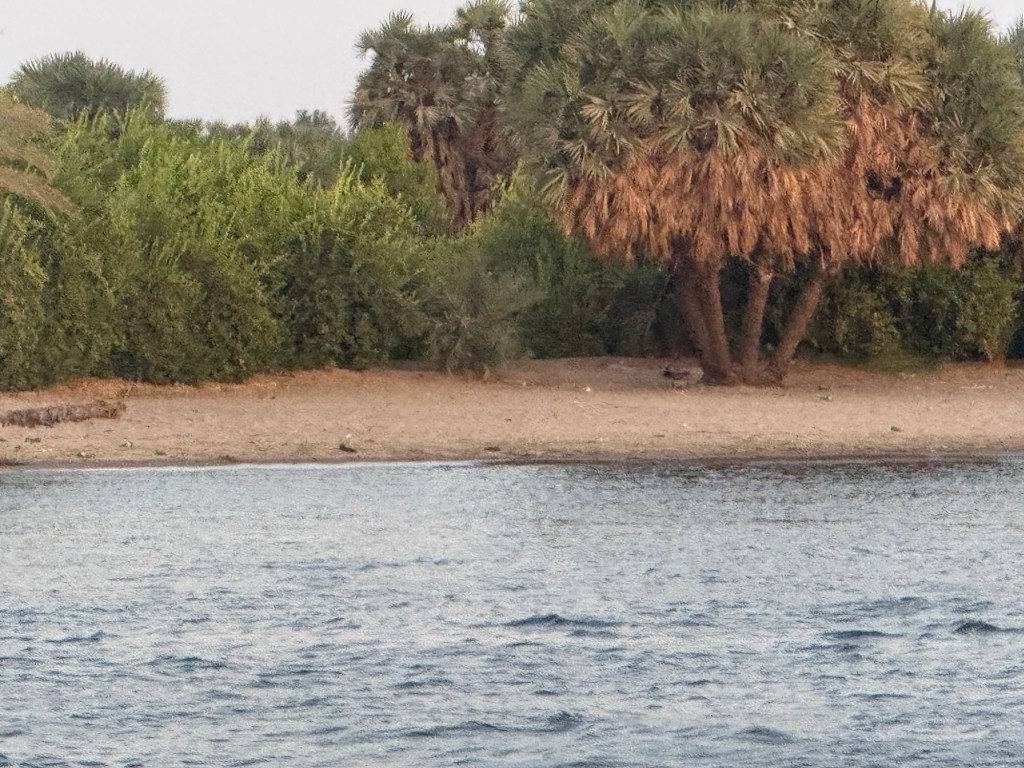
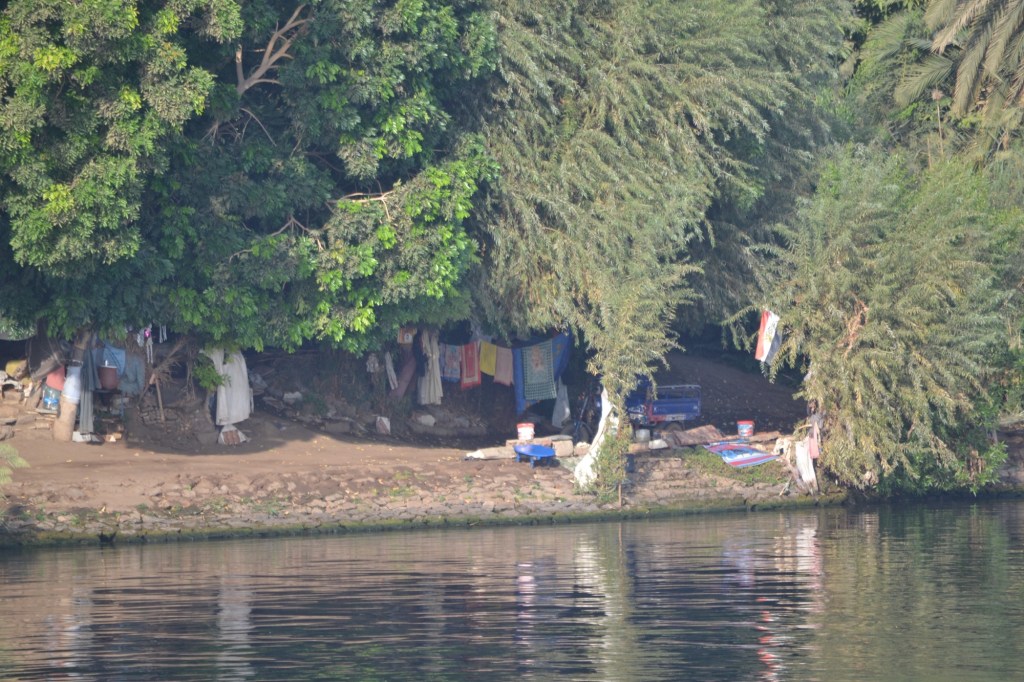
There was a variety of abodes along the river – from the palatial to the more rustic.
The usual fishermen were out encouraging catfish to jump into their nets.
Bird life was abundant, although slightly out of my camera lens’s ability to get close-ups; I should have brought the 600 mm lens!
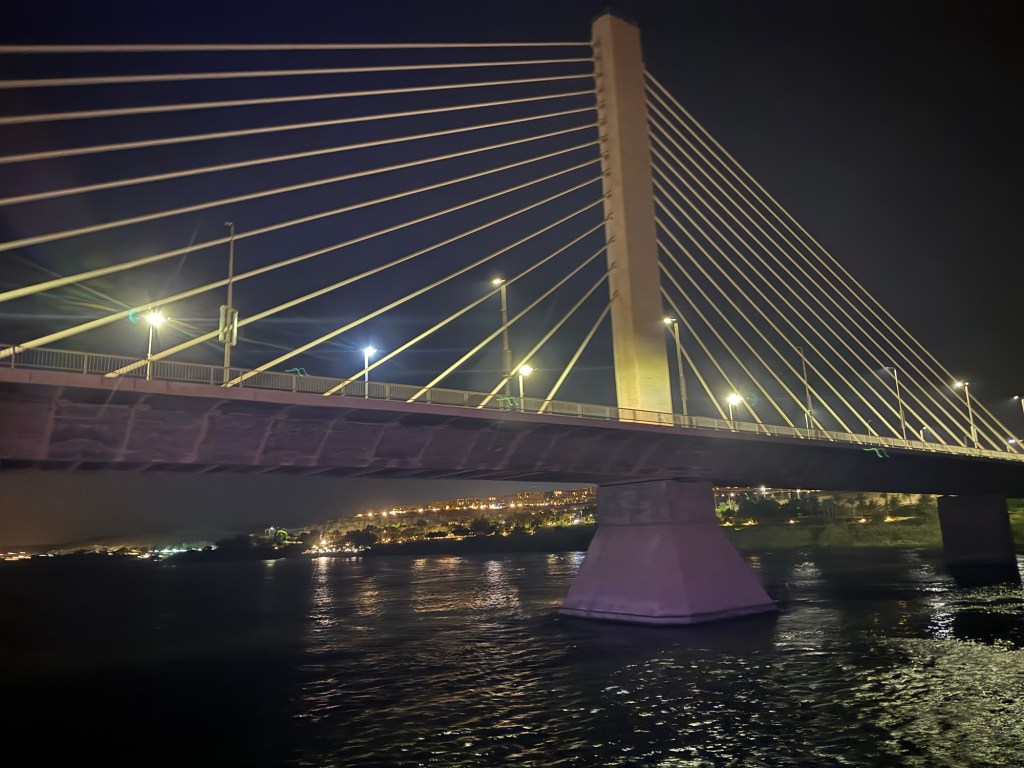
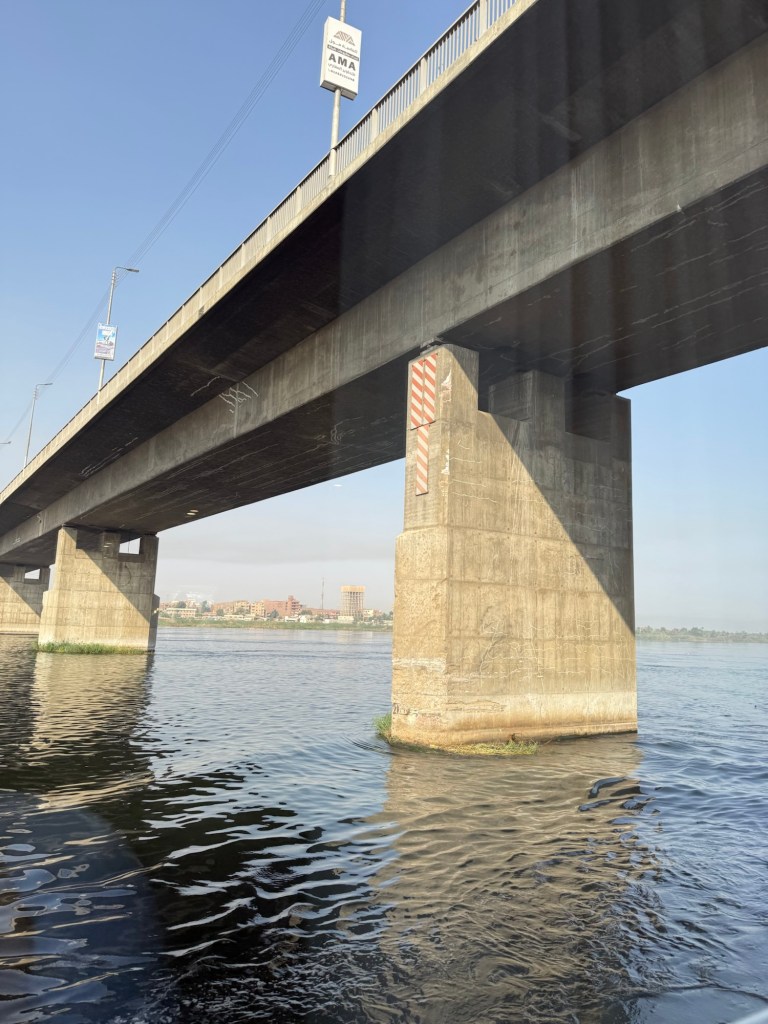
We crossed under a low bridge, top deck canopies down, and have just docked at Edfu ready for our Temple of Horus excursion.
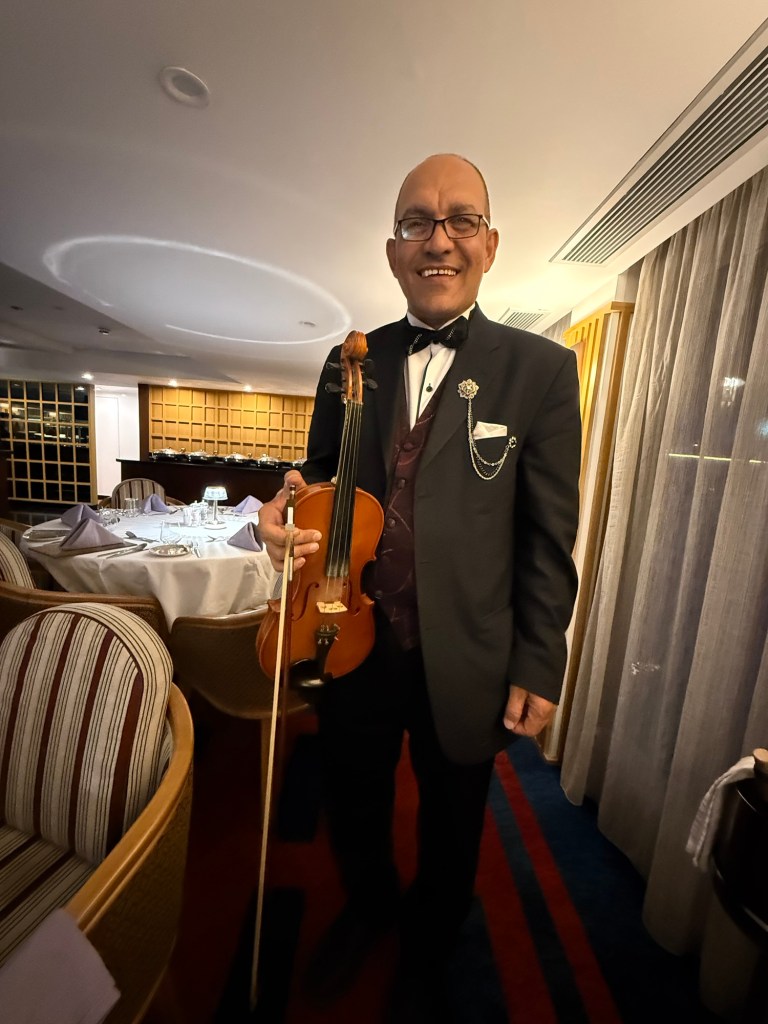
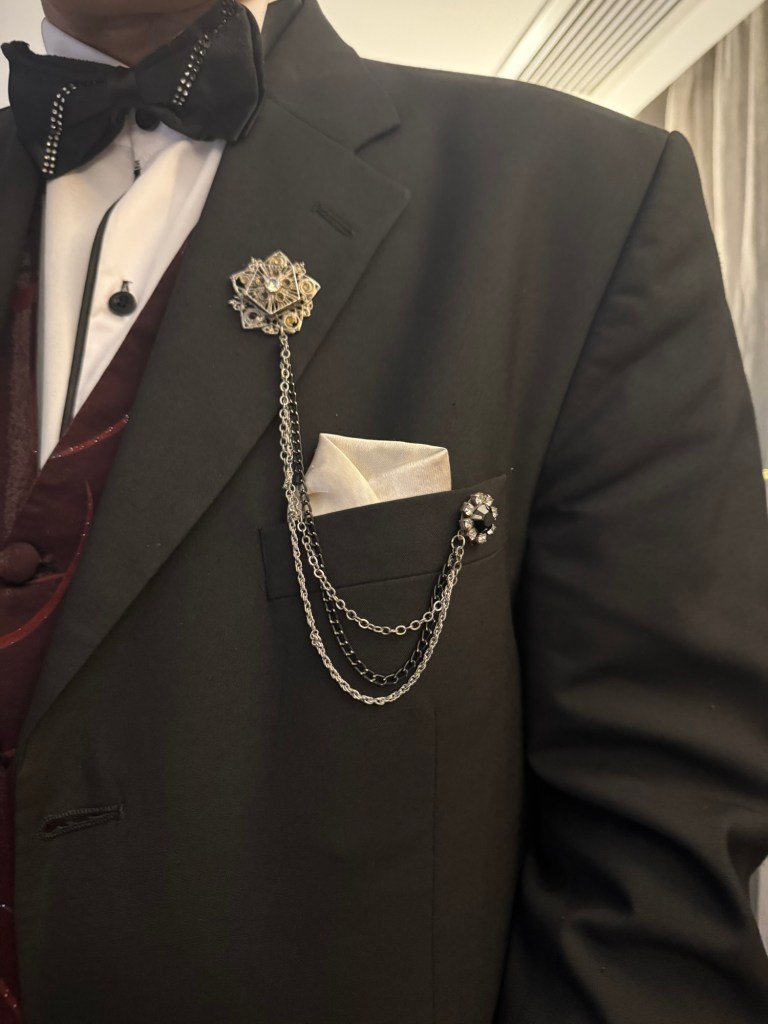
Although this post is late in the evening, it is worth it to highlight this talented individual from Luxor, who skillfully plays the piano, accordion, and violin.
He is a lovely person with interesting jewelry. 😃 I will find out his name (again) tomorrow…
During AMA’s renowned Happy Hour, he performed a selection of popular piano pieces, and later serenaded our dinner table with accordion music (a tango) …….
……followed by a violin rendition of Windmills of Your Mind.
We liked his playing so much we were last to clear the dining room…
And so to bed. We shall be with the Kings and Queens tomorrow …


















































 seetheworldtravelblog