Our itinerary for the day includes visiting two Coptic Orthodox Christian churches and a Jewish Synagogue.
For religious context, Egypt’s population stands at approx 108 million, with 25% identifying as Christian, 300 as Jewish and the remaining population is Muslim.
The term “Coptic” refers to the Coptic language, the final stage of ancient Egyptian, or the Coptic Orthodox Church, the largest Christian community in the Middle East, which utilizes the Coptic language in its liturgy. Additionally, “Coptic” pertains to the Coptic culture and people, who are indigenous to Egypt and share a heritage tied to ancient Egypt, Christianity, and their unique history.
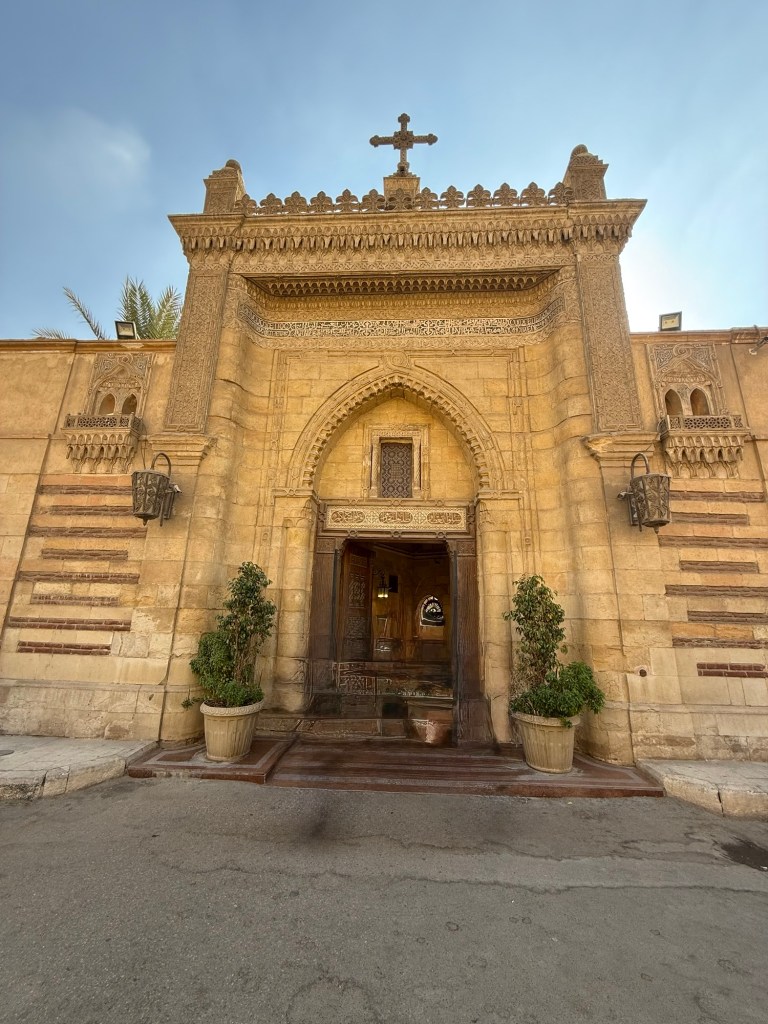
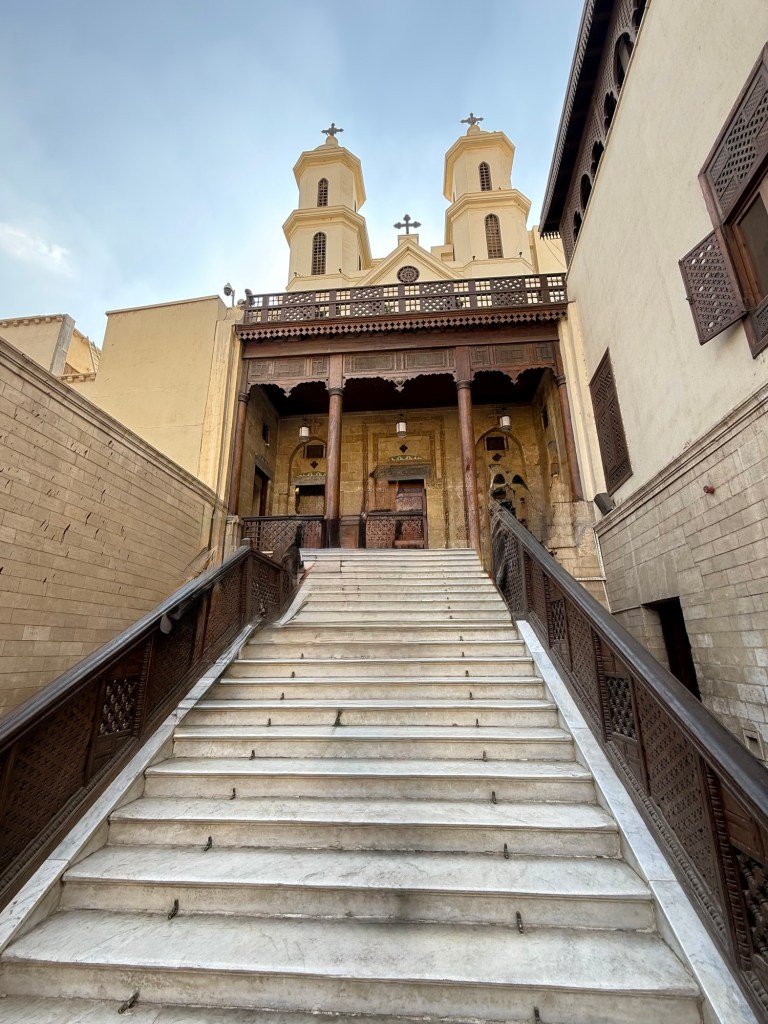
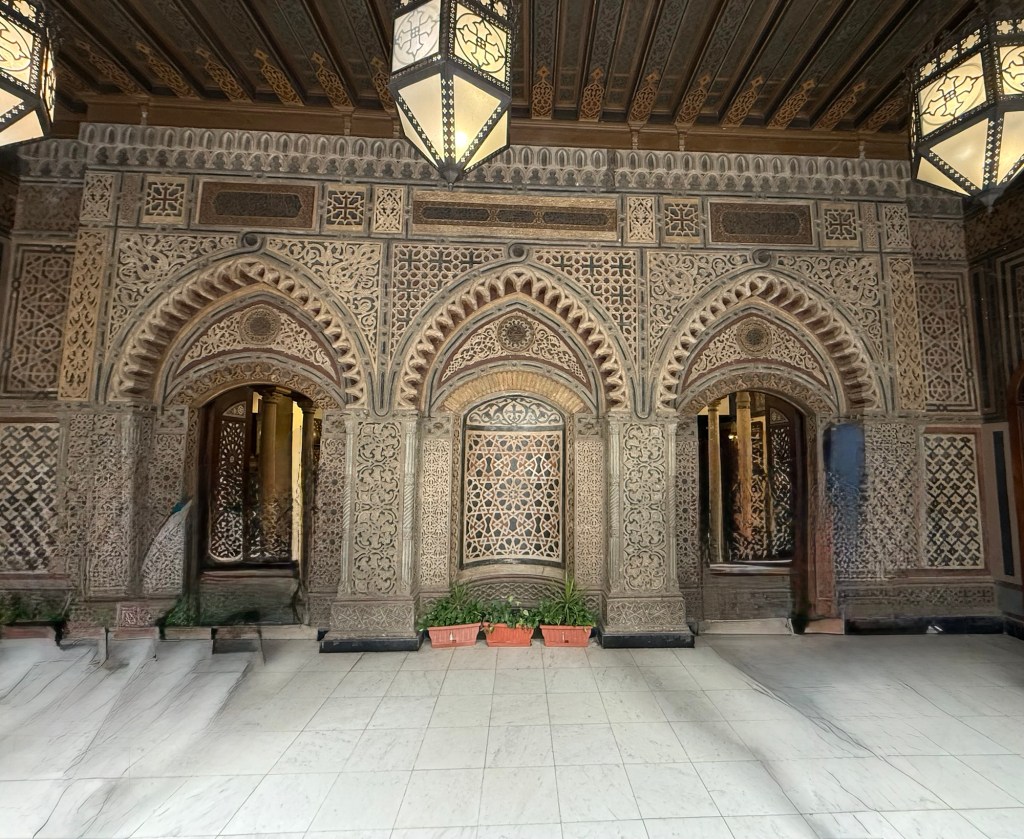
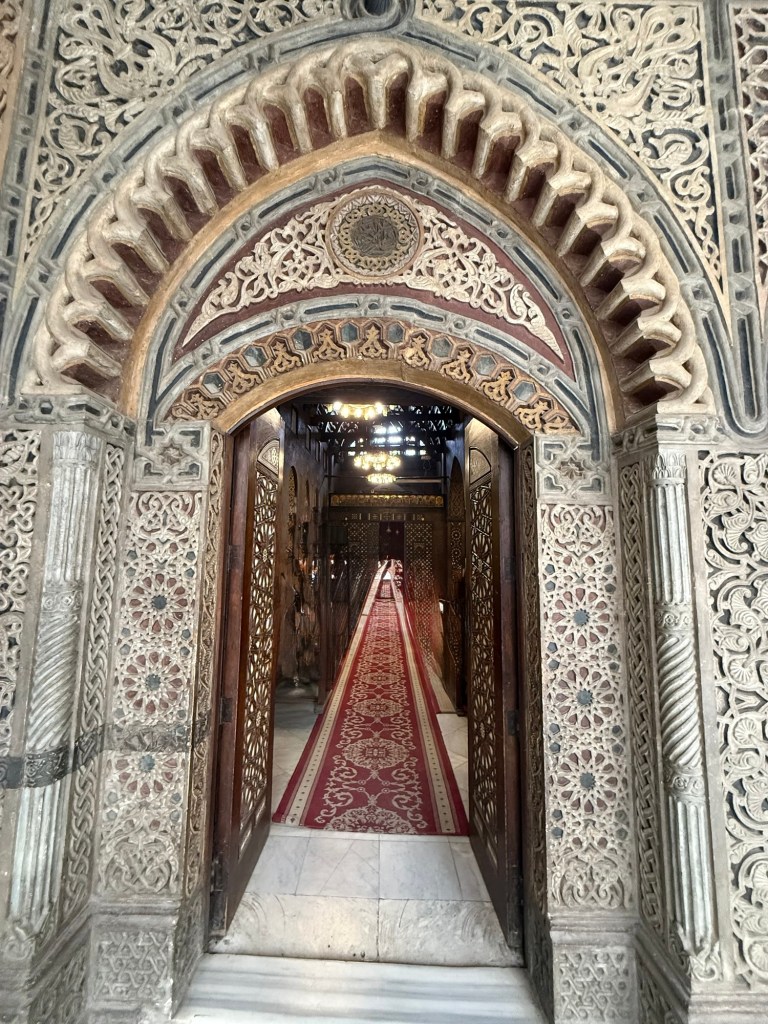
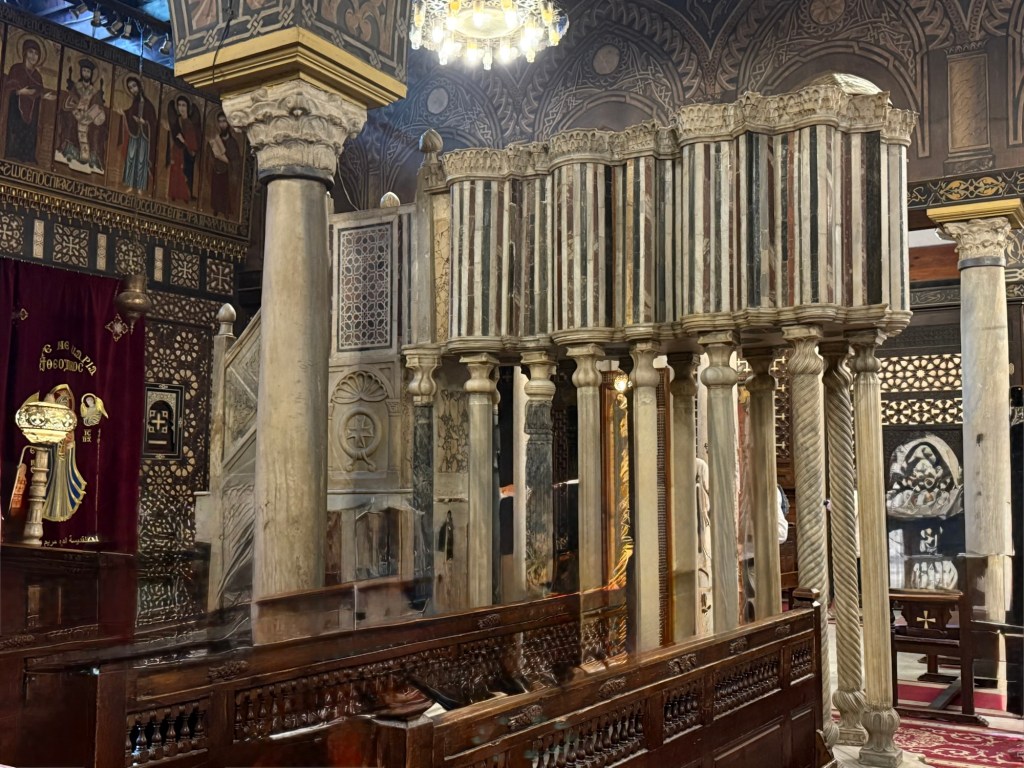
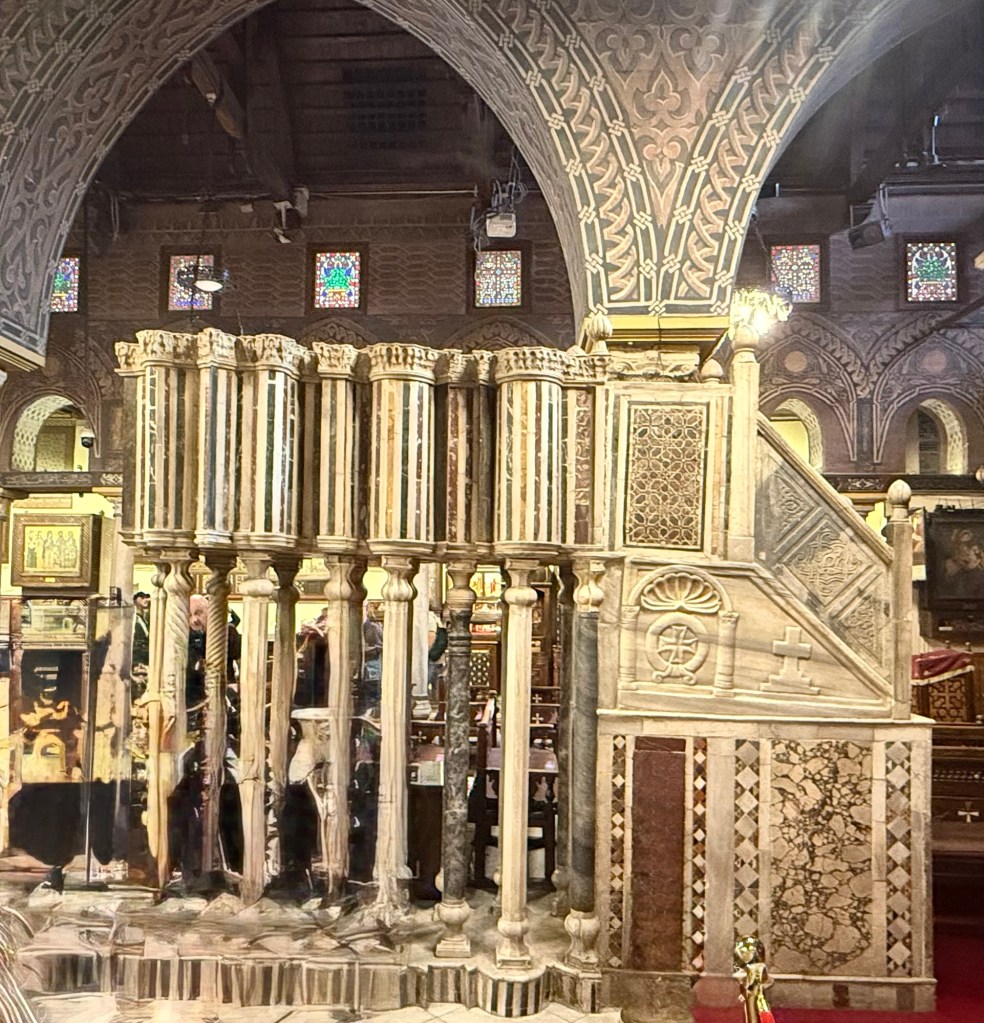
Hanging Church The Hanging Church is also known as the Suspended Church or Al-Moallaqa. Its name derives from its construction on the southern gate of the Roman Fortress.
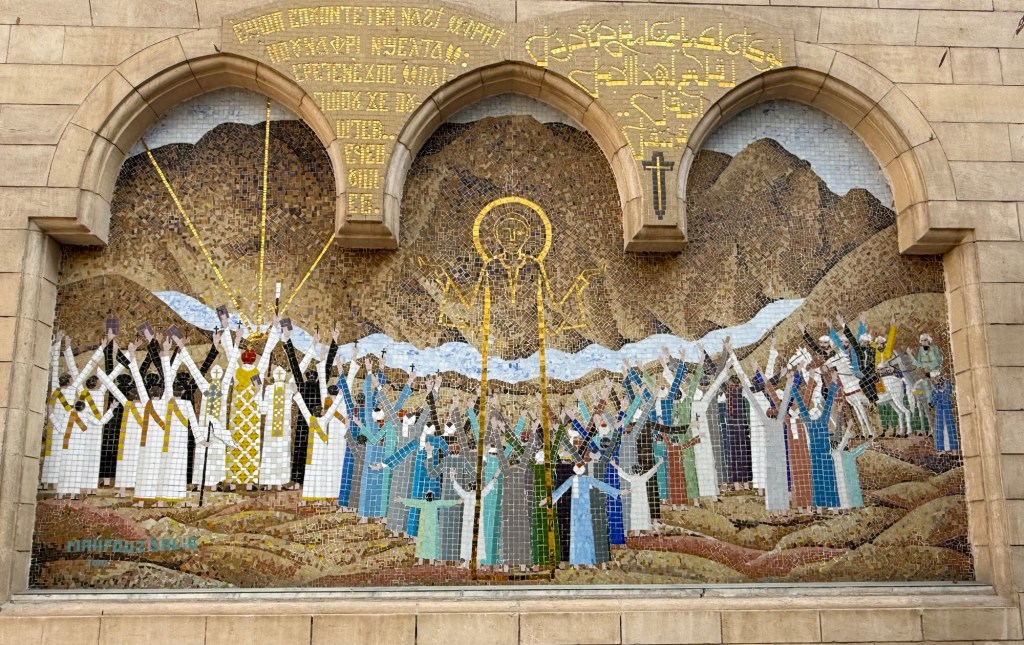
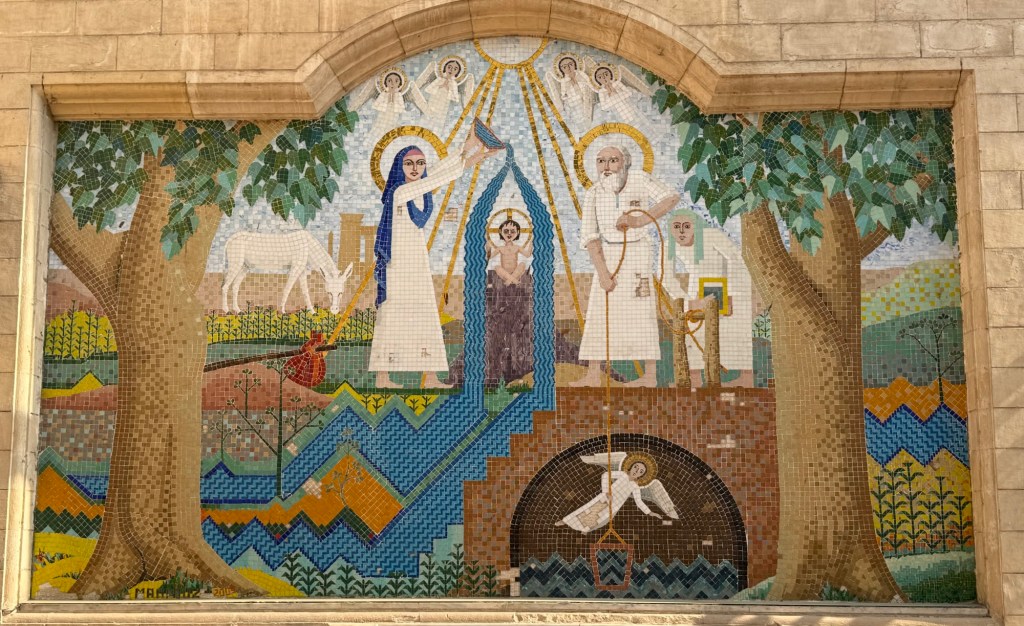
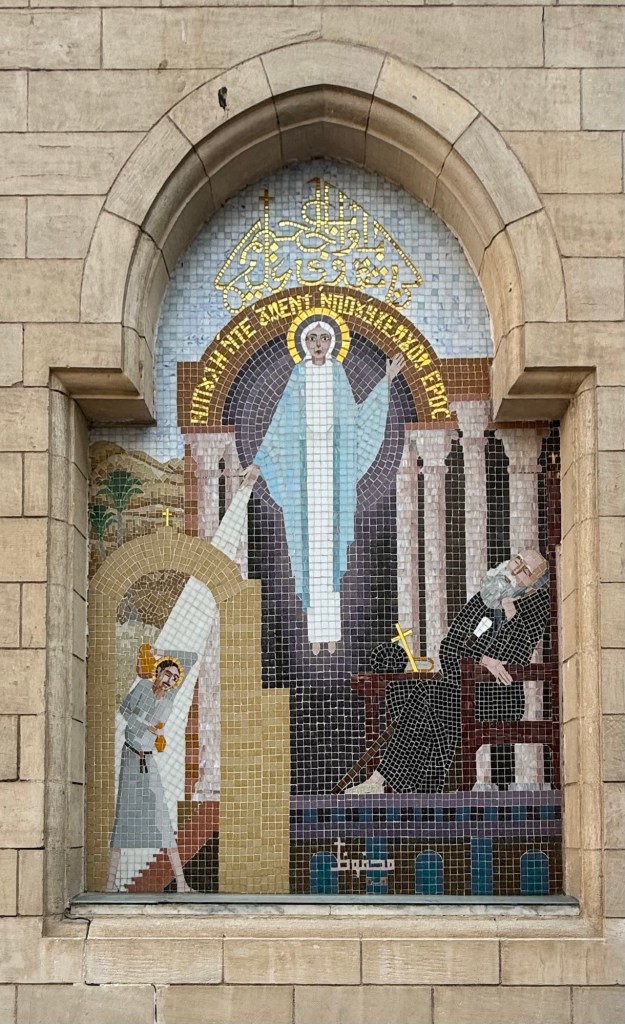
There are many modern mosaics in the courtyard.
Steps lead you up to the church.
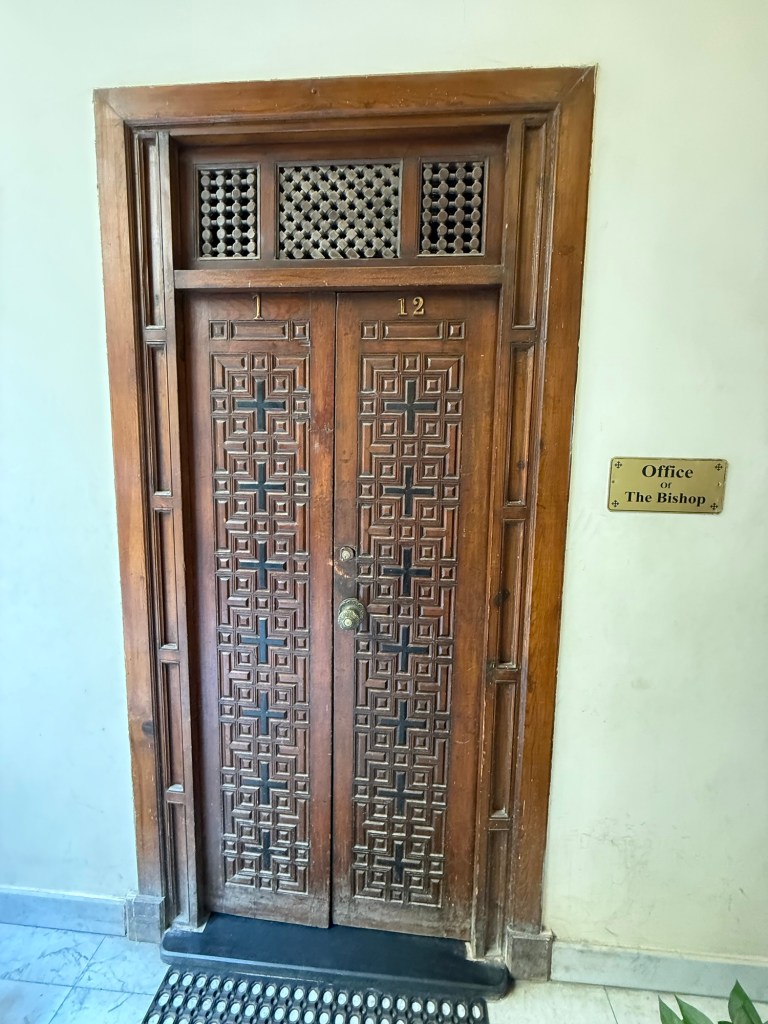
At the top of the steps is the Bishop’s Office.
The church’s foundation consists of logs of palm trees and layers of stones built above the ruins of the Roman fortress.
The impressive pulpit of the Church, dating back to the 5th century, rests on 15 slender columns. On either side of the pulpit, a cross is depicted above three steps, symbolizing the three days Jesus Christ spent in his tomb and his subsequent resurrection.
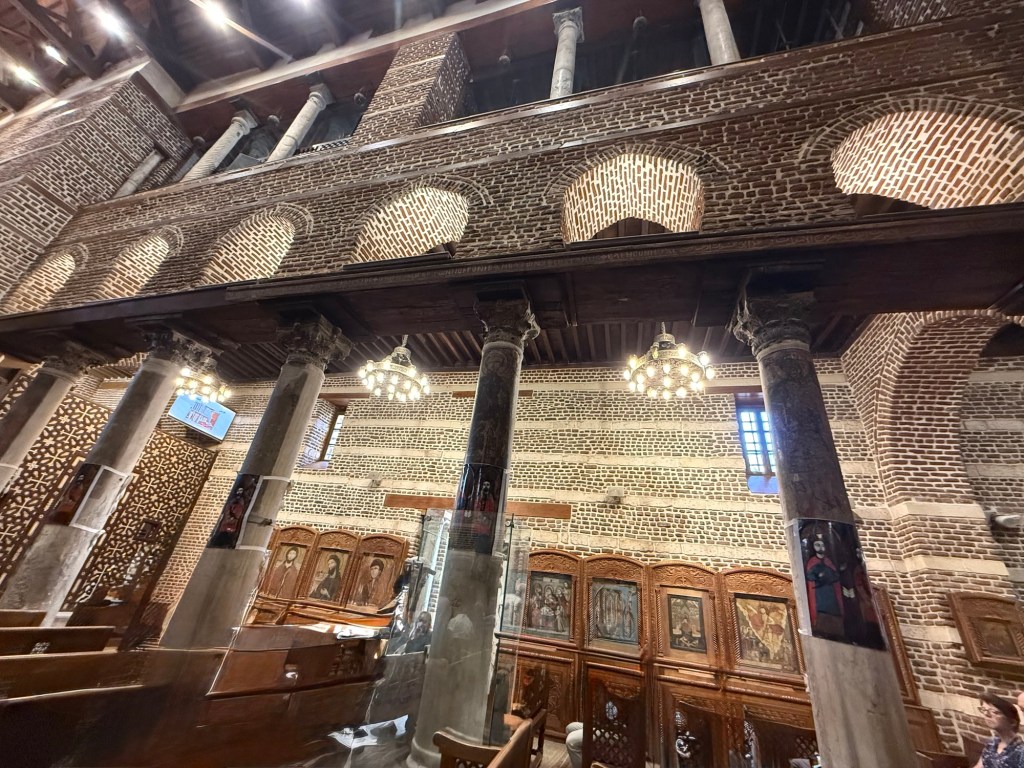
The church houses a total of 110 icons, including the “Coptic Mona Lisa,” which dates back to the 8th century A.D. and depicts Virgin Mary, Jesus Christ, and John the Baptist. As per Mona Lisa, those eyes follow you and remind you of your many sins.
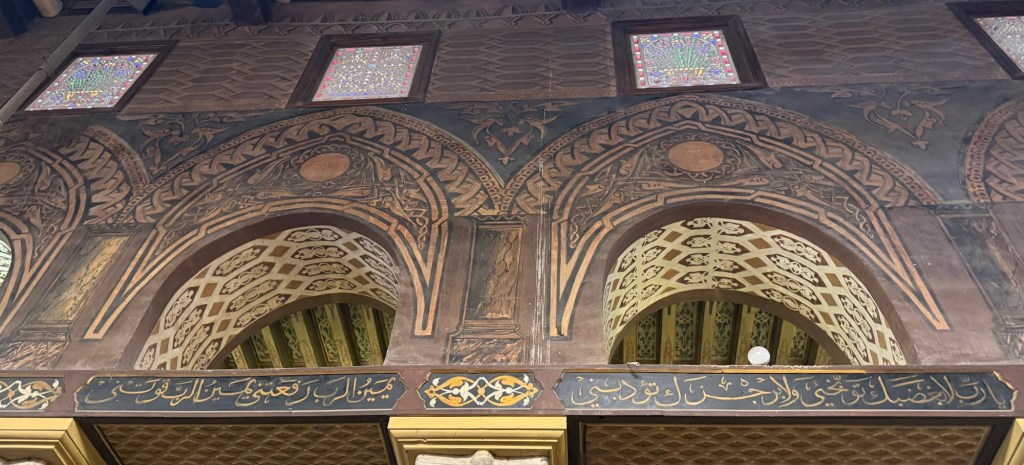
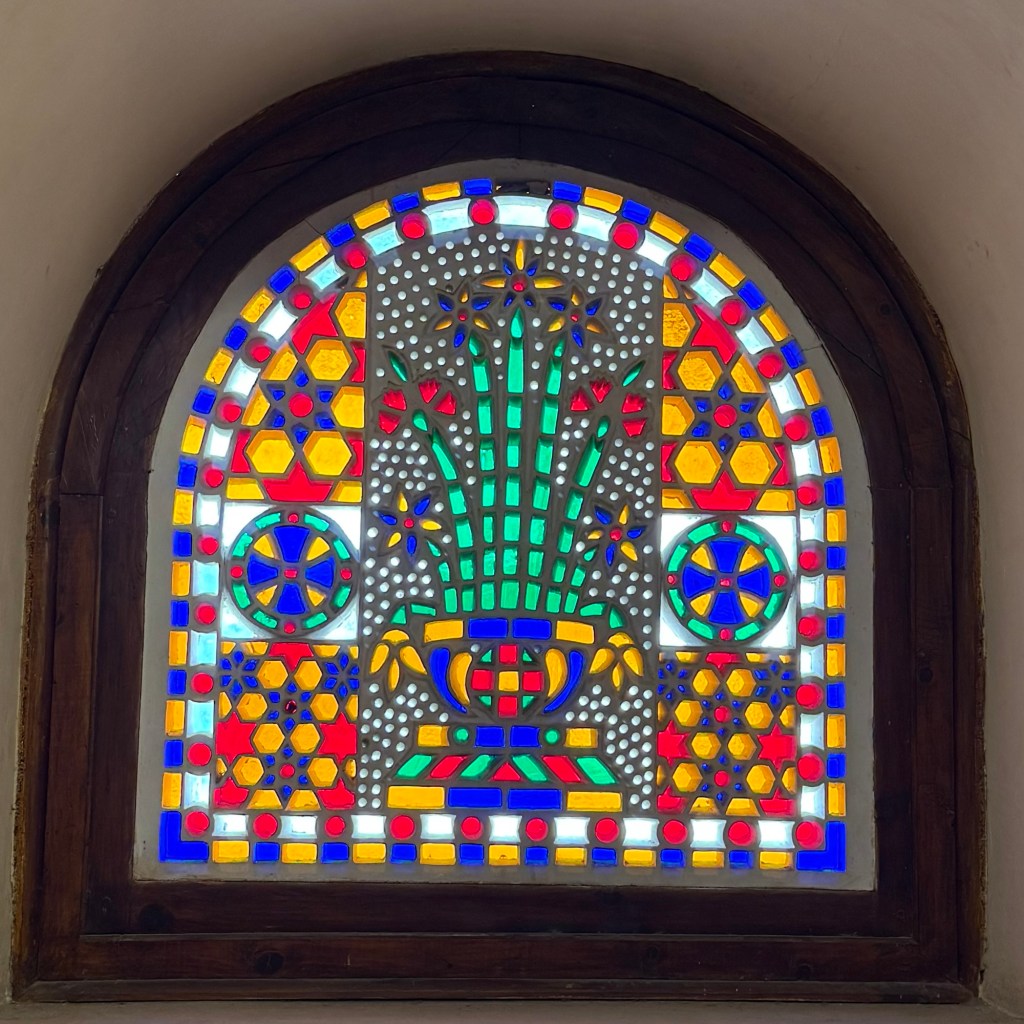
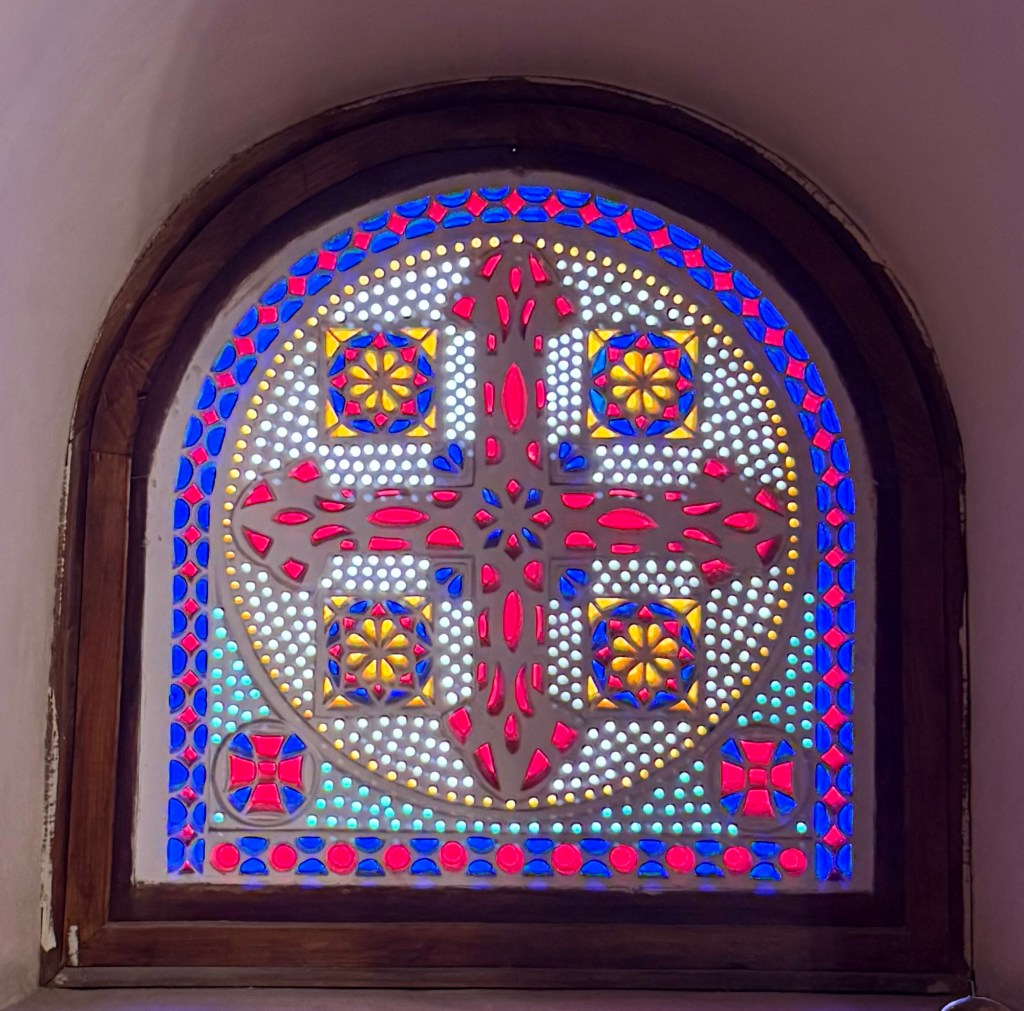
There was some small and pretty stained glass windows.
I encountered the priest of the Hanging Church hanging outside, who greeted me with a friendly “Hi.”
The experience was truly fascinating.
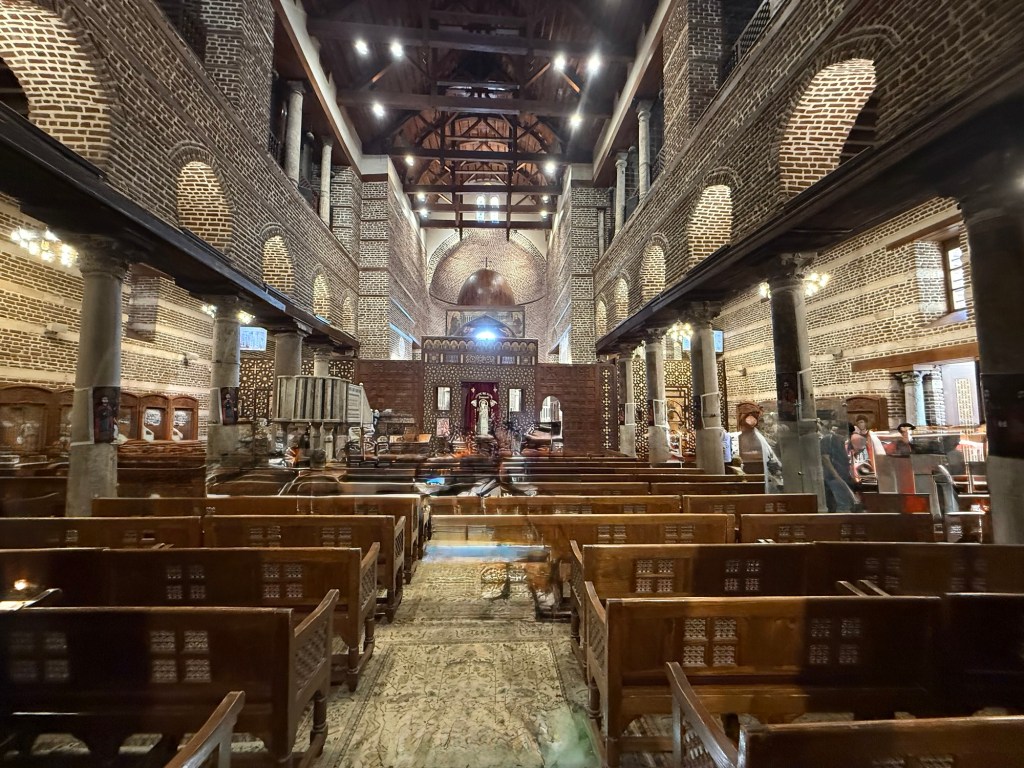
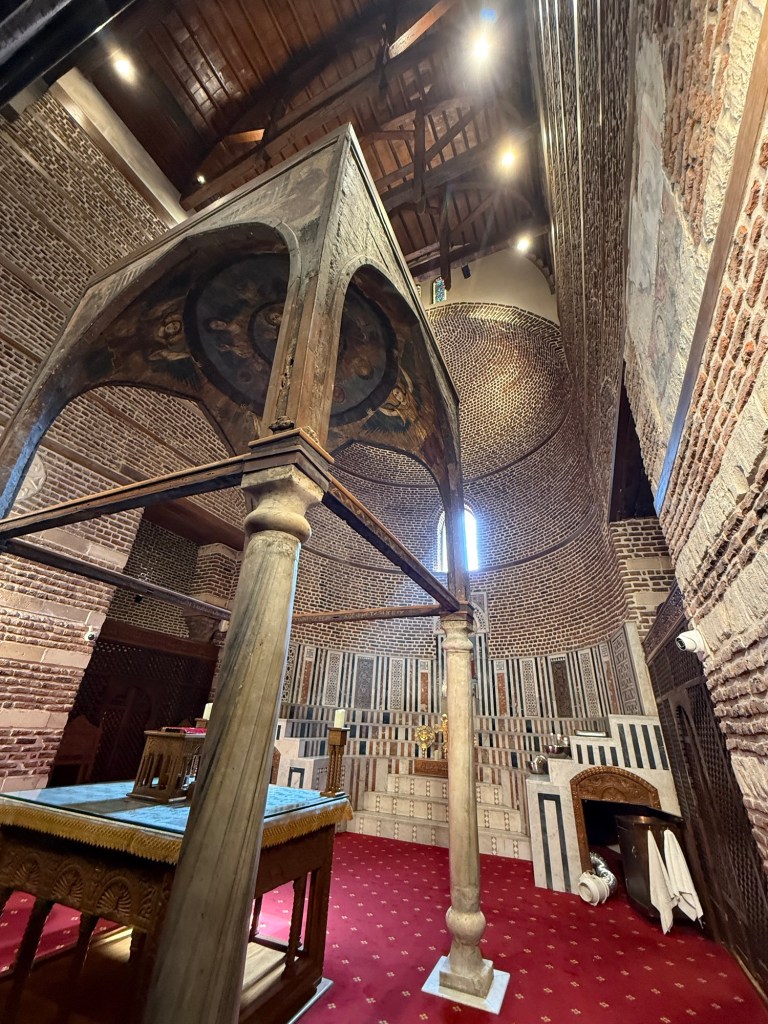
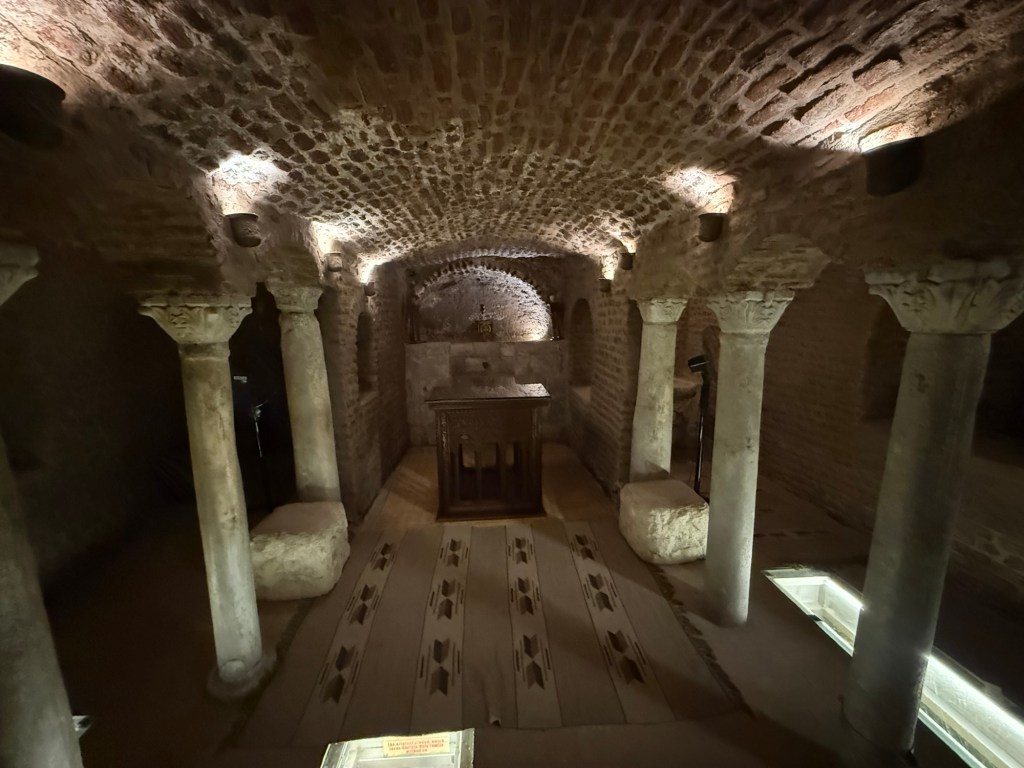
Abu Sarga (Cavern) Church Abu Sarga is built on a basilican structure with a nave and two side aisles.
The west end of the church features a return aisle. Twelve columns, eleven of which are made of white marble and one of red granite, separate the nave from the aisles. Some of the marble columns display clear traces of figures, likely representing saints. Corinthian capitals, originating from older buildings, are placed between the column shafts and the wooden architraves.
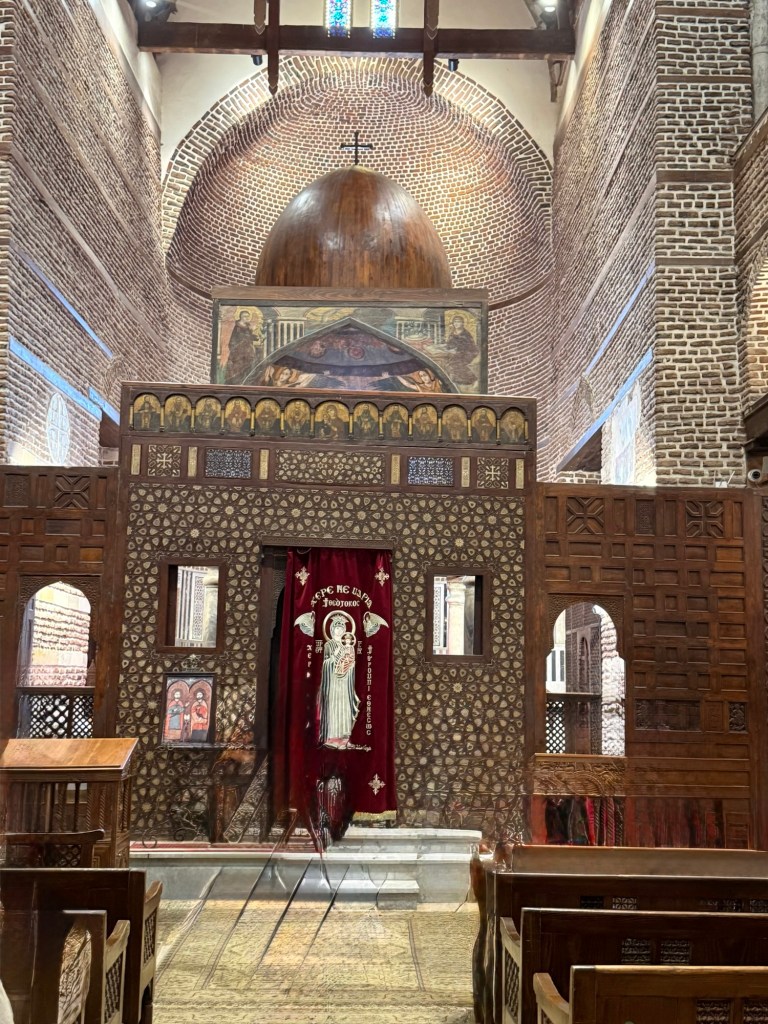
On the east side of the church, a tripartite sanctuary is separated from the congregation hall by an impressive wooden screen, beautifully decorated with ebony and ivory, with its oldest part dating back to the 13th century.
Exceptional icons depicting various scenes from the life of Christ, Virgin Mary, and diverse saints adorn the walls of Abu Sarga.
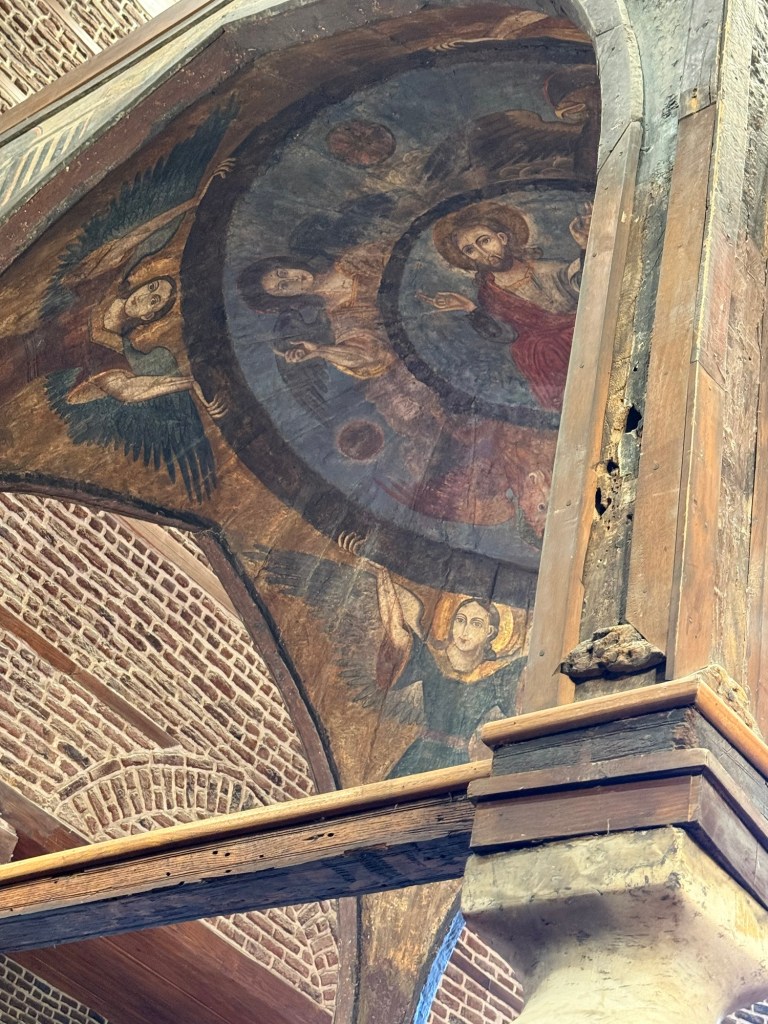
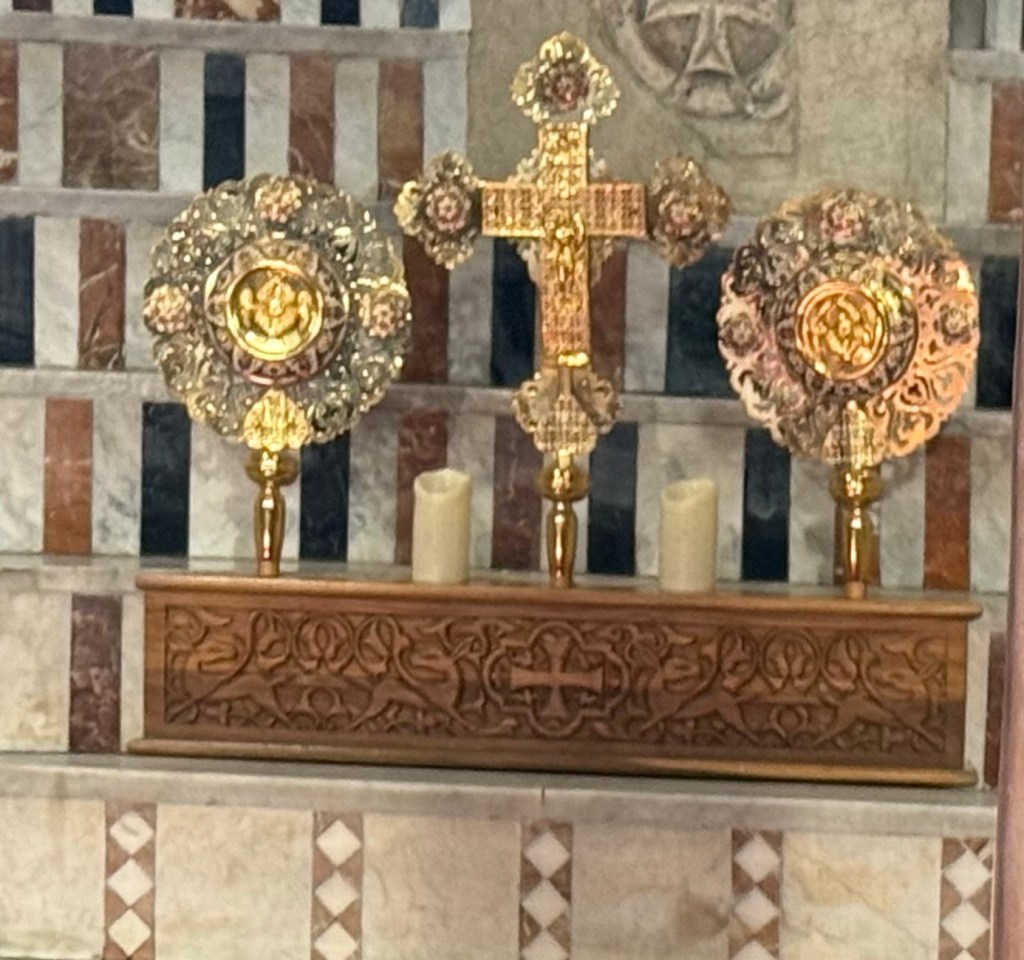
Inside its main sanctuary, a wooden canopy supported by four pillars is placed above the altar, painted with biblical scenes, including Jesus Pantocrator and Archangel Gabriel appearing to Virgin Mary. The apse behind the altar is richly decorated with strips of marble and mosaics.
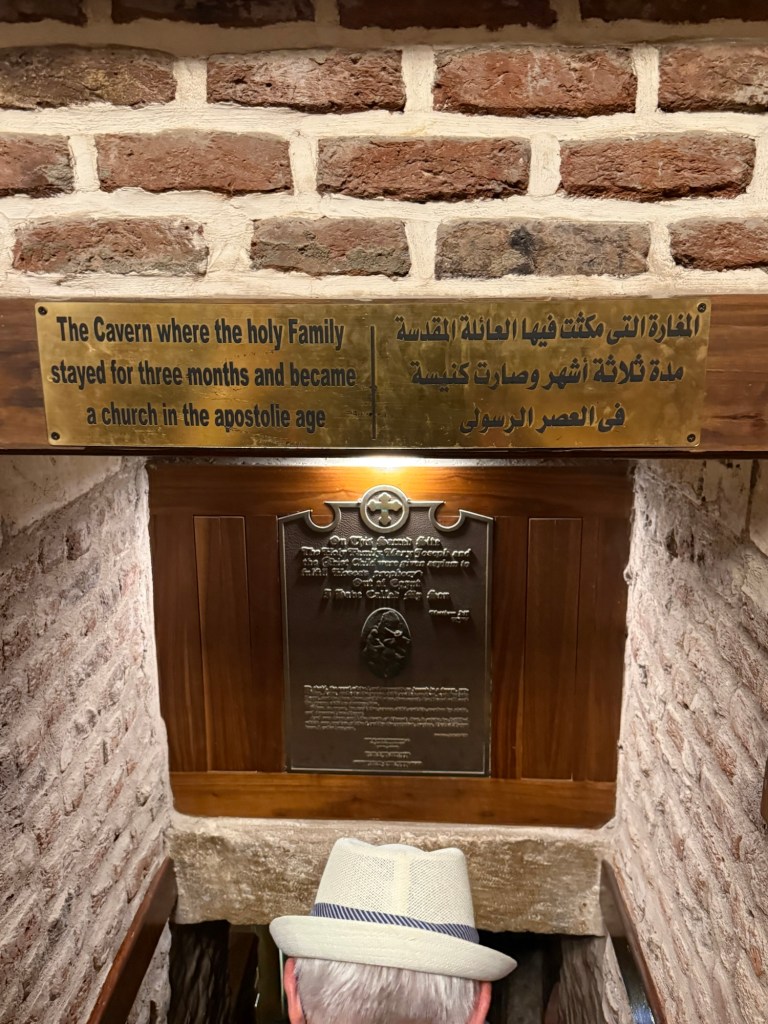
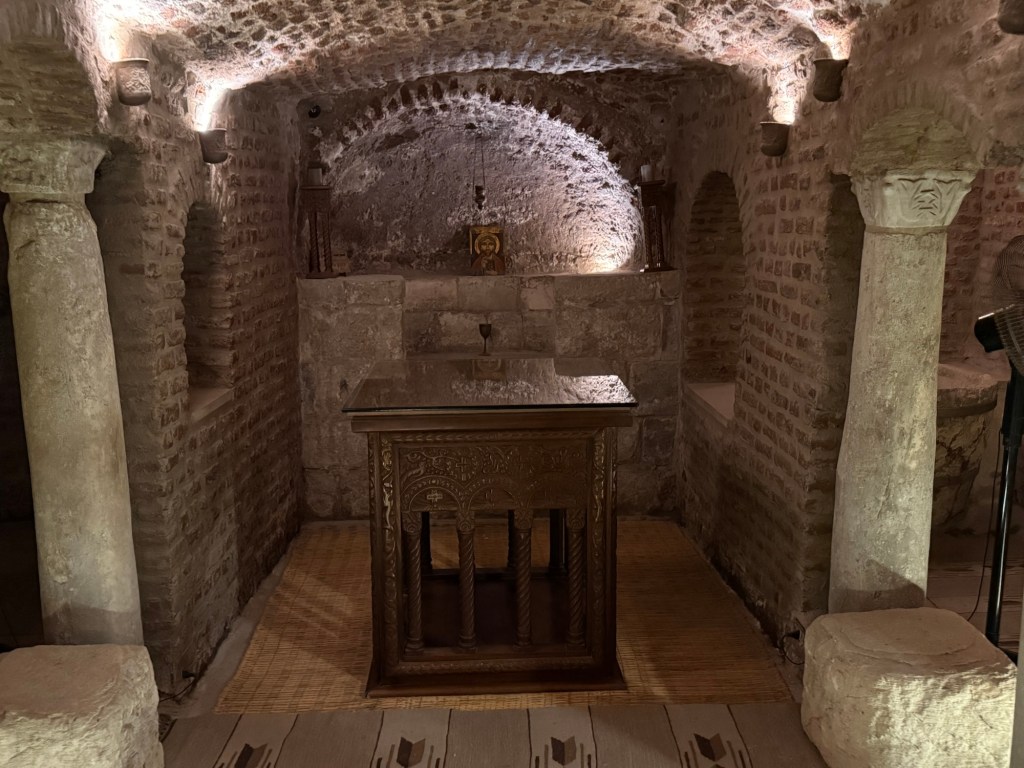
And then to The cavern…
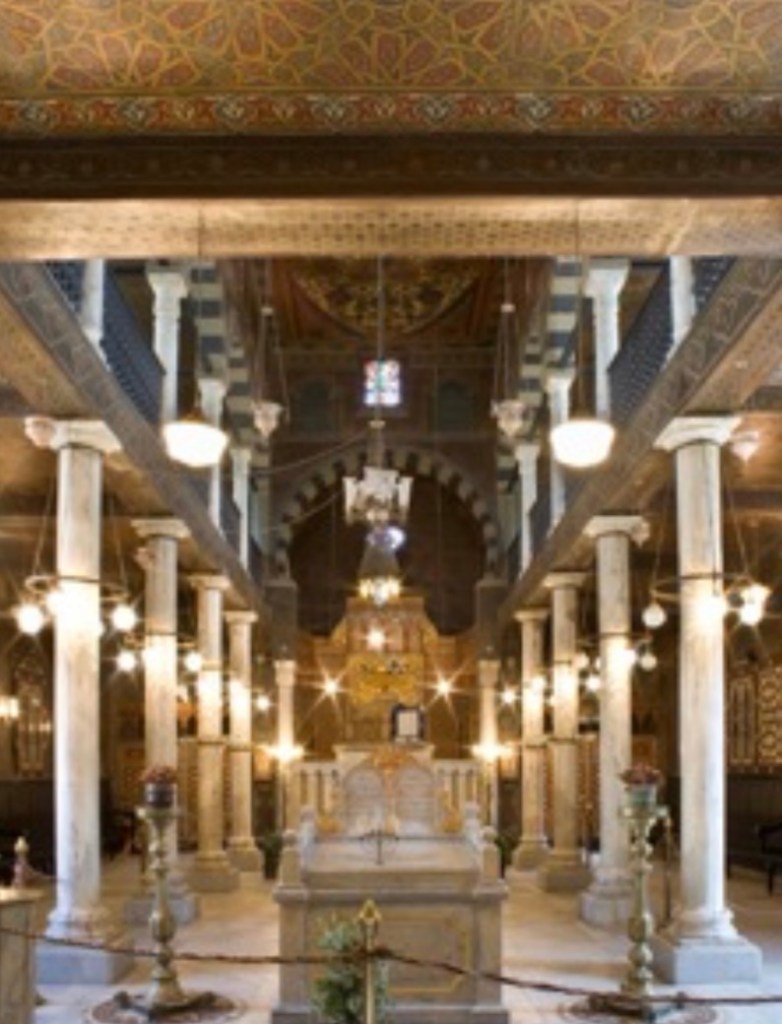
Ben Ezra Synagogue (No photography was allowed; the image shown is a low-quality one from online) The Synagogue of Ben Ezra was originally a church. However, it was sold to pay the annual taxes imposed on the church by the government in 882 A.D. The synagogue is named after Abraham Ben Ezra, who purchased the church for 20,000 dinars. The basilican structure, featuring a nave and two aisles, is still recognizable. The synagogue has gained fame for its Geniza, an archive of ancient Jewish manuscripts comprising thousands of rare texts. While the synagogue may not have been particularly impressive, this may be attributed to the fact that it is government-run and there are only 300 Jews in the entire country of Egypt, according to the census.
Once again, we were faced with the challenge of seeing so much in such a short amount of time.
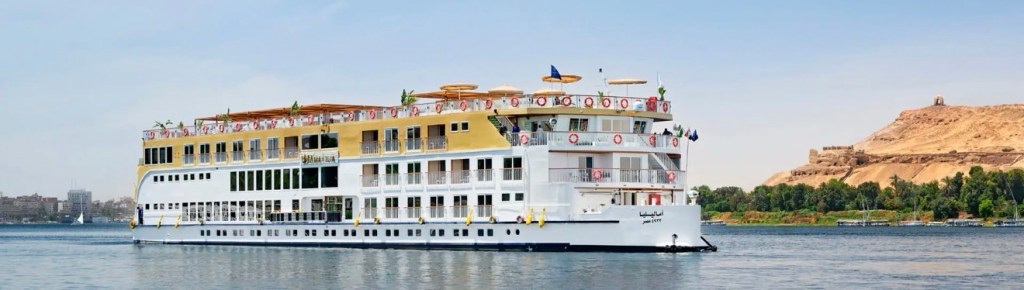
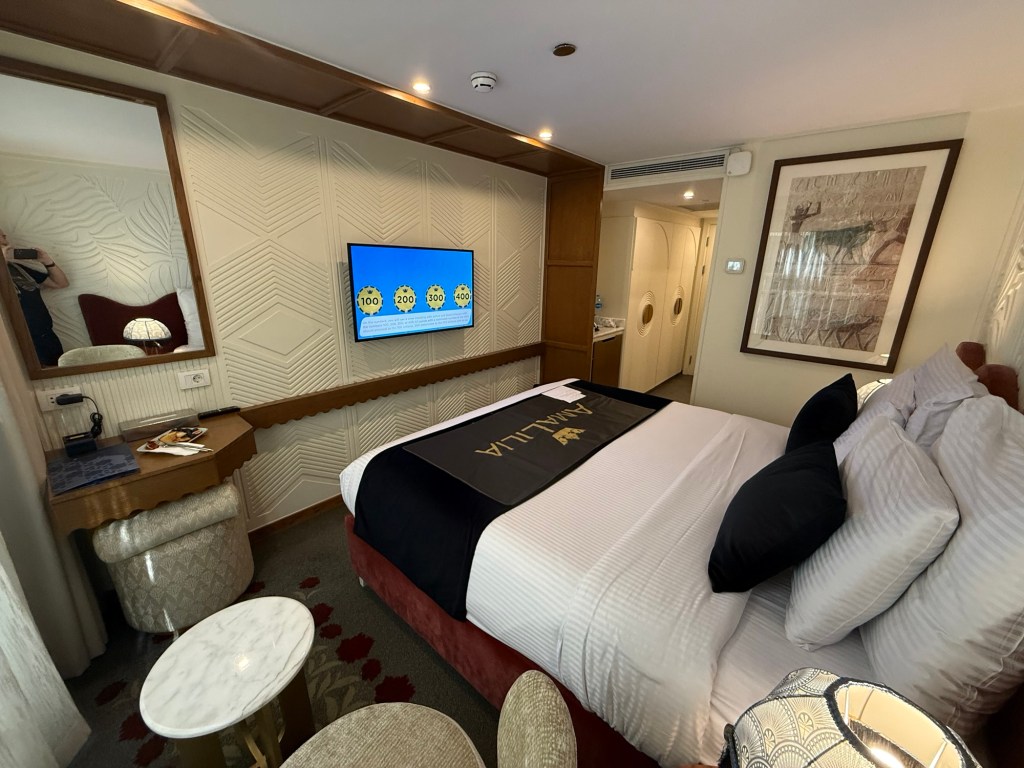
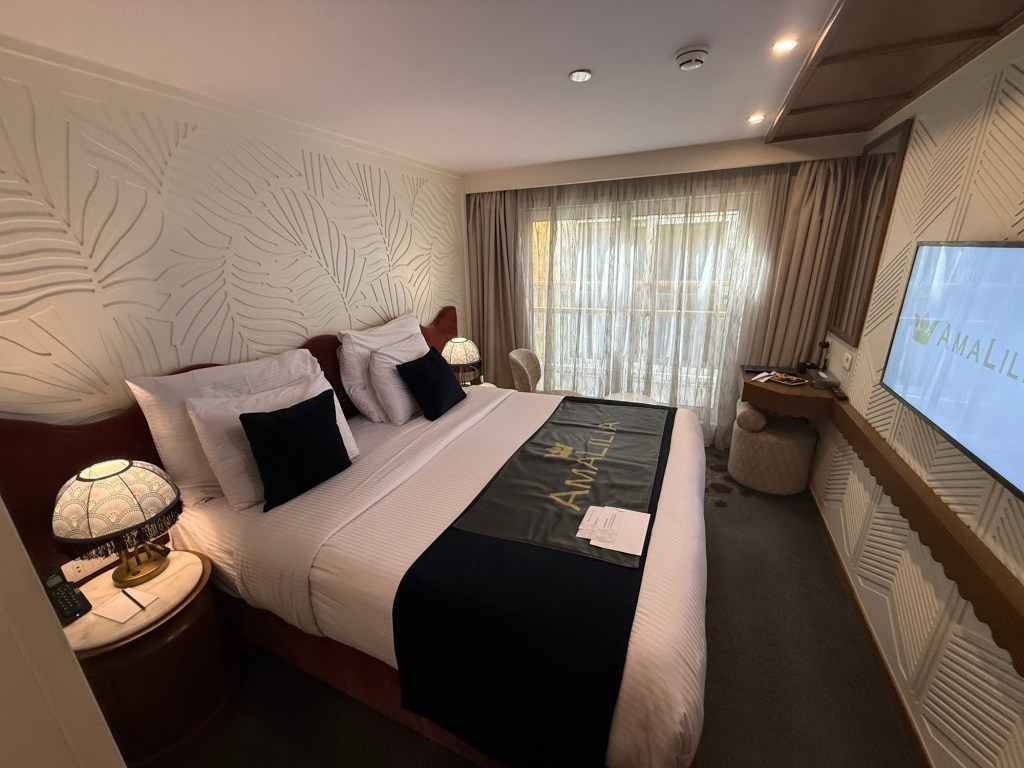
So, now we bid farewell to Cairo for seven nights as we fly to Luxor to embark on our ship, the AMA Lilia, for our Nile cruise.
We will return to Cairo for one last night on October 23.
Citadel of Saladin and the Egyptian Museum including King Tut, Cairo
By Paul Bryers
This morning, we convened with our AMA Guide, Mohammed, at 10:30 am, a respectable hour, and promptly headed for the hills, literally.
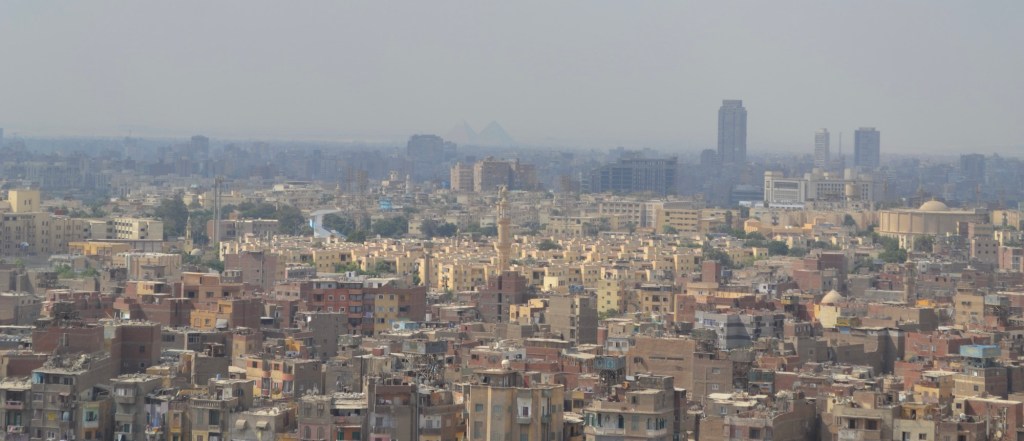
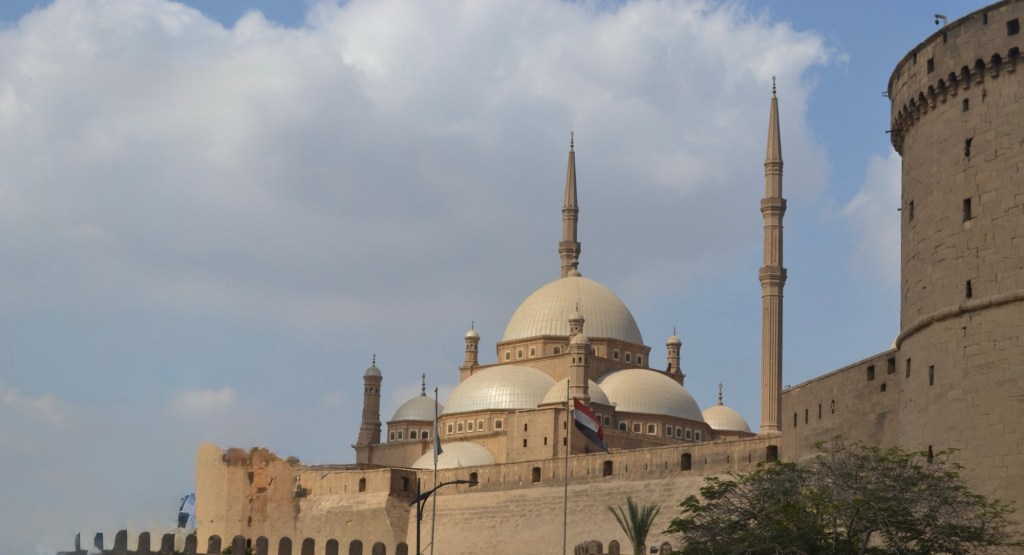
The Citadel of Saladin is one of the most iconic monuments in Islamic Cairo and among the most impressive defensive fortresses dating to the Middle Ages. Strategically situated on the Muqattam Hills, it afforded a formidable defensive position and offered, as it still does today, an unrestricted panoramic view of Cairo all the way to Giza. We could just make out the Great Pyramid.
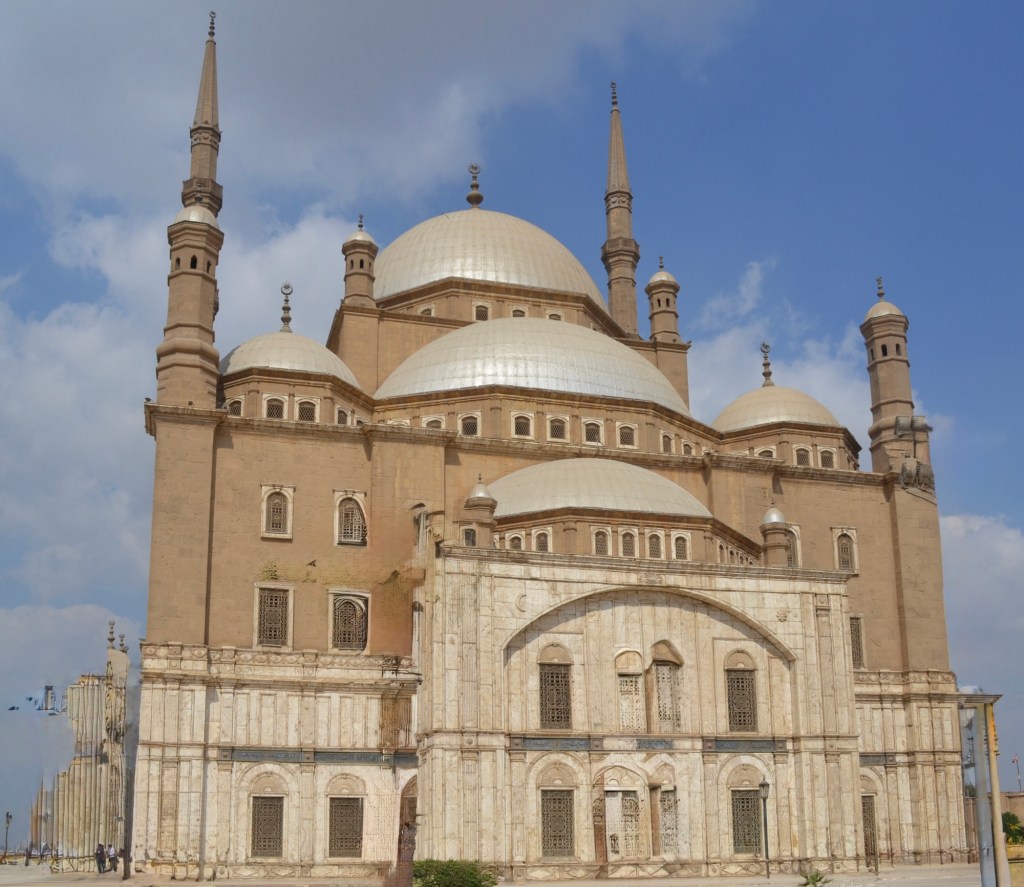
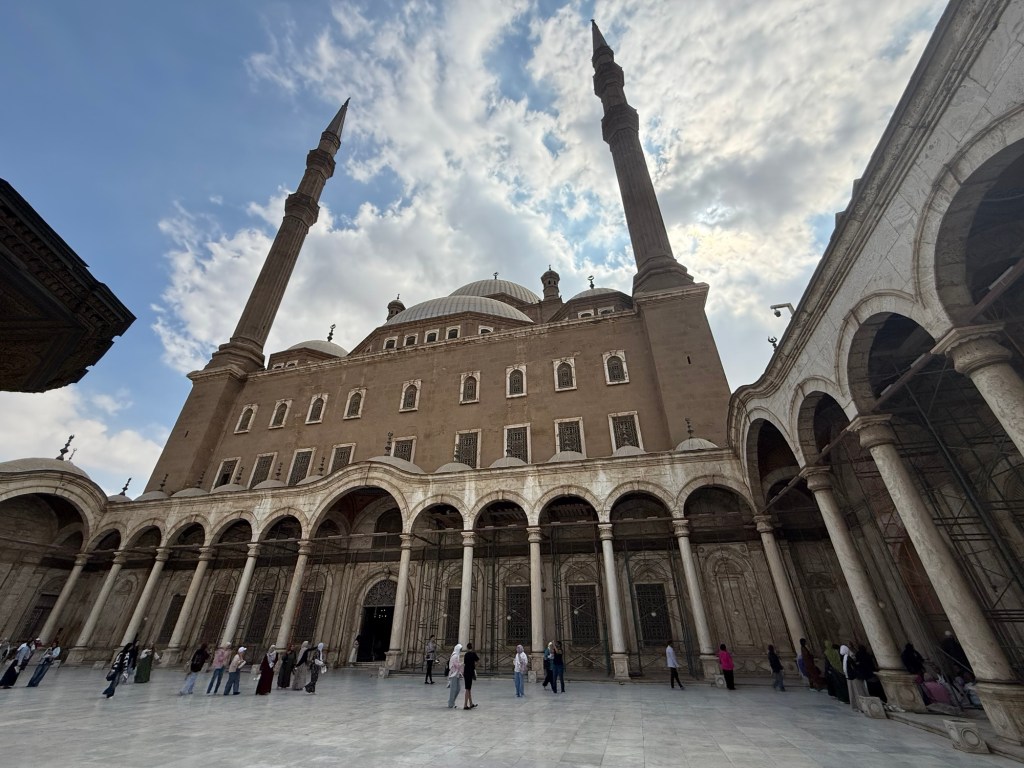
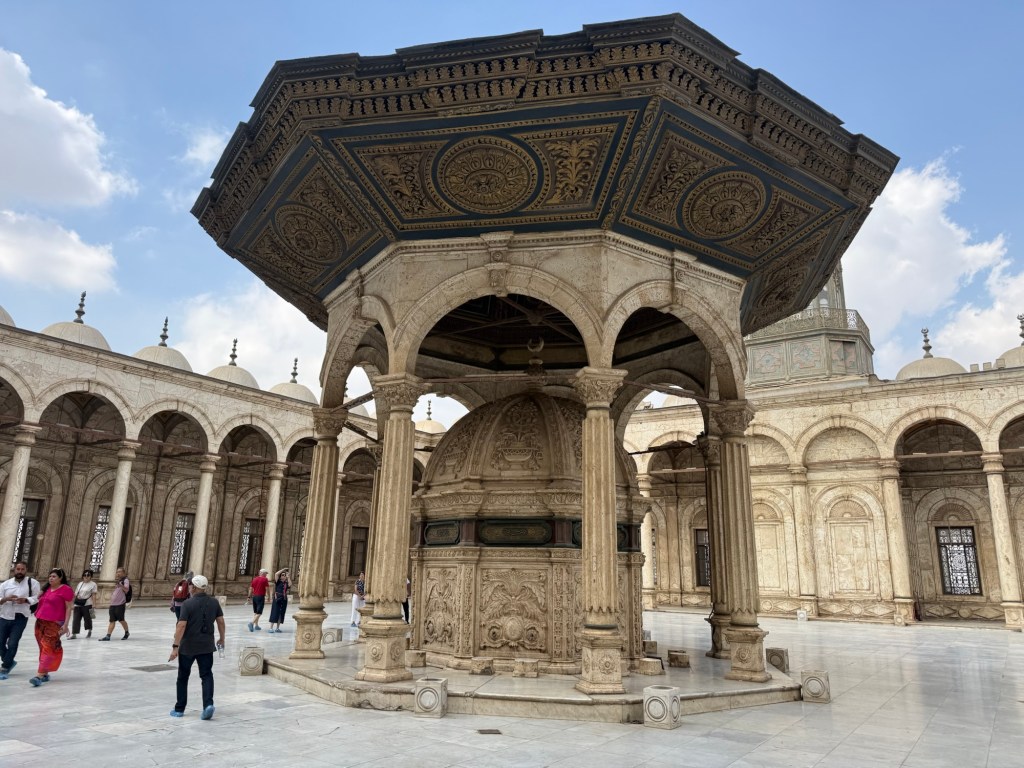
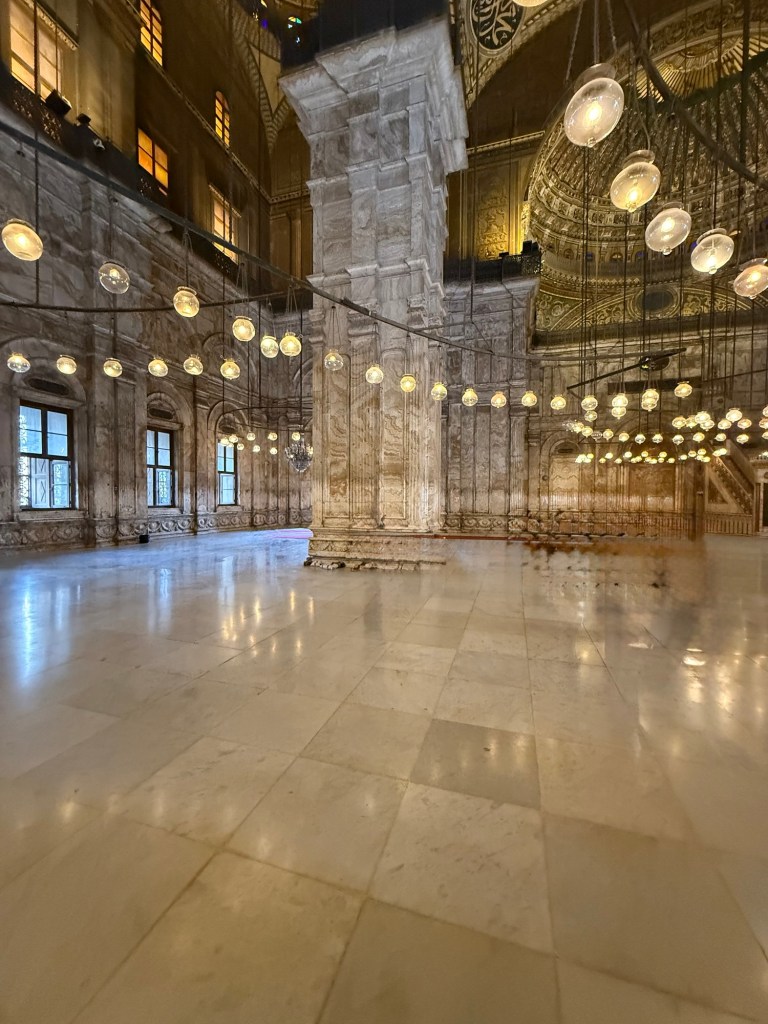
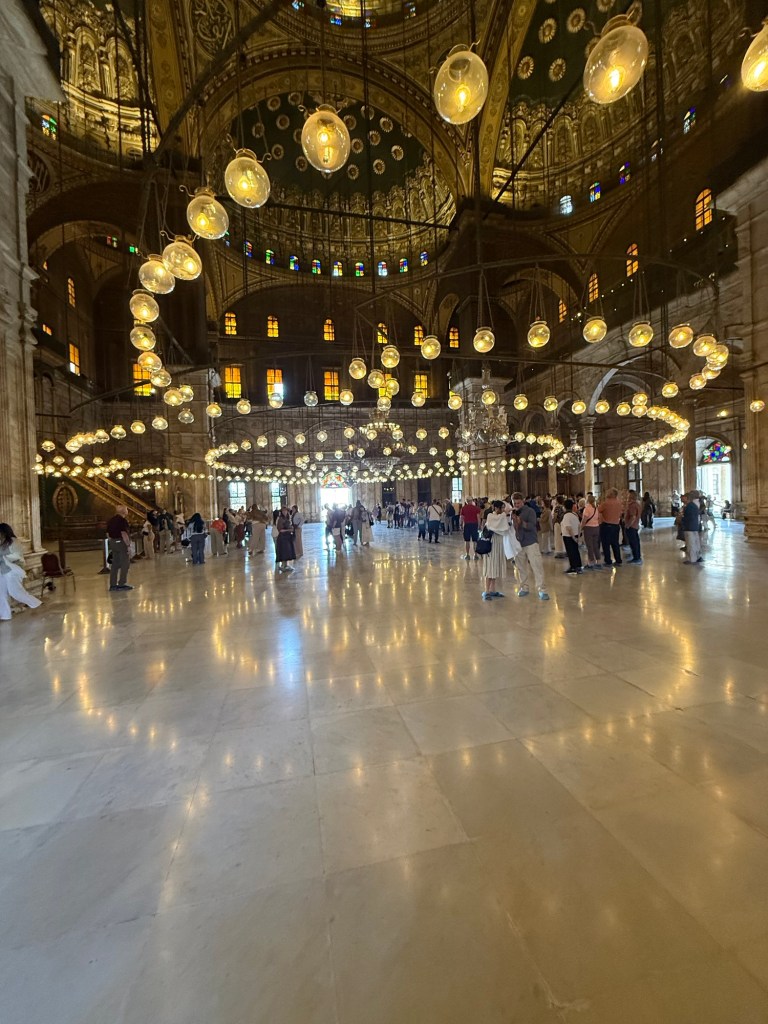
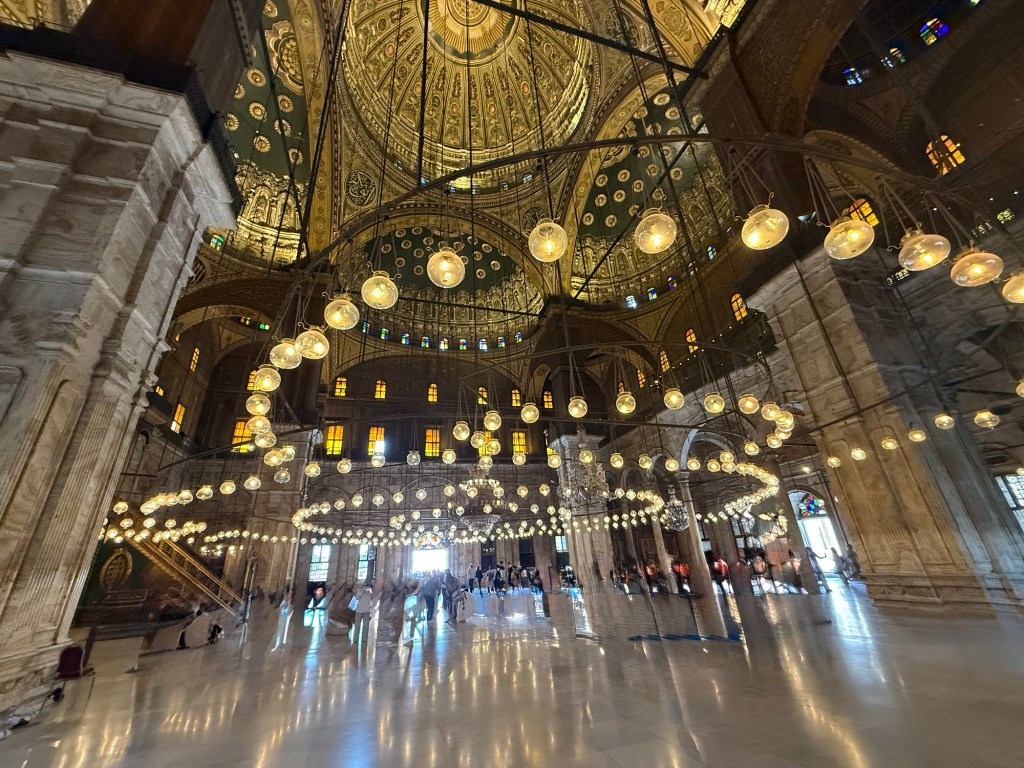
The Mosque of Muhammad Ali is located inside the Citadel. It was built by Muhammad Ali Pasha in 1848 AD on the site of Mamluk palaces. This mosque is known as the “Alabaster Mosque”, in reference to its marble paneling on its interior and exterior walls. The mosque’s twin minarets are the highest in all of Egypt, each reaching a height of 84 meters.
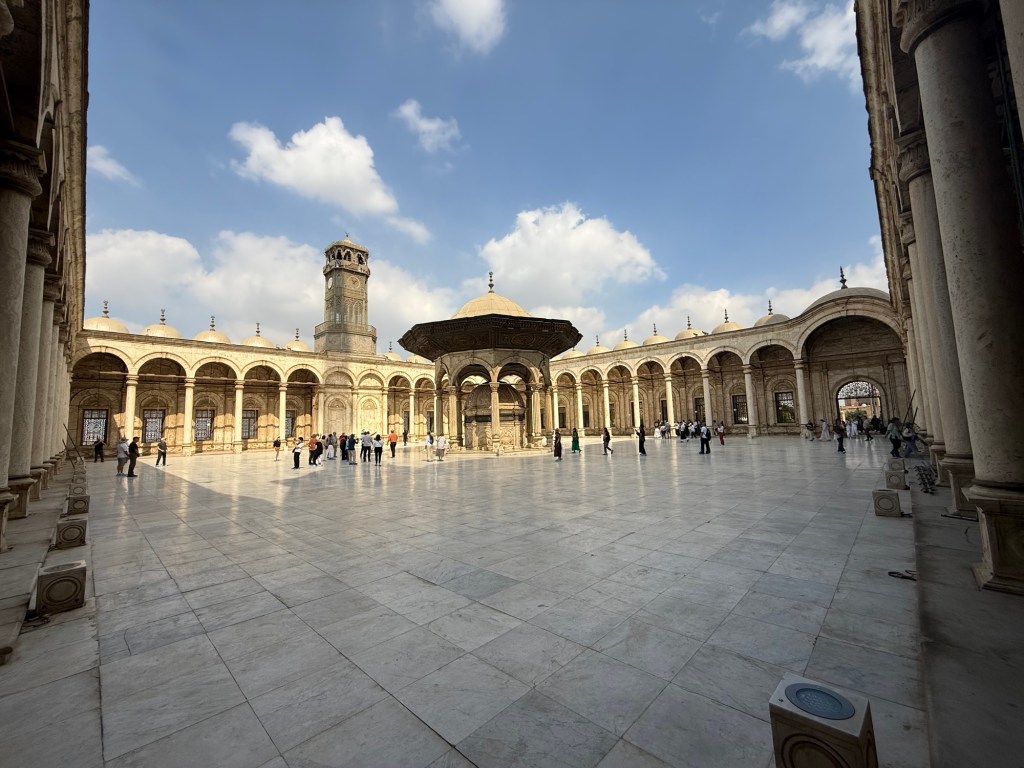
The limestone mosque was built in the Turkish style that consists of an open court and prayer hall.
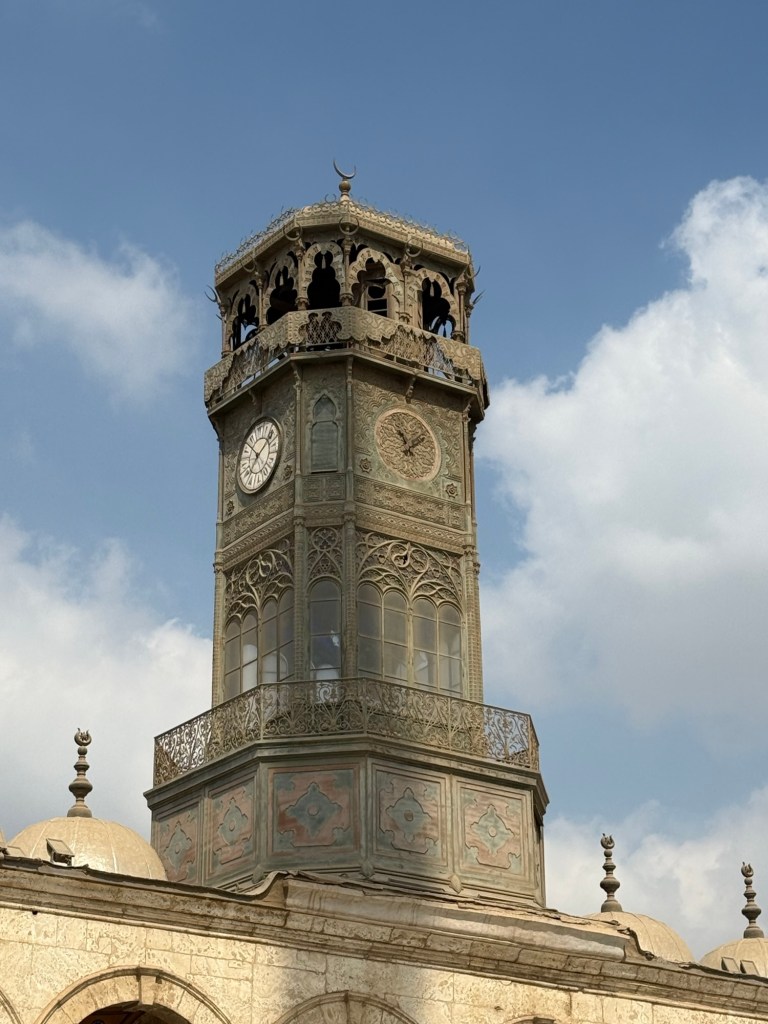
The outer open court contains a fountain with a gloriously decorated vase and a copper clock tower, which was gifted to Muhammad Ali Pasha by Louis Philippe of France.
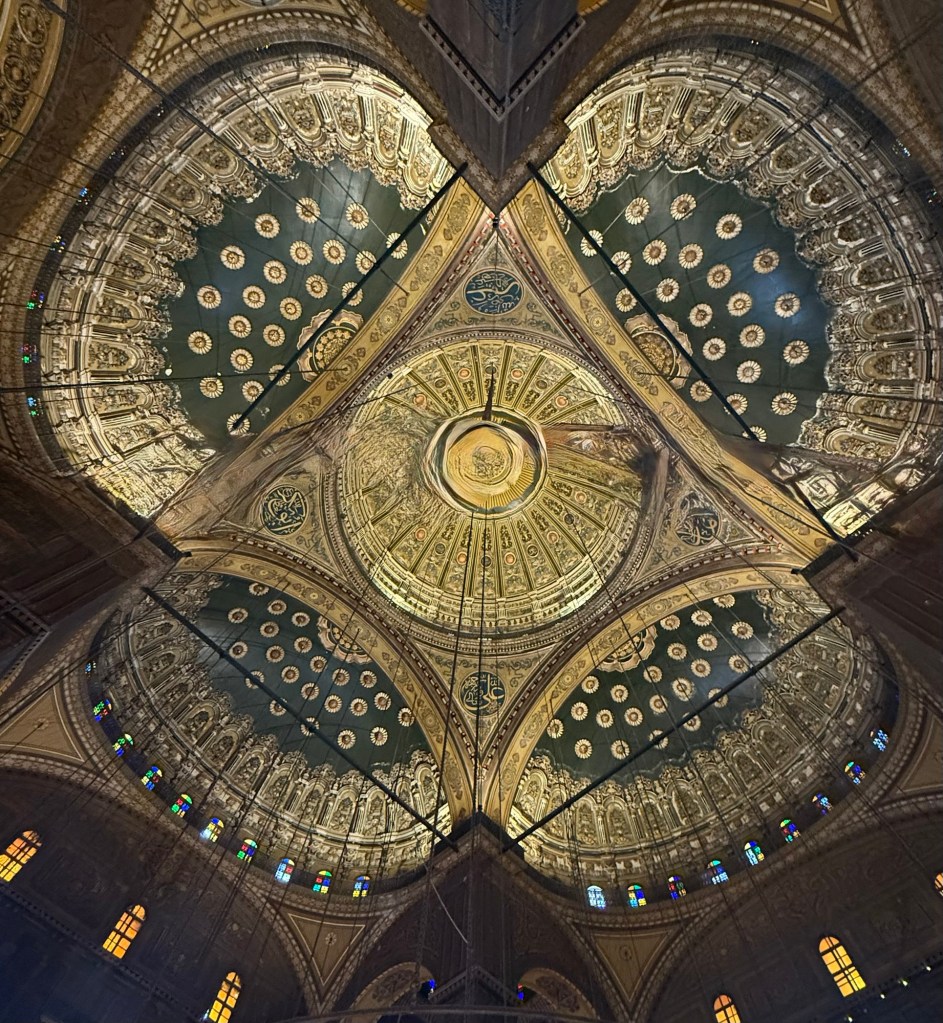
The prayer hall is a square space that is surmounted with a large central dome which is surrounded by four semi-domes and four shallow domes in the corners. There are two minbars (pulpits) inside the mosque. The original of the two is made of wood decorated in green. The other was a later addition made of marble.
The ceilings are a dazzle of blues and golds, leading to a severe case of photographic neck pain!
After a lavish Egyptian lunch at the Nile Ritz, we walked to the Egyptian Museum (EM).
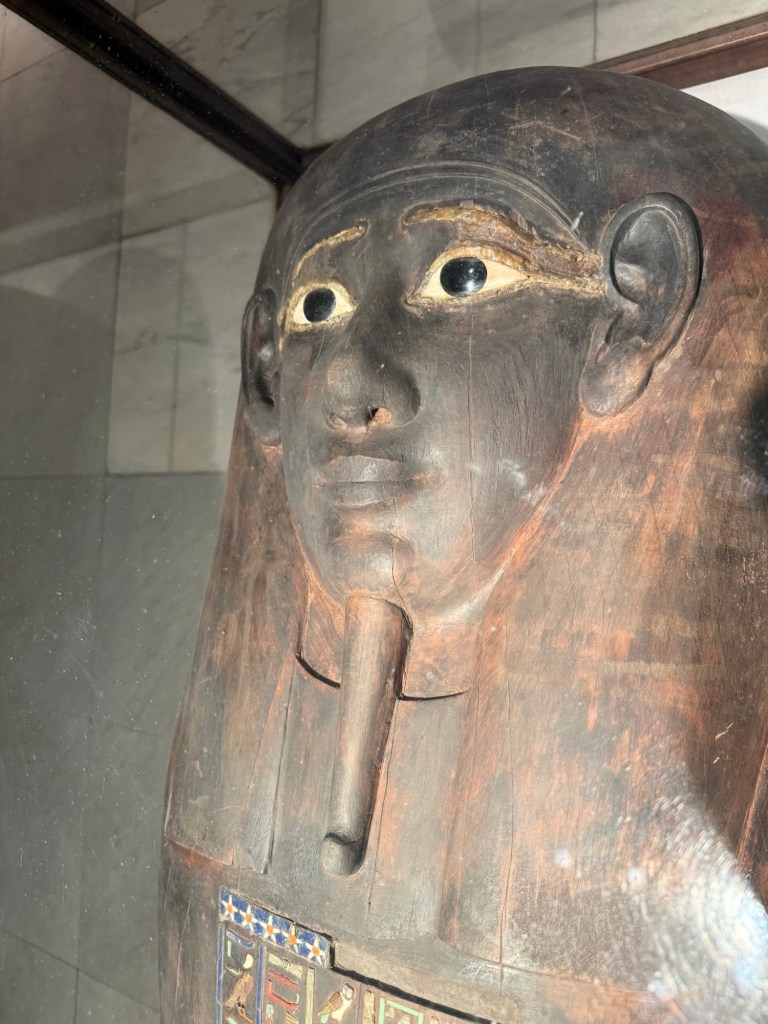
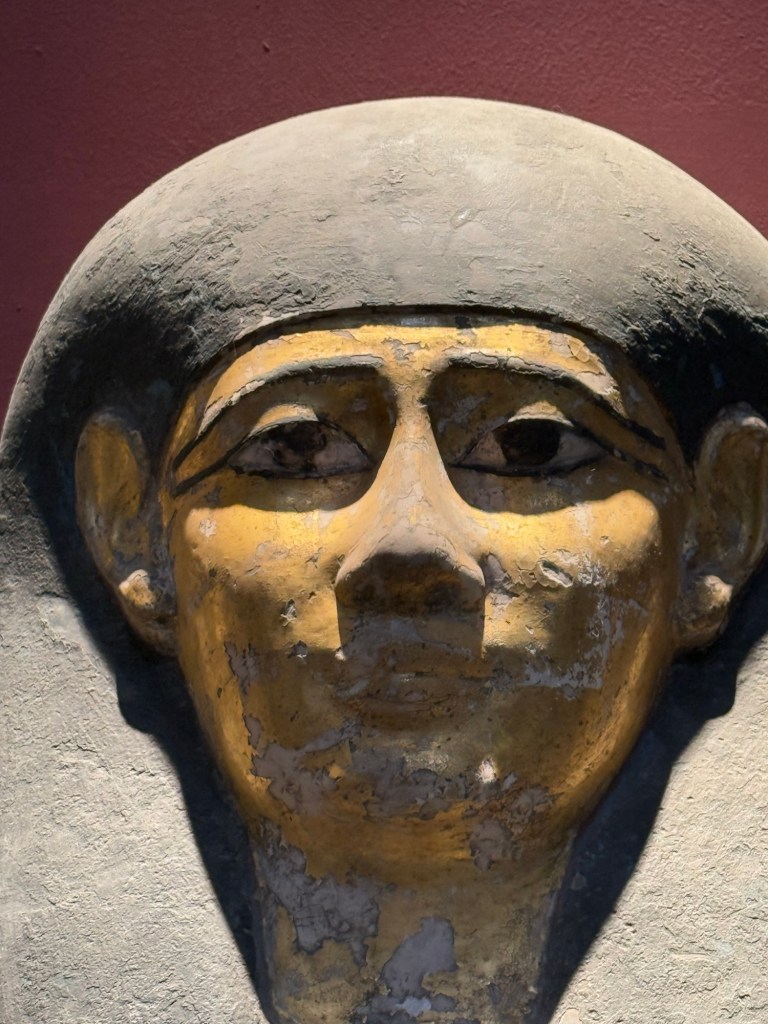
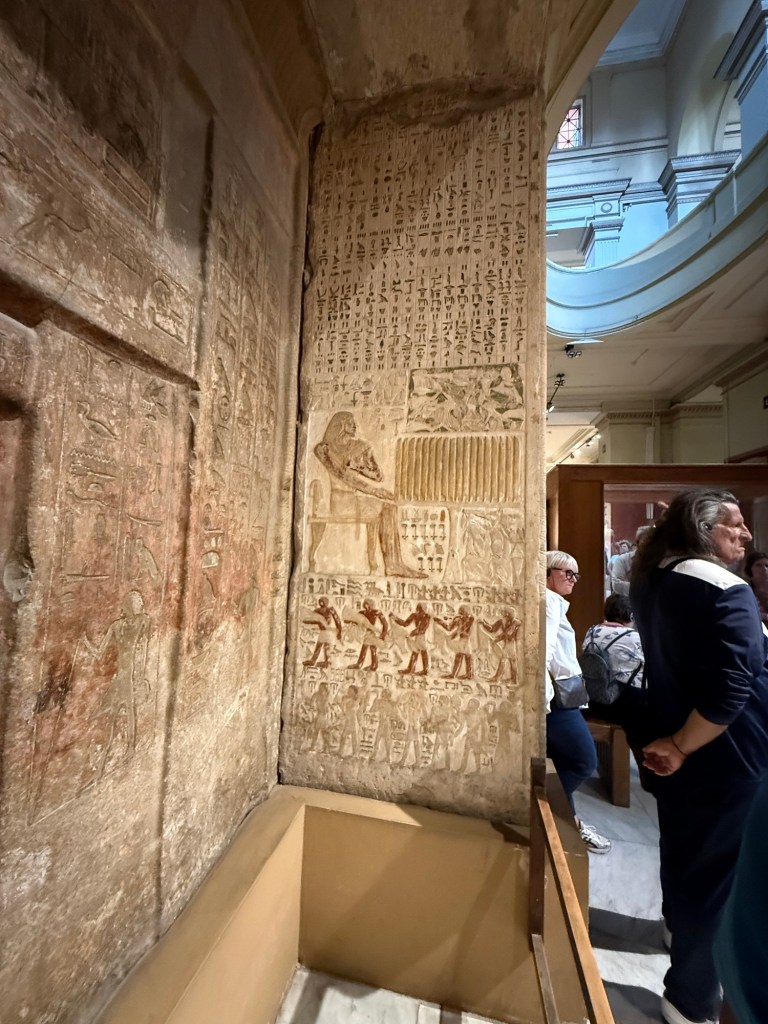
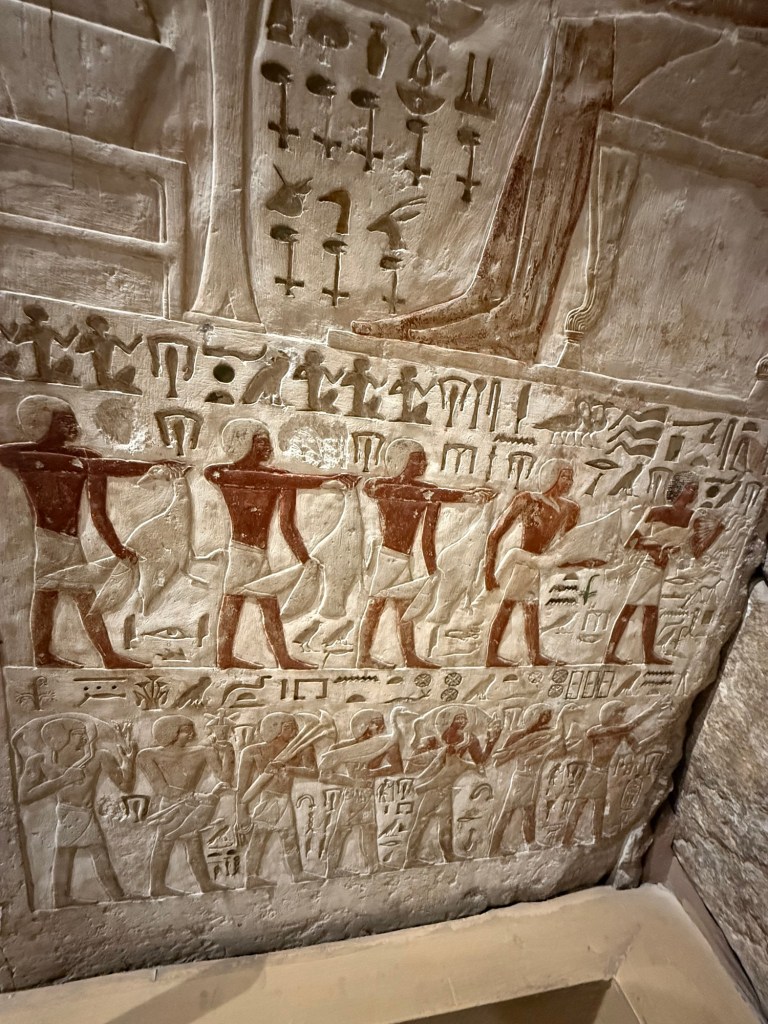
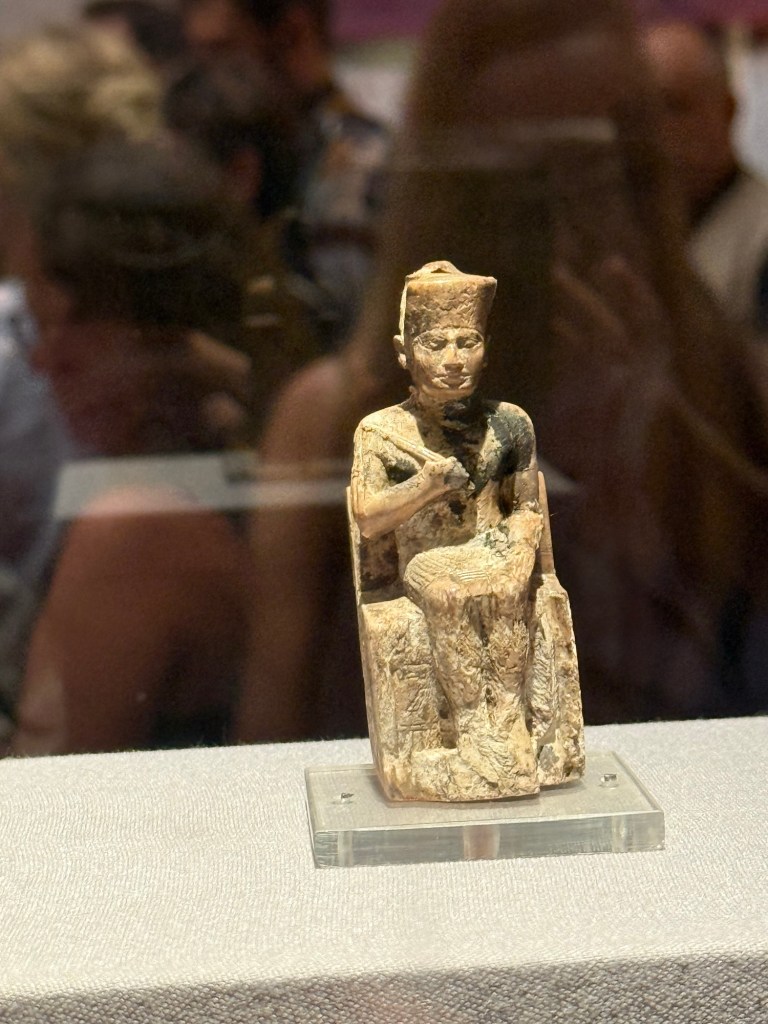
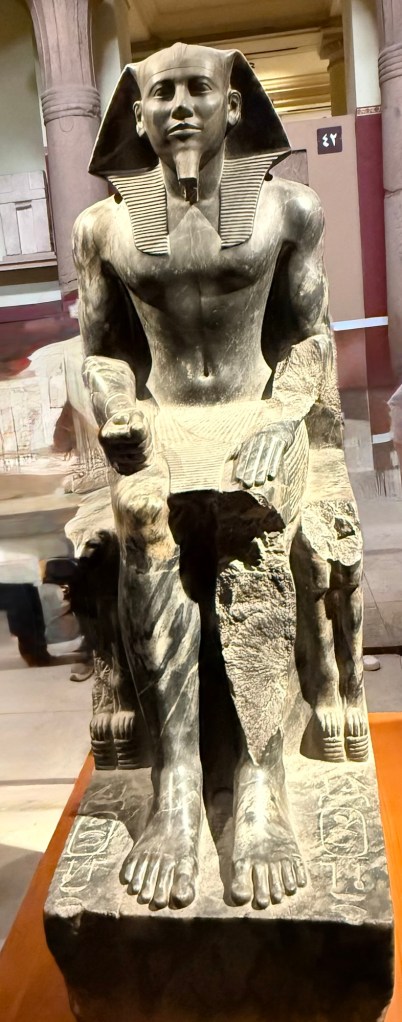
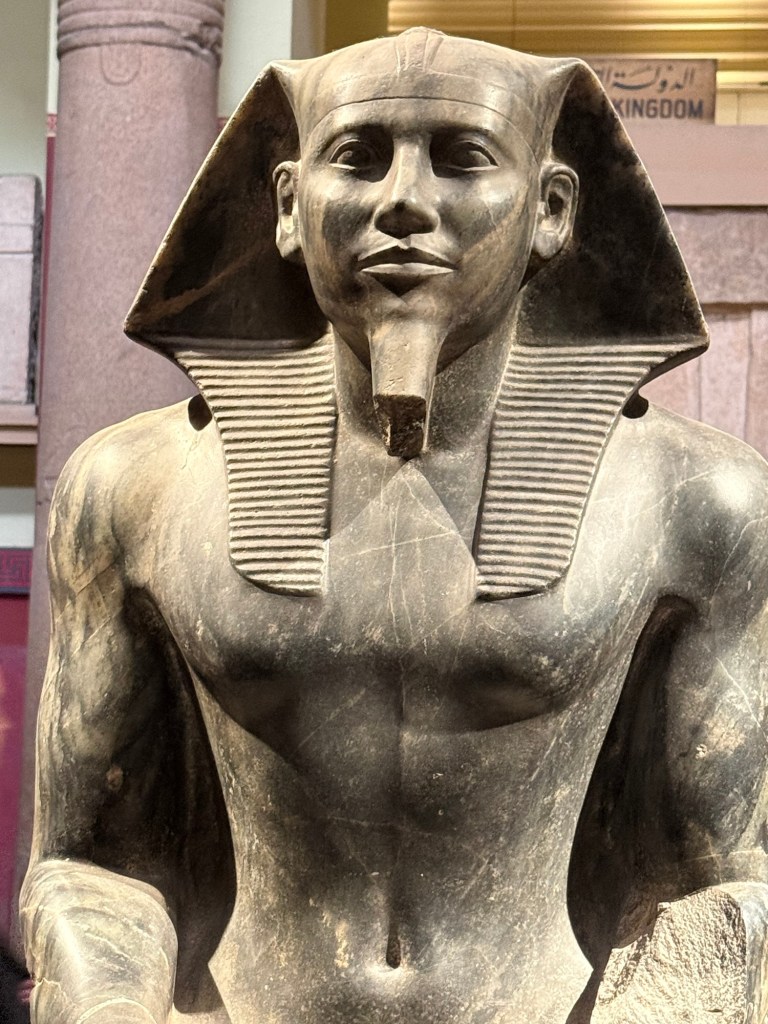
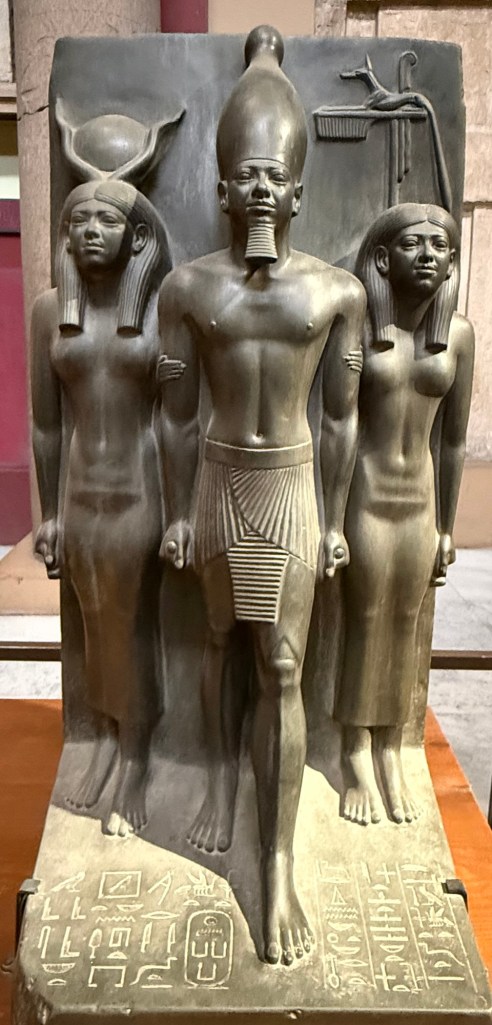
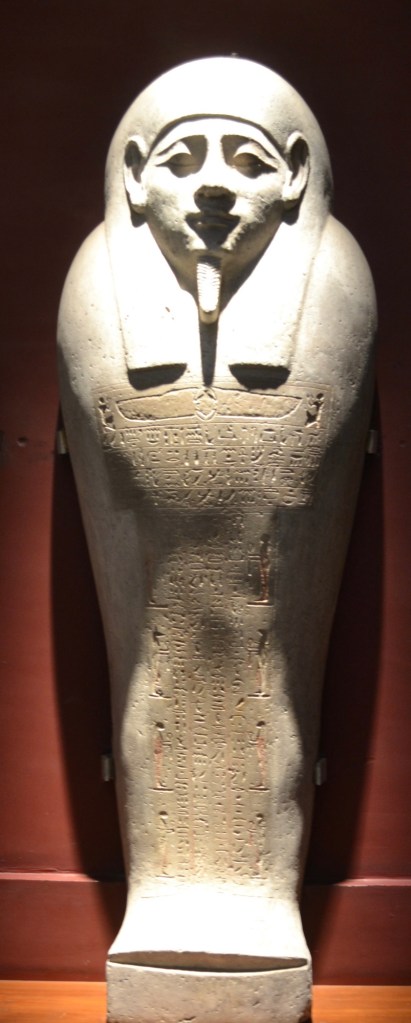
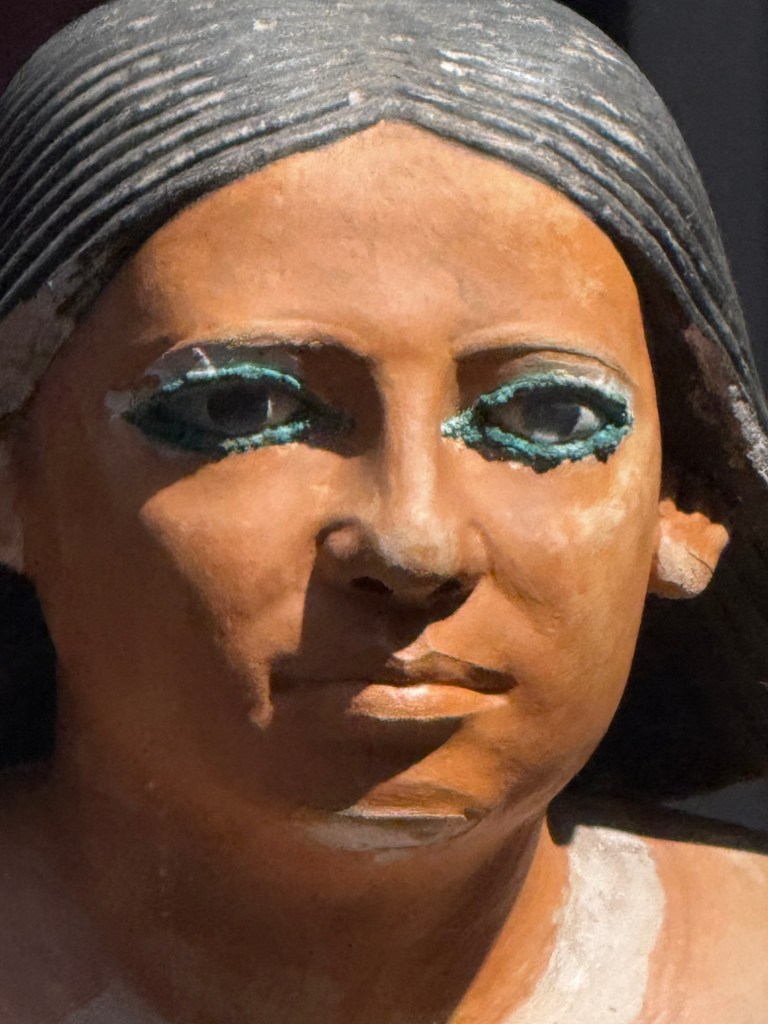
This museum has a plethora of statues and artifacts and is much more manageable than the Grand EM we visited yesterday.
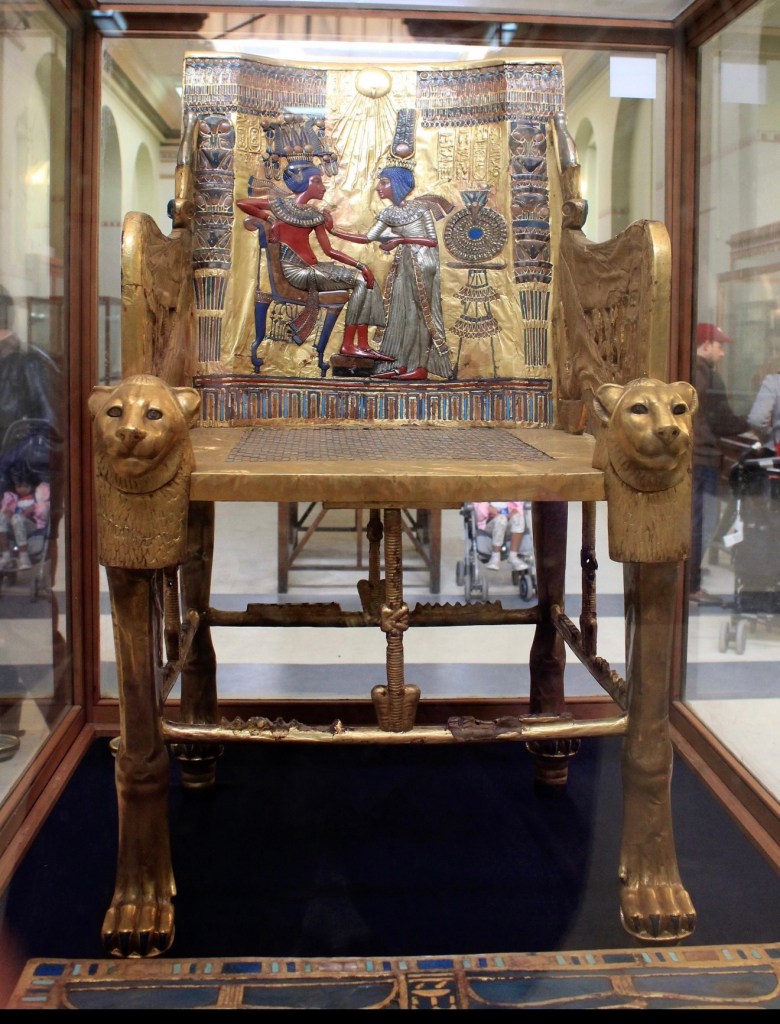
Notably, this is the home of the Tutankhamun exhibition. In a few days it will move to the GEM.
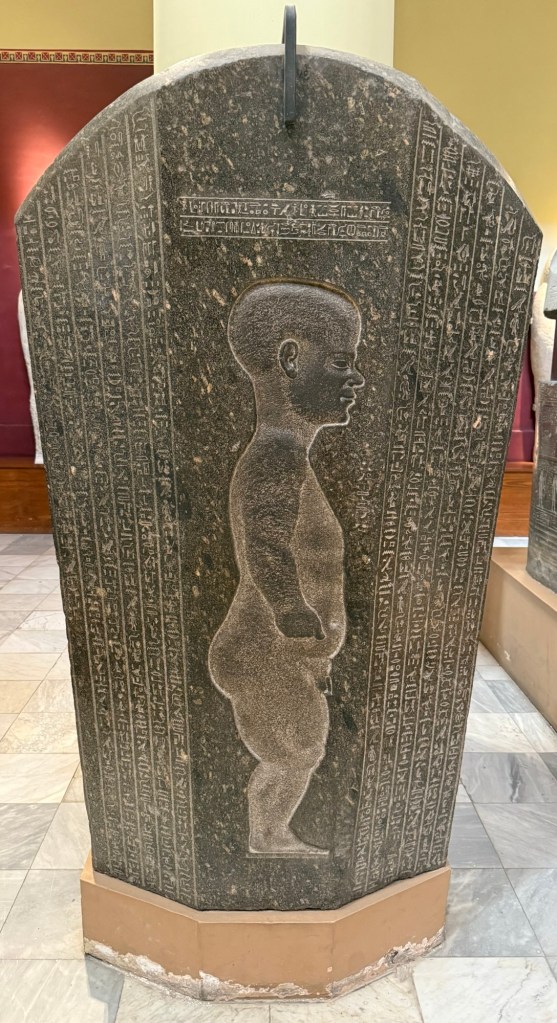
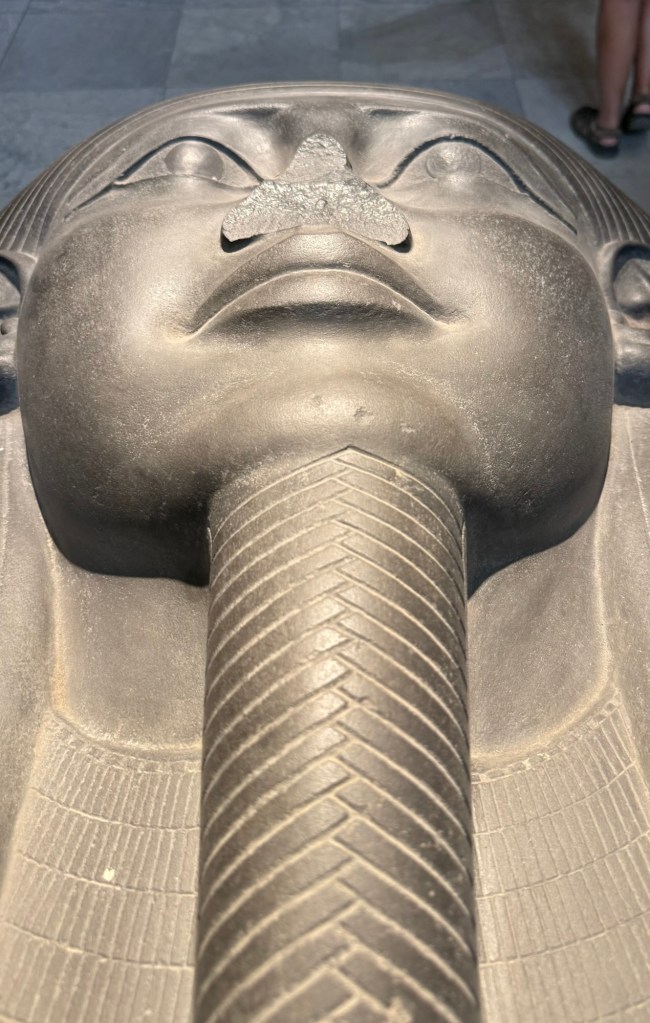
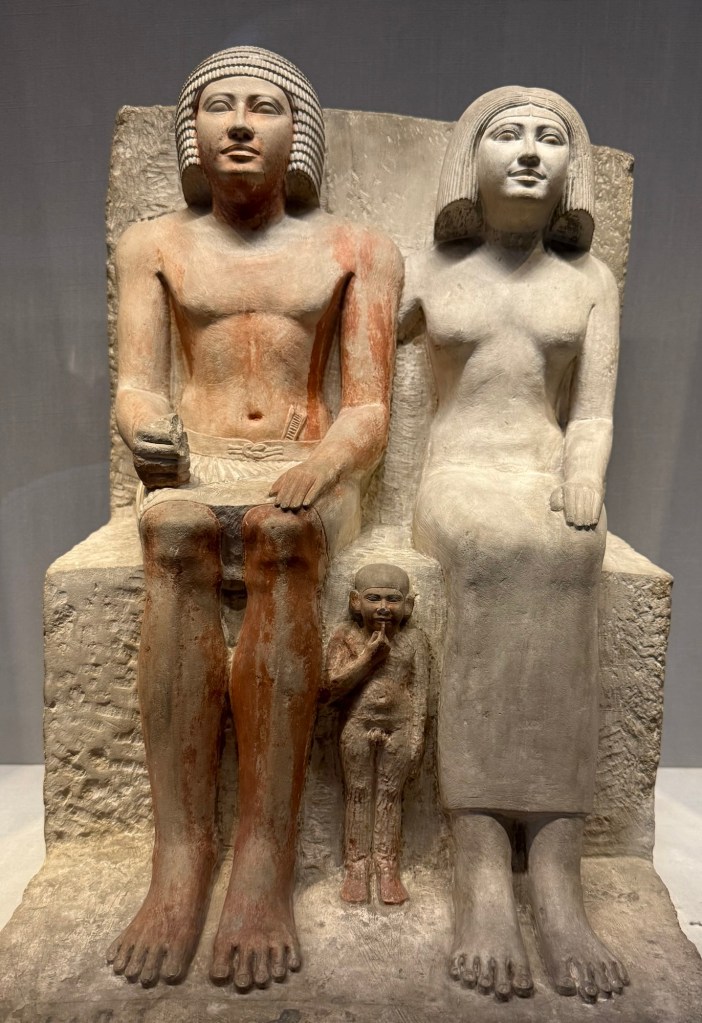
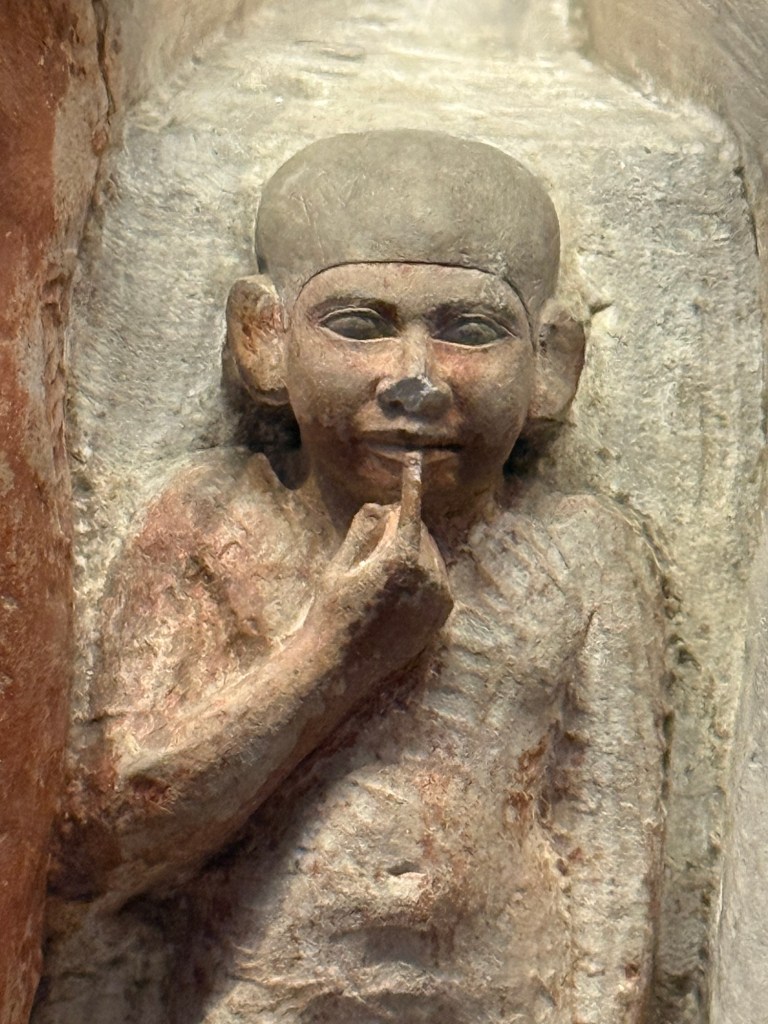
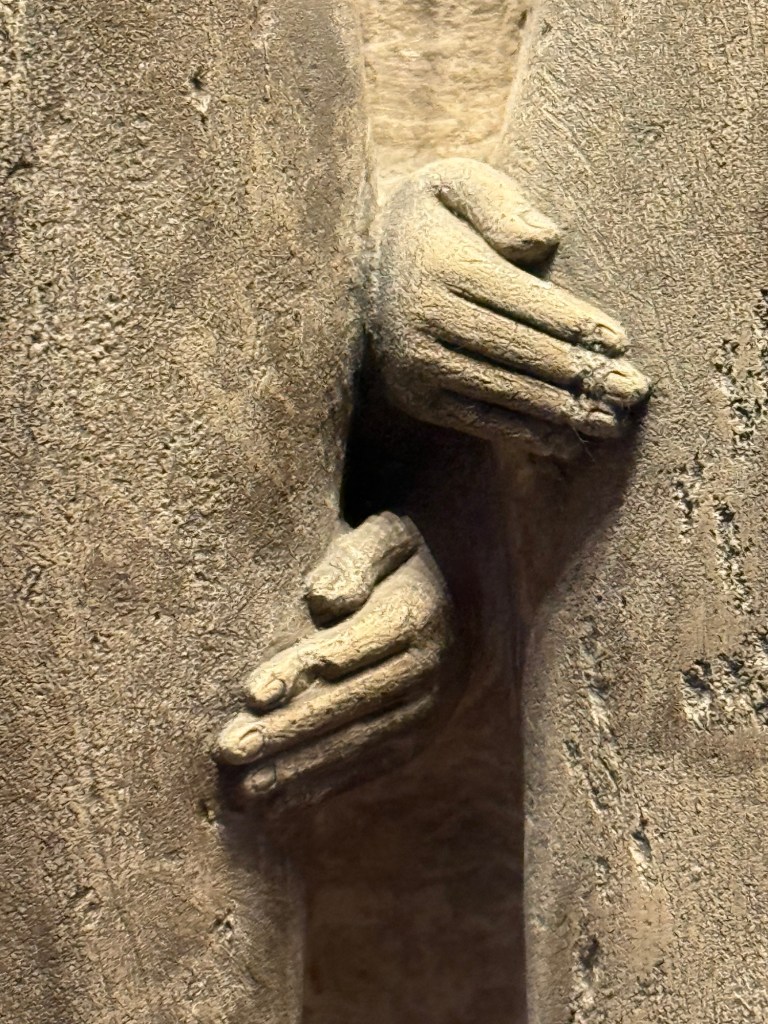
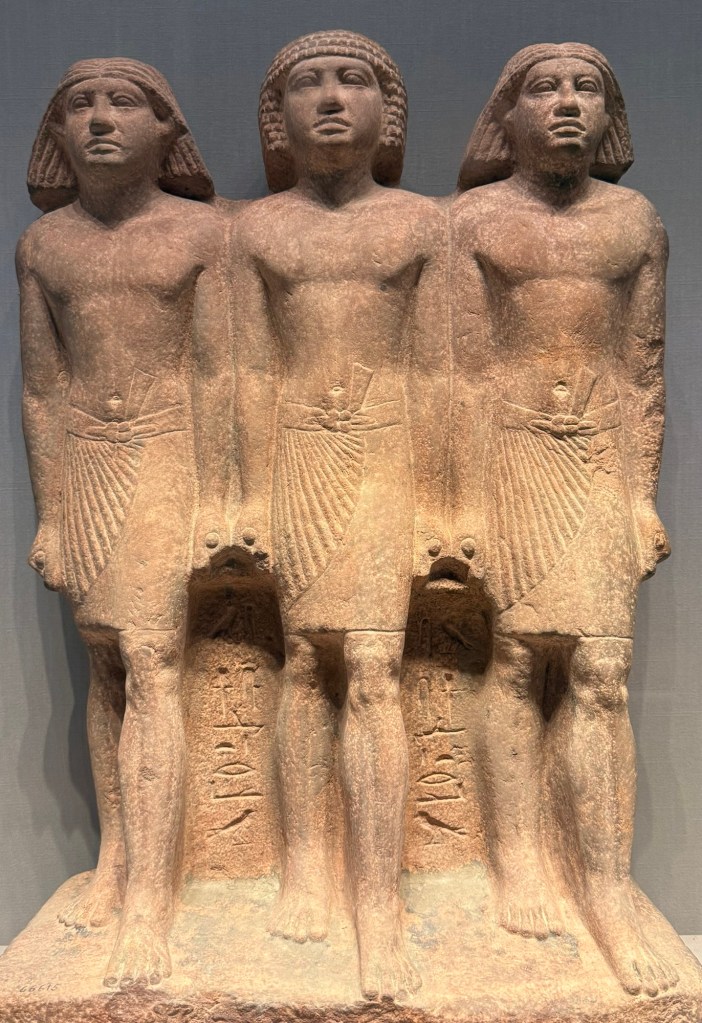
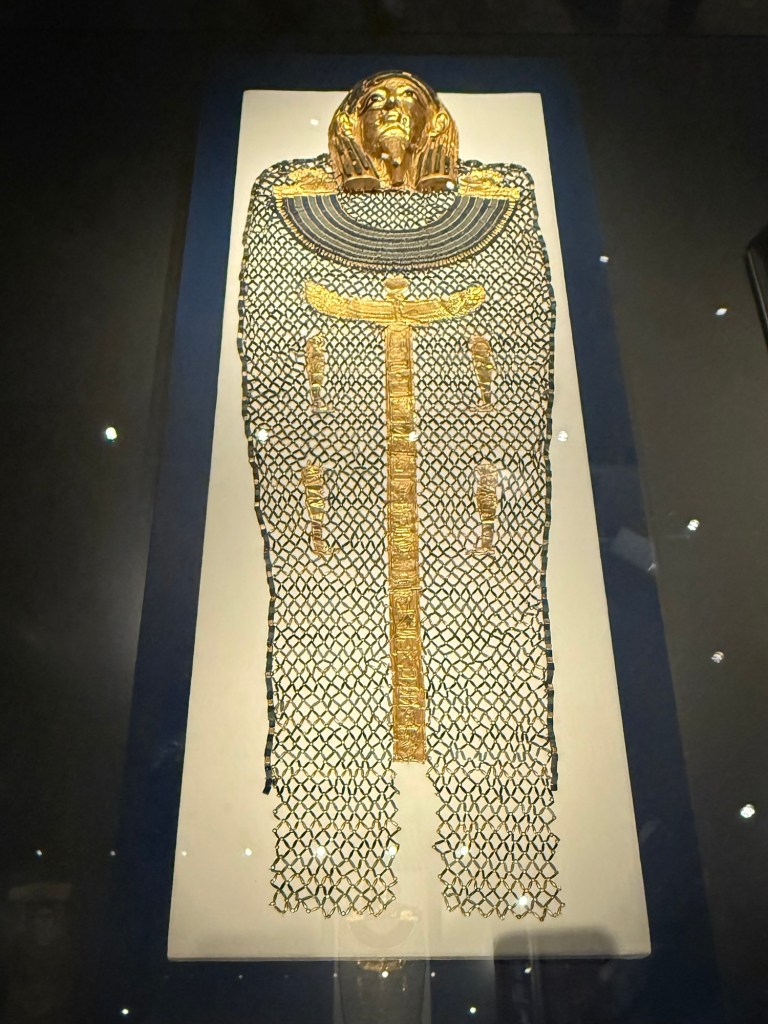
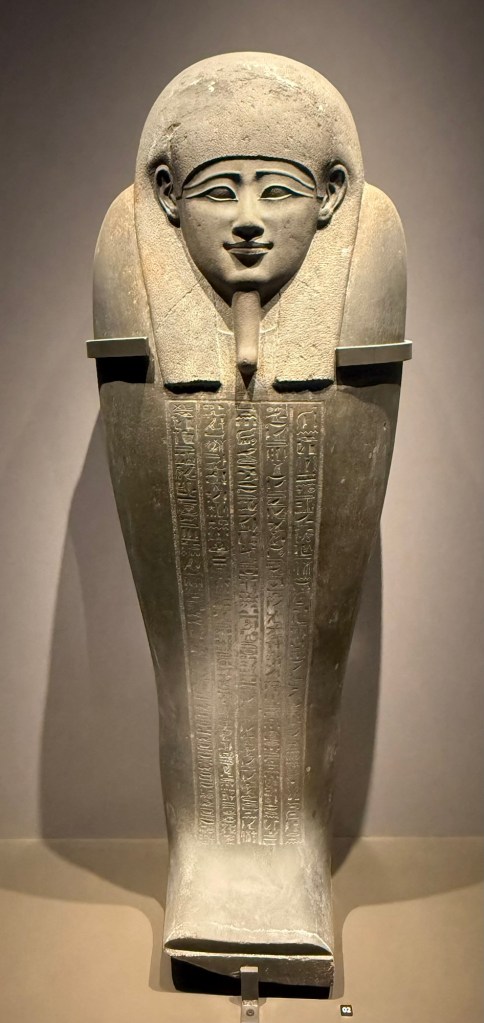
Again, I have not attempted to name each artifact – just enjoy them for their appearance.
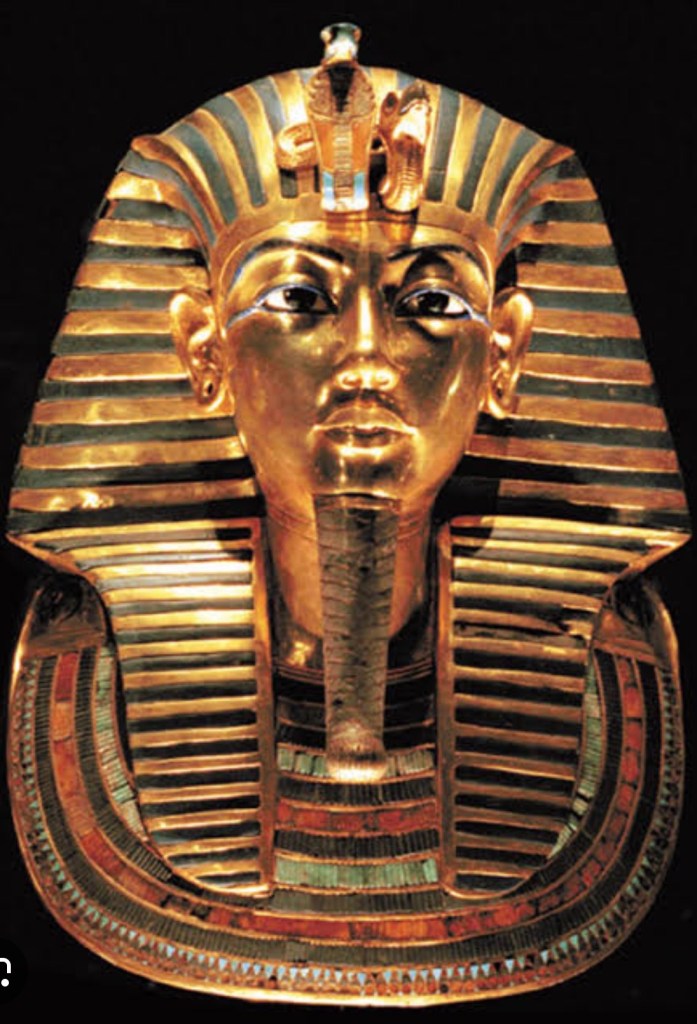
At last we reached King Tut! Note that as photography is not allowed these photos are courtesy of the EM.
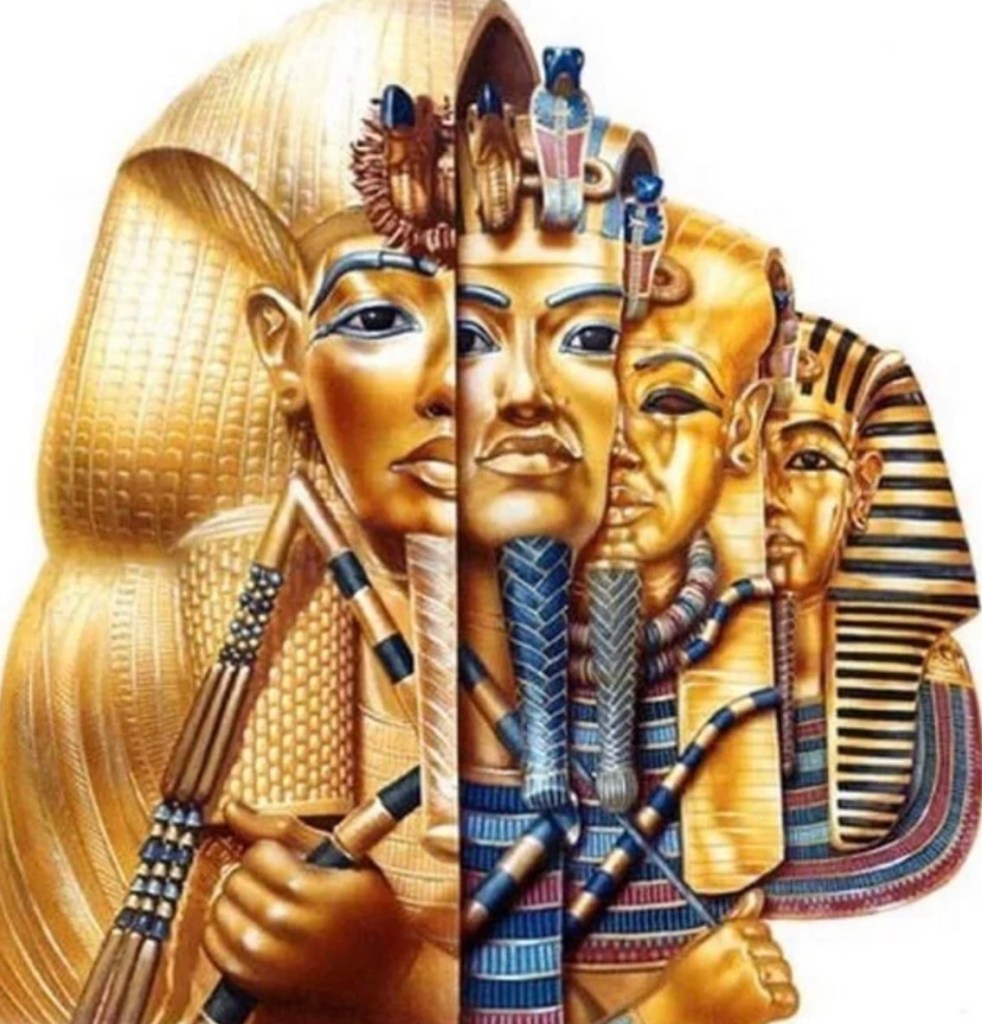
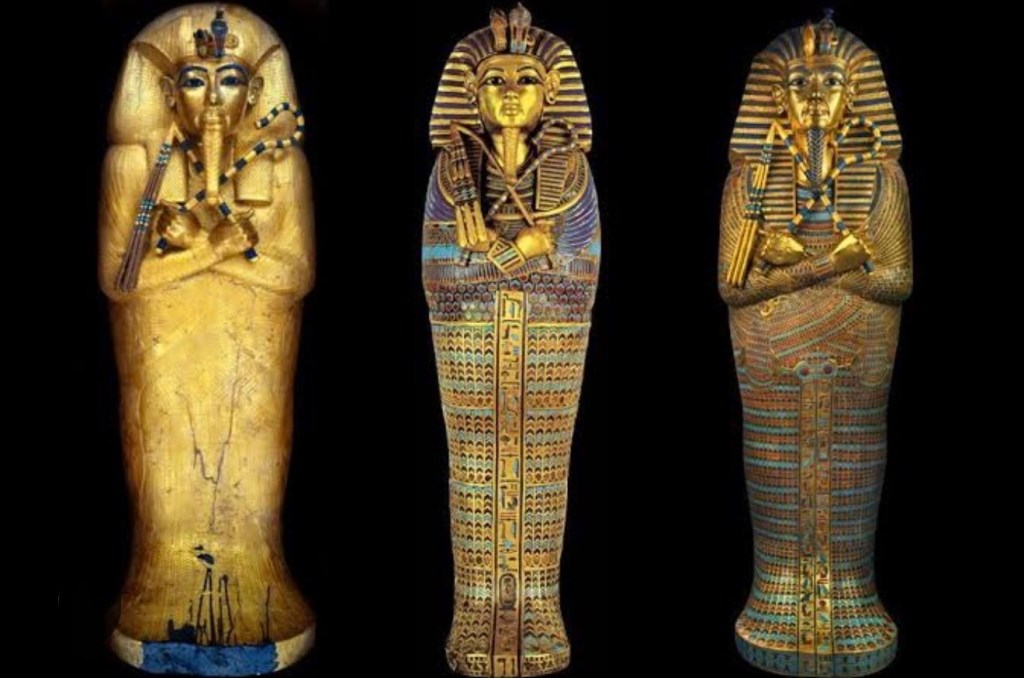
The fantastic exhibition consists of the funerary mask and the coffins.
Solid Gold Funerary Mask The mummy’s face was covered by the iconic solid gold mask, inlaid with semiprecious stones and glass.
Outer quartzite sarcophagus A large stone container that housed the three coffins. It is decorated with figures of protective deities at its corners.
Outer gilded wooden coffin This is the largest of the three coffins and is made of gilded wood with inlays of semiprecious stones and glass. It is shaped like a human, portraying the king in his divine form.
Middle gilded wooden coffin Nestled inside the outer one, this coffin is also made of gilded wood and is decorated with multicolored glass and semiprecious stones.
Innermost solid gold coffin The most spectacular coffin, made entirely of 110.4 kg (243 lb) of solid gold. It was found inside the middle coffin, with the mummy wrapped in linen and placed within it.
Saqqara, Great Pyramid of Giza, Sphinx and the Grand Egyptian Museum, Cairo
By Paul Bryers
Firstly, I must commend our AMA cruise leader, Sammy, for his exceptional organizational skills in creating an exhaustive day’s itinerary. Additionally, our AMA local guide, Mohammed, was extremely knowledgeable, making it challenging to absorb all the information, but I managed to grasp the key points 😃 .
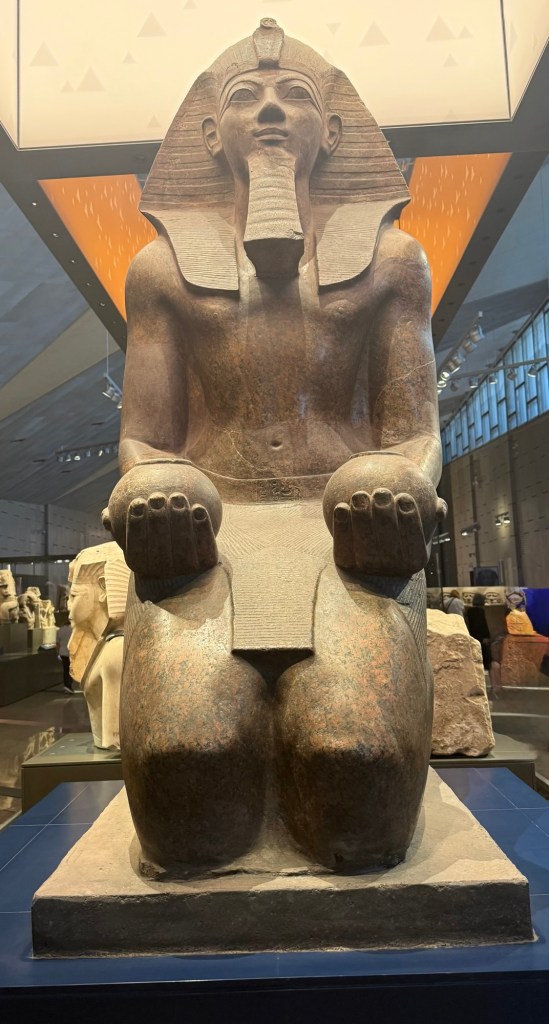
The colossal pyramids and equally colossal statues are a hallmark of ancient Egyptian civilization.
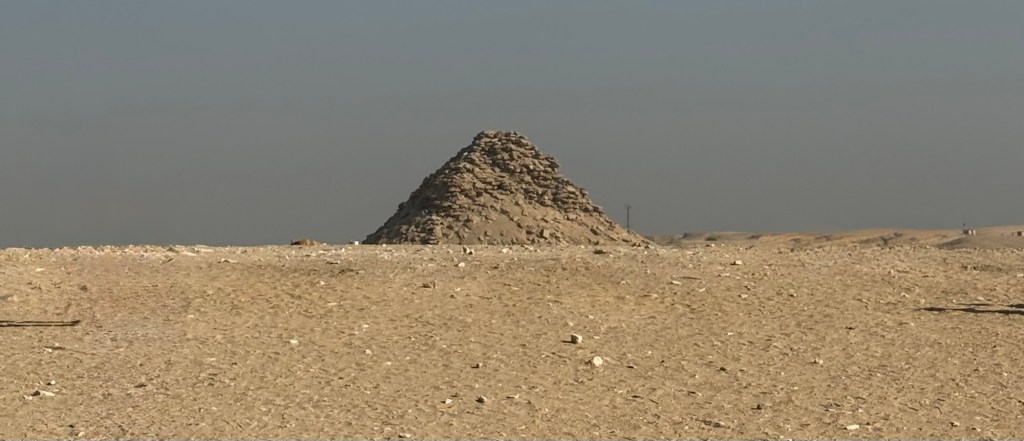
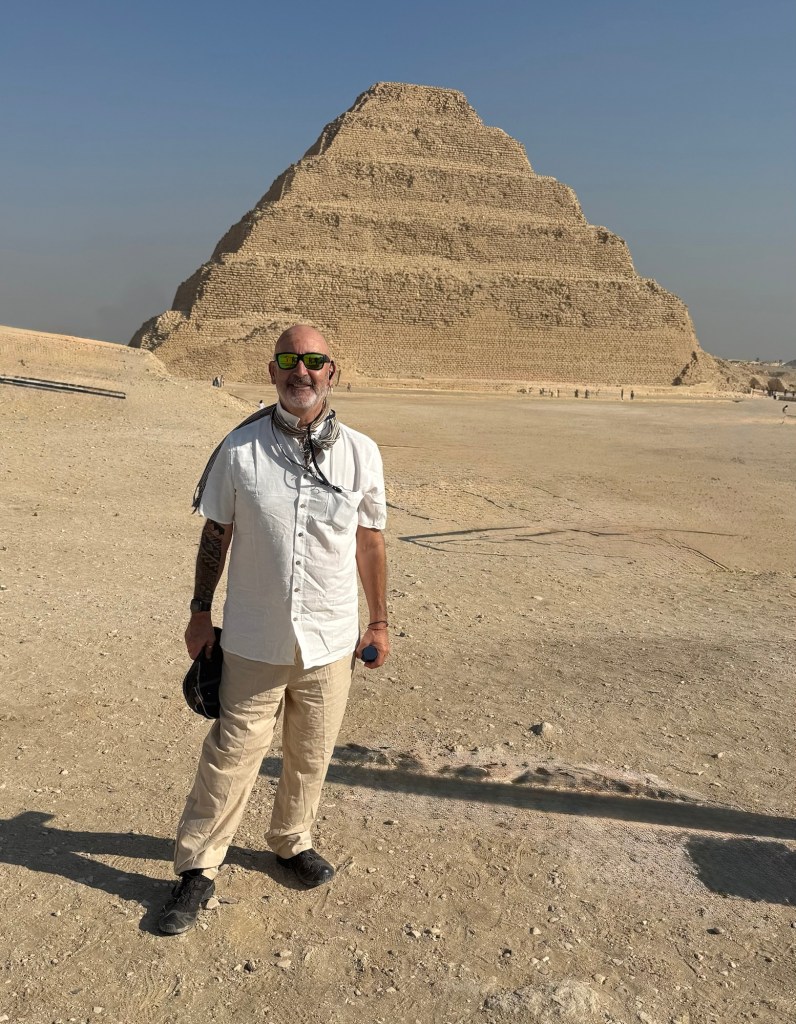
Our first stop, Saqqara, is a vast archaeological site in Egypt that served as the necropolis for the ancient capital of Memphis and is home to the world’s oldest pyramid, the Step Pyramid of Djoser.
Steps Pyramid
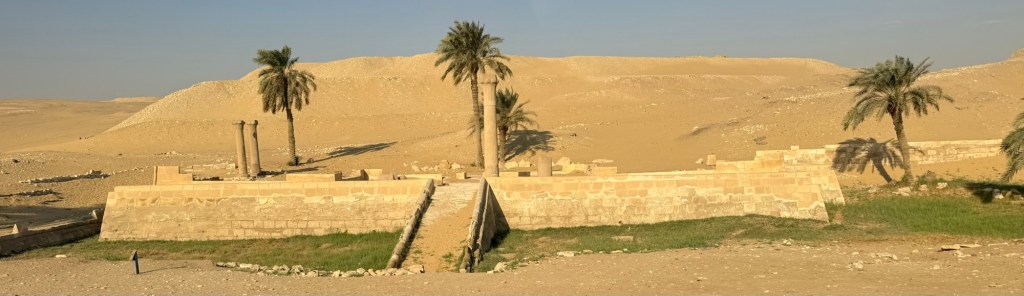
Upon arrival at the site, we were greeted by the port that served the area in ancient times. Due to the Aswan and other dams, there is no longer a water presence in the area.
Old Port
The port was followed by the pet cemetery – another King comes to mind…
Pet Cemetery
Saqqara was a major burial ground for royalty and nobility for over 3,000 years and contains numerous other pyramids, mastaba tombs, and funerary complexes. The site is a UNESCO World Heritage Site and is renowned for its historical significance as the birthplace of pyramid architecture.
The Blueberries took time to have a group photo…what a handsome bunch…
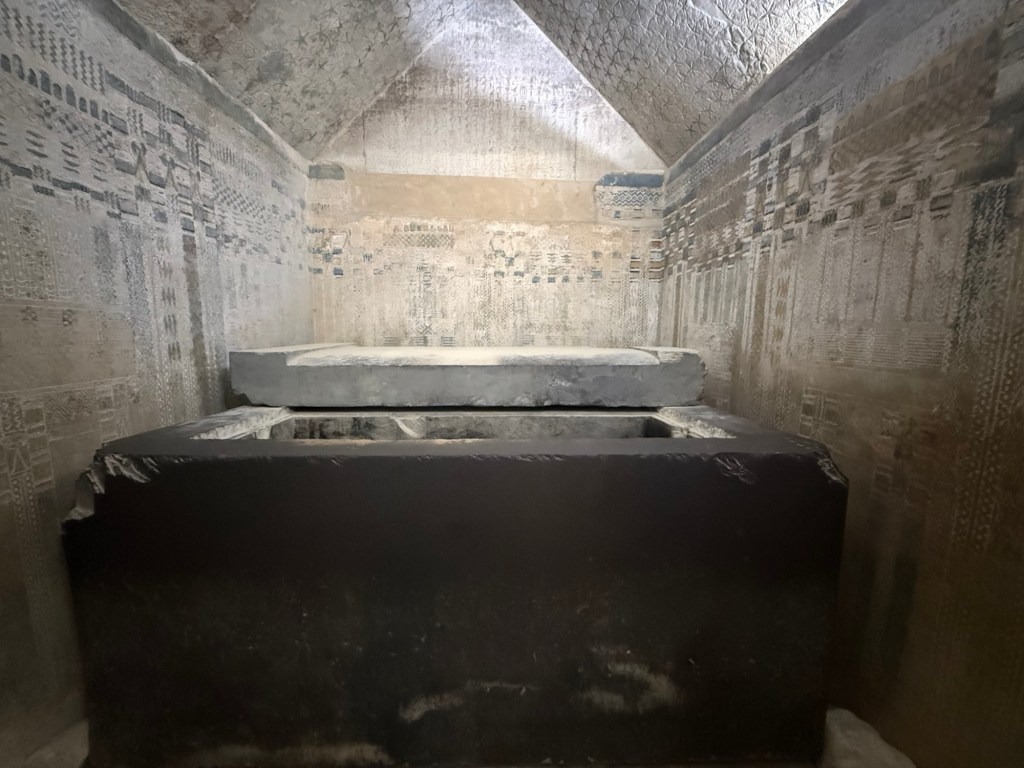
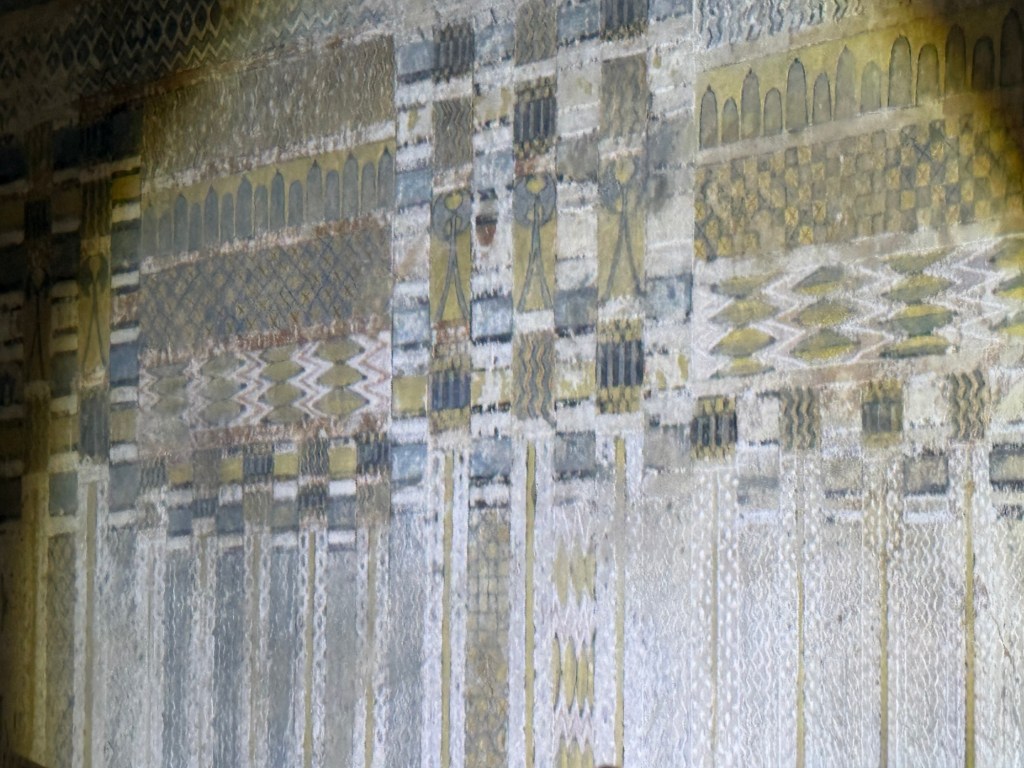
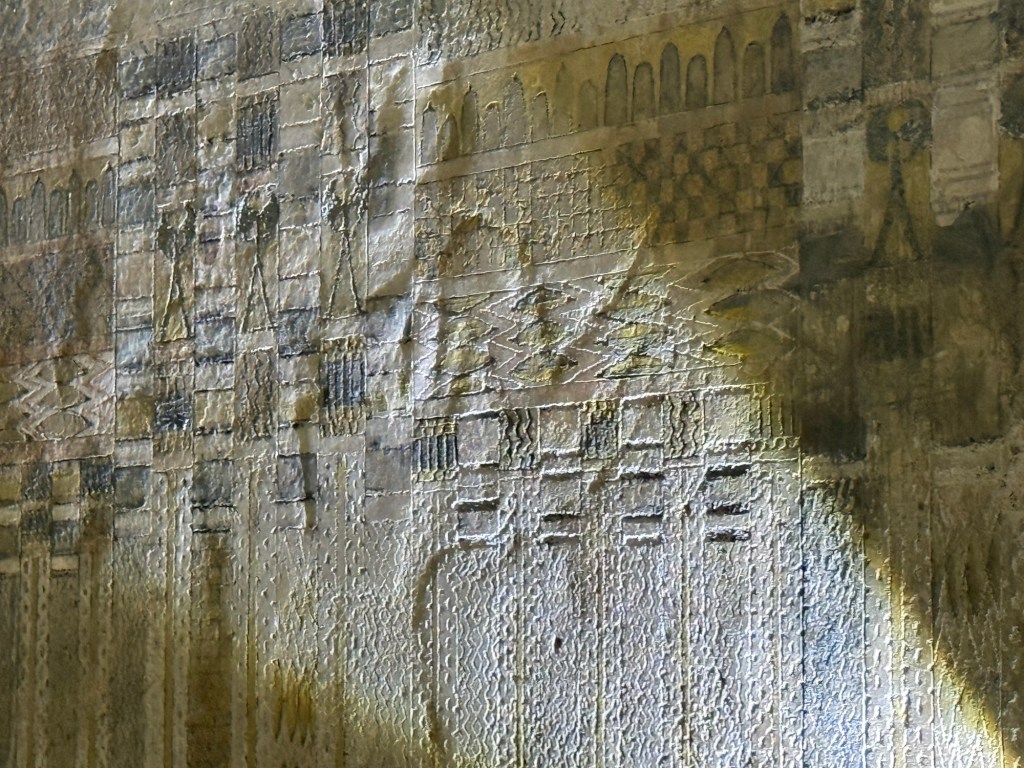
I walked down int Steps Pyramid , crouched like a wee Scottish gnome, to the burial chamber. Initially, it was not very impressive until the guide illuminated the walls with his torch, revealing vibrant colors and reliefs that were otherwise hidden.
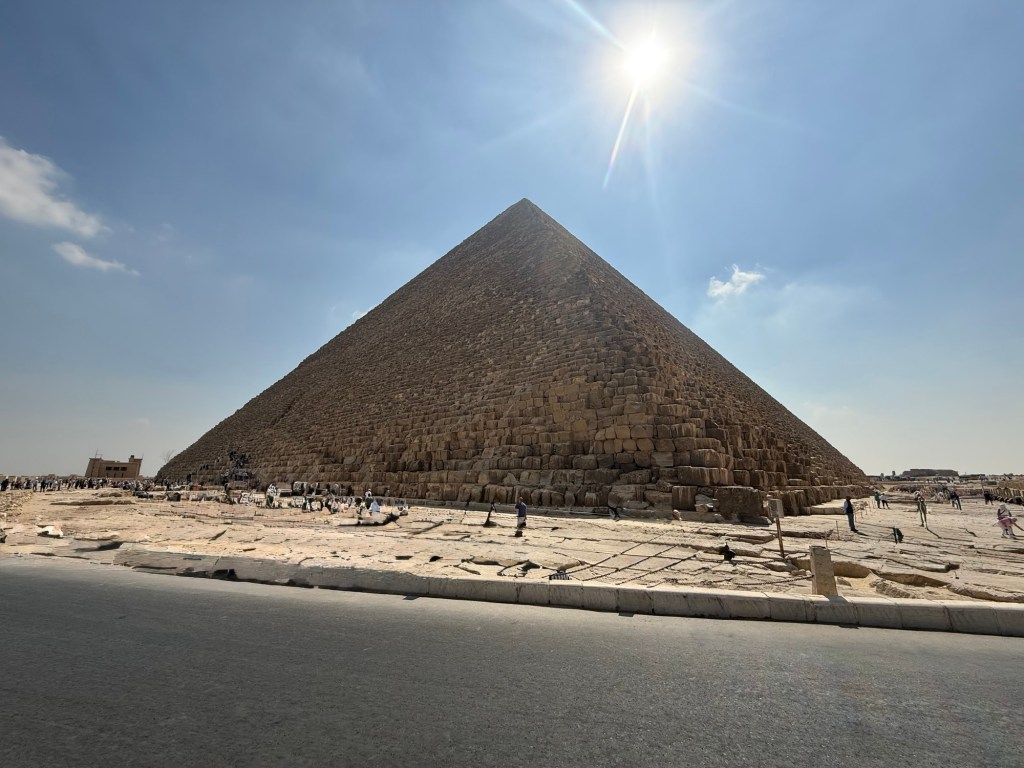
The Great Pyramid of Giza is the largest of the three pyramids in Giza, built around 2580–2560 BC as a tomb for Pharaoh Khufu. It was the tallest man-made structure in the world for nearly 3,800 years and is the only one of the Seven Wonders of the Ancient World to remain largely intact. Its intactness is indeed impressive. The pyramid is composed of millions of limestone and granite blocks, with internal chambers including the King’s Chamber and the Grand Gallery.
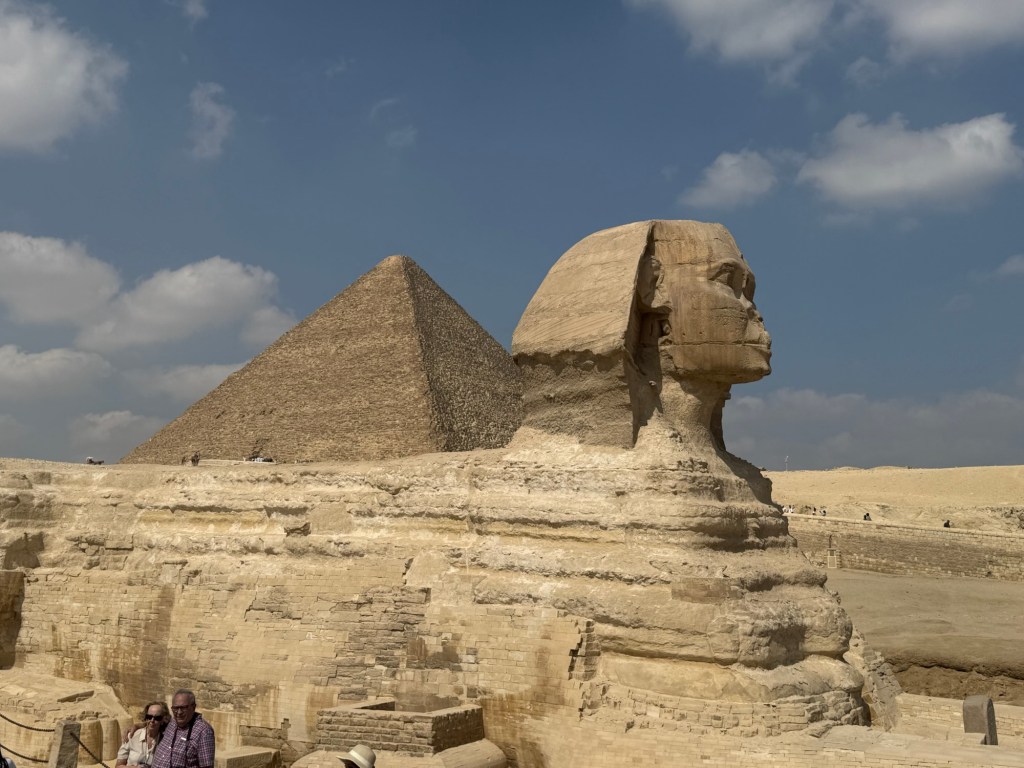
The Great Sphinx of Giza is the most famous cat in the world. It was carved directly out of the bedrock during the 4th Dynasty (c.2613–2494 BC), making it extremely old. Ancient Egyptian sphinxes represented the king with the body of a lion, demonstrating his power, and the human head symbolizing intelligence.
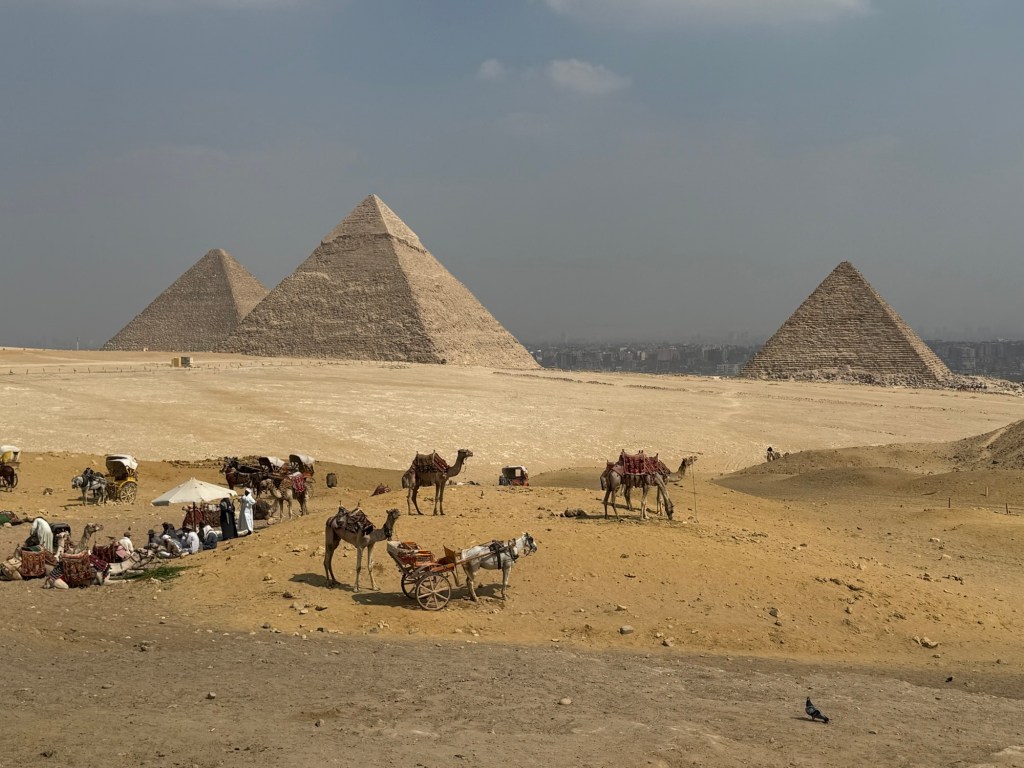
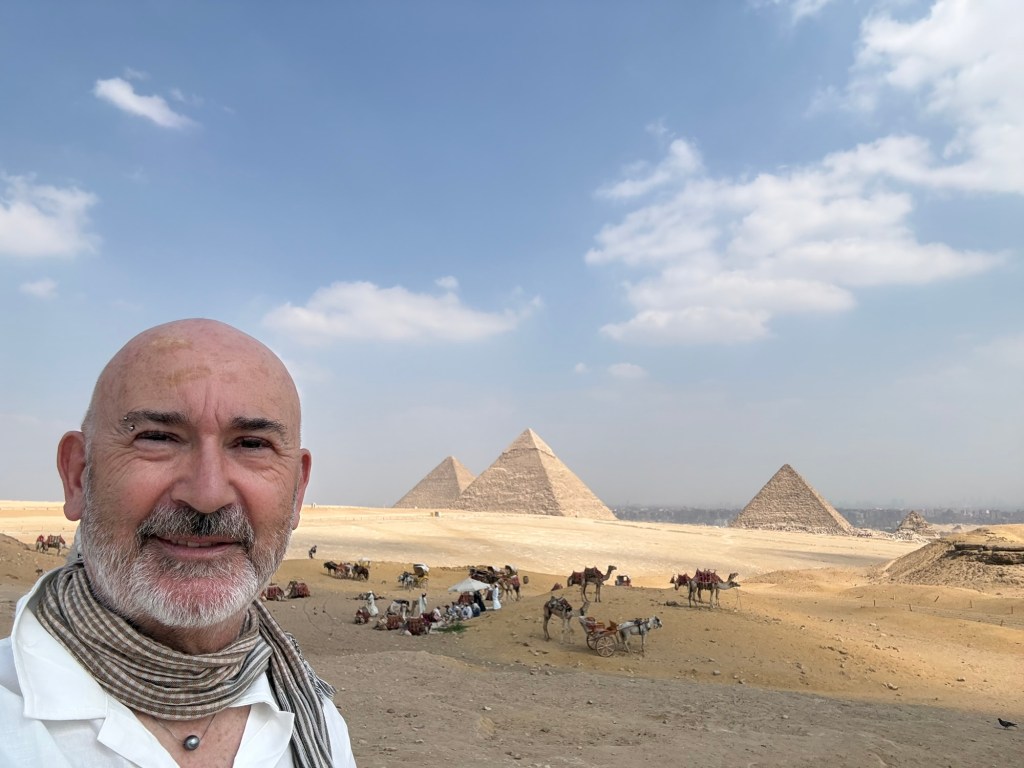
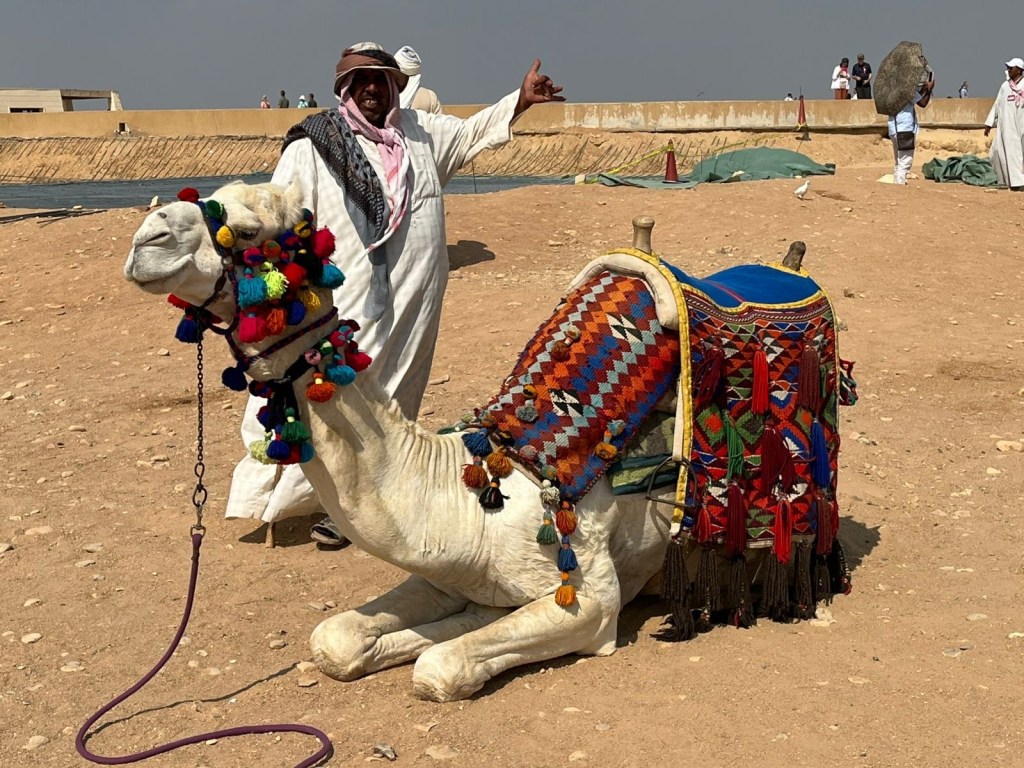
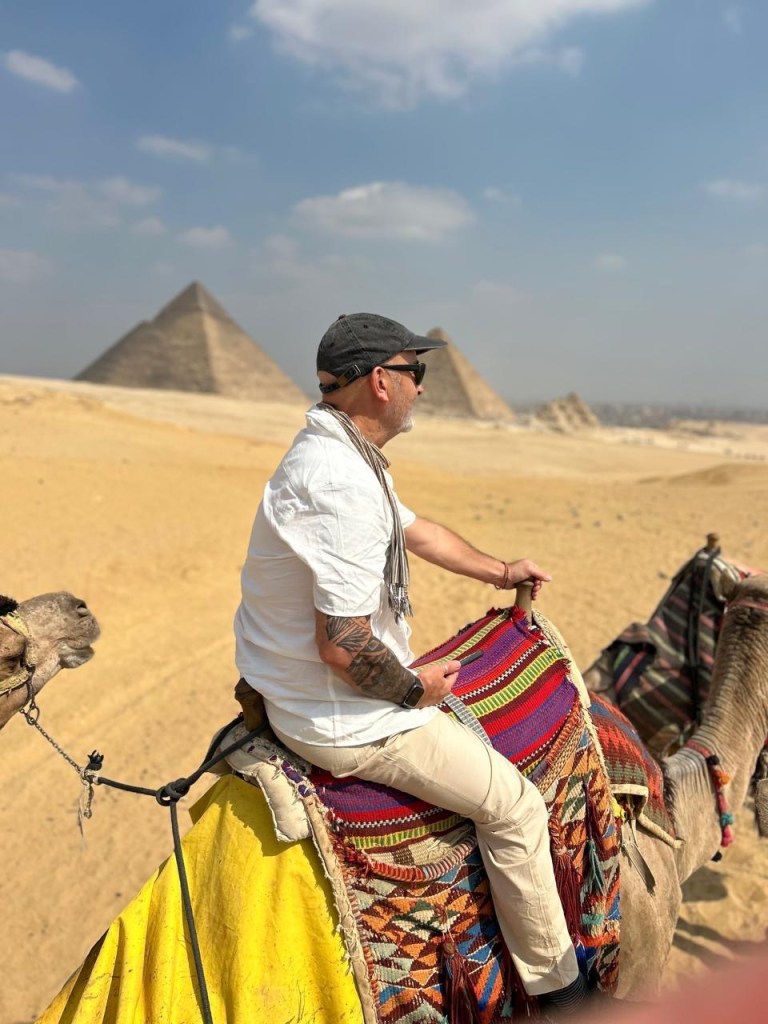
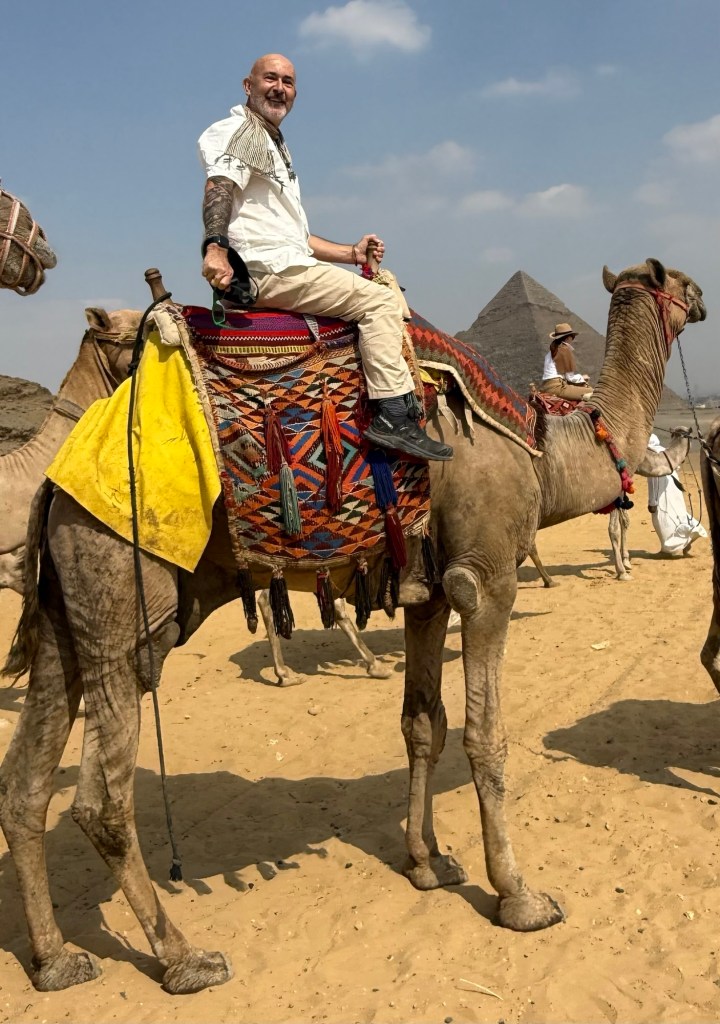
Camel time? You can’t come to Giza and not do a wee camel ride, and get the ubiquitous photo in front of the Great Pyramid.
My camel, Camilla, was a little frisky while the camel behind, Clarisa, was very friendly and chewed away while resting her chin on my leg – she had major camel breath – completely minging. All good though…
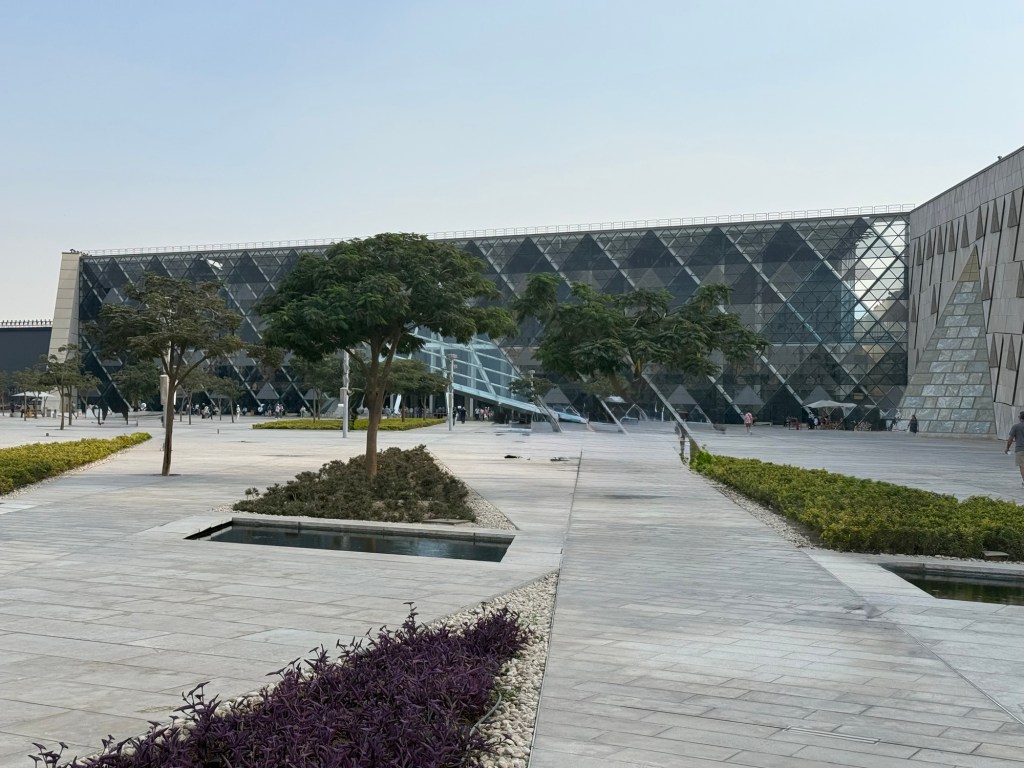
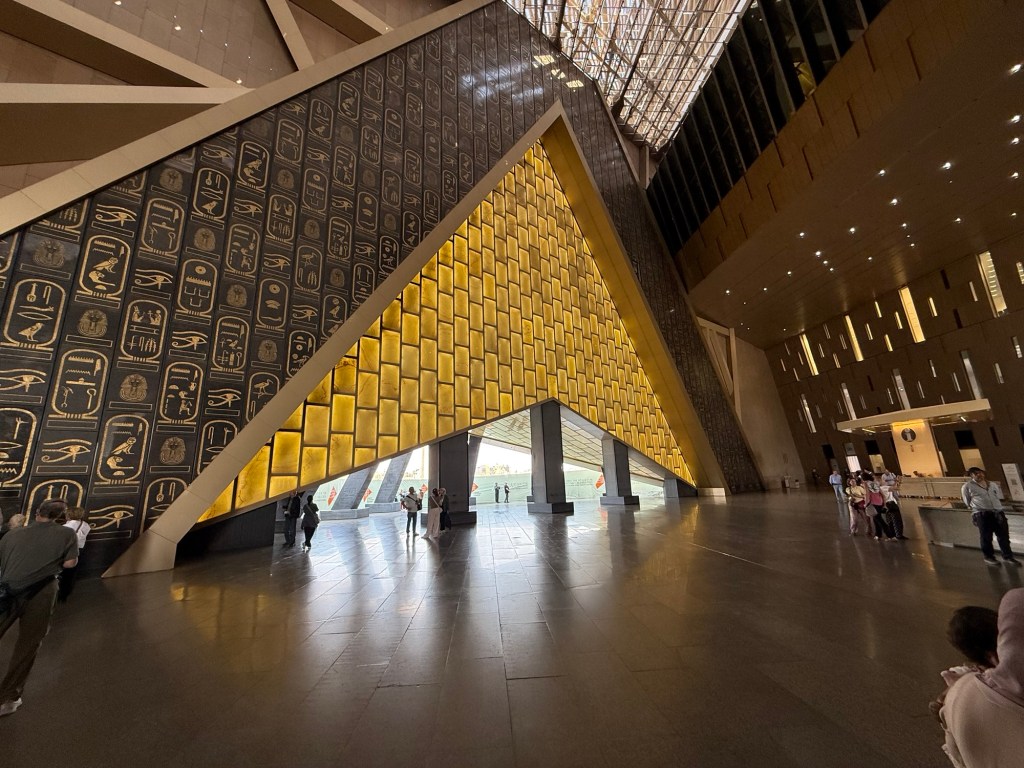
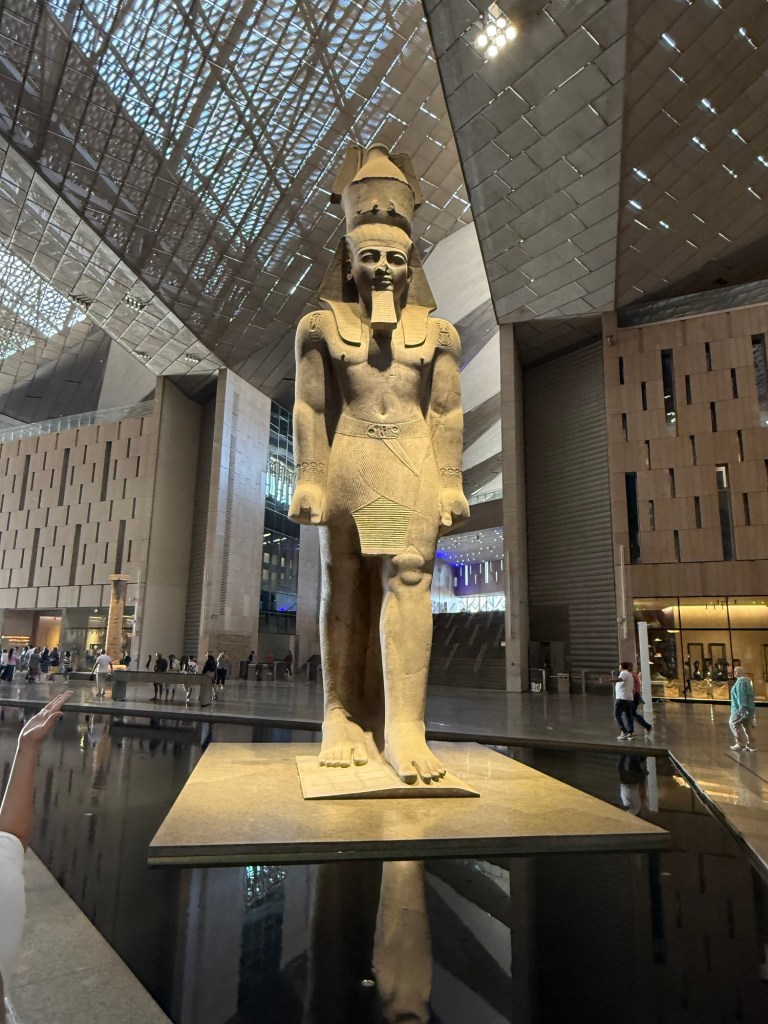
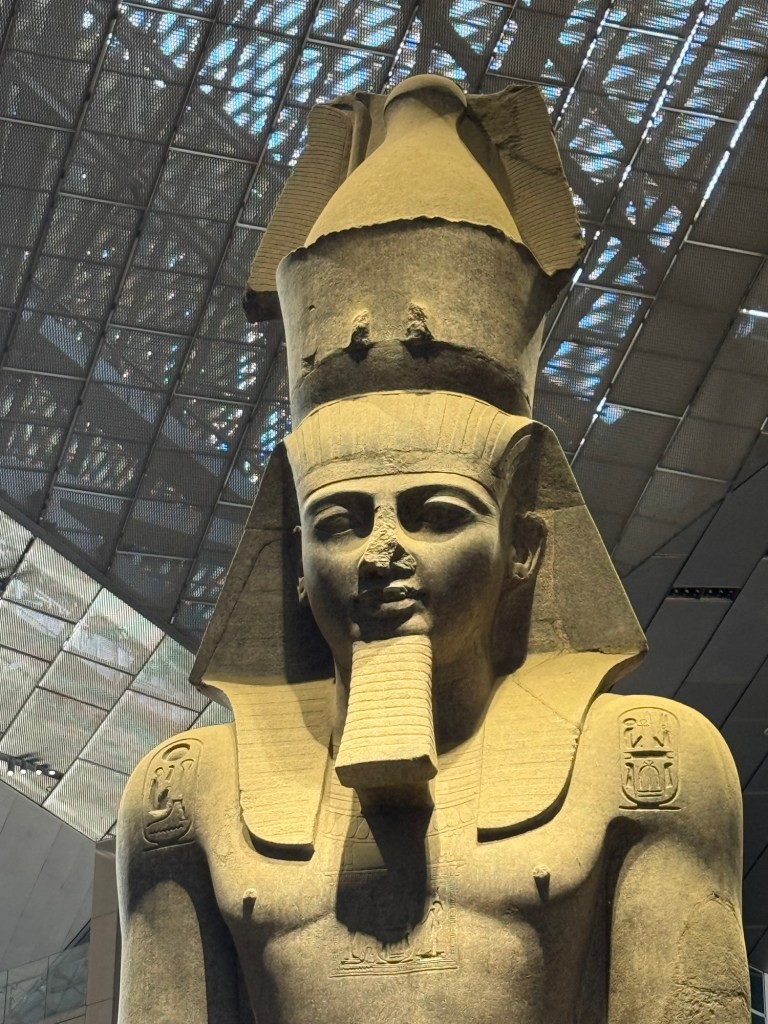
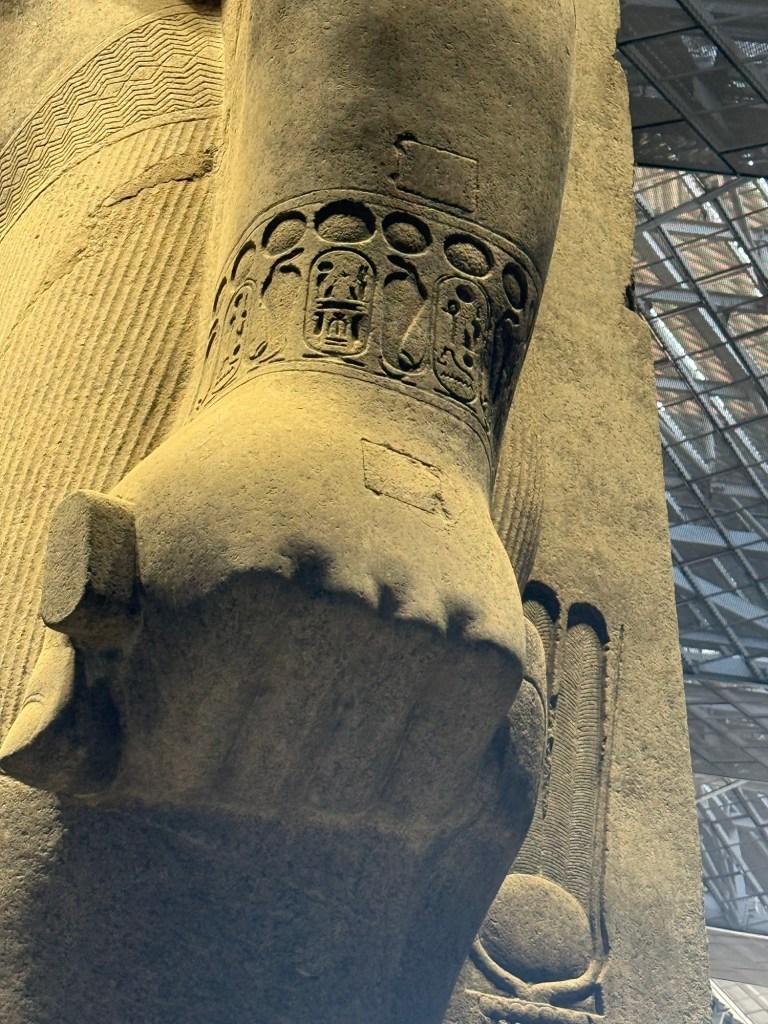
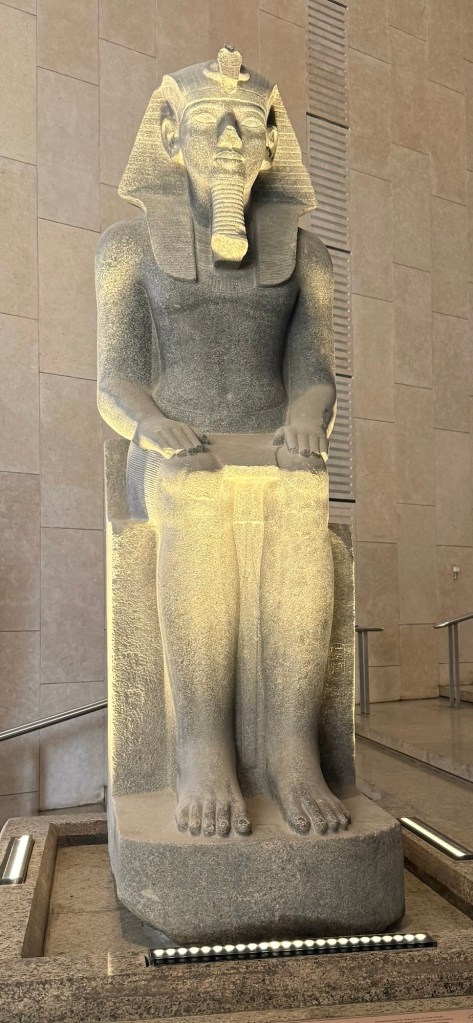
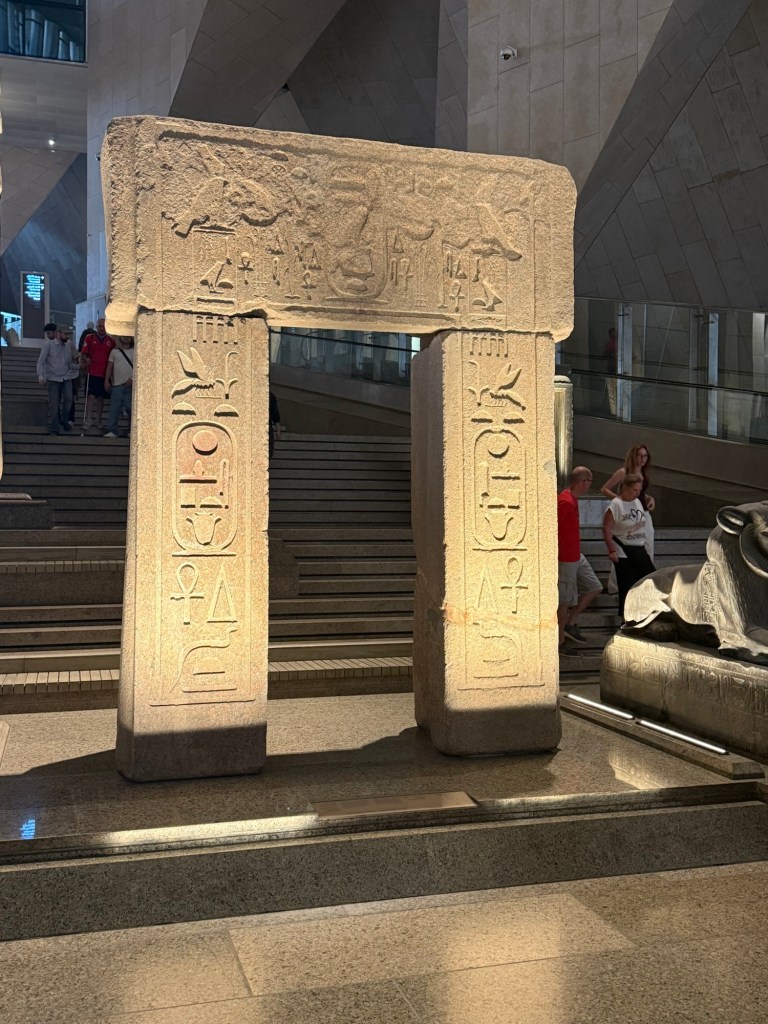
The Grand Egyptian Museum is a magnificent structure that has taken considerable time to build. It is the world’s largest archaeological museum, and one could easily spend days exploring its vast collections. Unfortunately, our visit was limited to 2 hours, which was insufficient to fully appreciate the impressive relics on display.
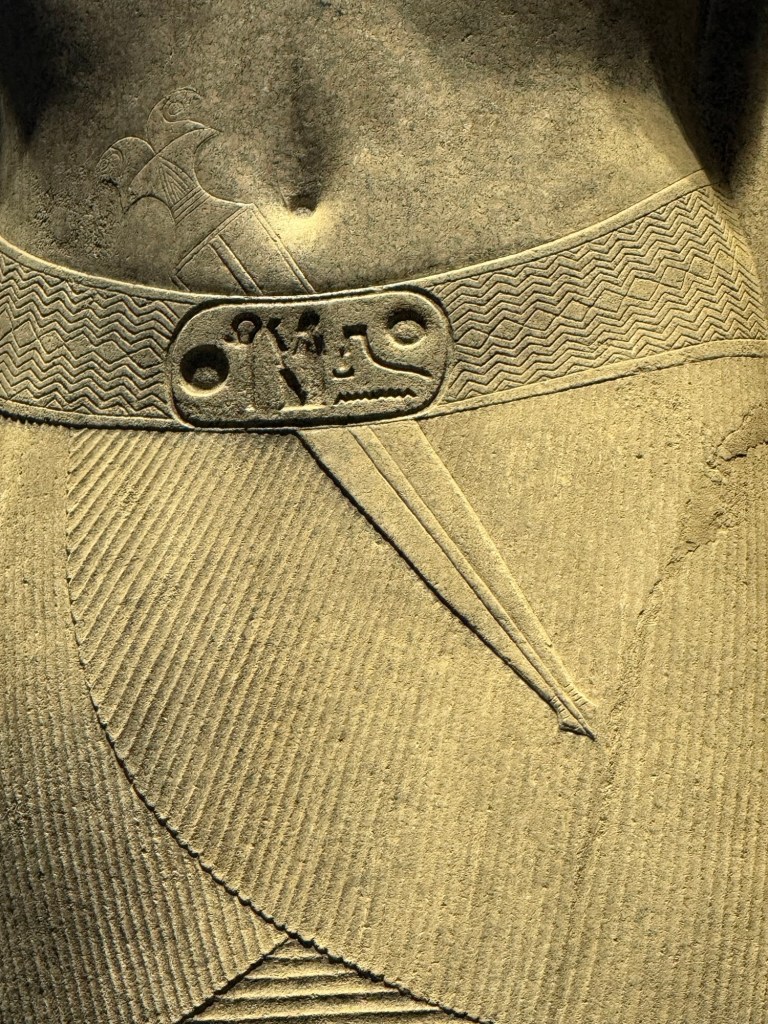
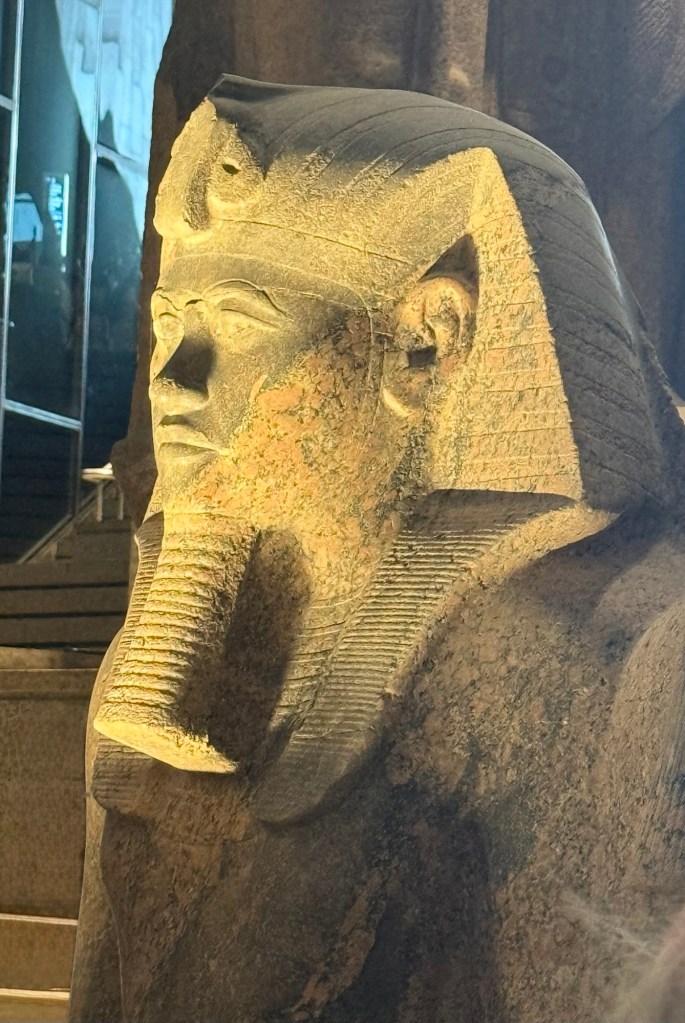
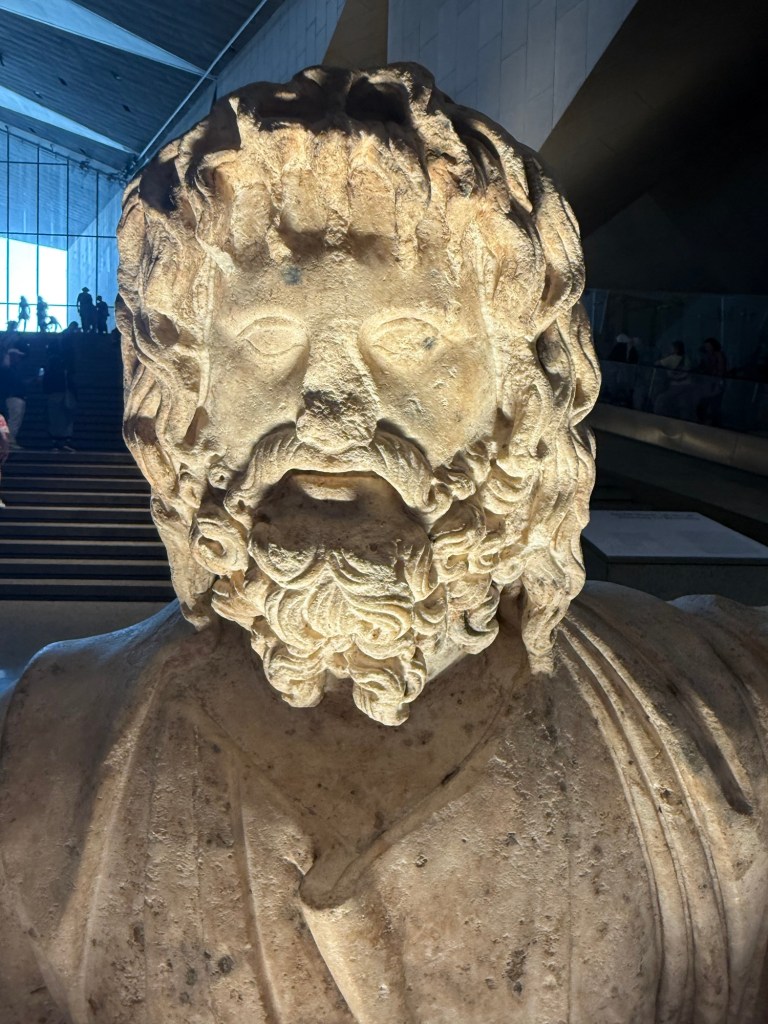
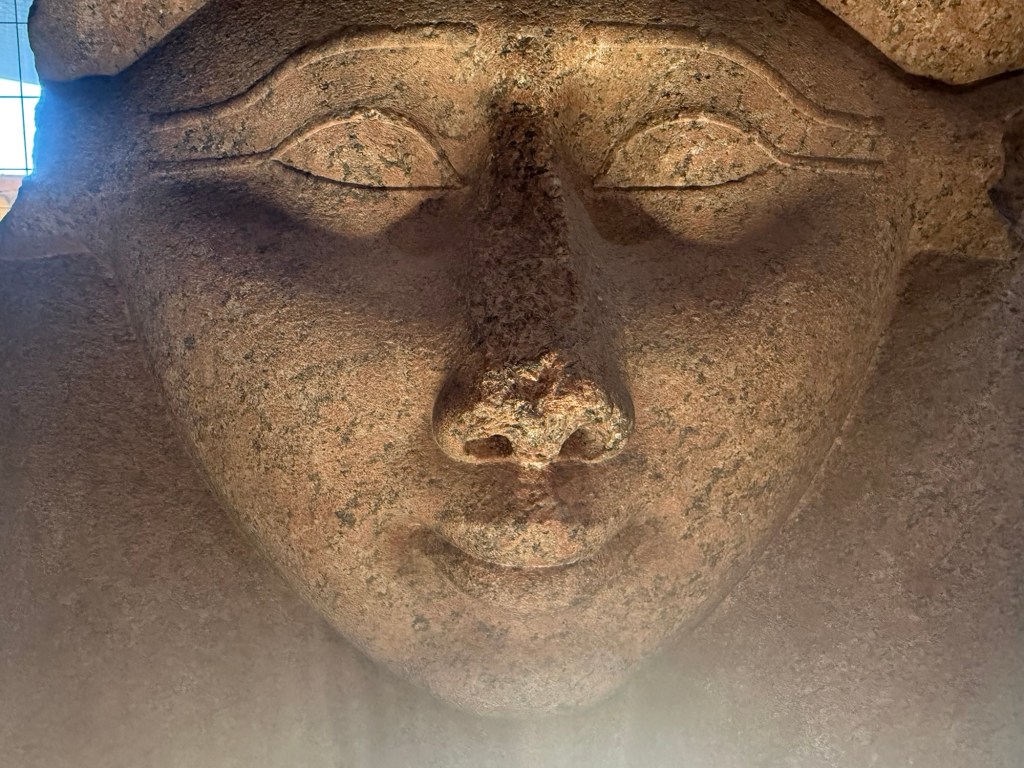
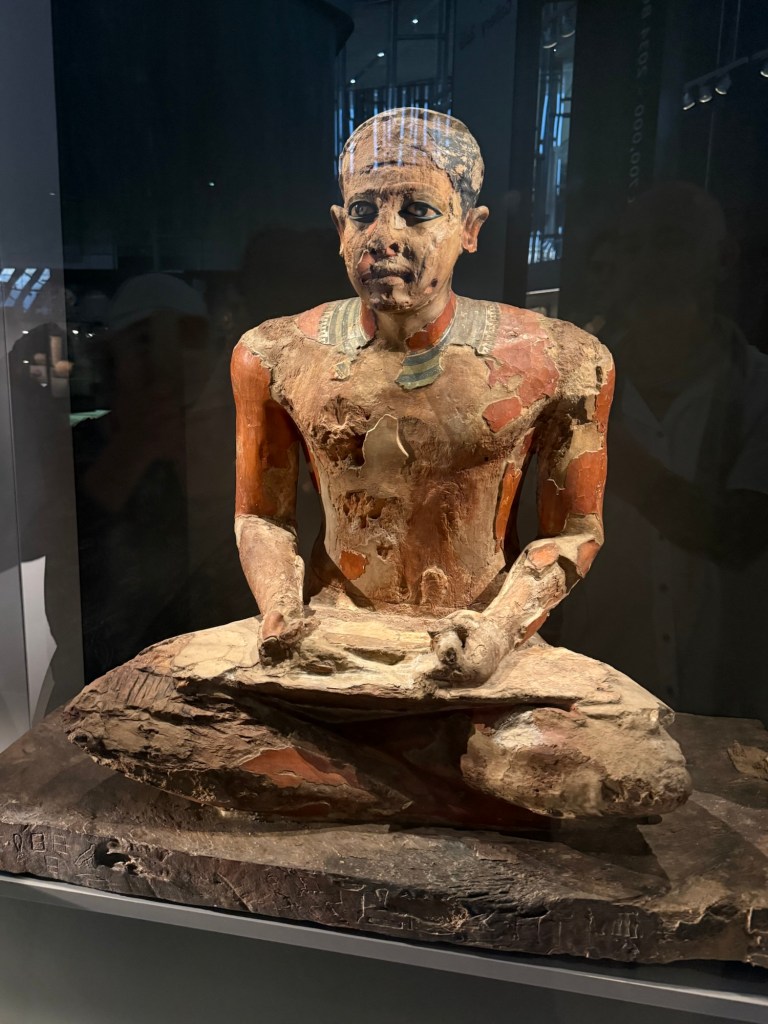
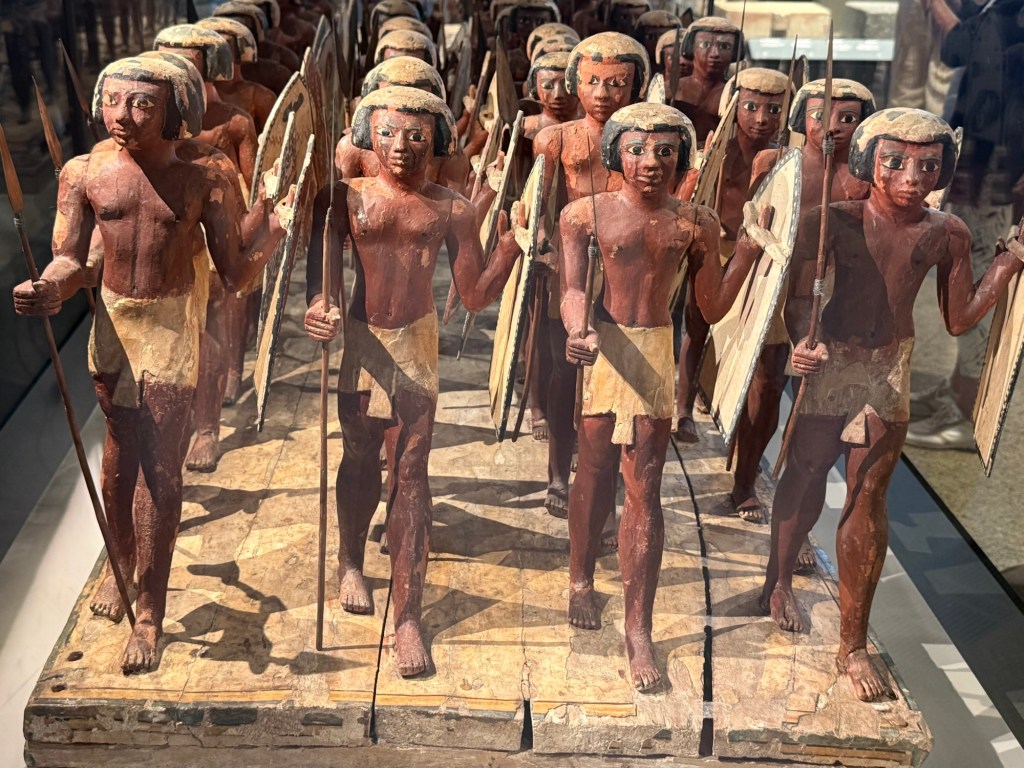
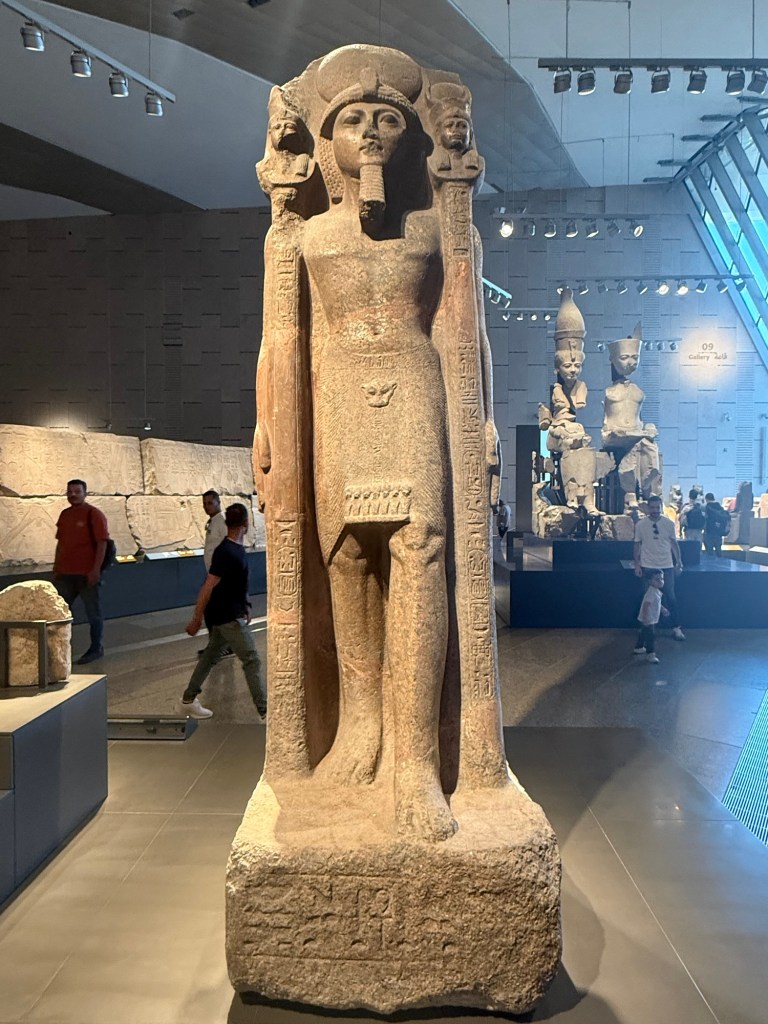
I’m not going to even attempt to name all these marvelous relics as I only had time for a wee swatch aw most of them, but I think you will enjoy just seeing their beauty.
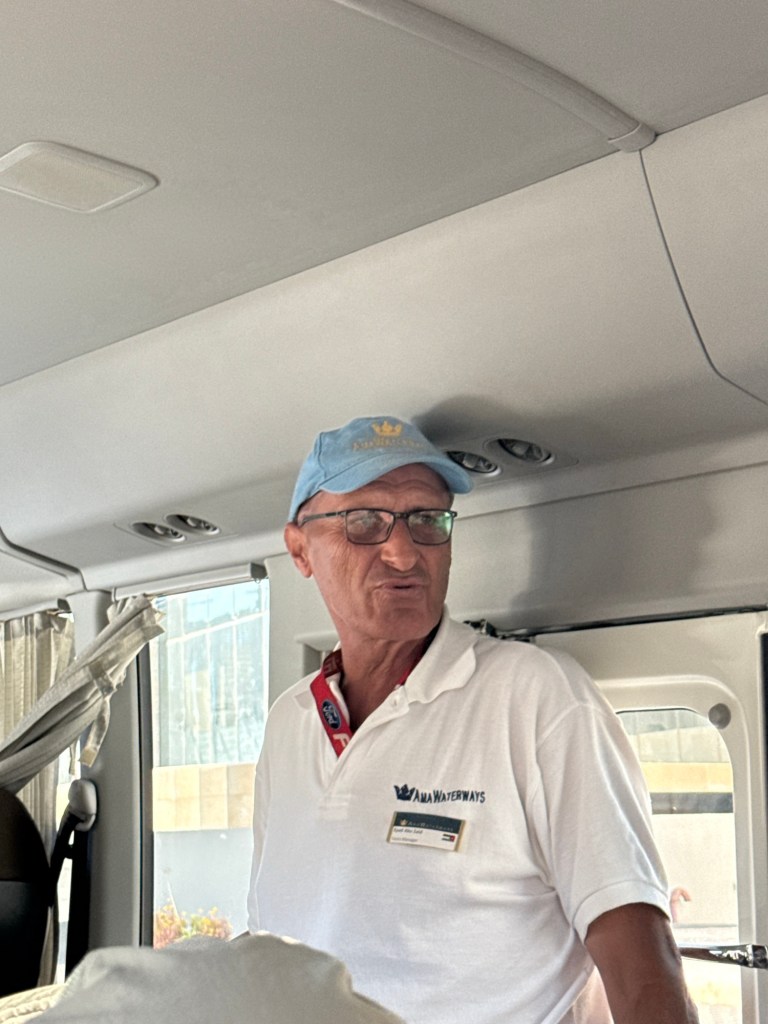
This afternoon was truly enjoyable. Our AMA guide, Eyad, continued to work his magic making sure we saw the best of Jordan.
Our wonderful guide, Eyad Abu Zaid
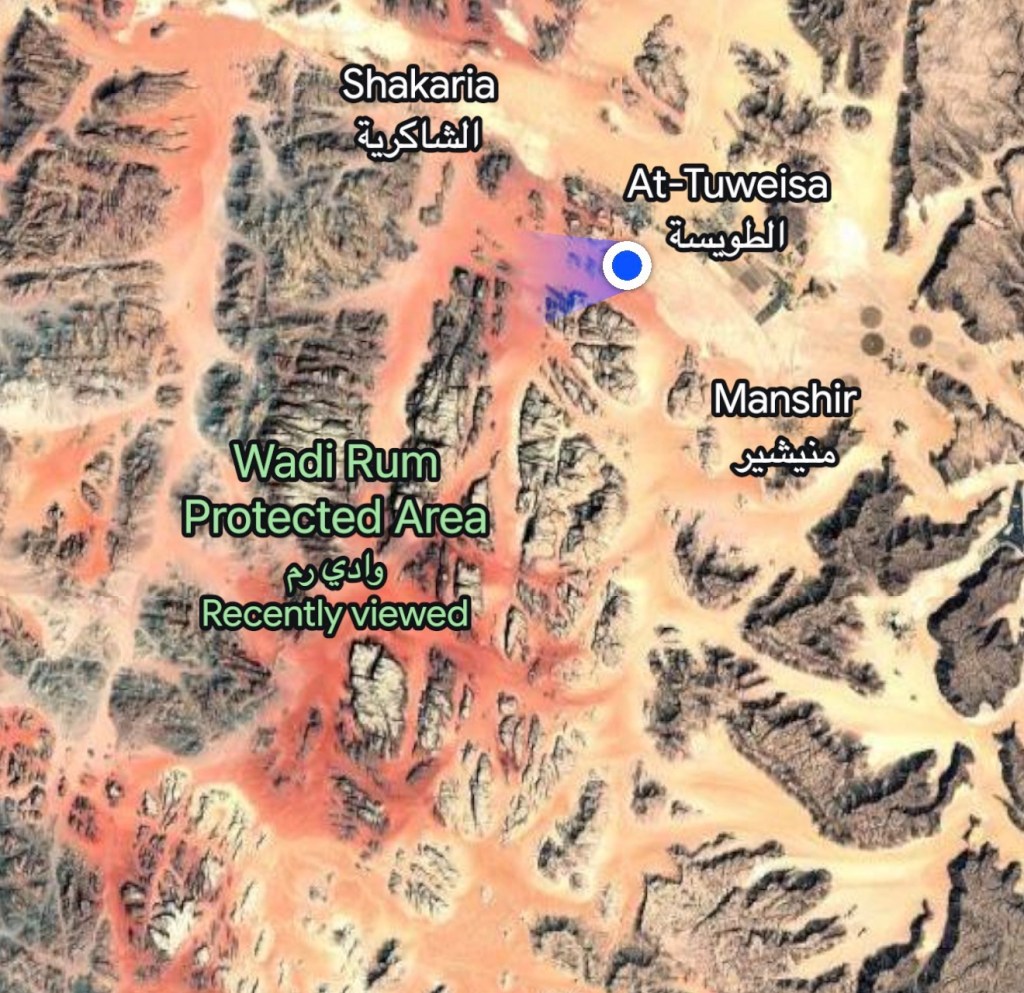
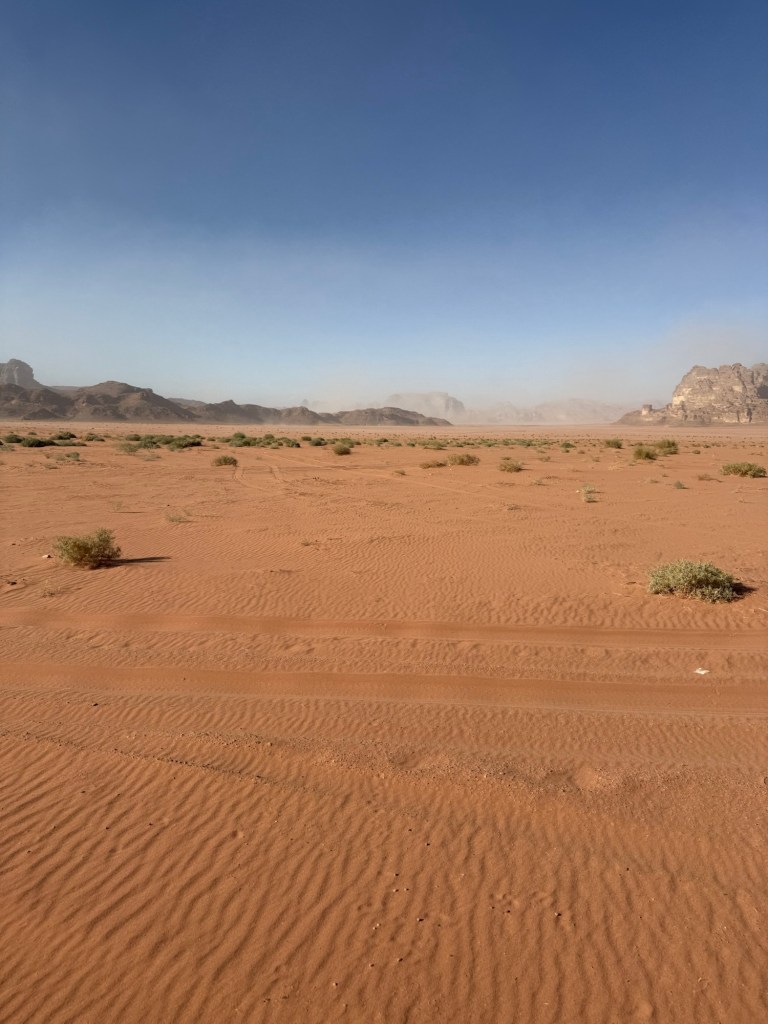
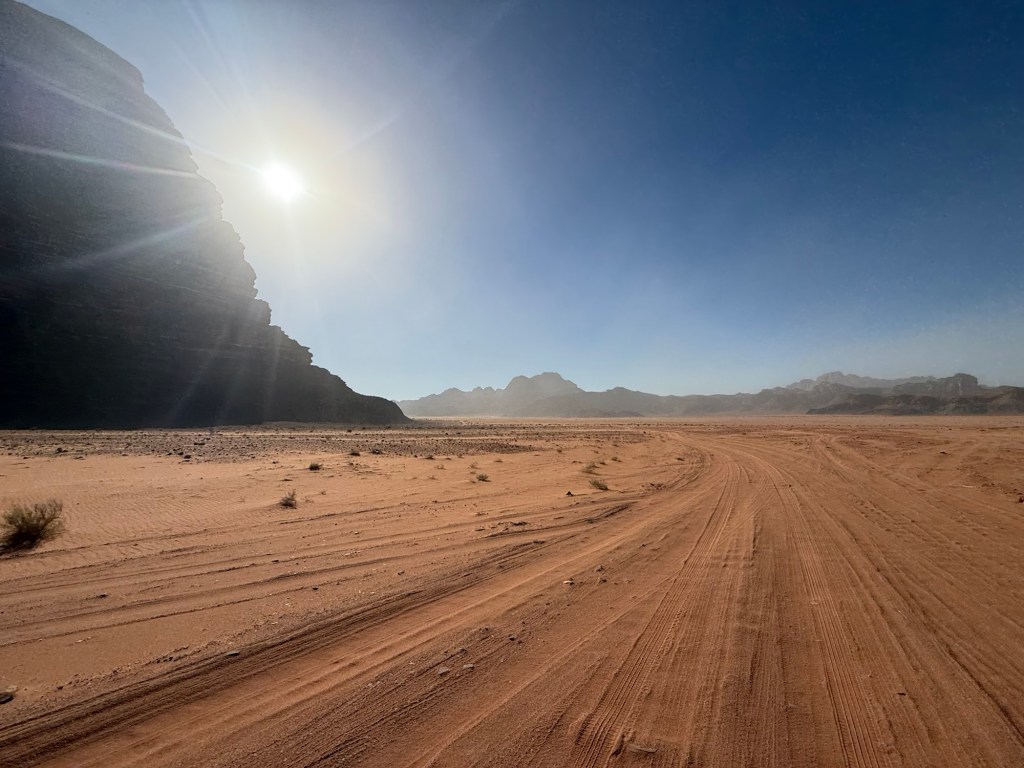
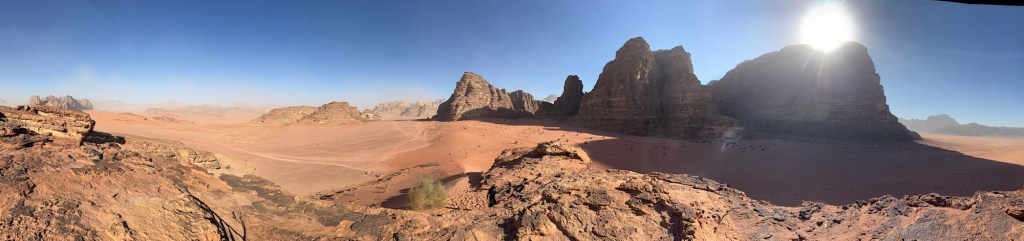
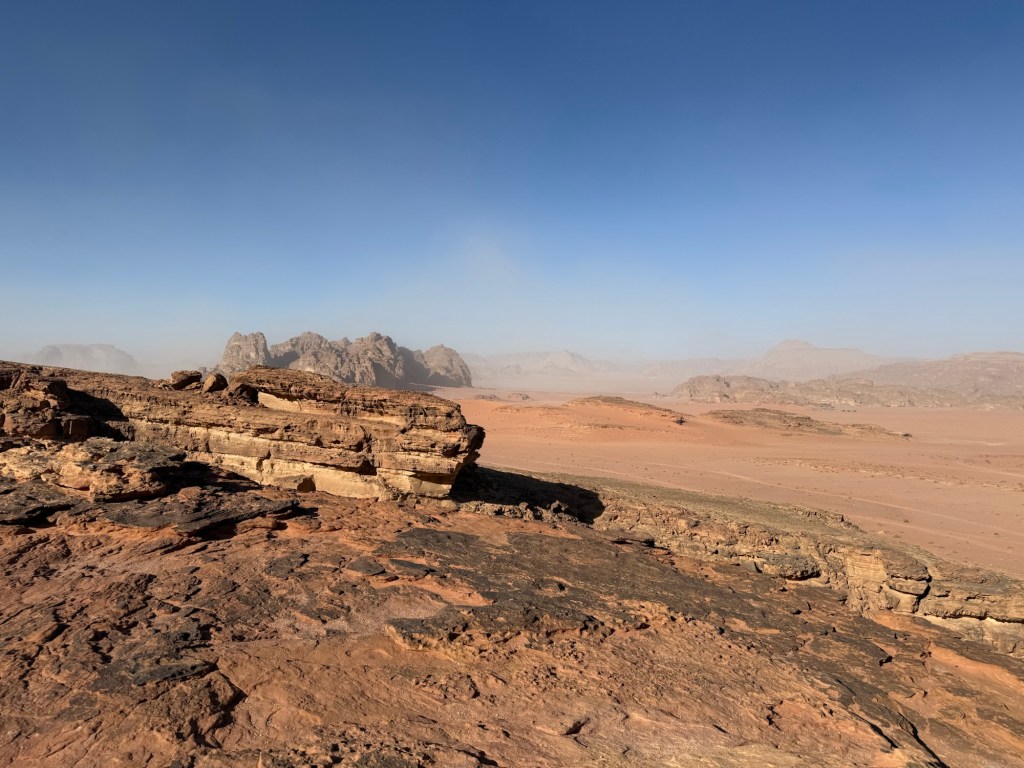
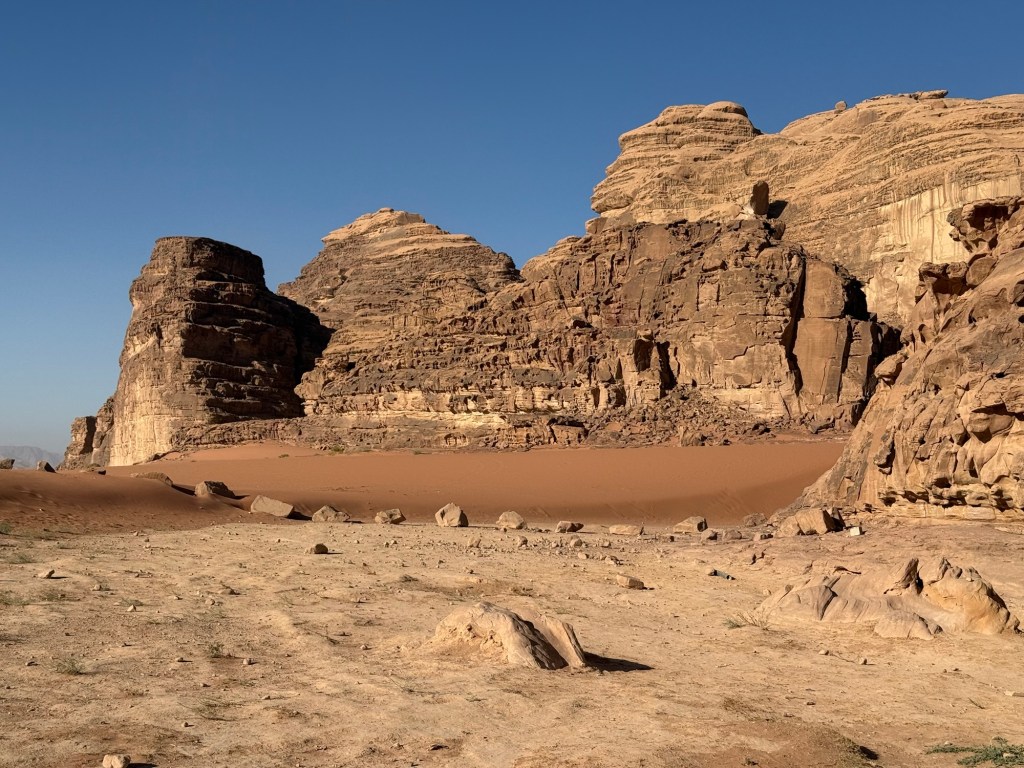
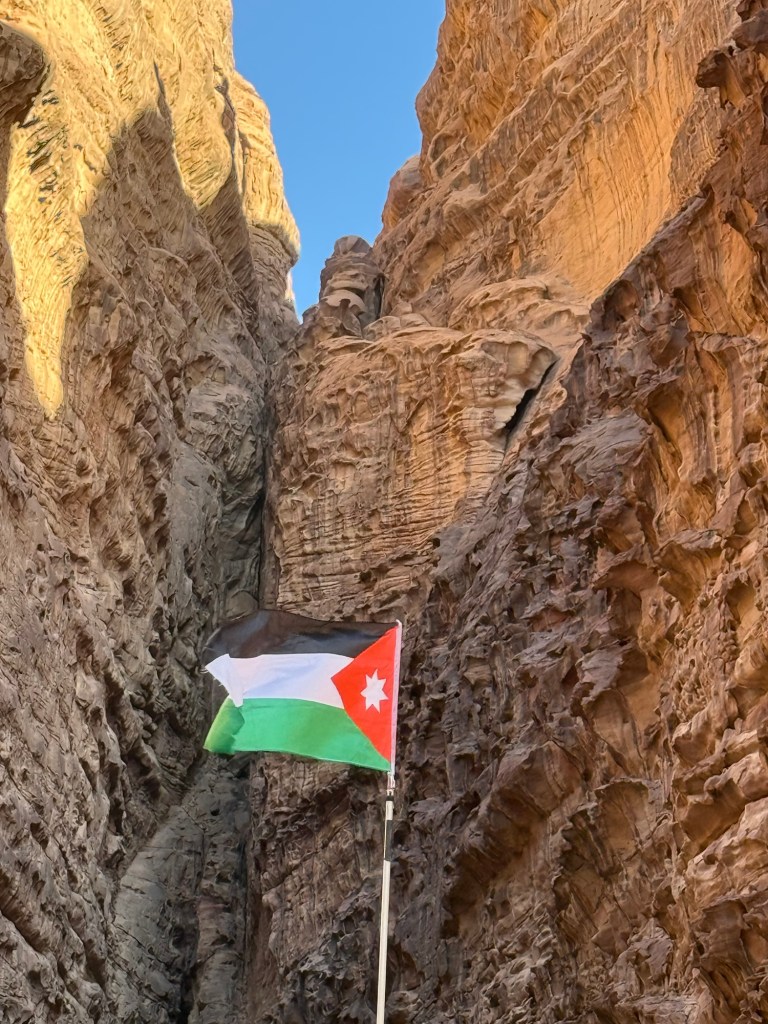
Wadi (dry river bed) Rum is an area of outstanding natural beauty, now protected by the government.
Map of Area
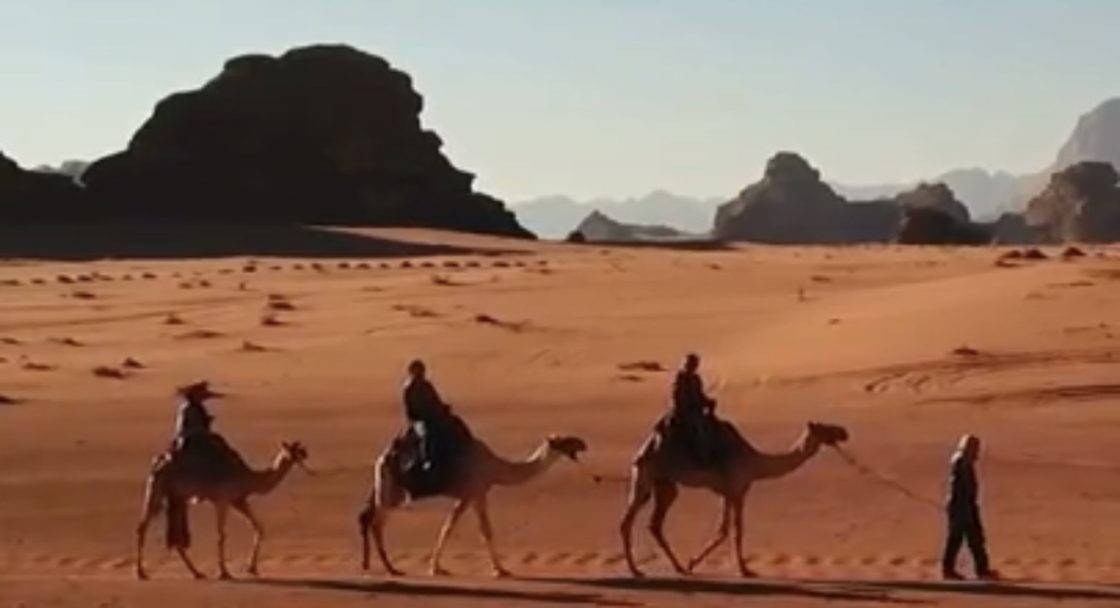
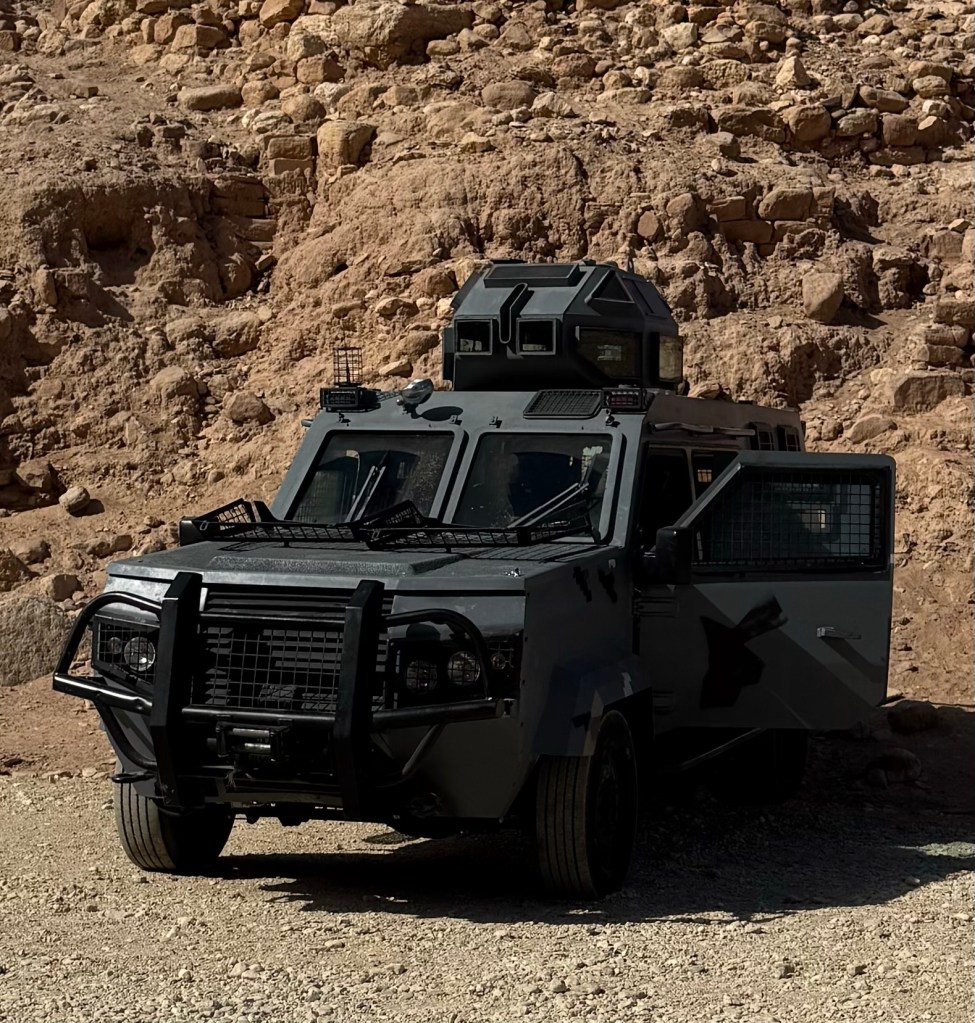
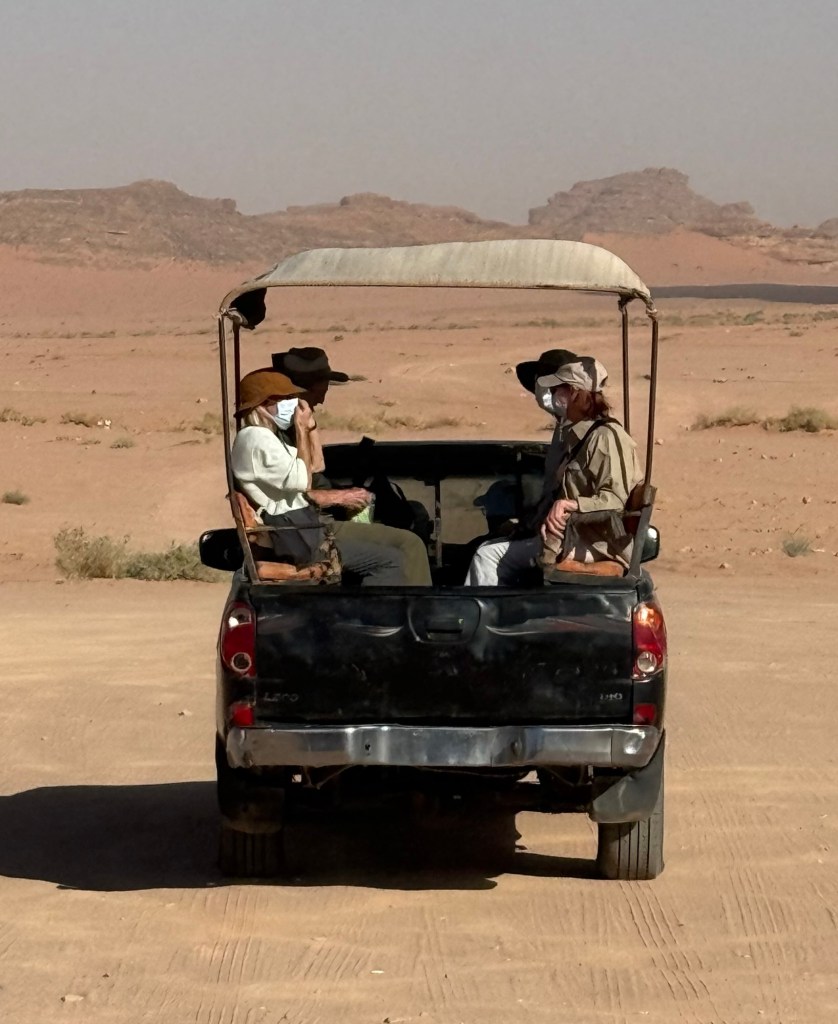
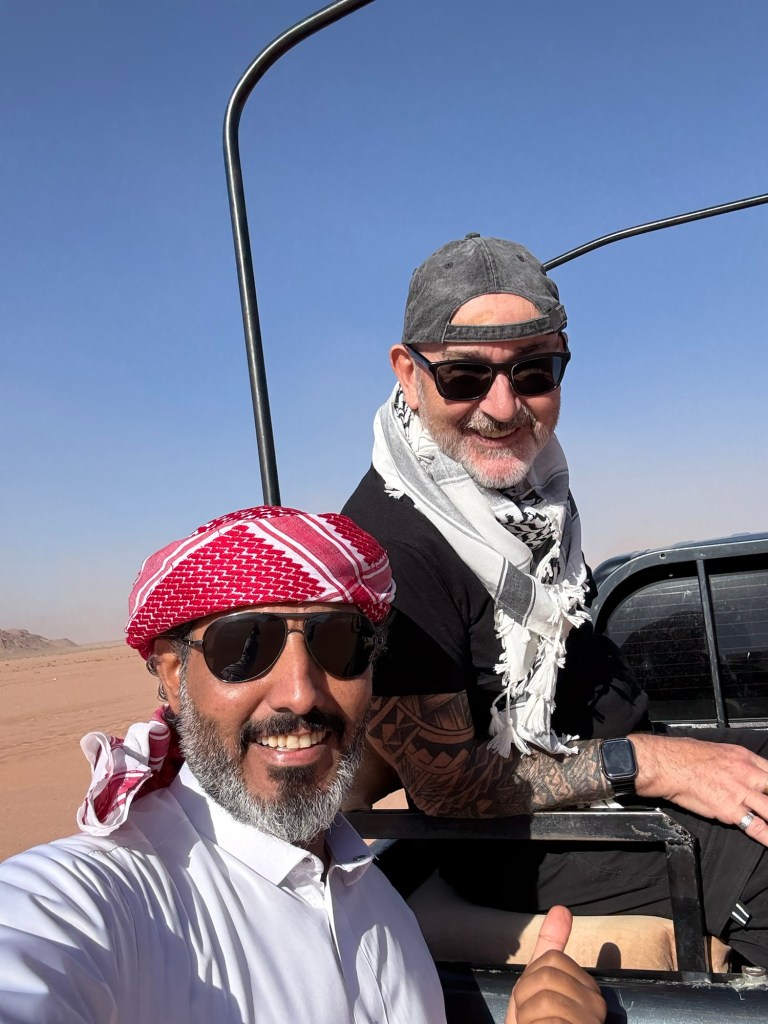
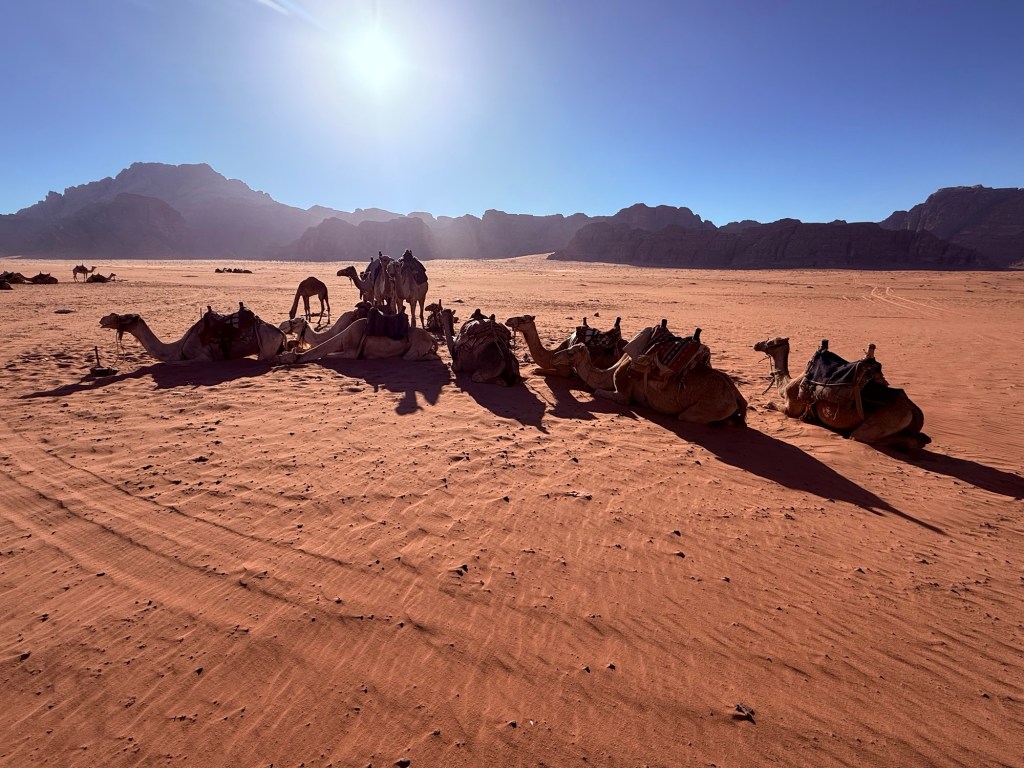
We embarked on a journey in two vintage jeeps into the desert. The red dust was being raised by the incessant wind, creating little whirling dervishes, reminiscent of my recent visit to Turkey.
Ha, ha – not really, this is a Jordanian Security JeepYes, this is one of our jeeps…Being sand blastedRocking along on a Jeep and a prayer Our driver, Number One
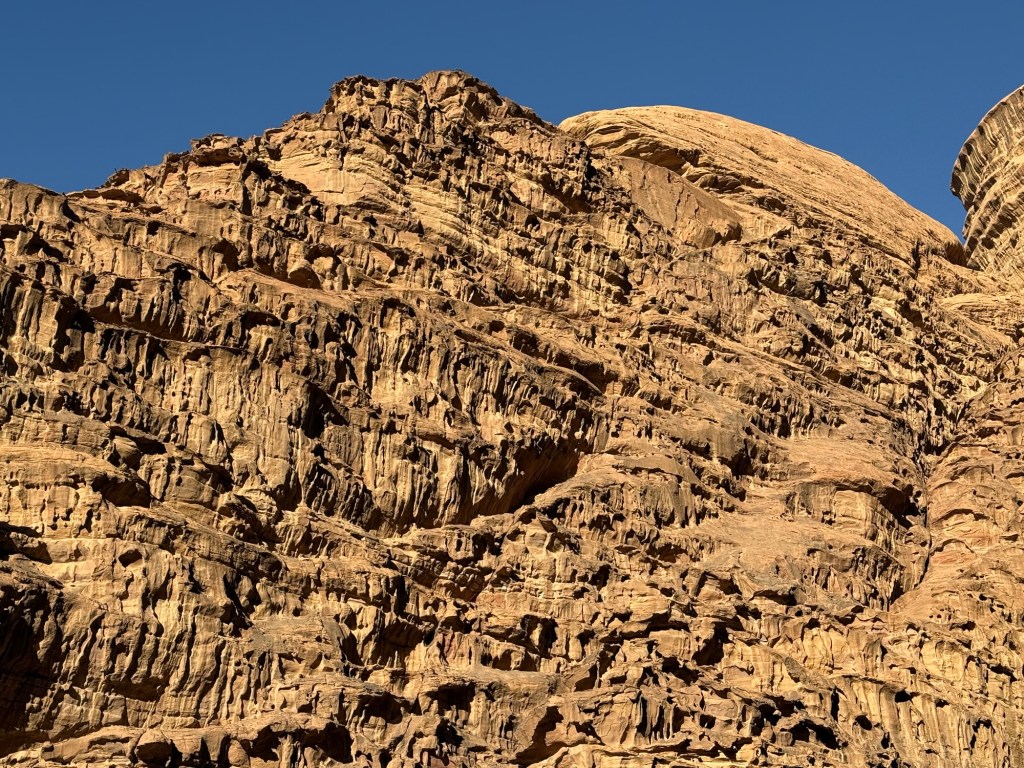
Rising out of the sand were fascinating rock formations, created by the same sedimentation – river carving processes as the gorges at Petra.
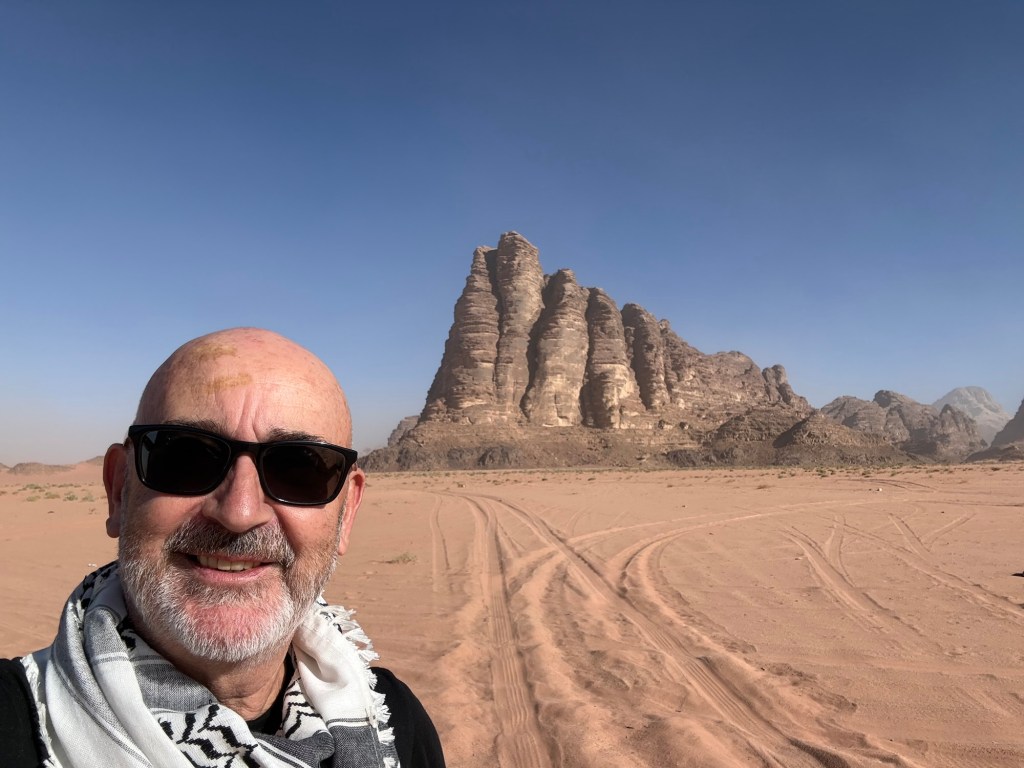
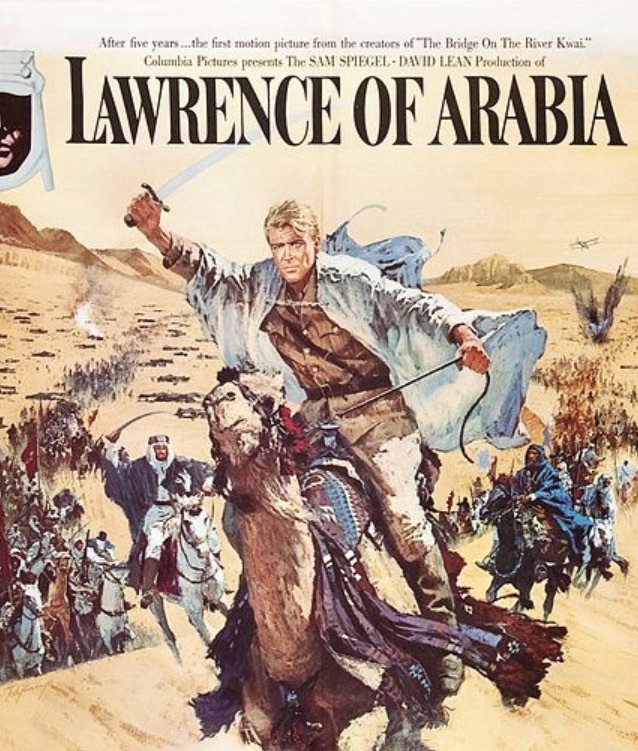
Notably, the formation Seven Pillars of Wisdom, famous from David Lean’s 1962 film about Lawrence of Arabia, starring Peter O’toole, Alec Guinness, Anthony Quinn and Omar Sharif, was a highlight; this film was based in tge book the Seven Pillars of Wisdom.
Seven Pillars of Wisdom, featuring me as Lawrence of ArabiaSeven Pillars of Wisdom
Interestingly, more recent blockbusters have been filmed here – Star Wars, The Martian, Dune and Mission to Mars.
The red sand spread out forever around us..
I ascended a sand dune to get a 360° view of the desert – startlingly beautiful.
As I was on an adrenaline high, I ran back down the dune, sounding a bit like a chest clinic is in my future.
Panting puppy
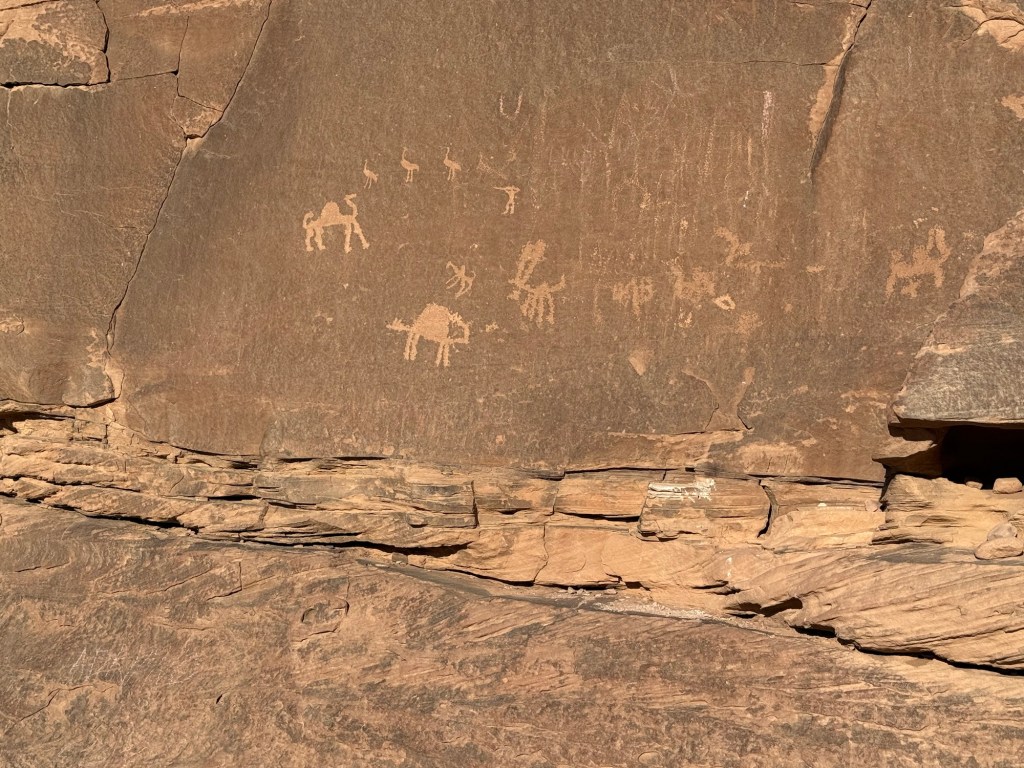
We observed some ancient carvings on the rock that you could actually touch but, of course, you did not. Amazingly, they have survived the Bedouins and tourists.
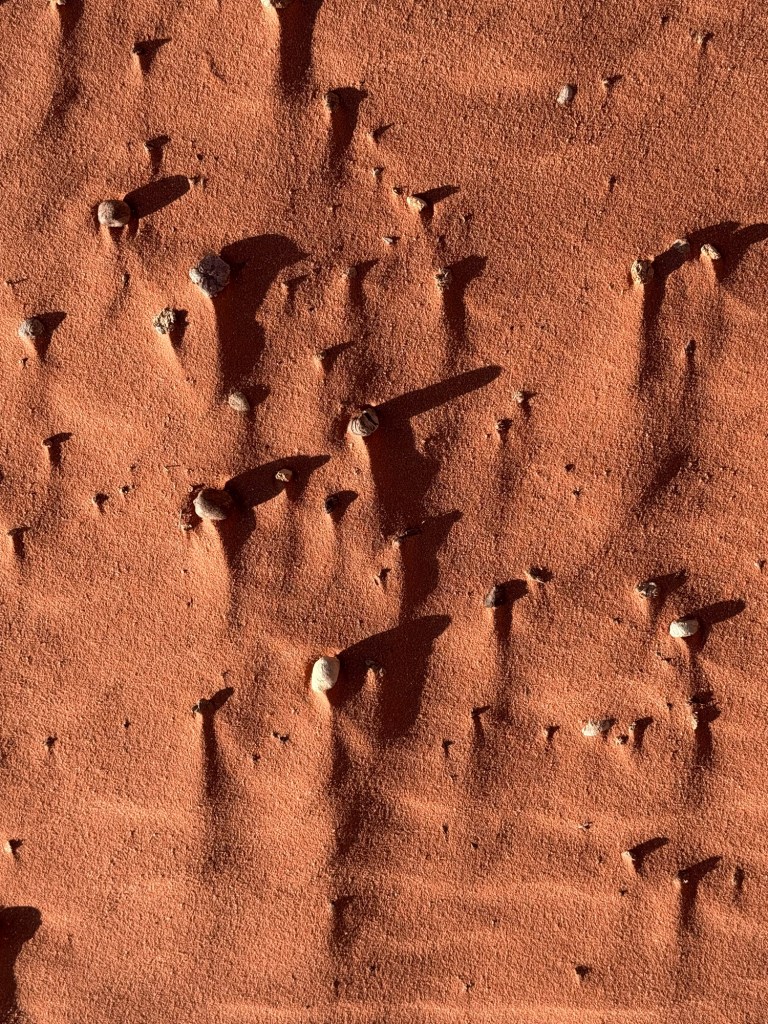
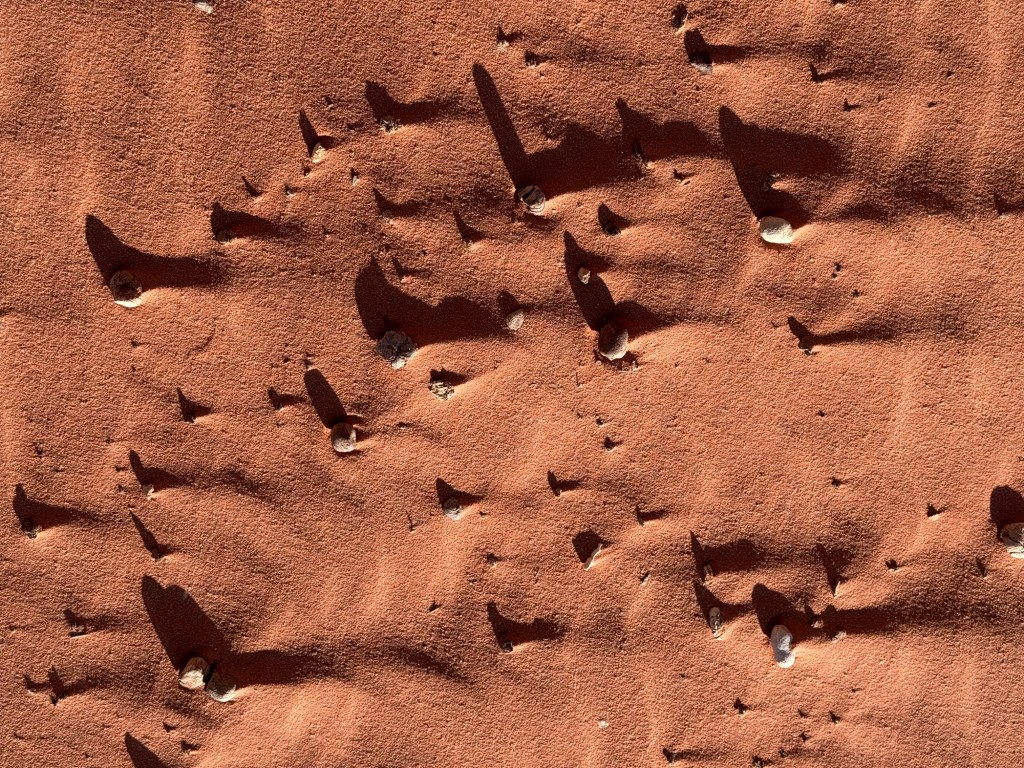
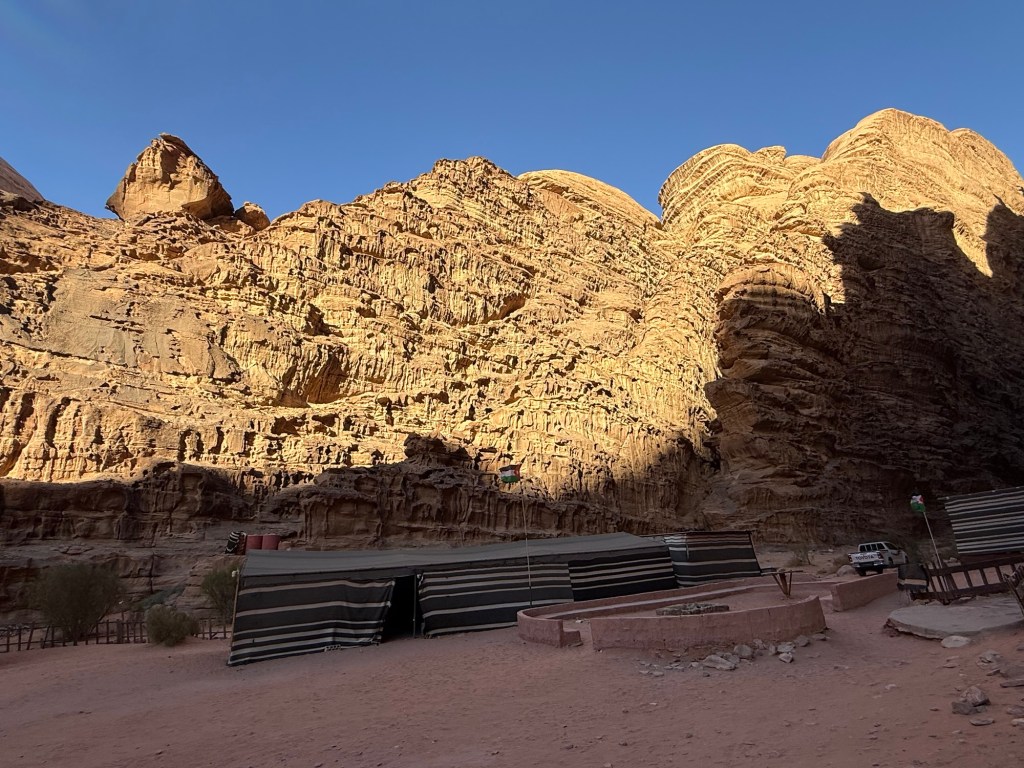
The area of the carvings had reddest of sand and beautiful, weathered rock. While watching where I was putting my feet, I noticed the beautiful shadows created by the setting sun.
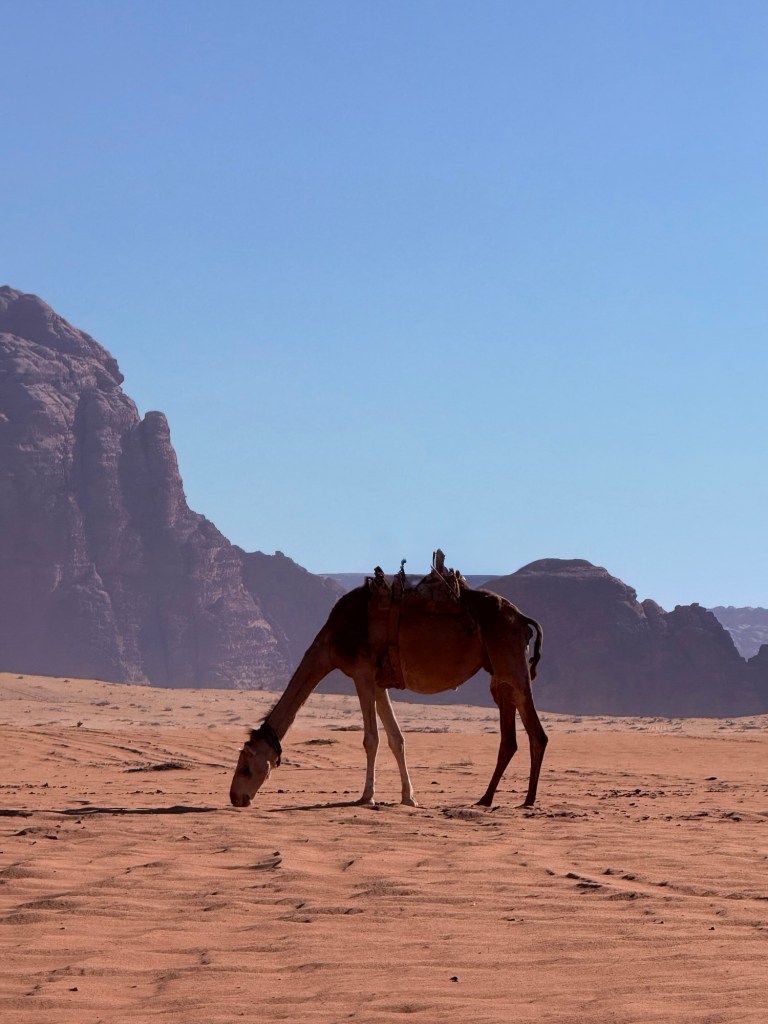
We met some lovely camels, especially a young camel called Calum The Camel, who was very inquisitive, wandered towards me and kissed my tattoo.
“Eye of the Camel”; thank you Calum The Camel
Finally, we went and took tea with a Sheik in his goat-hair tent . I purchased some lovely pomegranate incense for US $7 and a Jordanian red check headdress for US$10. I shall use these to my advantage….
And now it’s a 2 hr drive back on the windy roads to Petra.
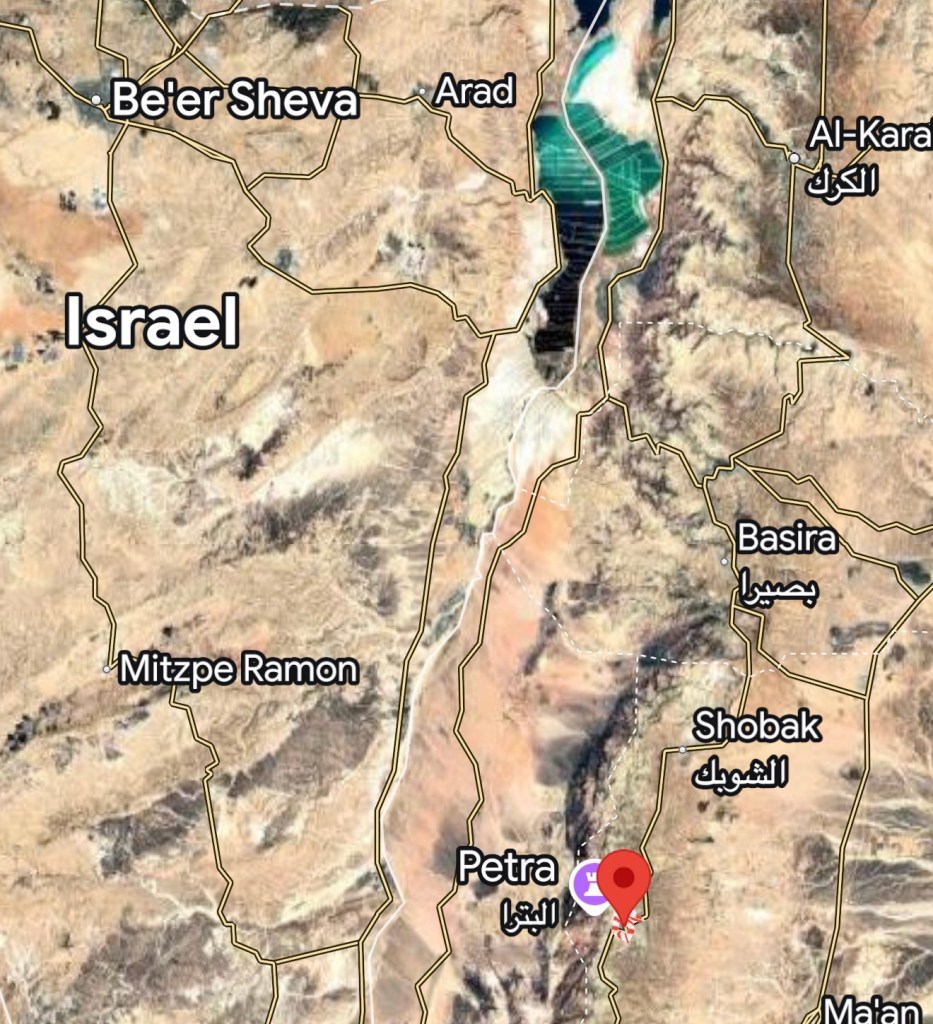
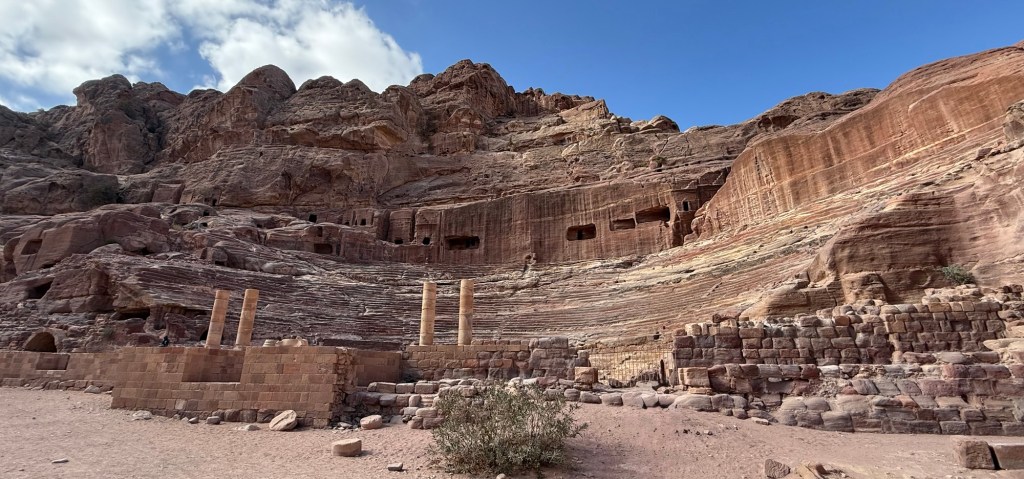
We departed early from our hotel, the Petra Moon, and walked approximately 2 miles to the ancient Arabic city of Petra.
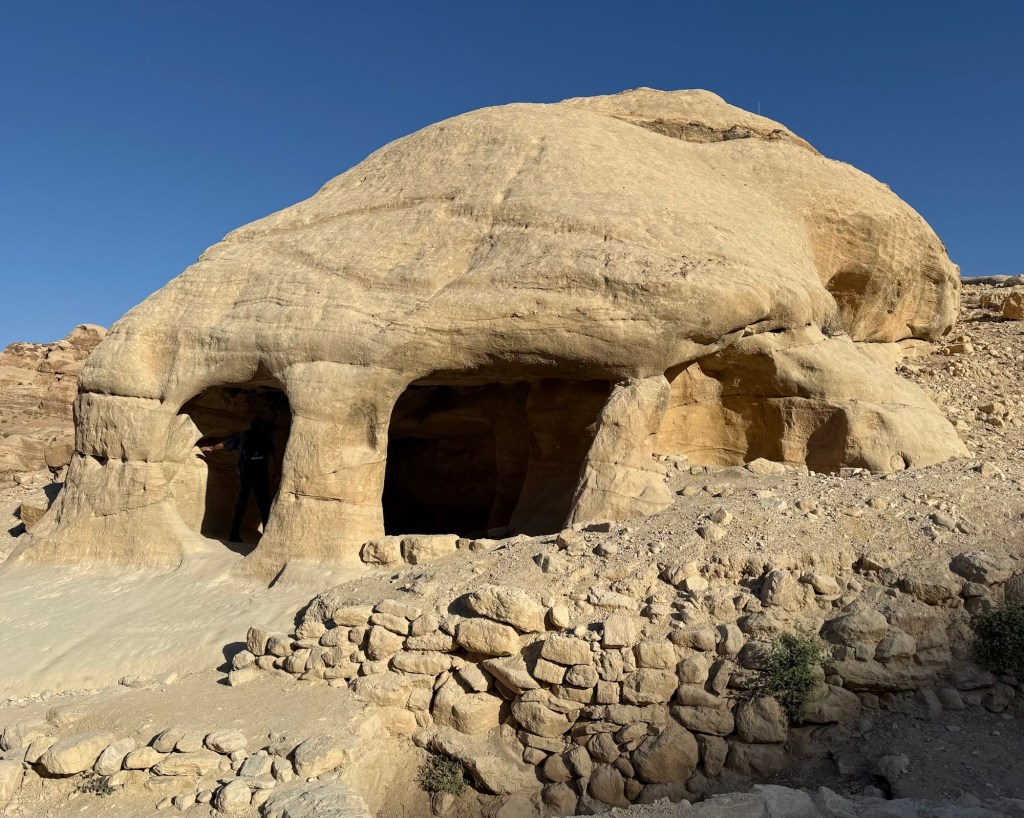
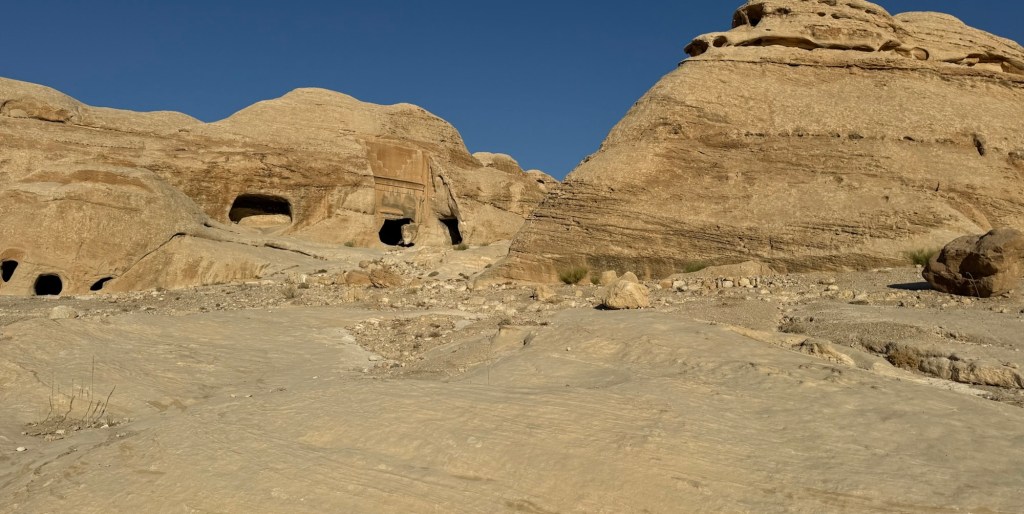
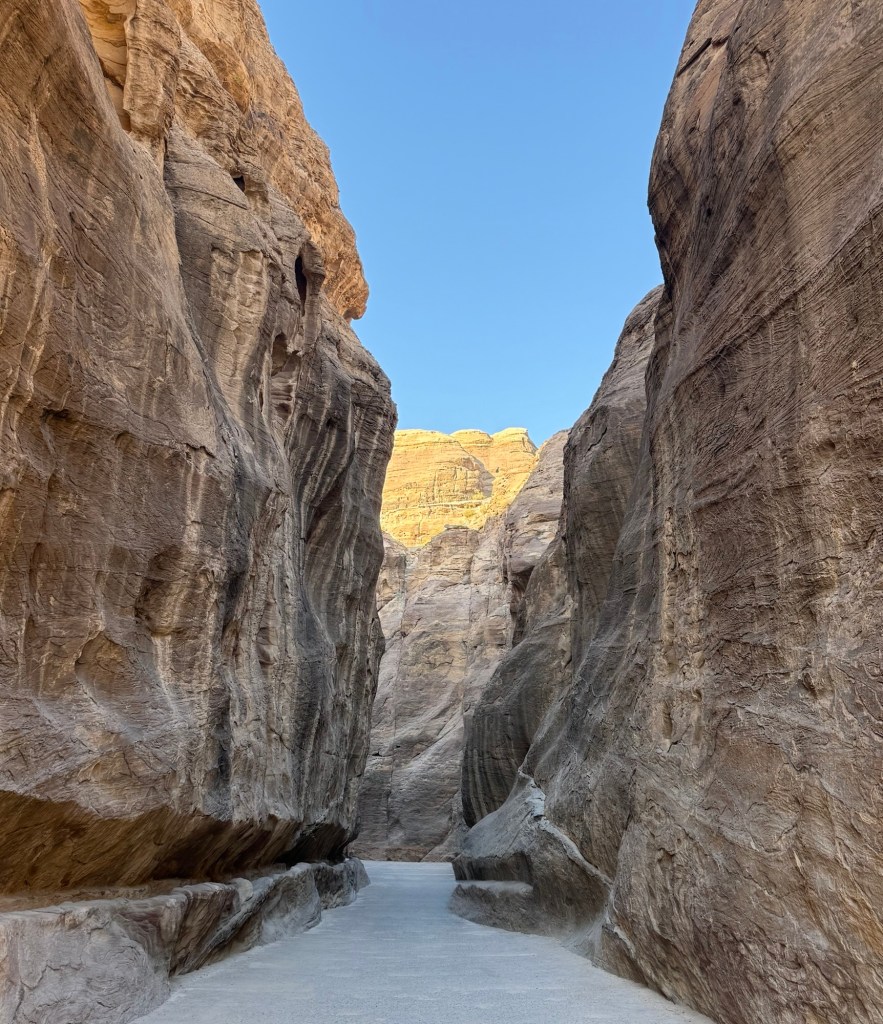
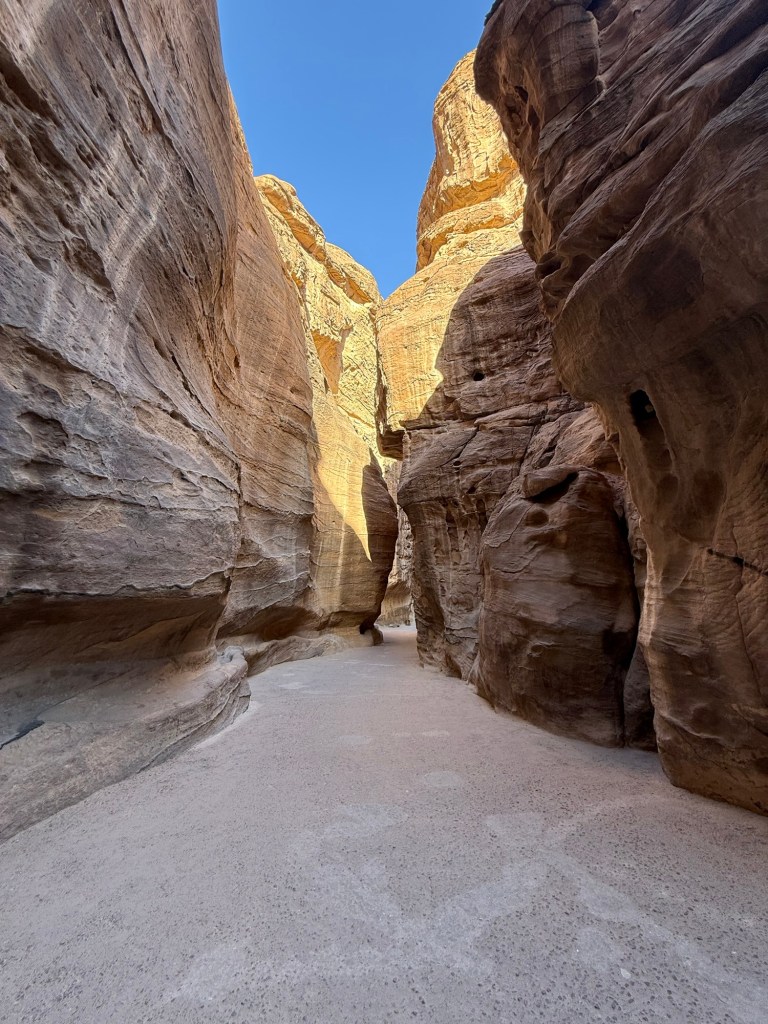
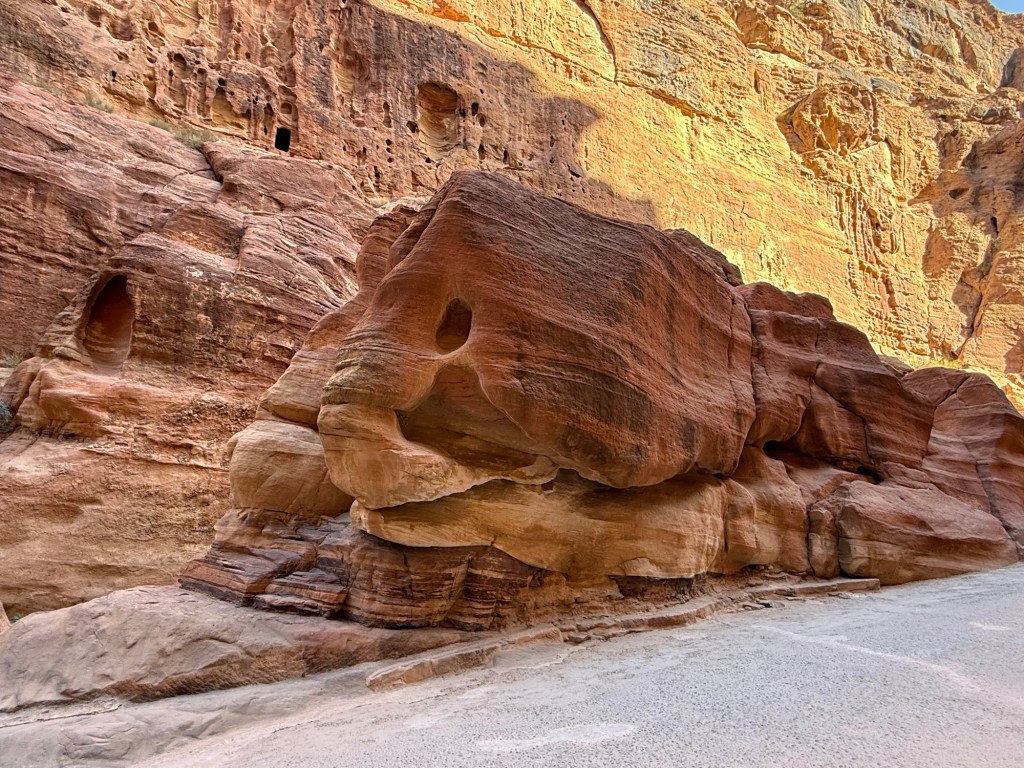
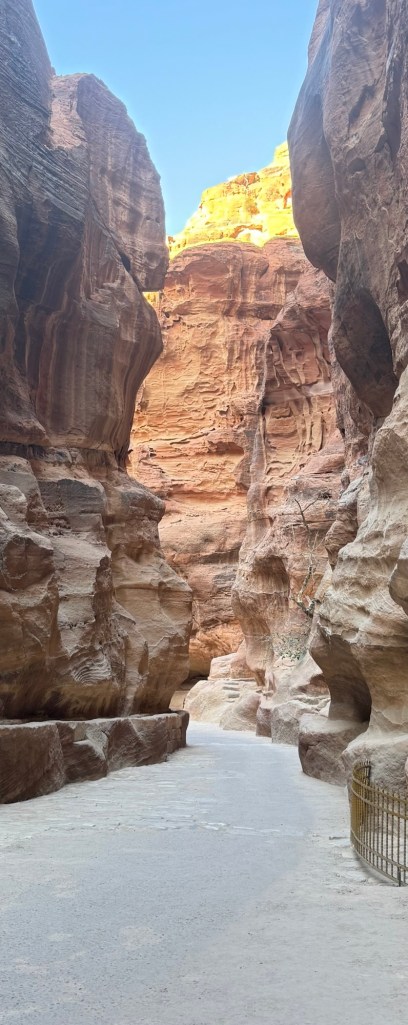
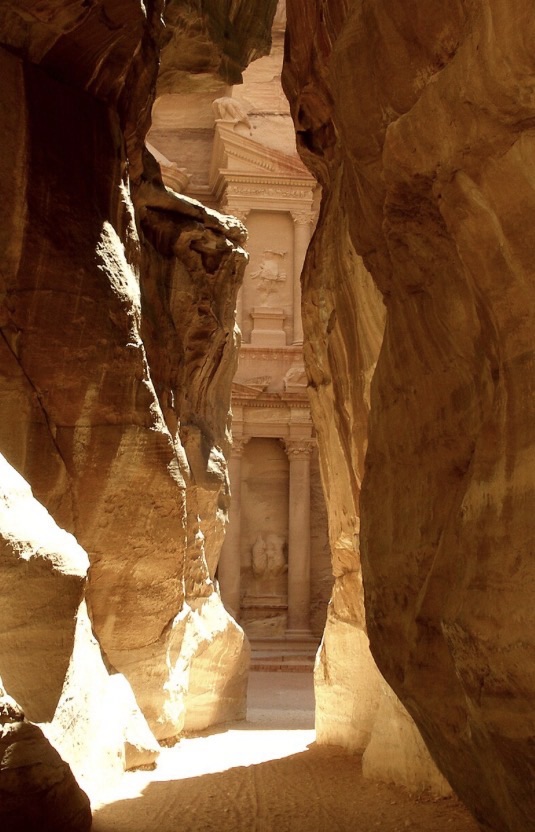
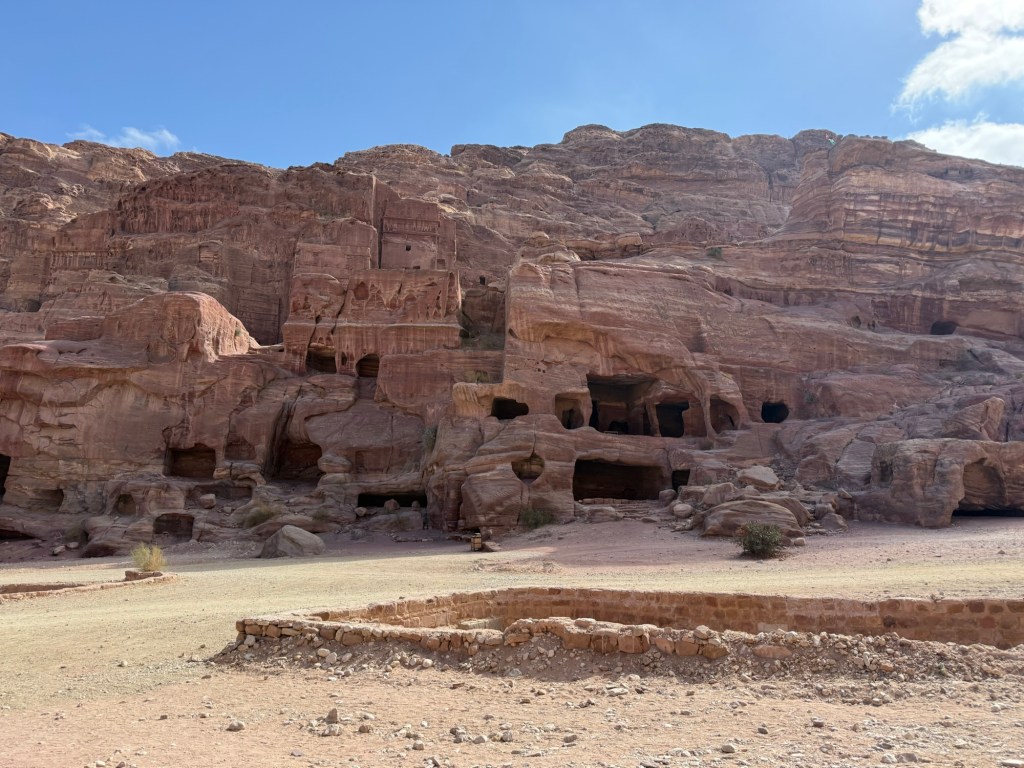
We initially passed through an area where people lived in caves until the middle of the 20th century and then through winding, narrow gorges.
The caves were utilized by Bedouins and other Arabic tribes until the Jordanian Government relocated them to nearby towns.
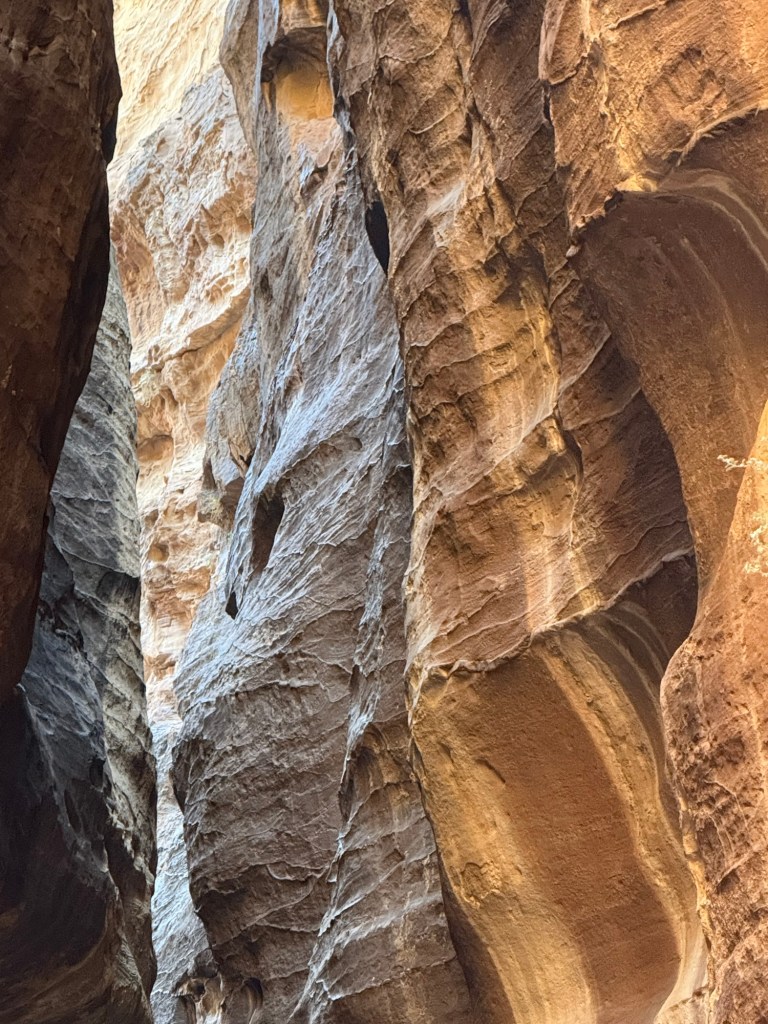
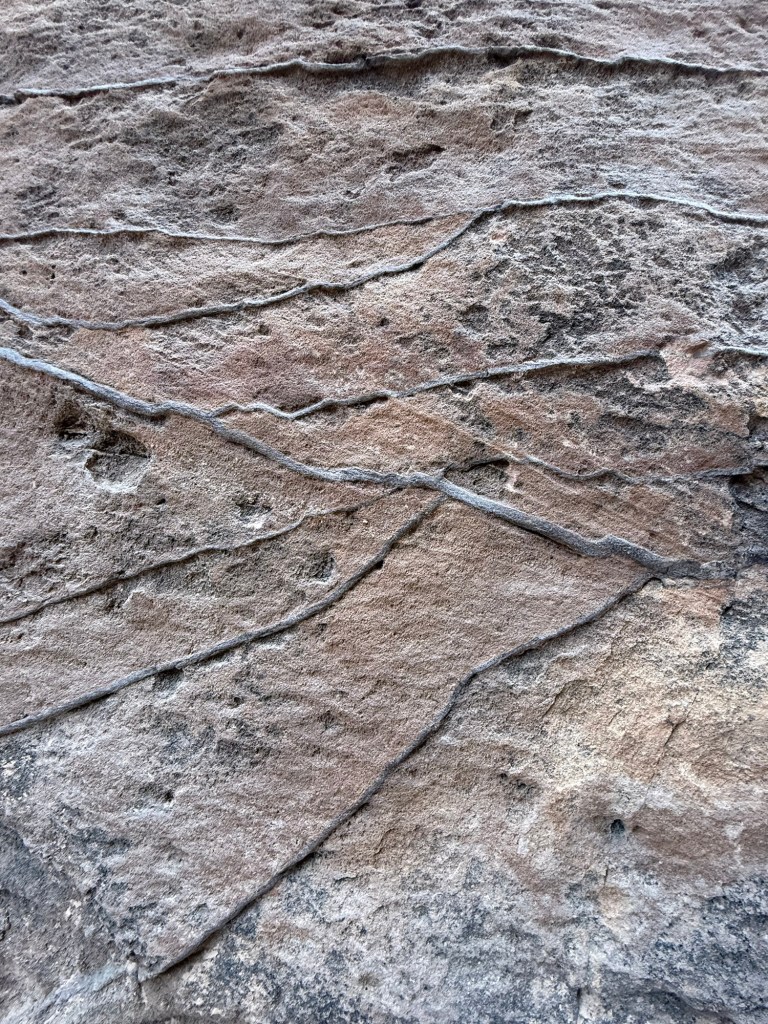
The gorges were formed by water eroding layers of sediment that had been deposited millennia prior when the area was below sea level.
The resulting gorge walls are multi-hued and tower hundreds of feet above the path to the city.
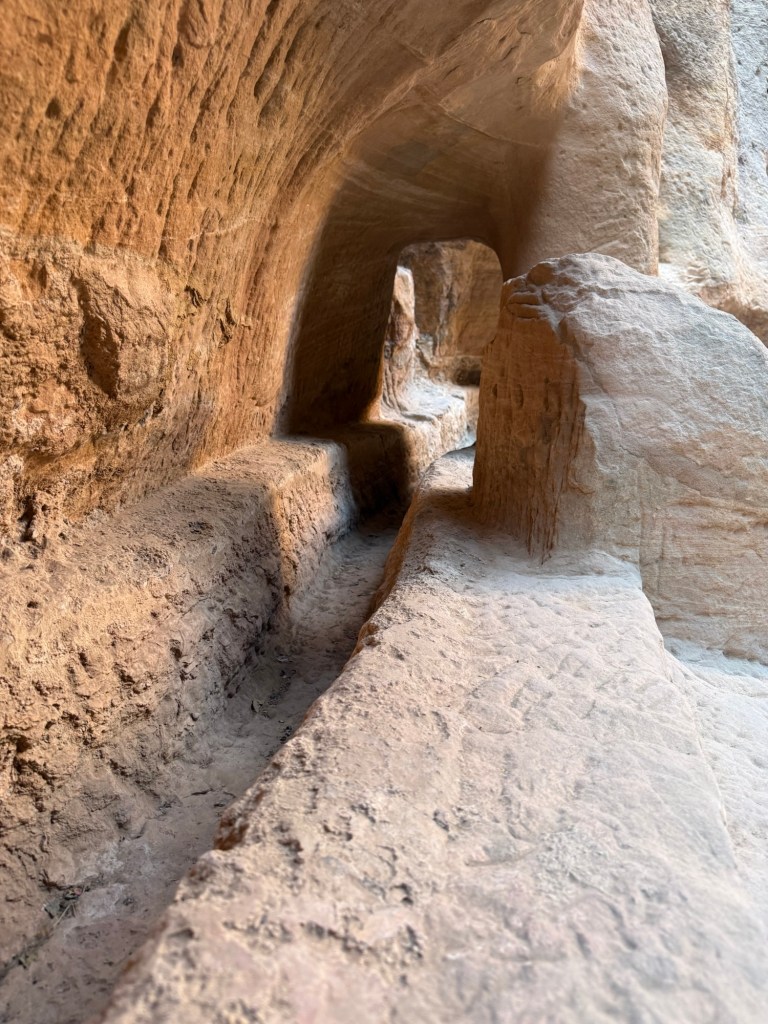
Along each wall, there are small, elevated half-pipes that channeled water down into the city, providing a better quality and more plentiful supply of water than is available to most Jordanians today.
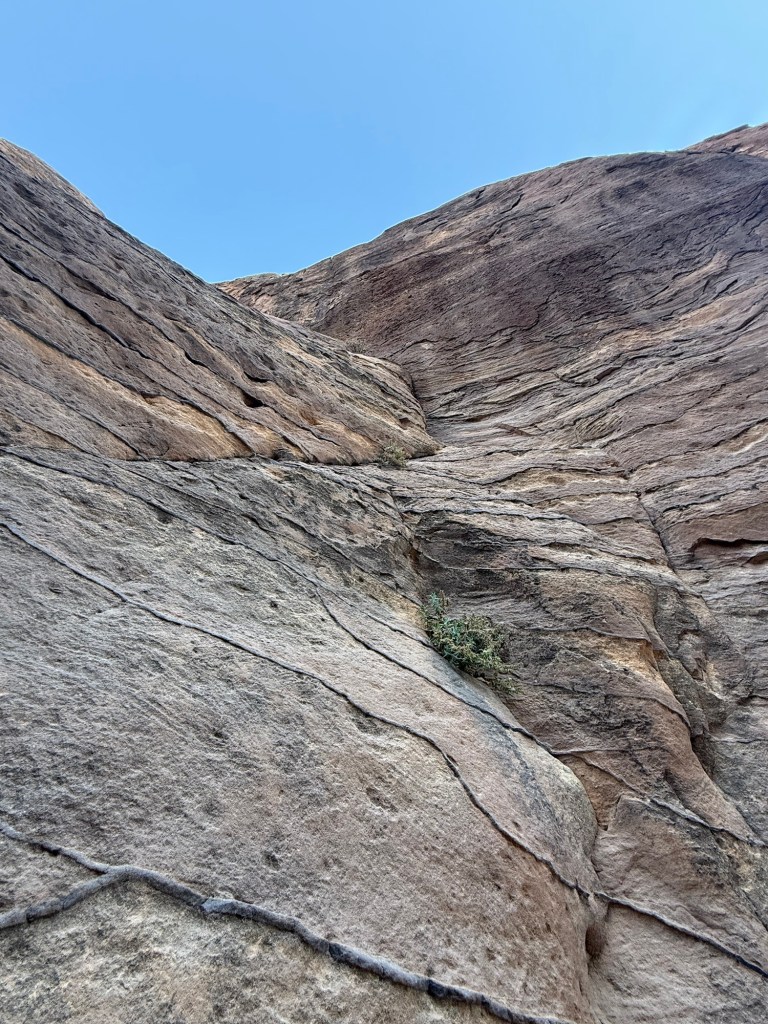
The lines of sediment are very noticeable, and thin black lines depict the result of sedimentation from local volcanic activity.
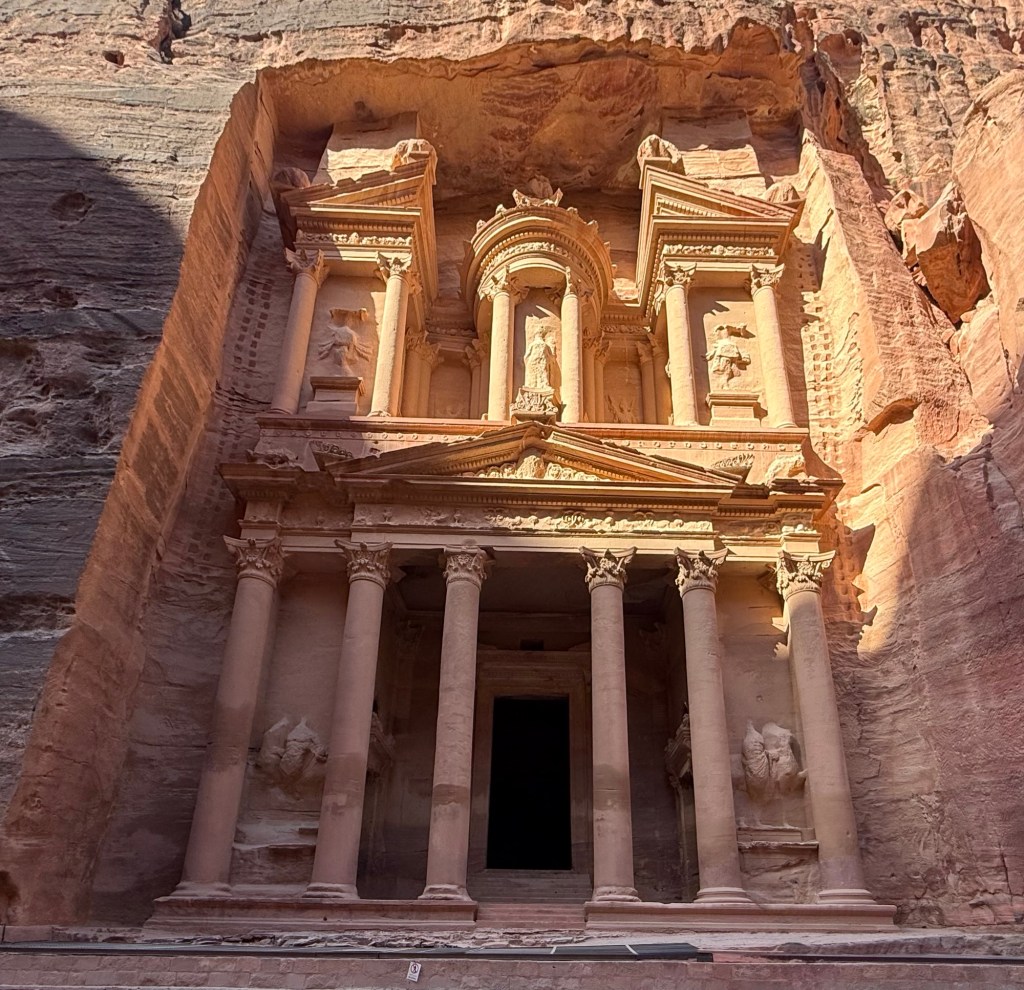
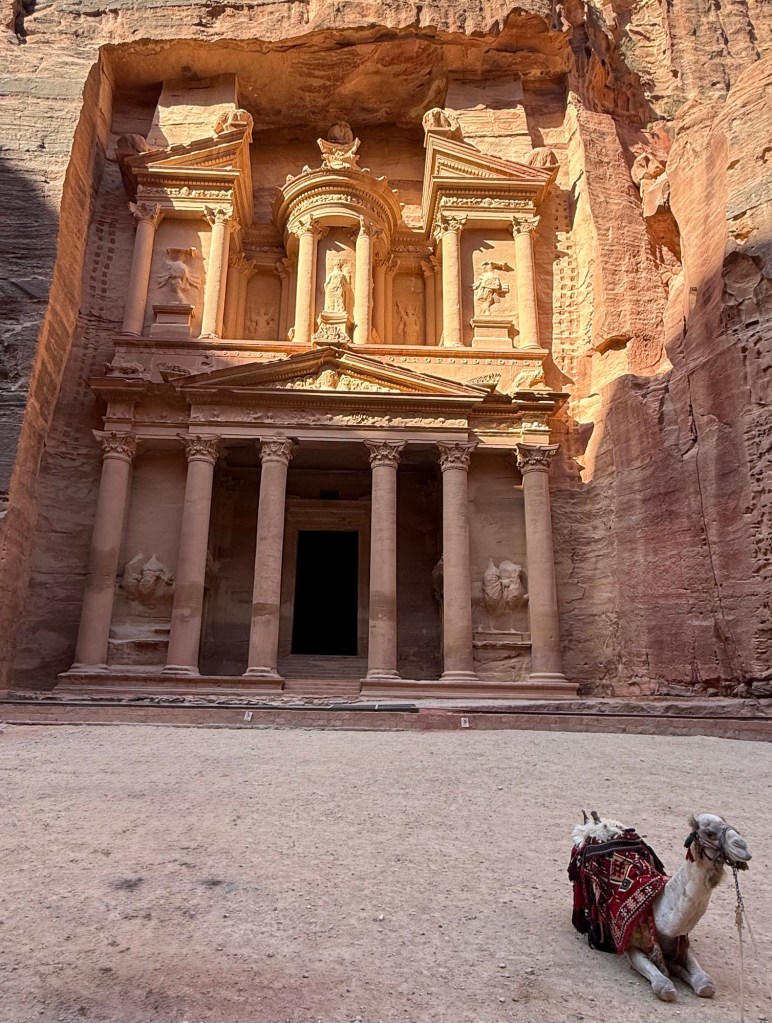
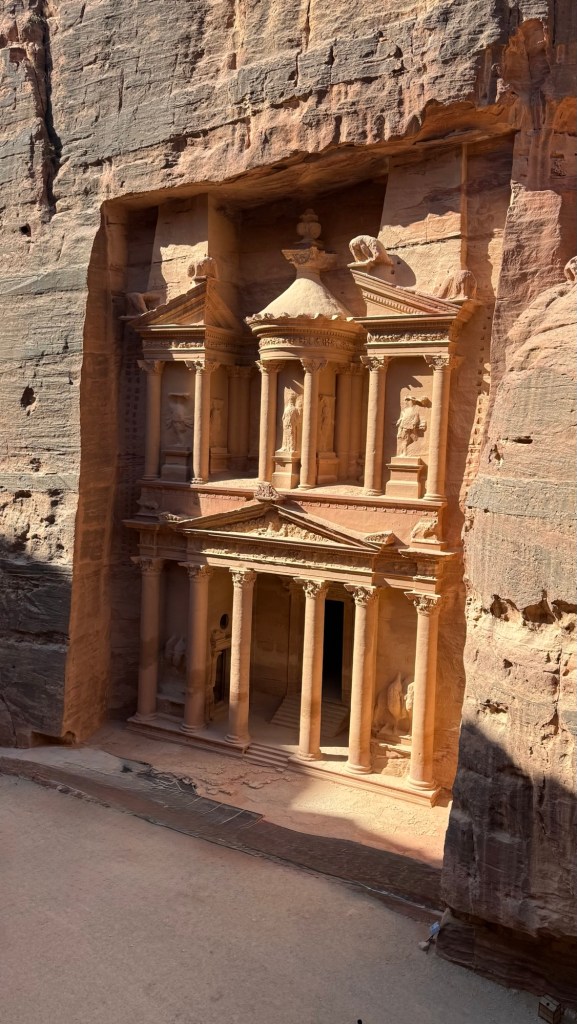
As you reach the end of the gorge, you get a tantalizing glimpse of the Treasury, the most renowned ruin in the city. And then, suddenly, it’s there, rising majestically before you!
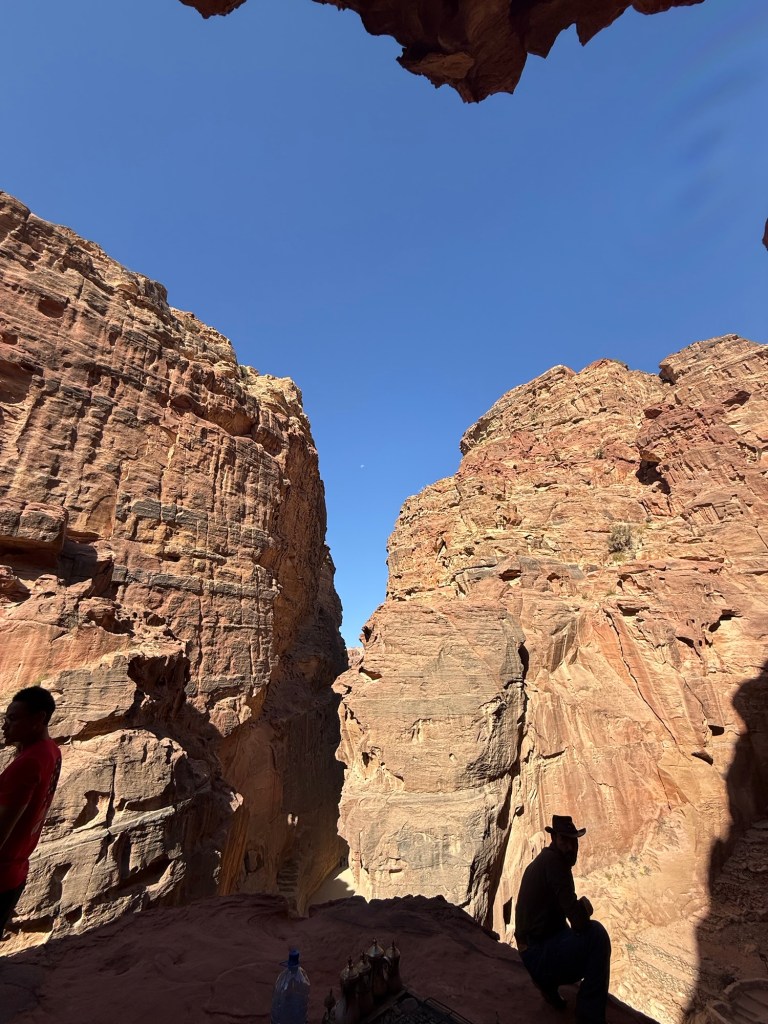
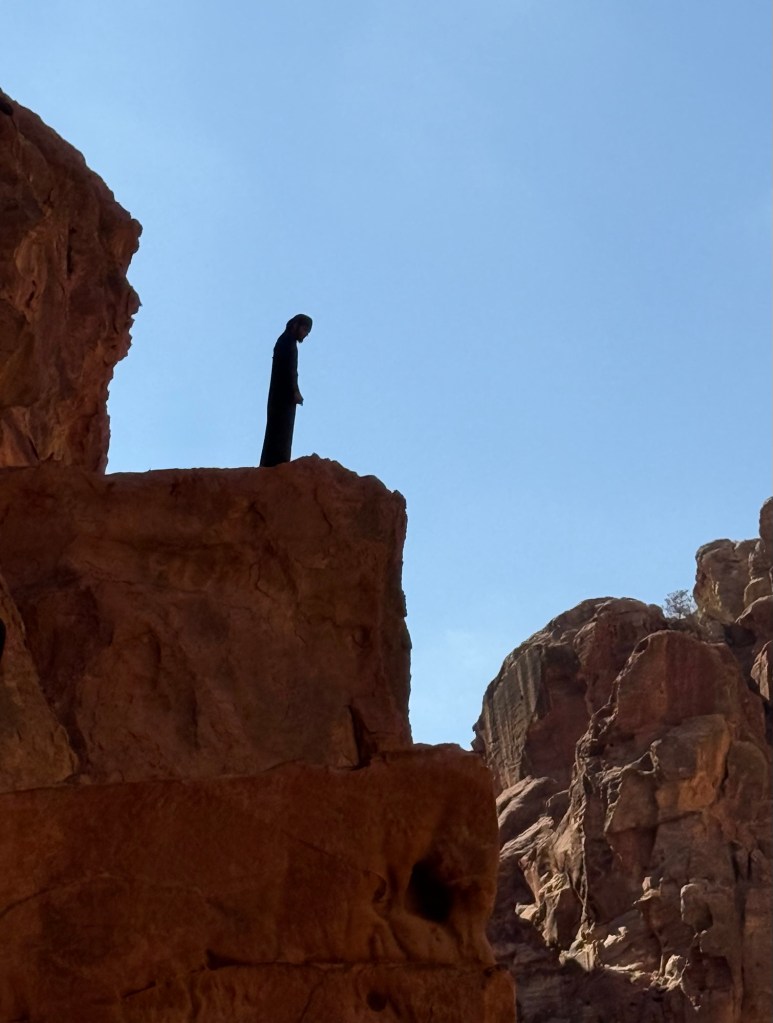
Looking up, I saw a silhouette of a man in Arabic attire. I climb up some rock steps to see what he was about, and gained a different perspective on the Treasury.
Notably, the Treasury was not actually a treasury – there are only a few small caves behind the impressive facade. It was more likely the tomb of some important Arab.
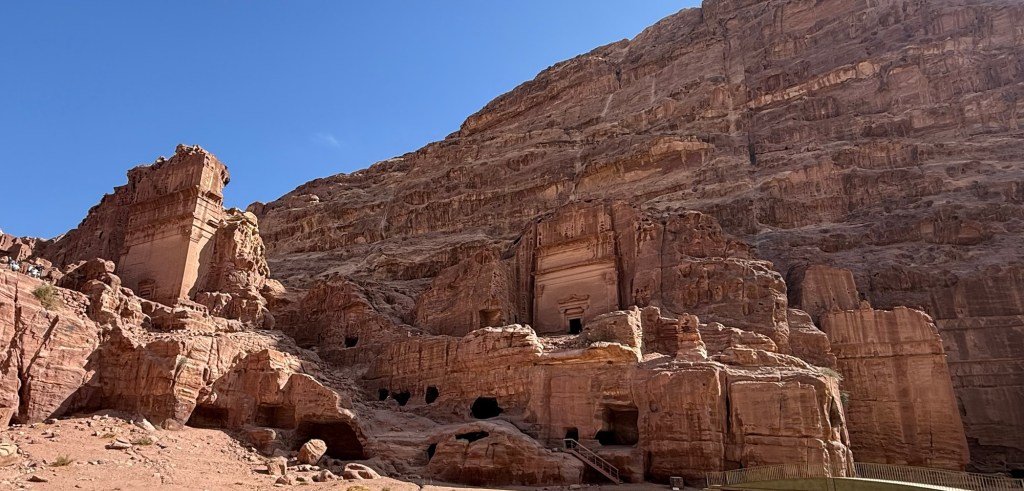
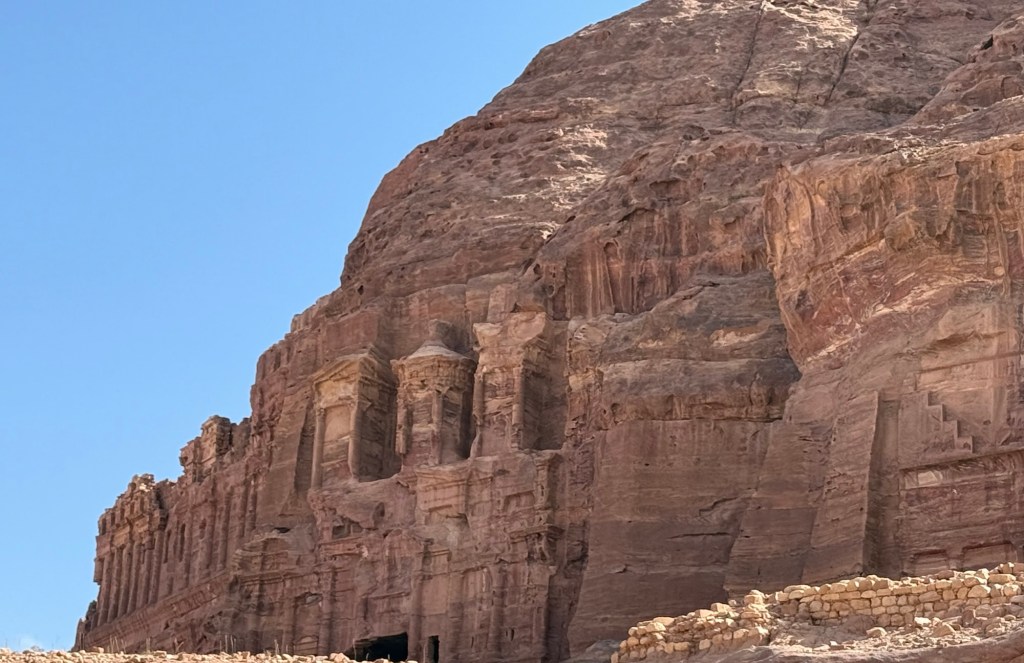
Continuing inward from the Treasury, you encounter other large facades …
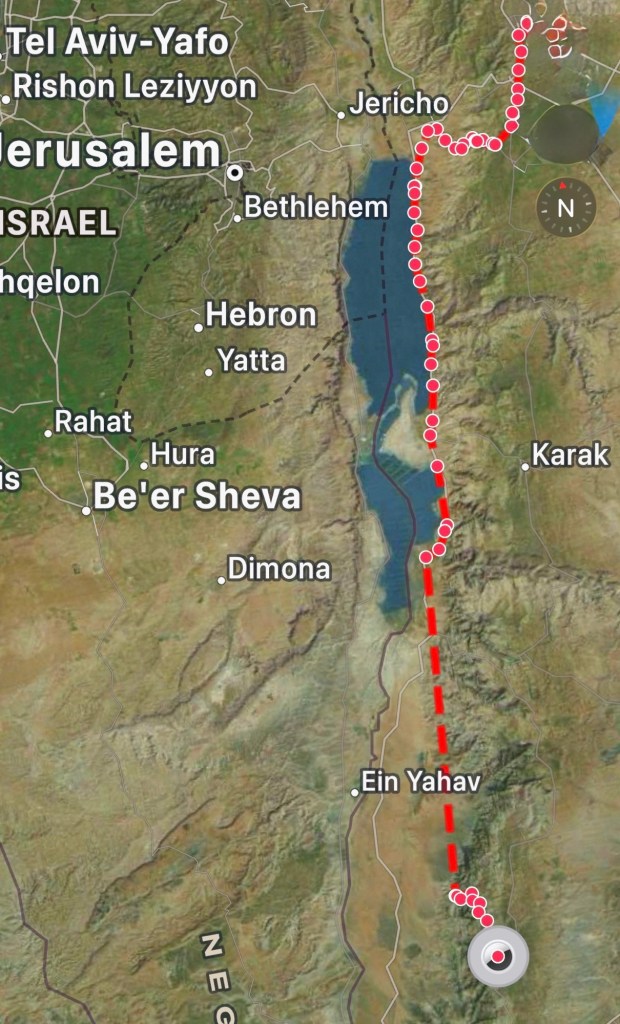
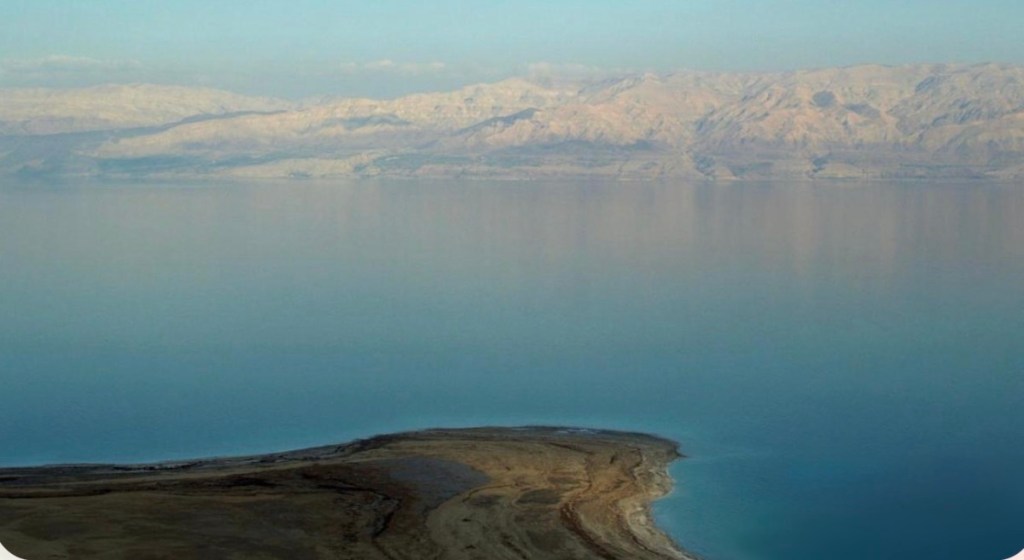
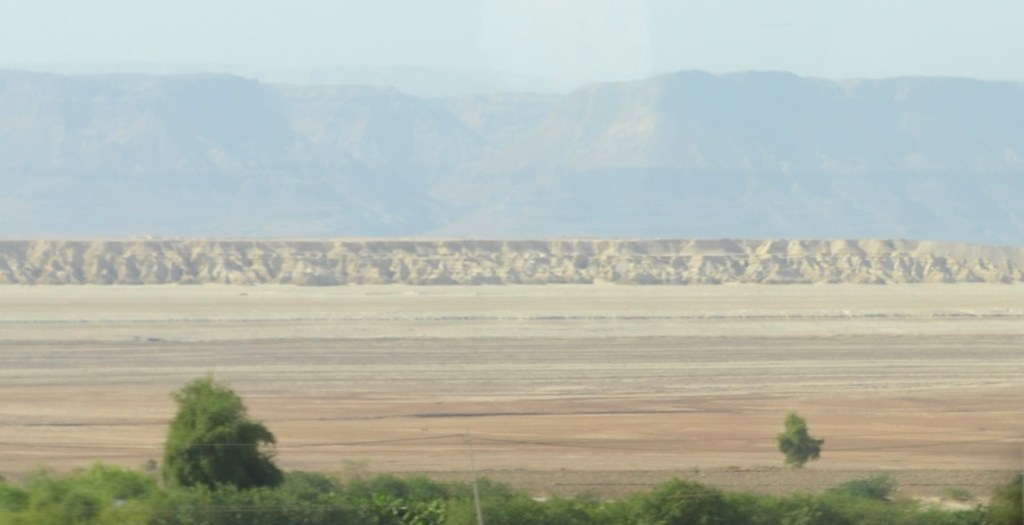
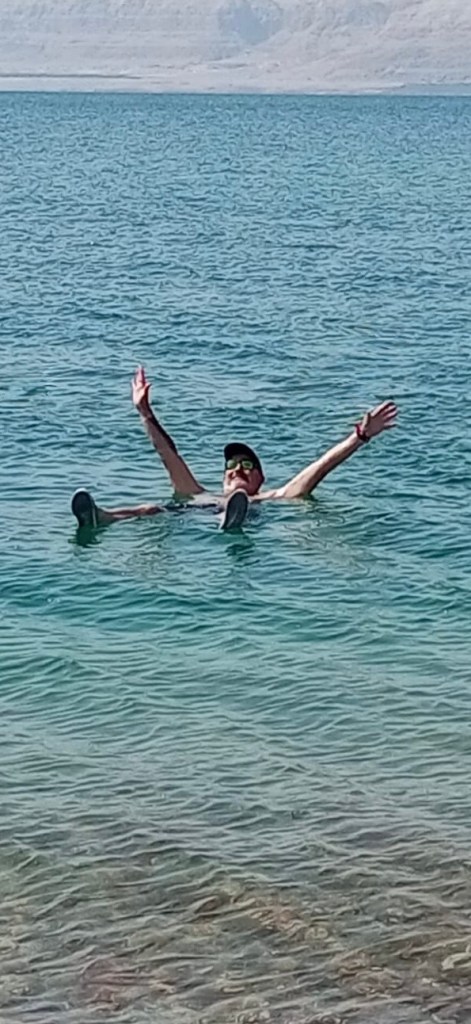
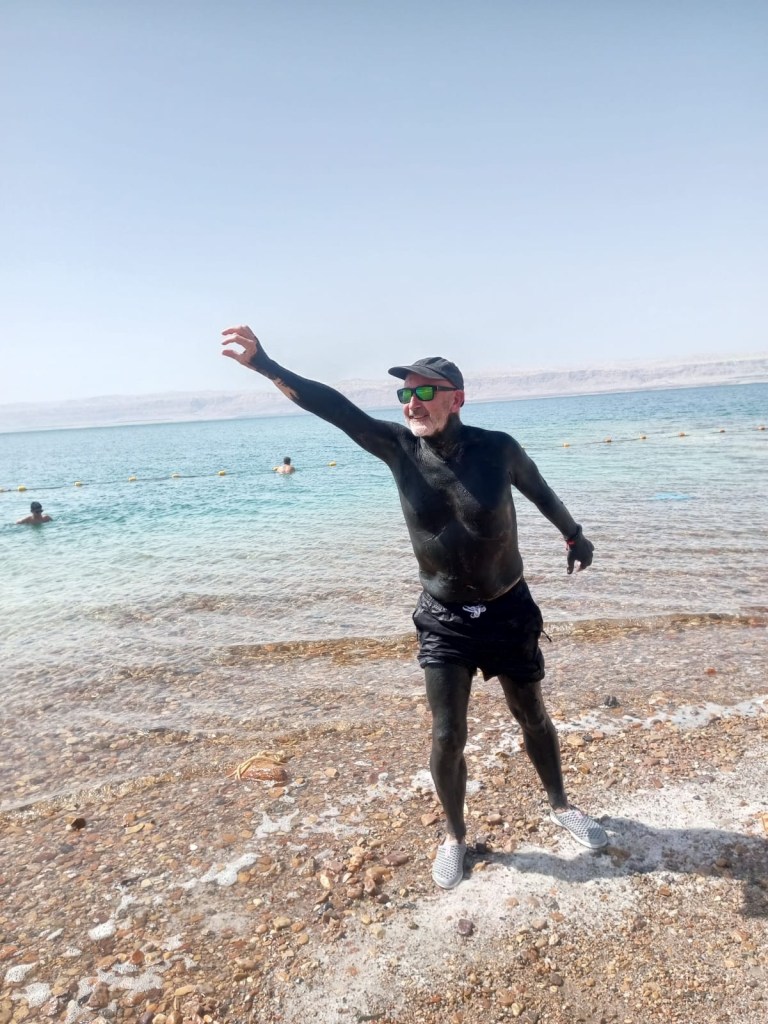
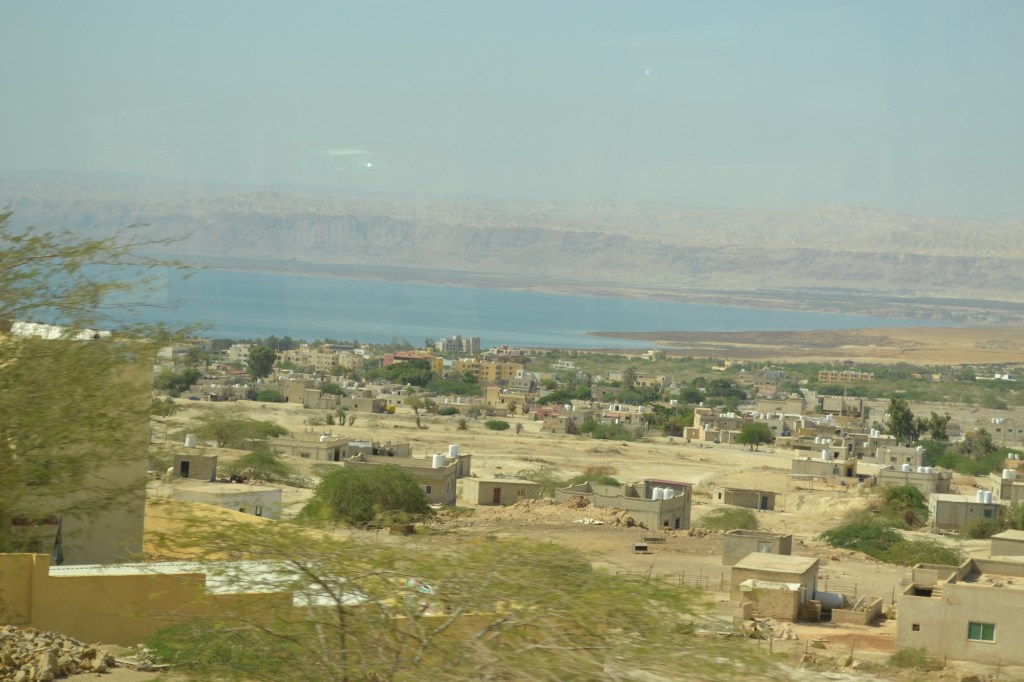
Following our encounter with the Dead Sea’s saltiness, we proceeded southward along the shoreline and then southeast, traversing the hills to reach Petra.
The Dead Sea eventually gave way to the border with Israel, marked by barbed wire, watchtowers, and border guards on both sides.
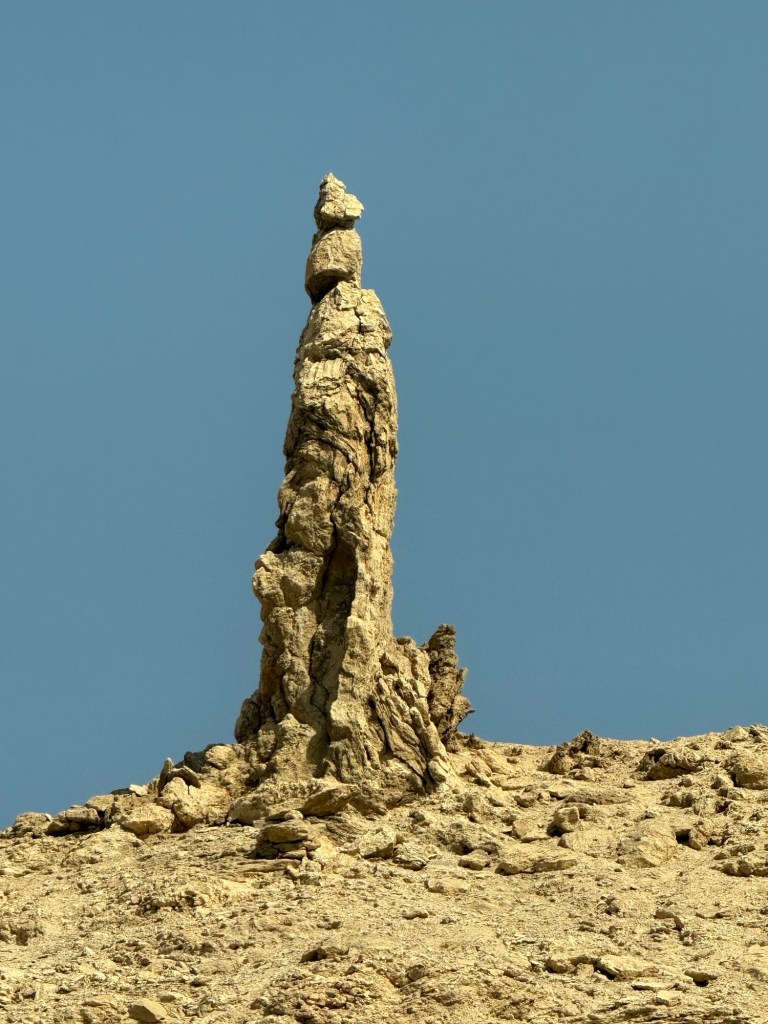
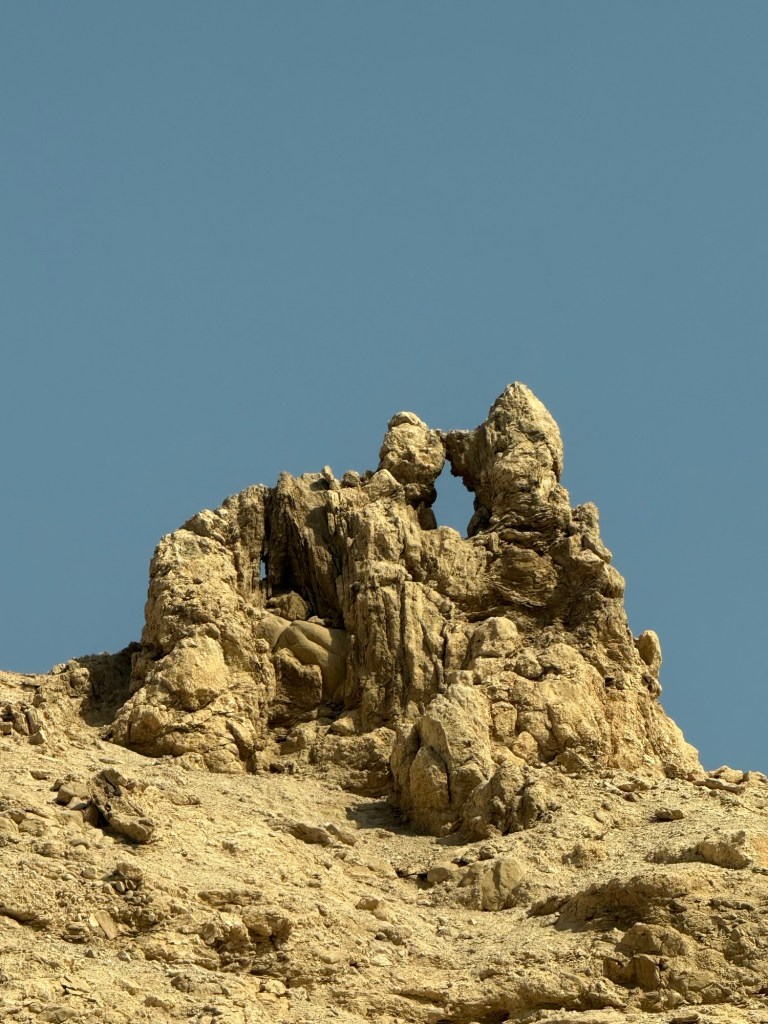
En route, we caught sight of Lot and her children, famously turned into pillars of salt.
As we ventured into the hills, the road narrowed significantly, becoming very windy and steep. Nevertheless, our bus navigated the route successfully.
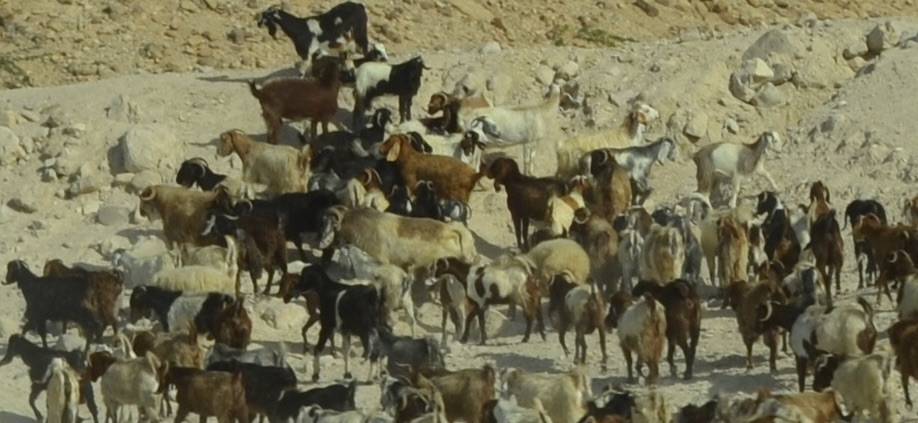
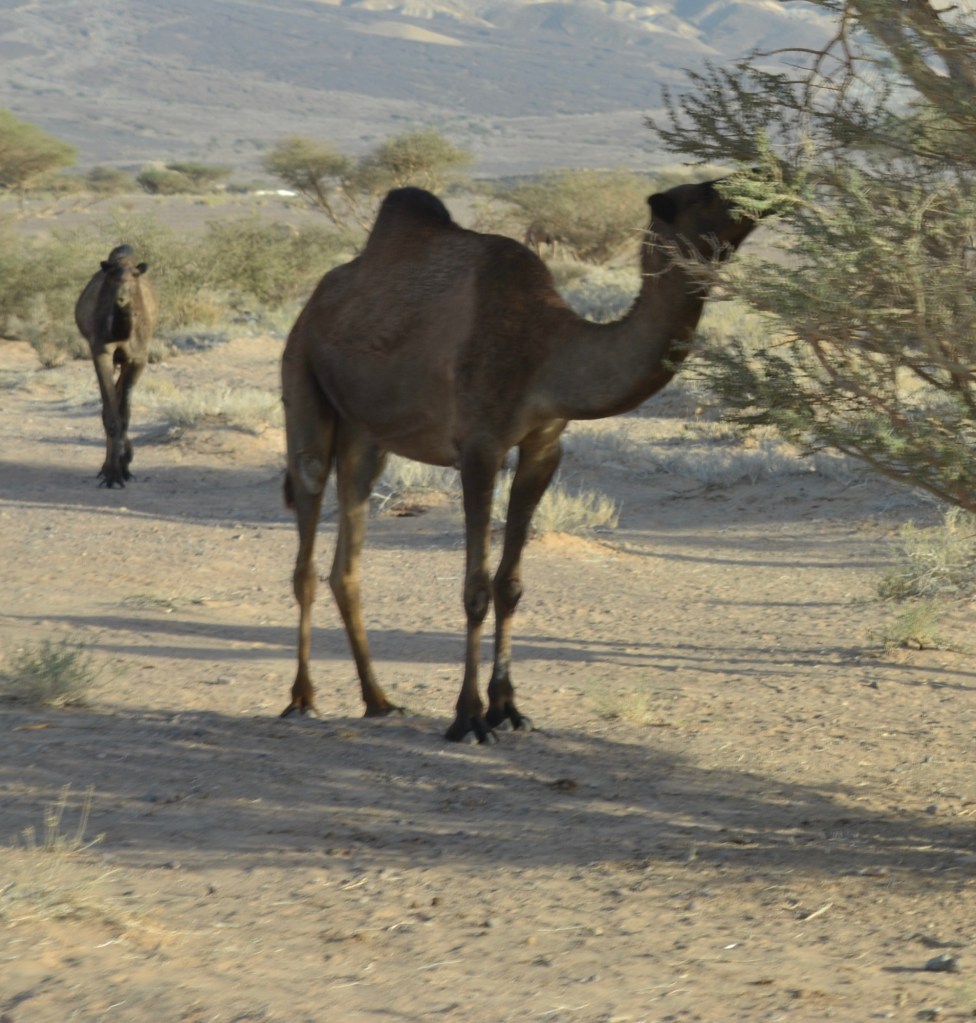
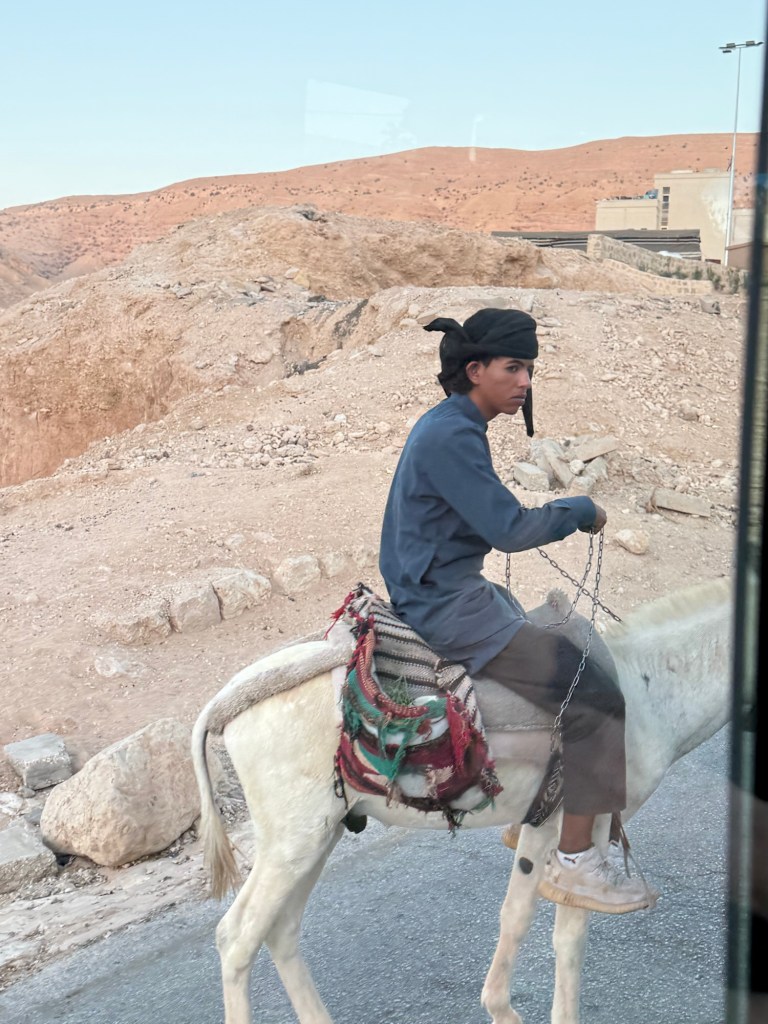
Along the way, we encountered goats, camels, dogs, and local residents, primarily Bedouins.
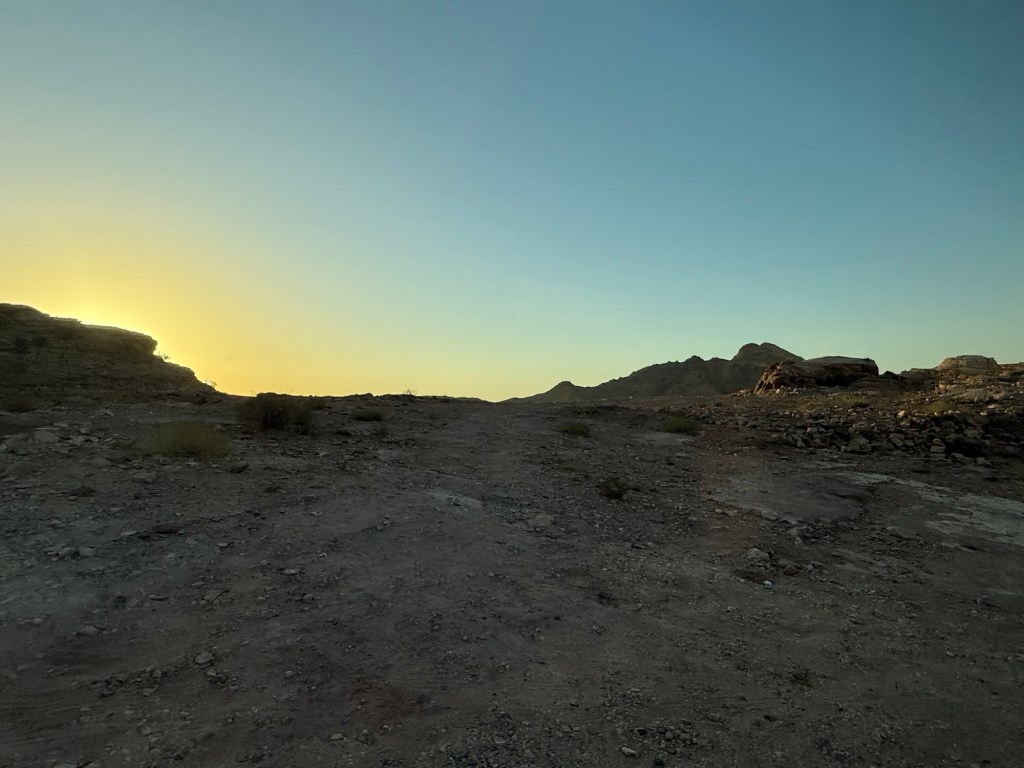
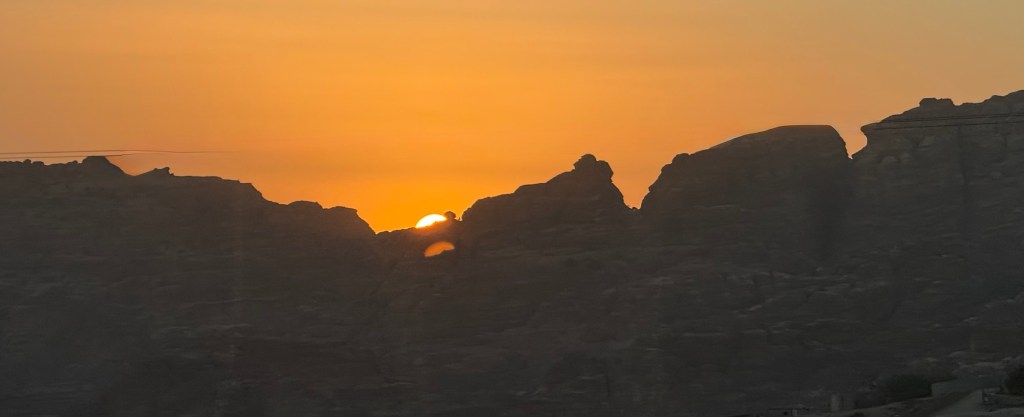
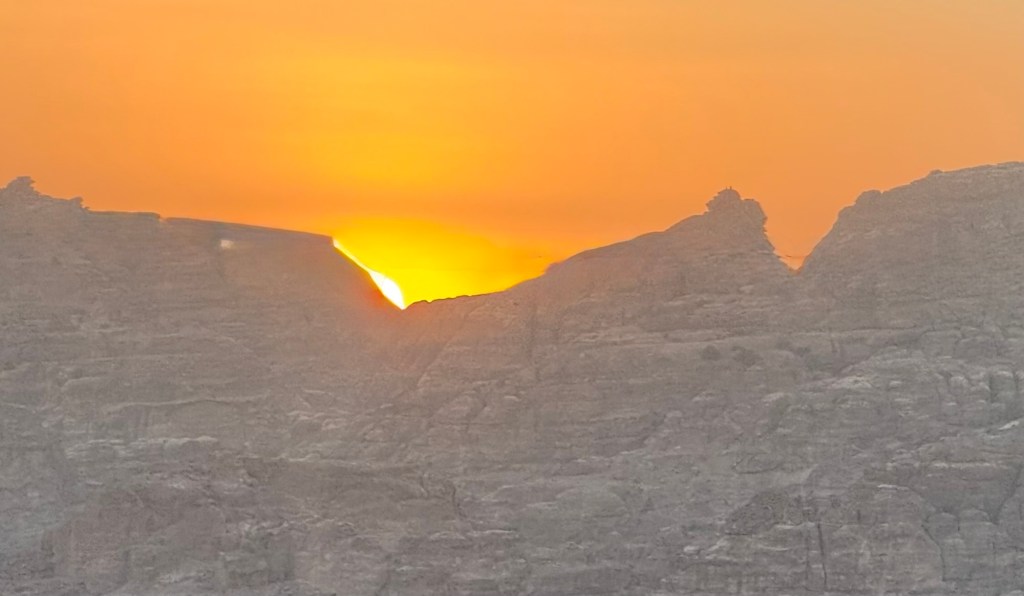
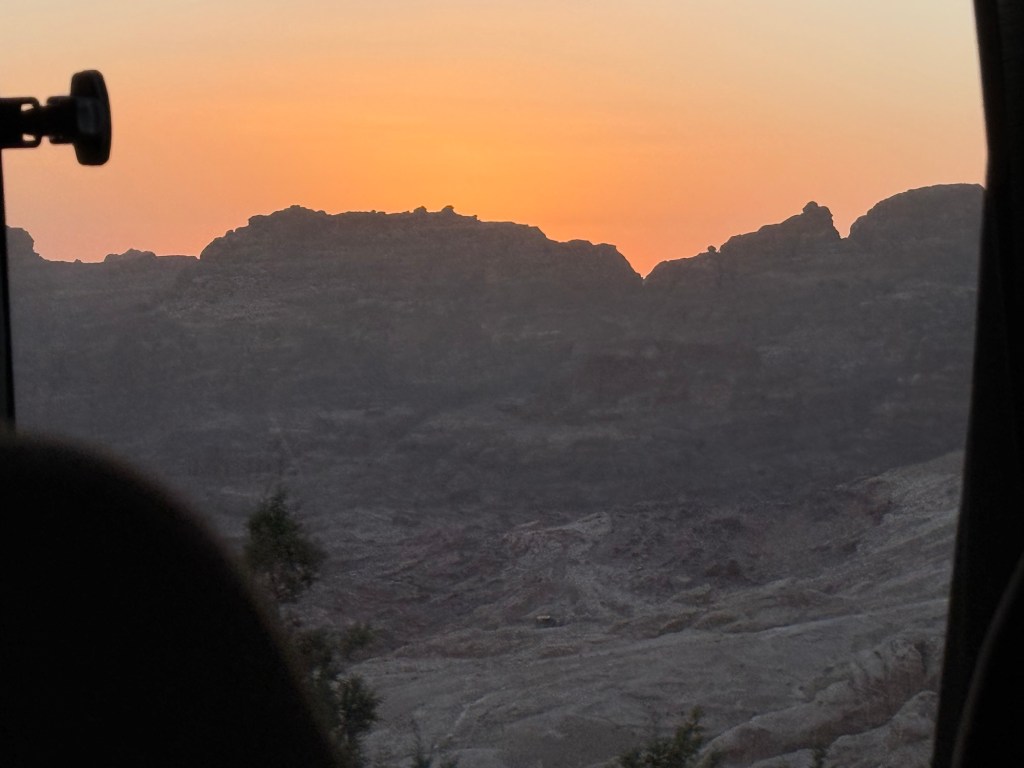
As we made our final approach to Petra, the sun set behind the mountains, casting a warm glow.
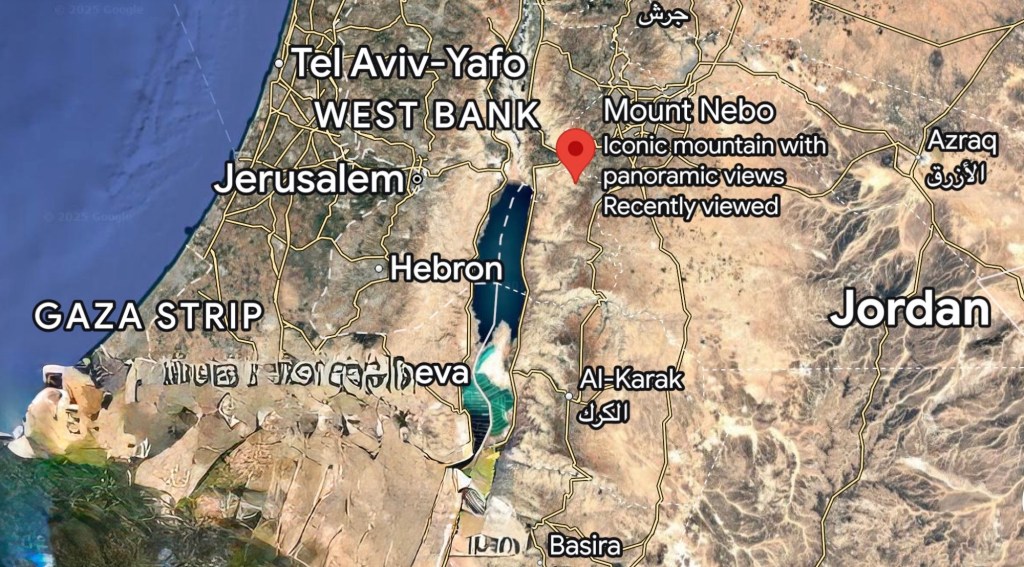
Today, I gained a unique geographical and political Arabic perspective on the Israel, Palestine, Jordan region, having previously explored Hebron, Bethlehem, Jerusalem, West Bank, Nazareth, Sea of Galilee, and Mount of Beatitudes from an Israeli perspective approximately three years ago.
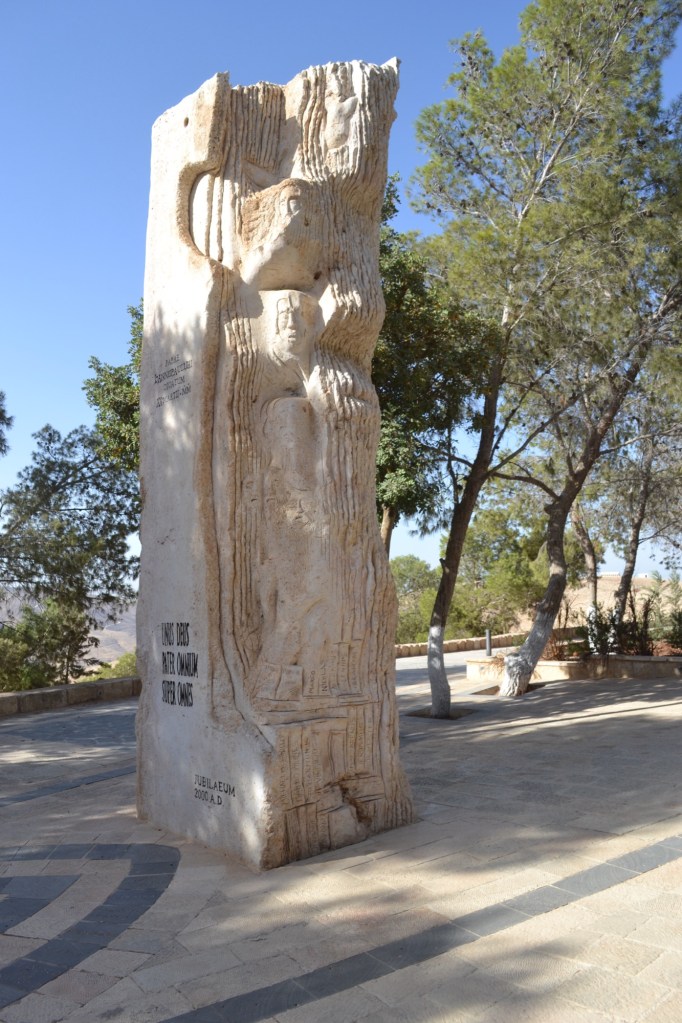
Mount Nebo is a site of great significance, commemorating the Hebrew Prophet Moses, who led the Israelites out of slavery in Egypt. Moses is revered as the most important prophet in Judaism and Samaritanism, and one of the most important prophets in Christianity, Islam, the Baháʼí Faith, and other Abrahamic religions. So, an important man!
Notably, Mount Nebo is the area where Moses brought forth water from a rock and passed away at the age of 120. According to biblical narrative, Moses struck his staff to bring water from a rock twice. The first instance was in accordance with God’s instructions, while the second instance involved Moses striking the rock in anger, resulting in God’s punishment that Moses would not enter the Promised Land. This seems rather harsh to me, but you know what God’s are like when crossed.
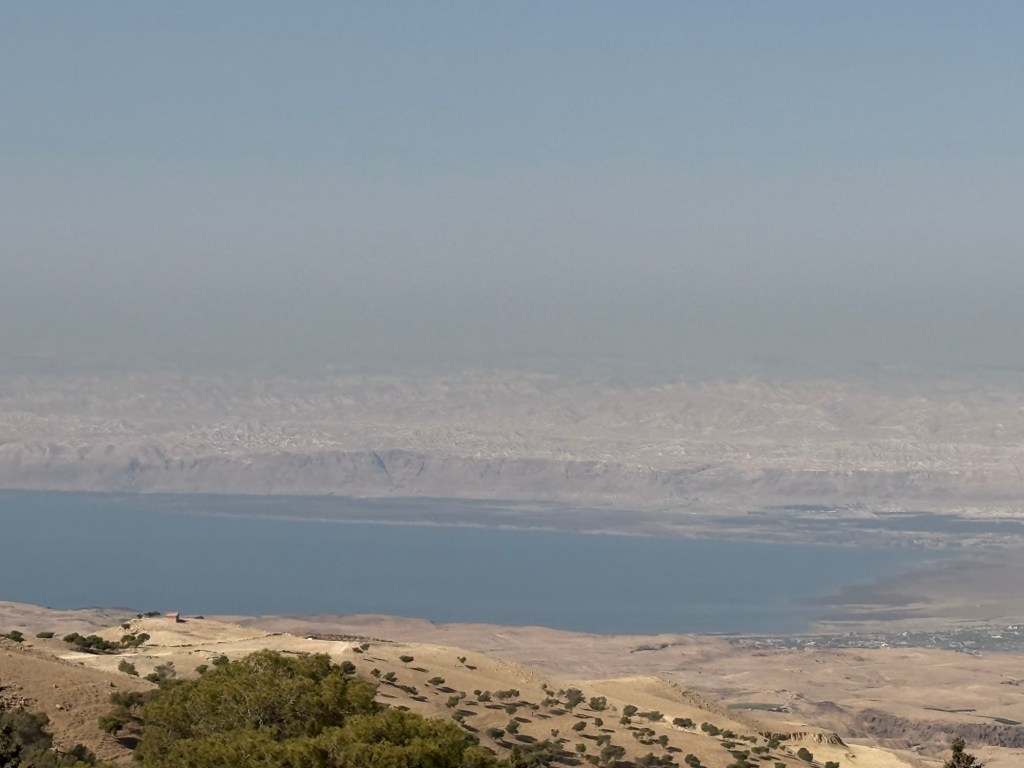
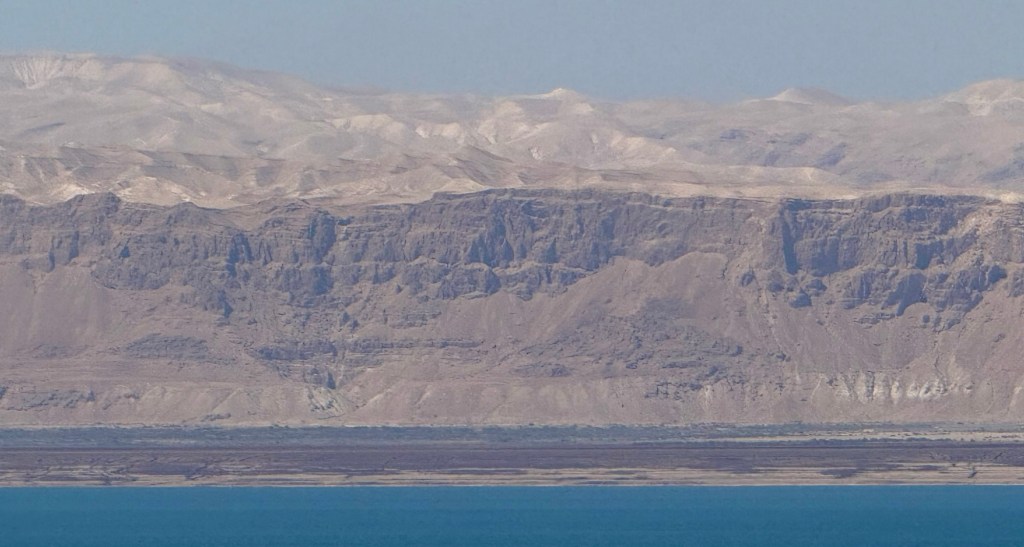
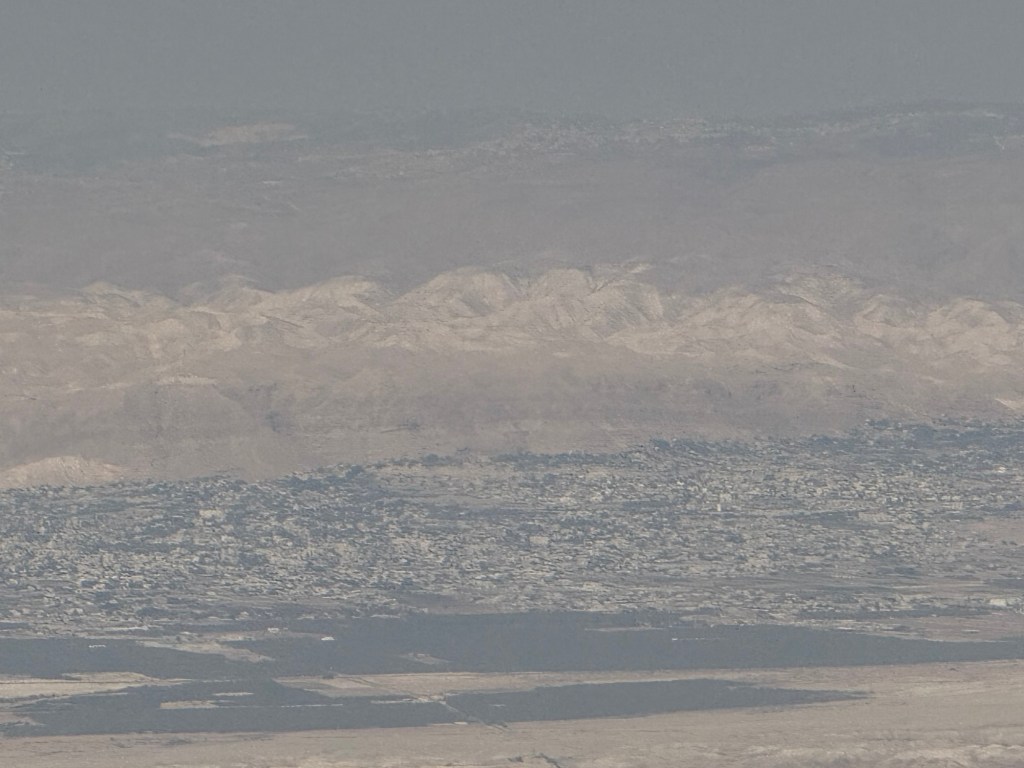
The views from Mount Nebo is breathtaking, encompassing:
Dead Sea…
Jordan valley…
Palestinian West Bank…
Jericho ….
….and on clear days, the gleaming domes of Jerusalem upon the top of the hills on the horizon.
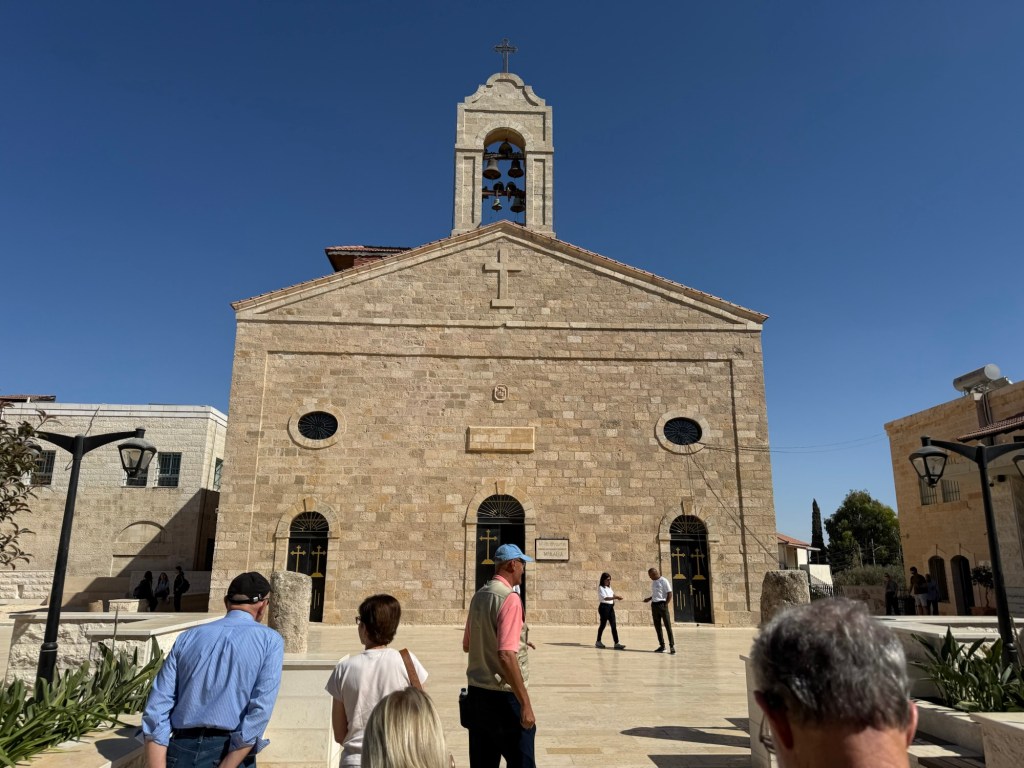
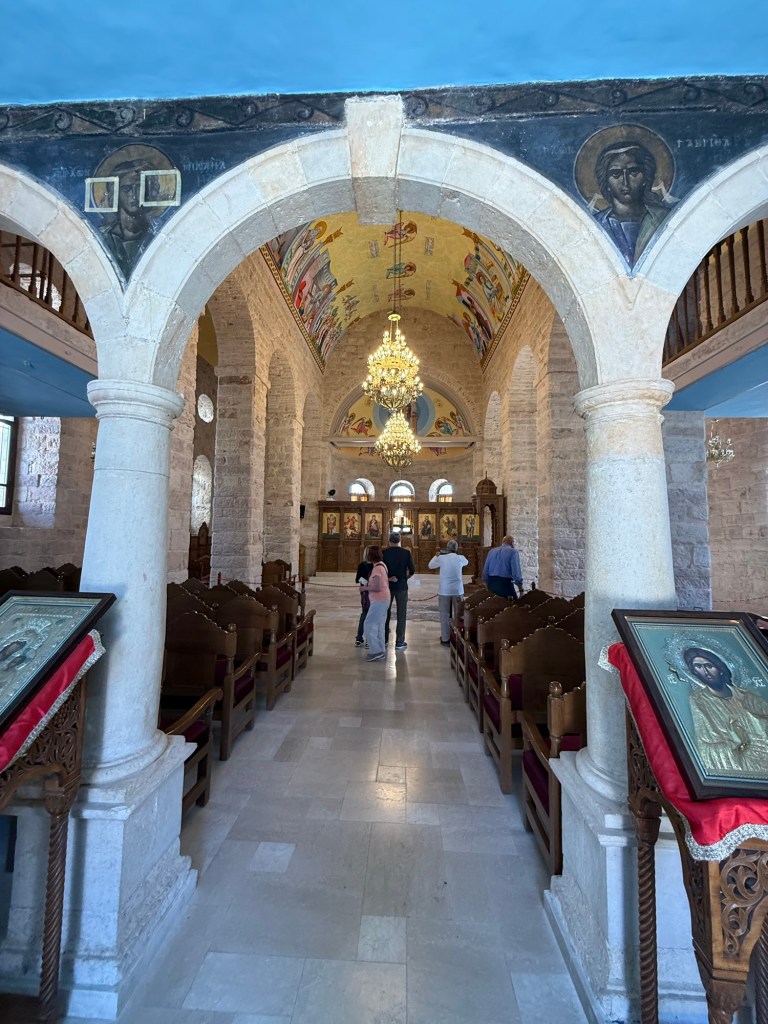
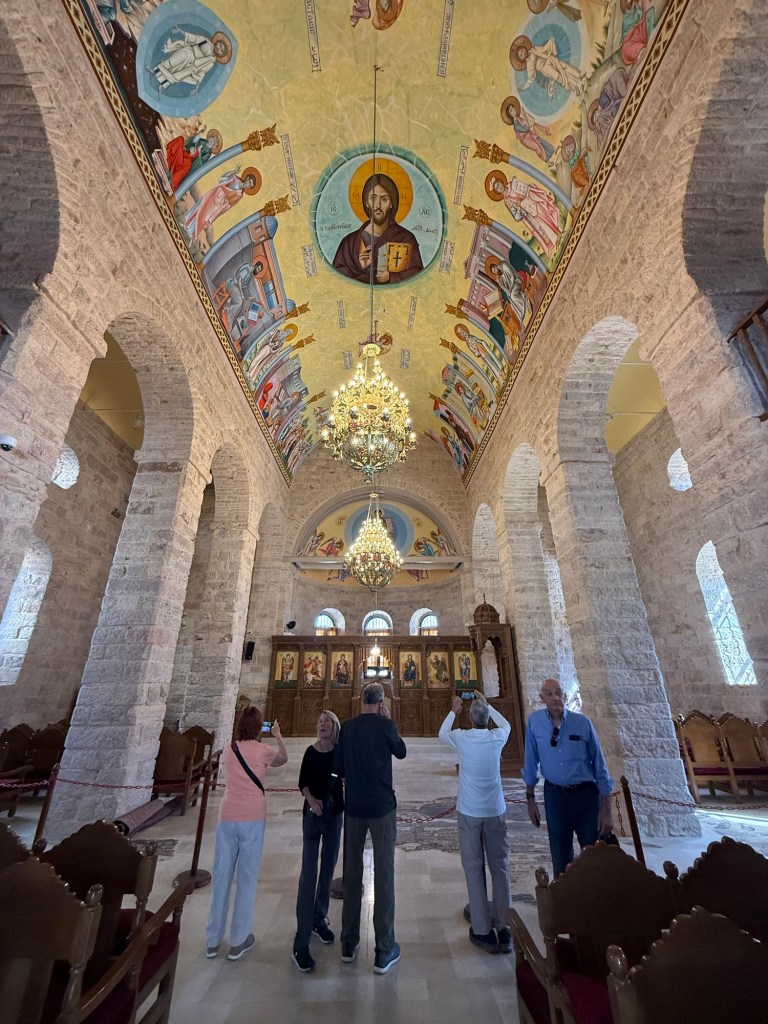
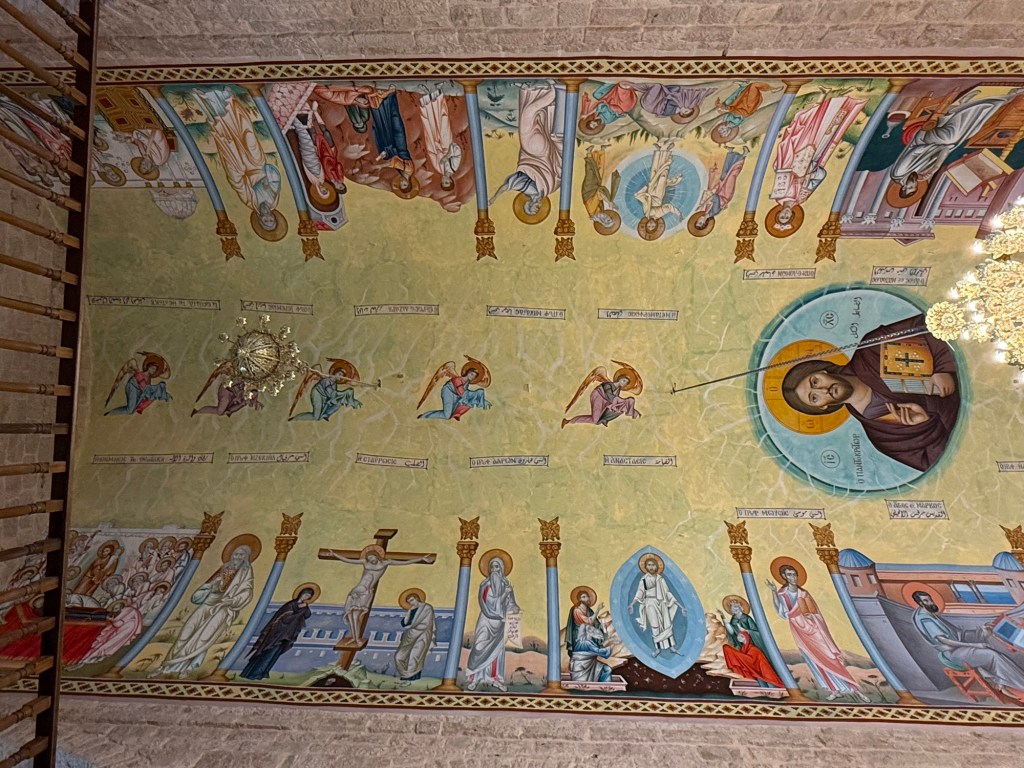
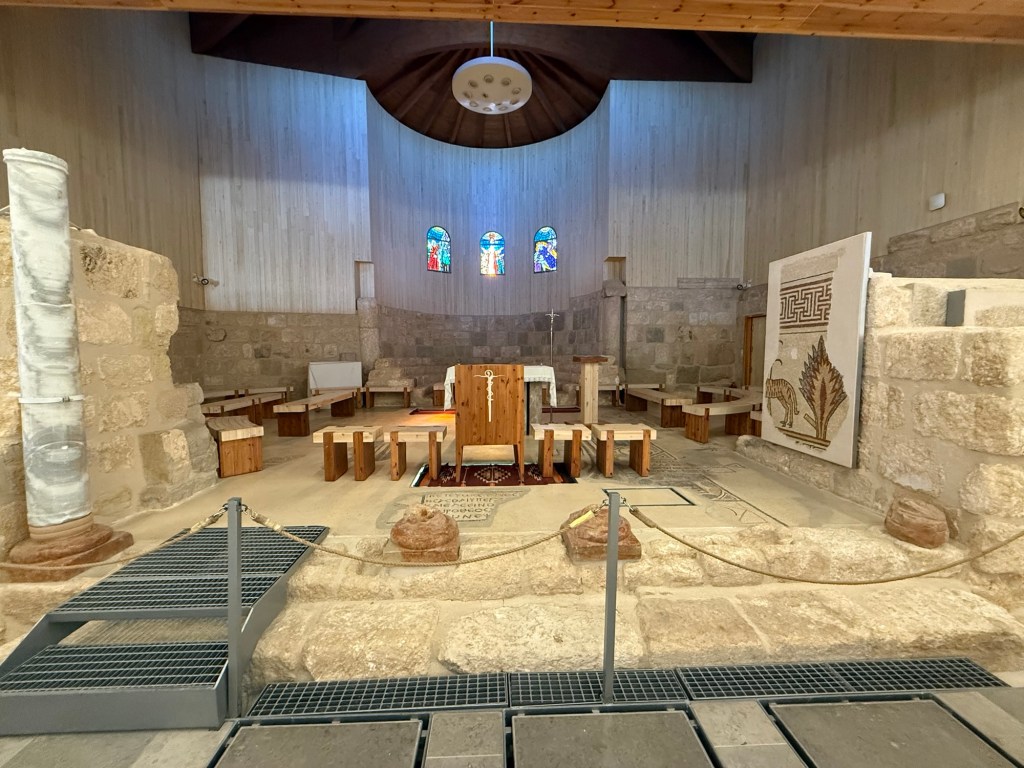
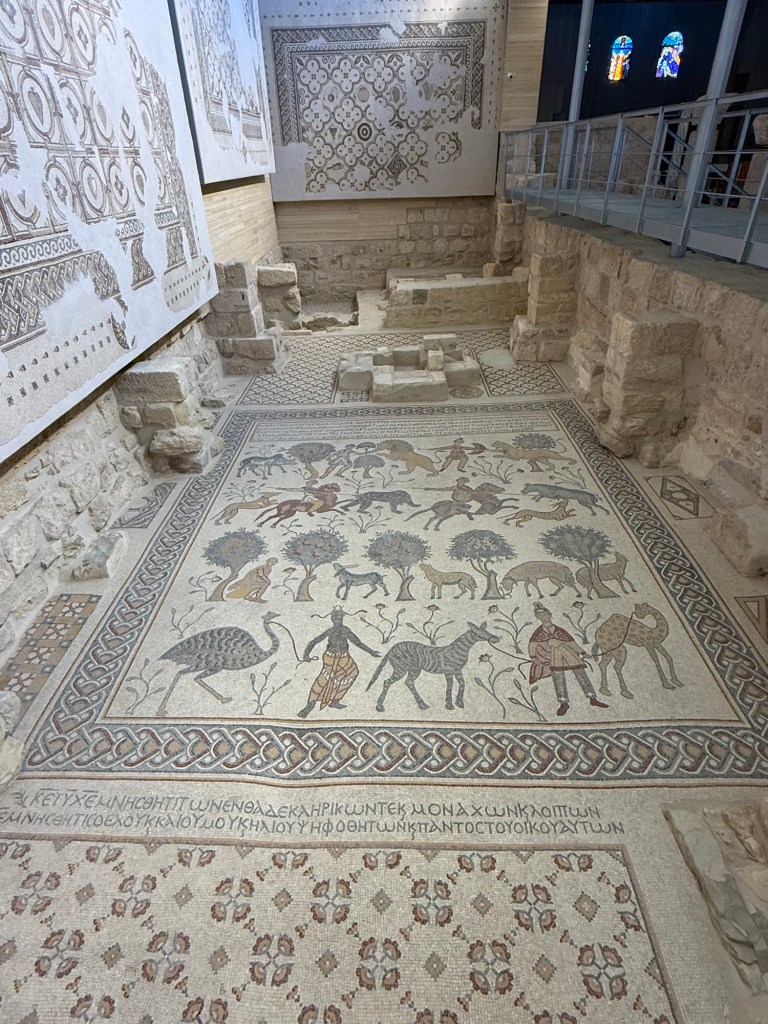
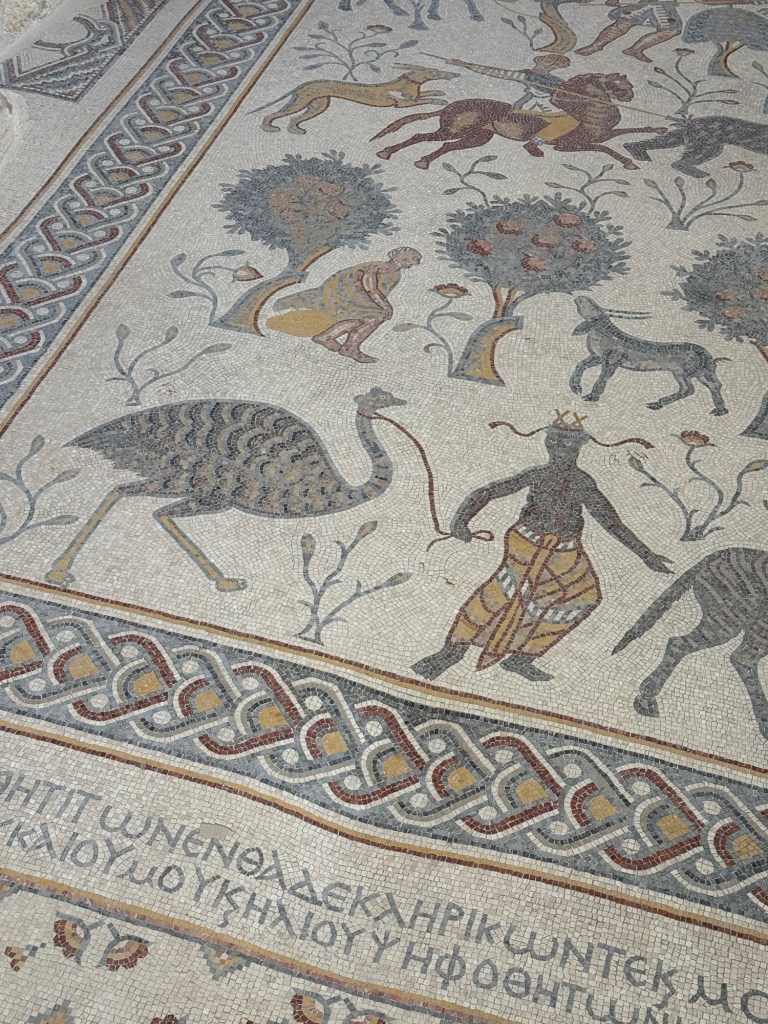
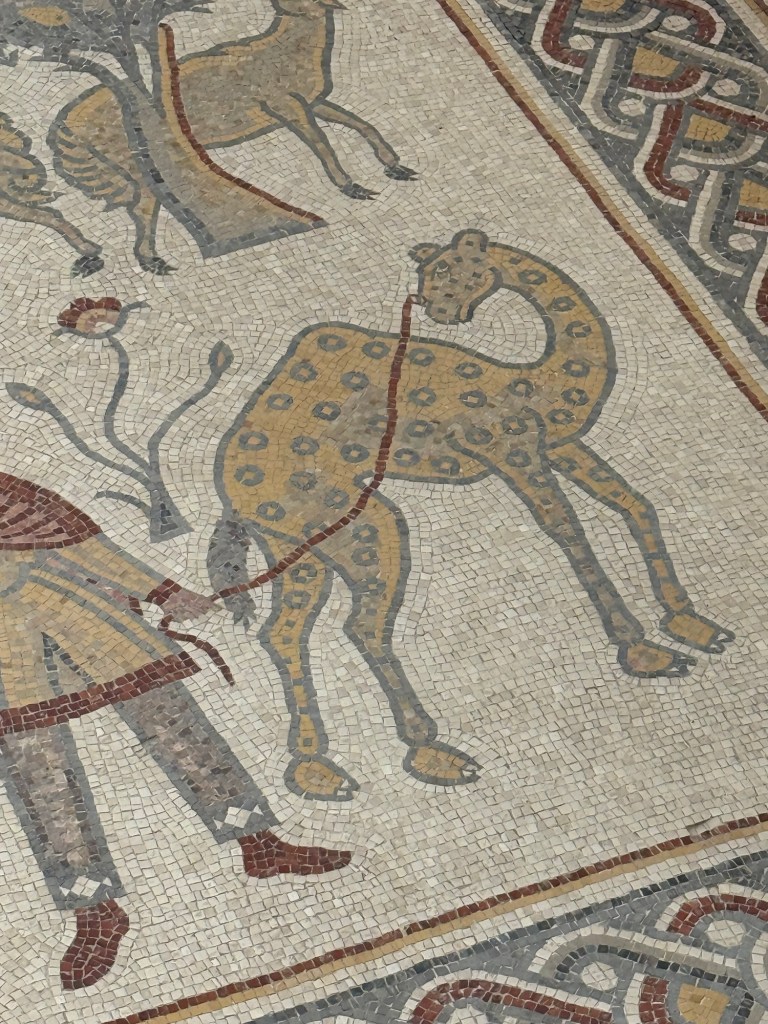
The church on the Mount houses and protects incredible ancient mosaics in remarkable condition.






























































 seetheworldtravelblog