By Paul Bryers
- Day Itinerary: Fez
- Guide: Amine ^
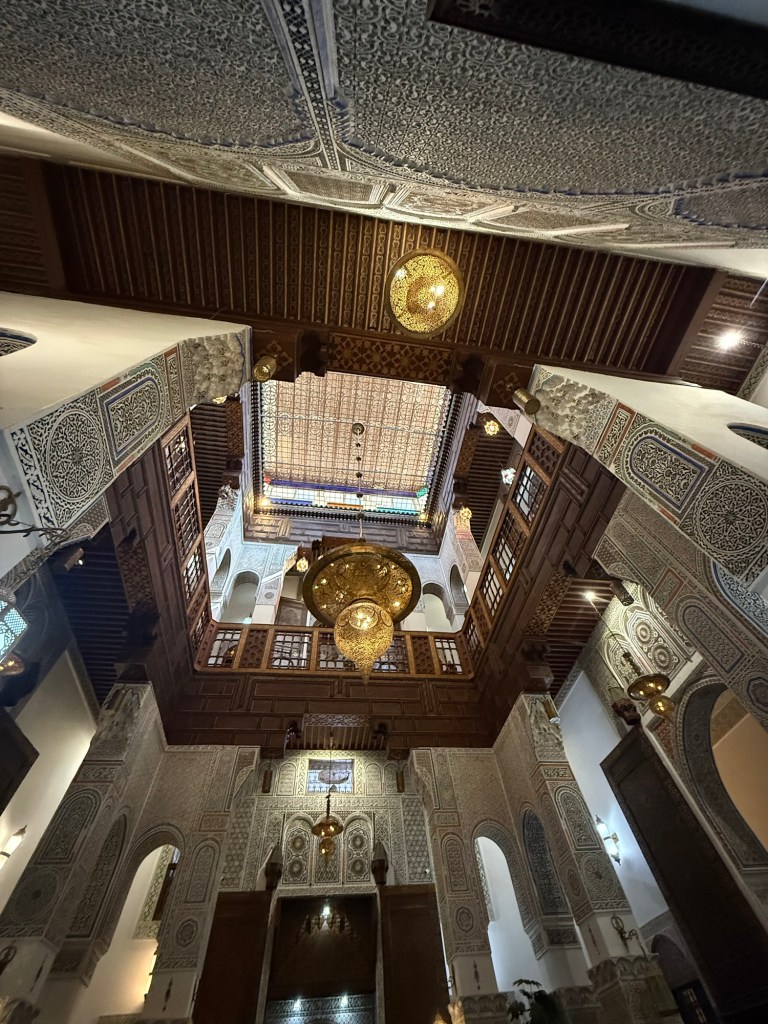
- Meals: Palais Bab Sahra, Fez
Fez:
The ancient city of Fez, or Fes el Bali, is a UNESCO World Heritage site and one of the world’s largest and oldest living medieval medinas.

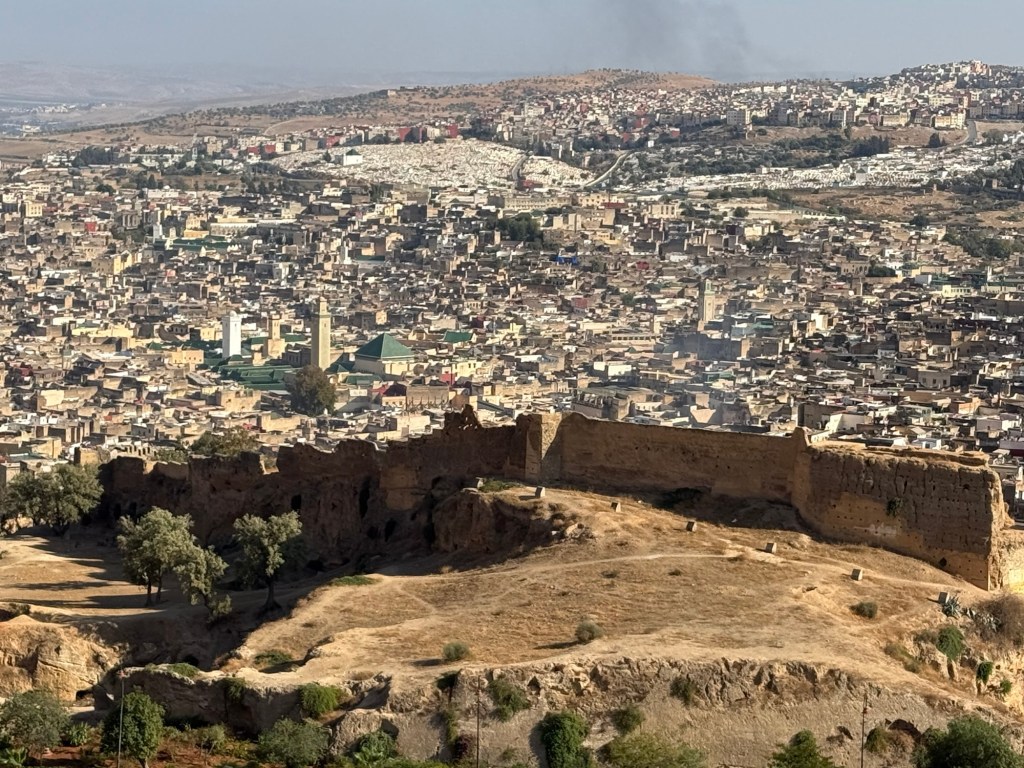
Founded in 789, it is a car-free, labyrinthine quarter with a maze of narrow, winding streets, approximately 9,000 alleys, and historic monuments that have remained largely unchanged for centuries.
Alleys
My excellent guide, Amine, stated upfront that even though he is from Fez, he did not know all the 9,000 alleys. To help avoid dead ends, he explained that signs within a square or rectangle are connecting streets, while those within a hexagon are dead ends.
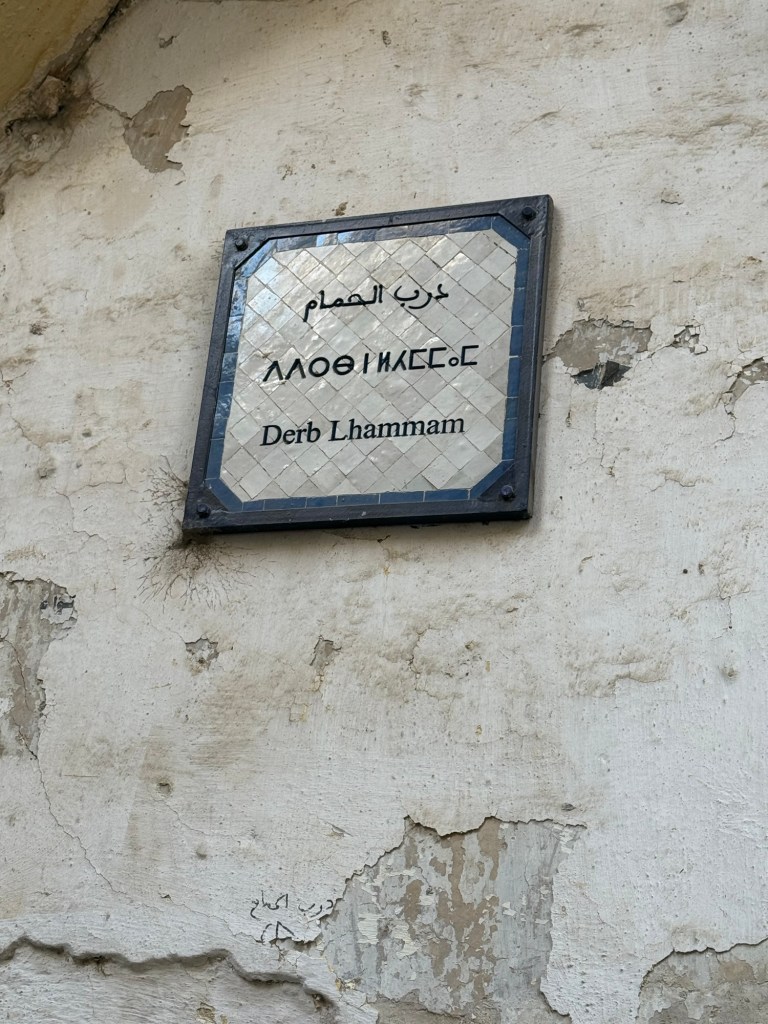
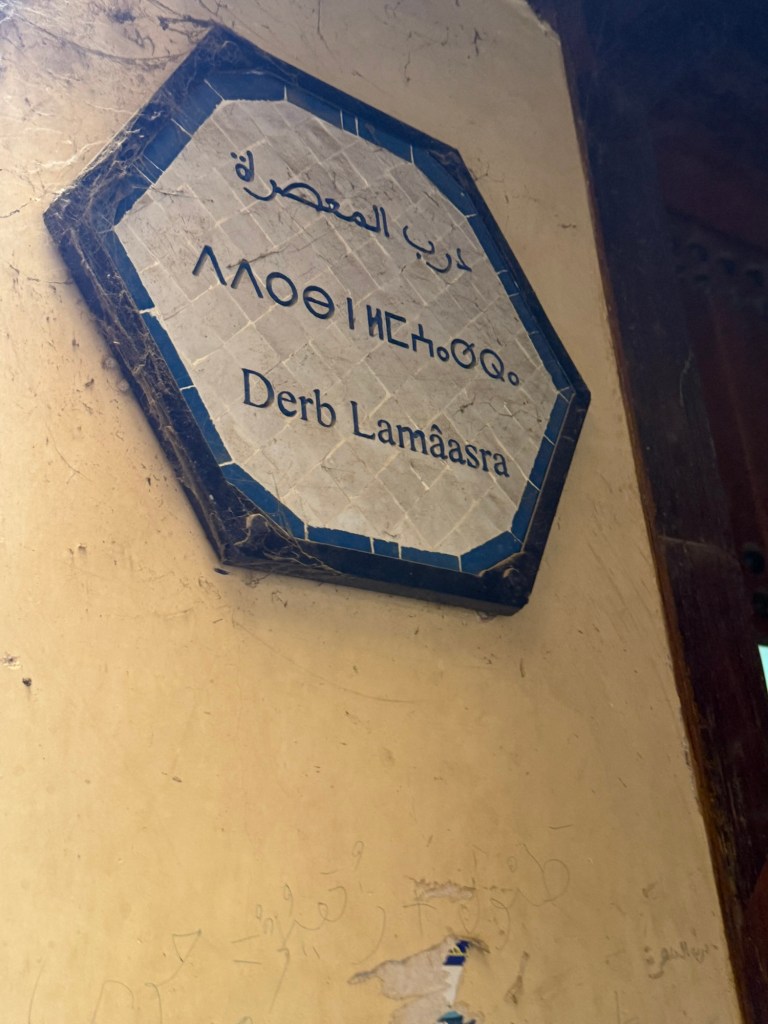
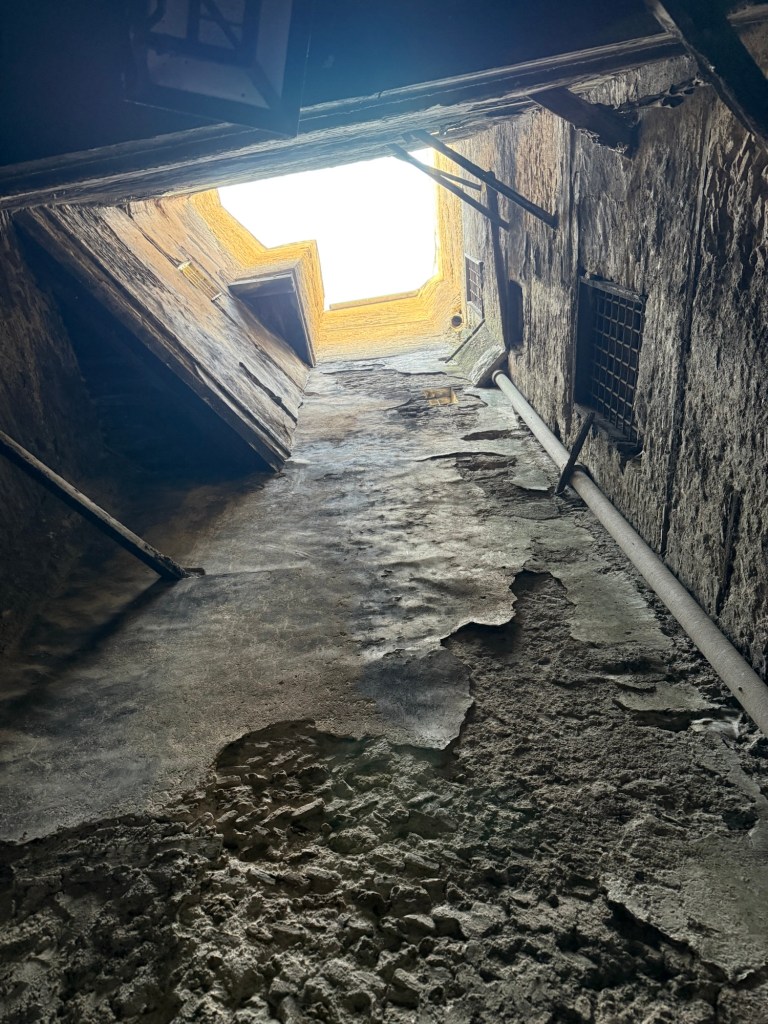
Many of the alleys are dark and damp, with scaffolding supporting the walls.

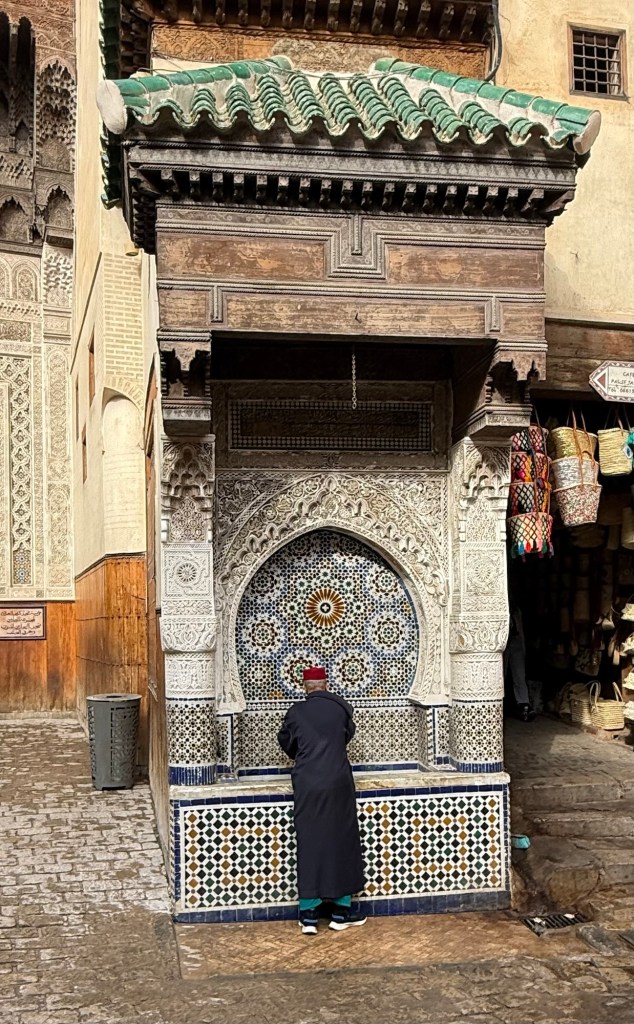
The alley intersections are much brighter and airier, and some have beautiful old public fountains where locals still come to get drinking water.
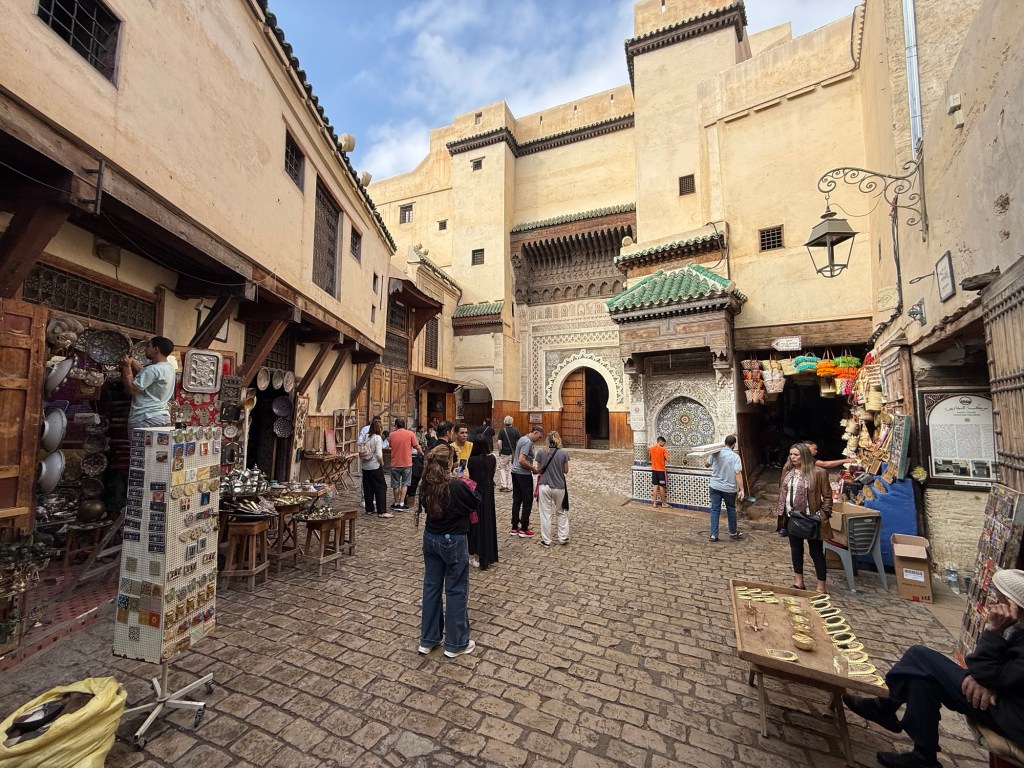
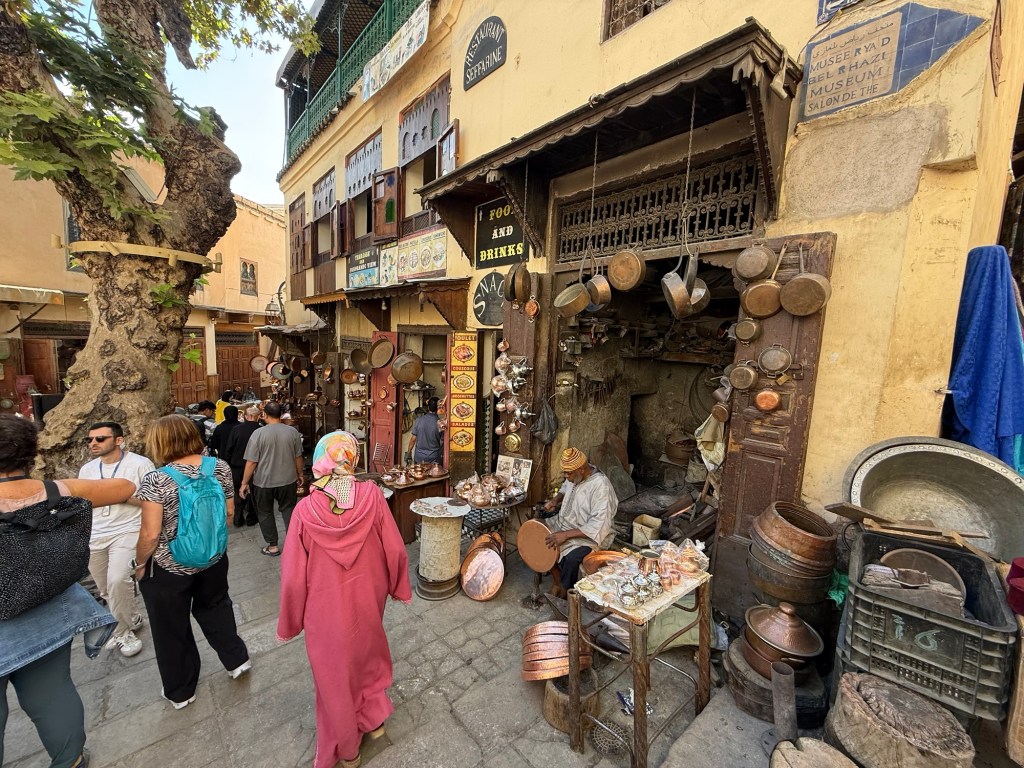
Amine explained the locations and groupings of the different merchants (which I immediately forgot) and then we headed out into the Medina.


Nejjarine Museum of Wooden Arts & Crafts:
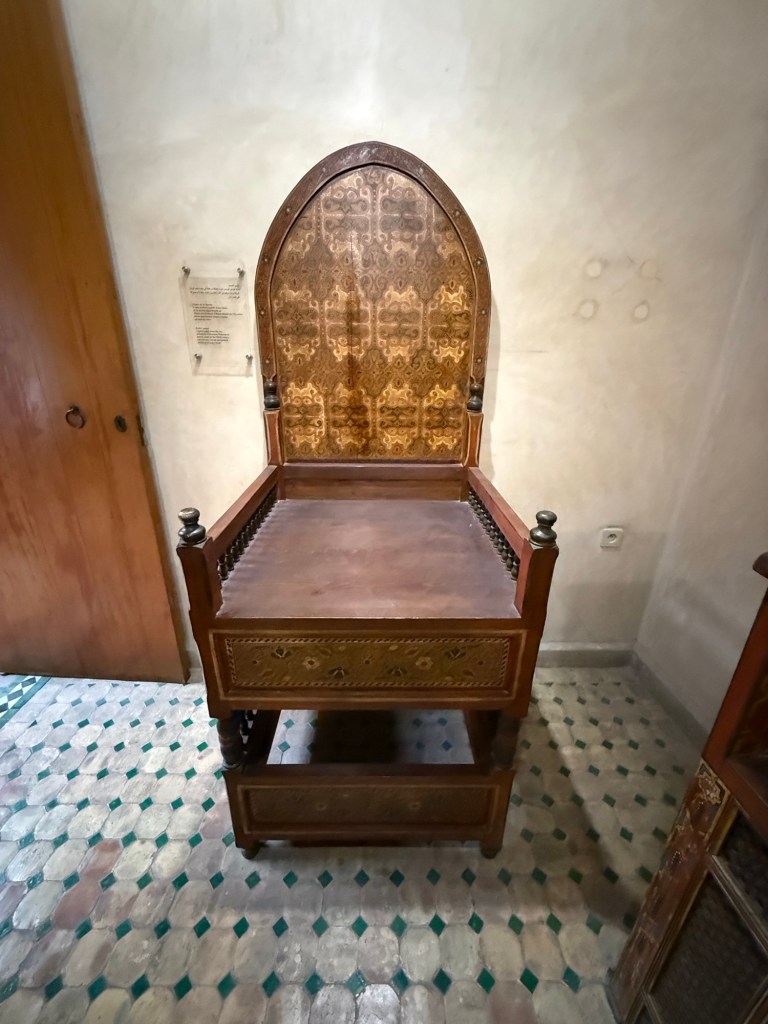
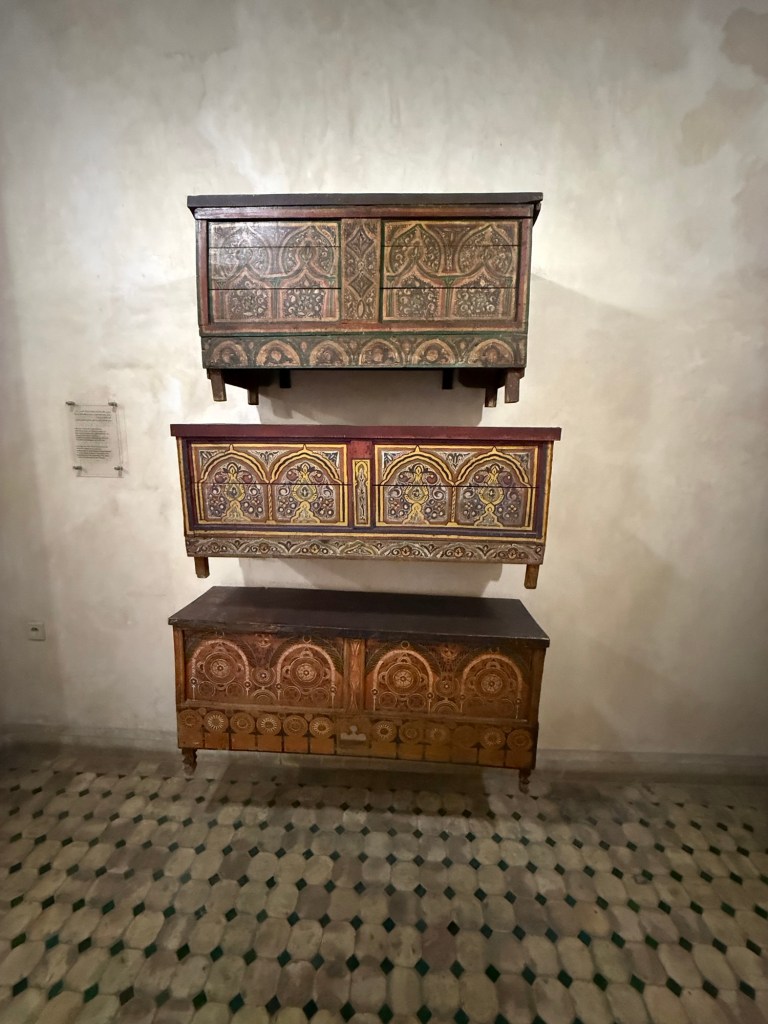
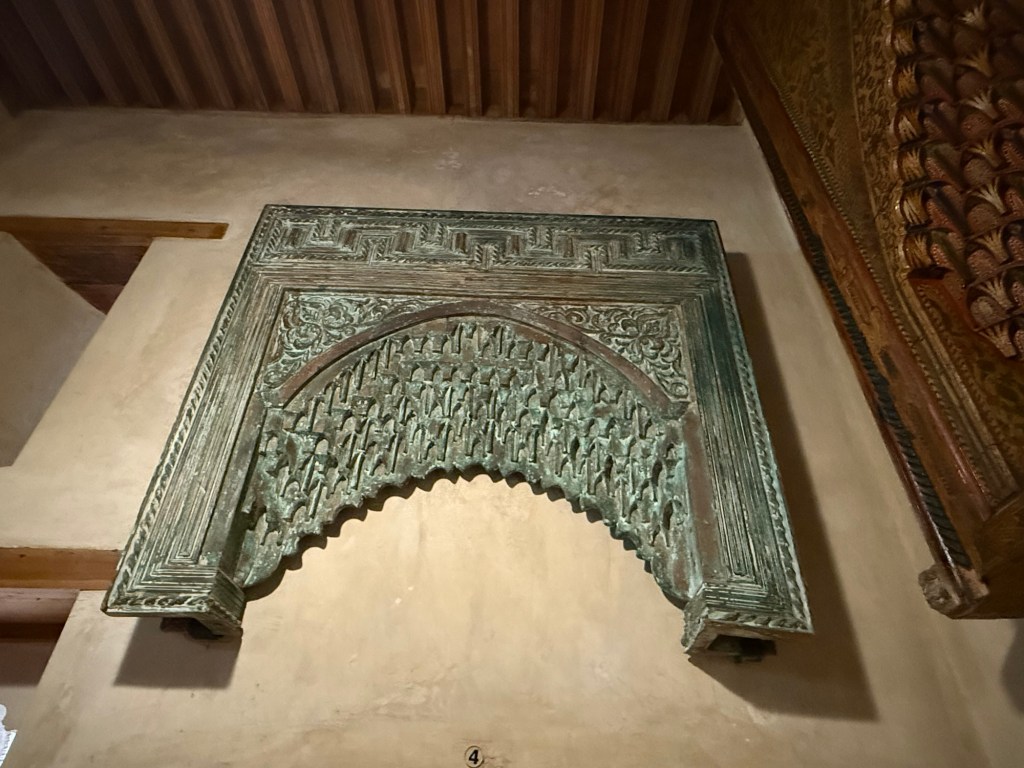
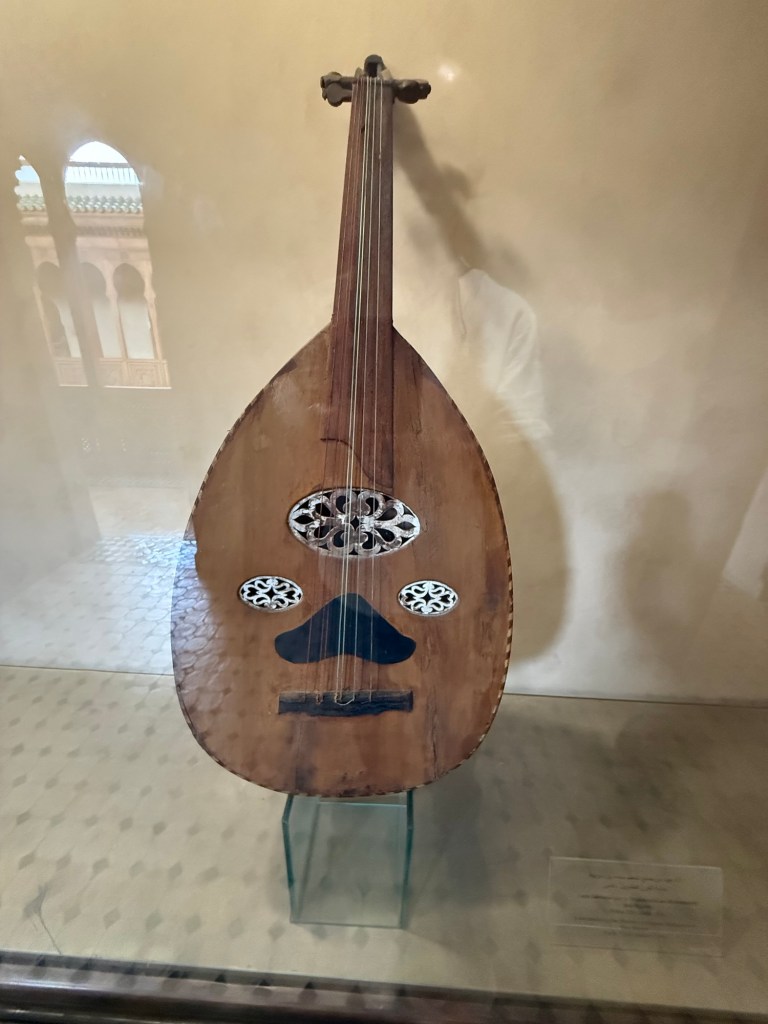
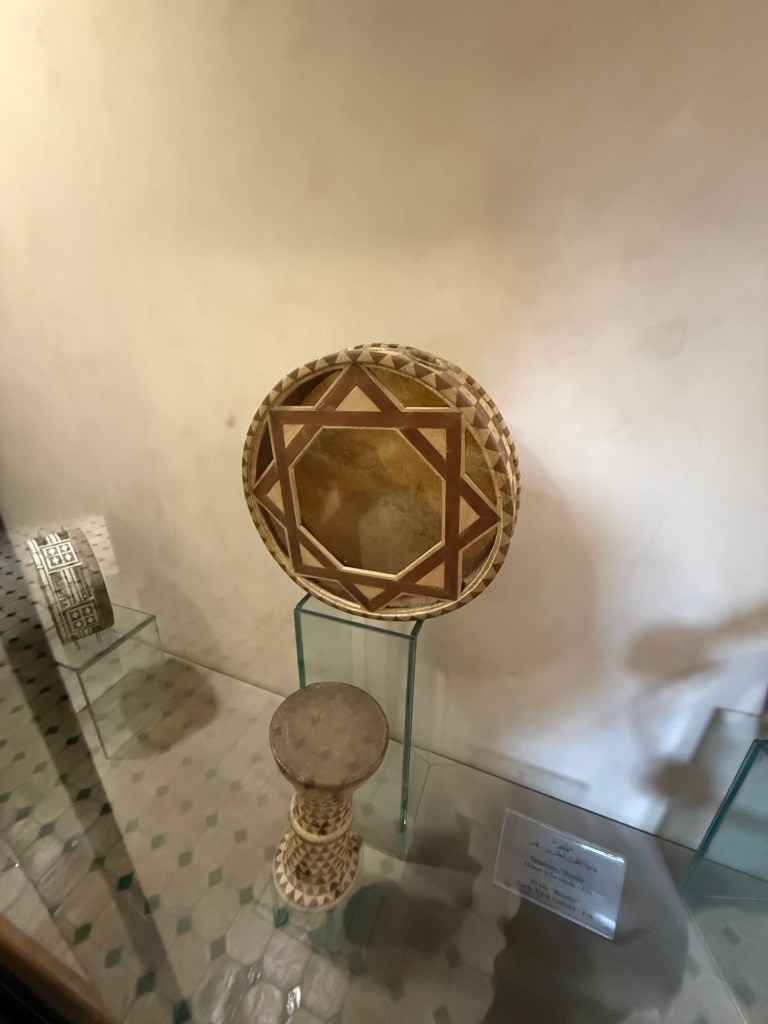
We commenced our tour at the Nejjarine Museum. This is a beautiful 3-story building with a rooftop overlooking the city.
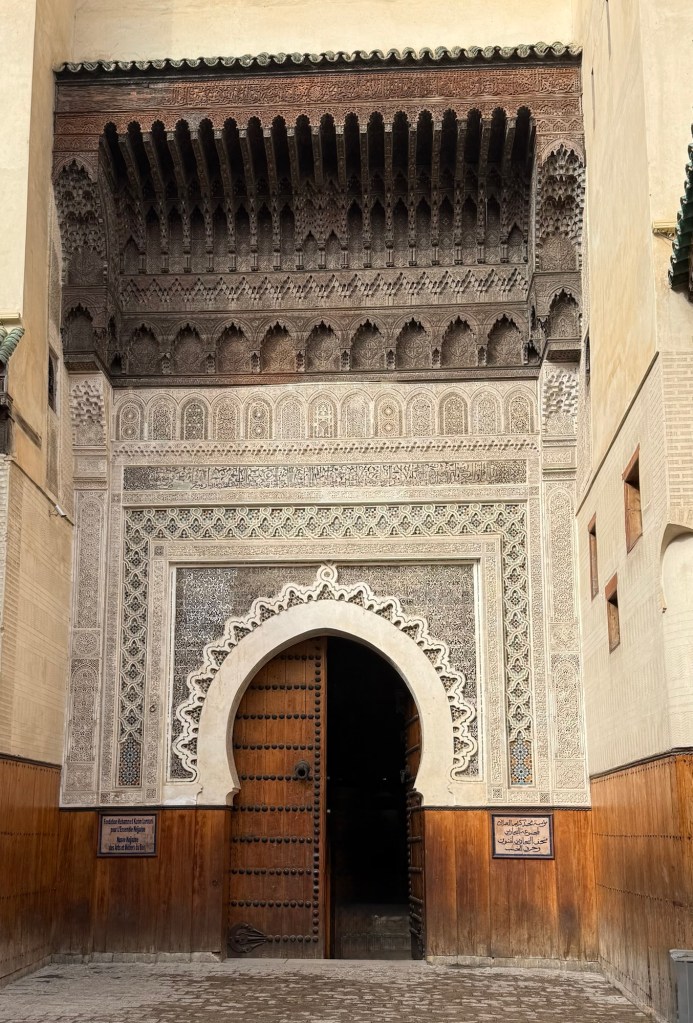

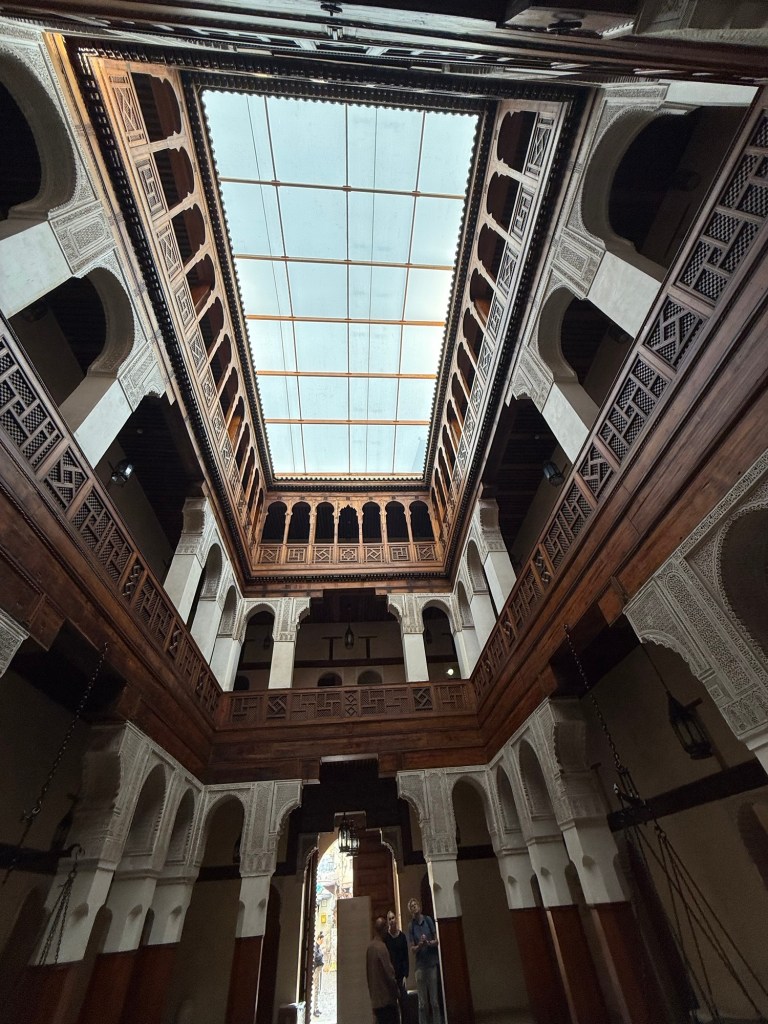
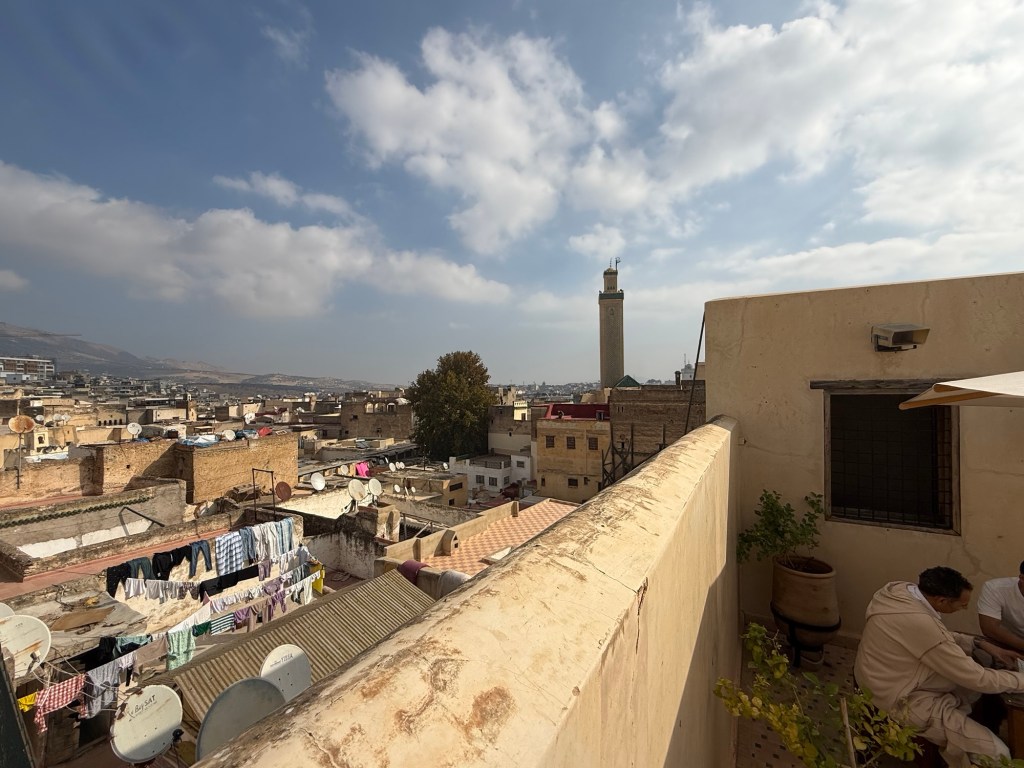
This is a fantastic museum with numerous relatable items that are well-labeled and described.

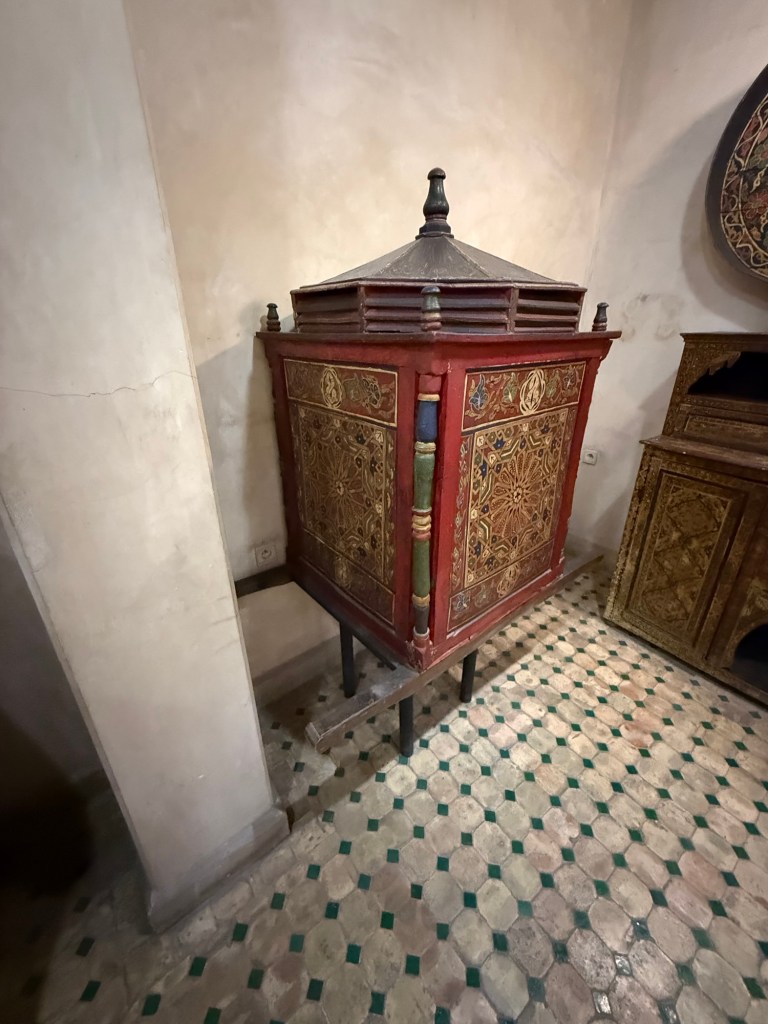


Mausoleum of Moulay Idriss II:
The mausoleum contains the tomb of Idris II (or Moulay Idriss II when including his sharifian title), who ruled Morocco from 807 to 828 and is considered the main founder of the city of Fez. It is considered one of the holiest shrines in Morocco.


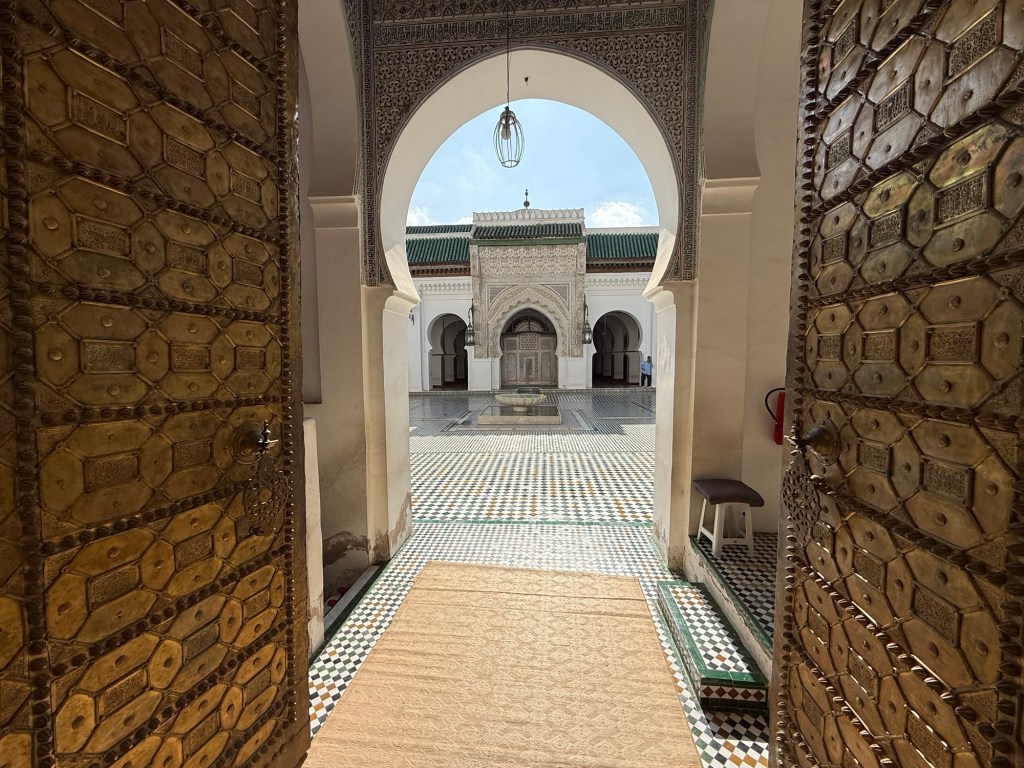
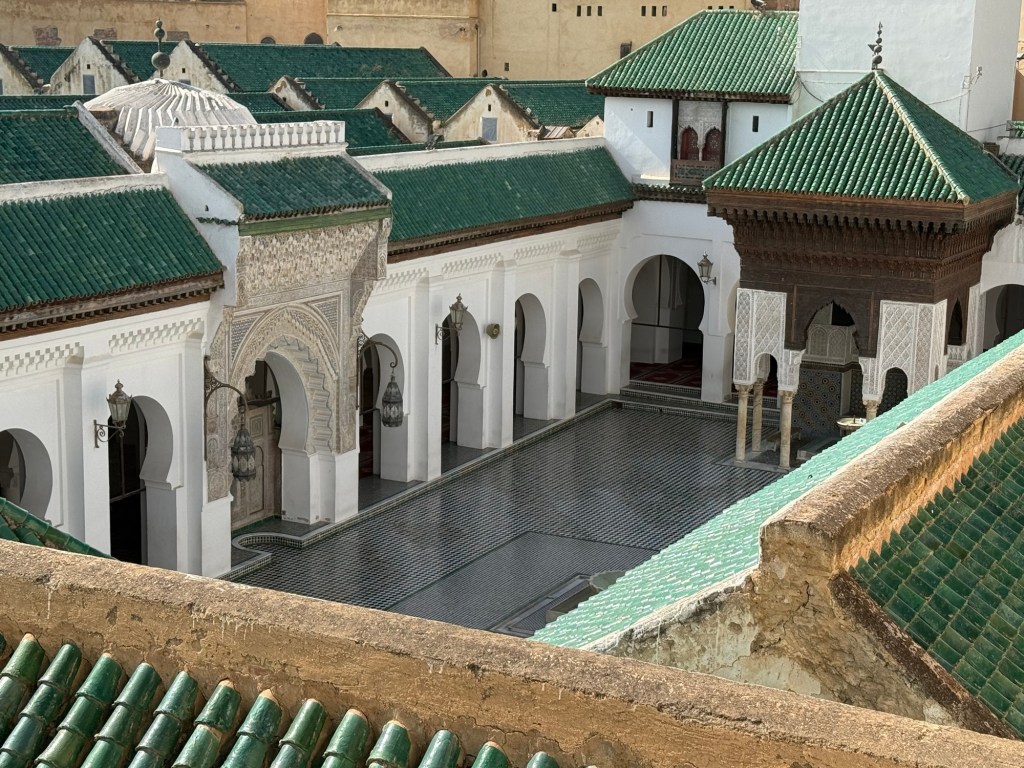
Kairaouine Mosque and the University of al-Qarawiyyin:
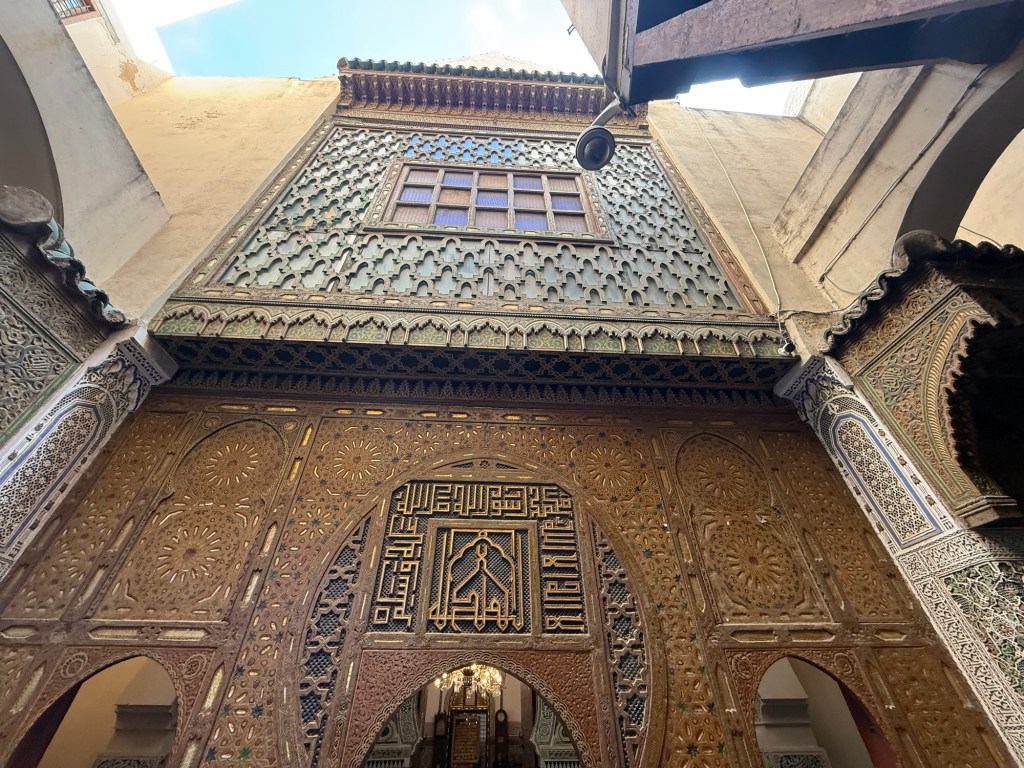
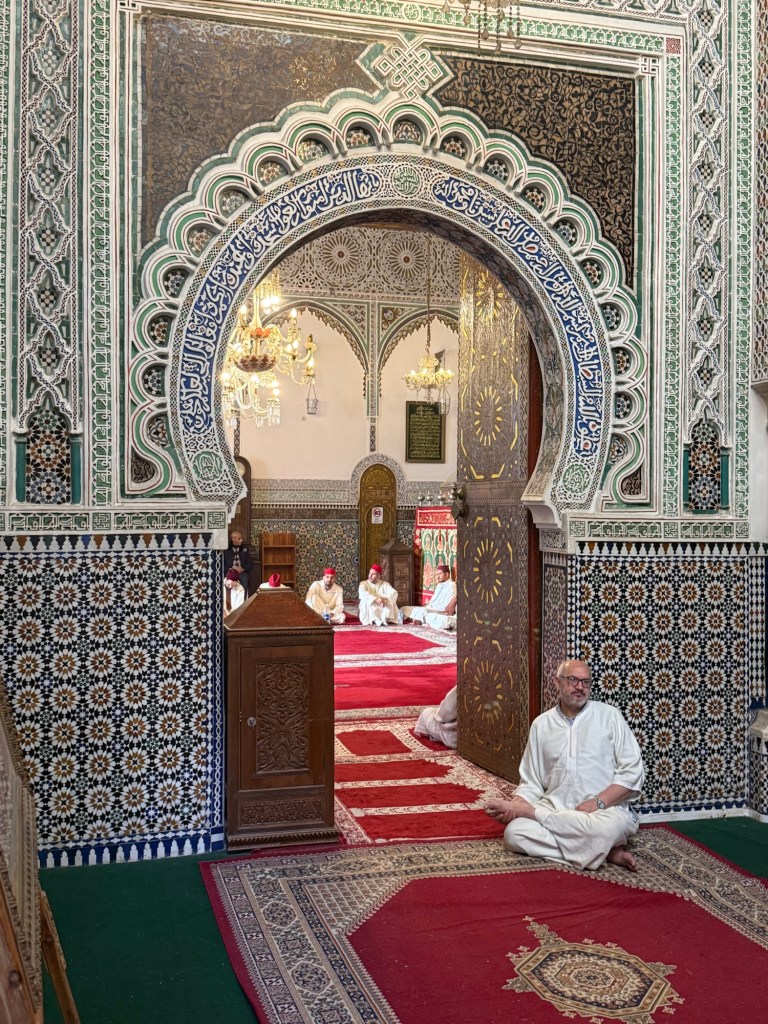
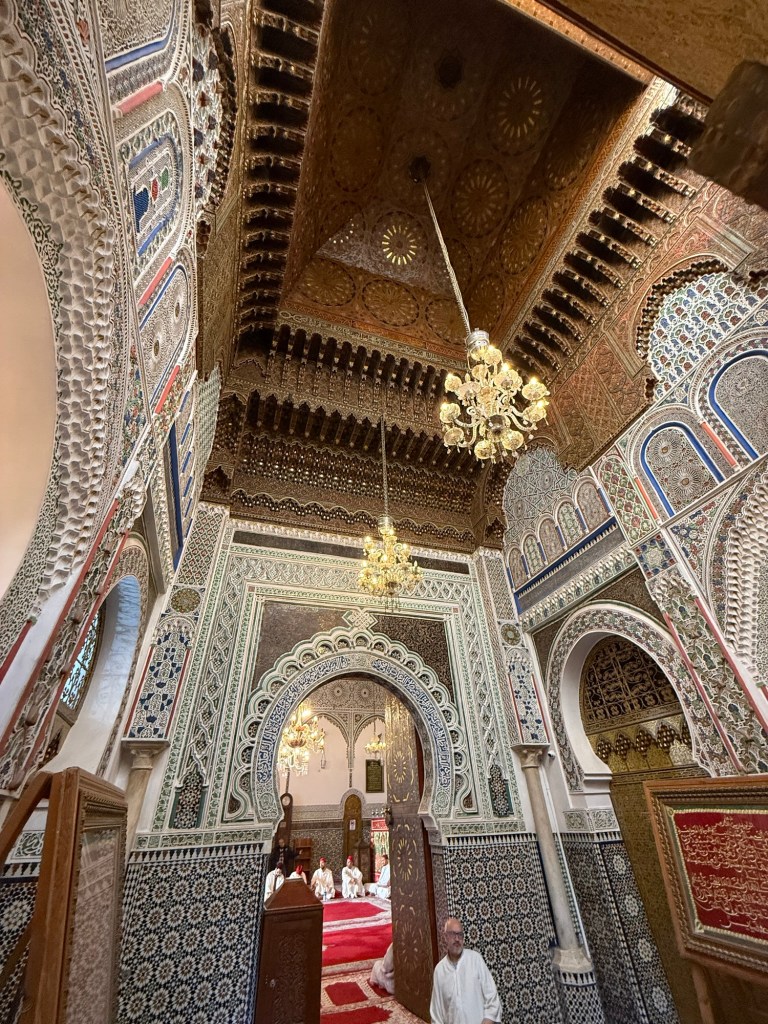
This is the oldest continuously functioning university in the world and was founded by a woman.

Chouara Tannery:
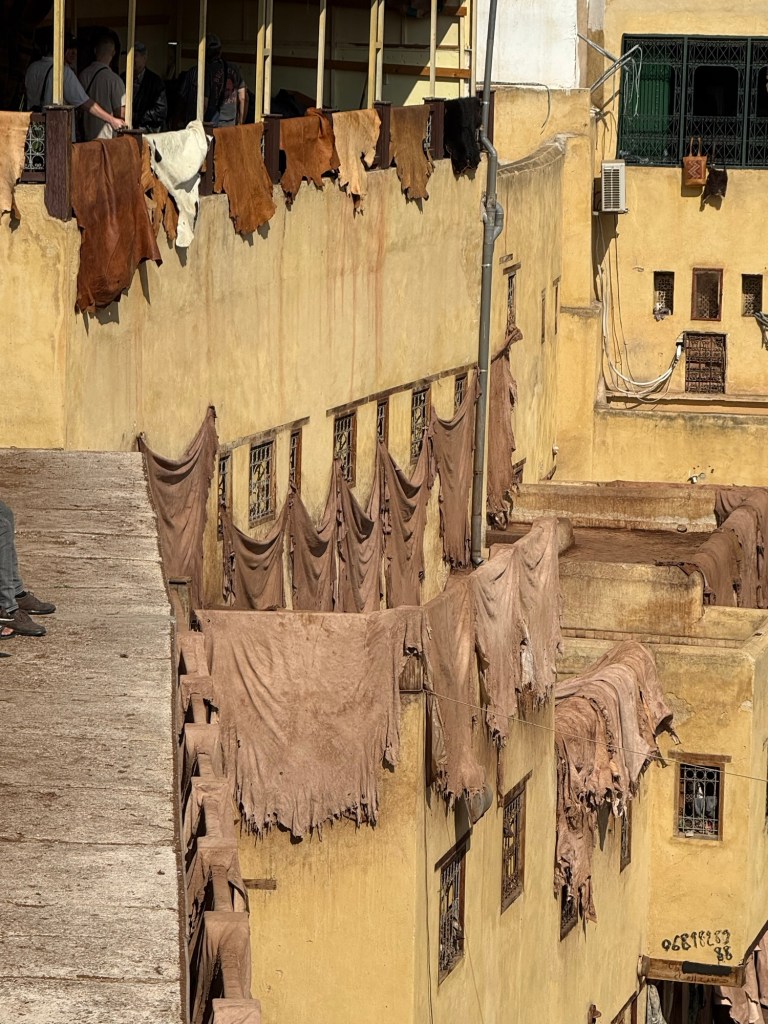
This has got to be one of the most unpleasant places I’ve ever visited. There are thousands of animal skins at various stages in the process of becoming leathery skins.
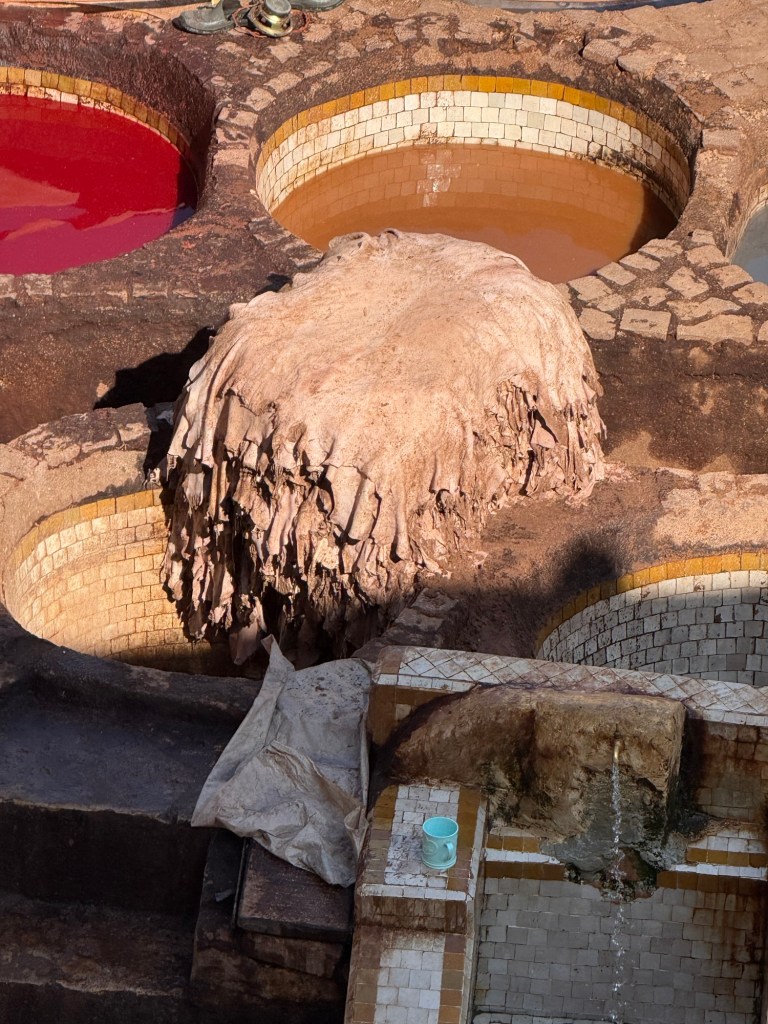
The traditional Moroccan leather tanning process involves soaking animal hides in vats of pigeon excrement and cow urine to soften them. The stench from the soaking vats is overwhelming, despite the mint leaves stuffed up your nose.
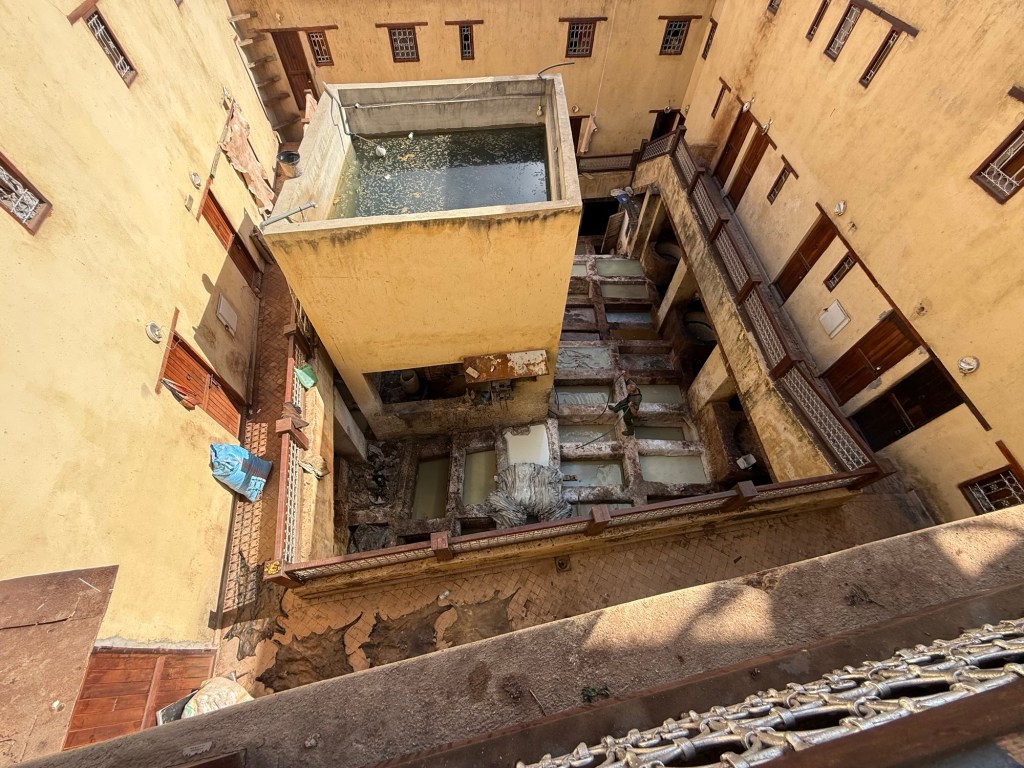
Following a hand-trampling step, the hides are then dyed using natural colorants from plants and spices like saffron, indigo, and henna, before being dried under the sun.
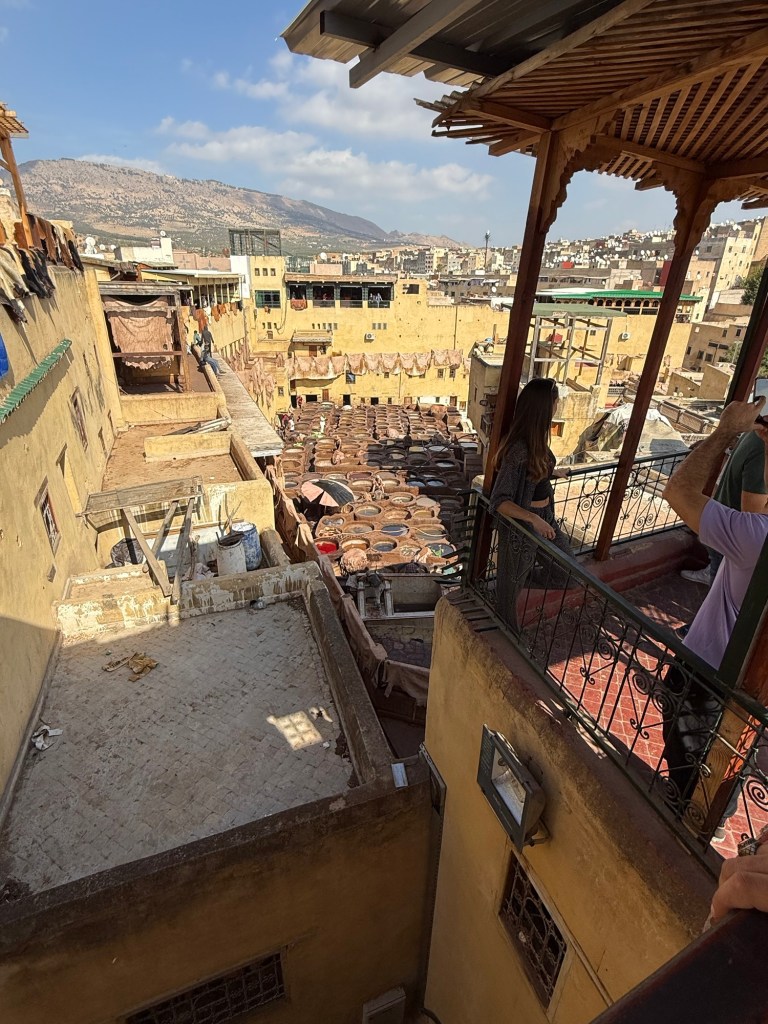

This method utilizes traditional, manual techniques to transform raw hides into high-quality leather.
I felt sympathy for the workers who do this day after day…
Jewish Quarter:
The Jewish Quarter was interesting if for nothing else that no Jews lived there anymore – those that still lived in Fez lived in the hills in their palaces.

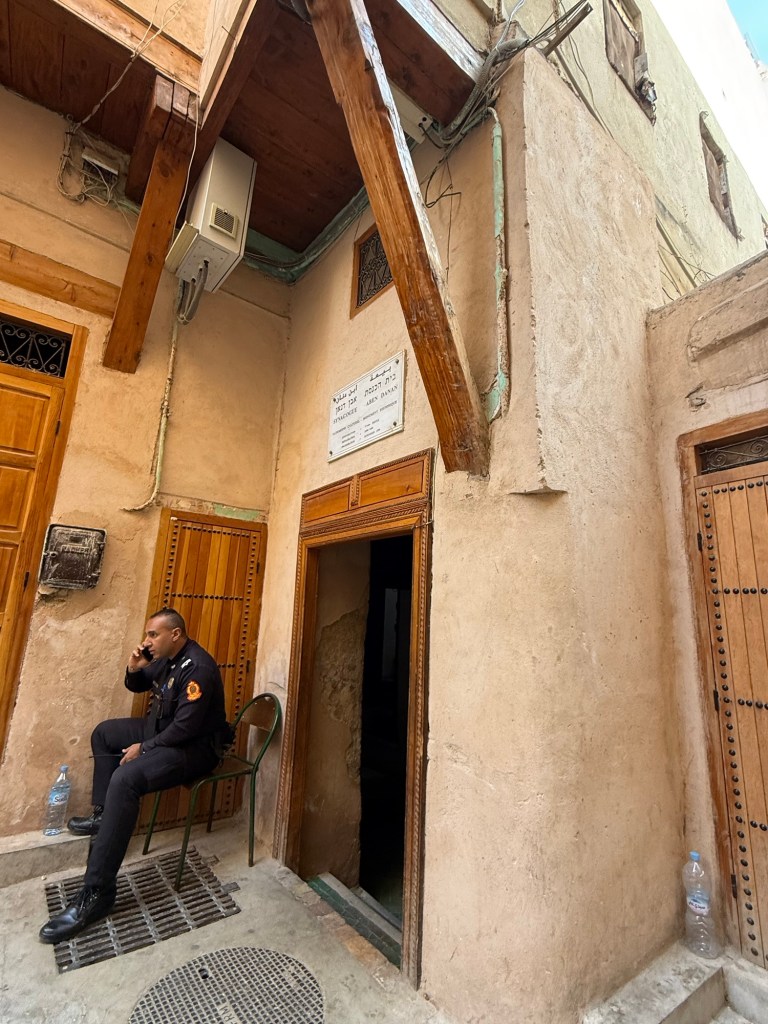
Mosaics:
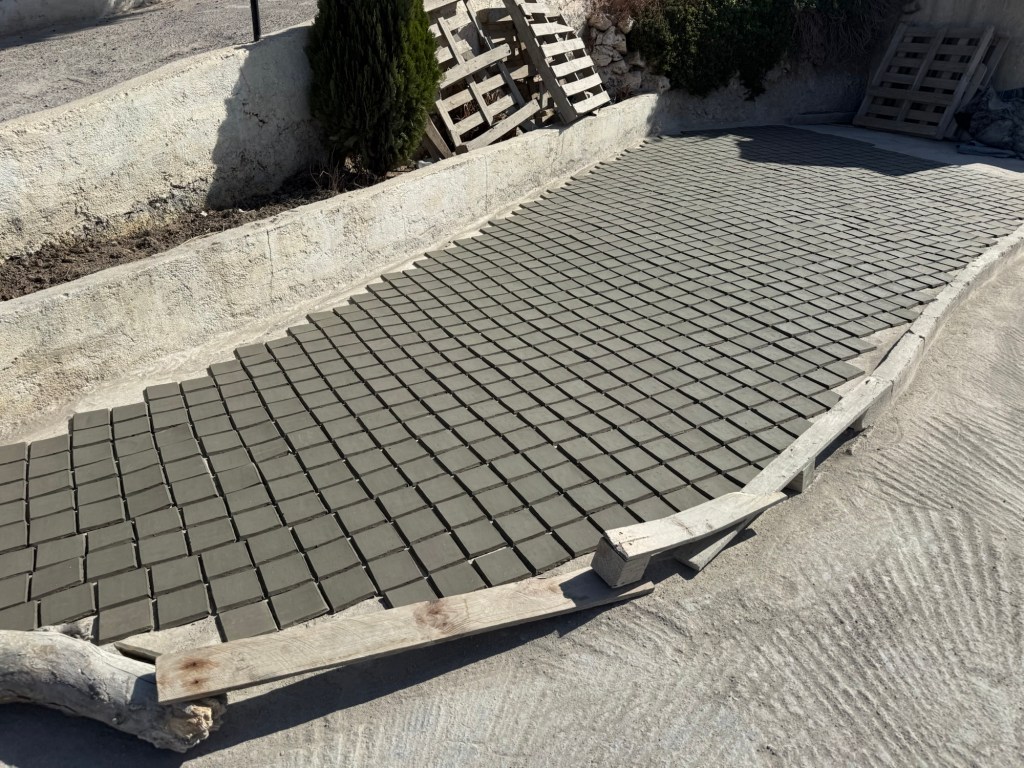
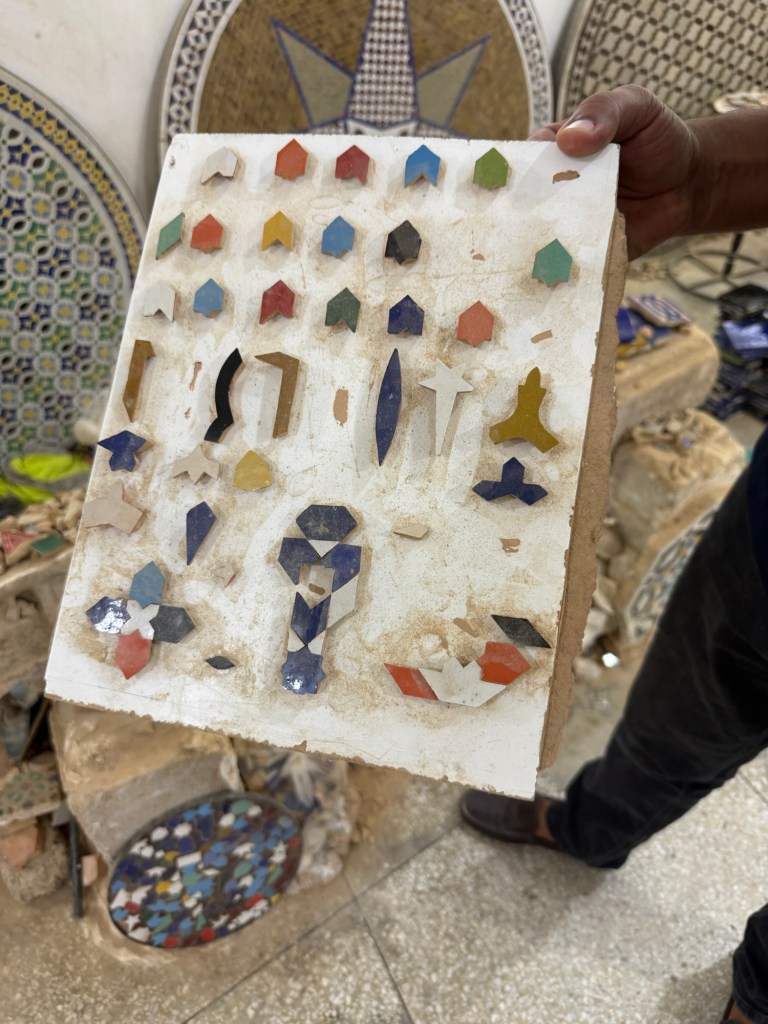
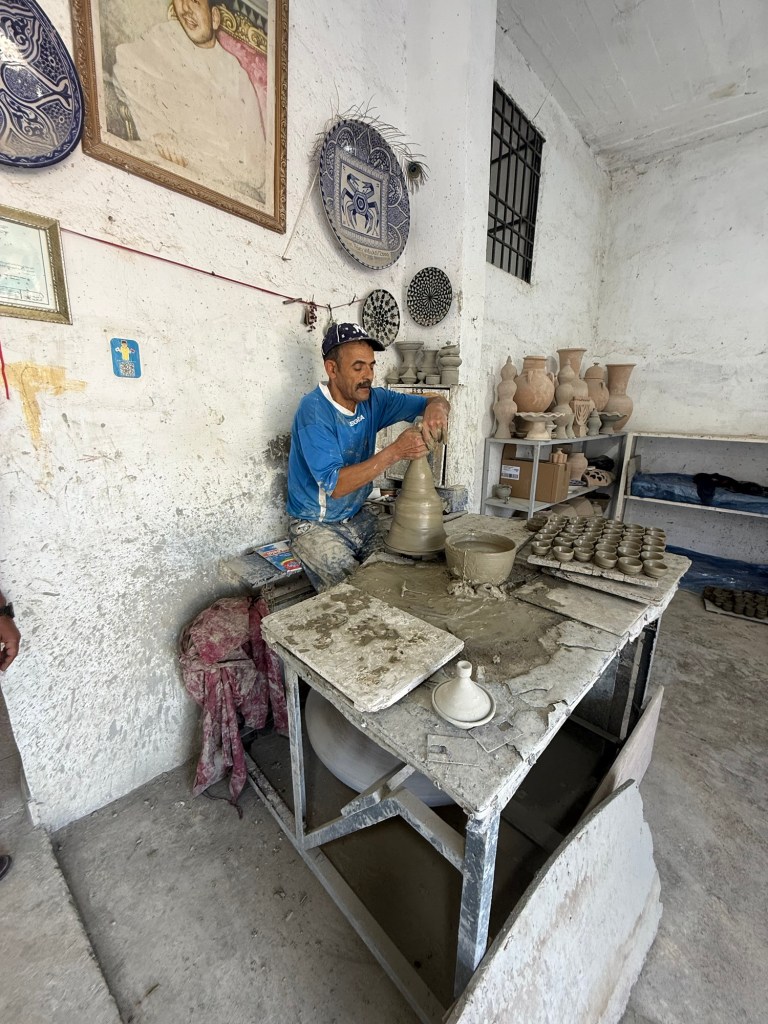
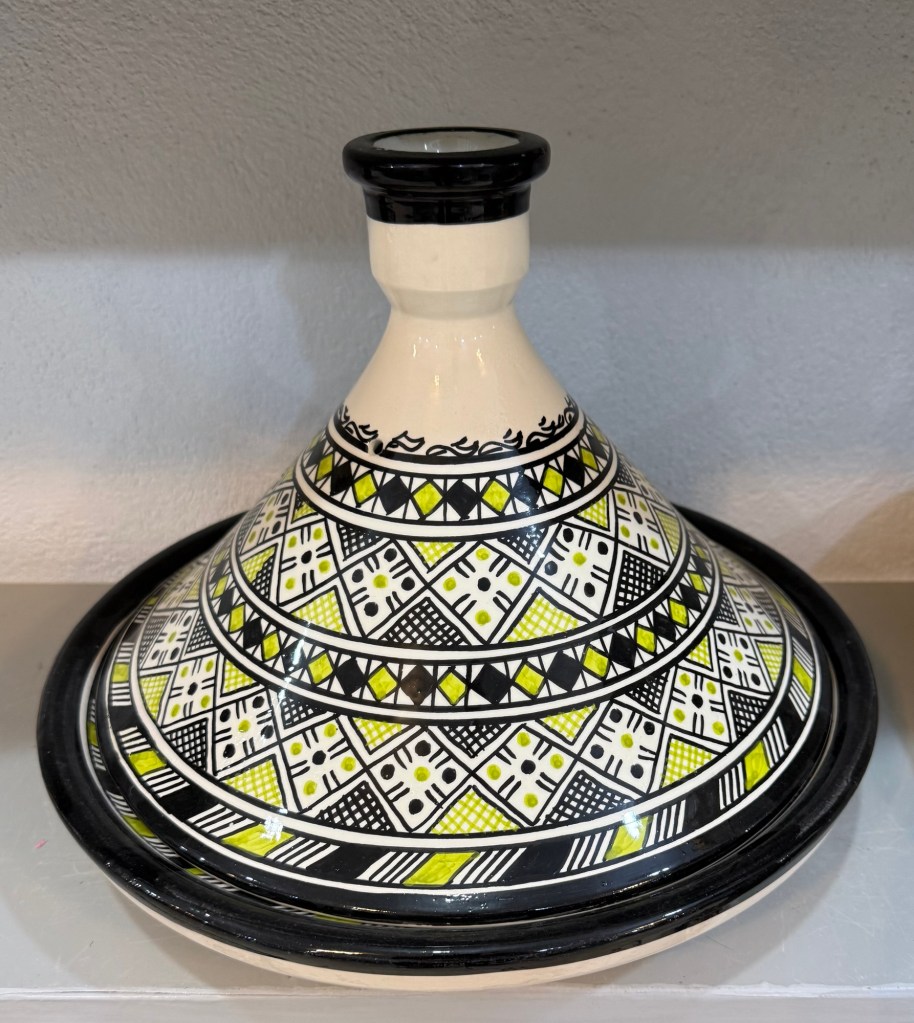
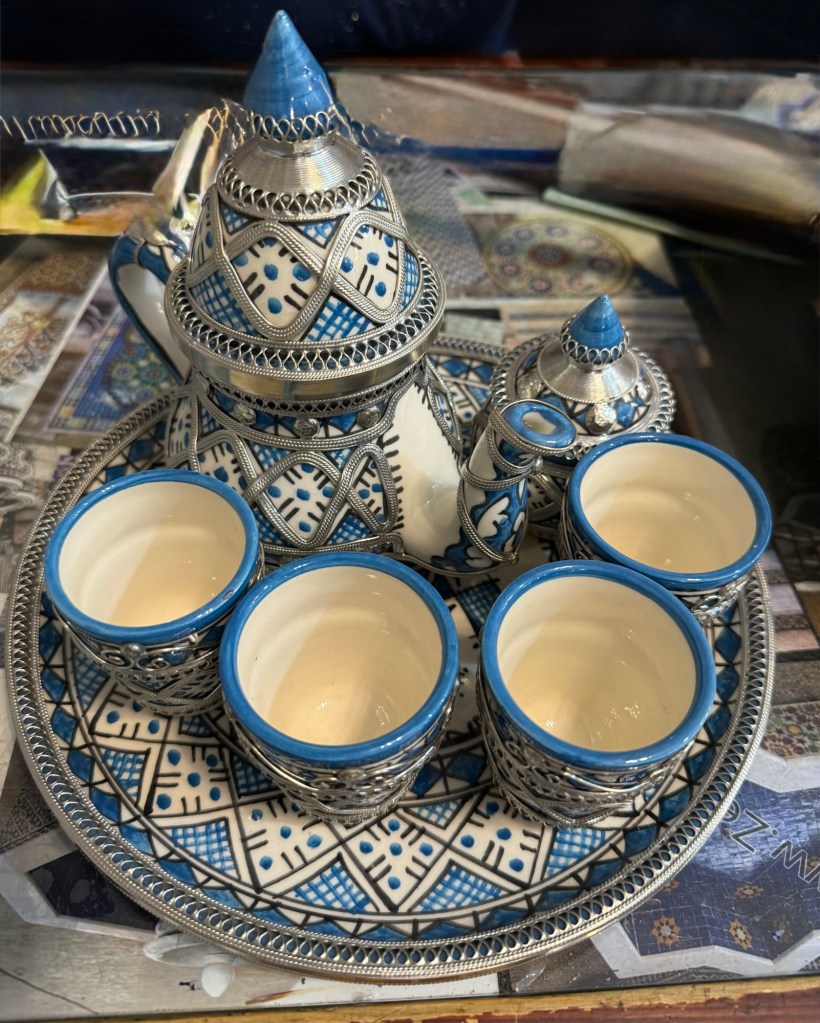
Reluctantly I was taken to a government controlled mosaic business. The process from raw clay to finished tile ready for cutting to make mosaics and the pottery making and glazing was interesting.
I could not keep my wee pennies in my pockets…..
Meals:
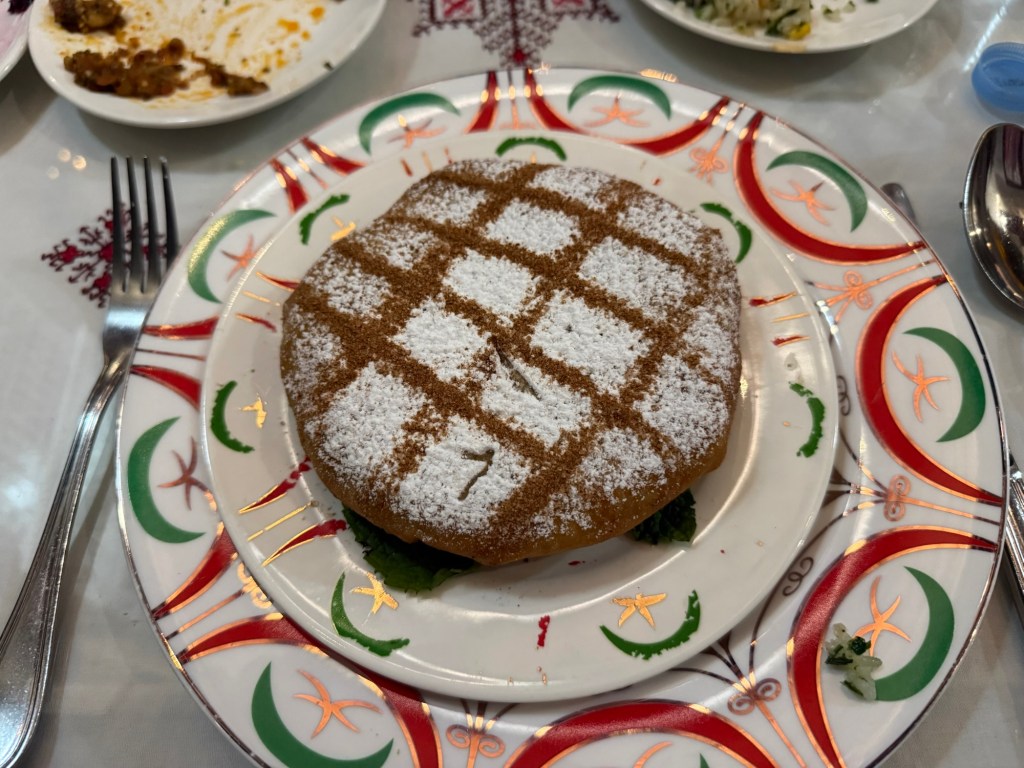
Fatigued after bargaining, lunch at Palais Bab Sahra was wonderful. After six salads, I had Chicken Pastilla, a regional delicacy. Shredded or minced chicken is wrapped in flaky pastry finished with a generous dusting of cinnamon and powdered sugar. The Spanish brought it to North Africa, but nomadic Berbers and native Arabic people have shaped its composition through the years. Known by many names, B’stilla/Pastilla/Bistilla is traditionally made with pigeon meat stewed in onions and aromatic spices, then wrapped in paper-thin crepes called warqa, which means leaf in Arabic. I would have opted for the pigeon as it tastes like chicken, and you know it’s contributed to the production of quality leather.

Guide:
Amine ^ was an excellent guide, and it was refreshing to hear a Muslim speak positively about past Jewish contributions to Muslim culture, architecture, clothing, etc. He is a fine fellow….
^ Supplied via Luxury Tours Morocco.
 Wander the World with Intent
I will do my best not to.
LikeLiked by 1 person
Paul I don’t think I will be purchasing any leather from now on, pigeon feces LOL You are showing me places I know I will never be seeing. I thank you for this.
David D
LikeLike
lol – it gets washed afterwards – just don’t lick it..,
LikeLiked by 1 person