By Paul Bryers
- Morning Itinerary: Drive Chefchaouen – Volubilis
- Guide: Moulad ^
Upon departing Chefchaouen in the morning, we were treated to a lovely view of the old Jewish City.


As we continued driving towards Meknes/Fez, the soil transformed into rich, black earth due to previous volcanic eruptions. The landscape was dotted with wheat and barley fields, and hills covered with fruit trees and other vegetation – a stark contrast to what I had anticipated in Northern Morocco.


Volubilis:
Our first stop was Volubilis, a Berber-Roman city, where we explored the ruins in detail. Notably, this city marked the westernmost point of the Roman Empire, much like Hadrian’s Wall in Scotland denoted the empire’s northernmost boundary.

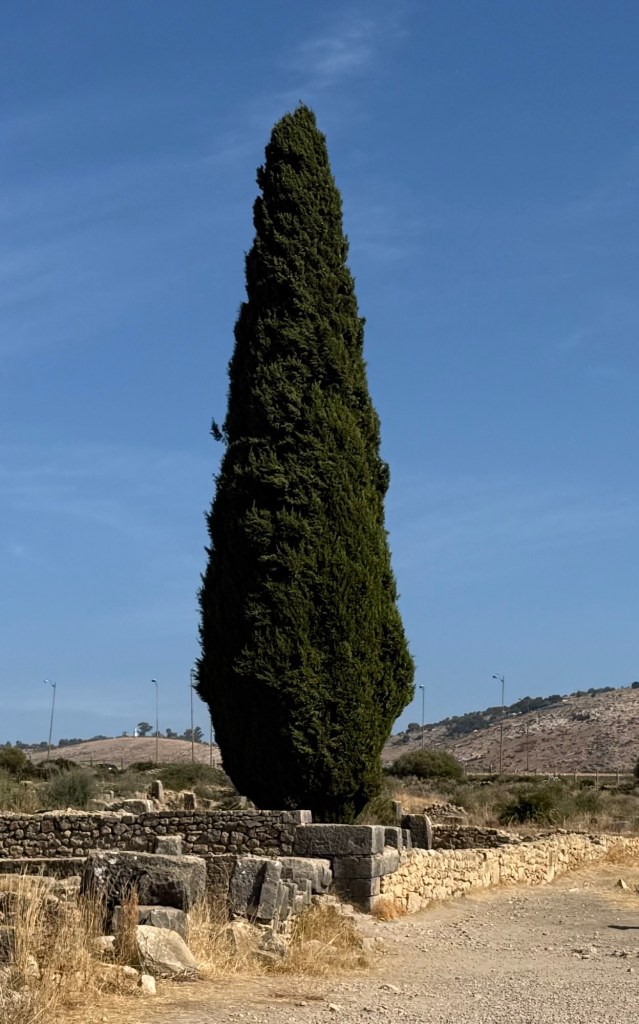
Upon entering the site, I was immediately drawn to a solitary tree, which I mentioned to Moulad resembled the one from the movie Gladiator, where Russell Crowe’s character reunites with his deceased wife and son. Interestingly, it was indeed the same tree!

Located in a fertile agricultural area, Volubilis originated as a Berber settlement in the 3rd century BC and expanded rapidly under Roman rule from the 1st century AD onwards. The city eventually spanned approximately 42 hectares (100 acres) with a 2.6 km (1.6 mi) circuit of walls.
I have included a site map for orientation purposes.

The city was designed along a main thoroughfare, the decumanus maximus. The city gates and porticos led to adjacent houses on both sides of the road, forming a near-perfect straight line from the Tangier Gate to the Caracalla arch.
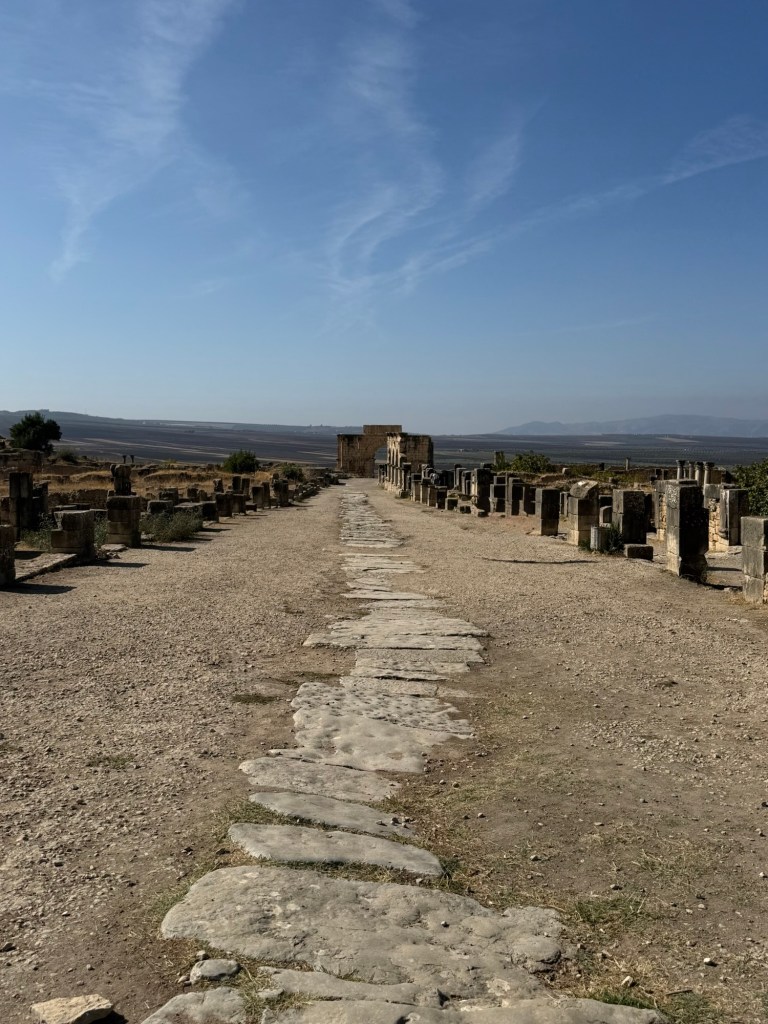
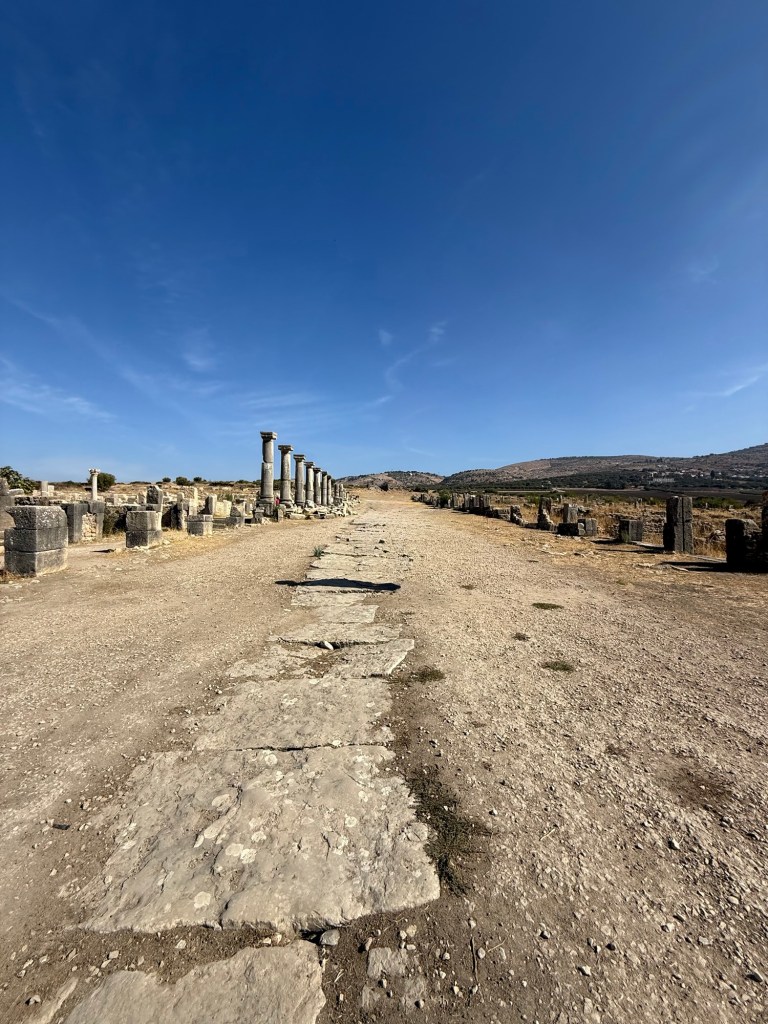
During the 2nd century, this thoroughfare was lined with columns and arches for shade …..

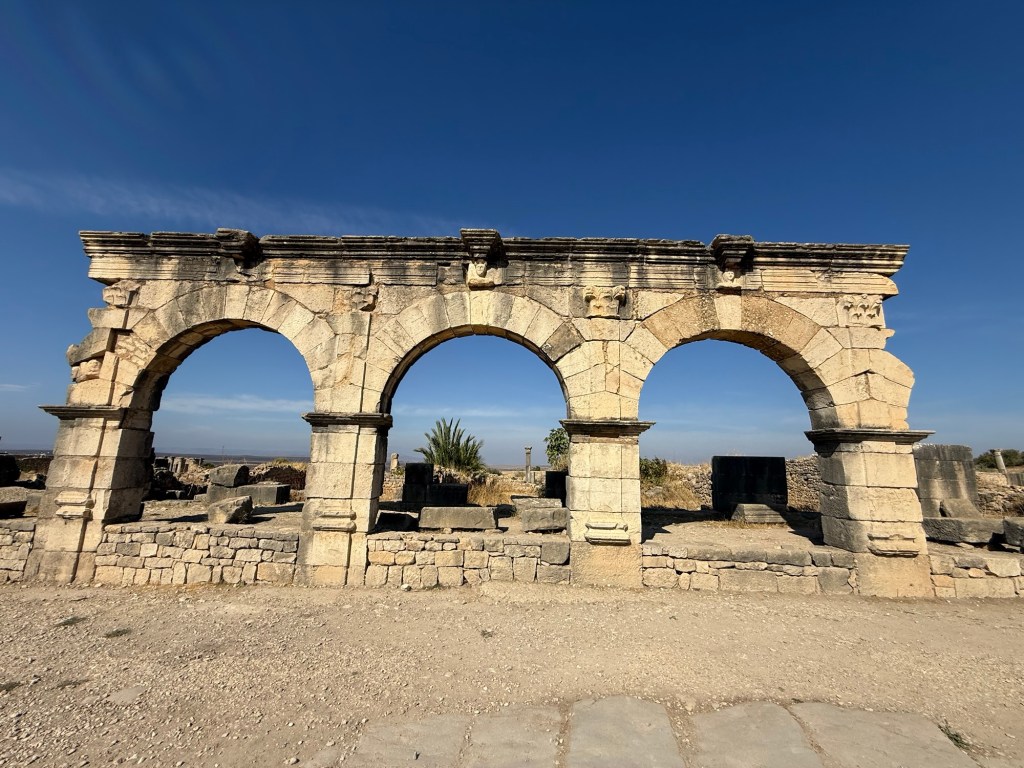
….with major public buildings, including a basilica,…
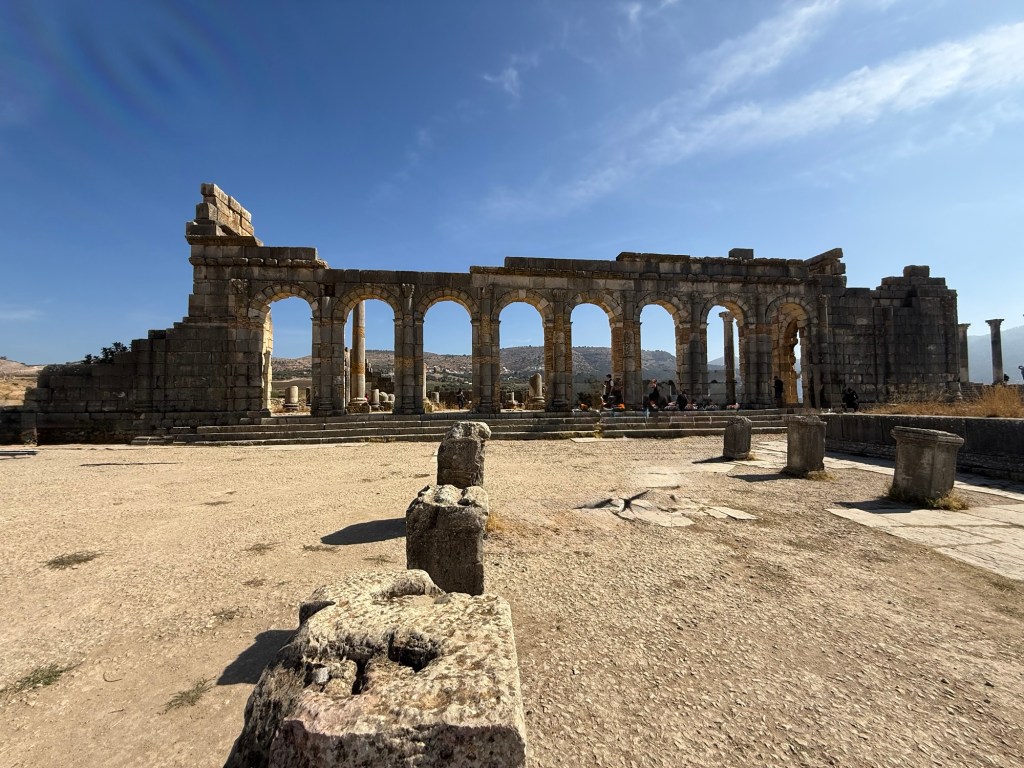
and a triumphal arch….

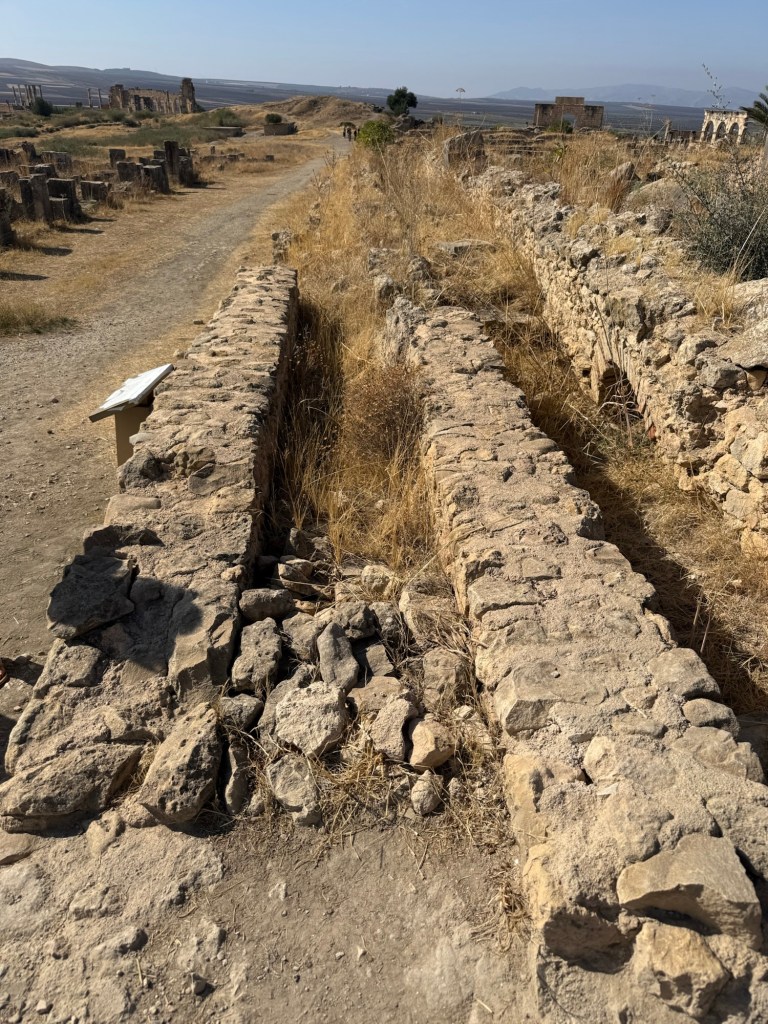
There was also a small aqueduct whereby fresh water came from the mountainss into the city.
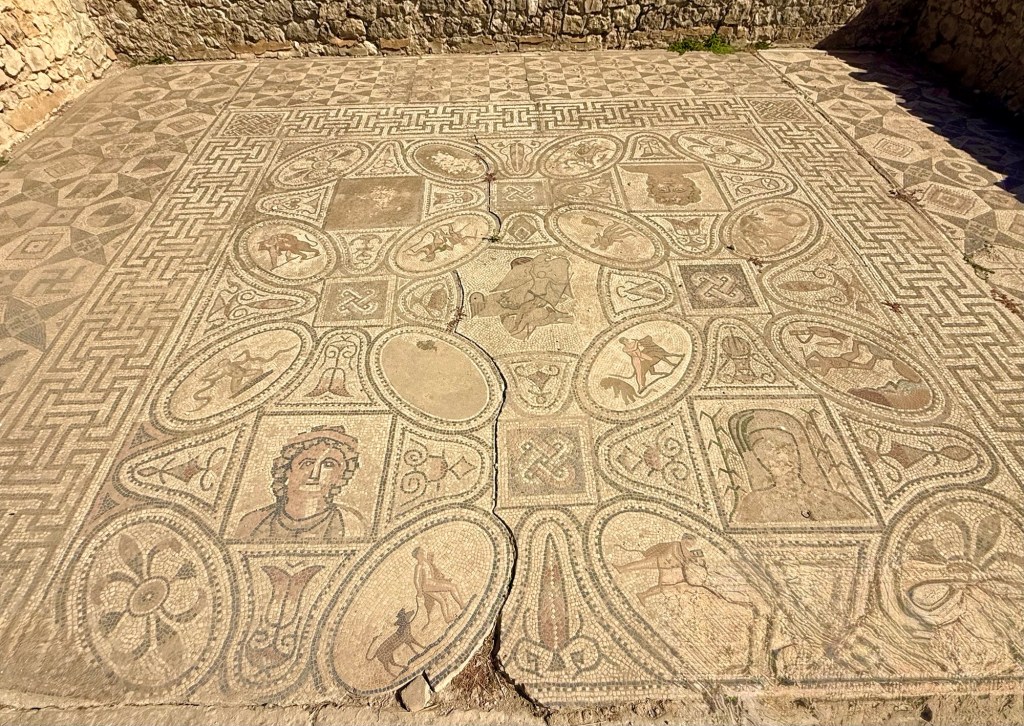
Volubilis is renowned for its impressive peristyle houses in the northeast area. The city’s prosperity, primarily derived from olive cultivation, led to the construction of numerous fine townhouses featuring large mosaic floors. Many of these floors have been meticulously restored.
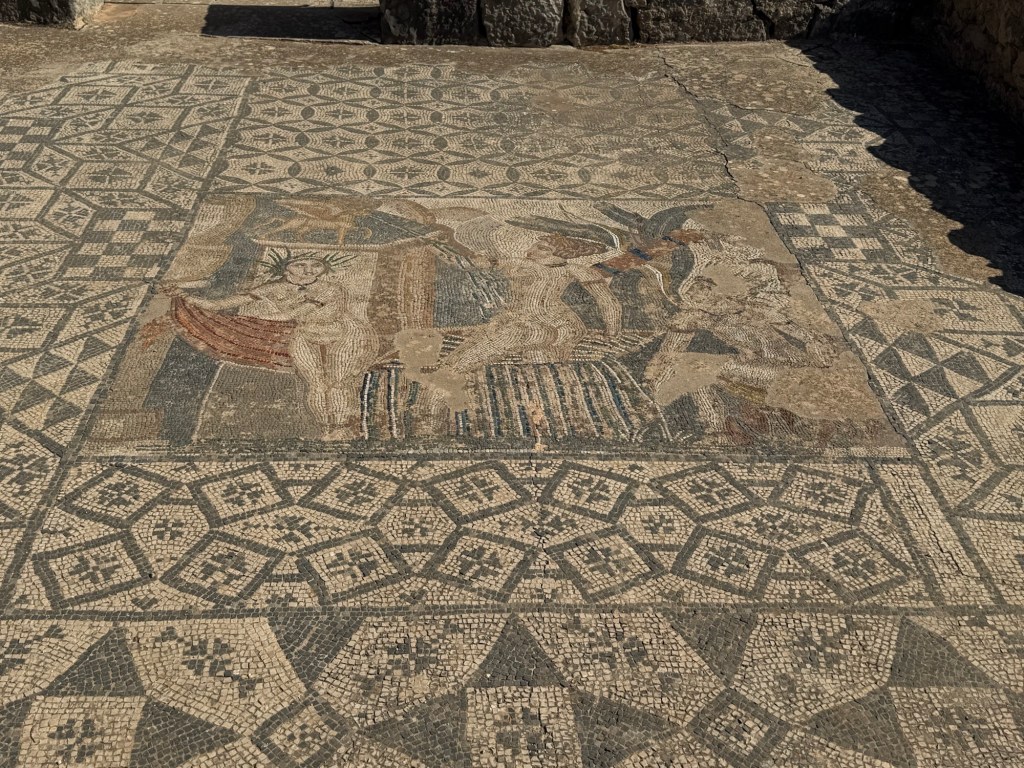
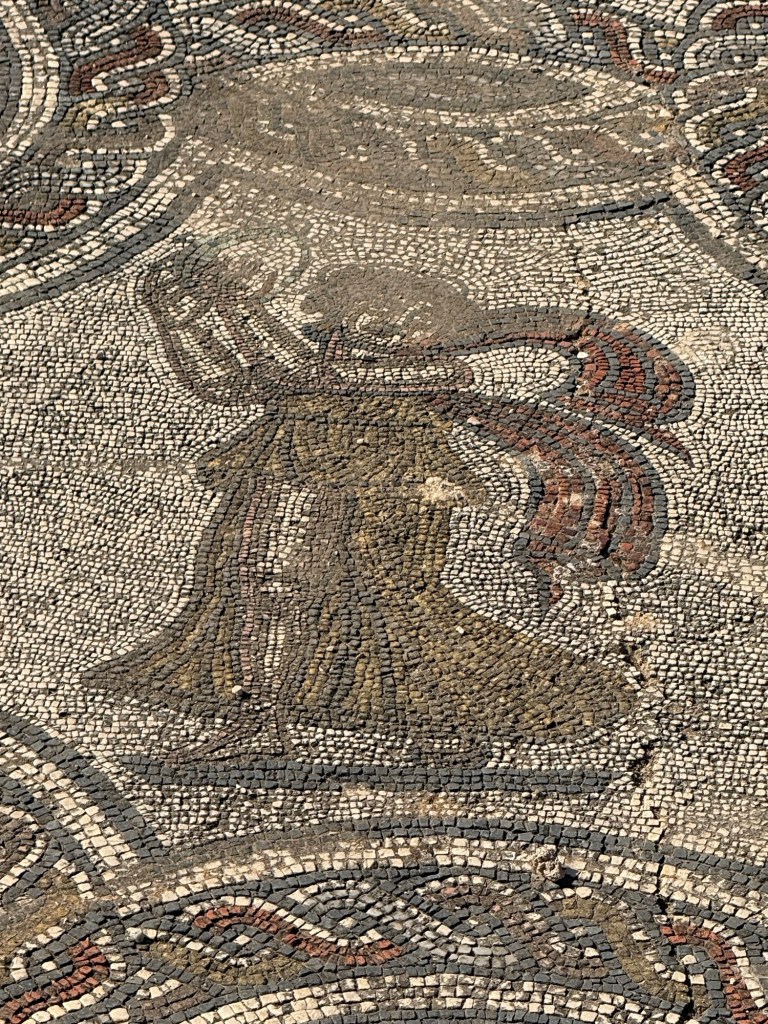

Among these houses, the House of the Labours of Hercules stands out as a masterpiece. With an irregular layout, this house opens onto a secondary cardo, distinguishing it from other houses in the northeast district. The reception room boasts a stunning mosaic depicting various subjects, including the kidnapping of Ganymede, the twelve labours of Hercules, and the Four Seasons.


The Temple of Venus, complete with a sacrificial altar, left a lasting impression. I jokingly advised the cat on the altar to vacate the premises promptly.


Today, Volubilis is recognized as a UNESCO World Heritage Site, distinguished as “an exceptionally well-preserved example of a large Roman colonial town on the fringes of the Empire”.
 See The World!
I agree the kitty needs to vacate. The town of Chefcheun is quite beautiful. How old is that tree? The arches amazing and still pretty sturdy.
David D
LikeLike
Dont know age of tree but I think here things grow very slowly and last a long time.
LikeLike