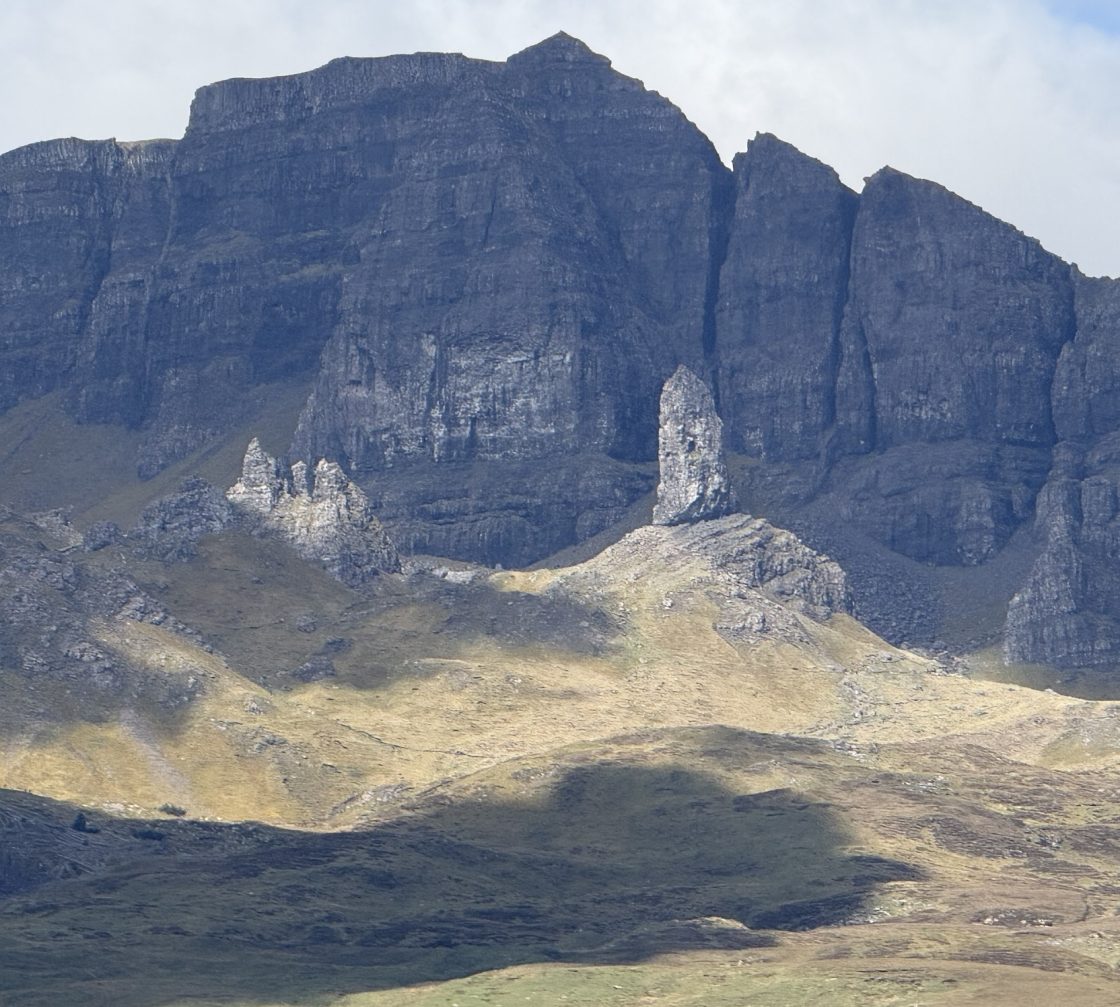
Days 5–6: Leverburgh (Harris) → St Kilda (overnight) → Lochmaddy
By Paul Bryers; May 27, 2026
Our crossing from Harris to St Kilda – roughly eight hours – was blessed with beautiful weather and cursed with rough seas, at least for a boat our size (about 8 feet waves at 12 sec intervals).
We fared reasonably well, though some guests and a crew member spent the day contemplating their tummies. Solidarity to the fallen.
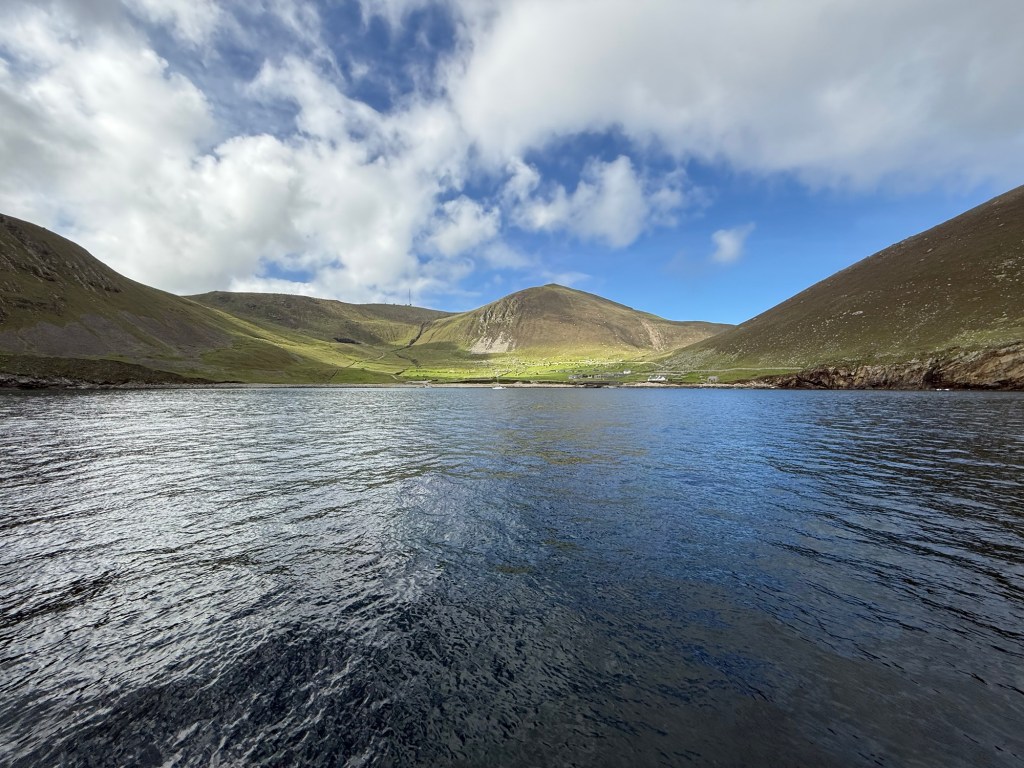
Our arrival at St Kilda was spectacular. Blue skies, deep blue seas, the islands rising in a hazy blue silhouette as though the whole archipelago had been painted by someone who’d been at the watercolours since breakfast.

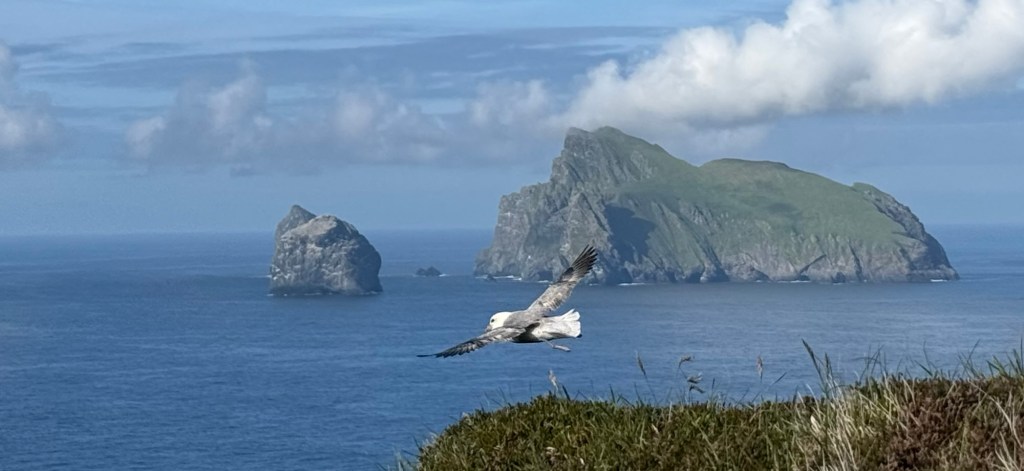
We could see Hirta – the big one – ….
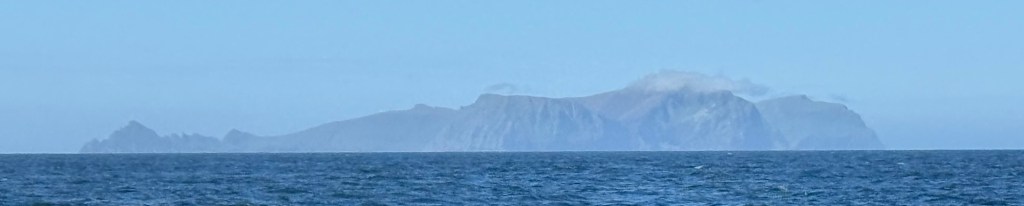
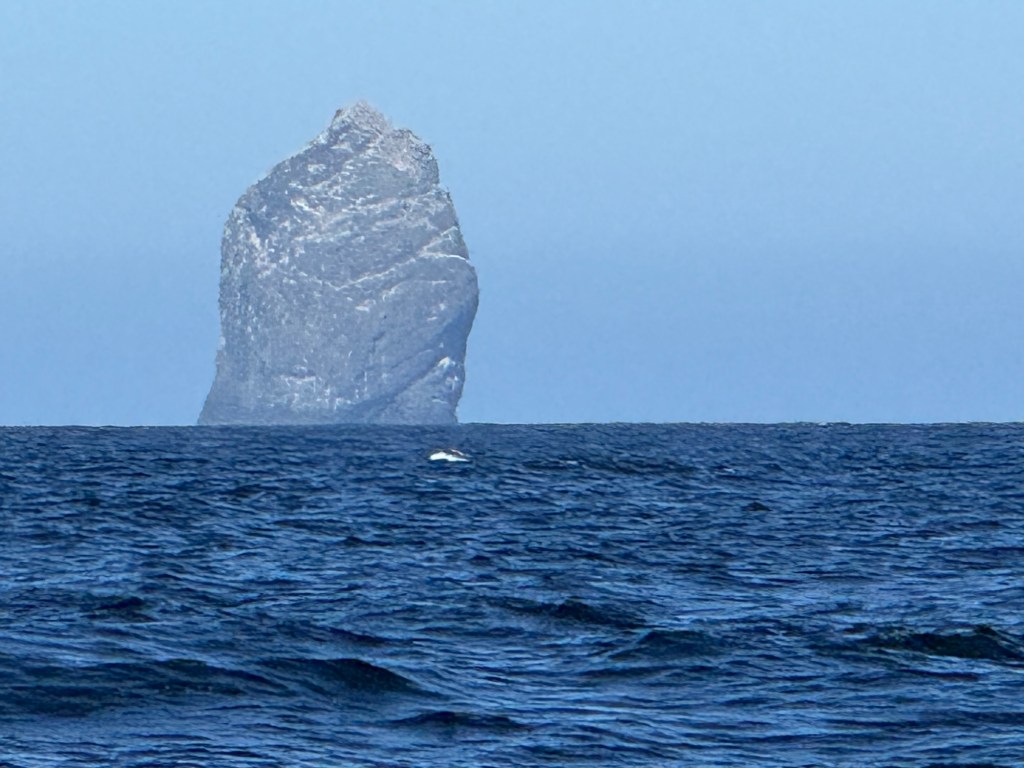
….along with Boreray and its great spear of a stac, Stac an Armin.
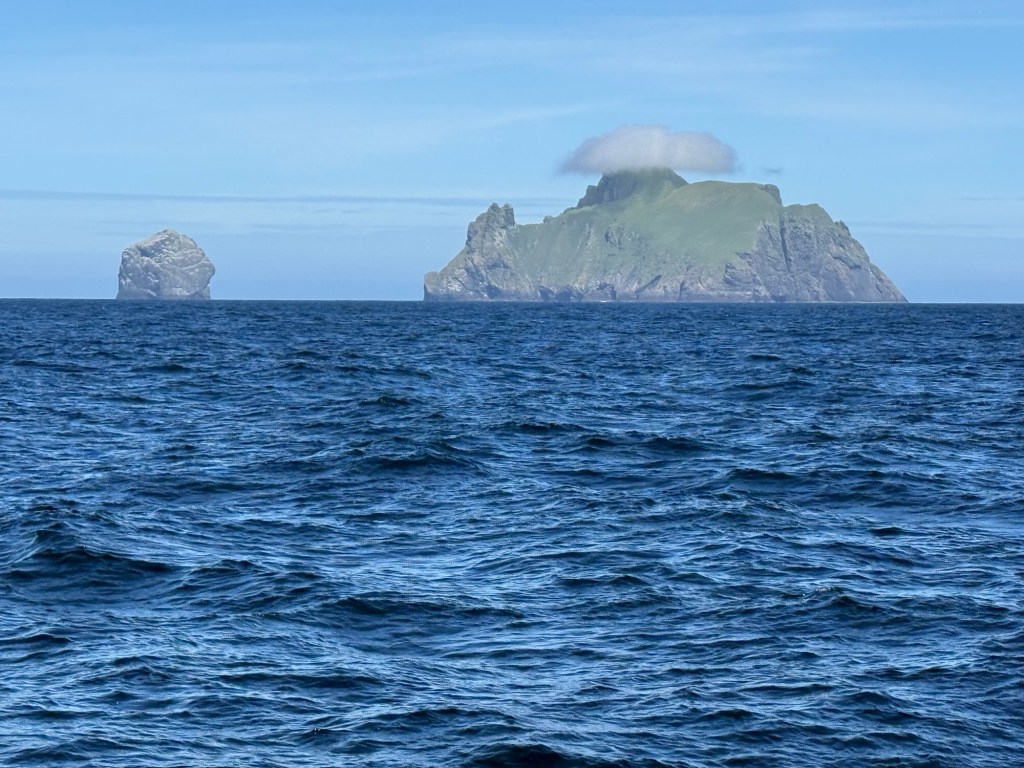
Soay sulked behind Hirta, doing its best to be overlooked.
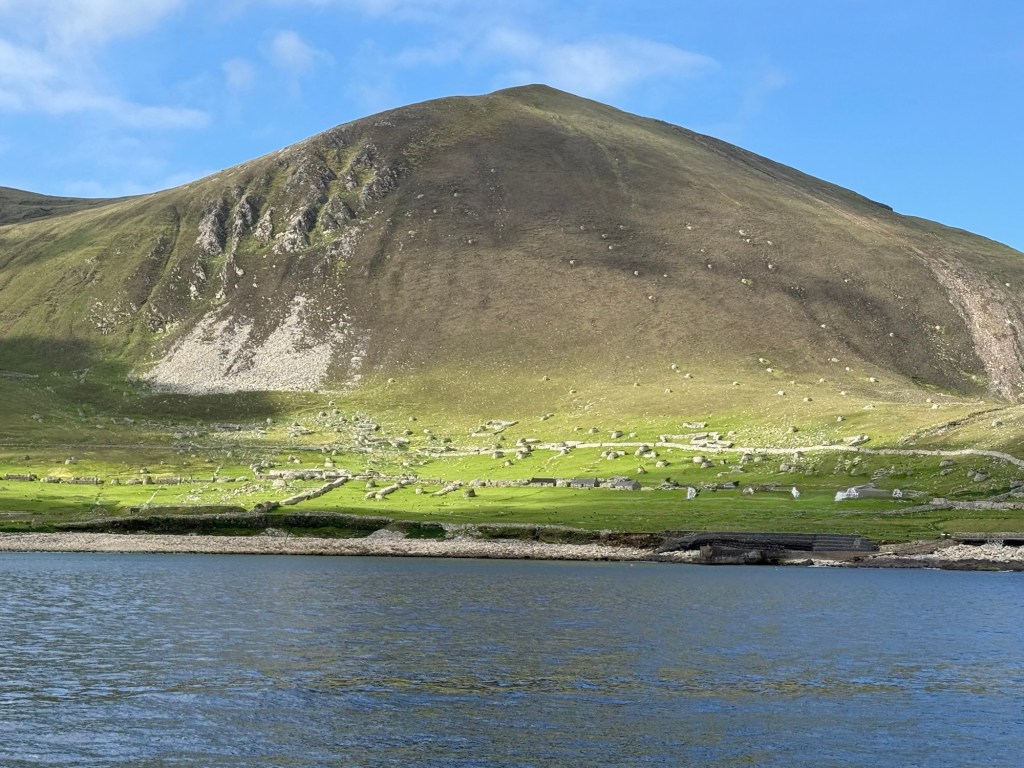
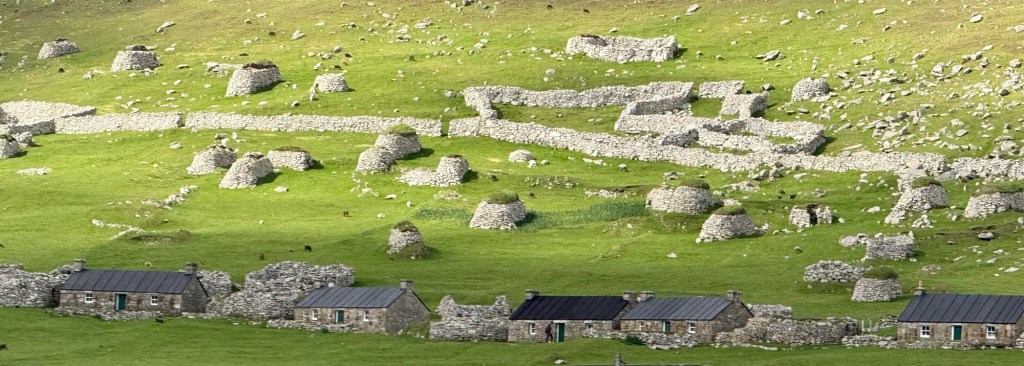
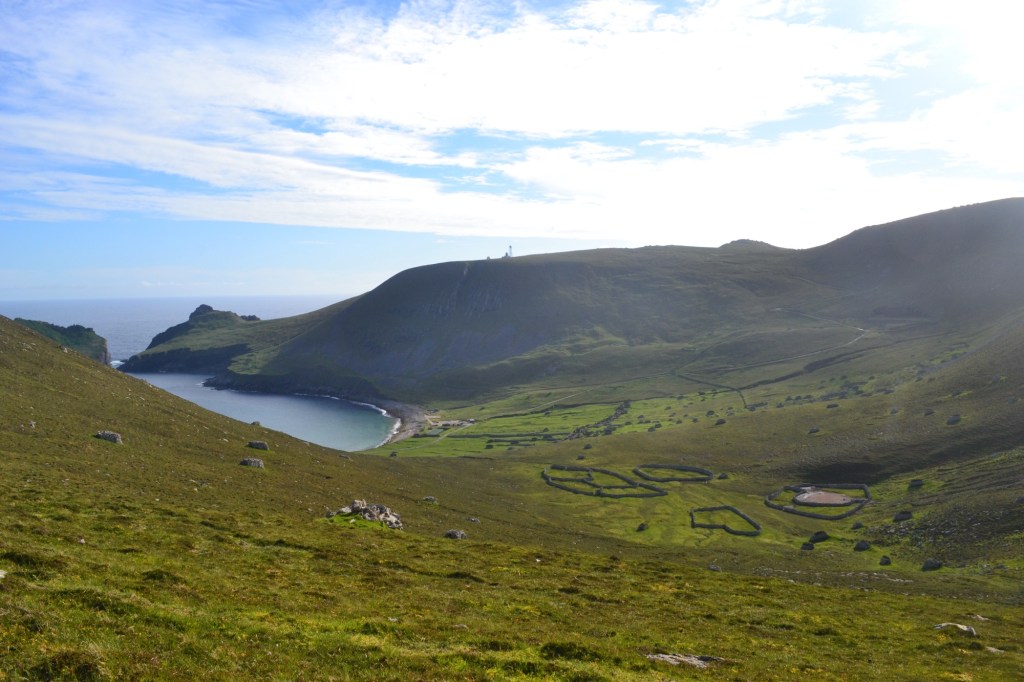
Hirta, close up, was magnificent. Steep undulating hills against the blue sky, the village speckled like ground pepper across the lower slopes.

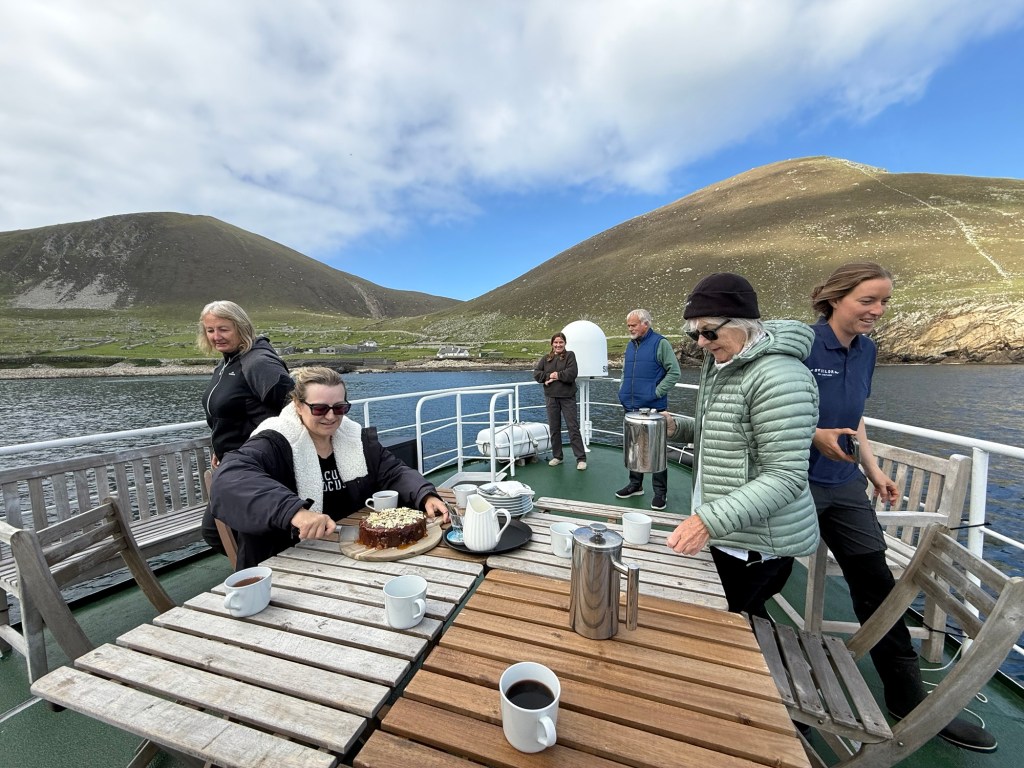
After high tea on deck, …..
…we headed ashore in the Zodiac, where the Warden greeted us. Other than the Warden, two National Trust for Scotland volunteers, and a couple of QinetiQ staff manning the radar installation, the islands are now deserted. Famine, hardship, and the sheer relentlessness of the place saw the last 36 islanders evacuated to the mainland on 29 August 1930, after they petitioned the government for removal. Hard to blame them. Beautiful as it is, you wouldn’t want to overwinter here with a bad cough.
The Warden pointed out her own house and that of the current volunteer, Miriam – whose father (a MacDonald) was born and buried on Hirta. Miriam lives in London and comes back to volunteer for about two months a year. Some pilgrimages are quieter than others.
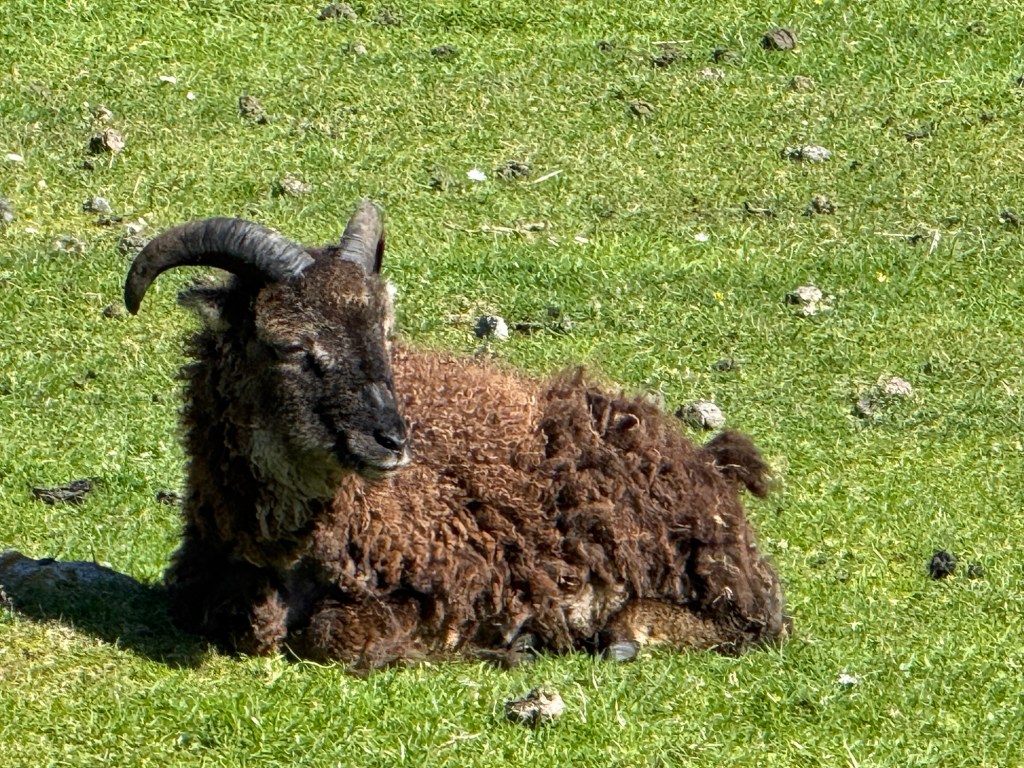
As the Warden talked, the adult Soay sheep – who badly needed a stylist, a comb, and possibly counselling – nipped at the sparse grass while their new lambs skittered about with the odd improbable leap. Soay sheep look perpetually as if they’ve just woken up in a hedge and aren’t entirely sure how they got there.
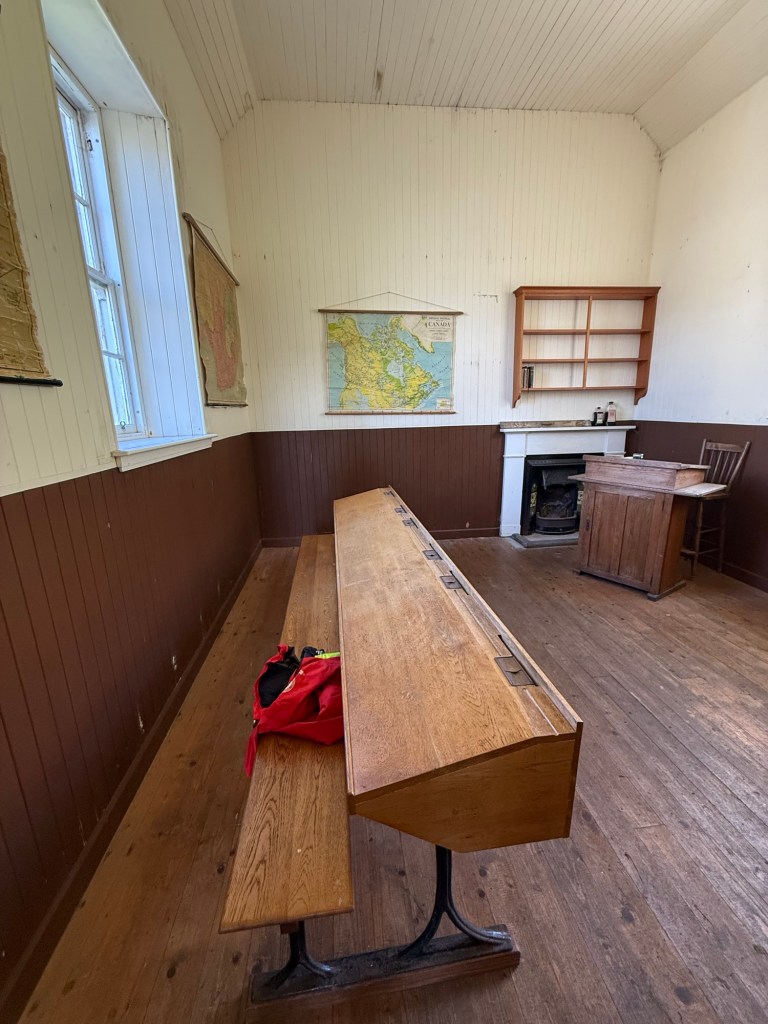
Down by the jetty stood the old schoolhouse….
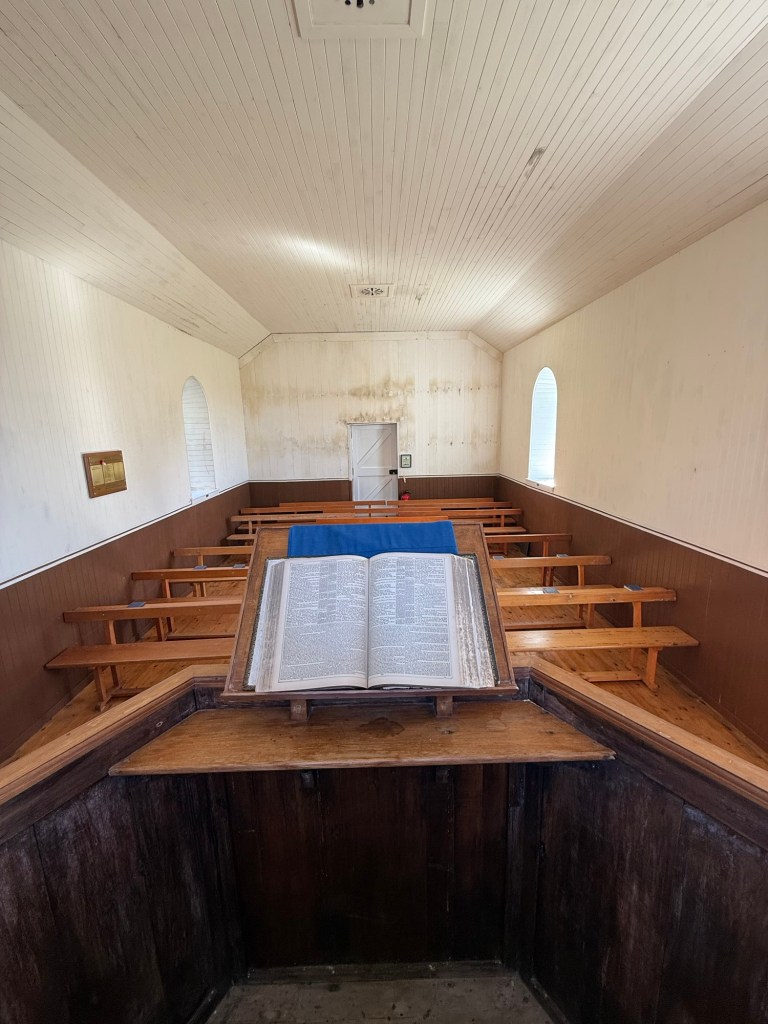
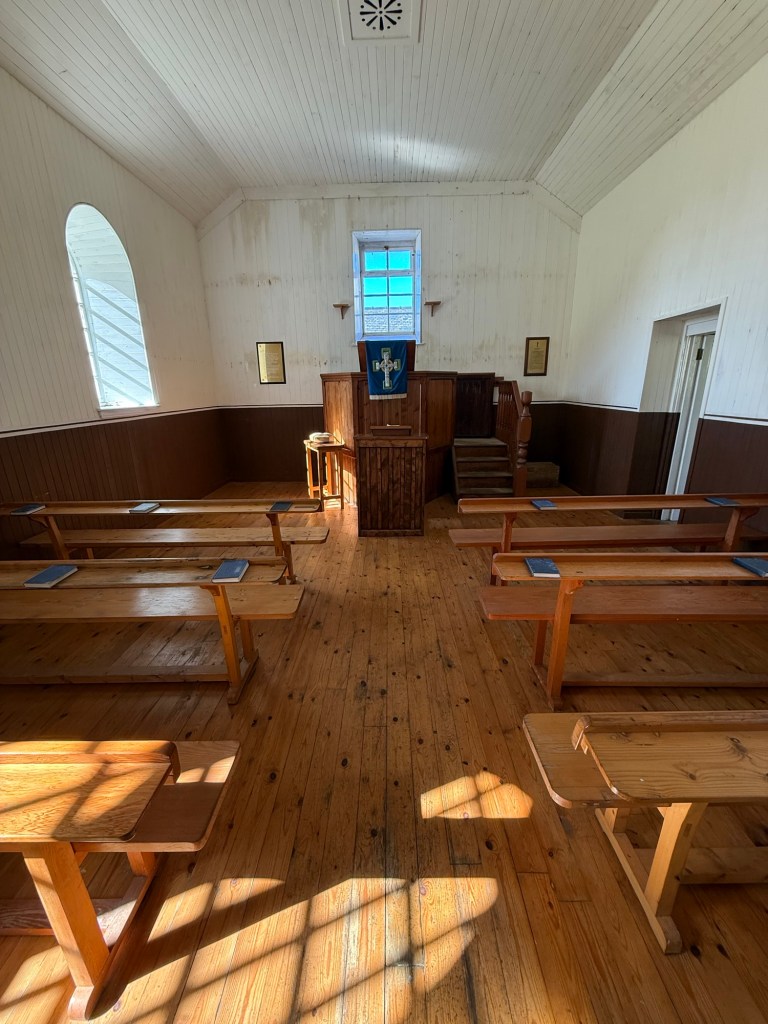
the church, ……
and the Factor’s house – ….
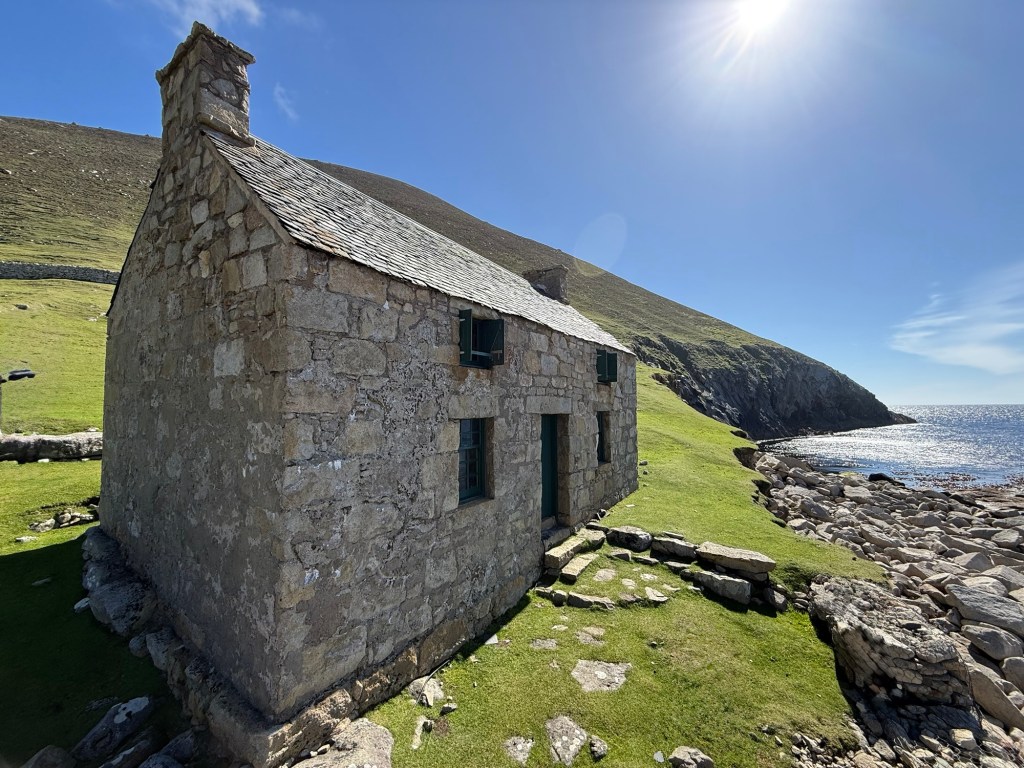
….the Factor being the man who ran the village on behalf of the Laird, which is a polite way of saying he collected the rent and kept the peace, in roughly that order.
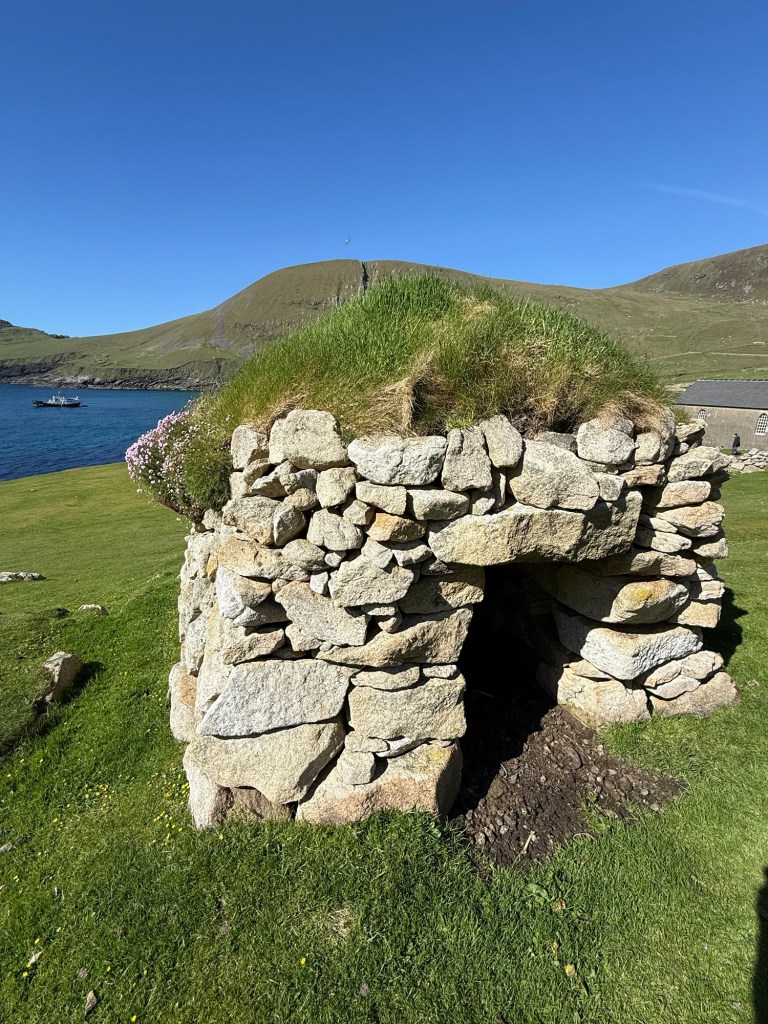
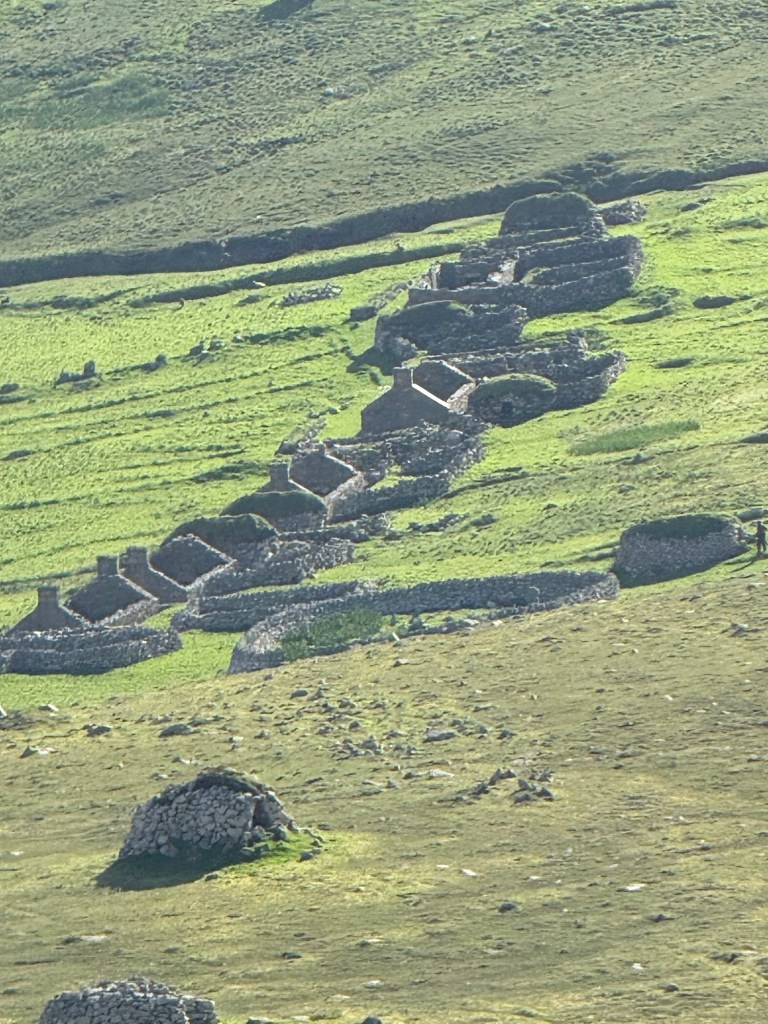
The small blackhouses were instantly striking on the lower slopes, their quasi-round storage cleits scattered around, above, and frankly everywhere – some perched right up on the ridgelines. Quite the trek for a snack. Lovely view while you ate it, mind.
I chose to walk up to The Gap to get the high view back down over the village and bay, and out across the cliffs to Boreray.
It was, to use the technical term, a schlep.
First came the ruined and partly-restored blackhouses with their attendant cleits. The cottages were perfectly sited to look out into the bay – some renovated by the National Trust as volunteer accommodation, others left as eloquent ruins. Now and again, out of the corner of the eye, you’d catch a shadow moving. A sheep? Probably a sheep. Almost certainly a sheep. And yet — there’s a presence about the place. St Kilda doesn’t quite let go of its people, or its people of it.
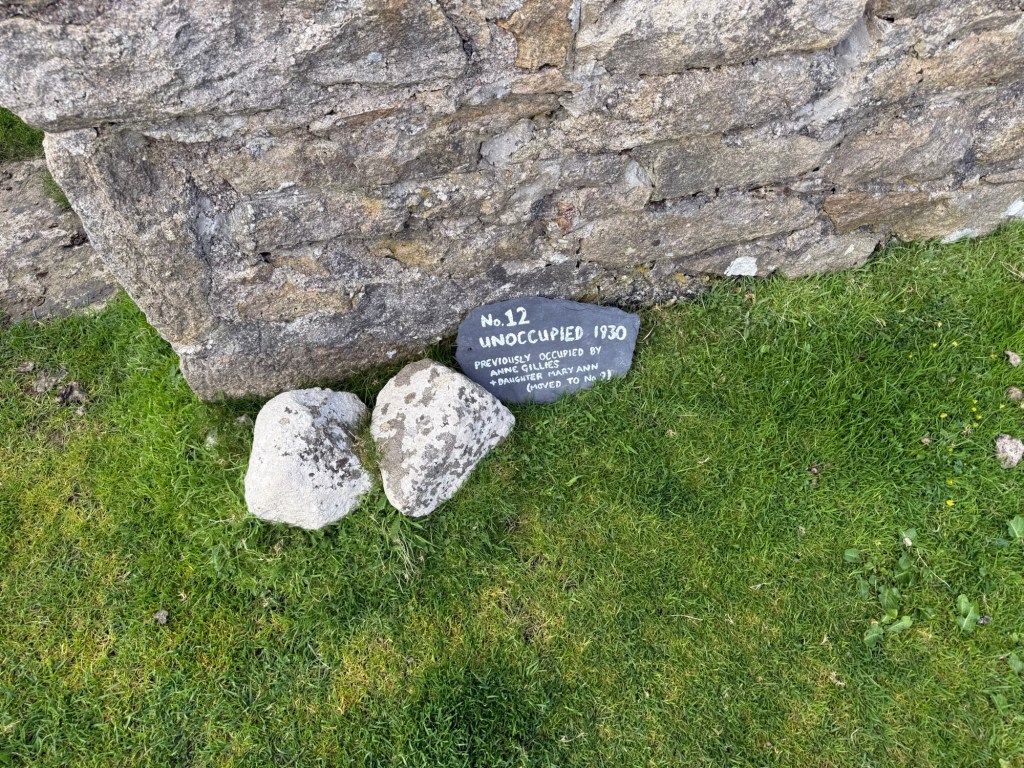
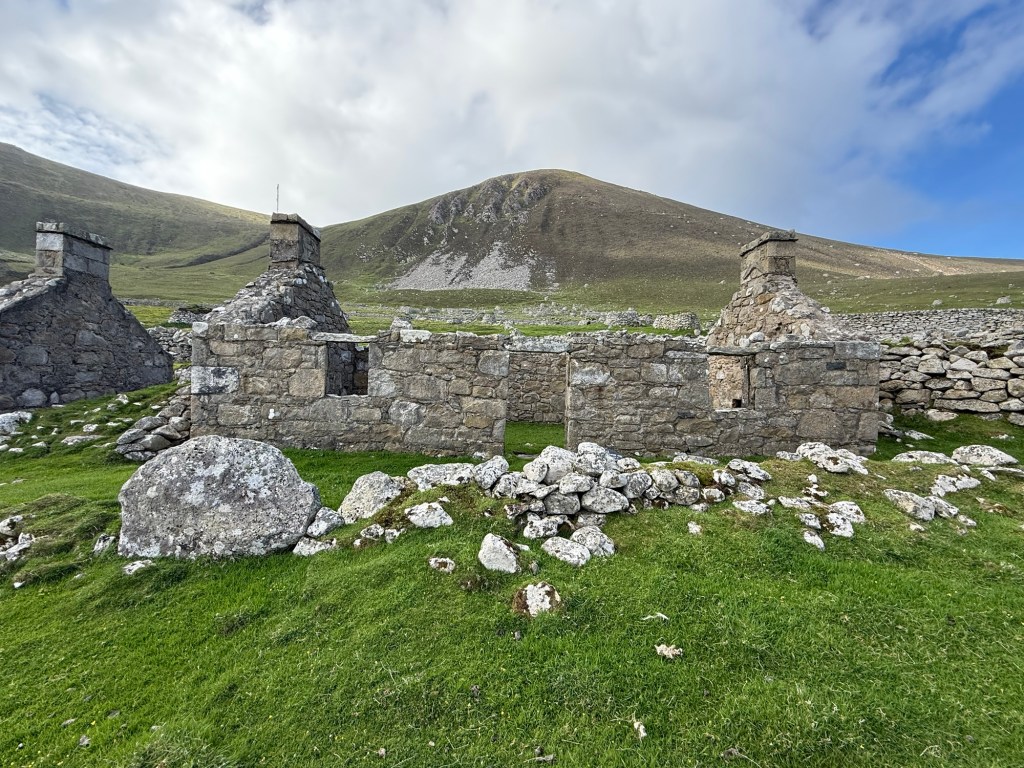
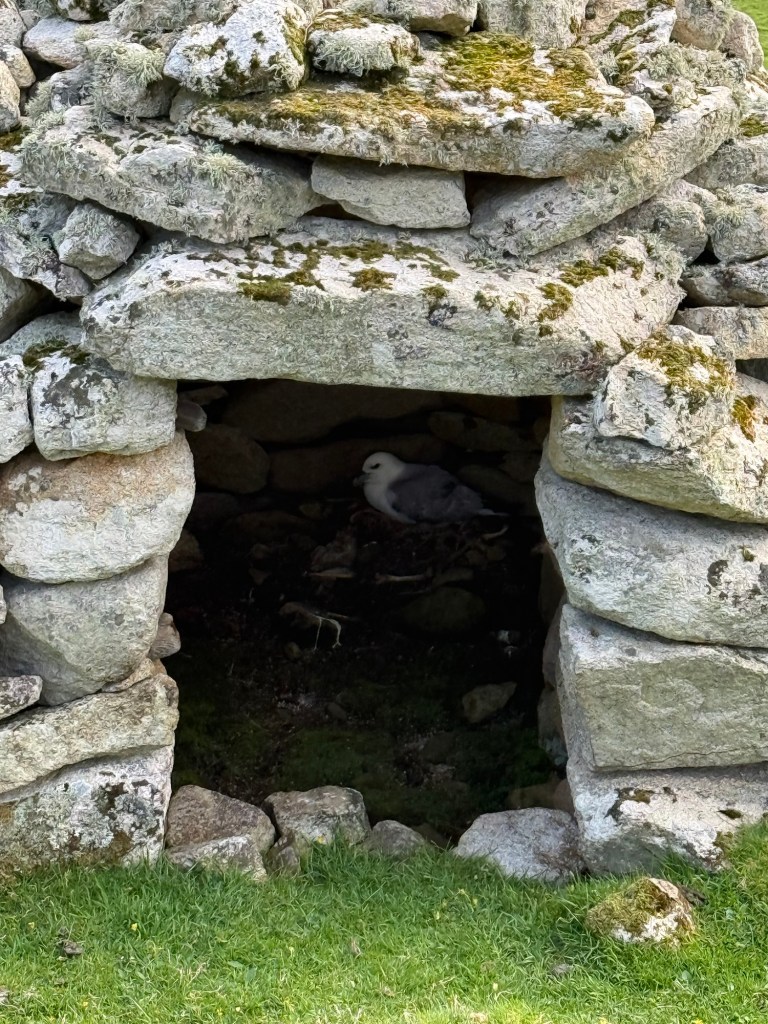
Each family once had their own cleits, used to store everything they could lay hands on – seabirds, fish, and whatever vegetable matter the island grudgingly produced. Now they lie empty, or are quietly squatted by sheep and birds who’ve found themselves rather nice listed properties at zero rent.
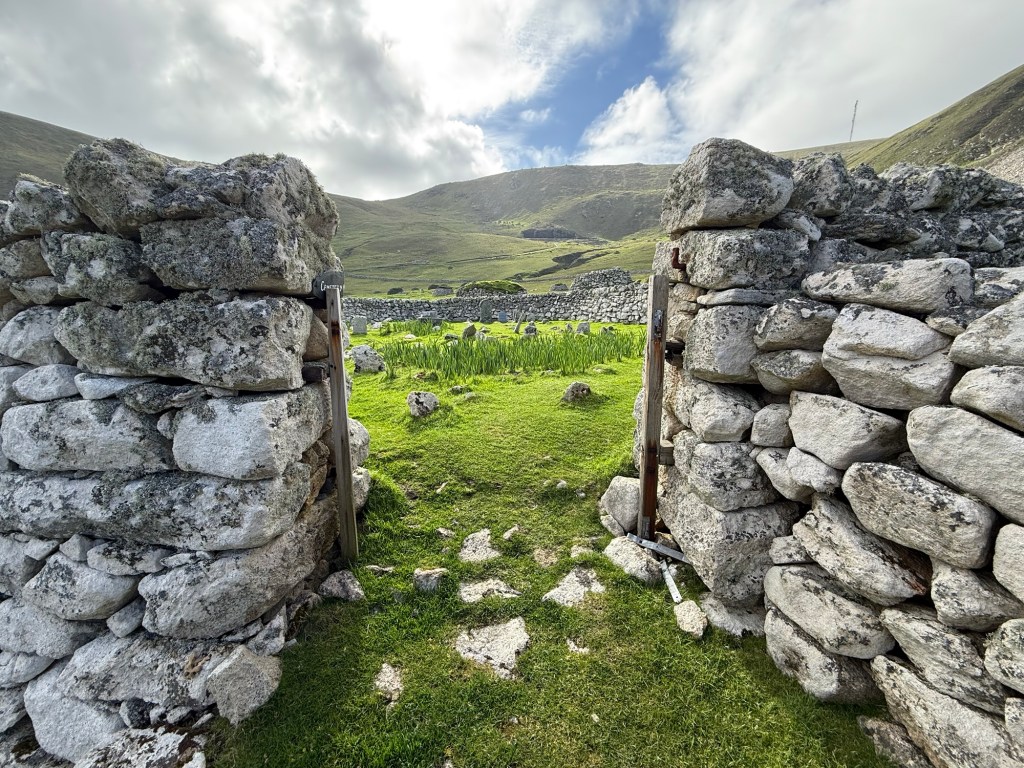
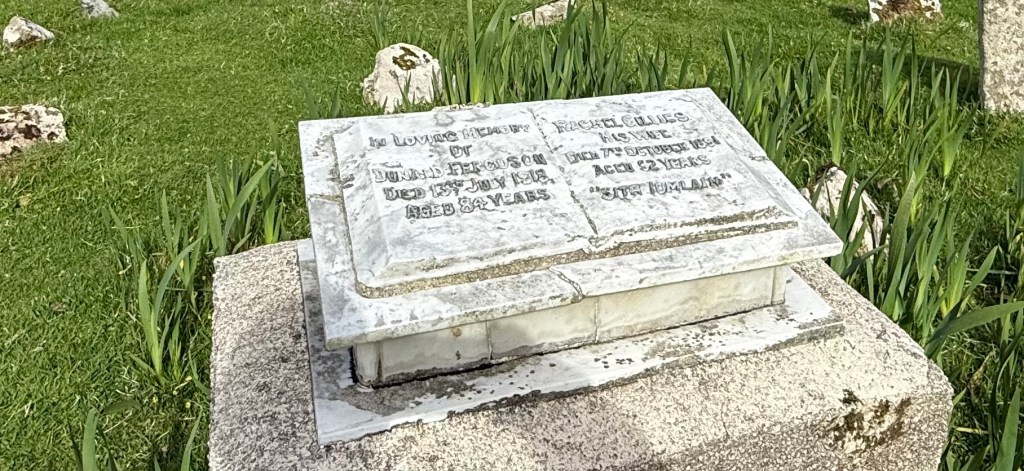
The cemetery was walled-in. Most of the stones were unreadable. It was serene in a way that only properly old graveyards manage – the kind of quiet that feels companionable rather than empty.
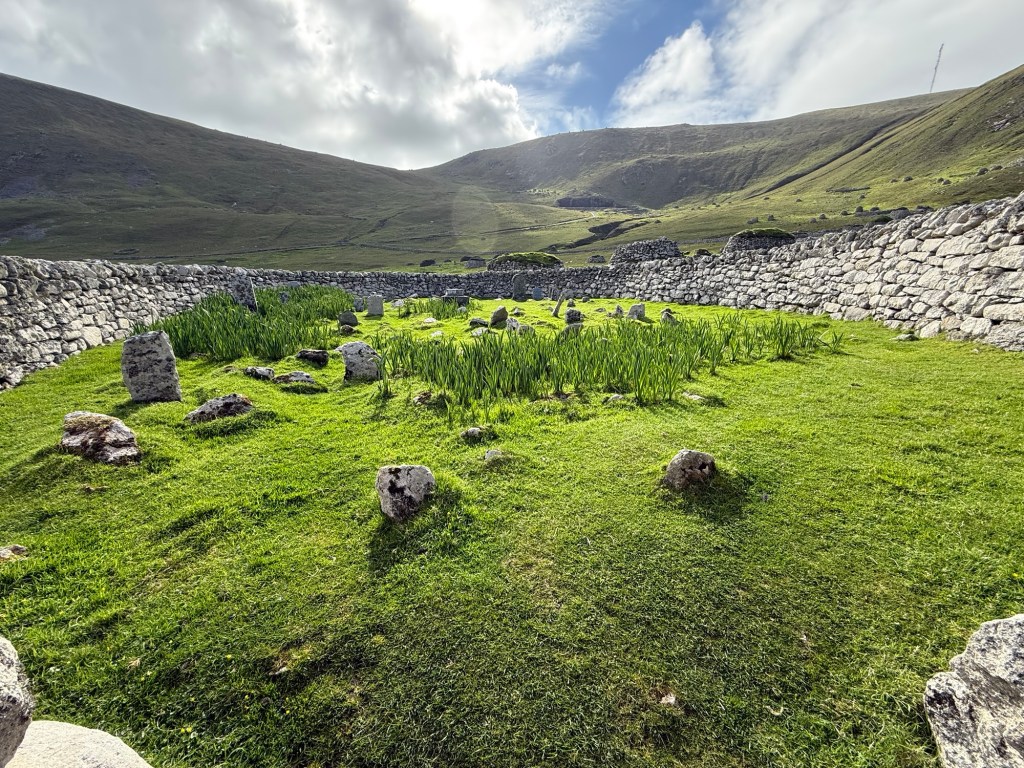
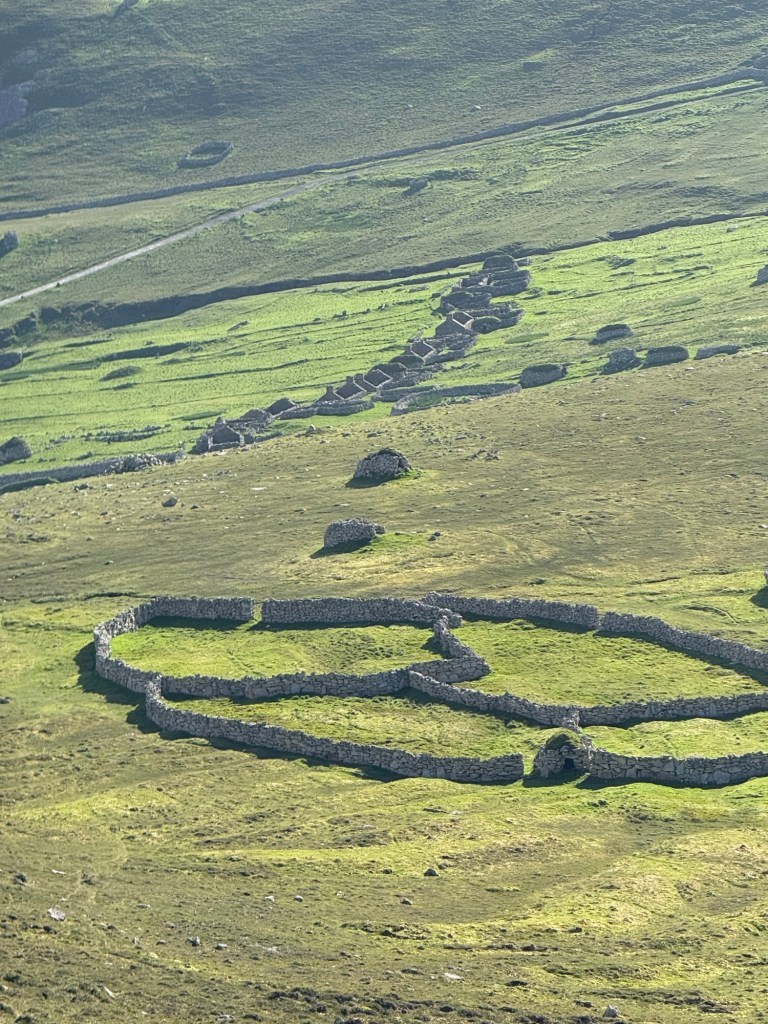
Past the cemetery, the land flattened into richer pasture, with the old stone holding pens still standing after centuries of Atlantic weather. Stubborn things.
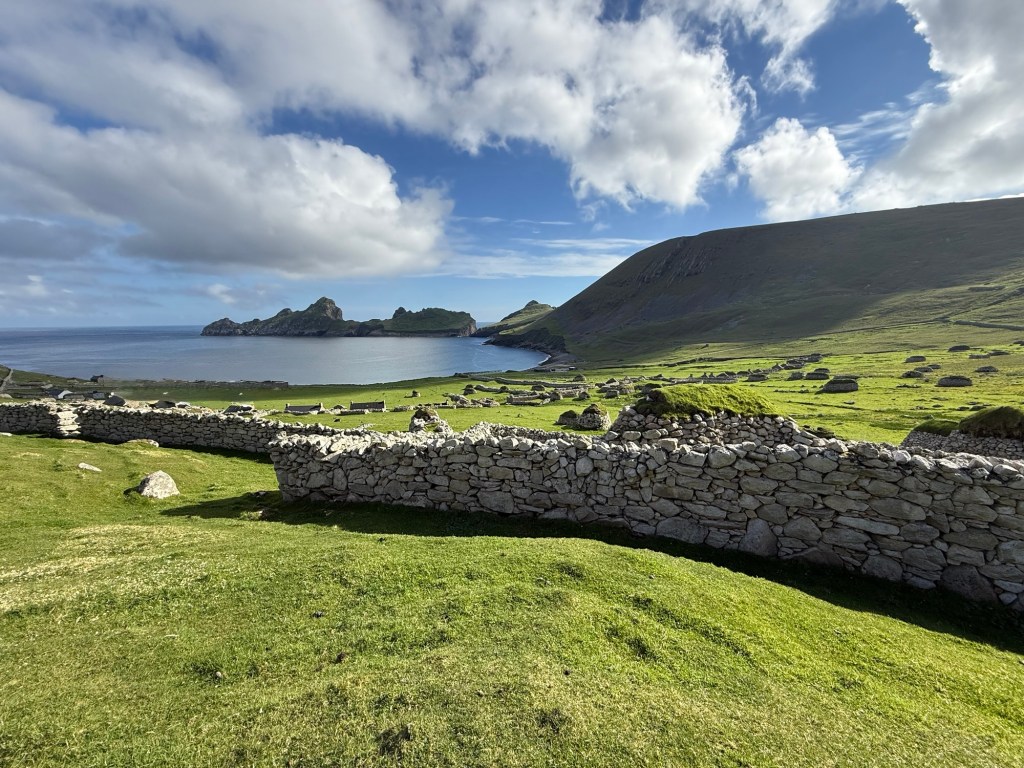
Then – more schlep. The slope steepened and turned boggy, the going slippery and sucking. Worth every squelching step.
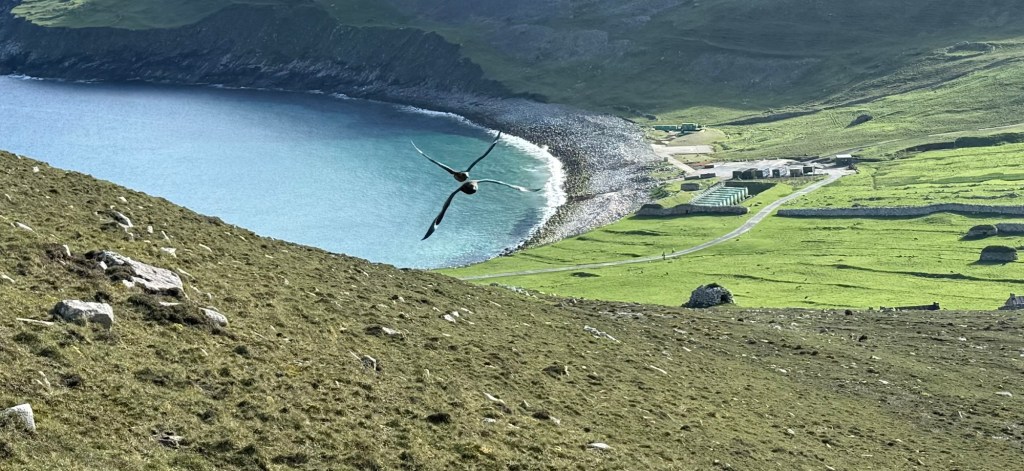
From The Gap, the view back over the village was genuinely sublime – the dark blackhouses speckled like ink on the green sea of grass, set against the real blue sea of the Atlantic. The drystone holding pens, seen from above, traced patterns across the landscape like some ancient piece of land-art.
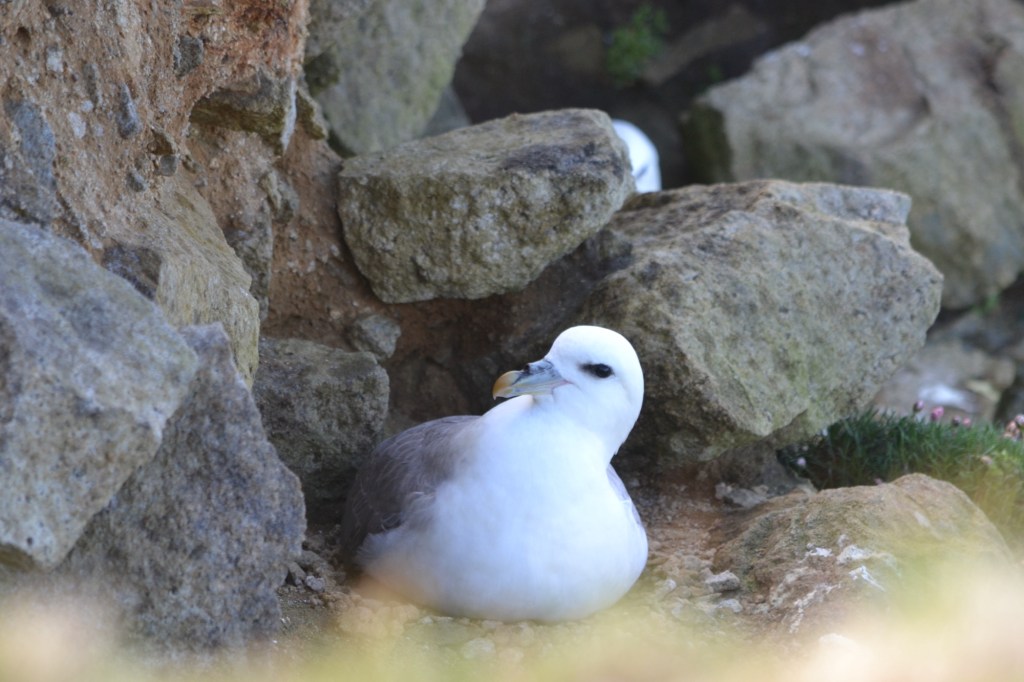
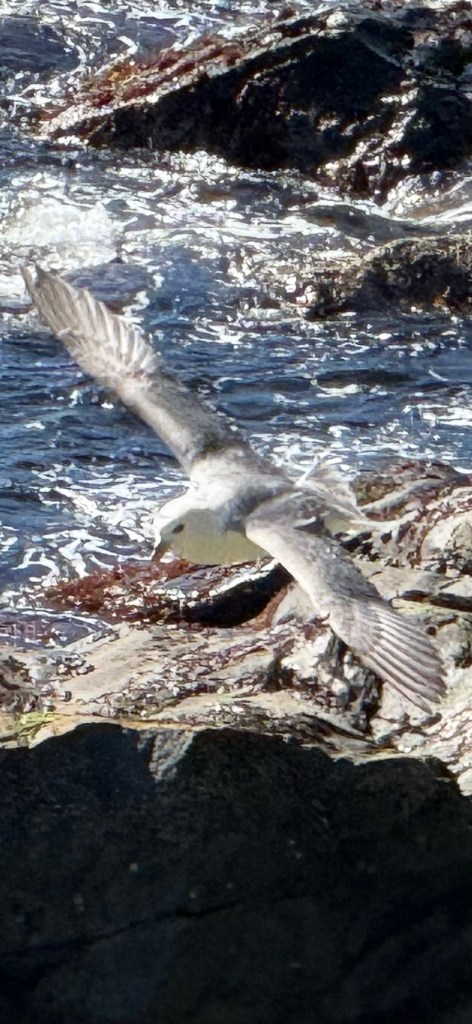
The sea-cliffs were alive with birds – gulls and fulmars, mostly, I think. Swoop, dive, climb. Swoop, dive, climb. Hypnotic.
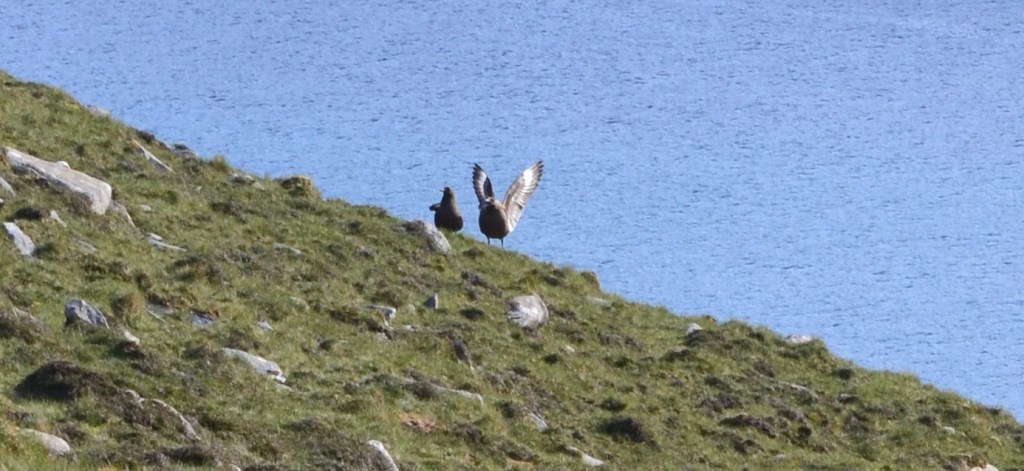
The Great Skuas were initially very photogenic. I had been warned to keep to the right, as the Skuas were nesting to the left. The Skuas had not been briefed on this arrangement and proceeded to launch a full-on frontal assault. It made for a couple of excellent photos. I came away without a head wound, which on a St Kilda skua-day counts as a personal triumph.
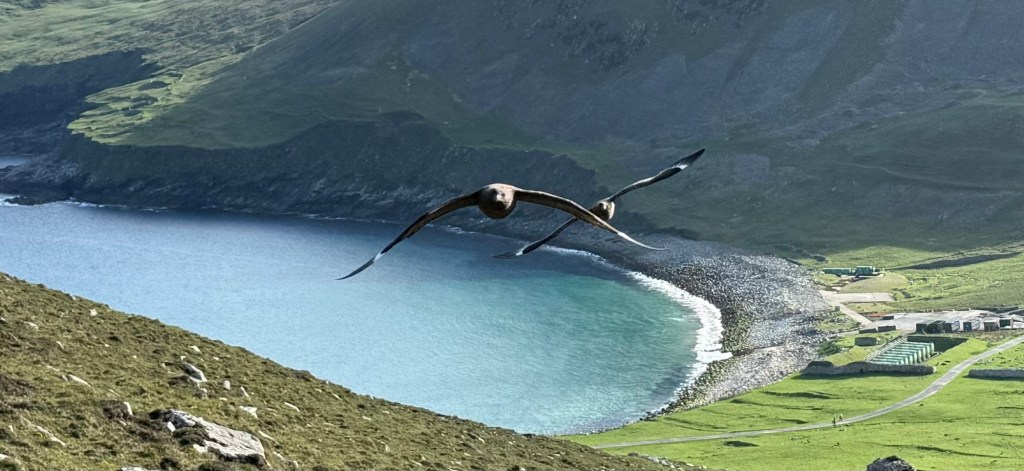
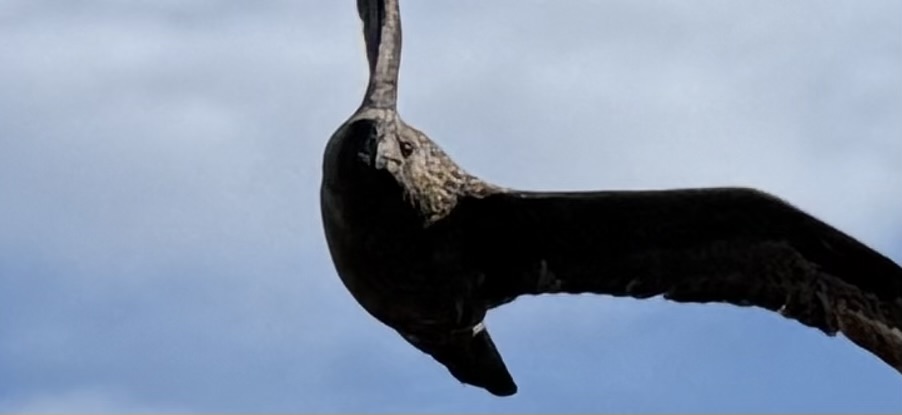
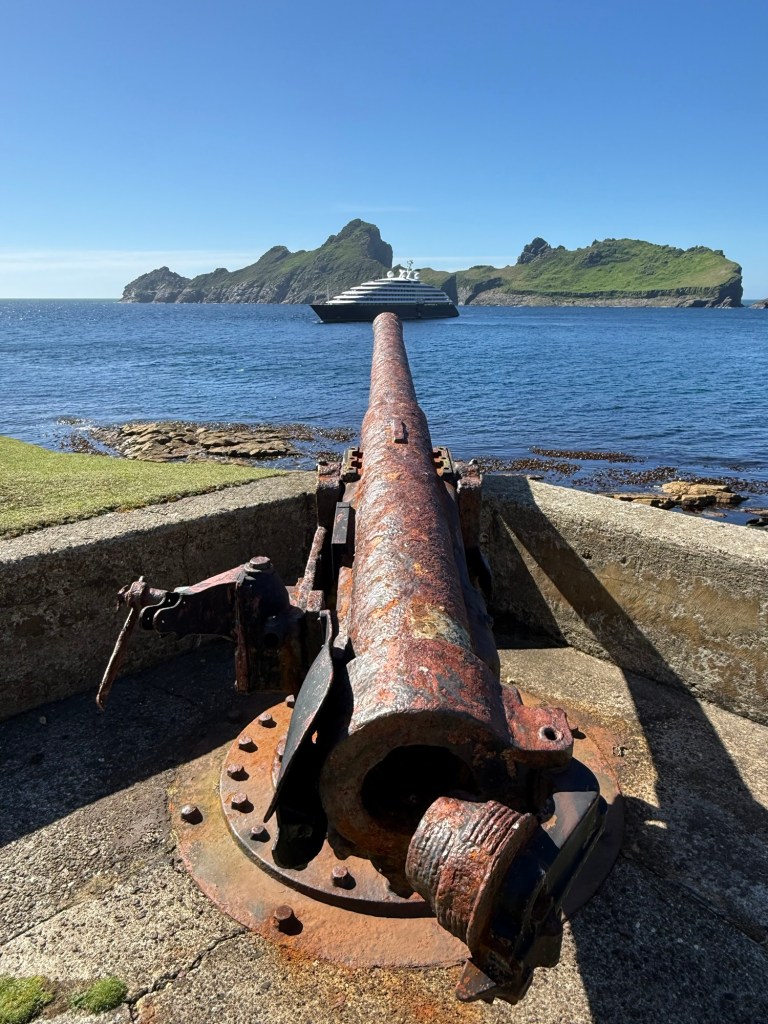
We woke the next morning to the small horror of a Ponant cruise ship anchored close by – an all gleaming, floating buffet. We scrambled ashore early to get a head start on the disembarking hordes.
I went straight for the cannon and took aim….bang!
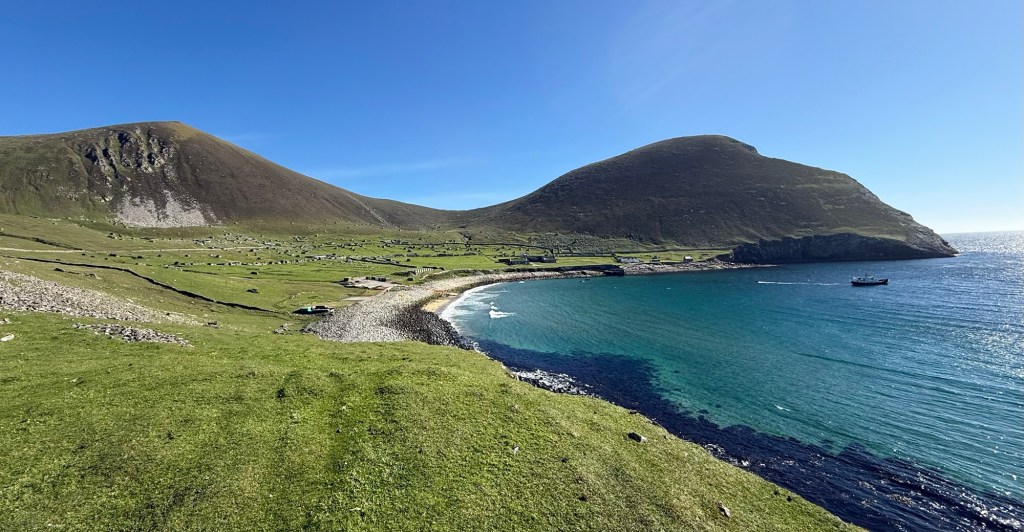
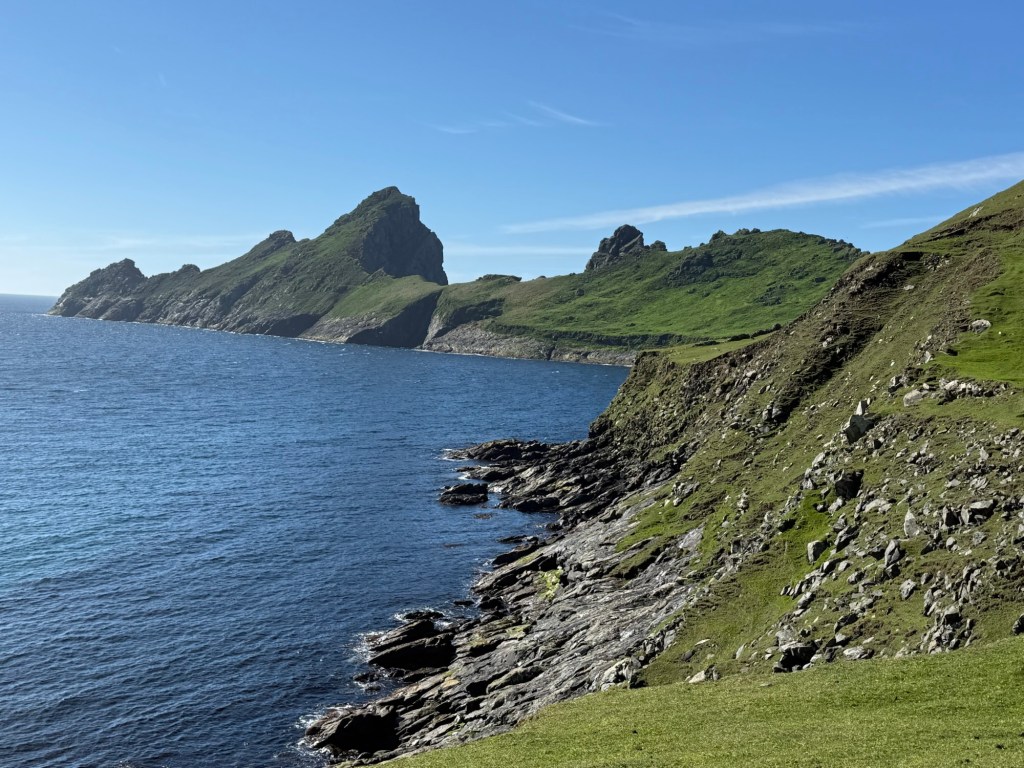
I took a short walk over to the other side of Hirta for a different perspective of the bay and a visit to the bird cliffs. Spectacular. Properly, genuinely spectacular.
Just before lunch we boarded Gemini and started back to the Outer Hebrides. Lumpy but a much improved forecast – our goal is to anchor overnight at Lochmaddy on North Uist.
The trip back gave us great weather despite the swell, and we were treated to a pod of bottlenose dolphins surfing our bow. Honestly, if you have to be bounced about in a converted lifeboat, this is the way to do it.
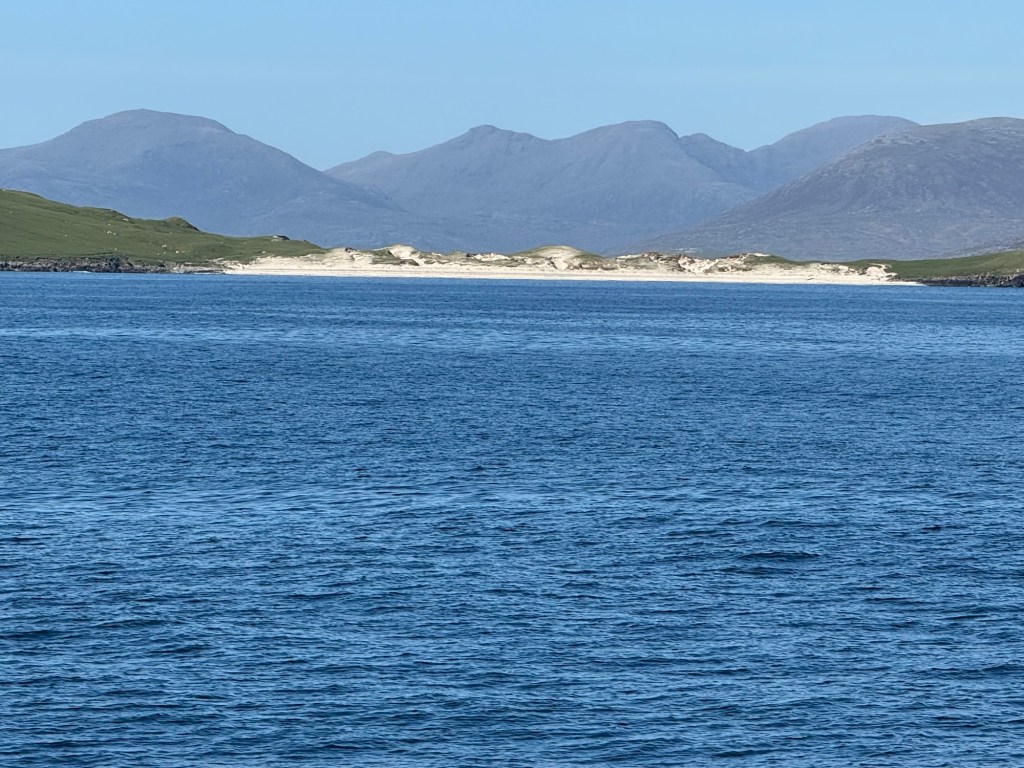
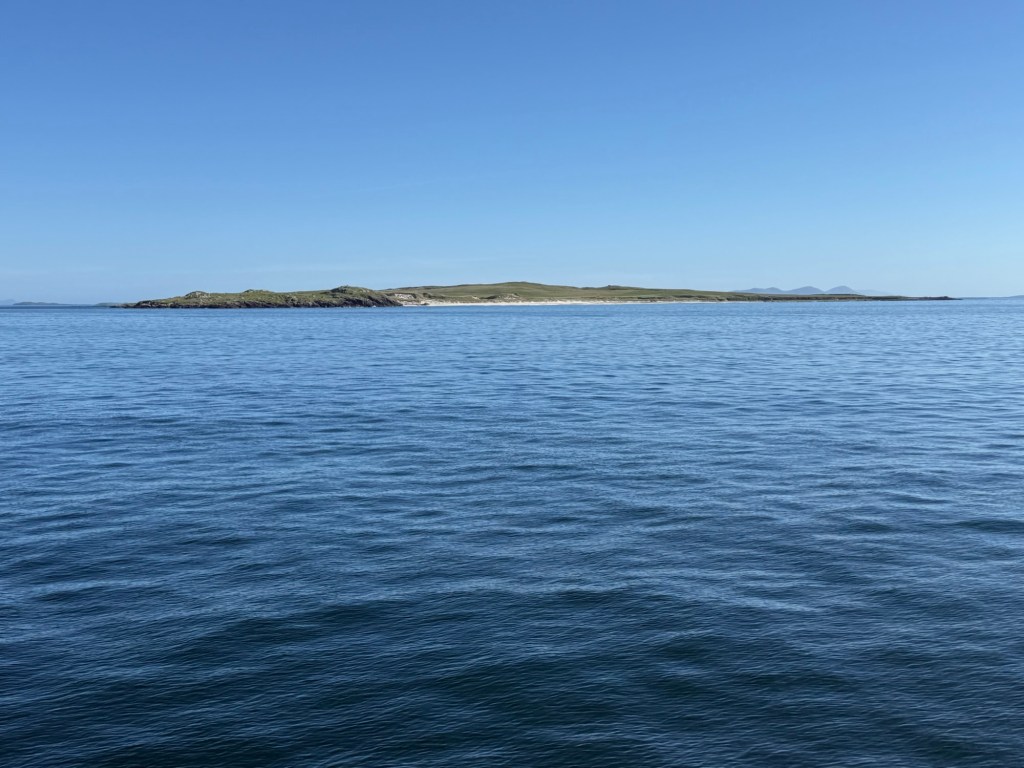
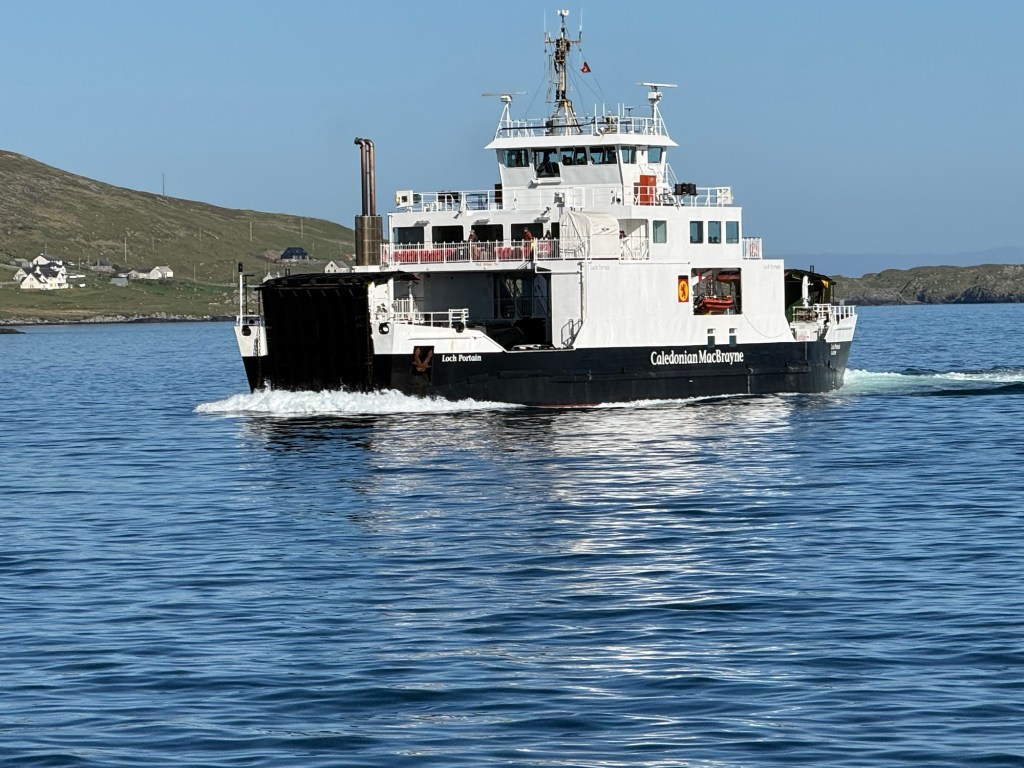
The waters between Harris and Berneray and North Uist were quite tranquil with the odd seal. We passed the Loch Portain car ferry at Leverburgh.
Tomorrow’s itinerary has yet to be determined as the weather is on a 15 min cycle – heavy wash with light rinse….we hope south towards Barra.
 Wander the World with Intent